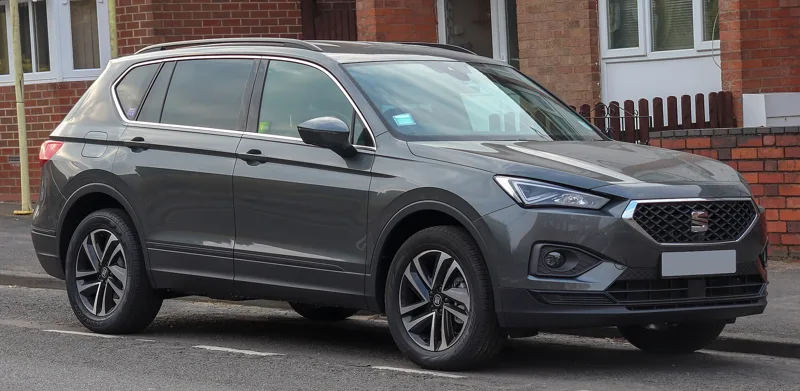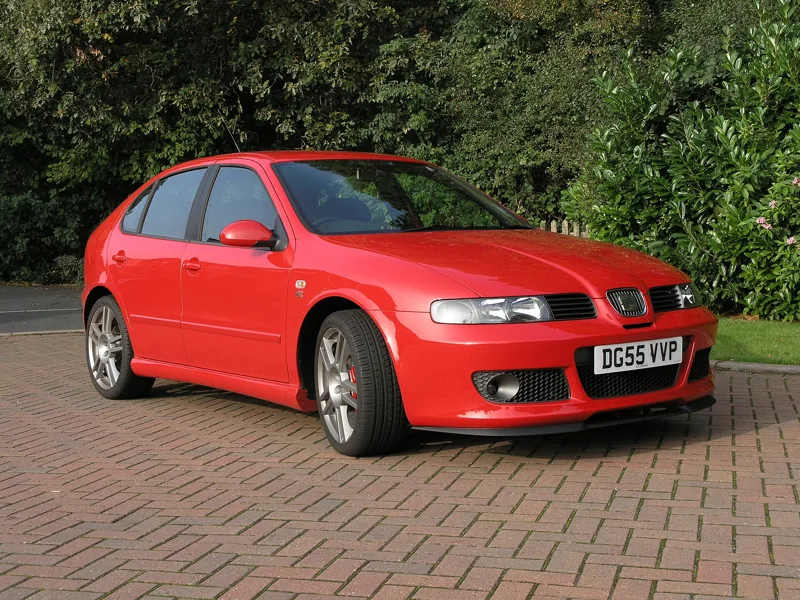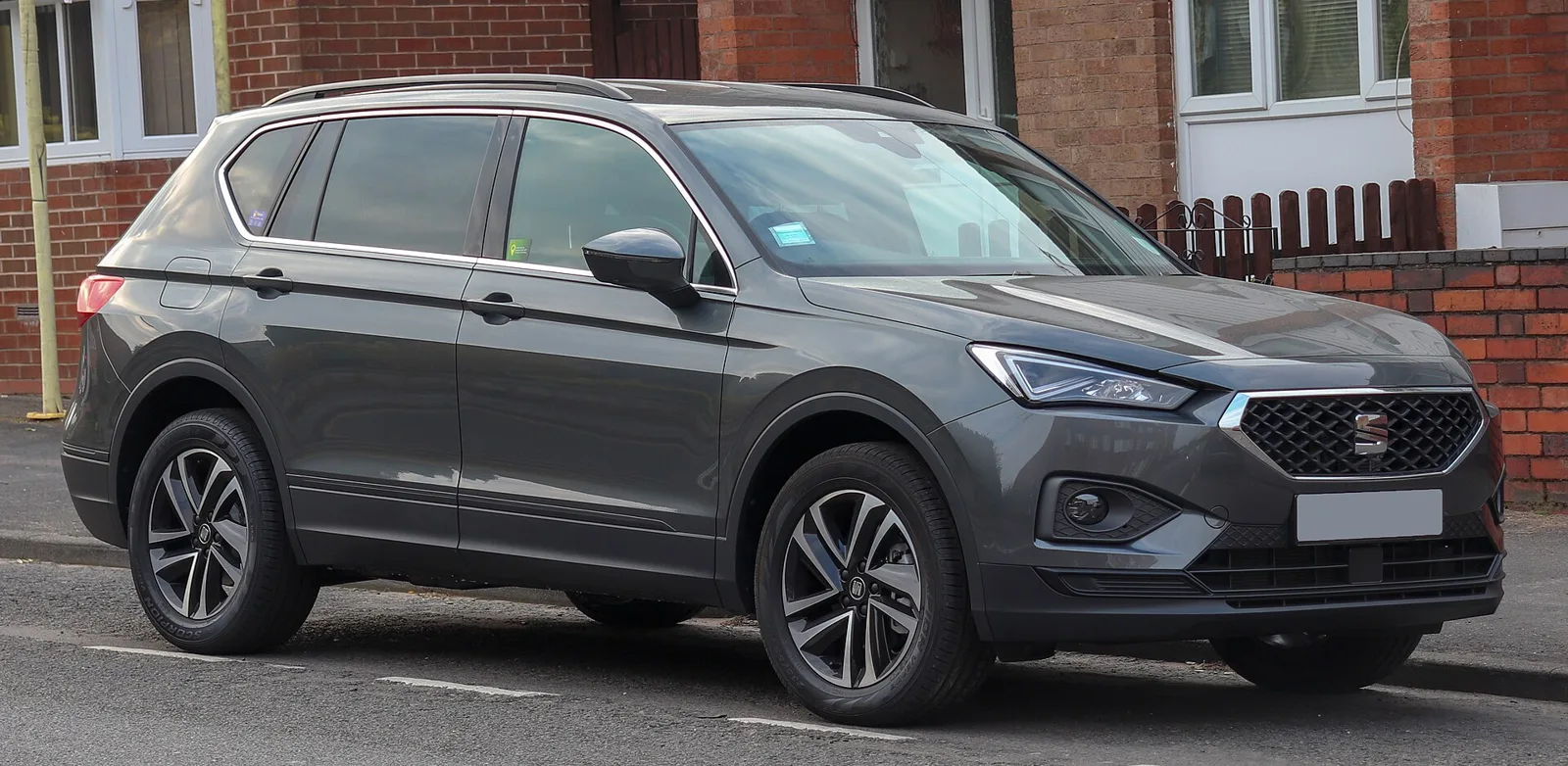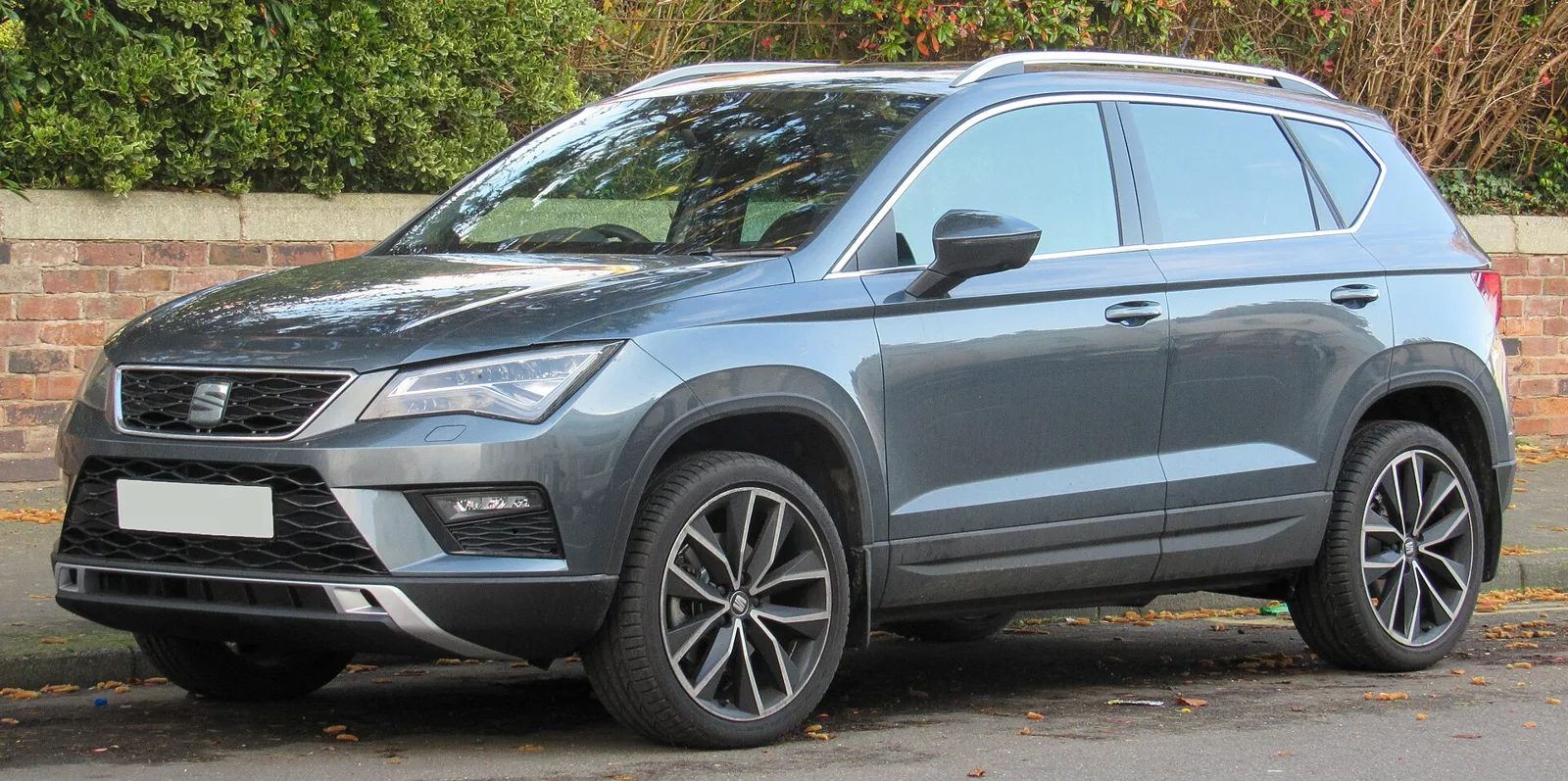
A Spanish saloon that was an Audi A4, a minivan that shared a line with the Sharan, and the SUV that took over from the Altea.
The Altea (2004 to 2015) was a compact MPV on the Volkswagen Group PQ35 platform. The Exeo was a rebadged Audi A4 built until 2014. The Alhambra was a seven-seat minivan built from 1996 to 2020. The Ateca is SEAT's first SUV, built in the Czech Republic.
The entire Audi A4 production line in Ingolstadt was dismantled and rebuilt in Spain. The reason was the Exeo, a car that looked new but was an Audi A4 underneath, and it is the clearest example of how SEAT filled out its range with Volkswagen Group hardware. The Altea, Alhambra and Ateca did the same in their own ways, covering family, minivan and SUV buyers.
How did the SEAT Altea, Exeo, Alhambra and Ateca fit into SEAT's range?
The Altea was a compact MPV, the Exeo a large family saloon and estate, the Alhambra a seven-seat minivan and the Ateca a compact SUV. Each sat on hardware shared within the Volkswagen Group: the Altea on the PQ35 platform, the Exeo on Audi's A4 B7, the Alhambra on the Sharan's, and the Ateca on MQB A1.
SEAT usually names its cars after Spanish places. The Altea takes its name from a city, the Ateca from a village west of Zaragoza and the Alhambra from the monument in Granada. The Exeo breaks the habit, taking a Latin word, exire, meaning to go beyond.
The Exeo was an Audi A4 with a SEAT front and rear, built on a line moved from Ingolstadt to Spain.
What was the SEAT Altea?
The Altea was a compact multi-purpose vehicle (MPV) produced from 2004 to 2015, previewed by the Salsa Emocion concept and designed by Walter de Silva. It launched in March 2004 as the first car in SEAT's new corporate look, and appeared at the Geneva Motor Show that year. The third-generation Toledo was identical to it apart from a larger boot.
The Altea reached the market after many rivals, but sold better than expected: 31,223 in its first year. It is a family five-seater with a sportier image than most of its competitors, on the Volkswagen Group A5 (PQ35) platform.
What was unusual about the Altea?
Its windscreen wipers park vertically, disappearing into the window surround at each side to improve pedestrian safety. The effect is a cleanly swept screen, though the wide A-pillars create a blind spot.
Six trim levels were offered, from Essence and Reference up through Reference Sport, Stylance and Sport to the FR. The range-topping 2.0 FR TDI produced 125 kW (170 PS; 168 bhp) from April 2006. Five gearboxes were offered depending on market and engine, from five- and six-speed manuals to a five-speed tiptronic and six- or seven-speed DSG. A flexible-fuel MultiFuel model used a 1.6 MPI engine running on E85, with 102 bhp.
Euro NCAP awarded the Altea five stars in 2004. Among its awards were a Red Dot Best of the Best design prize, the title of The World's Most Beautiful Automobile 2004 in Milan, and the Auto Trophy from Autozeitung in 2004 and 2005.
What are the Altea XL and Freetrack?
The Altea XL is 18.7 cm (7.4 in) longer than the standard car, with more luggage space. Paris hosted its debut in September 2006, and sales began that November.
The Freetrack, released in 2007, is dimensionally similar to the XL but is a compact SUV, with raised suspension, bigger plastic bumpers, and plastic extensions to the wheel arches and sills. Every Freetrack except the 2WD 2.0 TDI has a Haldex on-demand four-wheel-drive system, and the 4WD versions are called Altea 4. In Mexico and Russia it is sold simply as the SEAT Freetrack. SEAT did not market it as an SUV, although it competes with small ones. It launched in a very uncommon intense yellow, a colour that left production by August 2010.
Why did SEAT drop the Altea?
SEAT said on 21 August 2015 that both the Altea and the Altea XL were finished. No direct replacement was planned, because SEAT was following the shift from MPVs to SUVs. The Ateca, launched in 2016, took over the role, and CEO Luca de Meo said the company regarded the Ateca as the Altea's replacement.
In the UK, SEAT sold 439 Alteas and 445 Altea XLs in 2014. Half a million Alteas were produced overall.
What was the SEAT Exeo?
The Exeo is a large family car and flagship that SEAT built until May 2014, when the 81,572nd rolled off the line. It was a rebadged Audi A4 of the B7 generation with a redesigned front and rear, available only as a four-door saloon or a five-door estate. There was no direct replacement.
Before launch the car carried the codename Bolero and the internal designation Typ 3R. It is a D-segment model on the Volkswagen Group B7 (PL46) platform, and SEAT supplied its own bonnet, wings, boot lid, doors and door mirrors. Inside it used trim from the A4 Cabriolet and many A4 B6 and B7 parts. To make that possible, the whole A4 B7 production and assembly setup at Ingolstadt was taken apart and reinstalled at SEAT's Martorell factory in Spain.
How did the Exeo reach showrooms?
The Exeo was revealed at the 2008 Paris Motor Show as a four-door, five-seat saloon (Typ 3R5), and reached Western Europe in March 2009 with three petrol and two diesel engines. A lower-powered 88 kW (120 PS; 118 bhp) diesel was added in September 2009. From August 2009 an estate, the Exeo ST for Sport Tourer (Typ 3R9), joined the range.
Three new petrol engines followed in May 2010: two 1.8 TFSI units with 88 kW and 118 kW (160 PS) and a 2.0 TFSI with 155 kW (211 PS). Trims were Reference, Stylance and Sport. A 2011 facelift added bi-xenon LED headlamps, a honeycomb grille and revised engines.
What was different about the Exeo's engines?
Because the Exeo came from the Audi A4, its engines sit longitudinally, or north to south, rather than the transverse layout used elsewhere in the SEAT range. The gearbox is a transaxle mounted at the rear of the engine. Transmissions started with a six-speed manual, and a multitronic continuously variable unit with a choice of six or seven speeds followed for the 2.0 TSI and 2.0 TDI. Drive goes only to the front wheels: there was no equivalent of Audi's quattro.
All diesels are common-rail TDI engines with a diesel particulate filter, and every engine meets Euro 5. Suspension is multi-link at the front and rear, power steering comes from ZF and Bosch's ESP 8.0 is standard. Front discs run from 280 mm (11.0 in) to 320 mm (12.6 in).
The saloon's boot holds 460 litres (16.2 cu ft). The estate holds 442 litres, rising to 882 litres with the rear seats folded.
Did the Exeo win anything?
It took the Golden Steering Wheel award in Switzerland in 2009 in the upper medium sedan class. The Exeo ST was named Company Car 2009 in Germany, Finland's Tuulilasi magazine gave it Car of the Year 2010, and it was named Novelty of the Year 2009 in Catalonia.
In 2009 retail sales totalled 21,013, made up of 12,837 saloons and 8,176 Exeo STs, while the Martorell plant produced 22,981.
What was the SEAT Alhambra?
The Alhambra is a seven-seater minivan built from 1996 to 2020, and the industry considers it a large MPV. Production began in June 1996 at AutoEuropa, a Volkswagen Group plant in Palmela, Portugal, and the platform is the Sharan's. Ford's Galaxy was a relative of the first generation too.
SEAT showed a prototype at the 1995 Geneva show, then launched the production car at the same event the following year and put it on sale in June 1996.
How did the first-generation Alhambra work?
Most components and the design came from the Sharan Mk1 and Galaxy Mk1, but SEAT gave buyers more options for the money. The five rear seats fold down or unclip and can be removed, leaving a flat load floor, which was unusual for SEAT at the time. Load volume is 256l with seven seats, 852l with five and 2610l with only the front two.
The car stayed essentially unchanged from 1996 to 2010, apart from a major restyling in 2000 to reflect the new SEAT image. All three cars came off the same line at the AutoEuropa joint venture, with different engines and interiors. Ford has since pulled out, and its Galaxy Mk III and S-Max are made in Genk, Belgium. The AutoEuropa plant also built the Volkswagen Scirocco III from 2008 to 2017.
The 2009 Alhambra Ecomotive used the 2.0 TDI 140 PS (103 kW) with 159 g/km of CO2. Petrol choices included a 1.8L turbo with 110 kW and a 2.8L VR6 with 150 kW (204 PS), and the 1.9L and 2.0 TDI diesels spanned 66 to 110 kW. The Alhambra won the Monovolume do Ano award in Portugal in 1997.
What changed with the second-generation Alhambra?
Sales of the Typ 7N began in October 2010. It stretches to 4.85 m (15.9 ft), which is 22 cm more in length and 9 cm more in width than the original, and, like the Sharan, it reaches the middle row through sliding doors. In February 2013 SEAT presented a four-wheel-drive version with permanent all-wheel drive, a 2.0 TDI of 103 kW (140 PS; 138 hp) and a six-speed manual.
In September 2015 UK diesel models were revised for Euro 6, and outputs rose from 103 kW to 110 kW (150 PS; 148 hp) and from 130 kW to 135 kW (184 PS; 181 hp). SEAT announced in March 2020 that production would stop that same month.
It earned five stars from Euro NCAP in 2010 and four stars in 2019. Awards included the Autozeitung Auto Trophy in 2010, the Best MPV on the market award from What Car? in 2011, 2012 and 2013, and Best imported MPV from readers of Auto, Motor und Sport in 2011. Almost 500,000 have been sold since 1996, with 6,215 retail sales in 2009.
What is the SEAT Ateca?
The Ateca is SEAT's first SUV, a compact crossover in the C-segment on the Volkswagen Group MQB A1 platform. It slots between the Arona and the Tarraco. Barcelona saw the production car revealed on 1 March 2016, after two concepts: the IBX at Geneva in 2011 and the 20V20 at Geneva in 2015. Sales began in September 2016.
Under Volkswagen Group policy of building related models in the same factory, it is not made in Spain. It is produced at the Skoda plant in Kvasiny in the Czech Republic alongside the Skoda Karoq, to cut costs.
What trims and engines does the Ateca have?
The Xcellence tops the range, with leather upholstery, 18-inch alloys, an eight-inch touchscreen and a dial for choosing sport, normal, eco, individual, off-road or snow settings. SE is the mid-range version and S is the entry level.
The entry petrol engine is a 1.0-litre three-cylinder turbo with 115 PS (85 kW; 113 hp). Above it is a 1.5-litre EcoTSI with 150 PS (110 kW; 148 hp), shared with the Golf and Leon, which shuts down cylinders to save fuel. Diesels are a front-wheel-drive 1.6 with 115 PS and 112 g/km of CO2, and a 2.0 in 150 PS and 190 PS (140 kW; 187 hp) forms. The 4Drive models are limited to those two 2.0 diesels in top Xcellence trim, with a seven-speed DSG available.
What did the 2020 facelift change?
SEAT revealed the facelifted Ateca in June 2020. It has a new front bumper and grille, new rear bumper, LED headlamps and tail lights, and redesigned fog lamps. Rear lights echo the Tarraco, with sequential indicators on FR and Xperience trims, and the block-capital badge was swapped for the hand-written script of the new Leon.
Inside are a fresh leather steering wheel, revised door cards, more upholstery choices, an eight-way electric driver's seat, USB-C ports, multi-colour ambient lighting and voice recognition. The standard infotainment screen is 8.25 inches, with a 9.2-inch unit optional.
What is the Cupra Ateca?
Cupra is a performance brand whose cars are based on SEAT models, so the Cupra Ateca wears a copper-tinted badge instead of the SEAT logo. It has a 2.0-litre turbo petrol producing 300 PS (221 kW; 296 hp), a seven-speed DSG, 4Drive all-wheel drive and adaptive suspension. SEAT claims 0 to 100 km/h in 5.4 seconds and a top speed of 245 km/h (152 mph). A Cupra setting firms up the suspension and lets more engine noise into the cabin.
Every car gets 19-inch alloys and black Alcantara seats, along with dynamic chassis control, a digital instrument cluster, wireless phone charging and an eight-inch screen. Options include a Beats audio system, 20-inch wheels, a panoramic roof and a tow bar.
How safe is the Ateca?
Euro NCAP awarded the standard European Ateca five stars in 2016. In basic Latin American form, with seven airbags, the Czech-built car received five stars for adults and five for toddlers from Latin NCAP 2.0 in 2017, along with an Advanced Award.
The four SEATs compared
| Model | Type | Years | Based on | Notable fact |
|---|---|---|---|---|
| Altea | Compact MPV | 2004 to 2015 | Volkswagen Group PQ35 platform | 31,223 sold in the first year |
| Exeo | Large saloon and estate | Revealed 2008, ended May 2014 | Audi A4 B7 (PL46) | Built at Martorell on lines moved from Ingolstadt |
| Alhambra | Seven-seat minivan | 1996 to 2020 | Shared with Volkswagen Sharan | Built at Palmela, Portugal |
| Ateca | Compact SUV | Unveiled March 2016 | MQB A1 | Built at Kvasiny, Czech Republic |
What took over after the Altea, Exeo and Alhambra ended?
The Ateca carries the line forward. SEAT launched it in 2016 as the Altea's replacement, and the June 2020 facelift gave it LED lighting and a larger standard screen. The Alhambra ended in March 2020, and the Exeo in May 2014, with no direct replacement for either.