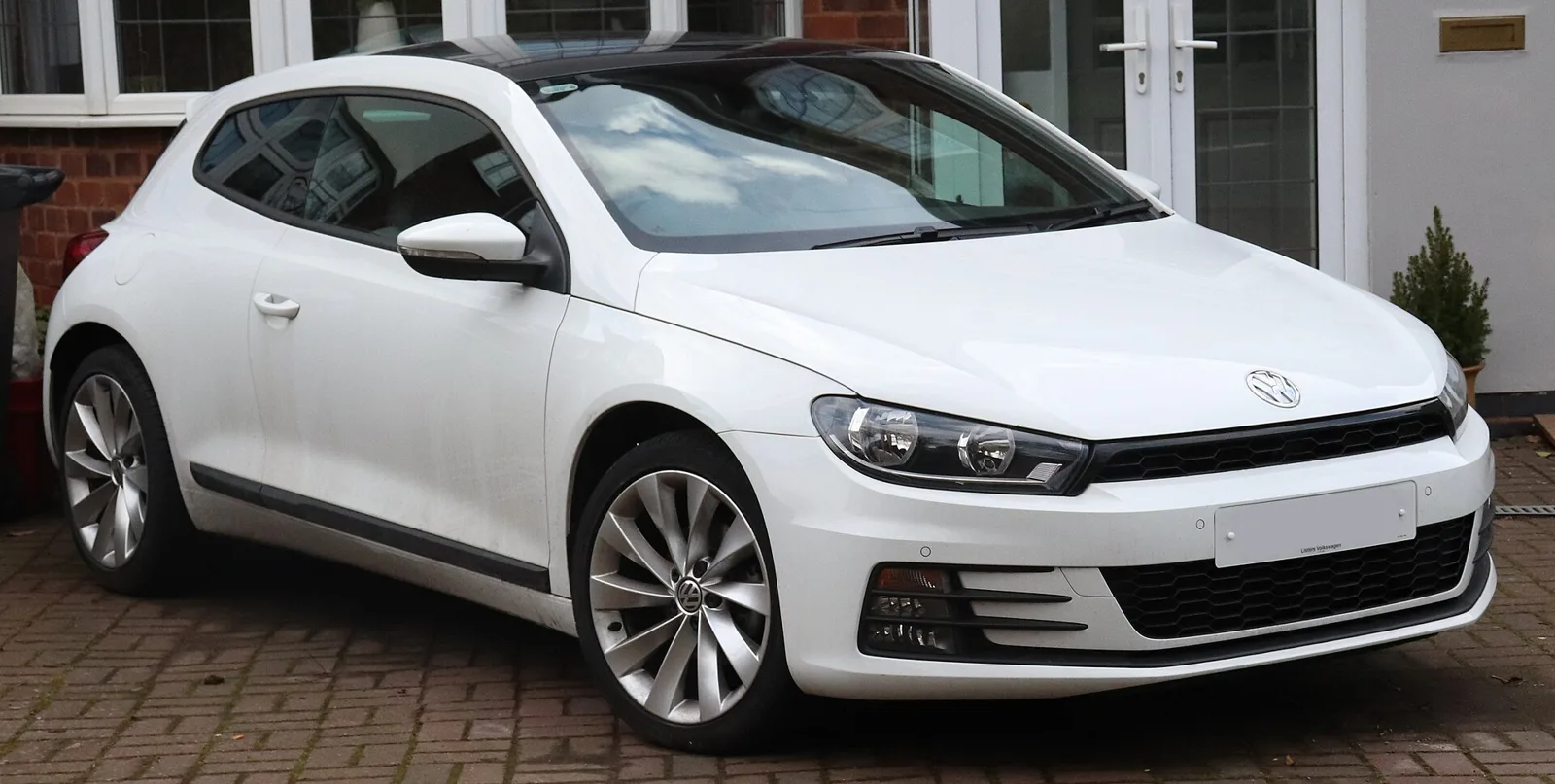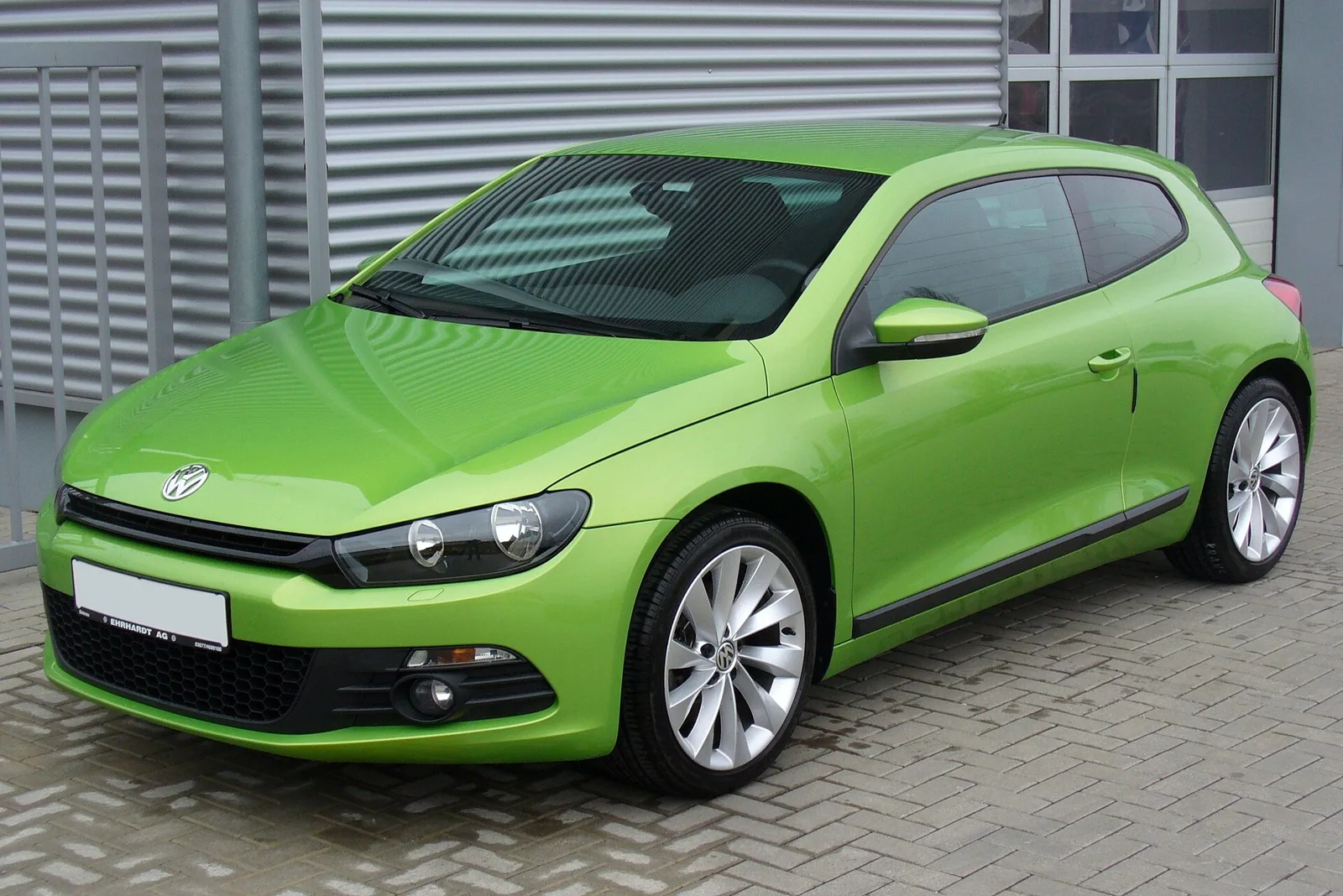
A 2+2 coupe with a sharp front end, a twin-charged engine, a top R model and a Golf VI platform.
The VW Scirocco III was a 2+2-seat front-drive coupe built on the Golf VI platform from 2008 to 2017. It offered a twin-charged 1.4 TSI, 2.0-litre TSI and diesel engines, and an R model with 195 kW (265 PS; 261 hp), and 272,436 were built.
The VW Scirocco III was a 2+2-seat coupe with front-wheel drive, first shown at the Geneva Motor Show in spring 2008 and on sale from that August. It was built on the Golf VI platform, and it was voted Car of the Year 2008 by Top Gear magazine. Production ran until 2017, and no successor has been built since.
How did the third Scirocco come about?
The third generation first appeared as a design study called the VW Iroc, shown in Berlin on 24 August 2006. The name was chosen to echo the earlier ScIrocco. Most of its outer design came through into the production car, and the work came from the former VW designer Murat Gunak, who had also led the design of the Golf V, the Eos and the Tiguan.
The gap between the second and third generations was long. The II generation ended in 1992, and the III did not arrive until 16 years later, in 2008. The earlier generations had passed from one to the next with no break in the line.
A Golf-based sports coupe with a sharp nose and a twin-charged 1.4-litre engine.
What does the Scirocco III look like?
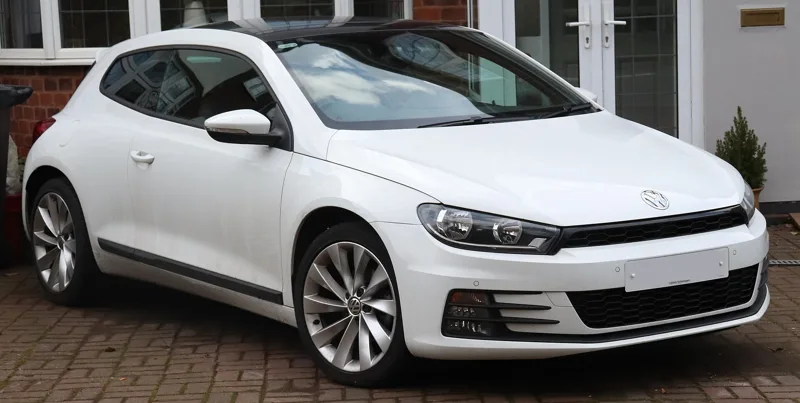
The front is the car's most noticeable feature. Large air intakes sit in the front bumper, with a honeycomb pattern in the intake grille and a distinctive bonnet shape. Black radiator slats, painted black on the R model, give the sports coupe its so-called evil look. The headlamp housings run straight into the slats, which adds to the effect.
The side line climbs toward the back, and the roof slopes down behind. The VW badge is set flush into the bonnet. The body is galvanised against rust, although the tailgate can still show the first signs of corrosion.
How was the Scirocco III engineered?
The third Scirocco used the PQ35 platform, with a transverse engine. VW had introduced it with the Golf V, and the Golf VI also used it. The interior was carried over almost unchanged from the VW Eos for cost reasons, though aluminium-look trim lifted it. The drag coefficient (Cw) was 0.34, and the boot held between 312 and 1,006 litres with the rear seat backrest folded down.
The hidden B-pillar was intended to make the car look longer and sportier. The rear sports bench gave a feel of individual seats, and its integral head restraints folded down as standard.
What came as standard?
The base specification came with alloy wheels of 17 inches, leather on the steering wheel and handbrake grip, sports seats that adjust for height, power windows, air conditioning, brake assist, six airbags, speed-sensitive steering assistance and stability control. A button appears to switch the ESP off, yet it keeps running in the background in a more sporty setting.
The ParkPilot was available on request. It warned of obstacles with sound, and the closer the car got, the higher the tone rose. The reversing camera picture, called Rear Assist, appeared on the radio display in lifelike detail. Both the ParkPilot and the camera were paid extras.
What did the Scirocco III's engines look like?
At first there were only two petrol engines: a 1.4-litre TSI rated 118 kW (160 PS; 158 hp), and a 2.0-litre TSI borrowed from the Golf V GTI, which gave 147 kW (200 PS; 197 hp). Direct petrol injection combined with intelligent charging made them work efficiently, promising high output with low consumption. The newer VW TSI engines used a timing chain rather than a belt, and their oil pumps regulated the flow.
How did the 1.4 TSI's twin-charger work?
The 1.4-litre TSI was supercharged twice, a system VW called 'Twincharger'. At low revs a compressor provided the boost, and at higher revs a turbocharger took over. Outside marine propulsion the arrangement was rare. The engine made 118 kW (160 PS; 158 hp), and its 240 Nm (177 lb ft) of torque arrived at 1,500 rpm and stayed flat until 4,500 rpm.
The compressor's regulated boost is available from idle, and from around 2,000 rpm an exhaust turbocharger joins in. From roughly 3,500 rpm the turbo supplies all the boost, and a magnetic clutch then switches the compressor off. The compressor bridges the turbo lag, and it is disconnected from the crankshaft at higher revs so it takes no power.
A similar combination of compressor and turbocharger had been used in the 1980s on the Lancia Delta S4, the Group B rally car, in its 200 production vehicles. In autumn 2008 a single-turbo 1.4 TSI, producing 90 kW (122 PS; 120 hp), came in as the cheapest option, with its charge air cooler built into the inlet manifold.
Which Scirocco III engines came after the 2.0 TSI?
In the 2.0-litre TSI a single turbocharger does the work. From the end of 2009, as in the Golf VI, it was offered with 155 kW (211 PS; 208 hp) instead of 147 kW (200 PS; 197 hp). From 2014 a 132 kW (179 PS; 177 hp) version was also available. These engines grew from the 1.8-litre TSI of the EA888 family.
The sportiest version came at the end of 2009 as the Scirocco R, based on the Scirocco GT24. It came with a six-speed manual or a six-speed DSG. Its engine came from the Audi S3 and belonged to the EA113 family, producing 195 kW (265 PS; 261 hp), with torque hitting 350 Nm (258 lb ft) between 2,500 and 5,000 rpm.
Its body kit and alloy design marked it out from the regular cars. It carried R-Line bumpers at both ends, widened sill extensions, a rear spoiler in body colour, darker tail lamps and a black grained diffuser.
What diesels did the Scirocco III offer?
The 2.0-litre TDI diesel, rated 103 kW (140 PS; 138 hp), arrived in autumn 2008. VW claimed its common-rail injection gave the highest efficiency then achievable for a small diesel, up to 45 per cent. From May 2009 a 125 kW (170 PS; 168 hp) TDI joined it, and in January 2013 the 125 kW unit was swapped for a 130 kW (177 PS; 175 hp) engine, which was also fitted to the Audi A4.
What was BlueMotion?
The Scirocco could be specified as 'BlueMotion' to save fuel and cut emissions. The 1.4-litre TSI, the 2.0-litre TDI and VW's DSG dual-clutch gearbox formed its core. Start-stop and brake energy recovery, also called recuperation, helped it run on less fuel and emit less CO2.
What gearboxes were available?
Every engine came with a six-speed manual as standard. The 147 kW and 155 kW petrols, and the diesel, could be ordered with a six-speed DSG and steering-wheel paddles. The 118 kW 1.4 TSI was offered with a seven-speed direct-shift gearbox.
The dual-clutch gearbox changes gear in a few hundredths of a second, with no interruption in drive, into the next gear already selected. Sporty acceleration measurably matches a manual, without the clutch pedal. It works as an automatic or with paddles, and it is more dynamic to drive than a conventional automatic while also saving fuel.
How was the chassis set up?
The front axle used MacPherson struts and wishbones made from high-strength materials, keeping it light and compact. The rear had a four-link axle. Track measured 1,533 mm front and 1,561 mm rear, or 1,569 and 1,575 mm on the R, which is 60.4 and 61.5 in on the standard car and 61.8 and 62.0 in on the R. Weight was split 65 to 35 per cent between front and rear.
For an extra charge, Dynamic Chassis Control provided triple-adjustable dampers that react to the road in milliseconds. The driver chooses SPORT, NORMAL or COMFORT, and SPORT also sharpens the steering.
How safe was the Scirocco III?
The Scirocco reached five stars in the Euro NCAP crash test of 2009. It had a full airbag system as standard, including driver and front passenger airbags with passenger airbag deactivation, head airbags for both rows and front side airbags. The gas generators fill the bags within 30 to 40 milliseconds of a registered impact.
ESP intervenes in the brakes and engine management when the car begins to break away, keeping it stable even in critical moments. A hill start assistant was standard, and driver fatigue detection was available as an extra. The optional Plus anti-theft system included interior monitoring, an electronic immobiliser and tow-away protection.
What were the Scirocco III's special models?
The line-up grew through a string of limited and special editions. Each one added colours, wheels or equipment to the standard car, and some offered a discount compared with a similar base model.
The Scirocco Sport was the base version from August 2008, with a TDI diesel and, from spring 2009, a 125 kW engine. The Collectors Edition ran to 100 cars, painted in Oryx White with Berry White leather, 19-inch polished wheels and a panoramic sunroof, and it was only available with the 147 kW TSI.
The Scirocco R became the top model from late October 2009. A facelifted R followed in 2014, its two-litre TSI tuned to 206 kW (280 PS; 276 hp), with torque reaching 360 Nm (266 lb ft). Later came the Blue Motion, shown at the IAA in 2009, which concentrated on consumption, along with the TEAM, EDITION, MATCH, LIFE, GTS, CLUB, ALLSTAR and SOUND models.
The 2012 to 2015 GTS paid tribute to the 1982 Scirocco II GTS. It had black-and-red stripes, 18-inch black Thunder wheels and Black Peak dashboard inlays. The 2015 to 2017 GTS facelift used a 2.0-litre TSI of 162 kW (220 PS; 217 hp) and added Norwich 18-inch wheels and red brake calipers.
What changed at the 2014 facelift?
The Scirocco was facelifted in April 2014. The front was reworked and the rear lamps were revised, and the engine line-up was tuned for more power and better efficiency.
The VW logo on the tailgate now worked as the boot release, as it did on the sister Golf VI. Production ended in summer 2017 with the 2017 model year, and no successor has followed.
How many Scirocco IIIs were sold?
Total production came to 272,436 vehicles from 2008 to 2017. In Germany, 53,186 third-generation cars were newly registered between 2008 and 2018. The best German year was 2009, with 16,162 registrations.
Did the Scirocco III race?
VW entered three Scirocco GT24 race cars at the 24-hour race at the Nurburgring in 2008. Each was rated 239 kW (325 PS; 321 hp) and 320 Nm (236 lb ft), and they finished 11th and 15th overall in a field of more than 200 cars. Hans-Joachim Stuck was among the drivers.
In 2009 the best Scirocco GT24 finished 15th. A team-mate in the Scirocco GT24-CNG, which ran on natural gas for the first time, finished 17th and took the class for alternative fuels. From 2010 to 2014 a brand cup called the Volkswagen Scirocco R-Cup was also held.