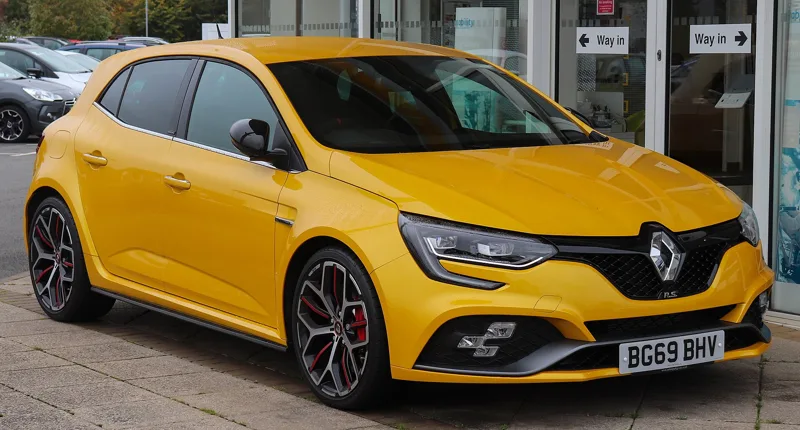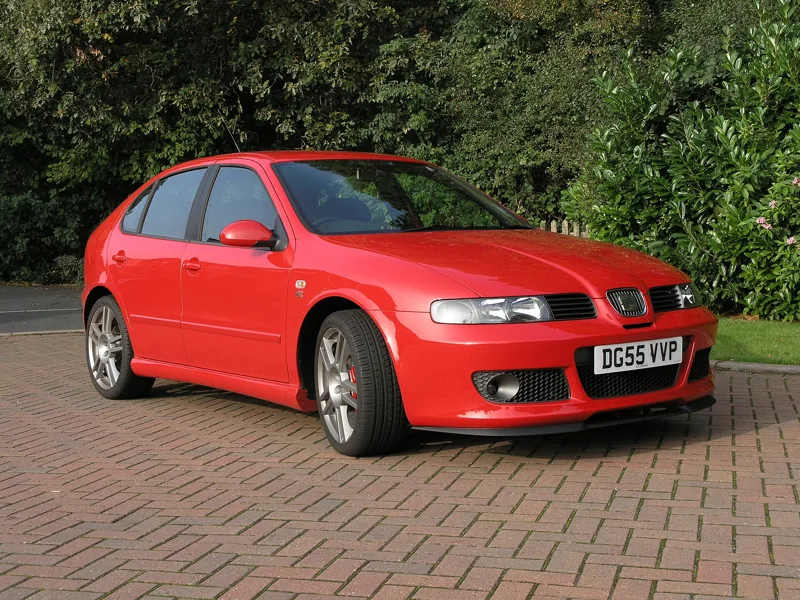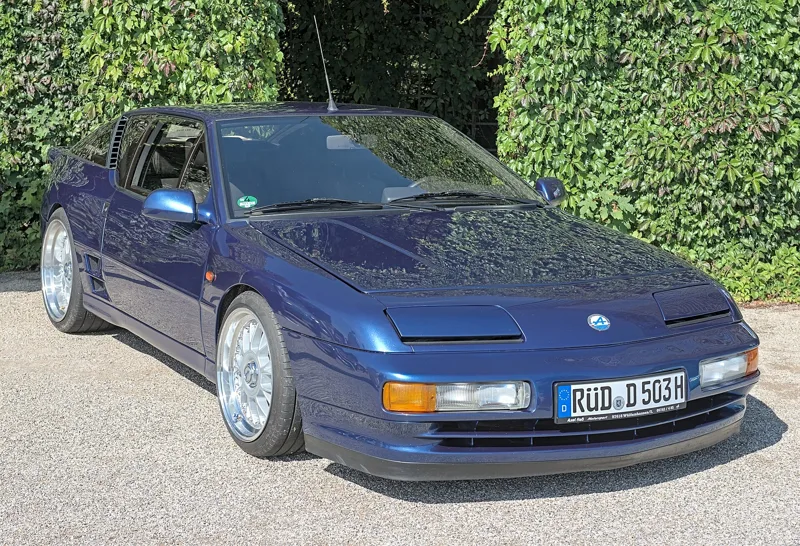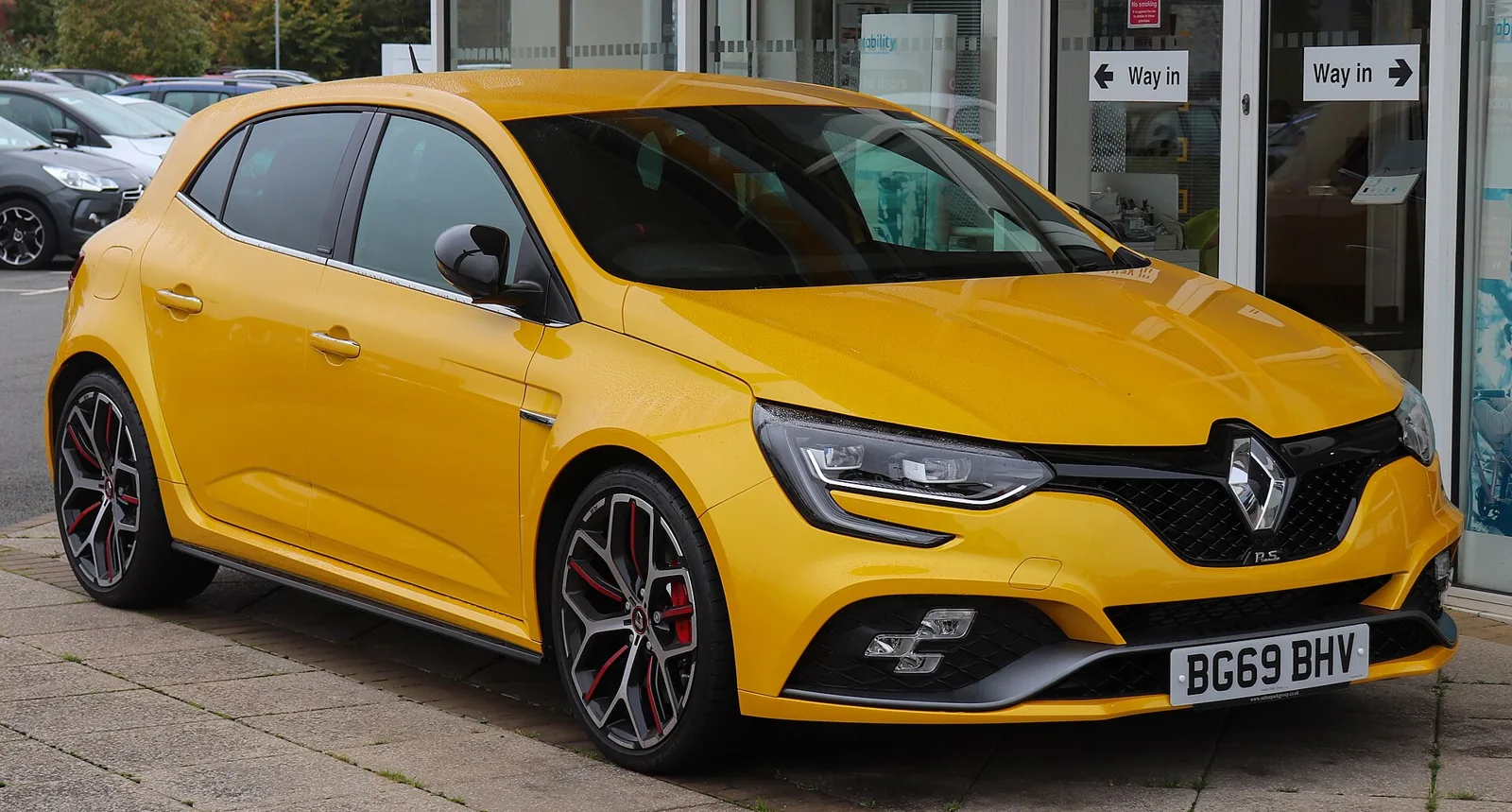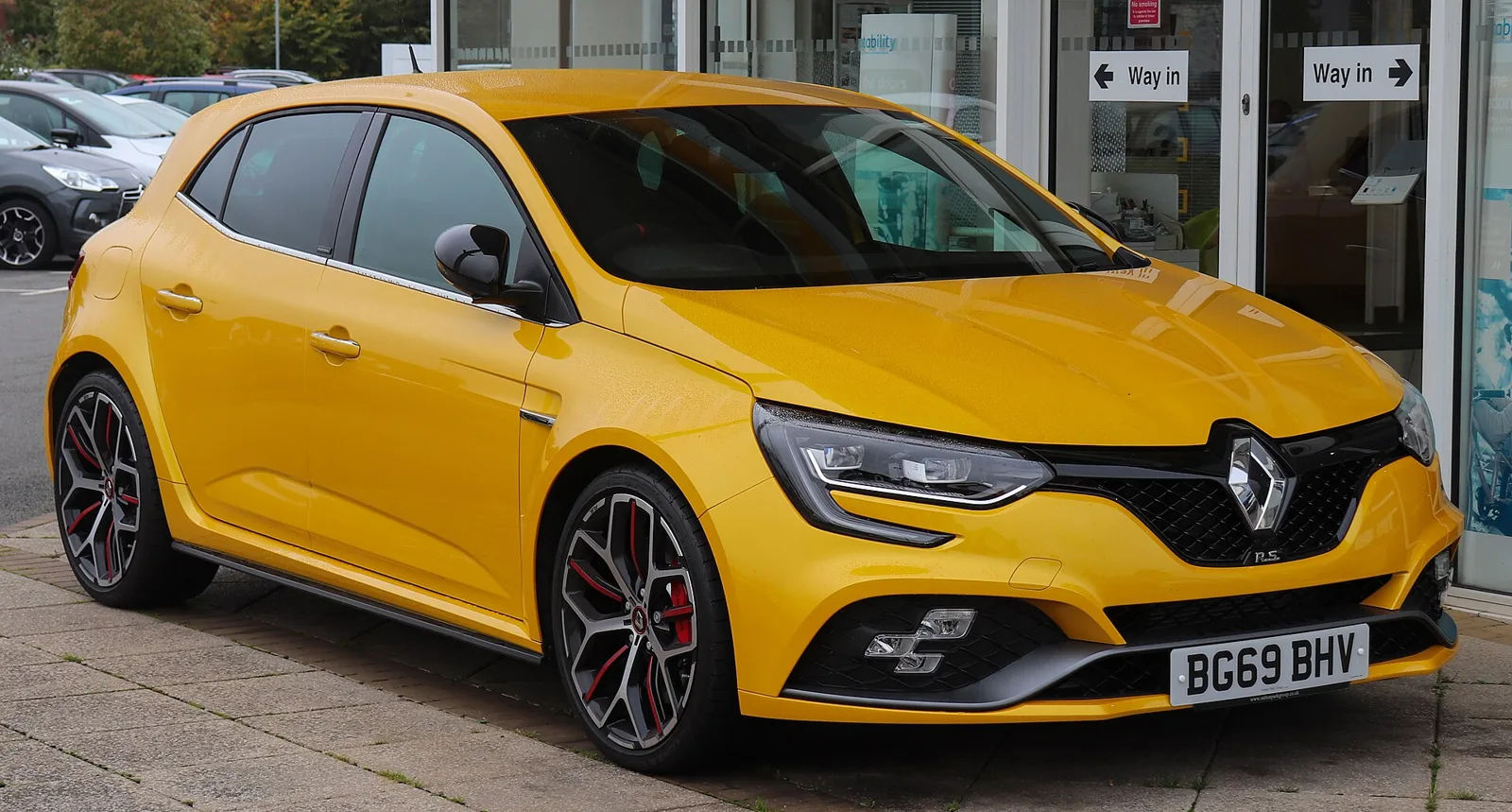
Two European hot hatchbacks from the 2000s, one a Renault Sport special with a racing history and one a Spanish family hatch that grew a Cupra performance badge.
The Renault Megane RS was a turbocharged Renault Sport hot hatch from 2004, with 225 PS and a racing family that included the R26.R and the Trophy. The SEAT Leon grew from a 1999 family hatch into a Cupra performance line, and its Mk2 Cupra R reached 195 kW (265 PS; 261 bhp).
The Renault Megane RS and the SEAT Leon Cupra were both hot hatchbacks from European makers, built on family-car platforms and sold on the promise of sporting ability. The Megane RS came from Renault Sport, with a turbocharged engine, a racing heritage and a string of awards. The Leon was a Spanish family hatch that grew a Cupra performance badge, and its best version was the Cupra R.
Where did each car come from?
The Megane RS was introduced in September 2004 and based on the Megane II small family car. It was built at Renault's Dieppe factory, using body shells made in Palencia, Spain. The series was produced by Renault Sport, the high-performance subsidiary that works for Alpine, a Renault subsidiary.
The SEAT Leon launched in 1999 and was built at Martorell. Its first generation, the Typ 1M, shared components with Volkswagen Group models such as the Golf Mk4, but was marketed as a sportier and cheaper alternative with a fastback design inspired by the Alfa Romeo Alfasud.
The second-generation Leon, the Typ 1P, began production in May 2005. It was similar in design to the SEAT Altea, which had launched a year earlier, and it brought modern design cues and vertically parked wipers to the Leon range. It won a Red Dot design award in 2006 and was named Firmenauto des Jahres in Germany that year.
The third generation, the 5F, moved to the Volkswagen Group MQB platform in 2012. Its public debut came at the Paris Motor Show that September, and the platform was shared with the Volkswagen Golf Mk7, making the Leon the second car on it.
A Renault Sport badge with a racing past against a Spanish family hatch that grew a Cupra R.
How did the engines compare?
The Megane RS 225 used a turbocharged 2.0-litre petrol engine that produced 225 PS (165 kW; 222 bhp). A twin-scroll turbocharger reduced lag, and most of the torque arrived from 2,000 rpm up to the redline, with the turbo working from 1,800 rpm.
The Leon's top petrol performance came from the 2.0 TFSI. The Cupra version produced 177 kW (240 PS; 237 bhp) and reached 100 km/h in 6.4 seconds, while the Cupra R used the same 195 kW (265 PS; 261 bhp) engine found in the Audi S3 and the Golf R, with 0-100 km/h in 6.2 seconds and a limited top speed of 250 km/h.
The first-generation Leon Cupra R had a different character. It used a turbocharged 1.8-litre engine, with output rising from 154 kW (209 PS; 207 bhp) to 165 kW (224 PS; 221 bhp) later on. The Cupra 4 went the other way, using a 2.8-litre VR6 at 150 kW (204 PS) with four-wheel drive.
The Megane's diesel route was the dCi 175, a 2.0-litre diesel rated at 173 hp (129 kW; 175 PS) and 360 Nm of torque.
Specifications side by side
| Feature | Renault Megane RS | SEAT Leon |
|---|---|---|
| First generation | Introduced September 2004, Megane II base | Typ 1M launched 1999; production ended May 2006 |
| Second generation | Megane III RS from 2010 | Typ 1P from May 2005 |
| Core engine | 2.0-litre turbo, 225 PS (165 kW; 222 bhp) | 2.0 TFSI, up to 195 kW (265 PS; 261 bhp) in Cupra R |
| Acceleration | 0-100 km/h in 6.5 seconds (225) | 0-100 km/h in 6.4 seconds (Cupra); 6.2 seconds (Cupra R) |
| Top speed | About 240 km/h (149 mph) | 250 km/h (155 mph), limited, for Cupra R |
| Transmission | Six-speed manual | Six-speed manual or DSG |
| Chassis options | Cup chassis with drilled discs and stiffened steering | Cupra with 18-inch twin-spoke alloys and red brake calipers |
| Special edition | R26.R, 450 cars; 265 Trophy, 500 units | Copa Edition, 55 units; Cupra 310, 100 units |
| Track result | 265 Trophy lapped Nurburgring in 8 minutes 8 seconds | No figure |
| Awards | What Car? Best hot hatch (2010 to 2014); Evo highest non-supercar (2011) | Car of the Year in Portugal (2001); Best Car in Germany (2009) |
| Safety | First five-star Euro NCAP rating in the segment | No figure |
Which car had the better chassis?
The Megane 225 Cup introduced a Cup Chassis option with drilled brake discs, red front and rear calipers, a larger brake master cylinder, different 18-inch wheels and revised stiffened steering. The Cup car was also 10 kg (22 lb) lighter than the Sport Hatch.
The Megane R26 gained a limited-slip differential for the first time, with Recaro seats, a sport exhaust and Michelin Pilot Sport 2 tyres. Its brakes were Brembo units with red calipers, and the car weighed 1,355 kg (2,987 lb).
The Leon Cupra's unique parts included red brake calipers, aluminium pedals and an oval exhaust, and the Cupra R was the fastest Mk2 Leon.
How far did the special editions go?
The Renault Sport R26.R was the most extreme road Megane. It was 123 kg (271 lb) lighter than the R26, achieved by removing the rear seats and seat belts, the passenger and curtain airbags and most of the soundproofing. It had a carbon fibre bonnet, a polycarbonate tailgate and Sabelt seats with carbon shells.
Only 450 R26.R cars were built, with 230 destined for the UK. It went on sale in October 2008 for GBP 22,990, and it was unveiled at the 2008 British International Motor Show.
SEAT's special editions were smaller. The Copa Edition had 55 units in Germany, with a 2.0 TFSI at 210 kW (285 PS; 281 bhp) and a 5.9-second 0-100 km/h time. The Cupra 310 Limited Edition used a 228 kW (310 PS; 306 bhp) engine in 100 units.
How did the Megane RS evolve after 2010?
The second-generation Megane RS 250 arrived in 2010 with a 2.0-litre twin-scroll turbo producing 247 bhp (184 kW; 250 PS) and 340 Nm of torque. It came with a six-speed manual, Brembo front brakes, an extended front splitter and 18-inch alloys.
The 265 Trophy followed in June 2011, a limited edition of 500 units with 261 bhp (195 kW; 265 PS) and 360 Nm. It reached 100 km/h in six seconds and a top speed of 254 km/h (157 mph), and it set a Nurburgring lap of 8 minutes 8 seconds, nine seconds faster than the R26.R.
The 265 was later made the standard Megane RS model in 2011 and 2012. Renault won a tender from the Gendarmerie National for a high-speed pursuit vehicle, which required 261 bhp, and it then sold the car to the public as well.
What did the Megane RS come with as standard?
The Megane RS came with leather and cloth seats, seat belts with red stitching, 18-inch alloy wheels, a dual sunroof, eight airbags, xenon headlights with headlight washers and Brembo brake discs. Electronic stability control, ABS with EBD and air conditioning were also part of the package.
A speed limiter could be set in the same way as cruise control, and it could be disabled or recalled with a button press. The Lux models added metallic paint, a hands-free card, electronic folding mirrors, a tyre pressure monitor, climate control, leather upholstery and a six-speaker radio with CD and MP3 playback.
How did the cars perform on track?
The Megane RS's racing story is more extreme than its road story. The Megane Trophy used a tube frame chassis with a glass fibre body that kept only a visual resemblance to the road car, and a 3.5-litre V6 at 325 hp (242 kW; 330 PS) placed behind the cockpit.
The Trophy was not road legal and raced in the Renault Eurocup, while cars also appeared in the Belgian Touring Car Series and the Dubai 24 Hour. Its second generation was shown at the 2008 Paris Motor Show and used in the Eurocup from 2009.
The Leon's sporting identity came through the Cupra badge and its special editions. The Cupra R's 6.2 seconds to 100 km/h was the nearest it came to a track-style headline figure.
How did the Leon's later years and special models develop?
The Leon Mk2 received a facelift in 2009, and the Cupra appeared in a SEAT racing game for the iPhone and iPod Touch that year. The Cupra R was the fastest Mk2 car, while the K1 Leon Cupra was built for one year for the UK market, inspired by the British Touring Car Championship race car and with redesigned bumpers, side skirts, a rear spoiler and oval exhausts.
SEAT's Streetcopa limited edition was launched at the 2008 Geneva Auto Show for the Swiss market, limited to 200 units. After SEAT won the World Touring Car Championship, a facelifted World Champion Edition followed, also limited to 200 units.
The Leon Twin Drive concepts pointed to a different future. The first Ecomotive was a series plug-in hybrid, with a 35 kW electric motor and a self-imposed top speed of 100 km/h, and its batteries gave a short urban range before the diesel took over. A revised 2011 version combined a 1.4 TSI petrol with an electric motor for a combined 161 bhp and 39 g/km of CO2, with production estimated for 2015.
The first-generation Leon also had a homage edition. The original Cupra was offered only in the red, yellow and black of the Spanish and German flags, reflecting the two countries that worked together on the project.
How were the cars received?
The Megane RS won a string of awards, including What Car? Best Hot Hatch from 2010 to 2014 and Top Gear's best hot hatch. It was also the highest-placed non-supercar in Evo's annual Car of the Year test in 2011.
The Leon's honours were spread across markets. It won Car of the Year in Portugal in 2001, Most Satisfactory Car of the Year in Poland in 2007, and Best Car of the Year 2009 for the import compact segment in Germany. A 2010 readers' poll for Autocar put the Cupra R at number 7 in its best hot hatchback of all time list.
The Megane RS also took the first five-star Euro NCAP rating in its segment, with six airbags, electronic stability control, traction control and a key-card that reduces knee injury in the centre console.
Which buyer should choose which?
A buyer who wanted the Renault Sport badge, a strong set of awards and the chance to buy a limited R26.R or 265 Trophy would look at the Megane RS. Its racing story and its turbo tuning gave it the more celebrated name of the two.
A buyer who wanted a family hatch that could turn sporty, with a range of Cupra and Cupra R versions and a diesel alternative, would find the Leon more practical. Its Mk3 successor added a larger boot, optional full-LED headlamps, a 5.8-inch touch-screen display and the SEAT Drive Profile system that changes engine, steering and gearbox behaviour.
On these facts the Megane RS had the stronger awards record and the bigger motorsport story, while the Leon offered broader model variety, from hot Cupra versions to diesels, estates and a hybrid concept. The buyer's priorities should decide the choice.