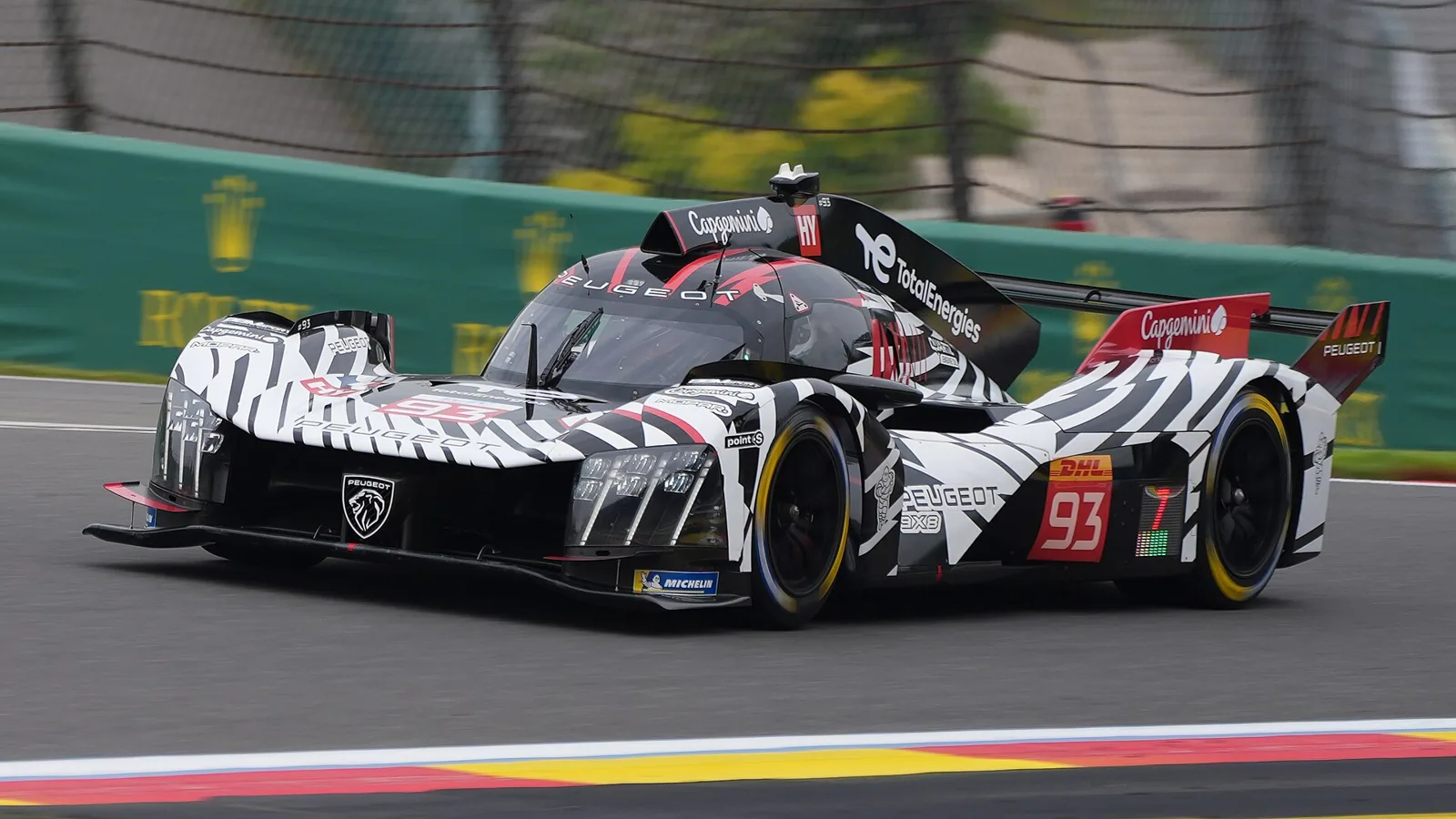
From a 3.5-litre V10 that won in 1992 and 1993 to a hybrid V6 that has chased podiums since 2022, the story of Peugeot's Le Mans cars.
The Peugeot 905 was a V10-powered sports prototype that took Le Mans victories in 1992 and 1993. The Peugeot 9X8 is a hybrid Hypercar that debuted in 2022, with a twin-turbo V6 at the rear and an electric motor at the front.
A Peugeot that won 9 of its 17 races and took the Le Mans 24 Hours twice, then walked away from sportscar racing altogether, is the shadow the Peugeot 9X8 has been running in since 2022. The Peugeot 905 and the Peugeot 9X8 are separated by three decades and a world of technology, yet both were built to answer the same question at the same race.
One was a lightweight carbon-fibre racer with a screaming V10 behind the driver. The other is a Hypercar with a combustion engine at the back, an electric motor at the front and, at first, no rear wing at all.
Where did the Peugeot 905 come from?
The Peugeot 905 was built by Peugeot Talbot Sport after the company had won the World Rally Championship in 1985 and 1986 and its turbocharged all-wheel-drive Group B cars were outlawed for 1987. With rallying closed to it, Peugeot looked to events such as the Dakar for a while, then to circuit racing.
The project was announced in November 1988. Peugeot Talbot Sport, run by Jean Todt from Velizy-Villacoublay in the suburbs of Paris, aimed the car at the World Sportscar Championship rules due in 1991. Those regulations sat much closer to Formula One thinking than the old Group C formula, and the 905 was designed for them rather than for Group C itself.
The engineering was ambitious for the period. Dassault engineered the carbon-fibre chassis. Behind the driver sat the SA35-A1, a light alloy 3,499 cc V10 without turbochargers that resembled the Formula One engines of its day. The car was first shown in February 1990 and officially unveiled on 4 July 1990 at the Circuit de Nevers Magny-Cours, with Jean-Pierre Jabouille at the wheel.
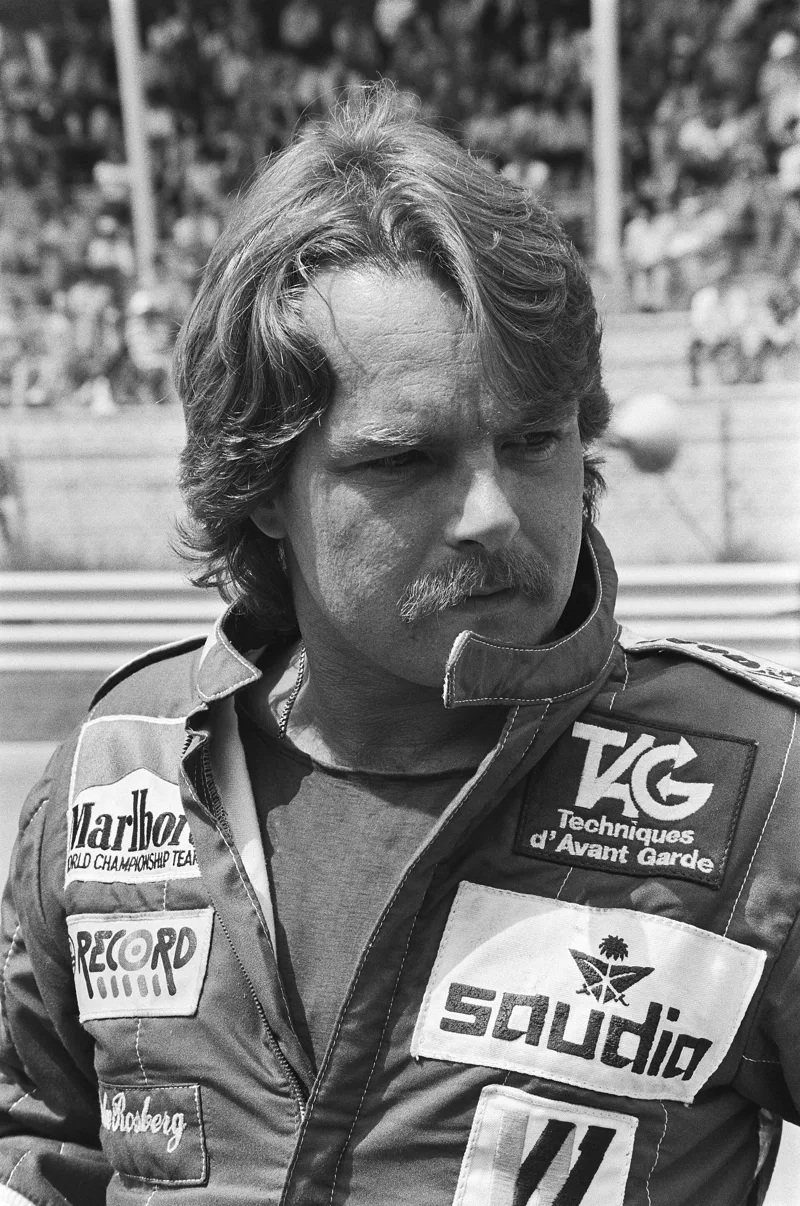
The racing debut came in the last two rounds of the 1990 season, the 480 km events at Montreal and Mexico City, with Jabouille sharing the car with Keke Rosberg. It was slower than the contemporary Group C prototypes, but clearly quicker than the other 3.5-litre prototypes racing that year.
Two Peugeot Le Mans cars, three decades apart, built for rules that left room for a bold idea.
How did the Peugeot 905 do at Le Mans?
The 905 took the 24 Hours of Le Mans in 1992 and again in 1993. The first victory went to Derek Warwick, Yannick Dalmas and Mark Blundell, the second to Geoff Brabham, Christophe Bouchut and Eric Helary. Across its whole career it started 17 races and won 9.
Getting there took a hard apprenticeship. The first full season, 1991, brought performance and reliability problems early on, and the benchmark was Jaguar's XJR-14, a car able to match the lap times of most contemporary Formula One machines. The very best F1 cars, the Williams-Renault and McLaren-Honda, were still at least 2 to 3 seconds a lap quicker than the Jaguar, which gives a sense of how close to grand prix pace this class had become. Peugeot did pick up a fortunate win at Suzuka, but at Le Mans that year both cars failed to last beyond four hours.
The answer was the 905B, a heavily revised car that kept only the cockpit of its predecessor. Most of the work went into aerodynamics: a two-tier rear wing, an optional full-width front wing and a more powerful engine, the SA35-A2. It first raced at the Nurburgring and finished the year with back-to-back one-two results at Magny-Cours and in Mexico, good enough for second place in the standings.
In 1992 the field thinned out. Only two factory efforts took on the championship, Peugeot's 905B and Toyota's TS010, which was in its first season under the 3.5-litre regulations. That meant real competition among the Group C cars was confined to Le Mans, and there the 905B delivered, bringing two of the team's three cars home first and third. The car also won both the drivers' and the team titles that season.
The following year the championship itself disappeared, though the cars were still allowed to run at Le Mans in 1993 and 1994. Peugeot had started work on a 905 Evolution 2 for the 1993 season, a car that turned a few laps in practice at the final 1992 race at Magny-Cours but was never finished. The team put everything into Le Mans with the Evo 1B and swept the first three positions. Peugeot then pulled out of sportscar racing.
What did the Peugeot 905 look like on paper?
The 905 was a compact car with a long list of Formula One-style ideas. Its 80-degree V10 had 40 valves and produced 650 PS (478 kW; 641 hp) at 12,500 rpm. The later 905B is credited with roughly 715 hp (533 kW; 725 PS).
Power went to the rear wheels through a 6-speed sequential manual gearbox, with the engine mounted behind the driver. The carbon monocoque car weighed 780 kg (1,720 lb), and it measured 4.80 metres (189.0 in) long, 1.96 metres (77.2 in) wide and 1.04 metres (40.9 in) high. Michelin supplied the tyres, in 32x63x17 and 34x70x18 sizes.
How do the Peugeot 905 and Peugeot 9X8 compare?
| Detail | Peugeot 905 | Peugeot 9X8 |
|---|---|---|
| Racing category | Group C1, built for the 1991 rules | Le Mans Hypercar, FIA World Endurance Championship |
| First race | 1990 | 2022 6 Hours of Monza |
| Engine | 3,499 cc V10, naturally aspirated | 2.6-litre twin-turbo V6 |
| Combustion output | 650 PS (478 kW; 641 hp) | 500 kW (670 hp) |
| Electric assistance | None | 200 kW (270 hp) motor on the front wheels |
| Gearbox | 6-speed sequential manual | 7-speed sequential |
| Driven wheels | Rear | Rear from the engine, front from the motor |
What happened to Peugeot between the 905 and the 9X8?
After the 1993 win, Peugeot moved to Formula One as an engine supplier. It used the same 3.5-litre V10 from the 905, which adapted easily to the grand prix rules, and from 1994 it powered McLaren until the end of the 2000 season. Results were modest, and the company switched its attention back to the World Rally Championship.
There Peugeot's factory team had won the title several times, but it withdrew its works rally operation at the end of 2005. The Le Mans return came with the 908 HDi FAP in the 2007 24 Hours. The Peugeot 9X8 was designed as the successor to the 905, the 908 HDi FAP and the 908, and it is described as Peugeot's first sports prototype in 11 years.
What is the Peugeot 9X8 Hypercar?
The Peugeot 9X8 is a sports prototype built for the Le Mans Hypercar category of the FIA World Endurance Championship. It made its debut at the 2022 6 Hours of Monza and carries a hybrid layout: a combustion engine drives the rear wheels and an electric motor drives the front.
Peugeot announced on 13 November 2019 that it would return to the championship and to Le Mans in 2022. The first race was not as early as the company hoped. Peugeot explained that the homologation process for the category ruled out an earlier start, so the debut slipped to Monza.
The name is a small piece of corporate code. According to Peugeot, the 9 stands for its high-performance models, the X for all-wheel drive and electric drive technologies, and the 8 for its contemporary models.
The Hypercar rules left room for a bold idea. A car in the category may carry just one adjustable aerodynamic element, and the FIA does not dictate which one, so Peugeot was free to leave off the rear wing completely. For the engine it chose a 2.6-litre twin-turbo V6 making 500 kW (670 hp), mated to a 7-speed sequential gearbox that drives the rear wheels. A 200 kW (270 hp) electric motor drives the front wheels, giving the car four driven wheels when both power sources are working.
Testing began in December 2021 and moved between several circuits: Algarve International Circuit, Circuit Paul Ricard, MotorLand Aragon, Circuit de Barcelona-Catalunya and Circuit de Nevers Magny-Cours. In all the car covered more than 10,000 kilometres across 25 test days. In April 2023 a Lego Technic 1:10 scale model of the car was announced, a set of 1,775 pieces released on 1 May 2023.
How has the Peugeot 9X8 raced at Le Mans and in the WEC?
The 9X8 has produced podiums and a pole position. Its podiums came in 2023 at Monza, in 2024 at Bahrain and in 2025 at the Lone Star Le Mans, and its first pole arrived in 2026 at Spa-Francorchamps.
The two cars run numbers 93 and 94, a reference to Peugeot's overall victory at Le Mans in 1993. For the 2022 6 Hours of Monza the squad named Paul Di Resta, Loic Duval, Mikkel Jensen, Gustavo Menezes, James Rossiter and Jean-Eric Vergne to share the cars, with each crew of three confirmed after testing. The two cars then contested the rest of the 2022 season, including the 6 Hours of Fuji and the 8 Hours of Bahrain finale.
2023: the wingless car
The first full season came in 2023. Rossiter did not return and Nico Muller took a seat in the number 94 car for the full year. The wingless concept worked best at the 2023 Le Mans 24 Hours and at Monza. At Le Mans the car qualified towards the back, yet led in the evening hours before heavy damage forced repairs. At Monza it finished third, the first WEC podium for the model.
2024: a rear wing arrives
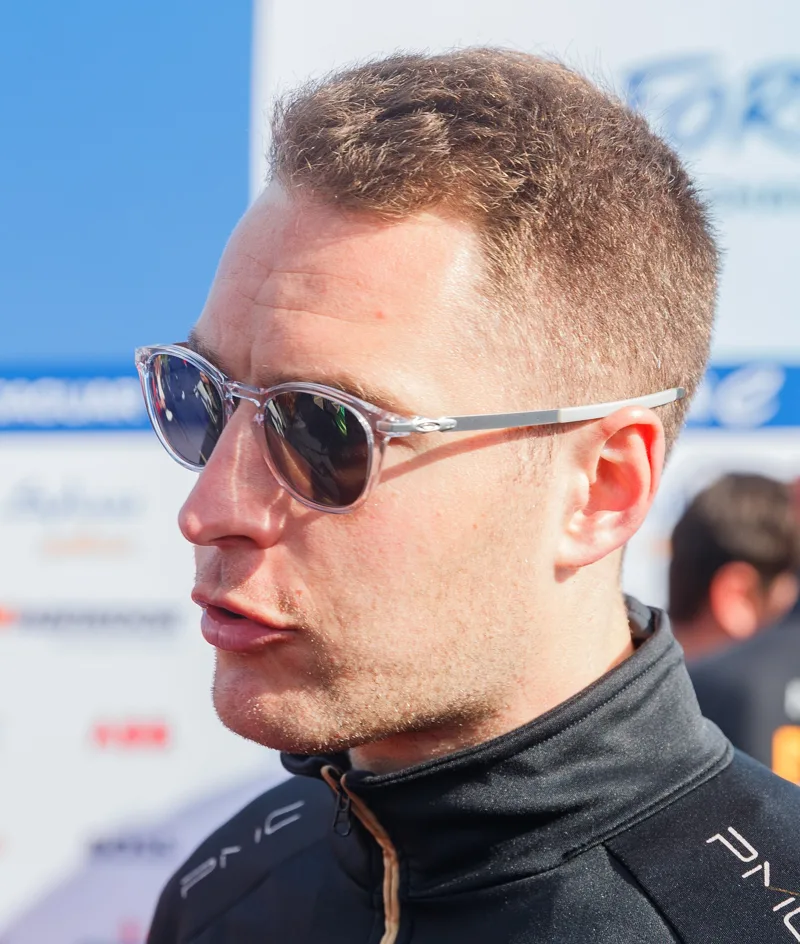
For 2024 Stoffel Vandoorne replaced the departing Menezes and both line-ups were shuffled. At Qatar the number 93 car fought for victory against the Porsche 963s of Porsche Penske Motorsport, in what is described as arguably the 9X8's most competitive race. It retired, and was later disqualified for running out of fuel on the last lap and failing to reach parc ferme.
On 25 March 2024 Peugeot presented an updated 9X8 with an added rear wing. The earlier version had proved mostly uncompetitive because of its dependence on ground effect, a way of using the shaped underside of a car to pull it towards the road. That approach suffers on uneven road surfaces such as Sebring. Peugeot also dropped its equal tyre widths: 31 cm tyres all round gave way to 29 cm at the front and 34 cm at the rear, matching its competitors.
The new concept first raced at the 2024 6 Hours of Imola and scored its first podium at the 2024 8 Hours of Bahrain.
2025 and 2026: a first pole
Malthe Jakobsen joined ahead of 2025 after Muller left. The first half of the year was difficult, and Peugeot recovered with a double points finish in Sao Paulo. At the 2025 Lone Star Le Mans the team recorded third and fourth, its best pair of results with the car and the 9X8's third overall podium.
At the 2026 6 Hours of Spa-Francorchamps, Jakobsen put the car on pole, Peugeot's first in the championship. The pace did not carry into the race. The pole-sitting number 94 faded to the midfield and retired after a collision with Iron Lynx's number 79 Mercedes-AMG GT3 Evo, while the number 93 finished seventh.
Where the Peugeot 905 and 9X8 stand in 2026
The most recent result is the 2026 6 Hours of Spa-Francorchamps, with the number 93 car seventh and the number 94 retired after its pole. Peugeot's 9X8 has run as a two-car entry in the World Endurance Championship since 2022 and has changed its aerodynamic concept once, in 2024.
The 905 started 17 races in its career and won 9, and in 1992 it took both championship titles. The 9X8 has so far added podiums at Monza, Bahrain and the Lone Star Le Mans, plus that pole position at Spa, to the Peugeot Le Mans history.