How a 1974 van became the LDV Pilot and Convoy, how the Maxus passed to SAIC, and how the LEVC TX became a common London taxi.
The LDV Pilot and Convoy were British panel vans descended from the 1974 Leyland Sherpa, and the Maxus replaced the Convoy in 2004 before SAIC took over the design after LDV failed in 2009. The LEVC TX is a Geely-owned, range-extender electric London taxi built since 2017.
Two Chinese groups now stand behind the British names that once gave the Royal Mail its vans and London its taxis. SAIC bought the intellectual property of LDV in 2010, and Geely owns the London EV Company, builder of the electric LEVC TX. Between the Sherpa-based vans of the 1970s and 1980s and today's LEVC TX lies a tangled story of mergers, administrations and rescues.
What is the LDV Pilot, and where did it come from?
The LDV Pilot was the last of a line of panel vans built from 1974 to 2005. The line began as the Leyland Sherpa, developed by British Leyland's Austin-Morris division from earlier BMC light commercials. The Pilot carried 2.2 to 2.6 tonnes in a 5.7 cubic metre (200 cu ft) load area, behind a 1.9-litre Peugeot diesel driving the rear wheels.
Its ancestors were 1960s Morris and BMC vans, the J4 and the JU250. The big step came when engineers moved the engine ahead of the cab, under a bonnet, which brought Leyland's light van into line with the Ford Transit and the Bedford CF and allowed a longer wheelbase.
The Pilot kept a narrow track because it was meant to share assembly lines with cars. Publicity later turned that into a virtue, stressing how easily the van threaded narrow city streets and lanes. It was the reason the Royal Mail and British Telecom preferred the Sherpa and its successors to the Transit for many years, and the Royal Mail in particular bought huge fleets of every generation.
A van design from 1974 stayed in production until 2006; London's newest taxi carries its own small generator.
How did the Sherpa become the LDV Pilot and Convoy?
By changing its name roughly every few years. The van was launched in 1974 as the Leyland Van, then wore Leyland, Morris, Austin-Morris and Freight Rover badges in turn. The names reflected the turbulent times at British Leyland in the 1970s, and they kept changing as owners did.
| Period | Narrow van | Wide van |
|---|---|---|
| 1974-1982 | Sherpa | - |
| 1982-1984 | Sherpa K2 | - |
| 1984-1989 | Freight Rover 200 Series | Freight Rover 300 Series |
| 1989-1993 | Leyland DAF 200 Series | Leyland DAF 400 Series |
| 1993-1996 | LDV 200 Series | LDV 400 Series |
| 1996 onwards | LDV Pilot (to 2005) | LDV Convoy (to 2006) |
The Sherpa years
The first Sherpa range was sold as vans in 185, 215 and 240 versions, where the number gave the gross vehicle weight, 185 meaning 1.85 tons. There were pick-ups, a crewbus and minibus, and chassis cabs. The load space of 5.4 cubic metres (190 cubic feet) was much larger than the J4's. In 1978 the 1.7 and 2.0-litre O series petrol engines replaced the old B series petrols, and the 1.7 gave 45.5 kW (61 bhp; 62 PS). The bigger petrol cost a mere extra 50 pounds and drove far better at the same fuel consumption.
With exports falling and the Transit taking sales, British Leyland even considered quitting the sector. It chose a limited update instead, and the Sherpa K2 arrived in June 1982 with a neater look, a black slatted grille that echoed the Range Rover, and much better side access to the load bay. A forward-leaning B-pillar inherited from the Morris J4 body had obscured the driver's view, so new doors and a revised pillar fixed that. A taller walk-through body offered 330 cubic feet (9.3 m3), a Luton body lifted space to 460 cubic feet (13 m3), and a four-wheel-drive van joined the range.
Freight Rover to the Pilot
The next facelift brought square headlamps and new bumpers, and the van became the Freight Rover 200 Series, alongside a wide-bodied 300 Series. In November 1986 the old B series diesel gave way on the 200 to the Rover MDi, also sold as the Perkins Prima. It was noisy and raucous, but reliable and frugal; as a city van it was adequate, yet it was unsuitable for motorway work.
The Rover Group left the sector in 1989 when Freight Rover was sold, and the 200 Series became the Leyland DAF 200 Series. The last of those switched to the less economical but more refined PSA XUD 1.9-litre diesel. When LDV Limited was formed in 1993 from the insolvent Leyland DAF's van business, the narrow van was briefly the LDV 200 Series. In 1996 a major facelift brought softer front styling, a redesigned dashboard and seats, and the new name of Pilot.
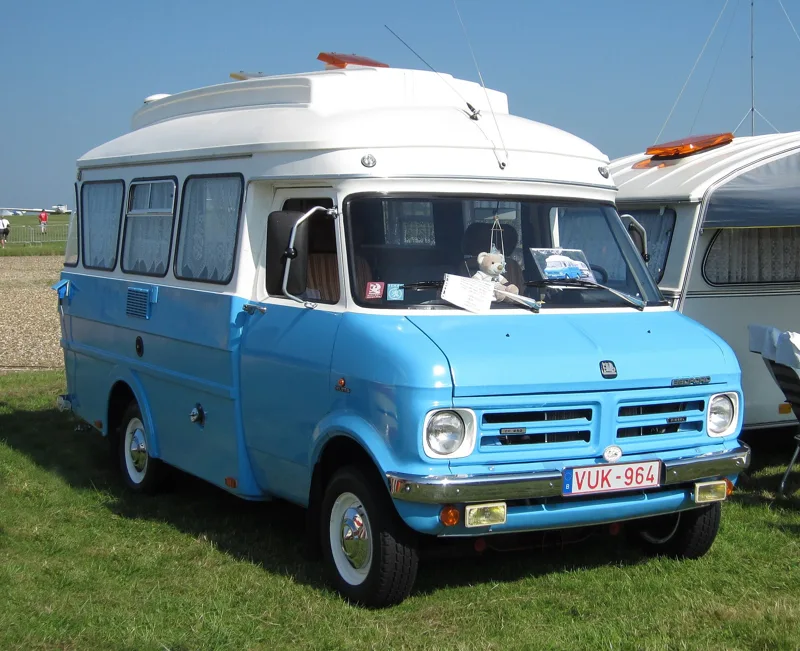
The Pilot was popular as a minibus and came as a pick-up and a fleet van, and the army used it to carry troops. Every Pilot used the Peugeot 1905cc diesel, which made it sluggish and limited it to 75 mph (121 km/h) apart from a turbocharged version that drove far more satisfyingly. Gears were selected with a floor-mounted lever.
What was the LDV Convoy?
The LDV Convoy was a light commercial van built from 1983 until 2006, a wider and longer relative of the Freight Rover Sherpa. It started life as the Sherpa 285, 310 and 350, became the Leyland DAF 400 Series in 1989 and the LDV 400 Series in 1993, and took the Convoy name in 1996.
The original 300 Series came in three wheelbase lengths, with load capacity from 7.6 m3 (270 cu ft) to 11.4 m3 (400 cu ft), and a minicoach version seated up to 18 people. From 1986, after a special police contract, a Rover 3.5-litre V8 became available that proved popular with emergency services and express delivery firms.
The 1996 Convoy
Ogle Design facelifted the 400 in 1996 and renamed it the Convoy, with new bumpers, a new bonnet and headlamps 40% brighter than before.
What operators liked was practical. The track was narrower than the Transit's, so the van squeezed down alleys and country lanes. It was simple enough to diagnose and repair that a clutch job took little more than two hours, service came every 15,000 miles on most models, tyres were easy to find, and the van was built in the United Kingdom. Those qualities earned the Convoy a 10.5% market share in 1998 and loyal buyers in the Royal Mail and local authorities.
The Convoy came in 2.8, 3.1 and 3.5-tonne forms, the heaviest on dual rear wheels, with load volume of up to 12.9 cubic metres. It could be had as a crew cab seating up to seven, a pick-up or a fleet van, and undercut every other full-size van on sale in Britain. Reviewers rated the load capacity as best in class, but they criticised the handling in the wet when empty and a ride they called primitive.
Minibuses, school buses and coachbuilding
LDV's Specialist Vehicle Options division coachbuilt directly in the Washwood Heath factory in Birmingham, which suited ice cream sellers, fire brigades, tow truck operators and disabled users.
The chassis became hugely popular as a minibus. Factory conversions let customers buy a fully type-approved minibus without a separate coachbuilder, the first business of its kind in the United Kingdom. The in-house 17-seater was the only one in the country with a low roofline, which suited operators who parked in a garage, and LDV took around 60% of the UK market for that size.
For schools, LDV built a standard-specification minibus in reflective school livery, with ABS, orange flashing lights, a reversing siren and child-sized three-point belts. It followed a survey of 31,000 schools and was unveiled at the 1998 British Motor Show, with free training for three drivers included. It earned a reputation as the king of the primary schools.
Engines, ambulances and aftercare
Early Convoys used Peugeot engines, praised as economical, but from 1998 most engines came from Ford, including the York "banana" diesels that reviewers called dated and noisy yet dependable. The Ford Duratorq direct-injection diesel that arrived in 2002 had a non-optional turbocharger and, with an optional intercooler, rose from 75PS to 90PS.
A factory LPG conversion of a Ford petrol engine, making 115PS, appealed to police who wanted power without the V8's running costs. The general warranty on those vans fell from 150,000 miles to 60,000 miles.
The V8 survived in detuned 3.5-litre form at 135hp, mostly as an ambulance with coachwork by the Universal Vehicle Group. A planned 3.7L upgrade never happened because of brake problems. Fuel consumption was shocking, rarely reaching double figures in miles per gallon in town. From around 2003 ambulance trusts began switching to Mercedes-Benz Sprinters with powerful diesels, which the Convoy never offered, and which came with a hydraulic tail lift where Convoy crews had to lift patients by hand.
Parts shared with older British Leyland cars made spares easy to find. By the end, though, reviewers sneered at the interior as a raid on the old British Leyland parts bin, although others called it durable, simple and no-nonsense. The van won What Van's Best Minibus in 2000, 2001 and 2002, plus the Prince Michael Road Safety Bus and Truck Award in 2000.
The end of the Convoy
By the mid-2000s the platform, which dated back to 1974, was hopelessly dated against its rivals. The Transit alone had been completely redesigned twice during the whole life of the Sherpa, Freight Rover, Pilot and Convoy series, and buying running gear from rivals such as Peugeot and Ford dented profitability. The last Convoy was built in 2006, and the Maxus replaced it.
What was the LDV Maxus?
The LDV Maxus was a light commercial van launched at the end of 2004. It was developed by LDV and Daewoo Motor under the LD100 programme in a five-year, 500 million pounds effort that began before Daewoo entered receivership in November 2000. It was meant to replace the Convoy and Daewoo's Lublin II.
A narrower derivative to replace the Pilot, called the BD100, was partly developed but never reached production. After General Motors took over Daewoo, LDV secured exclusive rights, bought the tooling and moved the van from Daewoo's Lublin plant in Poland to Washwood Heath in Birmingham. GAZ in Russia also made a version.
Critics liked it, and it sold well across the UK, with fleet buyers including National Grid, Royal Mail and police services. It was named Van of the Year 2005 by Professional Van and Light Truck magazine. The Maxus came in two wheelbases, three roof heights and 2.8t, 3.2t and 3.5t weights, as a multi-purpose van, a 10, 12, 15 or 17-seat minibus, or a chassis cab.
How LDV collapsed
In July 2006 the Russian group GAZ bought LDV, planning to build the Maxus in one of its own Russian factories by 2010. Instead, LDV went into administration in June 2009 after GAZ failed to provide funds, and about 800 workers were laid off. Weststar LDV of Malaysia, the licensed Maxus distributor for Asia, Europe and the Middle East, had been expected to buy it, but the deal fell through the week before administration.
In 2008 LDV built 10,000 vans for sales of around 150 million pounds, but it lost 54 million pounds across 2008 and the first quarter of 2009. SAIC of China bought most of LDV's assets in August 2010 and aimed to launch a Chinese Maxus in 2011. In March 2011 it launched a new commercial vehicle marque named Maxus, and the original van was relaunched as the V80 in June 2011.
What happened to the Maxus V80?
The Chinese-built V80 appeared in summer 2011 under the Maxus marque in standard, logistics and deluxe versions. A minibus took 7 to 16 seats, there were two wheelbases, and the 2.5-litre diesel came in 88 kW (118 hp) and 100 kW (134 hp) forms. Exports to English-speaking countries carry the LDV brand.
Australia and New Zealand got it first in 2012. Thailand followed in 2013, Colombia in May 2014, Ireland in May 2015 and the United Kingdom in 2016. In Thailand since March 2019 it has been the MG V80, with a 2.5-litre VM Motori diesel-turbo giving 100 kW (136 PS) and 330 N.m (243 lb.ft). In November 2023 the Chinese market received a major update for the 2024 model year, named the Xintu V80.
Hydrogen and battery versions
The FCV80, a plug-in hybrid fuel cell passenger van, appeared in November 2017 at the Guangzhou International Automobile Exhibition. Its range is 305 kilometres (190 mi), and it seats 10 to 14. Sales in 2020 were 297 vehicles.
The EV80 and EV80 Plus electric vans, launched in China with the EV90 in August 2020, share a permanent-magnet synchronous motor that makes 120kW and 280N.m. Lithium iron phosphate batteries of 51.5, 53 and 71kWh give a pure electric range of 202 to 250km. The EV80 Pro of 2023 keeps the motor but has a 77kWh battery that charges to 80% in 43 minutes, with an official range of 320km, and a completely different front end.
What is the LEVC TX taxi?
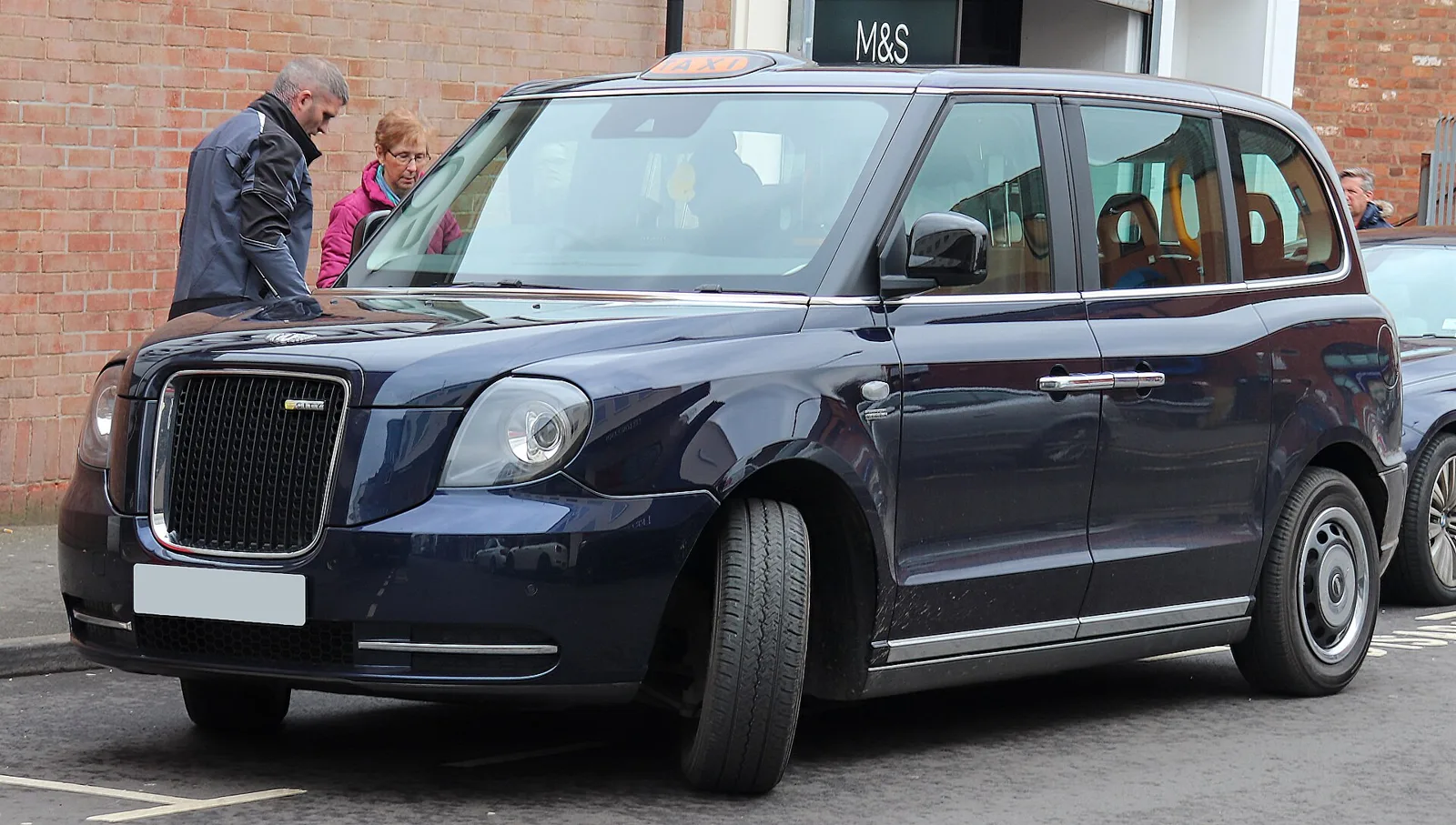
The LEVC TX, previously called the TX5, is a purpose-built London taxi made by the London EV Company, a subsidiary of Geely. It is a plug-in hybrid with a range-extender, and the latest in a long line of hackney carriages built by LEVC and its predecessors.
It exists because of regulation. Transport for London's rules banned new diesel taxis from January 2018, so new additions had to be capable of zero emissions. By February 2018 the TX was the only taxi that met the rules.
Geely was already talking in the late 2000s about converting London's black cabs to electric power. Starting in 2014, Geely put 480m pounds into LEVC for a new taxi and a new plant near Coventry, aiming for 36,000 vehicles a year. Production began in 2017.
How the LEVC TX works
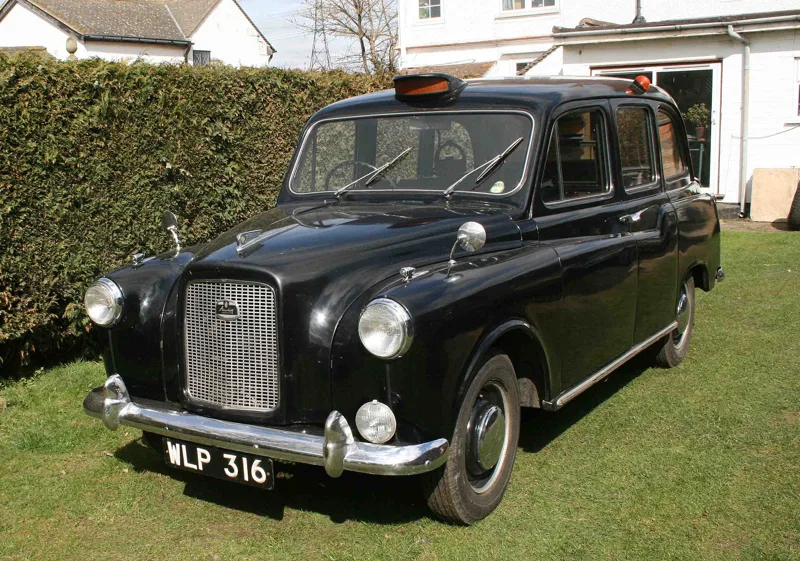
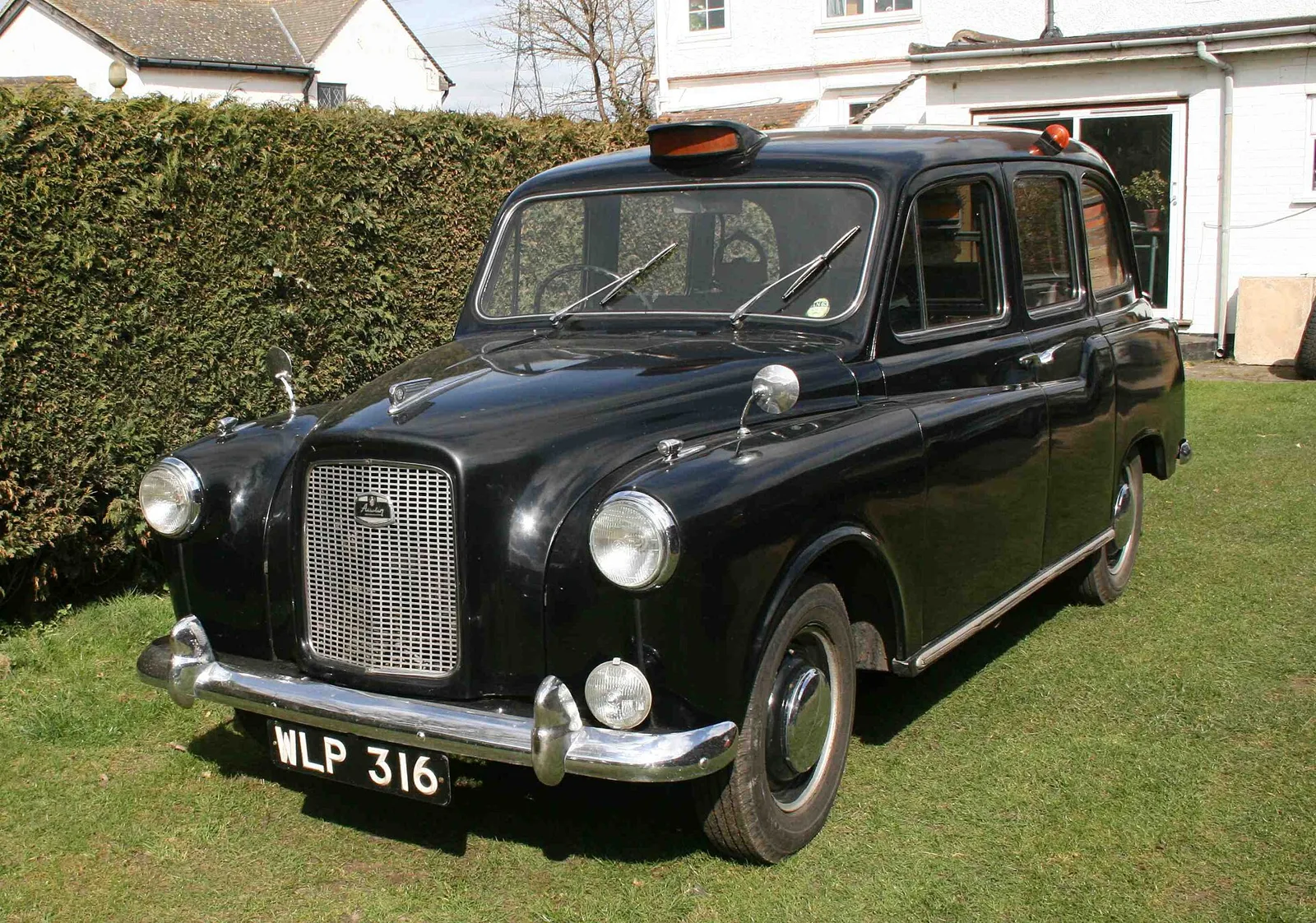
Underneath is a platform unique to the TX, with a bonded aluminium chassis made in Britain. By value, 32 percent of the parts are localised; Chinese and European content each make up 32 percent, and American content 4 percent. The styling evolves the shape started by the Austin FX4 of 1958 and the TX1, TXII and TX4 that followed, and the back-hinged doors that vanished with the FX4 are back.
Think of the drivetrain as an electric car carrying its own small generator. The wheels are driven only by a 110-kilowatt (148 hp; 150 PS) Siemens electric motor, so the TX runs on electric power all the time. A 33 kilowatt-hour (120 MJ) battery from LG Chem feeds it, and when the charge runs out, a petrol engine bought from Volvo, a turbocharged 1.5-litre three-cylinder rated at 81 horsepower (60 kW; 82 PS), works as a generator, topping up the battery rather than driving the wheels. In that mode the maker claims 36.7 mpg-imp (7.7 L/100 km; 30.6 mpg-US).
The charge connectors sit either side of the radiator grille: a CCS socket taking 50 kW DC or 22 kW AC, and an optional CHAdeMO connector taking 50 kW.
A taxi has to turn tightly, and the TX does so with a turning circle of 8.45 metres (27.7 ft), a radius of 4.23 metres (13.9 ft), which is possible because the front wheels can swing through up to 63 degrees, against a typical 38. Passengers get a wheelchair ramp that the driver deploys, extra-large doors, grab handles in high contrast and an audio induction loop.
Where it sells
By April 2022 over 5,000 TXs had been sold in London, about a third of the taxi fleet, and in May 2022 LEVC said over 7,000 had been sold worldwide. By March 2023, 10,000 had been built. By December 2023 more than half of London's taxis were zero-emission capable, the majority of them TXs.
Outside the capital, the TX is a taxi in Austria, Denmark, France, Germany, Gibraltar, Poland, Spain and Switzerland, and further afield in Australia, Azerbaijan, China, India, Israel and Japan. Taxis went to Baku Taxi Service in Azerbaijan in March 2020. The LEVC VN5 panel van is a plug-in hybrid built on the TX.
What became of the Sherpa line, the Maxus and the TX?
Geely's hope of building 36,000 taxis a year was the ambition behind the factory near Coventry; by March 2023, 10,000 had been built. LEVC announced plans for Japan in January 2020, with deliveries reported for the second quarter of that year. In China the V80 line keeps moving, with the Xintu V80 for the 2024 model year and the restyled EV80 Pro of 2023. The Maxus name now lives on under SAIC, and the Sherpa line ended with the Pilot in 2005 and the Convoy in 2006.