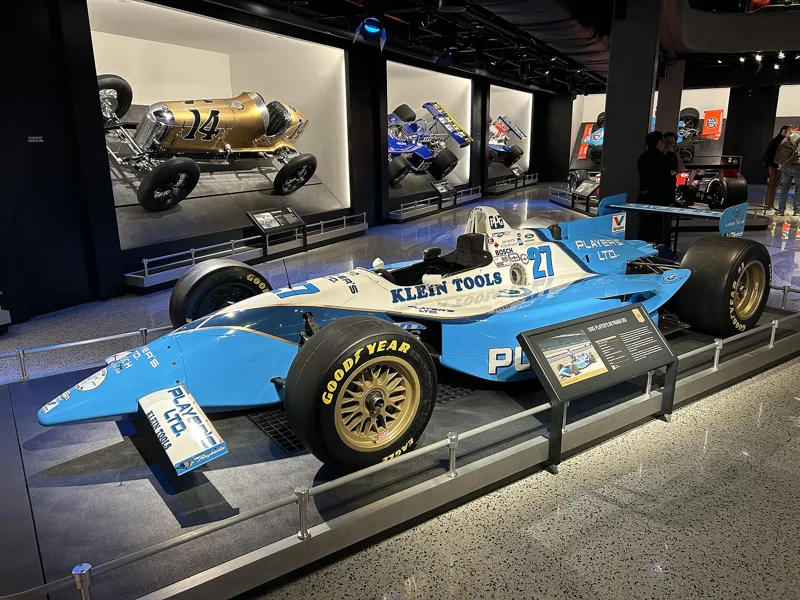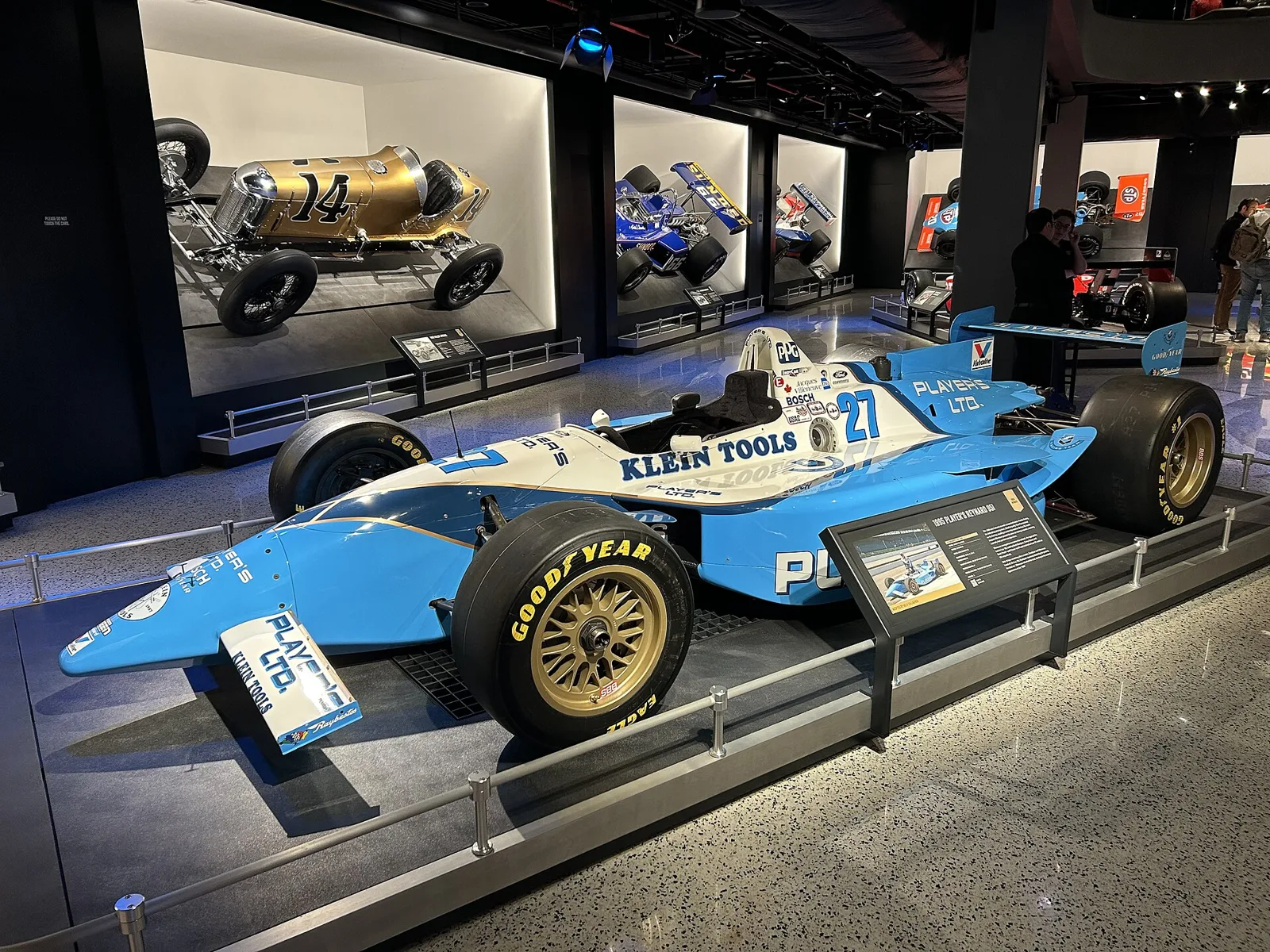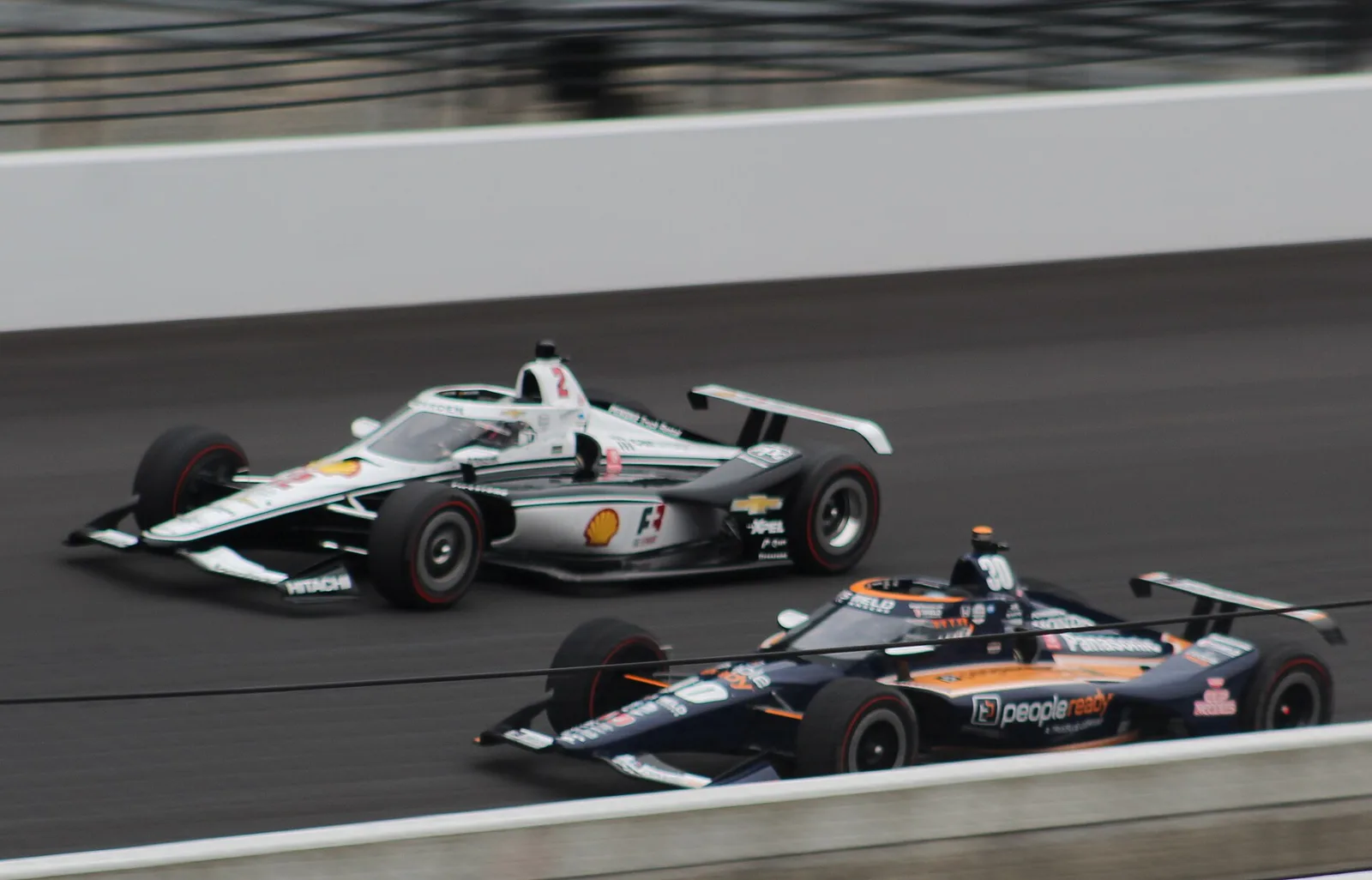
A hand-built American flop, a Reynard that won on debut, a Panoz-built winner of two Indianapolis 500s and the Dallara that has outlasted every IndyCar chassis before it.
The Dallara DW12 has been IndyCar's standard chassis since 2012. The G-Force GF09 won the 2003 and 2004 Indianapolis 500s, the Reynard 94I won its first CART race in 1994, and the Rahal-Hogan RH-001 started 43 races without a win and missed the 1993 Indianapolis 500.
No IndyCar chassis has stayed in service longer than the Dallara DW12, a car that first raced in 2012, and its planned successor has just slipped to 2028. Behind it sit three older designs, each from a different moment in American open-wheel racing: a hand-built flop, a rival that won on debut and a Panoz-badged winner of the Indianapolis 500.
What is the Dallara DW12?
The Dallara DW12, formally the Dallara IR-12, is an open-wheel racing car built by Italian manufacturer Dallara for teams in the IndyCar Series. It was first used in 2012 and took over from the IR-05, a chassis that was nine years old by then. No IndyCar chassis has been in use for longer.
Each chassis costs $349,000 under a deal the series negotiated. From 2015 Honda and Chevrolet have sold rival aero kits to teams in place of Dallara's, though the central structure is still the same Dallara tub.
No IndyCar chassis has been used for a longer period of time.
How did IndyCar's 2010 rethink lead to the DW12?
In 2010 the Indy Racing League drew up the ICONIC Plan, a title built from six words: Innovative, Competitive, Open-wheel, New, Industry-relevant and Cost-effective. The committee included Randy Bernard, then IndyCar's chief executive, along with Brian Barnhart, the retired Indianapolis 500 winner Gil de Ferran, Tony Purnell and Eddie Gossage.
Swift, Lola, DeltaWing, Dallara and BAT Engineering all put in bids. Organisers announced on 14 July 2010 that Dallara had won. It replaced cars that had raced through 2011: IR-05s in 2003 and 2007 versions, powered by naturally aspirated V8 engines that the rules had required since 1997.
The idea was to split the car in two. Every team would run the same core rolling chassis, the IndyCar Safety Cell, capped at $349,000 and assembled at a new Dallara plant in Speedway, Indiana. On top of it, teams would bolt body parts known as Aero Kits: wings, sidepods and engine cowlings. Any manufacturer could sell a kit, but had to offer it to every team below a price ceiling of $70,000. Purnell invited carmakers and firms such as Lockheed Martin and GE to try.
Cost killed the first plan. On 30 April 2011 team owners voted 15-0 against allowing multiple aero kits in 2012. In August that year IndyCar confirmed they would wait until 2013 for economic reasons, even though Chevrolet and Lotus had already said they intended to build kits. In the end, everybody ran the Dallara package in 2012.
Why is the DW12 named after Dan Wheldon?
Wheldon, the 2011 Indianapolis 500 winner, ran the first official test of the new chassis at Mid-Ohio on 8 August 2011. More testing followed at Barber, the Indianapolis road course, Iowa and Indianapolis. In early October, Scott Dixon for Honda and Will Power for Chevrolet began a second phase of running.
Then came 16 October 2011 and the final race of the IR-05 era at Las Vegas Motor Speedway, where Wheldon was killed. A scheduled Las Vegas test was cancelled, and Dallara decided to call its 2012 car the DW12 in his honour. The practice was borrowed from Ligier, whose JS cars carry the initials of Jo Schlesser, killed in the 1968 French Grand Prix.
The car's design reflected that history. It added part-enclosed rear wheels and a reshaped nose section, both intended to stop the kind of single-seater crash that killed Wheldon.
How has the DW12 changed since 2012?
Its first race was St. Petersburg's 2012 Honda Grand Prix, held on 25 March, with Team Penske's Will Power on pole and Helio Castroneves taking the first win. The Indianapolis 500 debut came two months later. Across the car's first three runnings of that race there were 136 lead changes, including a track-record 68 in 2013.
In 2015 the universal Dallara kit gave way to separate designs from Honda, working with Wirth Research, and Chevrolet, working with Pratt & Miller. Chevrolet teams won all but six races that year. But three Chevrolet entries flipped at Indianapolis, which pushed back pole qualifying, led to tweaked rules and prompted a safety review over the winter. Both makers revised their kits mid-season, with Honda dropping front wing endplates for safety reasons and Chevrolet adding a winglet.
For 2016 the cars gained domed skids, and Zylon tethers to keep loose bodywork from flying off a car and striking another. Those tethers followed the death of Justin Wilson, who was hit by loose bodywork at Pocono in 2015. Honda cut its front wing from three stacked elements to two, and the Chevrolet kit was less dominant than the year before. A development freeze followed in 2017.
The reset came in 2018 with the Universal Aero Kit, or UAK-18. The base Dallara tub stayed as it was, but the airbox and the rear-wheel guards were removed, because research and results showed the guards did little against big crashes and broke easily. More downforce was meant to come from ground effects than from wings, and the looks drew on 1980s and 1990s Indy cars. Teams also saved money, since the same chassis could take kits for road courses, street circuits, short ovals and superspeedways.
Inside the cockpit, entrants moved to a Cosworth CCW Mk2 steering wheel and Configurable Display Unit 4.3 dashboards, although some smaller teams kept their older Pi Research Sigma Wheel for another year to save money. Seats were reprofiled and the cockpit became slightly longer and wider. Scott Dixon tested the aeroscreen at ISM Raceway on 9 February 2018 and Josef Newgarden at Indianapolis on 30 April 2018. Advanced Frontal Protection arrived at the 2019 Indianapolis 500, and the Aeroscreen, developed by Red Bull Advanced Technologies, followed in 2020.
| Chassis | Builder | Period | Defining fact |
|---|---|---|---|
| Rahal-Hogan R/H-001 | Truesports, then Rahal-Hogan Racing | 1991 to 1993 | 43 CART starts, no wins; missed the 1993 Indianapolis 500 |
| Reynard 94I | Reynard Racing Cars | 1994 and 1995, then the Indy Racing League in 1996 and 1996-97 | Won its first CART race; holds Indianapolis lap records |
| G-Force GF09 | G-Force Technologies, then Panoz | Winners in 2003 and 2004; last seen in 2008 | Two Indianapolis 500 wins and a 2003 title |
| Dallara DW12 | Dallara | 2012 onwards | $349,000 per chassis; longest-serving IndyCar chassis |
What was the G-Force GF09?
The G-Force GF09 was built by Elan Motorsport Technologies for Panoz, on groundwork laid by G-Force Technologies before Panoz bought it. The version that saw the most use was the GF09B, and the Panoz GF09C came after that. Later cars carried the Panoz name.
Its glory years were 2003 and 2004. Gil de Ferran won the 2003 Indianapolis 500 in one, and Buddy Rice repeated the feat in 2004 in the same model. The GF09 also helped Scott Dixon take the 2003 IndyCar championship.
The end was quiet. Every IndyCar Series team eventually chose the Dallara IR-05, so Panoz effectively withdrew after the 2008 season and put its efforts into sports car endurance racing. The last GF09 sighting came in 2008 Indianapolis 500 practice, where Phil Giebler of American Dream Motorsports crashed his Panoz and failed to qualify.
Why does the Reynard 94I still matter at Indianapolis?
Designed by Malcolm Oastler from November 1992, the Reynard 94I was briefed as a straightforward, well-engineered car that would be easy to set up and service, with a thoroughly developed aero package. Its starting point was an unused Galmer G93 design that Reynard had bought. Bruce Ashmore, previously with Lola, arrived late as technical director and added Indy car experience.
Reynard borrowed from its F3000 cars, including the dynamic suspension shocks and a longitudinal gearbox, whereas rivals Lola and Penske used a transverse one. It also set up a technical base in Indianapolis and kept its office and service staff open to customers, while other makers were mostly still in England. Bicester, England, was where all 14 cars for 1994 were built.
The reward came at once. Michael Andretti won the opening race at Surfers Paradise for Chip Ganassi's team from 2nd on the grid, making it the first CART race the model entered, and won again at Toronto. Jacques Villeneuve, a rookie, scored his first victory at Road America for Forsythe-Green. Even so, teams reported the car was too pitch-sensitive, which the 1995 Reynard 95I set out to fix.
The 94I was far from finished. Its tub matched the 95I's, so smaller teams could update it to 1995 specification, and Project Indy, Arciero-Wells, Pagan Racing and sometimes Ganassi used it that year. Stefan Johansson qualified for the 1995 Indianapolis 500 in one after his Penske chassis proved slow. In 1996 the new Indy Racing League allowed all cars built to 1995 rules, so more 94Is lined up, mostly from Hemelgarn, Pagan and Treadway Racing.
That is where its records come from. Treadway engineer Tim Wardrop set up Arie Luyendyk's car so well that Luyendyk took the all-time unofficial lap record at Indianapolis, 239.260 mph, plus a one-lap record of 237.498 mph and a four-lap record of 236.986 mph. All three still stand. He also won from pole at Phoenix and took pole at Las Vegas in 1996.
What went wrong with the Rahal-Hogan RH-001?
It began as an American patriotic project. In 1989 Truesports president Steve Horne ordered an Indy car billed as "Made in America", the first since the 1986 Eagle. Chief engineer Don Halliday headed the design team, with Gary Grossenbacher on aerodynamics, and the car was built in Hilliard, Ohio. Ohio State University let the team open a former US Air Force wind tunnel at Port Columbus, six miles from the workshop.
The Truesports 91C was shaped around driver Scott Pruett, who had joined in 1989. A testing crash in 1990 kept him out for the whole season, so new safety features designed with Dr Terry Trammell, CART's director of medical services, went into the car. It had an all-composite tub whose layers were laid by hand over a tool instead of being formed in a mould, with separate body panels. The thinking was that this gave structural benefits and room for aero changes.
The engine let it down. John Judd's V8 was underpowered and the transverse gearbox was unreliable. Even so, in 1991 Pruett qualified in the top 10 in 13 of 17 races and finished 10th in the championship with 67 points. Road and street courses suited it, including 3rd on the grid at Portland and 4th places at Toronto and Mid-Ohio, but superspeedways exposed the power deficit. Customer team Robco entered nine races with rookie Brian Till in 1992 for eight points and then dropped out.
For 1992 Truesports switched to the Ilmor-Chevrolet A engine and renamed the car the 92C, with a higher nose and a Corsair wing, and the nickname Eagle. Halliday said it logged hundreds of hours in the tunnel. It showed early promise, with Pruett 7th at Phoenix and 3rd on the grid at Long Beach. After Horne left in June, the team announced it would close at season's end and development stopped. Pruett finished 11th with 62 points, his best finish being 4th at Vancouver. He later said the car did not handle and never really did anything, and $4 million had been spent on developing it.
Bobby Rahal and Carl Hogan took it on anyway. Late in 1992 they chose to develop the Truesports chassis rather than run Lola, after Rahal tested it at Mid-Ohio and saw potential. Halliday and Grossenbacher joined them, the car was fitted with the Ilmor-Chevrolet 265C engine and renamed the R/H-001, and it appeared in black-and-yellow Miller colours. It crashed at a Phoenix test in November 1992.
At the 1993 opener in Australia, Rahal started 13th and finished 6th, though more than a second off Pruett's pace in the same car a year earlier. Long Beach gave the chassis its best result, a 2nd place. Then came Indianapolis. Rahal waved off a first attempt at 214.179 mph on 15 May and later averaged 217.140 mph, saying the car was extremely sensitive to the weather and handled worse the hotter it got. With 15 minutes of Bump Day left, Eddie Cheever bumped him with 217.599 mph. A late run in the spare car, at 216.342 mph, fell short.
A planned all-new R/H-002 for June was cancelled. Rahal moved to a Lola, while Mike Groff drove an R/H-001 in Miller Genuine Draft Light colours in selected races, scoring points in three and leading a lap at Milwaukee.
When will the DW12 be replaced?
The UAK-18 car, with its twin-turbocharged V6 and the aeroscreen, was originally due to be retired at the end of 2023 and replaced by a hybrid powerplant for 2024. Series officials delayed the hybrid rollout until July 2024, so the 2023 package was used for the first races of that season, including the Indianapolis 500.
The hybrid units come from German manufacturer Mahle, which has supplied power units to categories such as the DTM. The delay from 2023 was blamed on the impact of the COVID-19 pandemic on manufacturing capacity and on Chevrolet and Honda wanting more time for testing. A hybrid system for the existing 2.2 litre V6 engines was introduced at the 2024 Honda Indy 200 at Mid-Ohio, pairing an electric motor rated at 60 hp (45 kW) and 33 lb ft (45 N m) with a 60-volt capacitor storing 320 kJ (90 Wh).
An announcement on 16 December 2024 said the series and Dallara would confirm a successor from 2027 onwards, with the DW12 due to retire after the 2026 season. That was later delayed to 2028. The IR-28 is the planned car, and its arrival has slipped because of slow engine production, supply chain hold-ups and money problems.
Has the DW12 been involved in a fatal accident?
The DW12 is the second Dallara IndyCar chassis to see a fatality. It happened at the 2015 ABC Supply 500 at Pocono Raceway, where Justin Wilson died after Sage Karam's crashed car sent a nose cone into his helmet. It remains the last fatality in the series.