From a Gremlin in 1970 to the Civic Type R and electric rivals, the cars that made small and fast a category of its own.
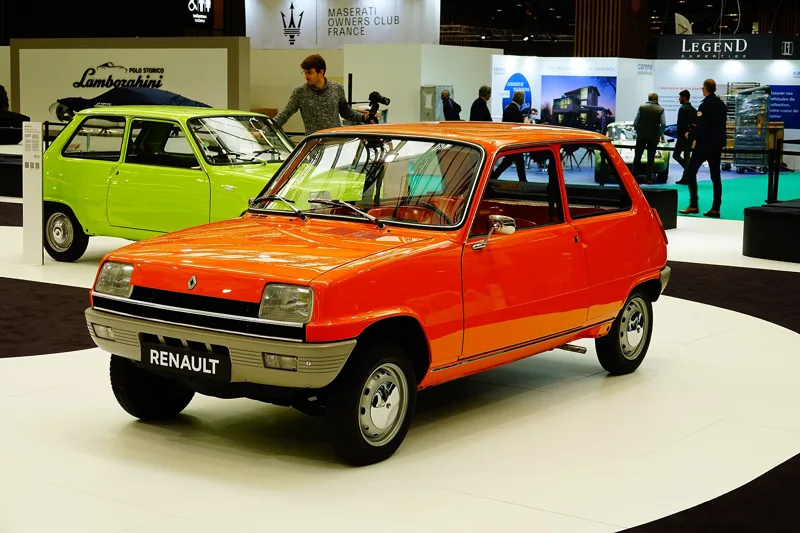
A hot hatch is a quick, sporty hatchback, a term that took hold in the UK in the 1980s. The Volkswagen Golf GTI, released in 1976, is credited with making the genre popular, and later rivals include the Renault 5 Alpine, Honda Civic Type R and Hyundai i30 N.
Volkswagen had little appetite for a fast Golf, so a handful of its own engineers built one on the quiet. That small act of defiance became the Golf GTI, the car usually credited with making the hot hatch a mainstream idea.
What is a hot hatch?
A hot hatch is the high-output version of a hatchback, with the name clipped from hot hatchback. Sportier factory versions of small hatchbacks have existed since the 1970s, but the term only took hold in the mid-1980s. The usual recipe is a front engine driving the front wheels on petrol, and most hot hatches come from Europe or Asia.
The words themselves are younger than the cars. People in the United Kingdom began saying hot hatchback in 1983 and shortened it to hot hatch in 1984, and The Times printed it for the first time in 1985. Enthusiasts now apply the label backwards to late-1970s cars that nobody called that at the time. Most hot hatches use a two-box body, though a few sloped liftback shapes blur into sports saloon territory.
A softer category exists beneath it. From the 1990s into the 2000s, warm hatch became the name for sporty hatchbacks that are slower than a hot hatch, a sort of junior version. Examples are the Mini Cooper (below the Cooper S), the Peugeot 207 GT (below the 207 GTi), the Suzuki Swift Sport and the Toyota Yaris SR.
Volkswagen had little appetite for a fast Golf, so its engineers built one on the quiet.
Which car was the first hot hatch?
It depends on the definition. The 1961 Mini Cooper had a small body and front-wheel drive, two key hot-hatch traits, but it was not built as a hatchback until 2001, so it does not qualify. The first car to meet the criteria was American: the AMC Gremlin, introduced on 1 April 1970 and promoted as America's first subcompact.
It came with a 3.3 L straight-six, a 3.8 L option and, by the 1972 model year, a 5 L V-8. AMC marketed it on its performance and radical design. Set beside the Beetle, it was longer by two inches, matched its economy and undercut it by $1 in the eastern United States, and its standard engine made 128 horsepower, over double the Volkswagen's output.
Europe's first came in September 1971, the Autobianchi A112 Abarth, prepared by the motorsport division of the Fiat Group. Its 982 cc engine gained capacity from a longer stroke and was paired with a sporting exhaust, a twin-choke carburettor and a different camshaft.
Early hot hatches by the numbers
| Car | Year | Power | Performance |
|---|---|---|---|
| Simca 1100 Ti | 1973 | 82 hp (61 kW), up 40% | 0-60 mph in under 12 seconds, 169 km/h (105 mph) |
| Alfa Romeo Alfasud Ti | 1973 | 68 PS (50 kW; 67 hp) | 160 km/h (99 mph) |
| Renault 5 Alpine | 1976 | - | 0-60 mph in under 10 seconds, 177 km/h (110 mph) |
| Vauxhall Chevette HS / HSR | 1978 | 135 bhp / 150 bhp | Built for competition |
| Lotus Sunbeam | 1979 | 150 bhp (112 kW) | 0-60 mph in 6.6 seconds |
The Simca also gained front disc brakes, spoilers and alloy wheels, and the Alfasud Ti added a five-speed gearbox and a Weber twin-choke carburettor to its 1.2 litre engine. The Renault 5 Alpine, sold in the UK as the Gordini, went on sale in May 1976. Two cars were built purely for competition: the Chevette HS and HSR used a 2.3 litre 16-valve slant-four, and the Lotus Sunbeam of 1979 used Lotus's 1973 cc 16V slant-four. The Sunbeam drove its rear wheels and still counts as a hot hatch.
How did the Golf GTI start a culture?
The Volkswagen Golf Mk1 was the replacement for the Beetle. Giorgetto Giugiaro's Italdesign styled it, and it reached European showrooms in May 1974, marking Volkswagen's move away from rear-mounted air-cooled engines toward front-wheel drive with water cooling up front. The two-box body, transverse engine and steep hatch made it a natural base for a sporting version.
Volkswagen was in no mood for one. Beetle sales had slumped, and the company posted a loss of DM 807,000,000 in 1974. A fast Beetle called the GSR, the Yellow-Black Racer, had drawn a negative political reaction in 1973, which left Volkswagen with little appetite for a faster Golf. Anton Konrad, head of the press department, and engineer Alfons Lowenberg began work on a quick Sport Golf off the books, outside any official programme. Others joined them: Gunter Kuhl, Hermann Hablitzel, who slipped parts from the project into routine tests, suspension specialist Herbert Schuster, Jurgen Adler, whose chassis analysis led to reinforcements, and Franz Hauk, who had developed the EA827 engine. Horst-Dieter Schwittlinsky from marketing coined the GTI name. Their first prototype was based on a Scirocco, not a Golf.
Volkswagen unveiled the Golf GTI at the 1975 Frankfurt Motor Show and put it on sale in July 1976. It was meant at first only for West Germany. Exports of left-hand-drive cars began in 1977, and right-hand-drive production followed in 1979. The GTI is credited with establishing the popularity of the hot hatch. Together with the Renault 5 Alpine it created a market for small, practical hatchbacks with performance to rival the coupes of the day: the Renault 17 TS, Lancia Beta Coupe 2000 and Ford Capri 2.0. Both had top speeds above 177 km/h (110 mph), and both enjoyed a short run of unparalleled sales until the early 1980s.
The British took to it. The right-hand-drive Golf reached the UK in October 1974 and was the 14th best-selling car there in 1975, with more than 19,000 sold. What Car? magazine named the facelifted Golf GTI its Car of the Year in 1981, ahead of new rivals including the Austin Metro and the Mk3 Escort. In 1983, its final year on sale and almost a decade old, it still sold more than 25,000 units and ranked 14th again. The Mk2 took over from the Mk1 in September 1983 in most markets, and in March 1984 in Britain.
What happened to hot hatches in the 1980s?
Across much of Europe the Mk1 GTI and the Renault 5 Alpine and Gordini had the field to themselves until the early 1980s. Around 1984 demand for sportier hatchbacks widened, and many makers added a hot version. They found power in different ways: better carburettors in the Ford Fiesta XR2, fuel injection in the Peugeot 205 GTI, a turbocharger in the Renault 5 GT Turbo, a supercharger in the Polo G40, and a larger 2.0 litre engine in the Fiat Ritmo and Strada Abarth 130 TC.
The decade also produced the all-wheel-drive Lancia Delta HF Integrale, the Suzuki Swift GTi, Citroen AX GT, Renault 11 Turbo, the Opel Kadett GTE (sold by Vauxhall as the Astra GTE) and the Ford Escort RS Turbo. By the close of the decade the hot hatch was a hit across Europe and pushing into markets worldwide.
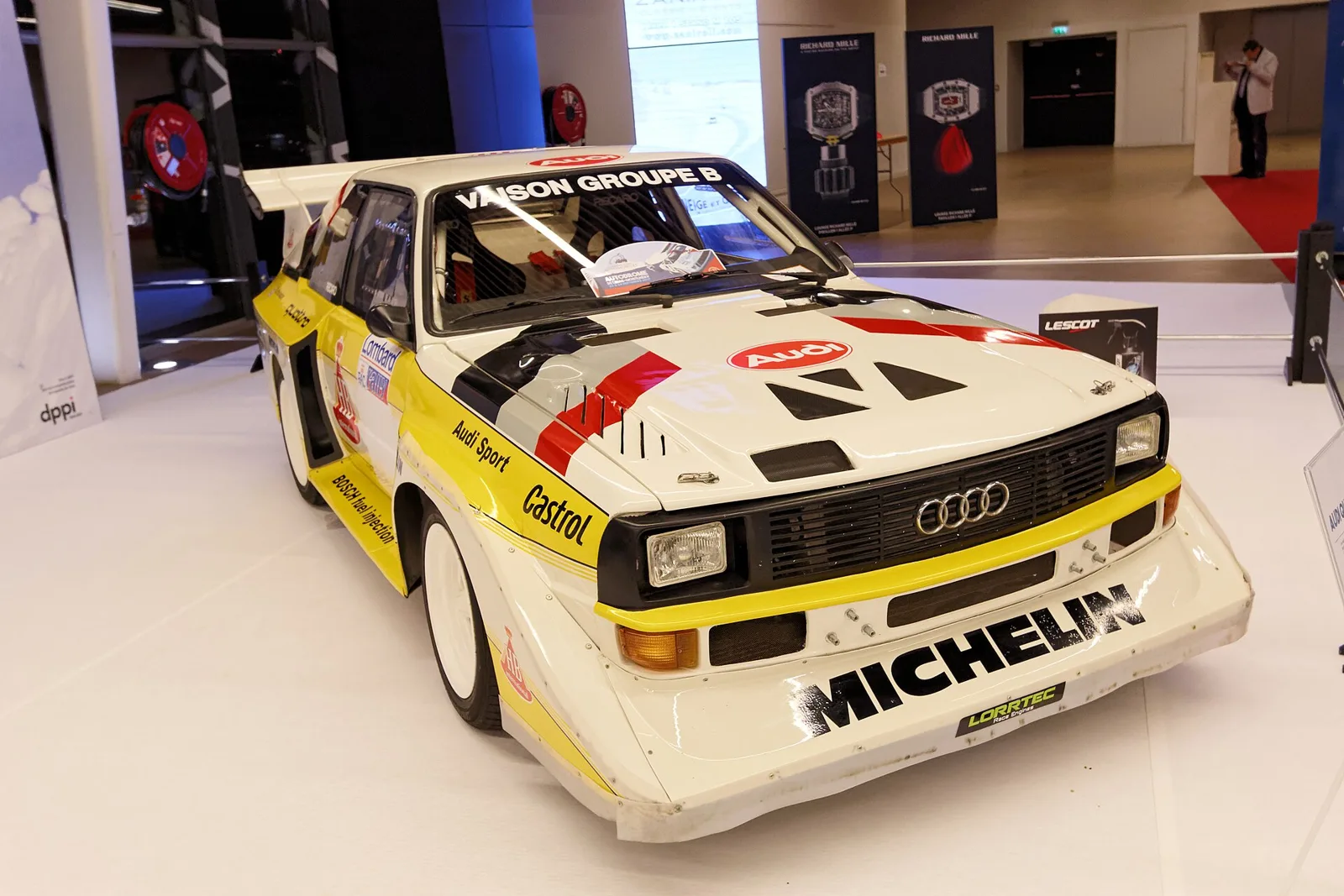
Group B rallying then pushed the idea to an extreme. Small runs of ultra-high-performance variants appeared to satisfy the rules, often called homologation specials, among them the Peugeot 205 T16, the MG Metro 6R4 and the Lancia Delta S4. The wildest of the lot was the Renault 5 Turbo, built from 1980 to 1984. It placed a 1,397 cc turbocharged engine in the middle of a body that looked like a normal Renault 5, behind the driver, and sent power to the rear wheels. It made 160 PS (118 kW) and was the most powerful French production car at its launch.
Bertone styled the rear bodywork under Marcello Gandini. Renault launched the car at the Brussels Motor Show in January 1980, and made the first 400 at the Alpine factory in Dieppe to meet Group 4 rules. Demand beat the homologation minimum, and 4,987 were built in all: 1,820 of the Turbo 1 and 3,167 of the cheaper Turbo 2, which had a 200 km/h (120 mph) top speed and a 6.9 second sprint to 100 km/h (62 mph). Jean Ragnotti won the 1981 Monte Carlo Rally in one on its first World Rally Championship outing, although four-wheel-drive Group B cars proved faster on dirt soon afterwards.
The idea travelled. Ford sold the 1983 Escort GT in the United States, Chrysler produced the 1984 Dodge Omni GLH, short for Goes Like Hell, and the 1986 Shelby GLHS, and in Japan the 1982 Honda City Turbo and 1986 Suzuki Cultus GTi appeared.
What is the Honda Civic Type R story?
The Honda Civic Type R has been built since September 1997, and it was the third Honda to carry the Type R badge, after the NSX and the Integra. The recipe is consistent: a body made lighter and stiffer, an engine tuned for the job, bigger brakes and chassis upgrades, front-wheel drive and a five- or six-speed manual gearbox. A red background behind the Honda badge marks it out.
The first, the EK9, was introduced on 19 August 1997 and sold only in Japan. It had a hand-ported 1.6 litre B16B engine making 185 PS (136 kW; 182 hp) at 8,200 rpm, one of the highest outputs per litre ever for a naturally aspirated engine. It reached 97 km/h (60 mph) in 6.7 seconds and 225 km/h (140 mph), and Honda built 16,000 of them.
The EP3 of 2001 came from the Swindon plant in England. The European version used a 2.0 litre engine with 200 PS (147 kW; 197 hp), and the Japanese-market car made 215 PS (158 kW; 212 hp), keeping the helical limited-slip diff and the red Recaro seats that the European car lacked. In total Honda built 25,798 EP3s, of which Europe took 24,334 and Japan 1,464. A 30th Anniversary Edition of 2003 was limited to 300 cars, 100 in each colour.
The FD2 went on sale in Japan on 30 March 2007, as a four-door saloon, with 225 PS (165 kW; 222 hp) against 201 PS (148 kW; 198 hp) for the European FN2. Honda claimed more chassis rigidity than the Integra Type R, and the FD2 was on average one second quicker around Tsukuba and four seconds faster around Suzuka. A total of 14,062 were built before production ended in August 2010 because the car could not meet the coming emission rules. Today the Civic Type R holds the record top speed for a hot hatch, 171 mph.
Which hot hatches defined each decade?
The 1990s brought a wave of European models, including the Ford Fiesta RS Turbo and Escort RS Cosworth, Peugeot 106 Rallye and GTi, Peugeot 306 GTi-6, Renault Clio Williams, SEAT Ibiza Cupra, Golf VR6 and Ford Focus ST170, and the first Japanese ones, such as the Toyota Corolla GTi, Nissan Pulsar GTI-R, Mazda 323 GT-R and Honda Civic Type R.
The 2000s made hot hatches faster, with more turbocharged engines, and makers began to promote sub-brands: Renault Sport, Opel's OPC, Vauxhall's VXR and Abarth. The decade included the Abarth Grande Punto, Audi S3, Ford Focus ST and RS, Mini Cooper S and JCW, Renault Clio RS and Megane RS, Volkswagen Golf GTI and R, Mazdaspeed 3 and Proton Satria GTi.
All-wheel drive spread in the 2010s as power climbed, notably in the 2015 Ford Focus RS, 2013 Mercedes-Benz A 45 AMG, 2011 Audi RS 3 and 2010 Golf R. Even so, most hot hatches stayed front-wheel drive, many with more than 201 kW (270 bhp), and the Focus RS 500 reached 257 kW (345 bhp). The BMW M135i and M140i were rare rear-wheel-drive entries. Dual-clutch gearboxes also became increasingly common. In 2019 the W177 Mercedes-AMG A 45 S became the first mass-produced hot hatch past the 298 kW (400 bhp) mark, with 310 kW (416 bhp).
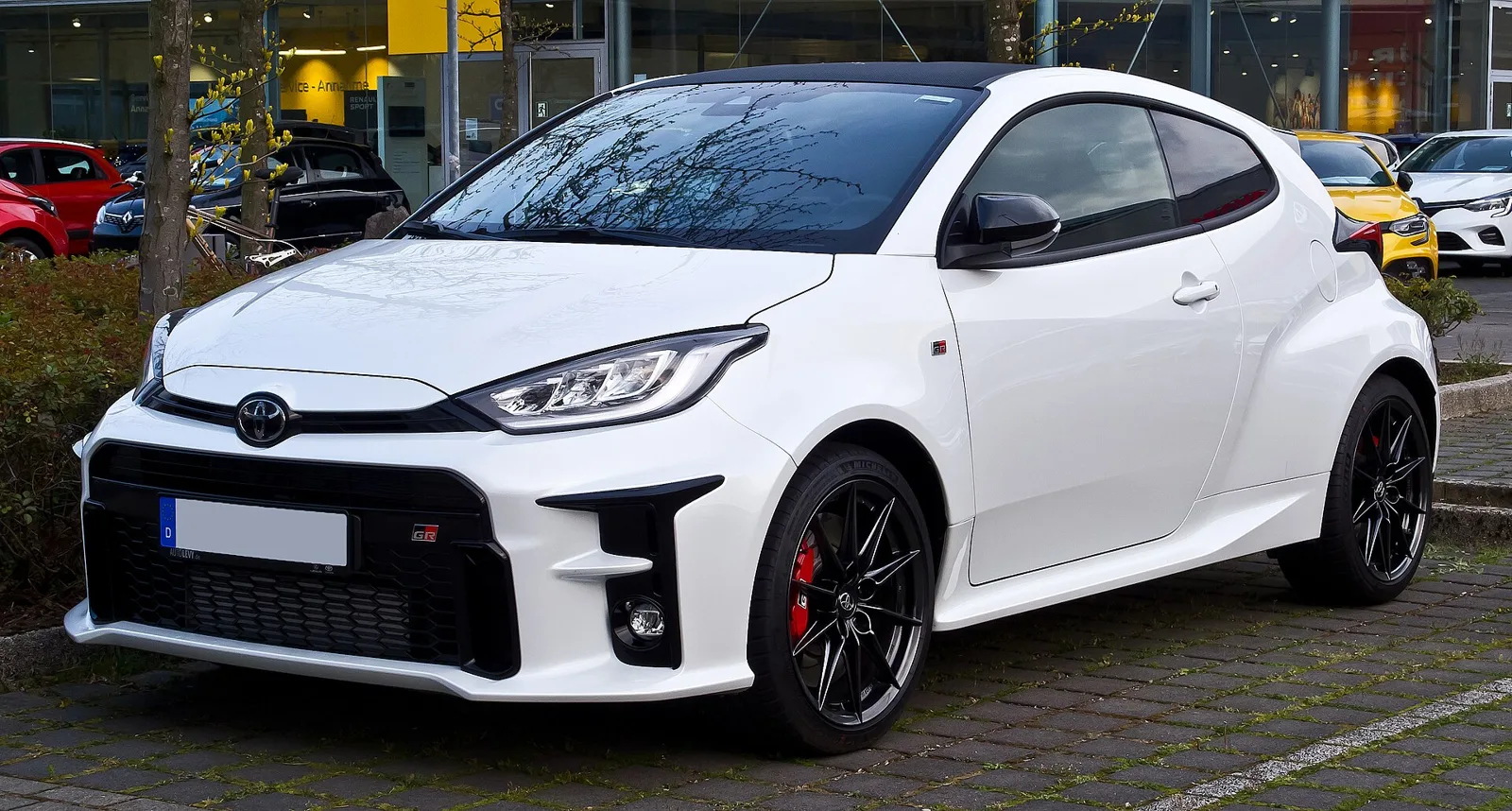
Asia has added its own. South Korea's entry began with Kia's Pro_Cee'd GT in 2013. Hyundai's first, the i30 N of 2017, took the Best Hot Hatch prize in the 2018 UK Car of the Year Awards, and Road and Track magazine named the 2019 Veloster N its 2020 Performance Car of the Year. The Toyota GR Yaris followed in 2020.
Which hot hatches are still being built?
Ford stopped producing the Fiesta and Focus in 2018, ending the ST and RS variants too, so that no American automaker had a hot hatch left. The last North American examples had been the 2002 Focus SVT, 2008 Dodge Caliber SRT-4 and 2016 Focus RS.
Honda has built the Civic Type R since 1997, and the newest benchmarks span several kinds of power. The Audi RS 3 holds the acceleration mark for petrol cars, needing 3.8 seconds to reach 62 mph, while the Hyundai Ioniq 5 N leads the electric ones at 3.4 seconds. The Mercedes A-Class AMG is the slipperiest, with a drag coefficient of 0.25, and the Civic Type R owns the top-speed record.
What does this mean for someone choosing one?
Start with where the car falls in the range. A warm hatch such as a Swift Sport or Yaris SR is slower than a hot hatch by design, and the label sits below a car's hotter sibling. Then think about drive: front-wheel drive is still the norm, all-wheel drive is the route to higher power, and the BMW M135i and M140i remain rare for their rear-wheel drive.
Production totals show how scarce some of them are. Honda built 16,000 EK9s, all sold in Japan, and Renault built 4,987 Renault 5 Turbos. The Golf GTI was a West Germany-only car at first, and right-hand-drive production did not begin until 1979, which matters if you want a particular steering position.
_%E2%80%93_f_03052021.jpg)