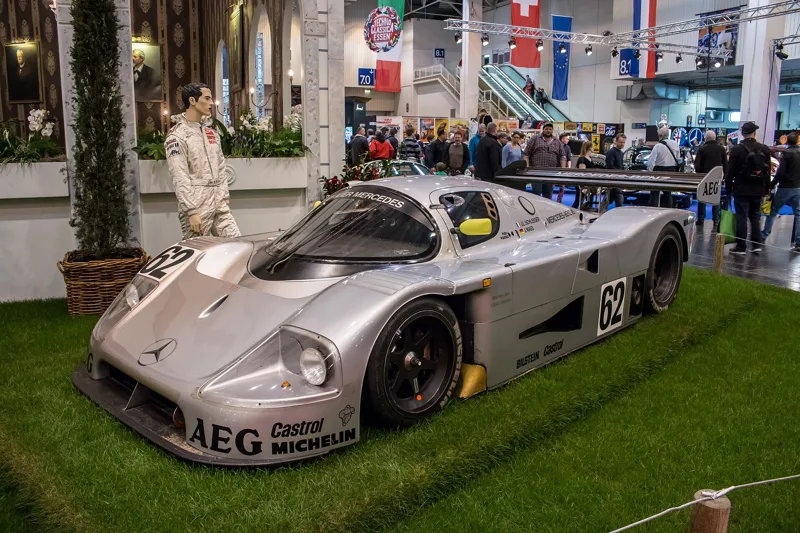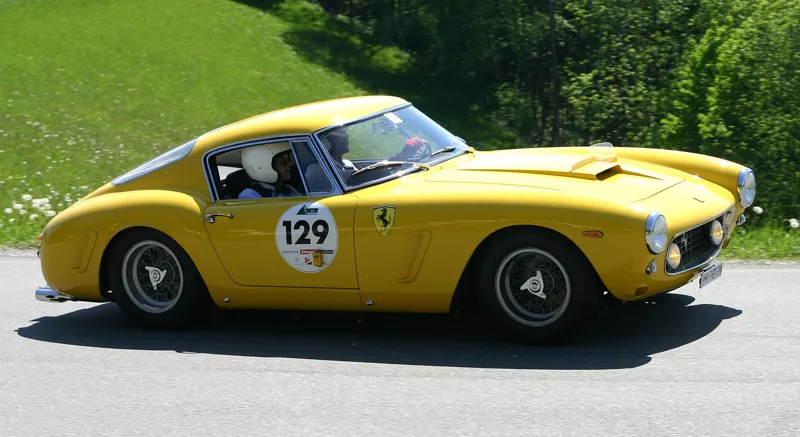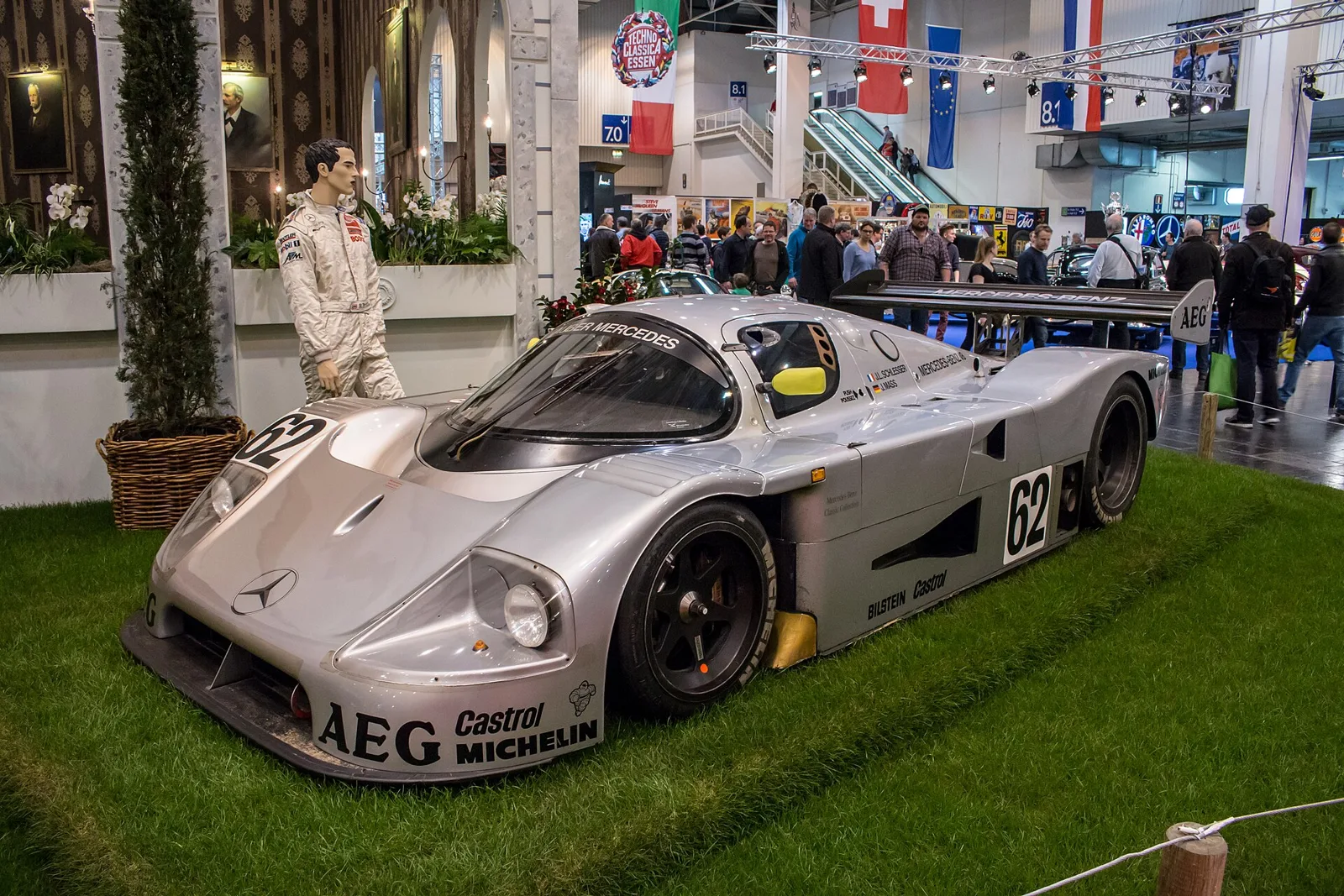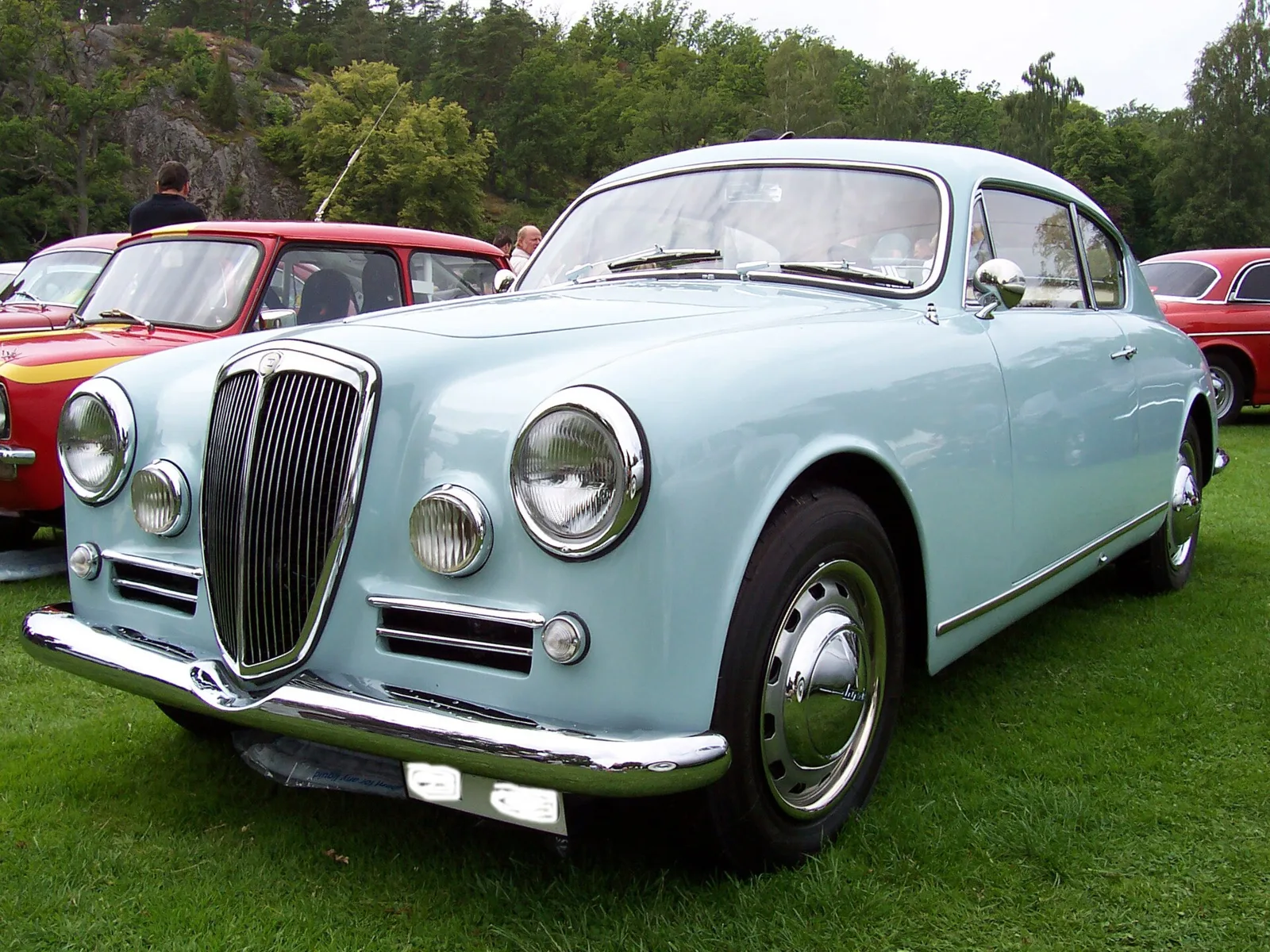
A 1929 Alfa Romeo, a Monza race Ferrari swept and a century of marketing explain why GT and sports car overlap so badly.
A grand tourer is a car built for fast, long-distance driving with luxury fittings, most often a coupe with the engine up front and two or four seats. A sports car puts dynamic performance and the thrill of driving first. The two overlap, and since the 1970s fixed-roof cars once called grand tourers have also been called sports cars.
The first car ever to be named a gran turismo was a 1929 Alfa Romeo, built long before anyone agreed what the words meant, and the label has been pulled about so much since that it now sits on hot hatches, homologation specials and continent-crossing coupes alike.
The short version of the difference is this. A grand tourer is built to cover long distances at speed and in comfort. A sports car is built for the thrill of driving, with almost everything else second. The line between them has never been sharp, and since the 1970s it has smudged further.
What is a grand tourer?
A grand tourer, or GT, is a car designed for high-speed, long-distance driving with luxury specification. The usual recipe is a front-engined, rear-wheel-drive two-door coupe with two seats or a 2+2 arrangement, and many started life as the coupe version of a luxury saloon. The Ferrari 250 GT, the Jaguar E-Type and the Aston Martin DB5 are routinely held up as classic examples.
The name is a near-direct borrowing of the Italian gran turismo. It spread through English in the 1950s, having evolved from the fast touring cars and streamlined closed sports cars of the 1930s. The French had their own version, the grande routiere.
Sam Dawson, news editor of Classic Cars, sketches the ideal as a car able to cross a continent at speed and in comfort while still delivering thrills on demand. He lists what it should offer:
- An engine that can sit at the upper limit of speed on any continental road without losing usable power.
- A design that was conceived as a grand tourer from the start, with every consideration in mind.
- Room for at least two people and their luggage, with space to spare, probably as a 2+2.
- Controls and layout inside and out arranged around the driver.
- A chassis and suspension that cope with handling and roadholding on every kind of route.
Comfort and handling outrank outright speed or spartan cabins. Because the engine usually sits up front, there is more cabin room than a mid-engined layout allows, and the typical GT adds softer suspension, more luggage space and richer trim.
A GT is meant to cross a continent at speed and in comfort; a sports car is meant to thrill, and the two have been trading cars for decades.
How is a grand tourer different from a sports car?
A sports car puts dynamic performance first: handling, acceleration, top speed, the thrill of driving and the ability to race. Nobody has set a minimum standard. A Triumph Spitfire and a Ferrari 488 Pista both qualify, despite vastly different performance. Broader definitions say only that performance should take precedence over carrying capacity. Narrower ones insist on two seats, or on two seats plus two small rear ones.
Beside the sophisticated machinery of grand touring, sports cars are typically portrayed as the cruder breed. Where a GT is meant to be comfortable across a whole continent, a sports car can afford to be raw.
Layout adds another clue. Traditionally sports cars have been rear-wheel drive with the engine at the front, as in the Caterham 7, Mazda MX-5 and Dodge Viper, or in the middle, as in the Ferrari 488, Ford GT and Toyota MR2. Front-engined designs often push the engine back towards the firewall to keep weight off the nose. Rear engines are unusual, the Porsche 911 being the notable exception. All-wheel drive has become more common since the 1990s, in cars such as the Lamborghini Huracan, Bugatti Veyron and Nissan GT-R, where it brings quicker acceleration and better grip on slippery roads at the cost of extra weight and complexity.
Seats matter too. Larger cars with properly roomy rear seats are usually classed as sports saloons rather than sports cars. The 1993-1998 McLaren F1 went the other way and used three seats, with the driver in the middle of the front row.
Grand tourer and sports car side by side
| Feature | Grand tourer | Sports car |
|---|---|---|
| Main purpose | High-speed, long-distance driving with luxury | Dynamic performance and the thrill of driving |
| Priorities | Comfort and handling ahead of outright performance | Performance ahead of carrying capacity |
| Seating | Two seats or 2+2 | Traditionally two seats or 2+2, once mostly roadsters |
| Engine and drive | Historically front engine, rear-wheel drive | Front or mid engine, rear-wheel drive; all-wheel drive more common since the 1990s |
| Body | Usually a closed two-door coupe | Roadster at first; fixed roofs added since the 1970s |
| Earliest label | 1929 Alfa Romeo 6C 1750 Gran Turismo | The Times in 1919; first known US use in 1928 |
Where did the gran turismo come from?
Italy got there first. In the 1930s its coachbuilders turned out small, light, aerodynamic coupes called berlinettas. An enclosed cabin adds weight and frontal area over an open two-seater, but Italian designers found that streamlining could cancel the penalty. Independent carrozzerie fitted light, flexible fabric bodywork to powerful short-wheelbase chassis from makers such as Alfa Romeo, and Carrozzeria Touring of Milan later pioneered superleggera aluminium bodies that allowed even slipperier shapes. A closed car also made sense on the Mille Miglia, which ran through an often wintry north of Italy.
The French pursued a different ideal, the grande routiere, built around elegance, luxury and gentlemanly touring between countries. These were often larger cars than their Italian counterparts.
The first car actually named gran turismo was the 1929 Alfa Romeo 6C 1750 Gran Turismo, a road and race chassis and engine specification offered with a wide range of bodies. A Weymann fabric-bodied berlinetta by Touring won the Vetture Chiuse category of the 1931 Mille Miglia, and a supercharged version, the 6C 1750 GTC Gran Turismo Compressore, took the Vetture a Guida Interna class in 1932. Vittorio Jano designed the 6C 1750 and was later instrumental in the 1951 Lancia Aurelia B20 GT.
Smaller makers followed. SIATA, a Turin tuner of Fiat cars, and Fiat itself built aerodynamic berlinettas on the Fiat 508 Balilla chassis in 1933 and 1935. Firms of this artisan kind, among them Nardi, Abarth, Ermini and Cisitalia, were later nicknamed Etceterini.
Which early cars set the template?
Cisitalia hoped to find a home for its 202 SC in the first race created for the new breed, the 1949 Coppa Inter-Europa at Monza, initially titled Turismo Veloce. The 202 SC was the road coupe version of Cisitalia's D46 single-seater and its open 202 sports car, with a Fiat-based 1100 cc four-cylinder engine. Against Ferrari's new hand-built 2000 cc V12 it had no chance, and Ferrari took the first three places. An 1100 cc class was hurriedly invented, but too late: owner Piero Dusio, by then bankrupt, had already left for Argentina. Even so, the Pinin Farina coachwork made the car famous, and it is credited with shaping the berlinetta and fastback coupes that followed. A Cisitalia 202 is on show at the Museum of Modern Art in New York.
The Maserati A6 1500 won the 1500 cc class of that same race, driven by Franco Bordoni, a former fighter ace of the Regia Aeronautica. It was the first production road car from the Maserati factory, with a tubular chassis, independent front suspension on coil springs and a 1500 cc six derived from the brothers' pre-war voiturette engines. Pinin Farina clothed it in a two-door fastback.
Ferrari's own route began after Enzo Ferrari's Scuderia, Alfa Romeo's racing division from 1929 to 1938, parted company with the firm in 1939. His first car, the Fiat-based Auto Avio Costruzioni 815, appeared at the 1940 Mille Miglia, and the V12 125 S followed at Piacenza in 1947, two of each being built. They evolved quickly into the 159 and 166, including the 1949 Ferrari 166 Inter, a road-going berlinetta with Touring and other coachwork. The 166 Inter S won the 1949 Coppa Inter-Europa.
By the early 1950s the idea had settled. The grand touring concept is traced to Europe and especially to the 1951 launch of the Lancia Aurelia B20 GT, with Jano, Enzo Ferrari and Johnny Lurani among the figures behind it.
Why did America buy European GTs?
Post-war American makers were less taken with the GT ethos. They preferred cars suited to long, straight, smooth roads, with powerful sixes and V8s available at every price, as in the 1955-1965 Chrysler 300. Yet the booming US market became the biggest buyer of European grand tourers, carrying film stars, celebrities and the jet set. The Mercedes-Benz 300 SL came in through Max Hoffman, the Ferrari berlinettas through Luigi Chinetti, and the Jaguar XK120 sold there too. Within ten years the GT approach had broken into the new American market for personal luxury cars, and the classic post-war examples are now prized by wealthy collectors.
How did the sports car start?
The sports car grew out of early twentieth-century touring cars and roadsters, and the phrase itself was not coined until after the First World War. The 1903 Mercedes Simplex 60 hp, designed by Wilhelm Maybach and Paul Daimler, is called a sports car years ahead of its time. It had a pressed-steel chassis, a gated four-speed gearbox, overhead inlet valves, a honeycomb radiator and a low centre of mass. It reached the 1903 Gordon Bennett Cup only because a specially built 90 hp racer had been destroyed by fire, and it went on to win.
Ferdinand Porsche designed the 1910 Austro-Daimler 27/80 and drove it to victory in the Prince Henry Tour. The 1912 Hispano-Suiza Alfonso XIII, a purpose-built two-seater named after a Spanish king, is another candidate for the earliest. In Britain the Motor Car Act 1903 imposed a 20 mph (32 km/h) limit, which led to Brooklands opening in 1907 and encouraged fast cars such as the 1910 Vauxhall Prince Henry.
The words 'sports car' appeared in motor catalogues around 1920, though nobody knows exactly where they came from. The decade that followed brought quicker engines, helped by the end of tax horsepower and the arrival of leaded fuel, which allowed higher compression. Early in the 1920s a racing car cost little more to build than a road car, so makers recycled one year's racer as the next year's sports car; the 1921 Ballot 2LS was based on a car that finished third in that year's French Grand Prix. By 1925 two-seaters were left to small firms such as Aston-Martin, with 350 built from 1921 to 1939, and Frazer-Nash, with 323 built from 1924 to 1939. The founder of Bugatti called the Bentley 3 Litre the fastest lorry in the world.
The 1930s were thinner. Cheap, light saloons with independent front suspension, among them the BMW 303, Citroen Traction Avant and Fiat 508, matched the handling of costlier sports cars. MG still became the best-selling sports car maker of the decade, and the Bugatti Type 57 won Le Mans in 1937 and 1939.
After the war Porsche made its debut with the 356 in 1948 and Mercedes-Benz built the 300 SL in 1954. The 1961 Jaguar E-Type, with a claimed top speed of 241 km/h (150 mph), stayed in production for 14 years, six-cylinder first and V12 last. Cheap lightweight roadsters arrived with the 1962 MG B, the Triumph Spitfire and the 1966 Alfa Romeo Spider, while the Lotus Elan of 1962 made lightness its philosophy with fibreglass bodies and a backbone chassis. The AC Cobra, also from 1962, took Shelby V8s up to 7.0 L (427 cu in), and the Porsche 911 arrived in 1964 and has not left production since.
How did the two labels blur together?
Look at the lists of famous cars and the overlap is plain. The Jaguar E-Type is listed as a classic grand tourer and also as an outstanding sports car of the early 1960s. The Maserati A6 1500, the Ferrari 166 family and the Mercedes-Benz 300 SL turn up on both sides as well. The post-war Italian GT class has been described as sustained high-speed motoring from a modest engine in a compact closed body, which fits plenty of sports cars too.
One shift in the 1970s moved the border for good: the sports car label began to be applied to fixed-roof cars that had previously been called grand tourers. Marketing blurred it further. GT turned into a badge, and a car carrying it may be little more than a mildly tuned family model.
What do the GT letters mean?
- GTA: gran turismo alleggerita, Italian for lightweight. GTAm marks a modified version, and GTA is sometimes used for automatics.
- GTB: gran turismo berlinetta.
- GTC: used in several ways, among them compressore for supercharged engines, cabriolet, compact, crossover and corsa, Italian for racing.
- GTD: gran turismo diesel. GT/E: gran turismo Einspritzung, German for fuel injection. GTE: grand touring estate.
- GTi or GTI: grand touring injection, mostly seen on hot hatches after the Volkswagen Golf GTi.
- GTO: gran turismo omologato, Italian for homologation. GTR or GT-R: gran turismo and racing.
- GTS: sometimes gran turismo spider for convertibles, although it has also appeared on saloons and other bodies.
- GT-T: gran turismo turbo. GTV: gran turismo veloce, Italian for fast. GTX: grand tourisme extreme. HGT: high gran turismo.
Some cars with GT in the name are not grand tourers at all.
What does GT mean in racing?
Grand touring cars have been central to endurance racing. The World Sportscar Championship, which ran from 1953 to 1992, began as a series for sports prototypes and expanded to GT cars in 1954 at the Mille Miglia. From 1985 it went back to prototypes only. GT manufacturers received their own titles from 1962 to 1984, except in 1982.
The FIA World Endurance Championship, in operation since 2012 and organised by the Automobile Club de l'Ouest, is seen as a revival of that series and caters for sports prototypes and Group GT3 cars. It awarded a GT manufacturers' cup from 2012 to 2016, renamed the World GT Manufacturers' Championship from 2017 and discontinued after 2022. The short-lived FIA GT1 World Championship, run by the Stephane Ratel Organisation, lasted from 2010 to 2012.
Other series fill in the ladder. GT World Challenge Europe has run since 2014 for GT3 cars, replacing the FIA GT Championship (1997-2009) and the GT1 World Championship. The IMSA GT3 Cup Challenge, since 2005, is a North American series for Porsche 911 GT3 Cup cars, and the GT4 European Series, since 2007, is an amateur championship for the least powerful GT class. SRO GT2, from 2018, slots between GT4 and GT3: its most powerful cars have nearly 700 horsepower but far less downforce than a GT3 car. LM GTE, a set of rules for modified road cars used at Le Mans and in related series, ran from 1999 to 2023, first as the GT class and as GT2 from 2005 to 2010; in the United States it was called GTLM. The Group GT3 regulations have been used worldwide since 2006, and Group GT1 was the fastest sports car category from 1994 to 2001.
Where the labels stand now
No clean boundary exists. Sports cars are defined by what they emphasise, not by a number, and insurers have even tried formulae of their own, usually charging more for the risk. Grand tourers are defined by an intent: speed, comfort and luggage space for a long road. Plenty of cars fit both descriptions.
For anyone choosing between them, the practical tests are the ones the definitions already suggest. A front engine, rear seats of some use, space for bags and a ride tuned for distance point towards grand touring. Low weight, a mid or rear engine, two seats and an edge to the handling point towards sports car. A GT badge on the boot lid settles nothing either way.