Ford's EUCD, Fiat's C-platform, the Renault-Nissan B and Geely's CMA each carry a large family of cars that look unrelated on the road.
These are four car platforms: Ford's EUCD from 2006, the Fiat Group's C-platform, the Renault-Nissan B platform from 2002 and Geely's Compact Modular Architecture from 2017. Each carries many models, from the Volvo S80 and Fiat Stilo to the Renault Clio and Polestar 2.
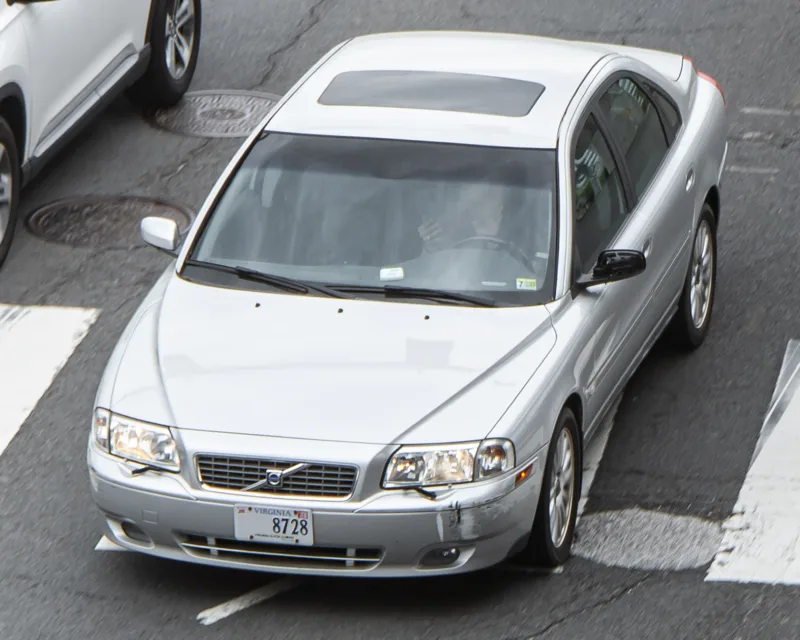
At the 2006 Geneva Motor Show, Volvo's S80 and Ford's S-MAX and Galaxy appeared side by side sharing about half of their total parts. The steering columns of the three cars share 80 percent of theirs. That overlap comes from the Ford EUCD platform, one of four underpinnings behind cars from the Fiat Stilo to the Renault Clio and the Polestar 2.
What are the Ford EUCD, Fiat C, Renault-Nissan B and CMA platforms?
They are four car platforms, meaning shared structural foundations on which different models are built. Ford's EUCD launched in 2006, the Renault-Nissan B platform dates from 2002, the Fiat C-platform served Fiat Group's small family cars, and Geely's Compact Modular Architecture debuted in 2017.
Think of a platform as the foundation and frame of a house. The same footings can carry houses that look nothing alike. In car terms, it fixes the key structure and the layout of the suspension and mountings, so a maker can spread development cost across several models, and a reader looking at two cars that seem unrelated can find a great deal in common underneath.
The Volvo S80, Ford S-MAX and Ford Galaxy share about half of their parts, and 80 percent of their steering column parts.
Four platforms compared
| Platform | Maker | Introduced | Example cars |
|---|---|---|---|
| EUCD | Ford (European operations) | 2006 | Volvo S80, Ford S-MAX, Ford Galaxy |
| Fiat C-platform (C1 and C2) | Fiat Group | 1995 (C1), 2001 (C2) | Fiat Bravo, Alfa Romeo 156, Fiat Stilo |
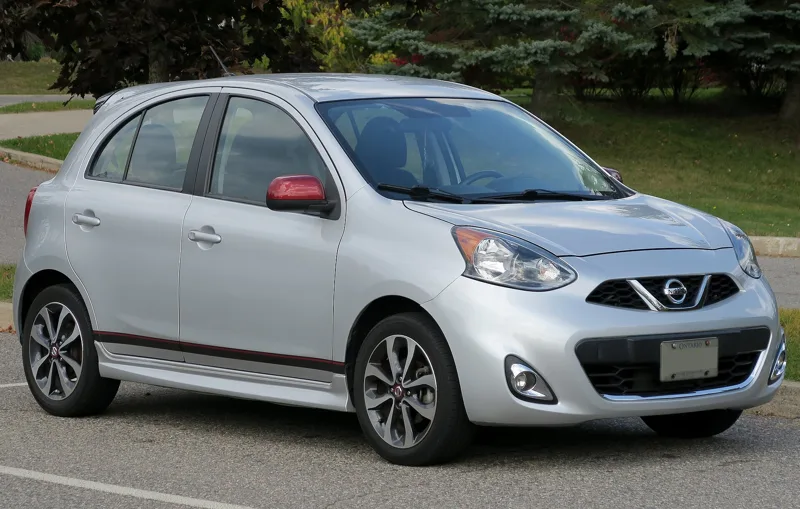
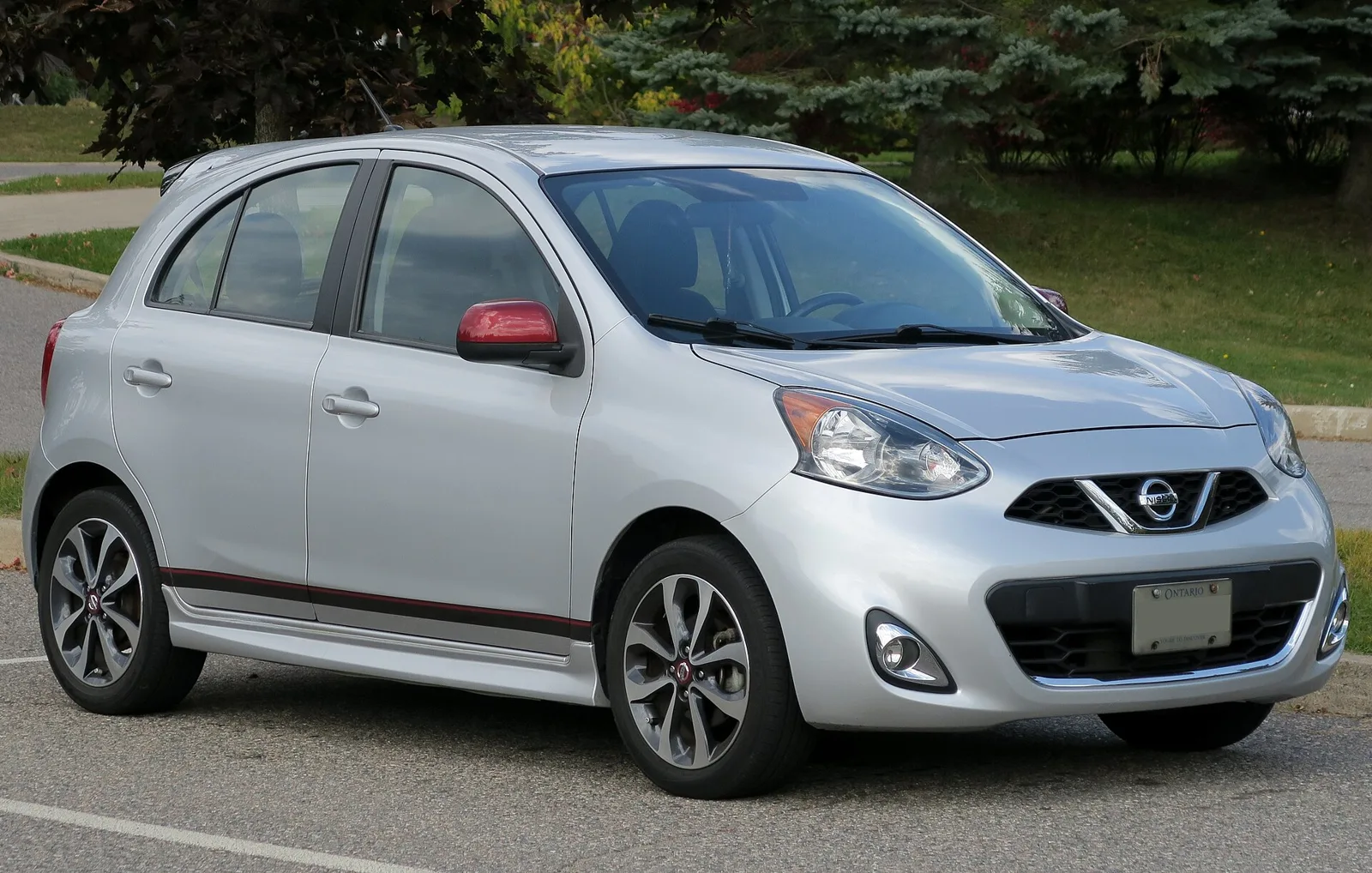
| B platform | Renault-Nissan Alliance | 2002 | Nissan Micra, Renault Clio III, Nissan Cube |
| CMA | Geely (through CEVT) | August 2017 | Lynk & Co 01, Volvo XC40, Polestar 2 |
What is the Ford EUCD platform?
EUCD stands for European Class D, and it is Ford's global midsize car platform, launched in 2006. Ford's European operations picked it instead of the Ford CD3 platform because it shared many components with the smaller C1.
There was another reason as well: the CD3 was reportedly unable to accept Volvo's straight-five engines. The first EUCD cars were the Volvo S80, built on the Volvo P3 platform, and the Ford S-MAX and Galaxy, all shown at Geneva in 2006.
After it separated from Ford, Jaguar Land Rover kept developing EUCD and turned it into the heavily modified LR-MS platform, also known as JLR D8. The Jaguar E-Pace of 2017, the 2015 Land Rover Discovery Sport and the 2011 Range Rover Evoque all sit on variations of the D8.
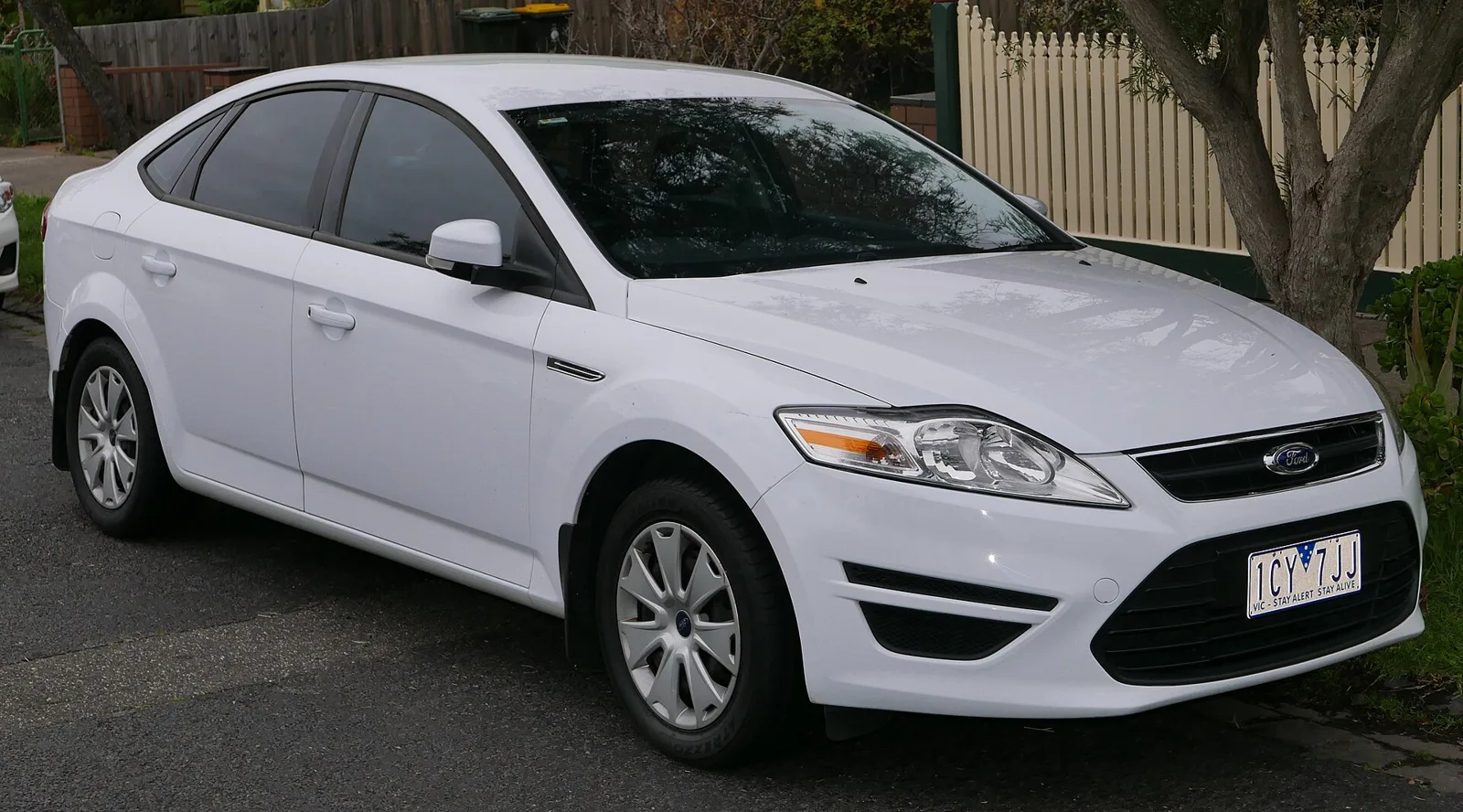
Ford itself moved on. For the 2013 model year the Fusion mid-size car migrated to a new common global platform, the Ford CD4, and its European counterpart, the Mondeo, made the same transition when the fifth generation reached the market for the 2015 model year.
What is the Fiat C-platform?
Fiat Group used it for small family cars. Before it came the Tipo Tre and Tipo Due platforms; after it, the Compact platform that first appeared under the Alfa Romeo Giulietta in 2010.
It came in two generations. The first, C1, was a lightly developed version of the Type Two platform and kept almost all of its structure and components, including the suspension layout. It is sometimes called Type Two rev. 2. The suspension is independent all round, pairing MacPherson struts in front with trailing arms behind. The Fiat Bravo and Brava came first, followed by the Marea, with the Multipla on the sandwich version.
The Multipla's 1998 version, called the C1 Sandwich, had a wider, boxier floor structure and adopted the reinforced suspension of the Brava. To protect its three front passengers, the engine was designed to slide underneath the car in a severe frontal impact rather than into the cabin. C1 engines could burn petrol, diesel or two fuels, with displacements up to 2.5 litres (153 cu in), including five-cylinder in-line units, and a six-speed manual gearbox.
A further development, Type Two rev. 3, served the Alfa Romeo 156 and Lancia Lybra, with a longer wheelbase and different suspensions. The Alfa had front double wishbones and rear MacPherson struts, while the Lancia had MacPherson struts in front and a BLG multilink rear, short for Bracci Longitudinali Guidati, or guided longitudinal arms. Estate versions of both could be specified with hydropneumatic self-levelling rear suspension from Boge-Nivomat. The reinforcements to the Lybra's front structure also went into the Marea's second series in 1999. The Alfa chassis went further, with a front suspension of the high-quadrilateral type and a three-link rear, inspired by the Lancia Delta HF Integrale, and a front structure revised to absorb impacts better. The Alfa Romeo 147 and GT were derived from the 156 floorpan and kept its suspension. The 156 Sportwagon Q4 and Crosswagon Q4 are the only C-platform cars with all-wheel drive.
C1 cars were the 1995 Brava and Bravo, the 1996 Marea and Alfa Romeo 156, the 1998 Multipla and Lancia Lybra, the 2000 Alfa Romeo 147 and the 2003 Alfa Romeo GT.
How was the Fiat C2 platform different?
The second generation, C2, was a clean-sheet chassis with MacPherson strut front suspension and a torsion beam at the rear. It debuted in 2001 with the Fiat Stilo and was designed by a global team of Fiat engineers and a small number of Lancia engineers at Mirafiori, with engineers in Betim, Brazil, taking part.
Development of the all-new platform began at least three years before the Stilo, with the aim of a highly flexible structure that could adapt from compact mid-size cars to estates and even premium models such as the third-series Lancia Delta of 2008. The rear torsion beam is a very compact solution, which suits a large boot and keeps production costs below those of more complex rear suspensions, while giving reliability and comfort.
The C2 was much more rigid and met Euro NCAP standards, the latest cars earning four to five stars. The engine sits across the car and drives the front wheels, and gearboxes included five- and six-speed manuals and the Dualogic or Selespeed robotised automatics.
It could take engines from the 1.2 FIRE petrol up to the 1.9 MultiJet TwinTurbo diesel. The 1.9 Multijet was the commonest choice. Others were the 1.4 in FIRE and T-Jet forms, the 1.6 and 1.8 16V units that FMA builds at Pratola Serra, a 2.4 five-cylinder with 20 valves, a direct-injection 1.8 T-Jet, and 1.6 and 2.0 Multijet diesels. In 2008 the 1.9 Twin Stage bi-turbodiesel, with 190 horsepower and 400 Nm, was homologated without altering the structure, since the chassis coped easily with that torque.
The Stilo and its Multiwagon, the new Fiat Bravo of 2007 and the long-wheelbase 2008 Lancia Delta are the C2 cars. The platform was assembled at Fiat's Cassino plant, and Betim built the Brazilian Stilo.
What is the Renault-Nissan B platform?
The Renault-Nissan Alliance has used it for compact and subcompact cars since 2002. It grew out of a Nissan-led project to create a common platform for both companies.
On the Nissan side it carries the Cube, Micra (March) K12, Bluebird Sylphy, Livina, Note E11, NV200, Tiida (Versa) C11, Wingroad and Juke, which is also sold as the Infiniti ESQ. The Renault side includes the Captur, Clio III, Clio IV, Modus and Zoe. As of 2010 the next generation was renamed the V platform.
A long-wheelbase version, B0, has existed since 2004 and was developed by Renault and Dacia. It underpins the Dacia Logan, Sandero and Duster (HS), the Nissan Terrano (D15) in Russia, the Nissan Kicks (D15), the Renault Arkana in Russia and the Renault Captur or Kaptur for the Global Access range. AvtoVAZ uses it for the Lada XRAY and Largus, and Mahindra for the Verito Vibe. The B0+ is used for the second-generation Dacia Duster (HM), and the M0, a development of the B0, for the Dokker, Lodgy, Logan II, Sandero II and Renault Symbol III.
In 2009 Nissan revealed an electric-vehicle platform based on the B0. It carried the first-generation Leaf, and the e-NV200 shared its drivetrain, battery and electronics with it, with a body on the Nissan B platform.
What is the Nissan V platform?
The V platform is the second generation of the B platform, and it supports an E-power hybrid powertrain. Cars include the 2010 Micra (K13), the 2011 Latio, Almera, Sunny and Versa (N17) and the 2011 Tiida and Pulsar (C12).
Later examples are the 2012 Sylphy, Sentra and Pulsar (B17), the 2012 Note (E12), the 2014 Venucia R30, the 2014 Datsun Go and Go+, the 2016 Nissan Kicks (P15), the 2017 Micra (K14) and Venucia D60, the 2018 Datsun Cross, the 2019 Almera, Versa and Sunny (N18), and the 2026 Nissan Kait. A 2012 concept, the Nissan Invitation, used it too.
What is Geely's Compact Modular Architecture?
The Compact Modular Architecture, or CMA, is a global mid-size unibody platform. CEVT, short for China Euro Vehicle Technology AB and a Swedish subsidiary of Geely, developed it. Work started in 2013, aiming for a highly flexible platform.
Almost everything is adjustable. The one constant is the gap from the middle of the front wheels to the pedal box, and all else is set to suit the vehicle's design. Its debut came in August 2017, on the Lynk & Co 01. Its configuration included four-cylinder 2-litre petrol and diesel engines and new 1.5-litre three-cylinder engines in turbocharged and naturally aspirated forms. A plug-in hybrid arrangement with 180 bhp supplemented by a 74 bhp electric motor was also planned.
It is used across Geely Group's Volvo, Lynk & Co, Geely Galaxy and Geely brands. The Volvo XC40 has used it since 2017 and the C40 since 2022. Lynk & Co's 01, 02, 03 and 05 use it, and so does the Polestar 2, the fully electric car.
Geely models include the Xingyue S, sold as the Tugella, since 2019, the Xingrui since 2020, the Xingyue L (Monjaro) since 2021, the Boyue L III since 2022, the Galaxy L6 and L7 from 2023 and the Boyue L IV since 2025. The Renault Grand Koleos has used it since 2024, and the Renault Filante from 2026.
What is CMA Evo?
CMA Evo, also called CMA 2.0, is a version of the platform dedicated to plug-in hybrids, announced by Geely in 2023. Its first vehicle was the Lynk & Co 08.
It has much better safety performance than the original CMA. The rear crash beam, energy-absorbing box and rear longitudinal member are designed together as one unit, which raises rigidity significantly. Volvo's XC70 plug-in hybrid SUV, announced in 2025, is based on the Lynk & Co 08 and is marketed on the Scalable Modular Architecture, a re-branded CMA Evo. The Lynk & Co 07 also uses CMA Evo.
What replaced these platforms, and what is still growing
The Ford EUCD gave way at Ford to the CD4, and the Fiat C-platform to the Compact platform of the Alfa Romeo Giulietta. The Renault-Nissan B became the V platform in 2010, which reaches the 2026 Nissan Kait. CMA is still growing: the Renault Filante arrives in 2026, and the Galaxy L7 runs only to 2026.