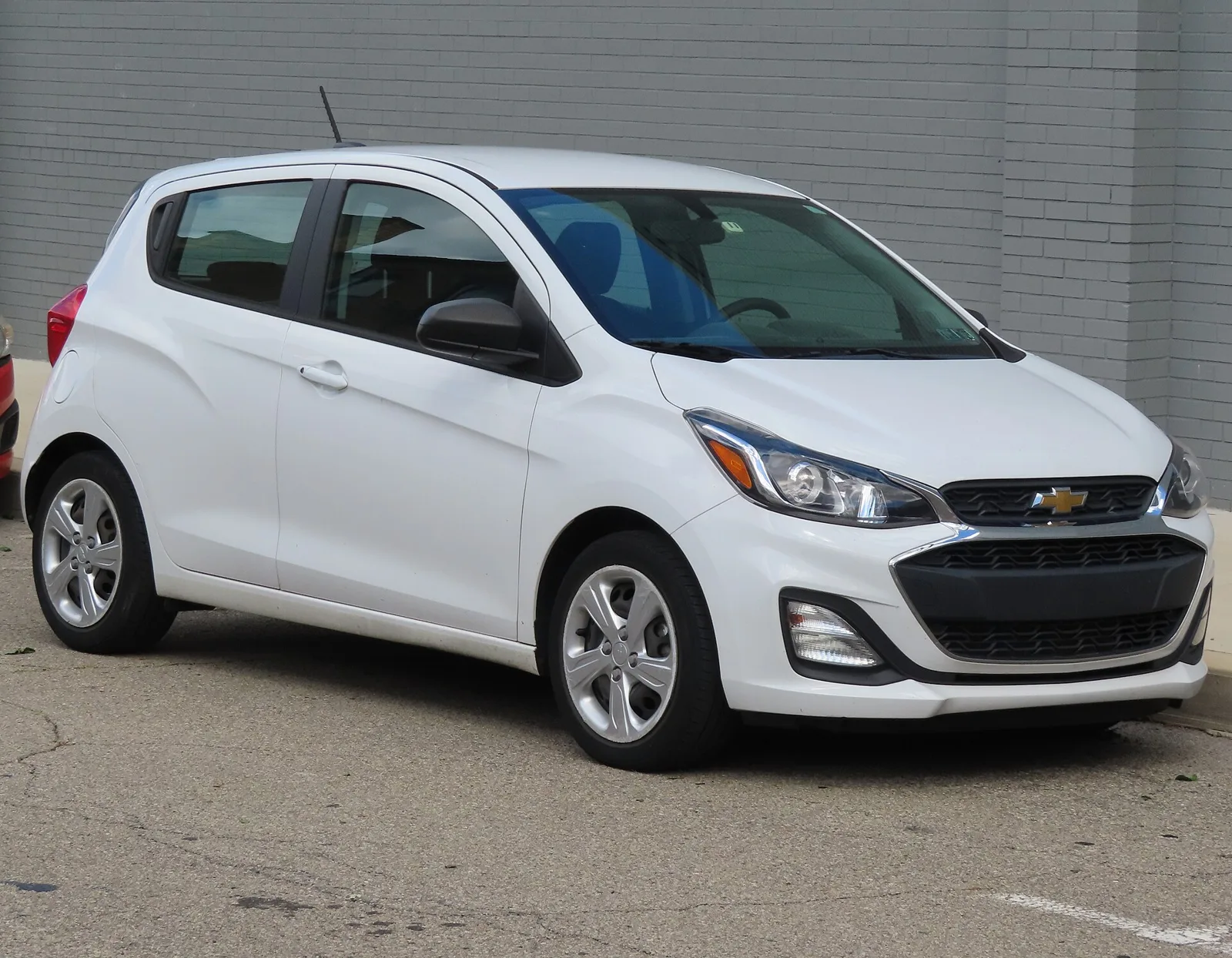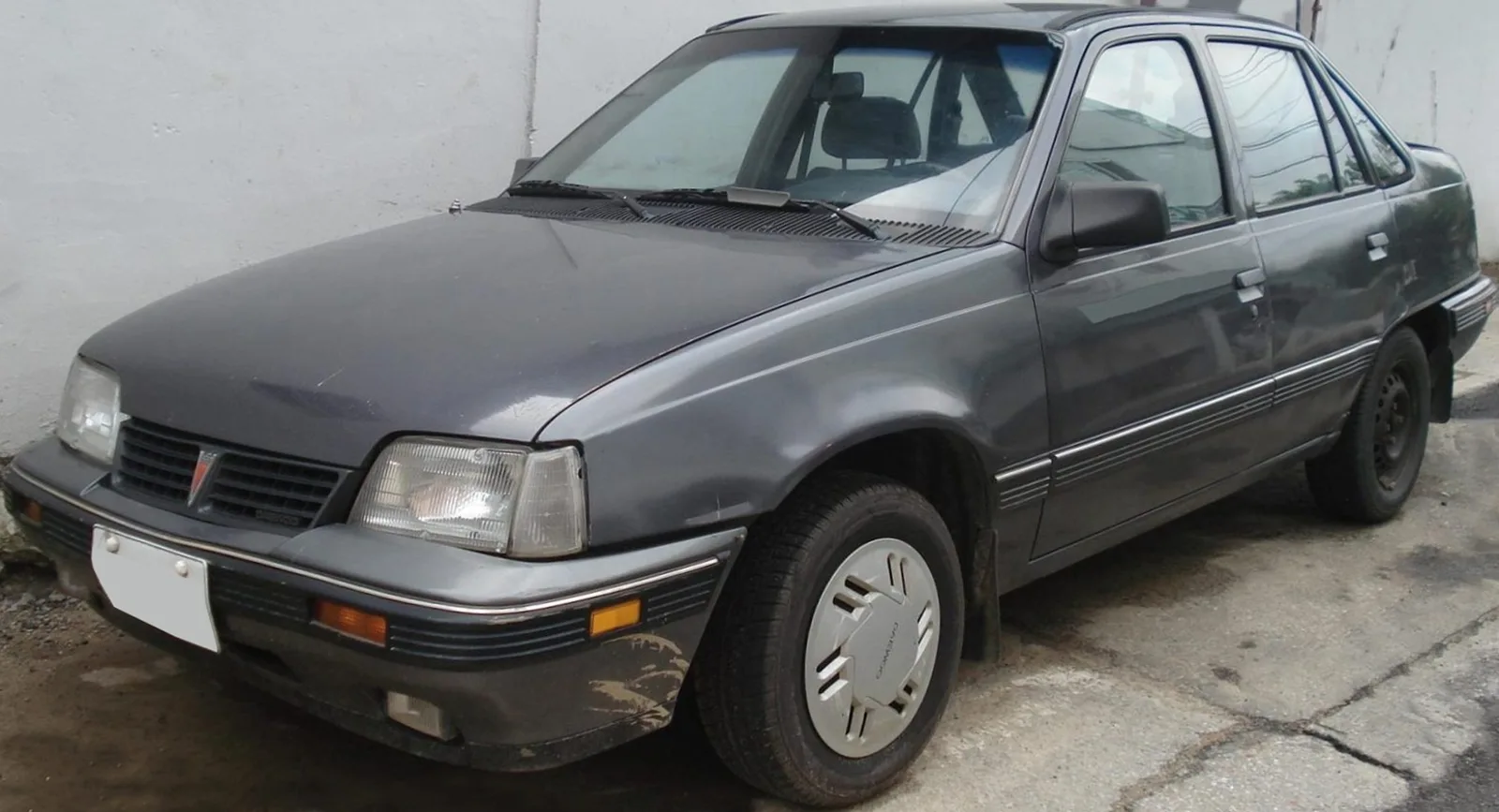
Three Daewoo saloons trace the company's path from licensed General Motors designs to its first in-house range, via a British direct-sales experiment and factories from Romania to Uzbekistan.
Daewoo's early cars came from General Motors designs. The Royale used an Opel Rekord body with Senator front, the LeMans was an Opel Kadett E, and the Nexia version won British buyers with a direct-sales package. The Leganza of 1997 was Daewoo's own executive saloon, styled by Giugiaro and replaced by the Magnus.
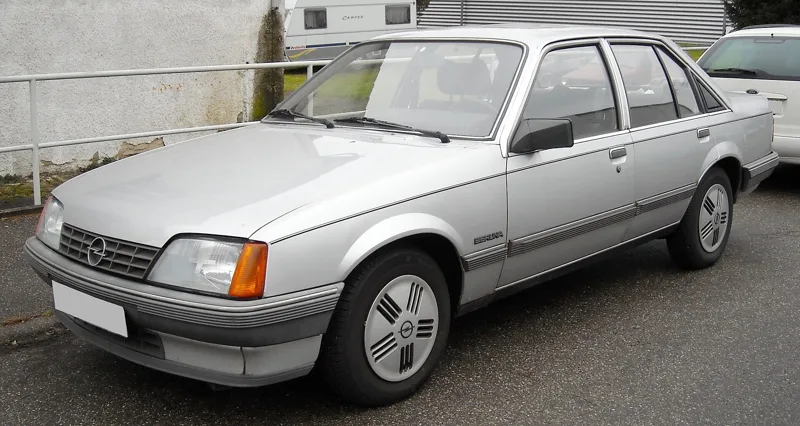
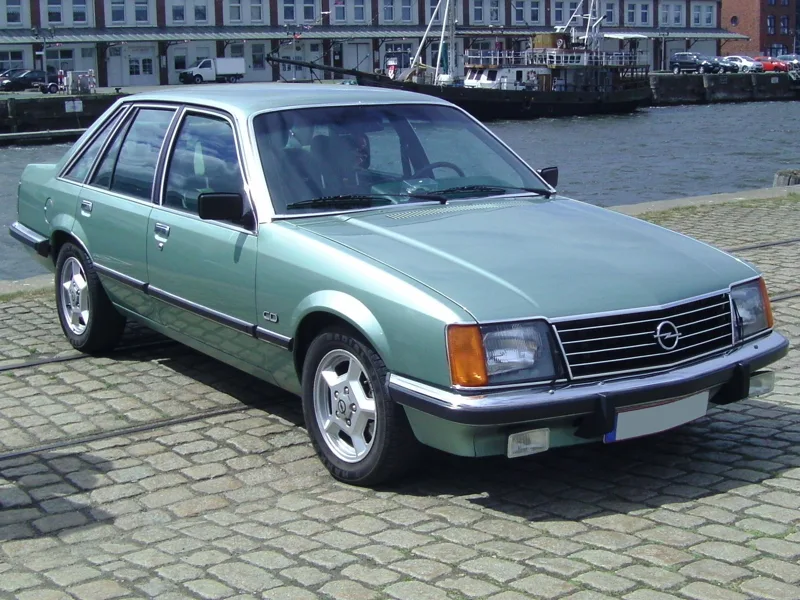
For years the Daewoo Royale was an Opel Rekord wearing the nose of a bigger Opel Senator, the same hybrid that Holden sold in Australia as the Commodore, and Holden pressed the Royale's body panels until November 1984. Daewoo's other early saloons had borrowed bloodlines too, until the Leganza arrived in 1997 as one of the first cars the company engineered for itself.
The Royale, the LeMans and the Leganza mark three stages in that journey: licensed General Motors designs, a compact hatchback that was sold under a tangle of names in markets around the world, and an executive saloon styled in Italy and engineered in Korea, Britain and Germany.
Where did the Daewoo Royale come from?
The Royale grew out of General Motors Korea's Rekord, launched in August 1972 on the German Opel Rekord D. GMK became Saehan Motors in November 1976, and in 1978 the second-generation Saehan Rekord, built on the Rekord E, appeared with a Saehan Royale sibling. The Royale took the Rekord E body and grafted on the front end of the larger Opel Senator A. Daewoo gained control of Saehan in January 1983, renamed it Daewoo Motors, and the car became the Daewoo Royale.
An earlier Royale, the Rekord Royale of August 1975, had been based on the Opel Commodore B, essentially a Rekord with a lengthened engine bay. A total of 12,005 of those were built between 1975 and 1978.
Holden in Australia stamped the Royale's body panels until November 1984. After that Daewoo installed its own pressing line. Korean-built shells received a unique rear panel with big, sloped, rectangular tail lights that added about 5 cm (2 in) of length. Under the bonnet, the Royale ran four-cylinder Opel engines, and only the Imperial had a bigger 2969 cc unit.
Even though its design was more than a decade old, the Nexia became one of Britain's most popular budget family cars.
A ladder of Royales
| Model | Engine | Power | Claimed top speed |
|---|---|---|---|
| Royale XQ (1983-1987) | 1492 cc, four-speed manual | 44 kW (60 PS; 59 hp) | 135 km/h (84 mph) |
| Royale Prince (1983-1991) | 1897 cc, four-speed manual | 63 kW (86 PS; 84 hp) | 168 km/h (104 mph) |
| Royale Salon (1980-1991) | 1979 cc, three-speed automatic | 100 PS (74 kW) | 176 km/h (109 mph) |
| Daewoo Imperial (1989-1993) | 2969 cc, four-speed automatic | 135 kW SAE (184 PS) | 195 km/h (121 mph) |
Daewoo sold the Royale in several levels of luxury, beginning with a Diesel that used an Opel 2.0-litre diesel engine. The Salon Super of 1986 packed in a digital dashboard, a trip computer and fuel injection, and borrowed the Senator's six-window glasshouse. The Super Salon that followed in 1987 added a 2.0-litre injected engine, a nine-band equalizer and heated seats. A cheaper Royale Duke arrived in 1987 with a 1498 cc engine, and a taxi version, the Duke City, ran on a 1.6-litre LPG engine before becoming the Royale Prince LPG.
The look changed twice. A revision in 1987 gave a new front end, grille and headlamps, and the cheaper Salon kept its four-window glasshouse. In 1989 the Prince took a new grille insert and the six-window shape. By 1991 the Prince replaced the Royale, with the top Imperial lasting until 1993.
The Imperial that arrived too late
Daewoo launched the Imperial in 1989 as an answer to the Hyundai Sonata and Grandeur, marketing it apart from the Royale range. Its styling echoed the Chrysler Imperial and New Yorker as well as some Japanese luxury saloons, and a formal roofline and reworked ends hid the car's Opel Senator roots. The specification was lavish: vinyl roof, Bosch anti-lock brakes, digital instruments, cruise control, automatic climate control, power windows, locks and steering, a trip computer and leather. Its 2969 cc engine made 135 kW SAE (184 PS), or 115 kW DIN (156 PS), with 230 N m (170 lb ft) of torque.
The car still looked dated, and its reputation for quality was poor. The Hyundai Grandeur outclassed it, and only 863 Imperials were built in a little over four years. The Daewoo Arcadia took over.
What was the Daewoo LeMans?
The Daewoo LeMans was a compact car built in South Korea from 1986 to 1994, then continued from 1994 to 1997 as the Cielo, mechanically identical but restyled. Like earlier Daewoos it took its underpinnings from an Opel, in this case the Kadett E on the GM T platform, and was essentially a badge-engineered Kadett. Korean production of the original car ended in February 1997 with more than 1 million built.
It went on sale in July 1986 as a three-door hatchback and a four-door sedan. It was one of the first aerodynamically shaped cars sold in South Korea, and the first with a digital dashboard. The five-door hatchback borrowed the sedan's rear doors and sloping rear pillars, and most three-door versions gained swing-out rear windows, a change from the German original.
In South Korea the five-door was the Penta5, the three-door was the Daewoo Racer and only the sedan wore the LeMans name. Home-market cars had a 1.5-litre engine of 89 PS (65 kW) because larger engines faced a severe tax penalty. A facelift in October 1991 reworked the front and tweaked the tail lights.
One car, many badges
Outside Korea the original car carried a long list of names: Asuna GT, Asuna SE, Daewoo 1.5i, Fantasy, Pointer, Racer, Passport Optima and Pontiac LeMans, with Daewoo Heaven also appearing. The five-door hatchbacks sent to Europe wore Nexia badges, while Racer turned up on assorted body styles almost at random. Australia knew it as the Daewoo 1.5i, in hatchback and sedan form.
North American sales began in mid-1987 under the Pontiac name, and for the 1988 model year it became Pontiac's smallest model in the United States, reviving the LeMans nameplate. This was a captive import, offered as a hatchback and a saloon. In Canada General Motors sold it through its Passport International division as the Optima, and later through the short-lived Asuna brand. The 1991 facelift was called the Asuna SE/GT there. Sales suffered from poor quality, and both the Pontiac LeMans and the Asuna SE/GT were dropped after the 1993 model year without a replacement. The Asuna brand itself ended in 1994.
New Zealand received the Pontiac LeMans from 1989, the first Pontiac-badged car sold there since the Canadian-built Laurentian of the 1960s. Czechoslovakia took a stranger route: a debt arrangement involving Czechoslovakia, Libya and South Korea led the state dealer Mototechna to import the 1.5 saloon, sold as the Racer, in 1988 and 1989.
The Cielo and the Nexia, Daewoo's European export
The second generation launched in 1994 as a three- or five-door hatchback and a four-door sedan, powered by a 1.5-litre engine with eight or 16 valves. It was still an Opel Kadett E underneath, built on the T-car platform, and unlike the Kadett it never had an estate version. Trims varied by market, from "Lifestyle" in parts of Europe to "Chess" in Spain and Portugal and GLi and GLXi in the Benelux countries.
Performance was modest. The GLi made 80 PS (59 kW) at 5,400 rpm and reached 100 km/h in 12.5 seconds, while a single-point injection version for lower trims made 70 PS (51 kW). The 16-valve GLXi produced 90 PS (66 kW) at an unusually low 4,800 rpm and trimmed the sprint to 12.2 seconds.
India built the Cielo through DCM Daewoo Motors until the Korean parent went bankrupt. General Motors declined to take on the Surajpur plant near Delhi, which was liquidated. Production in South Korea ended shortly after the Lanos arrived in 1996, and the Lanos and the Nubira replaced the Cielo range in 1997. Two places kept going. Russia built it from 1996 to 1998, while Uzbekistan began in 1996 and carried on to the end of 2016, with UzDaewoo Motors, later GM Uzbekistan and now UzAuto Motors, building only the second generation as the Nexia.
A prototype called the NGV 3, short for Nexia Green Vehicle, debuted at the Seoul Motor Show in 1995. It looked like a standard Nexia but ran on an electric motor.
Why did Britain take to the Nexia?
Daewoo was the first manufacturer to sell cars to British buyers directly instead of building a conventional dealer network, and its Nexia and Espero formed the British line-up from January 1995. The price was low and fixed, and the package included a 3 year/60,000 mile warranty, 3 years of free servicing and AA membership, one year's road tax, a full tank of petrol, a 30-day refund or exchange period and, at one point, a free mobile phone.
The base GLi came well equipped for the time, with a 1.5-litre eight-valve engine, power steering, a driver's airbag and ABS. The GLXi added a 16-valve engine, electric windows and mirrors, central locking, a rev counter and split-folding rear seats. NHS Scotland made the largest single order, for base cars.
When the AA tested a Nexia 1.5 GLi in September 1995 it found the car dull but liked the dealer satisfaction and described it as a sensible family car with easy aftersales and good value. Even though its design was more than a decade old, the Nexia became one of Britain's most popular budget family cars and helped Daewoo reach a 1 per cent share of the new car market in 1996. Air-conditioning became a free option on every Daewoo. By autumn 1997, when the Lanos took over, some 40,000 had been sold, though the Nexia stayed on sale until December 1997. In July 1997 Daewoo announced a best-in-class award for the Nexia in that year's Cornhill Insurance Motor Test, where it also took second place for favourite model, behind the BMW 5-Series.
The weak points
On 26 January 1996 Daewoo recalled every Nexia built since April 1995 because the engine-bay wiring harness had been misrouted and could chafe. Critics also pointed to Mk2 Vauxhall Astra mechanicals and a dull look, particularly on the Belmont-based saloons. The ABS control module was expensive to replace, and since a faulty ABS system fails the MOT test, that pushed some owners to part with the car. There were electrical problems, reliability was weak, and parts were hard to find because it sold less than its rivals.
Romania and Uzbekistan
Romanian production began in 1996 at Craiova, in the recently bought Daewoo Automobile Romania plant, where the Nexia was the first Daewoo built. It came only as a sedan and was exported across Central and Eastern Europe. The full-specification GLE had air conditioning, power steering, electric windows, fog lamps and central locking, though Romanian cars never received ABS or airbags. An Executive grade arrived in 2000 with a chromed grille, 14-inch wheels, bigger ventilated discs and a 16-valve engine. In 2004 the factory fitted the Lanos 1.5 SOHC engine to meet Euro 3, giving up some power. The car lasted until 2007.
In Uzbekistan, UzDaewooAuto began building the four-door Nexia in June 1996 and exported it to Kazakhstan, Russia, Moldova, Azerbaijan and Ukraine. A facelift called the Nexia II was presented in Tashkent in 2008, styled in Britain by Concept Group International together with GM Uzbekistan, and sold in Uzbekistan as a Chevrolet. Production ended in 2016. In a 2002 review by an independent journalist agency, the car scored 0.6 out of 16 under ARCAP safety standards.
How did Daewoo develop the Leganza?
The Leganza was designed to replace Daewoo's GM-licensed vehicles with its own range, alongside the Lanos and Nubira. Ulrich Bez, the former Porsche and BMW engineering chief, directed the work, and the Leganza was developed in only 30 months using Daewoo's growing R&D network in Korea, Worthing and Munich, plus other consultants. ZF supplied the transmissions and GM Australia the engines.
Giorgetto Giugiaro of Italdesign styled it, using themes from his 1990 Jaguar Kensington concept, which also shaped the 1991 Toyota Aristo. The Leganza's shape was compared to Giugiaro's Maserati Coupe, and its drag coefficient was 0.32.
Development began at the end of 1993, after the Lanos and Nubira, which delayed the Leganza in some markets. Styling took three months in the summer of 1994. Road tests ran for exactly a year from May 1995, and the car was ready for production in February 1997. The name combines the Italian words elegante and forza, meaning elegant and power.
What was the Leganza like?
The Leganza was a front-wheel-drive, five-passenger sedan, built in South Korea across a single generation for the 1997 to 2002 model years and known internally as the V100. It was an executive car, sometimes classed as a large family car, and it replaced the Prince. It ran a little longer than typical mid-size rivals from Europe or Asia, and some markets sold it as a cut-price executive car.
Holden-sourced D-TEC four-cylinder engines drove the front wheels, in two sizes that shared the same block and bore but differed in stroke. The 2.0-litre (1998 cc) made 131 hp (98 kW; 133 PS) at 5,400 rpm and was used in Europe. The 2.2-litre (2198 cc) made 133 hp (99 kW; 135 PS) at 5,200 rpm, with 200 N m (148 lb ft) of torque at 2,800 rpm, and went mainly to the American and Australian markets. Buyers could have a five-speed manual or a four-speed automatic.
The base car had hubcaps and cloth trim, and its ride and cabin noise were poor. Revisions in 1999 brought an electronically controlled automatic, the 2.2-litre option, 15-inch alloy wheels, an alarm, remote central locking and revised suspension. A Limited Edition added leather, faux woodgrain and a power driver's seat in 2001.
Selling it worldwide
Daewoo pushed the Leganza hard in developing markets, with kits assembled in Poland, Romania, Ukraine, Russia and Uzbekistan. Every car was effectively made at the Bupyong plant in Korea. In Russia a briefly offered version, the Doninvest Kondor, was assembled at TagAZ in Taganrog and lacked airbags even as an option.
The British launch came in autumn 1997 alongside the Lanos and Nubira, with a 3 years/60,000-mile warranty, three years of free servicing and AA cover, and 100 free cars handed out for a year to test customer satisfaction. Free insurance followed in 1998. The SX started at 13,795 pounds and the CDX at 14,995 pounds, and the only engine was the 2.0-litre D-Tec. Daewoo put the SX's running cost at 24.9 pence a mile, about ten per cent below comparable rivals. In May 1998 the CDX-E added Philips satellite navigation, a ten-disc CD changer, leather and new 15-inch alloys for 17,520 pounds on the road.
Between 1997 and 1999, Daewoo built several electric and hybrid Leganza prototypes in Korea, all painted white. One, the Leganza NGV, was shown at the 1997 Seoul Motor Show.
What replaced the Leganza?
The Magnus, known as the V200, came in 2000 on a V100 platform with a wheelbase longer by 30 mm (1.2 in). In South Korea the two were on sale together, and the Leganza got a minor grille update in 2001. The Magnus only launched internationally when the Leganza ended in 2002. By then Daewoo had ceased North American sales, so the V200 went to the United States as the Suzuki Verona and to Canada as the Chevrolet Epica. The UK and Ireland had no successor until the Daewoo Tosca arrived in 2007 under the Chevrolet Epica name.