
A refrigerator-parts firm from 1986 now stands behind Volvo Cars, Lotus, Polestar and half of Smart.
Volvo Cars, Lotus and Polestar are all controlled by the Chinese group Zhejiang Geely Holding, privately owned by Li Shufu. Geely bought Volvo from Ford for US$1.8 billion in 2010, took 51% of Lotus in 2017 and, with Li Shufu, held 66% of Polestar by mid-2025.
Geely began in 1986 as a maker of refrigerator parts. Today the privately owned Chinese group controls Volvo Cars and Lotus, holds a 17% stake in Aston Martin, runs half of the Smart brand and, together with its founder, owned two-thirds of Polestar by mid-2025.
Who is Geely and where did it come from?
Zhejiang Geely Holding Group, known as Geely Holding, is a Chinese automotive conglomerate headquartered in Hangzhou, founded by and privately owned by Li Shufu. It started as a refrigerator parts company, moved into motorcycles in 1994 and entered cars in 1997. In 2025 the group produced 4.1 million vehicles worldwide, of which 2.3 million were plug-in electric.
The early story is unusual in China. Geely was the first private car company in the country, at a time when other carmakers, such as Chery, were state-owned. Its first car, the Haoqing, left a line in Linhai on 8 August 1998, but the national production licence did not come until 9 November 2001, which delayed mass production until 2002. Li Shufu had to borrow from his family to start the business.
The holding company was established on 24 March 2003. The group sells vehicles under the Geely, Lynk & Co and Zeekr names, and its subsidiaries and joint ventures include Volvo Cars, Polestar, Proton, Smart, Lotus, the London EV Company, Radar Auto and Farizon. It ranked 225 in the 2023 Fortune Global 500. The name is a phonetic rendering of a Chinese word meaning auspicious.
Ford paid more than 6 billion dollars for Volvo Cars in 1999 and sold it for 1.8 billion dollars in 2010.
Who owns Volvo Cars?
Geely Holding does. It bought Volvo Cars from Ford for US$1.8 billion in a definitive agreement signed on 28 March 2010. The deal closed on 2 August 2010, with Geely paying 1.3 billion dollars in cash and a 200 million dollar note. It was then the largest overseas acquisition by a Chinese automaker.
The price looks small beside what Ford had paid. Volvo Cars had been separated from its former parent, the truck-maker AB Volvo, in 1999, when Ford bought it for US$6.47 billion. Ford put the business up for sale in December 2008 after continuing losses and, on 28 October 2009, named Geely its preferred buyer. European and Chinese approvals followed on 6 and 29 July 2010.
Ownership has since become more layered. In February 2020 Volvo and Geely began formal talks about merging their businesses, though Volvo had been left largely autonomous. The talks were halted, and in October 2021 18% of Volvo Cars shares were listed on the Nasdaq Stockholm exchange. Geely Holding still retains majority ownership. Li Shufu became chairman of the board in 2010.
Who owns Lotus?
Geely does, after several owners. Lotus was founded by Colin Chapman, who owned it until his death in 1982. General Motors then took a 91% stake by October 1986 for 22.7 million pounds, and sold it on 27 August 1993 for 30 million pounds to a company controlled by Romano Artioli. Malaysia's Proton bought a majority in 1996 and owned Lotus until 2017.
On 24 May 2017 Geely announced a 51% controlling stake, with the remaining 49% taken by Etika Automotive, a holding company of Proton's major shareholder. Lotus Technology, the electric-vehicle division, has a different structure: it is 30% owned by Etika, with the rest held by Geely and Nio Capital, and it listed on Nasdaq in February 2024, leaving 10.3% of shares with the public. In August 2026 Geely consolidated Lotus Cars into Lotus Technology by acquiring Etika's stake.
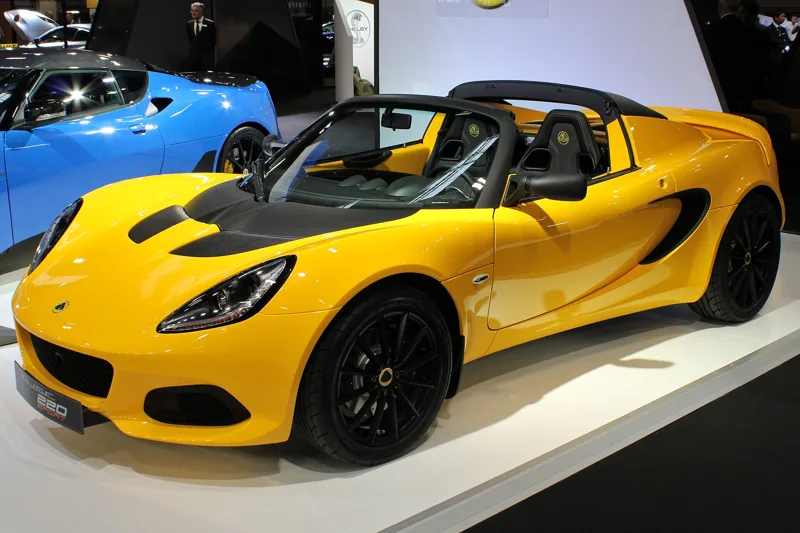
The brand has been busy rebuilding. In April 2021 Lotus announced plans to build only electric cars by 2028 and to lift output from around 1,500 cars a year to tens of thousands, with two billion pounds (US$2.8 billion) from Geely and Etika funding the change. Lotus Cars remains at Hethel in Norfolk, while Lotus Technology is headquartered in Wuhan, China.
Who owns Polestar?
Polestar is principally owned by Li Shufu's PSD Investment, Geely Holding and Volvo Cars. Its roots are in Flash Engineering, a Swedish racing team founded in 1996, which became Polestar Racing and then a Volvo tuning partner. Volvo bought it in July 2015, and in October 2017 Volvo and Geely announced it would become a standalone electric brand.
Its ownership has been moving towards the founder. In February 2024 Volvo said it would cut its stake in Polestar from around 48% to 18% by transferring 921 million dollars of stock. By April 2024 Geely Holding directly owned approximately 24% and the free float had risen to about 18%. In June 2025, PSD Investment put in 200 million dollars of equity, taking Li Shufu's holding to 44%, with Volvo's share falling from 18% to 16% and Geely and Li combined reaching 66%.
Polestar shares have traded on Nasdaq under the symbol PSNY since 24 June 2022. The company has no factory of its own: it takes an asset-light approach, with cars built in plants controlled by Volvo or Geely in China, the United States and South Korea.
Geely's Western brands at a glance
| Brand | Chinese owner | How and when | Detail |
|---|---|---|---|
| Volvo Cars | Geely Holding (majority) | Bought from Ford, closed 2 August 2010 | US$1.8 billion; 18% of shares listed in 2021 |
| Lotus | Geely | 51% bought on 24 May 2017 | Previously owned by Proton from 1996 |
| Polestar | Li Shufu's PSD Investment and Geely Holding | Volvo and Geely made it a standalone brand in October 2017 | 66% combined after June 2025 |
| Smart | Geely, 50-50 with Mercedes-Benz Group | Joint venture announced in January 2020 | Based in Ningbo; new cars use Geely's SEA platform |
| London EV Company | Geely Holding | Bought Manganese Bronze in February 2013 | Paid 11.04 million pounds; black cabs built in Coventry |
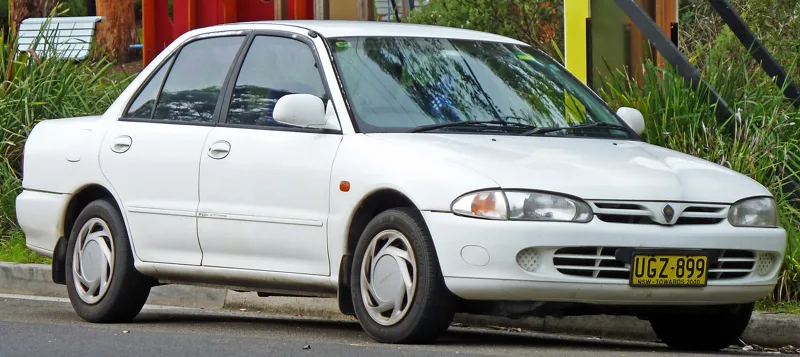
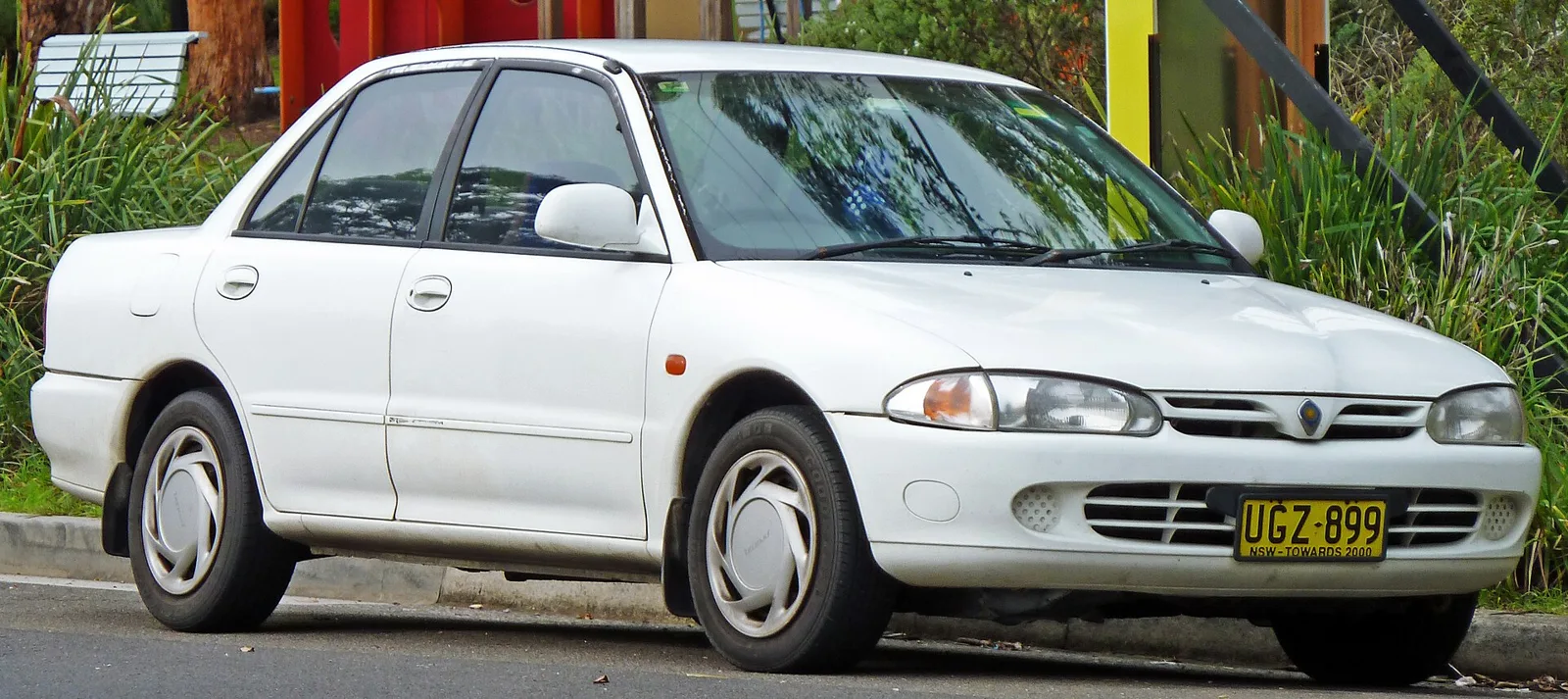
| Proton | Geely Holding (minority) | 49.9% stake finalised on 29 September 2017 | Malaysian carmaker |
| Aston Martin | Geely Holding (minority) | 17% stake | British sports car maker |
Has Chinese ownership changed how the cars are made?
At the level of engines, platforms and factories, it has. Under Geely, Volvo developed a new line of 3- and 4-cylinder engines to replace larger ones, and a new vehicle platform called Scalable Product Architecture. Volvo and Geely also jointly developed the Compact Modular Architecture, which is used by Volvo, Geely and Lynk & Co.
Volvo's sales give one measure. They reached 500,000 in 2015 for the first time in its history and grew to over 700,000 in 2023. Improving technical expertise and a sophisticated production management system are credited with a sales surge for Geely from 2010 onwards. Lynk & Co, launched in Berlin in October 2016, was designed to bridge the gap between Geely and Volvo and is owned 50% by Geely Auto, 30% by Volvo Cars and 20% by Geely Holding.
Electric and powertrain work is shared across the group. Volvo's hybrid engine operations moved into Aurobay, a joint venture with Geely, in 2021. Geely and Renault combined their combustion and hybrid powertrain operations into Horse Powertrain, established in late May 2024 and headquartered in London. The Smart cars from the Mercedes-Benz partnership, including the Smart #1 launched globally in 2022, sit on the SEA electric platform developed by Geely.
Manufacturing locations have shifted too. The Polestar 1 was built in a purpose-built centre in Chengdu, China, at up to 500 a year, and the Polestar 2 comes from Volvo's existing plant in Taizhou. Volvo itself still lists plants in Torslanda in Sweden, Ghent in Belgium, Ridgeville in South Carolina and Daqing in China. Its marketing still revolves around safety and Swedish heritage.
What else does Geely hold?
The stakes go beyond cars. Li Shufu, through his investment company, bought 9.7% of Daimler in 2018, and as of 2024 he was the second-largest Mercedes-Benz shareholder after BAIC Group. In December 2017 Geely Holding invested 3.25 billion euros for an 8.2% stake in Volvo Group, the truck and construction company, making it the biggest shareholder by number of shares.
Renault is a recurring partner. A Geely subsidiary was set to take 34% of Renault Korea Motors, and in June 2025 Geely Auto, Geely Holding and Renault announced a joint venture to build electric vehicles in Brazil, owned 73.57% by Renault, 21.29% by Geely Auto and 5.11% by Geely Holding. In September 2025, Mercedes-Benz Digital Technology took 3% of Qianli Technology, Geely's AI and autonomous driving company, for 1.34 billion yuan.
What stands in the way?
Geopolitics, mainly. In June 2026 Polestar announced it would withdraw from the United States market after the US Department of Commerce denied it the right to sell new vehicles after the 2027 model year, citing a rule against vehicles using connected software and hardware associated with China and Russia. The company said it would keep servicing existing cars there.
Trade and politics have touched the other brands. In June 2025 Lotus was considering moving car production from Norfolk to a new US plant because of high US tariffs, which threatened 1,300 jobs, though a UK-US deal was expected to lower tariffs to 10%. In June 2023 Ukraine blacklisted Geely because it would not leave the Russian market, and Swedish authorities began discussing a possible boycott of Volvo Cars, a discussion started by Sweden's Ministry of Defense. In October 2025 Polestar closed its last direct-sales store in China, saying its other Chinese operations would continue.
There have been commercial frictions too. In 2019 Citroen argued that Polestar's chevron logo was too close to its own. A French court ruled for Citroen in June 2020, Polestar cars could not be bought in France from December 2021, and the two companies were reported to have settled in September 2022.
What does it mean for someone buying or driving one?
For a buyer, the owner has not removed the national identity of each marque. Volvo Cars is headquartered in Gothenburg, builds in Sweden and Belgium as well as in the United States and China, and sells on its safety record. Lotus is still based at Hethel. Polestar is headquartered outside Gothenburg.
What changes is the engineering underneath and where it comes from. A Volvo, a Lynk & Co and a Geely can share a platform, a Smart sits on Geely's electric architecture, and a Polestar may be built in China, the United States or South Korea. Where you live matters as well, because Polestar has said it will leave the US market after the 2027 model year.
Where this goes next
The announced plans are mostly electric. Volvo said in early 2021 that it intended to stop selling fossil fuel-based cars completely by 2030. Lotus has said it will go electric-only in 2028, and Polestar said in 2022 that a roadster, the Polestar 6, was expected to enter production in 2026.
The ownership map is also still being redrawn. Geely consolidated Lotus Cars into Lotus Technology in August 2026, and the Brazilian joint venture with Renault was announced to produce vehicles under the Renault and Geely brands with a shared dealer network. In the US, Polestar's exit follows the 2027 model year, and the company will go on servicing existing cars.
.jpg)