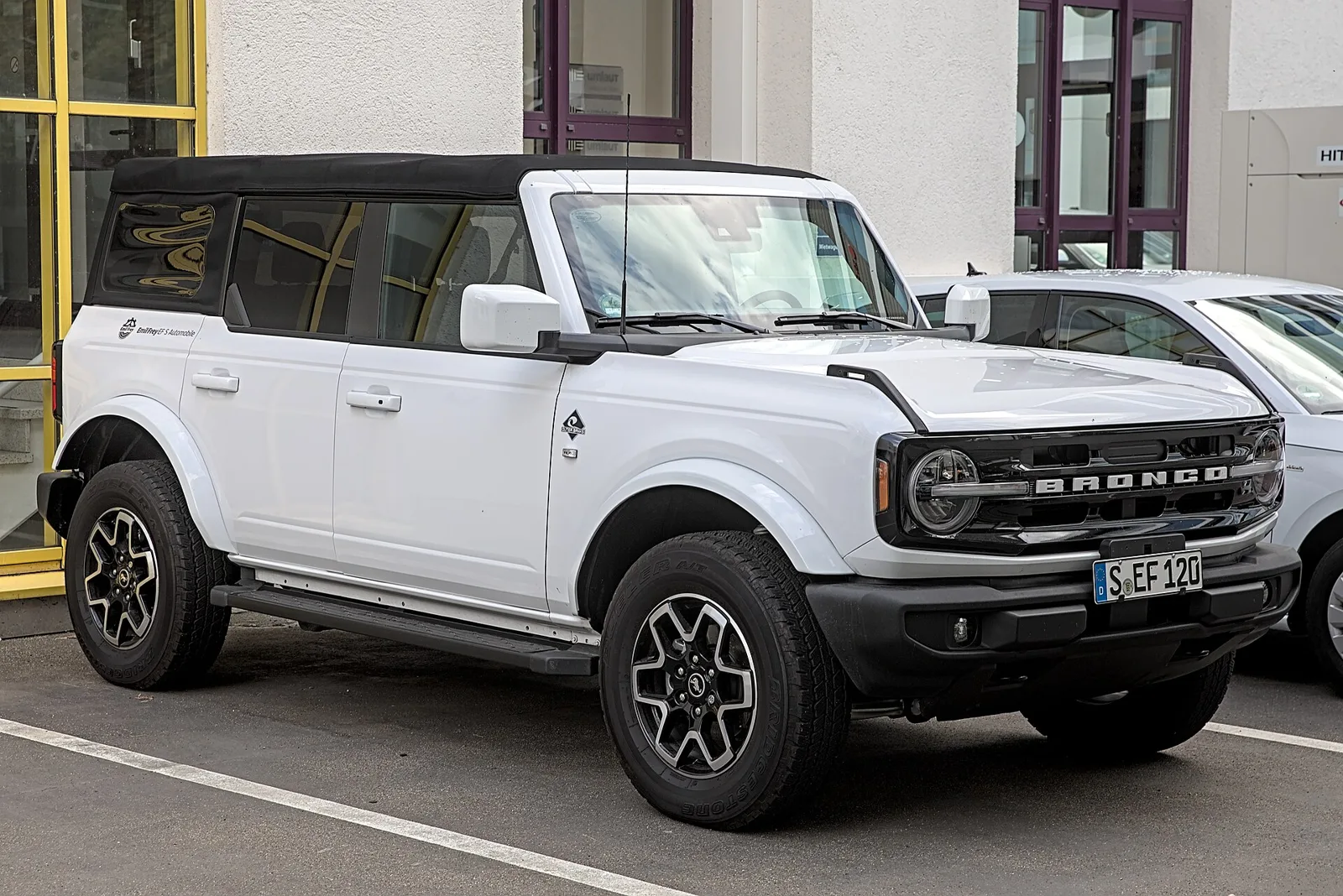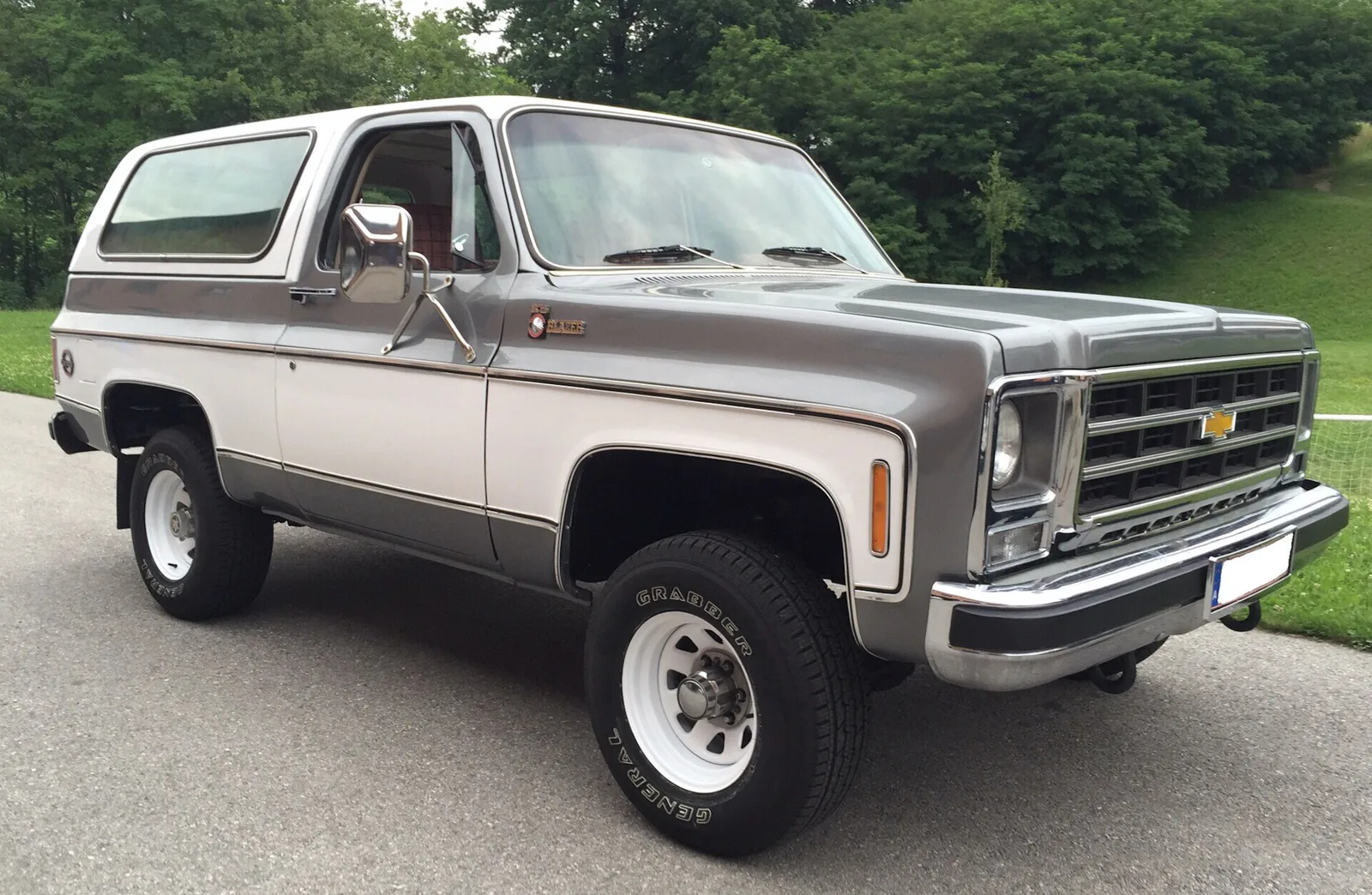
A half-cab 4x4, a baby Blazer, a six-cylinder TrailBlazer and a car-based Equinox show the platform decisions behind Chevrolet's SUV line.
Chevrolet's SUVs began with the 1969 K5 Blazer, a shortened pickup, and grew through the S-10 Blazer and GMT360 TrailBlazer. The unibody Equinox, introduced for 2005 to replace the Tracker and S-10 Blazer, moved the line to crossovers, while the full-size Blazer became the Tahoe in 1995.
When Chevrolet needed a name for a midsize crossover, it went back to a vehicle that began in 1969 as a pickup truck with its back cut off. The Blazer name travelled from a half-cab 4x4 with a removable roof to a Tahoe rename in 1995, and finally to a unibody crossover, while the Equinox and TrailBlazer took very different paths to similar showrooms.
Three ideas run through the story of the Chevrolet SUV line: building them on a truck frame, shrinking that truck frame for a smaller buyer, and eventually abandoning the frame for a car-based platform. The Blazer, the S-10 Blazer, the TrailBlazer and the Equinox each mark one of those switches.
How did the Chevrolet K5 Blazer start the SUV line?
The K5 Blazer was a full-size SUV marketed for the 1969 to 1994 model years, built as a shortened version of the half-ton C/K pickup. Chevrolet developed it to take on the International Scout and Ford Bronco, and by 1970 it had overtaken its rivals in the marketplace.
Designers took the K10 pickup and cut its wheelbase from 115 inches to 104 inches. The result outsized the Bronco and the Scout, and dwarfed the Jeep CJ-5. That bought more cargo space and steadier road manners, thanks to wider-set wheels and a longer wheelbase. Because it shared so much with the standard pickups, costs and price stayed low. Base cars were spartan, with the top and the passenger seat counted as options, while the shared parts bin allowed automatic transmissions, radios and air conditioning to be added.
Rivals responded. Chrysler introduced the Dodge Ramcharger and Jeep the Cherokee for 1974, and Ford moved the Bronco onto a shortened F-100 platform for 1978. GMC sold the same truck from 1970 to 1991 as the Jimmy. The K5 prefix appeared on Chevrolet badges until 1988, although General Motors never used it internally.
The Blazer name began on a pickup with its back cut off and ended up on a crossover.
What separated the three K5 Blazer generations?
The first generation (1969 to 1972) was the Action Line truck, the second (1973 to 1991) the Rounded Line, and the third (1992 to 1994) the GMT400. The big shifts were a rear-drive model in 1970, a half-cab design in 1976 and a permanent wagon body for the last version.
The first Blazers came only with part-time four-wheel drive, and a rear-drive version followed in 1970. Four engines matched the pickups: the 250 and 292 straight-sixes and the 307 and 350 small-block V8s. Transmissions included the Turbo-Hydramatic TH350 and a four-speed SM465 manual with a 6.55:1 first gear. The truck offered 8 inches of ground clearance and a 35-degree approach angle. Drum brakes were used at all four corners until 1971, when the whole GM light-truck range gained front discs.
The 1973 redesign gave the public its nickname, square body. Rear-drive Blazers lasted until 1982, though most buyers took four-wheel drive. Popular Science tested a 1973 car with the 175 hp 350 V8, automatic gearbox and full-time four-wheel drive and clocked 0-60 mph in 22.5 seconds, with 9.648 mpg at a steady 45 mph. A 1974 Blazer with the standard 250 six returned 13.69 mpg at the same speed. The rear window retracted into the tailgate on a manual crank or an electric motor, a system reputed to wear out cranks and overheat motors. The Blazer grew by 7 inches overall, with a wheelbase 2.5 inches longer, and gained a styling refresh in 1981.
From 1987 to 1991 GM temporarily relabelled the series R and V to avoid confusion with the GMT400 pickups, and the K5 emblems disappeared in 1988. Rear-wheel anti-lock brakes became standard in 1990. Engines ranged across 305, 307, 350 and 400 cubic inch V8s and a 6.2-litre Detroit Diesel V8, with the 250 six standard until 1982. The smaller 305, adopted from 1981, was underpowered and prone to detonation, and after throttle-body injection arrived in 1987 the 350 became the standard engine.
What happened to the full-size Blazer in 1992 and 1995?
For 1992 the Blazer became a three-door wagon on the GMT400 architecture, sharing its bodywork behind the doors with the Suburban and giving up the removable roof and the retracting tailgate glass. Three years later, for 1995, it was renamed the Tahoe.
The model grew by 3 inches in length and 6 inches in wheelbase. GMC retired the Jimmy name on its version in favour of Yukon, and gave Jimmy to its midsize SUV. Four Wheeler magazine named the Blazer its Four Wheeler of the Year for 1992, and in 1993 the Full-Size prefix was dropped. The only engine for 1992 was a 210 hp 350 V8 with throttle-body injection, joined in 1994 by a 180 hp 6.5-litre Detroit Diesel turbodiesel available only with an automatic.
How did the S-10 Blazer differ from the K5 Blazer?
The S-10 Blazer was a compact SUV built from the S-10 pickup for the 1983 to 2005 model years, where the K5 was a shortened full-size truck. Launched 14.5 inches shorter and 14.9 inches narrower, it earned the nickname baby Blazer, yet its cargo area was larger at 21.0 cu ft (595 L) against 20.1 cu ft (569 L).
General Motors introduced it for 1983 alongside the S-15 Jimmy to replace the Isuzu-based LUV truck. For eight years it came only as a two-door. A four-door arrived in March 1990 as a 1991 model with a wheelbase and body 6.5 inches longer, months before the Ford Explorer replaced the Bronco II. The Oldsmobile Bravada followed that year with an all-wheel-drive system called Smart-Trak.
Power started modestly: a 2.0-litre four making up to 83 hp, with a 2.8-litre 110 hp V6 optional. California cars used an Isuzu 1.9-litre four, and an Isuzu 2.2-litre diesel with 58 hp was on offer. The larger 2.5-litre Iron Duke replaced those fours after 1984, and a 4.3-litre V6 with 150 hp arrived for 1988, rising to 160 hp in 1989 and becoming the sole engine after the 2.8 was dropped. Four-wheel anti-lock brakes were standard from at least 1991, and in 1993 the badge changed to S-Blazer.
The second generation arrived as a 1995 model, dropped the S prefix and grew into a mid-size SUV. It took the 1995 Motor Trend Truck of the Year title unanimously, won the Playboy Truck of the Year and took the prize at the Detroit show, and used the 4.3-litre V6 alone. A 1998 refresh brought a new dashboard, a standard passenger airbag and four-wheel disc brakes, and the ZR2 package for two-door models added a wider track, about three inches of lift and 31x10.5 tyres for a little over $1,000. The Insurance Institute for Highway Safety rated it poor in the frontal offset test. US retail four-door sales ended in 2004, fleet production in 2005, and a Brazilian version continued through 2012.
Where does the Chevrolet TrailBlazer fit?
The TrailBlazer began as an upscale trim of the four-door S-10 Blazer for the 1999 model year and became its own mid-size SUV in 2001 on the GMT360 platform. It sold in North America until 2008 and was replaced by the Traverse in 2009.
Its all-aluminium Atlas inline-six produced up to 203.5 kW (273 hp; 277 PS) and 376 Nm, and no rival six-cylinder SUV in the class had more power when it appeared. An optional V8 with up to 225 kW (302 hp; 306 PS) used Active Fuel Management to shut down four cylinders on the highway. The 2002 North American Truck of the Year vote went to the TrailBlazer, and the six featured among Ward's 10 Best Engines from 2002 to 2005.
The EXT stretched the body by 410 mm (16 in) for three rows and seven seats, and the last one left Oklahoma City on 20 February 2006. The SS for 2006 was the first production SUV to wear Super Sport badging, a label first used on the 1961 Impala. It took the LS2 V8 from the C6 Corvette, with up to 395 bhp, and added a lowered, stiffened suspension, rear air levelling and 20-inch wheels. About 1.7 percent of TrailBlazers were SS models.
A next-generation GMT361 car planned for spring 2007 was reworked and then cancelled in June 2006 because of high development costs. The final TrailBlazer rolled off the Moraine line on 16 December 2008, a week ahead of the plant's closure, which was the subject of the 2009 HBO documentary The Last Truck. A 2012 recall by General Motors and Isuzu covered over 258,000 SUVs, among them 2006 and 2007 TrailBlazers, because window and lock switches could short-circuit.
The Asian TrailBlazer
The name returned in 2011 on a different vehicle. The second-generation Trailblazer debuted as a concept in Dubai in 2011, with the production car following at Bangkok on 21 March 2012. Like the K5 Blazer, the Tahoe and the S-10 Blazer before it, it sits on a truck frame, here the second-generation Colorado, topped by an enclosed three-row body.
It is built in Thailand and Brazil and sold across Southeast Asia, India, South Africa and the Middle East. In Australia it was the Holden Colorado 7 from 2012 and became the Trailblazer in 2017. Duramax diesels of 2.5 and 2.8 litres power most cars, with a 3.6-litre V6 in some markets, and a third facelift was unveiled on 17 April 2024.
How did the Chevrolet Equinox change the plan?
The Equinox is a crossover introduced in 2004 for the 2005 model year to replace the Tracker and S-10 Blazer. It rides on the unibody GM Theta platform with front-wheel drive as standard, and it was not designed for off-roading in the way that the truck-based Tahoe and TrailBlazer were.
The first generation was shown at the 2003 Detroit show and shared its mechanicals with the Pontiac Torrent. Its wheelbase of 112.5 inches was 5.9 inches longer than the Saturn Vue, and a sliding rear bench called Multi-Flex became its signature feature. CAMI built it at Ingersoll in Ontario, with the 3.4-litre V6 made in China and the transmission in Japan. A Sport model for 2008 and 2009 gained a 3.6-litre V6 with 264 hp and could reach 60 mph in under seven seconds, while the matching Torrent GXP was advertised against the BMW X3. Production ended in May 2009.
The second generation was announced on 21 December 2008 and debuted at the 2009 Detroit show, with the 2010 model going on sale in June 2009. A stiffened Theta platform carried gasoline direct-injection engines, a 2.4-litre Ecotec four as standard and a 3.0-litre V6 as an option. The 2013 model year brought a 3.6-litre V6 with 301 horsepower, 14 percent more than the 3.0, and the 2016 refresh was unveiled in Chicago on 12 February 2015. For 2017 the LTZ was renamed Premier. The 2010 Equinox was an IIHS Top Safety Pick.
Fuel economy drew scepticism. Edmunds InsideLine reported 18.8 mpg and Car and Driver 18 mpg against EPA ratings of 22 mpg city and 32 mpg highway. Motorweek managed 29.3 mpg in mixed driving, and The Truth About Cars suggested GM had inflated the ratings.
The third generation was unveiled on 22 September 2016. Gasoline versions of the 2018 Equinox went on sale in early 2017, with diesels following in the autumn. It also replaced the first-generation Captiva. The all-electric Equinox EV, introduced in 2022 with sales from 2023 for the 2024 model year, uses a separate design and underpinnings from the combustion Equinox.
How do the Chevrolet SUV nameplates compare?
| Nameplate | Years | Basis | Role |
|---|---|---|---|
| K5 Blazer | 1969 to 1994 model years | Shortened C/K pickup | Full-size, renamed Tahoe for 1995 |
| S-10 Blazer | 1983 to 2005 model years | S-10 pickup | Compact, then mid-size from 1995 |
| TrailBlazer | 2001 to 2008 in North America | GMT360 truck platform | Mid-size; replaced by the Traverse |
| Trailblazer (RG) | From 2011 | Colorado pickup frame | Three-row SUV for Asian and Brazilian markets |
| Equinox | From the 2005 model year | GM Theta unibody | Crossover replacing the Tracker and S-10 Blazer |
Where this goes next
General Motors later brought the Blazer name back for a midsize crossover SUV, and the Tahoe and Yukon continue alongside the Cadillac Escalade. The Equinox now also exists as the Equinox EV, and the Asian Trailblazer received its third facelift in April 2024.