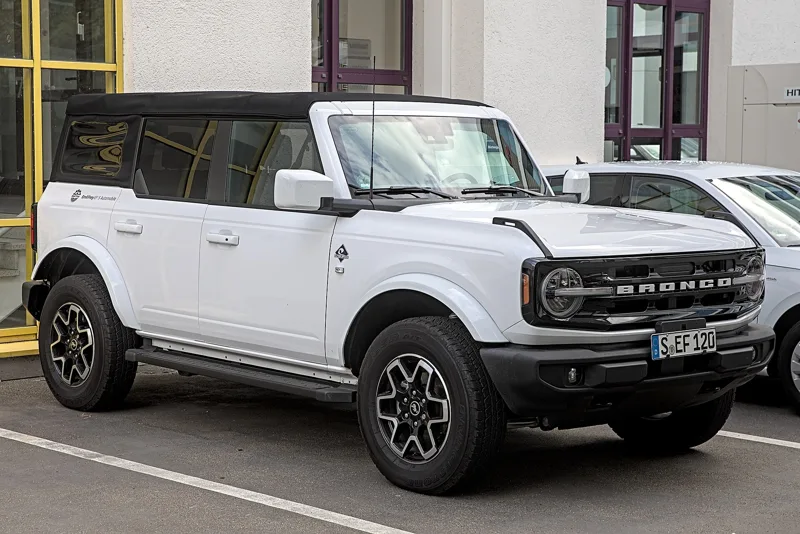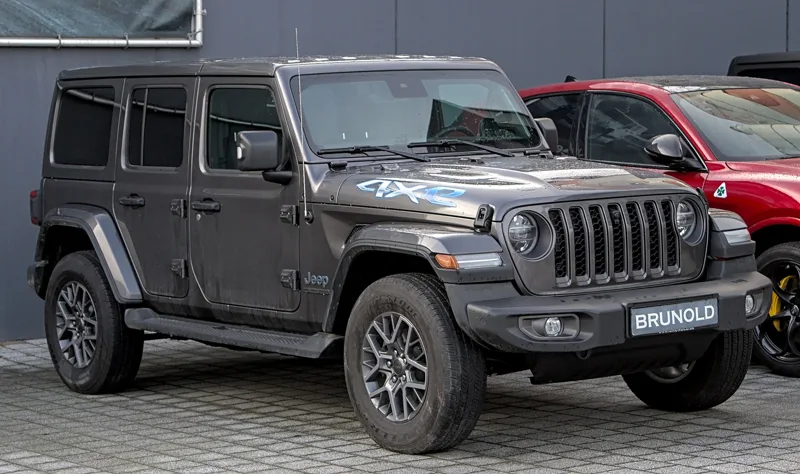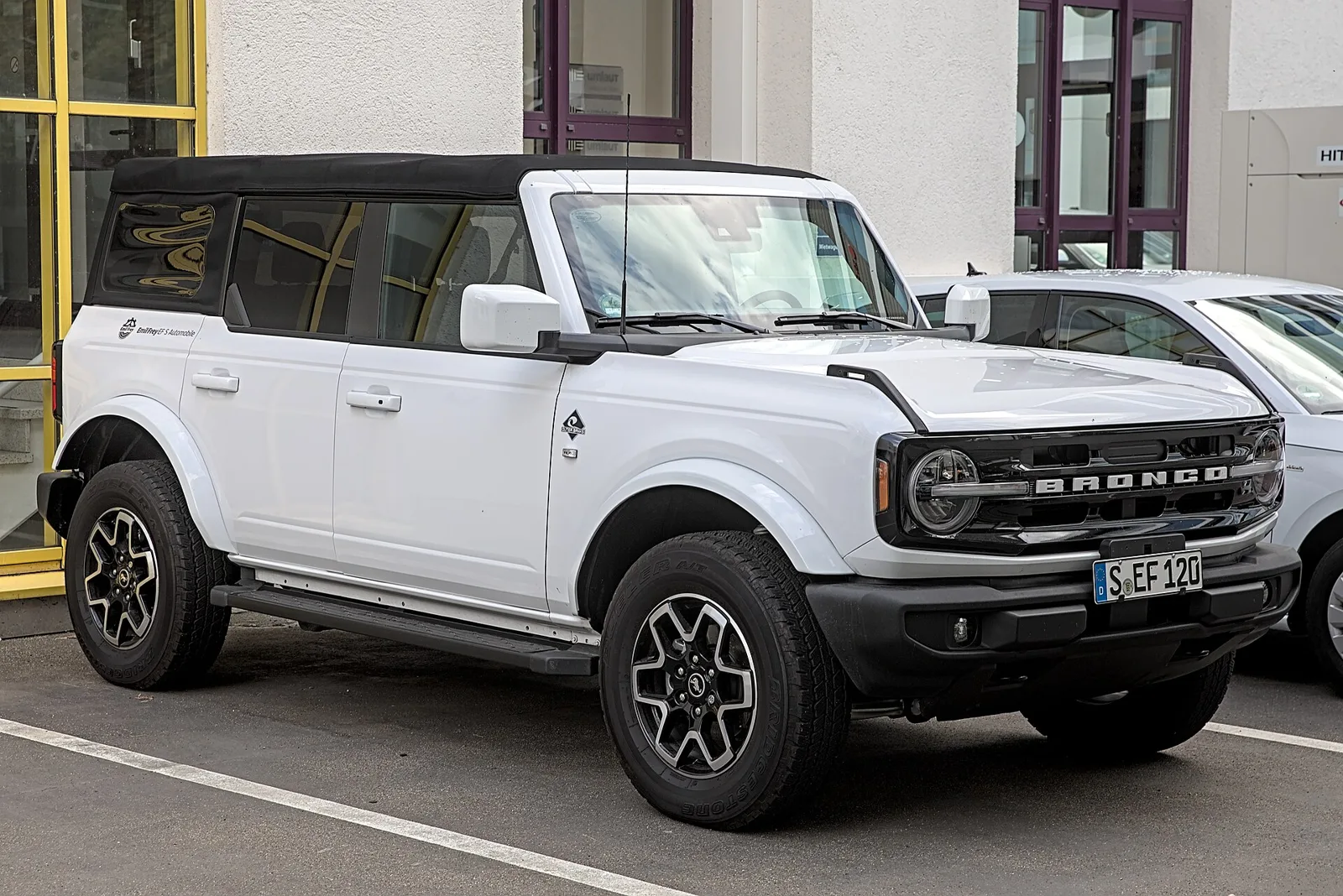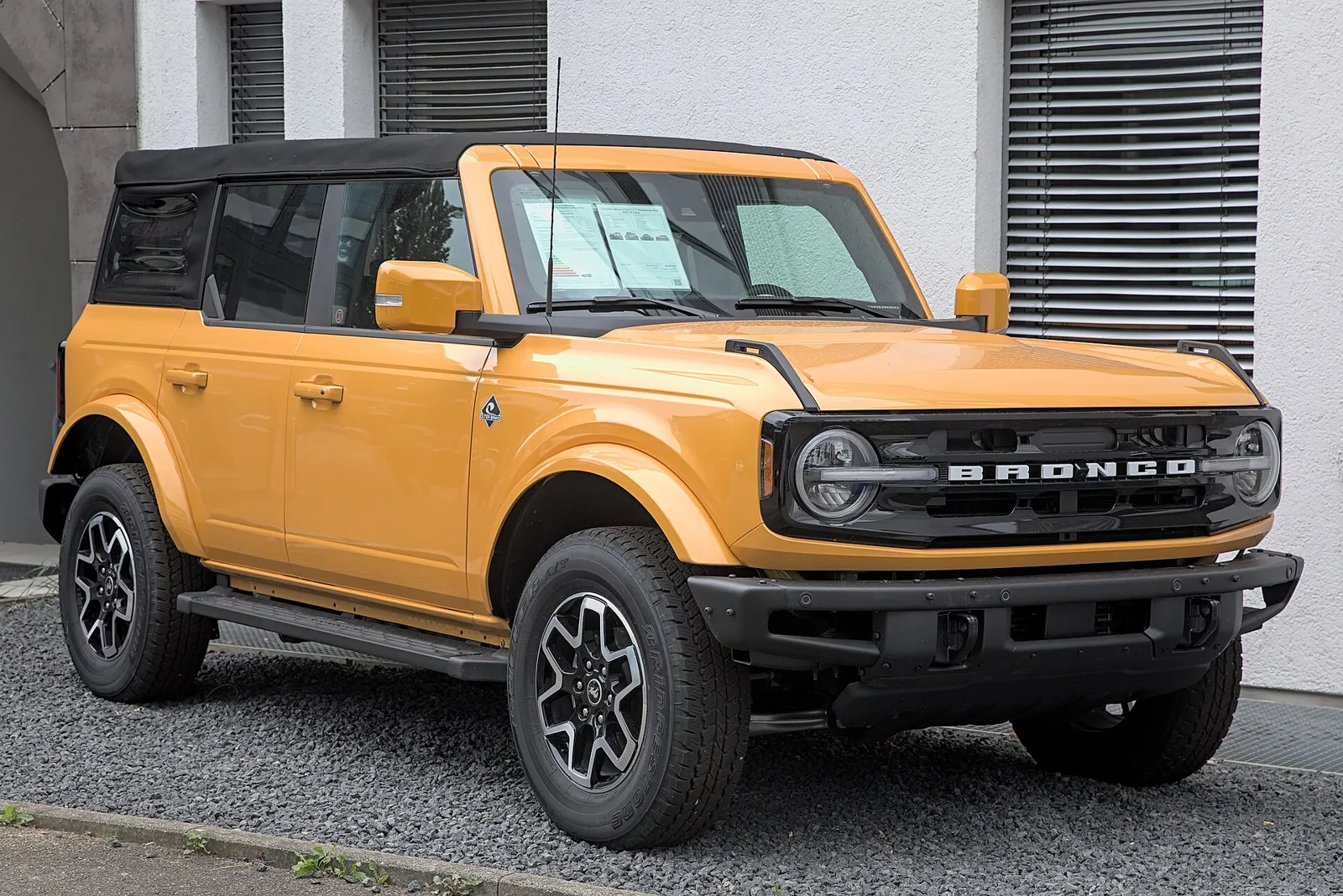
Ford's Bronco and Jeep's civilian CJ began as rivals in the compact off-road class, and their paths split when the Bronco grew into a full-size SUV in 1978.
The Jeep CJ, or civilian Jeep, is a line of compact open off-roaders built from 1945 to 1986, with more than 1.5 million made. The Ford Bronco, Ford's first SUV, ran in five generations from 1966 to 1996, with a sixth following for 2021.
The Ford Bronco and the Jeep CJ began as rivals in the compact off-road class, built for drivers who wanted a small, open vehicle that could go almost anywhere. The Jeep had a head start of more than two decades, since its civilian line dated back to the 1940s. The Bronco came later, in 1966, and it was designed to compete with the CJ-5. Their paths split when Ford made the Bronco a full-size SUV in 1978, while Jeep kept the CJ small for most of its life.
Where did each vehicle come from?
The Jeep CJ, short for civilian Jeep, was a line of small open off-road models and compact pickups built between 1945 and 1986. Willys' 1945 Universal Jeep is credited as the first mass-produced civilian four-wheel drive car in the world. Willys-Overland built the first CJ prototypes in 1944, adding a tailgate and moving the spare wheel to the side of the wartime Jeep.
The Ford Bronco was the first SUV that Ford developed. It was a model line of five generations sold from 1966 to 1996, followed by a sixth generation for 2021. Ford product manager Donald N. Frey conceived the idea in the early 1960s, and Paul G. Axelrad engineered it. Lee Iacocca approved the production model in February 1964, after the first clay models were built in mid-1963.
The Bronco was developed as an off-road vehicle to compete with the Jeep CJ-5, the International Scout and the Toyota Land Cruiser. Ford marketing shows an early example of promoting a civilian off-roader as a sports utility vehicle, and the two-door pickup version was the first model promoted this way.
Two compact off-roaders of the 1960s, one a civilian Jeep and one Ford's first SUV, that took different roads after 1978.
How were the two chassis built?
The Jeep CJ was built on a separate body and frame, with rigid live axles and leaf springs both front and rear. It had a tapering nose with flared fenders and a fold-flat windshield, and it could be driven without doors. Most CJs had part-time four-wheel drive with high and low gearing, and their open bodies took removable hard or soft tops.
The first-generation Bronco used a chassis developed for the model range alone, shared with no other Ford or Lincoln-Mercury vehicle. It had a 92-inch wheelbase, which sat between the CJ-5 and the Scout and was only an inch shorter than the later CJ-7. Its box-section body sat on a frame, and all examples were four-wheel drive with a Dana 20 transfer case and locking hubs.
The Bronco's front suspension was different from the CJ's. Radius arms located a coil-sprung front axle, with a lateral track bar, which gave a 34-foot turning circle, long wheel travel and antidive geometry that helped when snowplowing. The rear axle was a Ford 9-inch unit on leaf springs, and the front axle started as a Dana 30 before a Dana 44 took over in 1971.
What engines did the two vehicles use?
The Bronco launched in August 1965 with a 170 cubic-inch inline six, which made 105 hp. Derived from the Ford Falcon, it was modified with solid valve lifters and a heavy-duty fuel pump. In March 1966 a 200 hp 289 cubic-inch V8 became an option, and for 1969 it was enlarged to a 302 that lasted through 1977.
The first Bronco had a three-speed manual transmission with a column shifter at launch, which kept production costs down. A three-speed automatic was offered from 1973 in response to buyer demand. For 1973 a 200 cubic-inch inline six became the standard engine, and it stayed through 1977.
The CJ's engines changed over time as well. The CJ-3B got a taller grille and hood so that the new Willys Hurricane engine would fit. From 1963 a four-speed manual could be ordered for an extra $194. The CJ also received straight-six and V8 engines, automatic gearboxes and different four-wheel drive systems during its 42 model years.
How did the Bronco's early sales go?
The first Bronco sold well at first. Demand fell after the introduction of the Chevrolet Blazer, the Jeep Cherokee and the International Scout II, which ran from 1969 to 1974, as buyers moved towards SUVs with better on-road ability. The base price was $2,194 for 1966, equivalent to about $22,415 in 2025, and buyers could add options such as front bucket seats, a tachometer, a CB radio, a snowplow, a winch and a posthole digger.
Ford offered three body configurations for 1966: a two-door wagon, a half-cab pickup and an open-body roadster. The roadster was withdrawn after the 1968 model year because of its poor sales, and the half-cab was dropped after 1972, when Ford had introduced the larger Courier compact pickup. The Sport package, a chrome-trimmed wagon option from 1967, became a freestanding model in 1970.
The Jeep CJ kept selling for longer in its original form. Willys built the CJ-2A from 1945 to 1949, and 214,760 were produced. The CJ-3A followed from 1949 to 1953, with 131,843 built. The CJ-3B replaced it in 1953, and about 196,000 were made until 1968. The CJ-5 introduced round fenders in 1955, and the 1976 CJ-7 stretched the wheelbase by 10 inches and made doors and a removable hardtop common.
Kaiser Motors bought Willys-Overland in 1953, the same year the CJ-3B arrived, and the Kaiser parent company dropped the word Overland from the Willys name. Mitsubishi assembled about 550 CJ-3A models as the J1 and J2 in late 1952 and early 1953, for Japanese police and forestry use.
How did the two vehicles compete on the track?
In 1965 Bill Stroppe assembled a team of Broncos for long-distance off-road racing. Working with Holman-Moody, the Stroppe, Holman and Moody Broncos competed in the Mint 400, the Baja 500 and the Mexican 1000, which was later named the Baja 1000. In 1969 the team entered six Broncos in the Baja 1000.
In 1971 Ford dealers marketed a Baja Bronco package. It added quick-ratio power steering, an automatic transmission, fender flares that covered Gates Commando tires, a roll bar, reinforced bumpers and a padded steering wheel, along with bold red, white, blue and black paint. It cost US$5,566, against the standard V8 Bronco price of $3,665, and only 650 were sold over the next four years.
The CJ had a strong off-road reputation of its own. It was widely regarded as America's workhorse, and the CJ line was described as probably the most successful utility vehicle ever made. Jeep's own description of its end, in 1986, marked the close of an important era in the brand's history.
How did the Bronco become a full-size SUV?
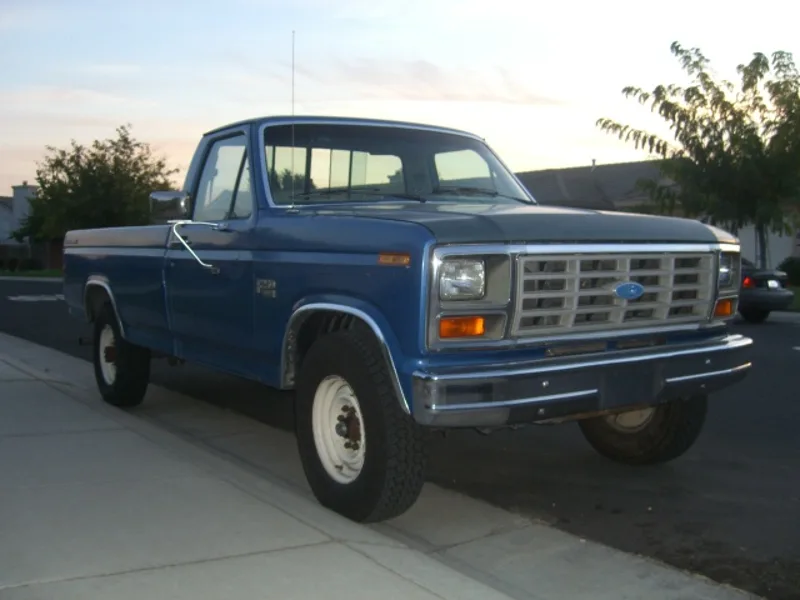
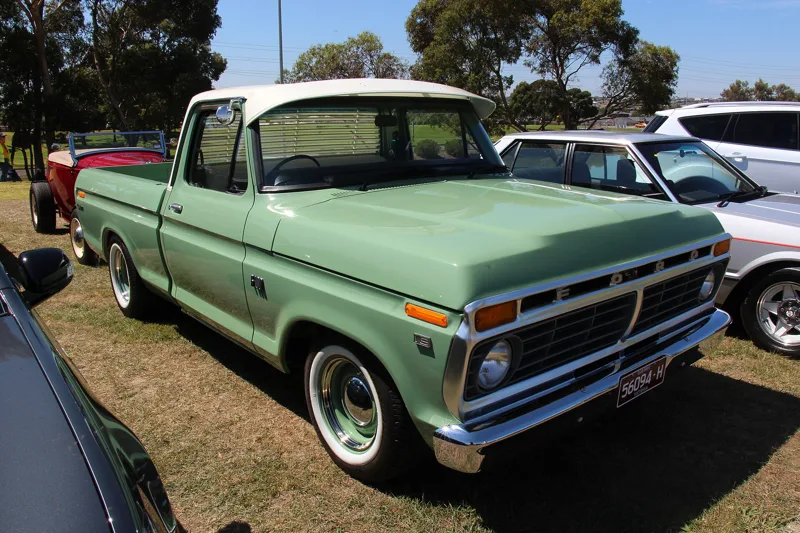
For the 1978 model year Ford released the second-generation Bronco. It was adapted from the F-Series pickup, which made it a shortened version of the F-100 4x4. To compete with the Chevrolet K5 Blazer, the Dodge Ramcharger and the Jeep Cherokee, the Bronco moved into the full-size SUV segment, and the change was intentional at a time when the industry was downsizing.
The adoption of the F-Series design added 12 inches of wheelbase, about 28 inches of length, 11 inches of width and 4 inches of height. Depending on the powertrain, the 1978 Bronco gained between 1,100 and 1,600 pounds of curb weight over its predecessor. The wheelbase reached 104 inches, and the car kept four-wheel drive as standard.
The second-generation Bronco had a V8 as standard, with a 400 cubic-inch V8 optional. The two engines offered much the same horsepower, but the 400 produced more torque. It was offered solely as a three-door wagon with a lift-off rear hardtop, designed by Dick Nesbitt with attention to stopping leaks around the top seals, and it sold so well in its two-year life that it overtook the Blazer and the Ramcharger in sales for the first time.
The CJ took a different path. The CJ-7 remained a small open vehicle, and in 1987 it was replaced by the first-generation Jeep Wrangler. The Wrangler looked very similar and rode on the same wheelbase, and it carried over important components, including its leaf springs.
How do the two vehicles compare side by side?
| Feature | Ford Bronco | Jeep CJ |
|---|---|---|
| Run | Five generations 1966 to 1996; sixth for 2021 | 1945 to 1986 as the CJ line |
| Chassis | Own chassis at first; F-Series-based from 1978 | Separate body and frame, rigid live axles |
| Suspension | Coil-sprung front on radius arms; leaf-sprung rear | Leaf springs front and rear |
| Wheelbase | 92 inches at launch; 104 inches from 1978 | CJ-7 stretched by 10 inches in 1976 |
| Early engine | 170 cubic-inch six, 105 hp; 289 V8 from 1966 | Willys four-cylinder, and later straight six and V8 |
| Size | Compact at launch; full-size from 1978 | Small open vehicle throughout |
| Output | Not given | More than 1.5 million built |
| Successor | Sixth generation in 2021 | Jeep Wrangler from 1987 |
Which buyer suits each vehicle?
The CJ suited buyers who wanted a small, simple open vehicle with proven off-road hardware. Its rigid axles and leaf springs gave it a durable, workmanlike character, and its removable tops and lack of doors made it easy to use on farms and trails.
The Bronco suited buyers who wanted a compact off-roader at first, and then a larger SUV with a more comfortable body. The 1978 model added air conditioning, a radio and tilt steering, along with a six-passenger interior for the first time, and it was far better suited to the road than the early model.
Neither vehicle is shown to be better overall. The CJ's long life and its place in Jeep's history are clear, while the Bronco's move to full size gave it a different market. The right choice depends on whether a buyer wants the small, rugged original or the larger, road-friendly SUV that the Bronco became.