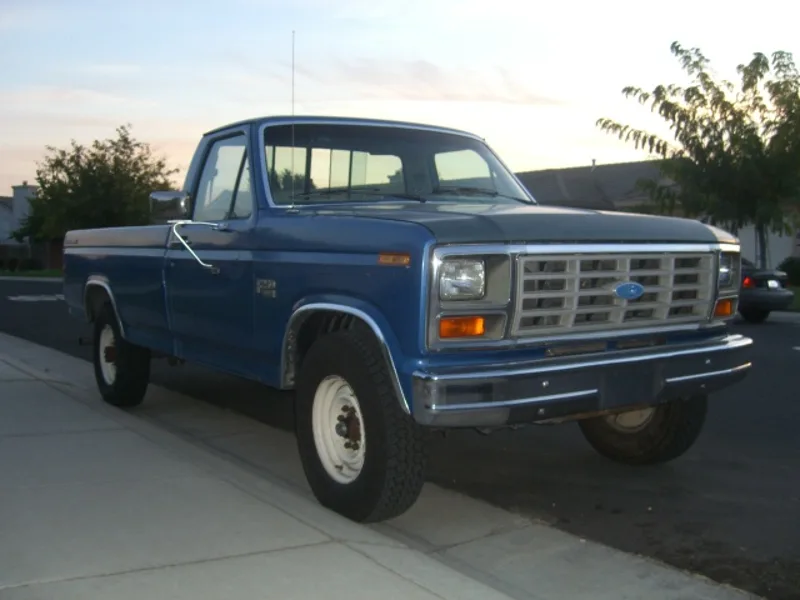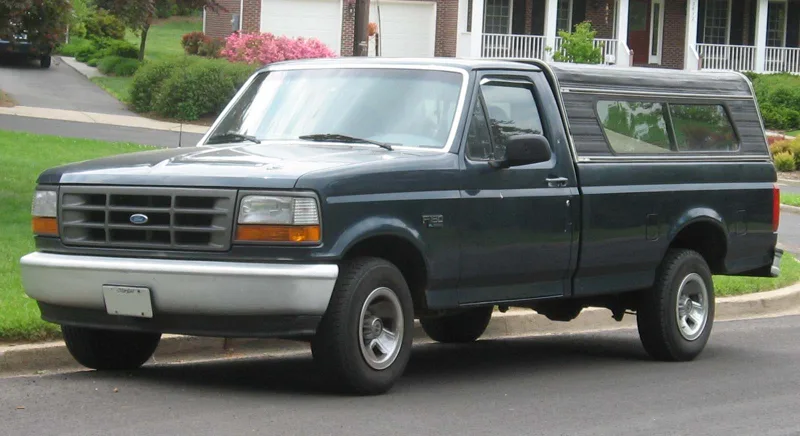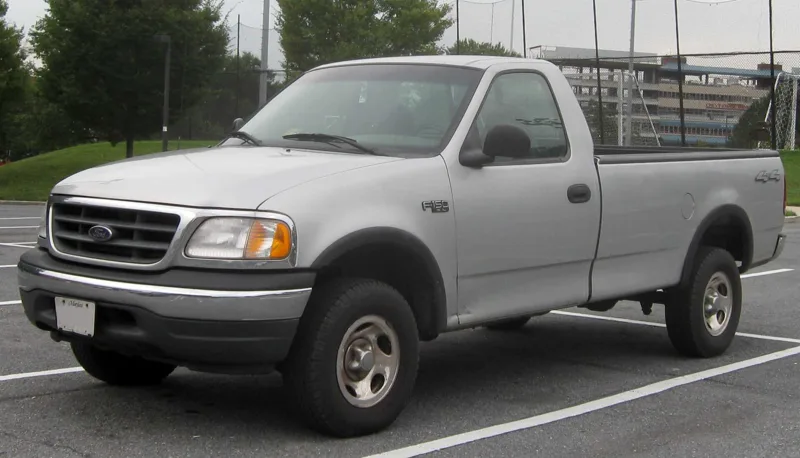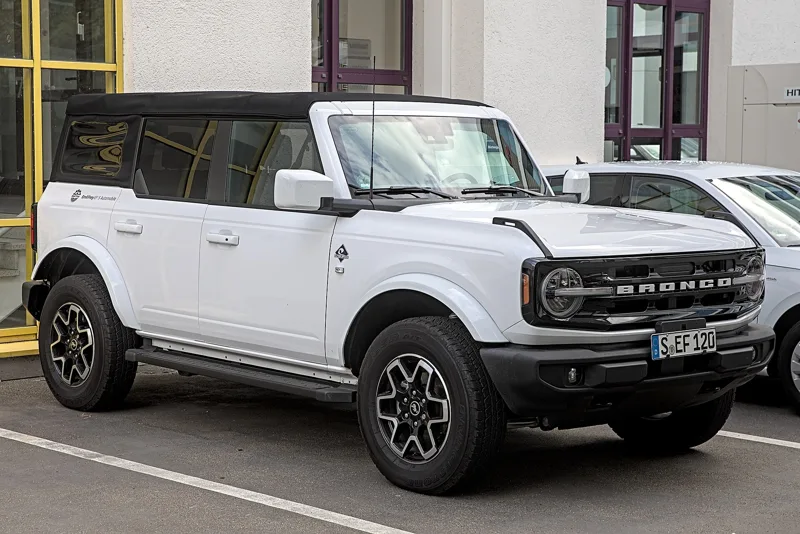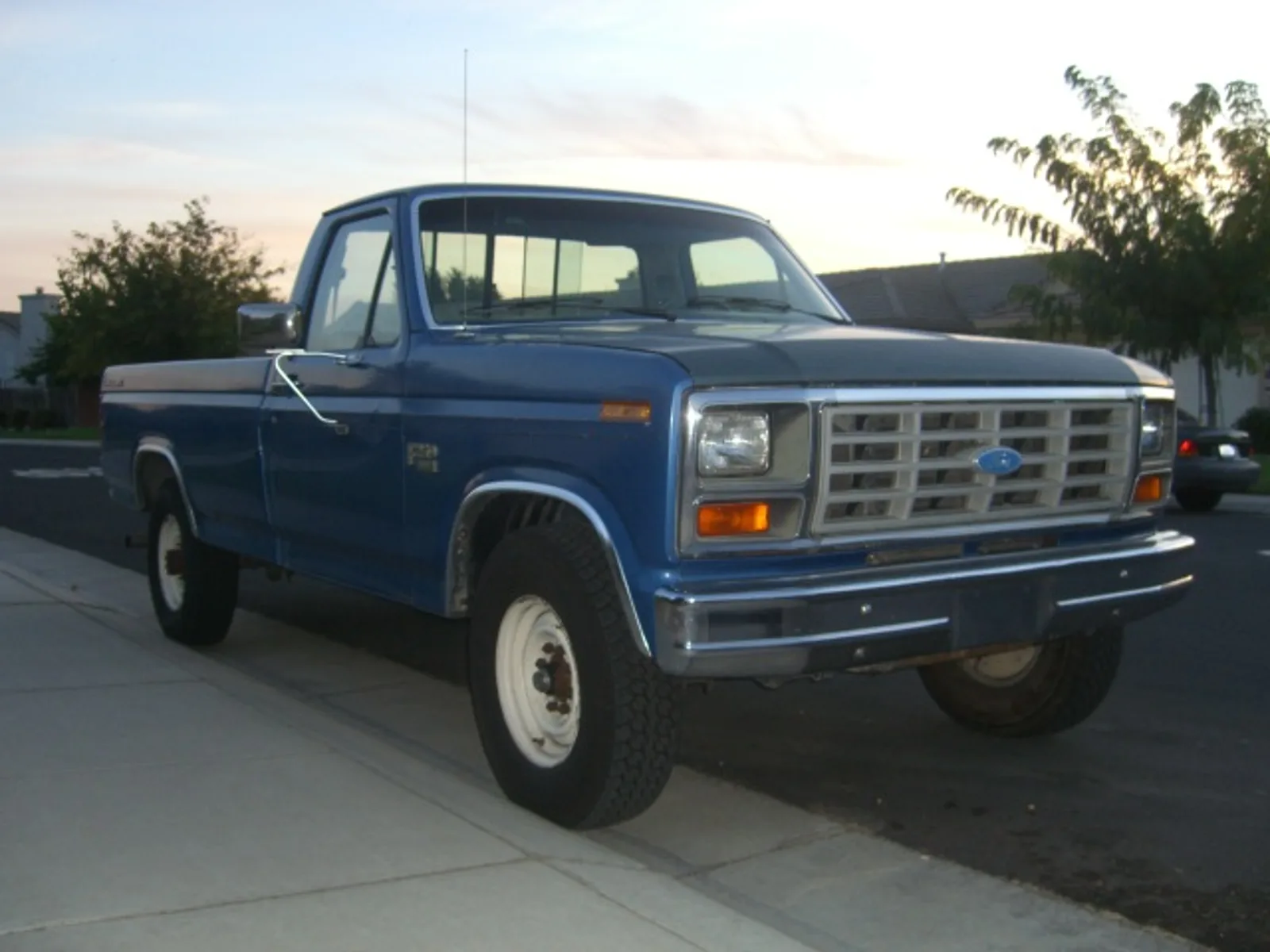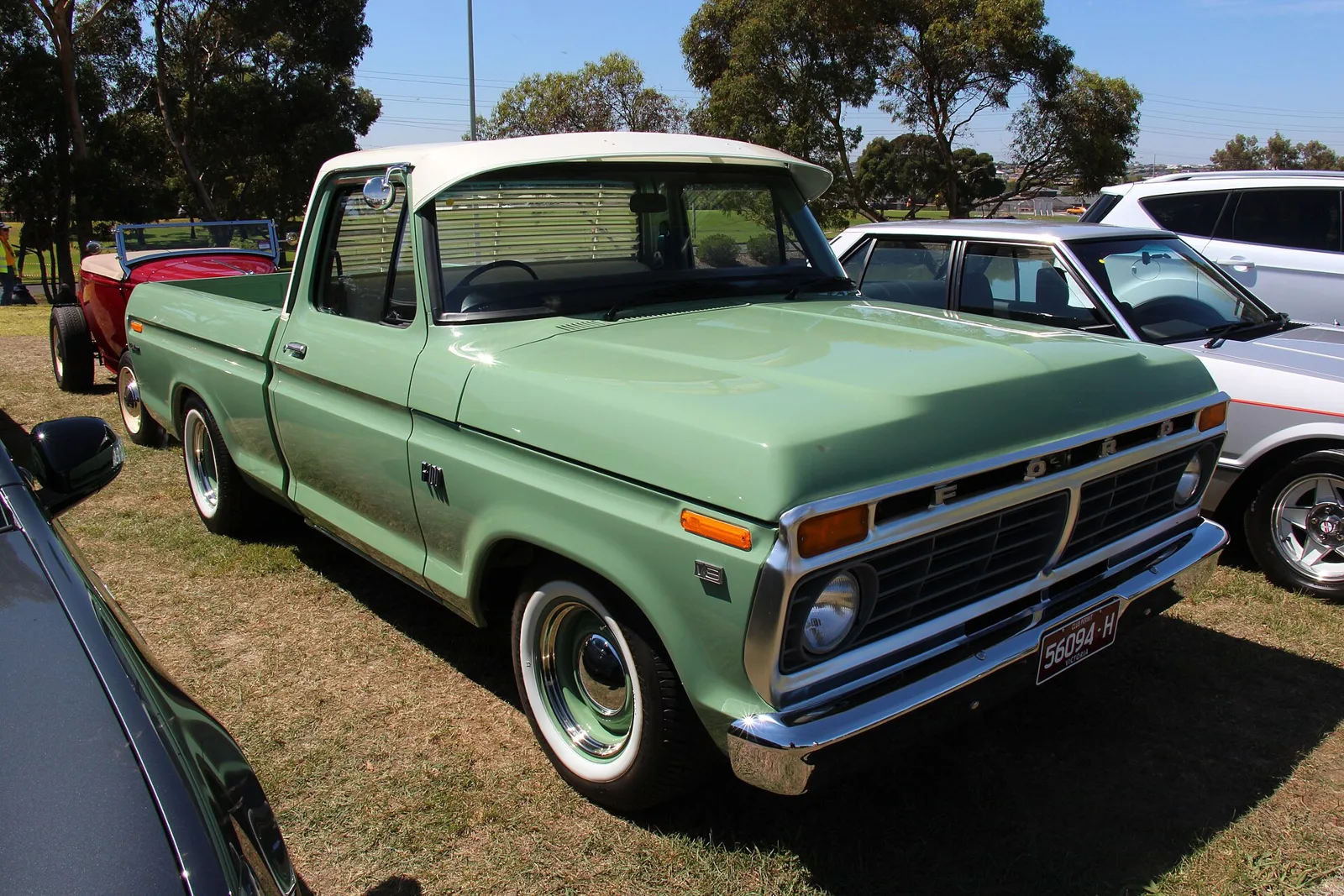
The dentside F-Series added the SuperCab and the F-150, passed the Chevrolet C/K in 1977, and gave birth to the Highboy and Bigfoot.
Built from 1973 to 1979, the dentside range added the SuperCab in 1974 and the F-150 in 1975. By 1977 it had moved ahead of the Chevrolet C/K in US sales, and it has led the market since.
The sixth-generation Ford F-Series was built from the 1973 to 1979 model years, and enthusiasts know it as the dentside Ford. It was the third and final generation derived from the 1965 F-Series, and it was made in North America, Argentina and Australia. Over those years the line added the SuperCab, the F-150 and a new Bronco, and by 1977 it had become the best-selling truck in the United States.
Where did the sixth-generation F-Series come from?
The sixth generation was launched in December 1972 for the 1973 model year. It kept the chassis of the generation before it but changed a good deal else. To fight corrosion Ford used more galvanised sheet metal, zinc-coated steel and zinc-rich primer. For safety the fuel tank was moved out of the cab and placed below the bed, which left a storage space behind the bench seat.
The line's growth was steady. By 1977 it had pushed ahead of the Chevrolet C/K as the country's top-selling truck, a lead it has kept. Its success rested on a broad range of models and body styles, along with a steady stream of updates.
The dentside trucks kept the 1965 chassis, added the SuperCab and the F-150, and went on to pass the Chevrolet C/K as the country's best-selling truck.
What changed between 1973 and 1975?
For 1973 Ford introduced a new heavy-duty F-350 V8 aimed at contractors and campers. It had a 140 in (3,556 mm) wheelbase, against 133 in (3,378 mm) on the F-100 and F-250, but the same overall length. Ordering the Camper Special package on a single-rear-wheel F-350 turned it into a Super Camper Special, built for the heavy slide-in campers of the period. The regular cab F-350 also became available with a wide Styleside bed for the first time that year.
For 1974 the F-Series gained an extended cab for the first time. Called the SuperCab, it delivered crew-cab seating for six in a more compact body, and it competed with Dodge's Club Cab. The model was introduced on 21 September 1973.
The F-150 arrived for 1975. It was a higher-payload version of the F-100, and its heavier GVWR of more than 6,000 lb (2,722 kg) was a design goal in its own right. The F-150 went on to become the most popular version of the line and eventually replaced the F-100.
How did the 1976 and 1977 models look?
In 1976 the split-grille design received a slight facelift, with black accents around the headlights and a more refined overall appearance. A limited Bicentennial Option Group was offered on Custom Styleside pickups that year, in Wimbledon White or Bahama Blue, with a golden eagle stripe and red, white and blue seat inserts.
The 1977 trucks had a trim revision. The cowl insignias became smaller and moved closer to the windscreen, and the bed gained a rectangular fuel door to hide the filler cap. The tank behind the seat was discontinued because of safety concerns. Ford also dropped the "Super" from the Super Camper Special, so F-350s with camper packages became simply Camper Specials, a name that had previously belonged to F-250s with those packages.
What changed in the 1978 and 1979 facelift?
In 1978 the grille was replaced by one larger unit, which no longer housed the headlamps or indicators. The headlamps moved into housings outboard of the grille, with the indicators below them, and a chrome Ford callout sat on the hood above the grille. Custom trucks kept round headlamps, while the Ranger, Ranger XLT and Ranger Lariat received rectangular ones with optional chrome bezels.
Dual fuel tanks in the bed became standard in 1978, and four-wheel drive could be specified on SuperCab models in part-time or full-time form. Full-time trucks used a chain-driven NP203 transfer case, while part-time versions had a gear-driven NP205. For 1979 every model adopted the rectangular headlamps, with black or chrome bezels to match the aluminium grille frame.
How were the trucks identified and trimmed?
GVWR depended on the wheel, spring, axle and brake combination, and the series code on the identification tag showed the model and its rating. Four-wheel-drive trucks could be recognised by their VIN and serial number. An F10 was a two-wheel-drive F-100, while an F11 was a four-wheel-drive F-100. Serial numbers beginning with an X denoted SuperCab models.
The trim line was trimmed back too. The base and Sport Custom trims were dropped, leaving Custom as the standard trim. The Ranger and Ranger XLT returned, and the Ranger Lariat was introduced in 1978 with cloth interior and special two-tone body and tailgate trim. Appearance packages added to the range included the Explorer package from 1974, with colour-keyed trim and wheelcovers, and the 1977 to 1979 Free Wheeling package with tape stripes and white-letter tyres.
What were the sixth-generation Australian trucks like?
Ford Australia built right-hand-drive sixth-generation trucks with locally sourced engines. The base model was the Custom, and the higher XLT was offered only on the F-100. The first trucks used US-sourced 240 and 300 cu in straight-sixes, but from August 1974 the 240 gave way to a locally sourced 250 cu in six, and the 300 gave way to a 302 Cleveland V8. The 302 was a destroked 351 Cleveland built with tooling sent to Australia when the Cleveland line closed.
The F-100 with the 302 was the first Australian sixth-generation truck to offer an automatic transmission. A Canadian-built four-wheel-drive F-250 with the 300 six arrived in 1975. In 1976 the 250 six was upgraded with a new crossflow head and renamed the 4.1 litre, and the F-100's gross vehicle mass was raised, going from 2,586 kg (5,701 lb) up to 2,770 kg (6,107 lb) before the 1977 specifications. A locally built four-wheel-drive F-100 followed in 1977, replacing the imported F-250 4x4.
In 1978 the 351 Cleveland replaced the 302 in the F-250 and F-350, while the 302 stayed in the F-100. In 1979 the 302 was discontinued, leaving the 4.1 litre six as standard and the 351 Cleveland, badged as the 5.8, as the upgrade. The F-250 and F-350 gained an automatic option in Australia for the first time, though only with the V8.
How did the Argentine F-Series compare?
Ford Motor Argentina continued production of the sixth-generation F-Series until 1982. The F-100 was sold as a pickup, and the F-350 came as a chassis cab, with the F-3500 offering a diesel version. The Argentine F-100 was available with a 221 cu in Econ straight-six, a 292 cu in Y-Block V8 and a 203 cu in Perkins diesel in four- and six-cylinder forms. A three-speed manual was the only transmission.
Argentine medium-duty trucks shared a grille design with American models of 1968 to 1972. The F-600 and F-6000 used a 292 V8 or a Perkins six diesel, while the F-7000 came with Perkins or Deutz six-cylinder diesels. Those trucks remained in production through 1983.
What was the Highboy F-250?
Highboy is an enthusiast nickname for the 1967 to 1977 F-250 four-wheel-drive trucks that used the narrower frame rails of the F-350 and a divorced transfer case. The design raised the ride height. The trucks were nearly 3 inches taller than an F-100 or F-150 4x4 and almost 6 inches taller than a two-wheel-drive F-250. The Highboy was historically significant because its layout formed the basis of Bigfoot, the 1974 F-250 that is often named as the first commercially promoted monster truck.
Highboy trucks used 3-inch front springs and 2 1/4-inch rear springs with nine leaves, and the rear axle sat on a 4-inch lift. Engines were a 240 six in 1973 and 1974, a 300 six from 1973 to 1977, and a 360 V8 from 1973 to 1976, which was replaced by the 351M and 400 V8s in 1977. Transmissions were a four-speed manual and a three-speed automatic, the latter only with V8s. Crew cabs were among the rarest versions of the generation.
In 1977 Ford introduced a married transfer case, attached to the transmission, which was used by the Jeep Gladiator and GM's Action-Line pickups. It allowed a ride height close to the two-wheel-drive trucks. The divorced design remained in production until the end of the 1977 model year.
What were the 1978 Bronco and the medium-duty trucks?
For 1978, after several years of delay, Ford released a second-generation Bronco to compete with the Chevrolet K5 Blazer and the Dodge RamCharger. It grew in size and used a shortened F-100 4x4 chassis. It kept the two-door wagon body, which was the most popular version, and adopted a half-cab hardtop design that lasted through 1996. The 1978 to 1979 Bronco was four-wheel drive only, with a 351M V8 as standard and a 400 V8 as an option.
The medium-duty F-Series had been redesigned for 1967 and changed little during the 1970s. The 1973 cab was adopted across the range, and the grille was revised. Ford ended production of the lowest-GVWR F-500 after 1977. Gasoline engines included a 370 cu in version of the 460 V8, which replaced earlier FE-series V8s in 1977. The Caterpillar 3208 V8 was offered in F700 and F800 models, and diesel trucks carried an extra zero in the name, such as F-7000.
What was the F-100 Eluminator?
Ford showed the F-100 Eluminator at SEMA in Las Vegas in 2021, a one-off electromod restoration of a 1978 F-100. It used an electric drivetrain and front and rear subframes from the Mustang Mach-E GT Performance Edition. Ford Performance designed it, and several aftermarket shops built it under contract to advertise the Eluminator crate motor for classic vehicles. The name alludes to the 5.2L Aluminator Modular V8.
Two traction motors, one per axle, pushed out 480 hp (360 kW) together and 634 lb ft (860 N m) of torque. Motor Trend tested the truck at 5,140 lb (2,330 kg), which was 160 lb (73 kg) heavier than the Mach-E donor. It reached 60 mph in 3.9 seconds against 3.6 seconds for the Mach-E, and ran the quarter mile in 13.0 seconds at 95.7 mph. Its estimated range was 200 mi (320 km) from the Mach-E's 88 kW-hr battery, which was 60 mi (97 km) short of the Mach-E's figure, partly because of the extra drag.
What are the sixth-generation F-Series specifications?
| Specification | Detail |
|---|---|
| Model years | 1973 to 1979 |
| F-350 wheelbase | 140 in (3,556 mm), against 133 in (3,378 mm) on the F-100 and F-250 |
| F-150 GVWR | More than 6,000 lb (2,722 kg), introduced for 1975 |
| Highboy ride height | Nearly 3 in taller than an F-100/F-150 4x4 |
| Australian F-100 GVM | 2,586 kg (5,701 lb) raised to 2,770 kg (6,107 lb) |
| Australian standard six | 4.1 litre, from the 250 CID six with a crossflow head |
| Eluminator output | 480 hp (360 kW), 634 lb ft (860 N m) combined |
| Eluminator 0-60 mph | 3.9 seconds |
| Canadian-built item | 4x4 F-250 with 300 CID six, added in Australia in 1975 |
| Bronco second generation | Released for 1978 on a shortened F-100 chassis |
Read the table with the year-by-year notes. Engine and market details change often across the generation, so each row should be read on its own.