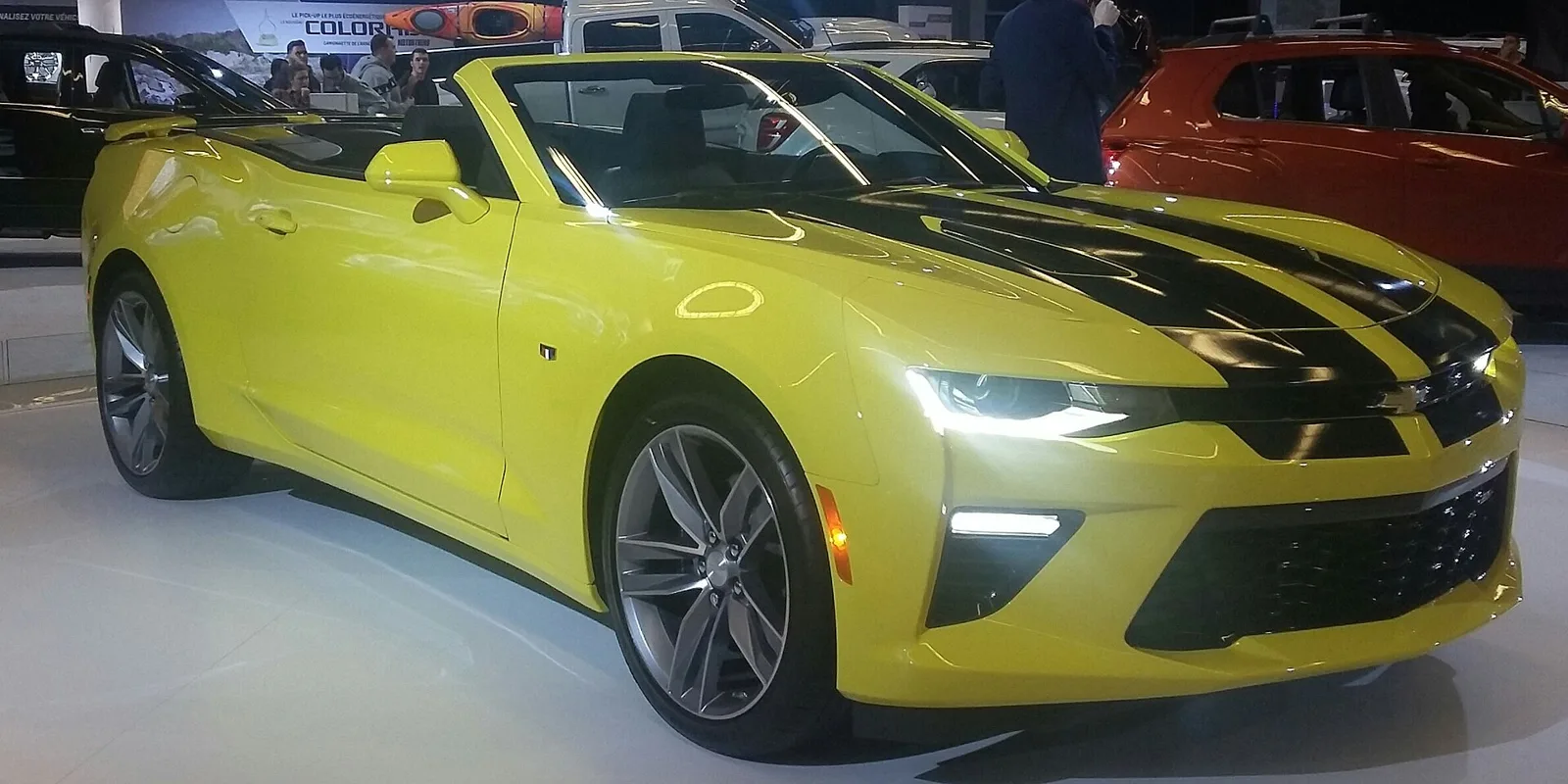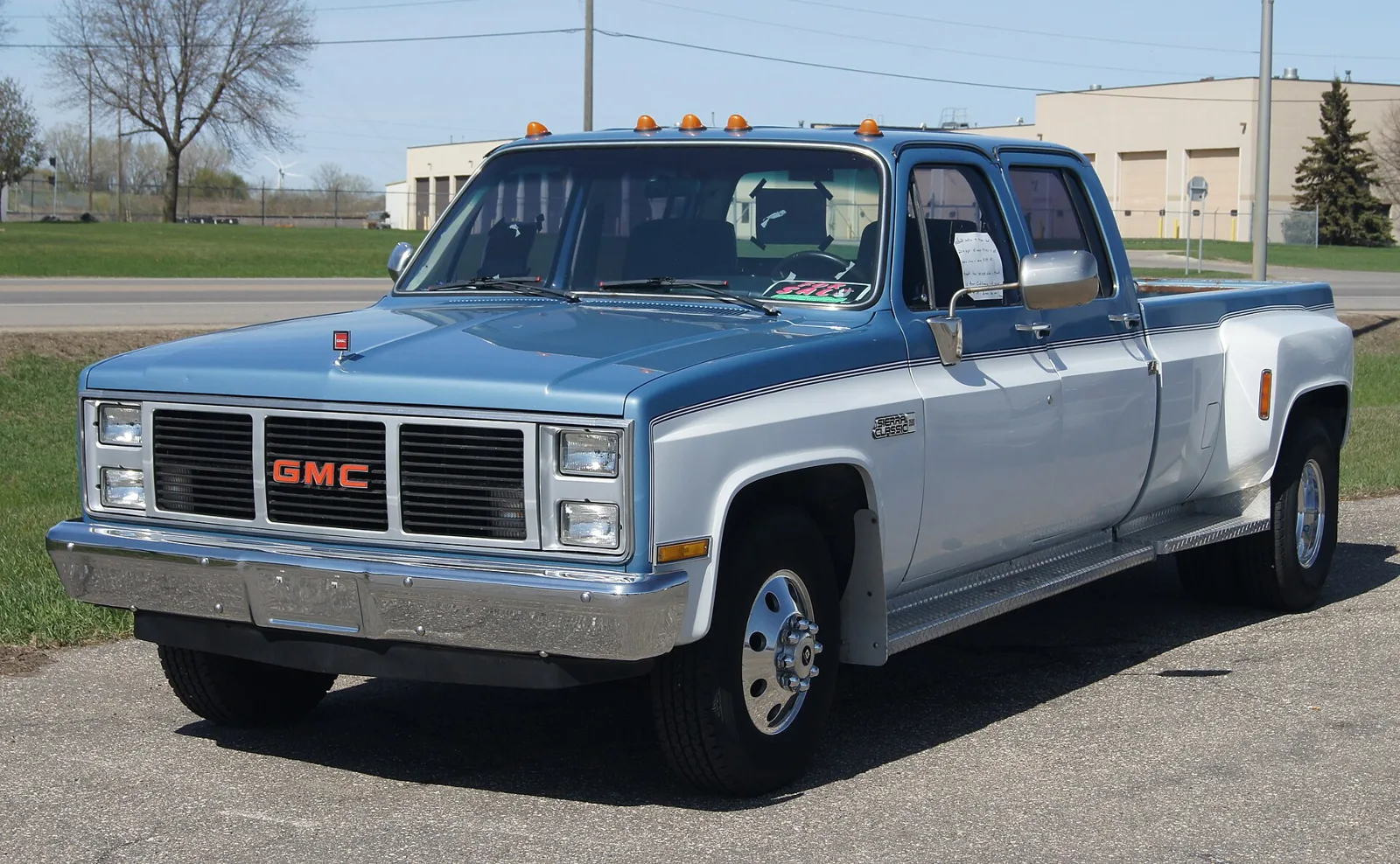
A General Motors truck line that ran for more than four decades, from the Task Force successor to the last heavy-duty chassis cabs.
The Chevrolet C/K was a General Motors truck line built from 1960 to 2002 in four generations. C meant two-wheel drive and K four-wheel drive, and the range ran from light pickups to heavy chassis cabs.
The Chevrolet C/K was a family of General Motors trucks built from the 1960 model year to 2002. Chevrolet and GMC both sold it, and it covered everything from light pickups to medium-duty chassis cabs and the platform for GM's full-size SUVs.
Over four decades the C/K went head to head with the Ford F-Series and Dodge's D-series trucks, the two rivals that defined the American full-size pickup market. Its later years also produced a South American family of trucks that borrowed heavily from the American designs.
Where did the C/K name come from?
The letters were a simple code. C stood for two-wheel drive and K for four-wheel drive, and GMC devised the system, with C meaning a conventional cab. The first generation was one of the few GM trucks of its time that never received an in-house nickname.
Four generations of C/K were built. GM called the second generation the Action Line and the third the Rounded Line. Enthusiasts later knew the fourth as the OBS trucks, a shorthand for Old or Original Body Style.
A working truck that became a family vehicle, then the basis of GM's full-size SUVs.
How did the first generation begin the line?
The first C/K launched in the autumn of 1959 as a 1960 model, taking over from the Task Force range. It was engineered as a truck from the start, so it no longer shared its platform with GM's A-body cars. Durability came first, though the designers borrowed several touches from passenger cars.
Pickups used a drop-center frame that let the cab sit lower and kept the centre of gravity down. Front torsion bars gave way to coil springs on two-wheel drive models for 1963, and the hood was redesigned for 1962. A new windshield and A-pillar were added to the cab for 1964.
No comprehensive facelift ever came during this first generation. Instead, GM made a steady run of smaller revisions, most of them to the drivetrain line-up and the cab trim, and the basic truck stayed recognisable through 1966.
What did the Action Line trucks change?
The second generation arrived for 1967 and was called the Action Line by General Motors. Its body was drawn again from scratch, aimed at a truck that could work on farms and building sites while still offering car comforts. The drop-center ladder frame and coil-sprung rear axle carried over.
Buyers could order the work-ready truck or add car-style options such as automatic transmissions, a radio with AM and FM bands, carpeting, and two-tone paint. The engine line also grew, because a large-block V8 appeared for the first time in 1968.
From 1969, GM switched entirely to Chevrolet-built engines for its C/K pickups. The same generation brought the Chevrolet Cheyenne in 1971 and the GMC Sierra in 1972, and General Motors still sells full-size pickups under both names.
Descendants of the Action Line pickup include the Chevrolet K5 Blazer, an open off-road vehicle, and the Suburban, a truck-based station wagon. Those models were the ancestors of today's full-size SUVs. For 1973 the Action Line gave way to the Rounded Line, and the Action Line trucks were the last C/K pickups sold solely as two-door cabs.
Why was the Rounded Line called the square-body truck?
The Rounded Line, introduced for the 1973 model year, was the third generation. It grew inside and out, and as pickups became personal vehicles their cabs took on more of the features found in GM sedans, such as power windows and power door locks as options. A four-door crew cab seating six was added to widen the appeal.
Relatively straight and boxy, the trucks earned the square-body nickname among the public. They were the first C/K designed with the help of computers and wind tunnels, and the shape was tuned to reduce drag and improve fuel economy. The chassis was all-new, with a leaf-spring rear suspension on every truck.
The K-Series models moved to all-wheel drive, and shift-on-the-fly 4x4 arrived for 1981. The same generation produced the dual rear-wheel pickup, nicknamed Big Dooley.
In 1978 the C/K offered the first diesel in an American full-size pickup, a 5.7L Oldsmobile unit. A 6.2L diesel V8 followed for 1982. The generation also introduced the Chevrolet Silverado nameplate, which Chevrolet still applies to its full-size trucks.
Across 18 model years the Rounded Line ran, the longest of any C/K generation. In 1987 the earlier trucks became the R/V series so that they could sit beside the fourth generation, and they were phased out by the 1991 model year.
How did the fourth-generation C/K split the Sierra name?
A fourth generation debuted in April 1987 as a 1988 model. Its GMT400 codename was used internally, and enthusiasts called the trucks the OBS. The cab was slightly smaller than its predecessor's, yet the interior gained room.GM added an extended cab to the range, although Ford and Dodge had offered one for more than a decade. For almost five years the fourth generation was sold beside the R/V, because the crew cab that would underpin the Suburban did not arrive until the 1992 model year.
The branding changed as well. The C/K name became exclusive to Chevrolet, since every GMC pickup now carried the Sierra badge, although GMC kept the C/K label as an internal model code. Chevrolet added specialist models including the W/T 1500 work truck, the Z71 off-roader and the high-performance 454SS.
A mid-cycle revision in 1995 added a driver-side airbag, and dual airbags became standard for 1997. A rear-hinged third door appeared on selected 1500 extended cabs in 1996.
For the 1999 model year the newer Silverado and Sierra took over, and the fourth-generation trucks were renamed the Silverado Classic and Sierra Classic. Pickups were discontinued after the 2000 model year. GM kept building the heavy-duty C3500HD chassis cab until 2002, making it the final C/K model.
How did the South American trucks differ?
Between 1964 and 2001, GM's Brazilian arm built three generations of light Chevrolet pickups. Each was derived to a varying degree from the American C/K of its day. The Brazilian range also included truck-based station wagons and SUVs in the style of the Chevrolet Suburban.
The first Brazilian light trucks, the C-series of 1964, wore a body exclusive to the country but shared their instrument panel with the first-generation American C/K. A double cab arrived almost a decade before its American equivalent, and the wagon was renamed Veraneio in 1969.
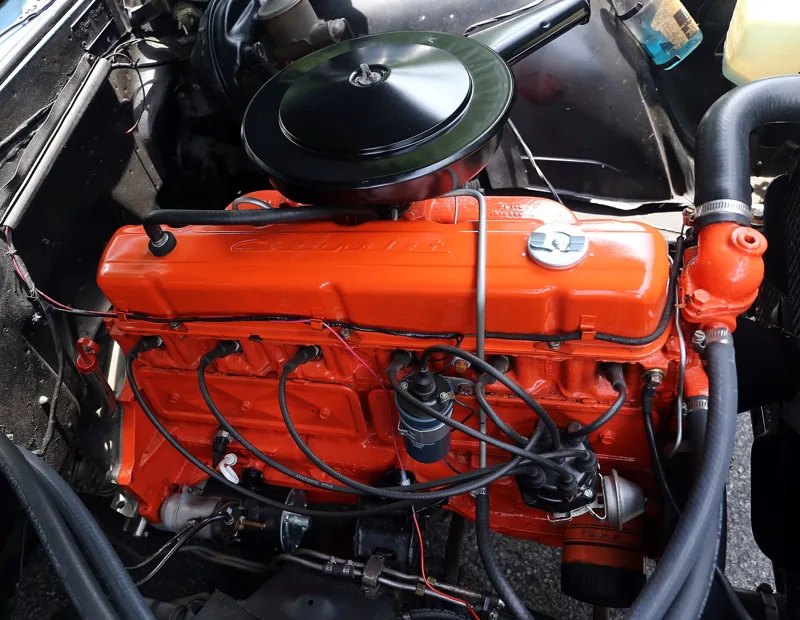
Engines followed a similar path. The 1964 truck used a 261 cu in inline six based on the Stovebolt engine, and a 250 cu in Opala six replaced it in 1971. By 1976 the standard petrol engine had become a 2.5-litre four, with a Perkins diesel joining the range for 1978.
Sharing its cab with the Rounded Line, the 1985 20-series carried its own front fascia. Its four-wheel drive version, offered for 1989, was withdrawn before the model year ended because of poor drivetrain reliability.
Built in Argentina at first, the 1997 Brazilian Silverado moved production to Brazil in 2000, when it gained the D-20 suffix. GM Brazil ended full-size pickup production in January 2002, having lost ground in the truck segment for years.
Chevrolet C/K generations at a glance
| Generation | Years | Key change |
|---|---|---|
| First (no GM nickname) | 1960-1966 | Drop-center frame, coil-sprung rear axle |
| Second (Action Line) | 1967-1972 | Redesigned body; Cheyenne and Sierra names |
| Third (Rounded Line) | 1973-1991 | Four-door crew cab; diesel from 1978 |
| Fourth (GMT400, OBS) | 1988-2000 | Extended cab; Sierra split from the C/K |
How did the Chevrolet C/K line finally end?
Pickup production ended after the 2000 model year, and chassis cabs followed until 2002. The Silverado and Sierra names that followed carried on the full-size pickup role the C/K had built up over four decades.
The medium-duty side of the line left earlier. From 1990 GM swapped its medium-duty C/K for the Kodiak, sold by GMC as the TopKick. The C3500HD stayed in production until 2006, but only for the Mexican market, which was the one exception to the 2002 end date.
Across its four generations the C/K showed how a working truck could also become a family vehicle. Its diesel options, four-door cabs and SUV offshoots mark the points where that change is easiest to see.