A hollow axle, cast alloy wheels and a race car you could buy: how one Molsheim design became the benchmark for a Grand Prix winner.
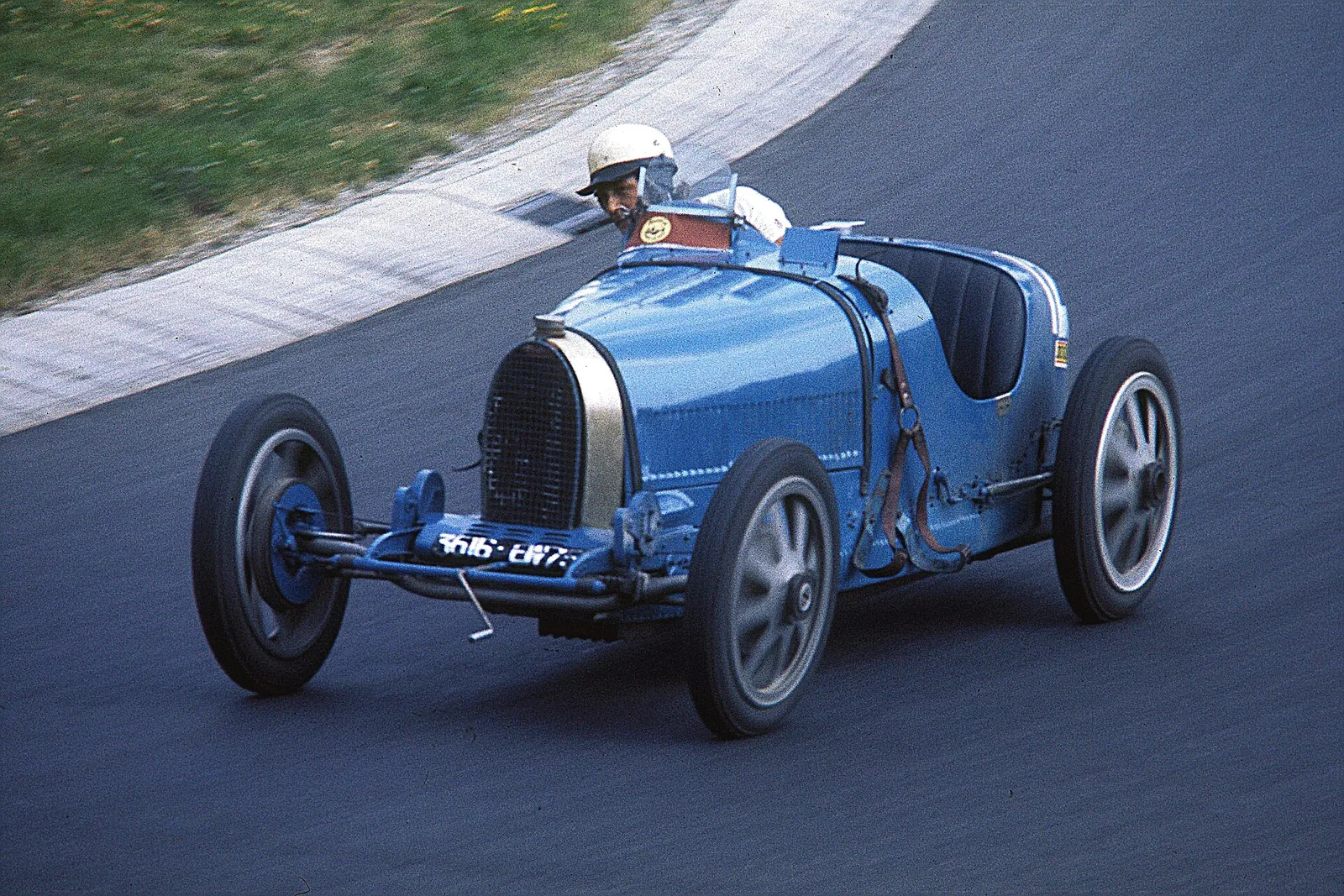
The Bugatti Type 35, built at Molsheim from 1924 to 1930, won over 1,000 races and the 1926 Grand Prix World Championship. A light straight-eight, hollow front axle, alloy wheels and a race-ready customer version made it a winner and made Bugatti's name.
At the height of its career the Bugatti Type 35 won an average of 14 races a week. Over its life it won more than 1,000, and in the two seasons before it took the 1926 Grand Prix World Championship it had collected 351 wins and set 47 records. For a car you could simply order from the factory, that is an astonishing ledger.
What was the Bugatti Type 35?
The Type 35 was a racing design built at Bugatti's Molsheim works between 1924 and 1930. The factory team made it famous, but it also pioneered something just as important: the idea of a race-ready car that anyone could buy. Privateers from around the world did, and they took it to circuits well beyond the reach of the works cars.
It looked the part. The arch-shaped, almost egg-shaped radiator became a Bugatti signature, and so did the tail. The tapered stern has been called a Bordino tail, after Pietro Bordino, who drove and modified the earlier Fiat 804 that may have influenced Ettore Bugatti's shape. The Type 35 is also remembered as the first car to use cast alloy wheels.
Weight was the enemy.
How did the Type 35 start?
Not well. The car made its debut at the 1924 French Grand Prix at Lyon, with the engineer and driver Jean Chassagne at the wheel, and the outing was spoiled by badly vulcanised Dunlop tyres. Even so, it showed promise, and refinements made it more competitive race by race.
What made the Bugatti Type 35 so good?
At its heart was an evolution of the three-valve, overhead-cam straight-eight from the Type 29. It displaced 1,991 cc (121.5 cu in), with a bore of 60 mm and a stroke of 88 mm (2.36 in by 3.46 in), the same dimensions as on many earlier Bugattis. What was new was a roller bearing system. Five roller bearings in all let the engine rev to 6,000 rpm, and output reached up to 90 hp (67 kW).
The chassis details mattered as much. The alloy wheels were a novelty, and the front axle was hollow, which reduced unsprung weight, meaning the mass that the springs do not support and that therefore hammers the road. Bugatti also passed the springs through the front axle instead of simply U-bolting them to it, as on earlier cars, a feature that would become a trademark. Even the dashboard had a touch of watchmaking: an 8-day clock made by Doxa.
Bugatti Type 35 variants
| Model | What changed | Engine or output | Built |
|---|---|---|---|
| Type 35 | Original, un-supercharged 1,991 cc straight-eight | Up to 90 hp (67 kW) | 96 |
| Type 35A "Tecla" | Simpler, road-going, with coil ignition and wire wheels | Plain-bearing crankshaft, smaller valves | 139 |
| Type 35T | Special for the 1926 Targa Florio | 2,262 cc, 100 mm stroke | 13 |
| Type 35C | Roots supercharger on the 2.0 litre engine | Nearly 128 bhp (95 kW) | About 45 |
| Type 35B | 2.3 litre engine with a large supercharger | 138 bhp (103 kW) | About 37 |
| Type 37 | 1.5 litre four-cylinder on the same chassis, mostly wire wheels | 60 bhp (45 kW) | About 223 |
| Type 37A | Supercharged Type 37 with bigger shrouded brake drums | 60-67 kW (80-90 bhp) | About 67 |
| Type 39 | Type 35 chassis with a modified crankshaft | 1,493 cc (one 1,092 cc version) | 10 |
The Tecla and the road-going Type 35A
A mechanically simpler version arrived in May 1925. It was meant for the road while keeping the racing look, though several were raced anyway with some success. The public nicknamed it the Tecla, after a well-known maker of imitation jewellery, which gives a flavour of how it was seen. For ease of maintenance it used plain bearings on the crankshaft, smaller valves and coil ignition, and it normally came on ordinary wire-spoked wheels.
Supercharging a car whose maker disliked it
The Type 35C of 1926 was fitted with a Roots supercharger even though Ettore Bugatti disliked forced induction, and a single Zenith carburettor. It came first and second in its first outing, the 1926 Milan Grand Prix at Monza, and the supercharged 2.0 litre layout proved dependable. In 1929 Bugatti charged 91,500 French francs for a Type 35C; the French driver Guy Bouriat bought two that March.
The most powerful version was officially the Type 35TC, for Targa Compressor, and is known as the Type 35B. It took the 2.3 litre engine of the 35T and added a large supercharger. In 1929 a 35B in British Racing Green, with William Grover-Williams driving, won the first Monaco Grand Prix. It had more torque, but it did not rev as high, and its fuel consumption was such that the factory went back to making the 35C.
The 35T had been a special for the 1926 Targa Florio, with a 100 mm (3.9 in) stroke taking capacity up to 2,262 cc (138.0 cu in). That put it over the 2.0 litre limit for Grands Prix, so it could not be used in them.
Cheaper cousins
The Type 37 used the Type 35's chassis and bodywork but was a sports car, usually delivered with wire wheels. Its 1.5 litre (1,496 cc) straight-four with a single overhead camshaft and three valves per cylinder made 60 bhp (45 kW), and was easier to maintain for many privateers. The supercharged Type 37A reached 60 to 67 kW (80 to 90 bhp). The Type 39 shortened the stroke to 66 mm for a 1,493 cc engine, and a single 1,092 cc version was also made.
Where did it win?
The Targa Florio fell to Bugatti for five years in a row, from 1925 through 1929. The car's first Monaco Grand Prix victory in 1929 was a privately entered one, and Louis Chiron, who took more podiums in Bugattis than anyone, later had the 1999 Bugatti 18/3 Chiron concept named after him.
The Type 35 was not Bugatti's last big success. Jean-Pierre Wimille took the 24 Hours of Le Mans twice, sharing the car with Robert Benoist in 1937 and Pierre Veyron in 1939. The 1939 victory came with just one car and meagre resources, and is the racing result for which the marque is remembered most.
Bugatti history: the man behind the car
Ettore Bugatti was born in Milan, and founded his company in 1909 in Molsheim, in Alsace, which was then part of the German Empire; it did not return to France until after the First World War. The family had an artistic streak: his father, Carlo Bugatti, was a significant Art Nouveau designer of furniture and jewellery. The cars were known for the level of detail in their engineering and the artistry with which it was executed.
That showed in the small things. Engine blocks were hand-scraped flat so no gaskets were needed. Many exposed surfaces in the engine bay carried guilloche finishes, and safety wires were laced through fasteners in intricate patterns. Rather than bolting springs to the axles, Bugatti forged axles with an opening for the spring to pass through, a more elegant answer with fewer parts. Bugatti sneered at Bentley's cars as the world's fastest lorries, because they put durability first. "Weight was the enemy," he held.
The company went back to work fast once the war was over. Under four months after the Versailles Treaty handed Alsace back to France, Bugatti secured a late stand at the 15th Paris show in October 1919 and showed three light cars based closely on pre-war models. All three shared one overhead-camshaft engine, a four-cylinder 1,368cc unit with four valves to each cylinder. The smallest, a Type 13 with a racing body the company built itself, rode on a 2,000 mm (78.7 in) wheelbase, while the Type 22 and Type 23 had 2,250 and 2,400 mm (88.6 and 94.5 in). Another early sign of the racing future was the little Type 10, which swept the top four places in its first race.
What happened to Bugatti after the Type 35?
The death of Ettore's son Jean on 11 August 1939, while he was testing a tank-bodied Type 57 racer close to Molsheim, changed the company's fortunes. The war left the Molsheim works in ruins. Ettore designed new cars, including the Type 73 road car, but only five Type 73 cars were built, and he died on 21 August 1947. The company made its last appearance at the Paris Motor Show in October 1952. In all, no more than about 8,000 cars had been made, and in 1963 the business, by then making aircraft parts, was sold to Hispano-Suiza.
Ettore's ambitions had reached beyond cars. In the 1930s he became involved in a racing aeroplane, the Bugatti 100P, aiming to beat German rivals for the Deutsch de la Meurthe prize; the Belgian engineer Louis de Monge designed it, and it never flew. He also designed the Autorail Bugatti, a motorised railcar that proved successful.
Revivals followed. In the mid-1950s Roland Bugatti tried a comeback with the Type 251, a mid-engined car, but it failed to perform. In 1987 the Italian entrepreneur Romano Artioli bought the brand and launched Bugatti Automobili S.p.A., whose first model was the EB110 GT, with a 3.5-litre quad-turbocharged V12 and four-wheel drive. Michael Schumacher bought an EB110 in 1994. The project had its drama: Paolo Stanzani proposed an aluminium honeycomb chassis but clashed with Artioli over engineering decisions and left, and in June 1990 Nicola Materazzi, chief designer of the Ferrari 288 GTO and F40, took over. He replaced the chassis with a carbon-fibre one made by Aerospatiale and shifted the torque split from 40:60 to 27:73. In 1993 Artioli also bought Lotus Cars from General Motors through his holding company. But the economy was in recession by the time it reached the market, and operations ceased in September 1995.
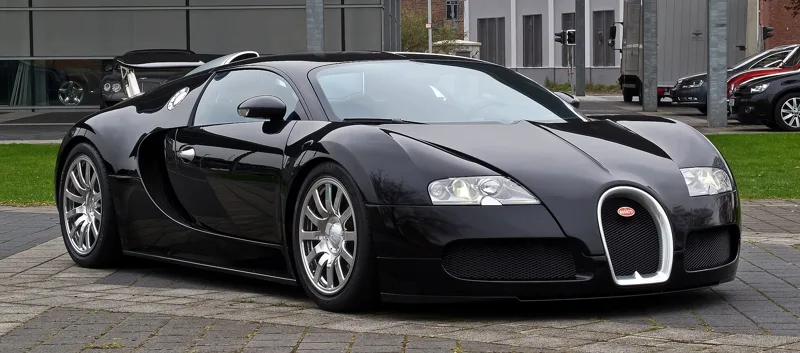
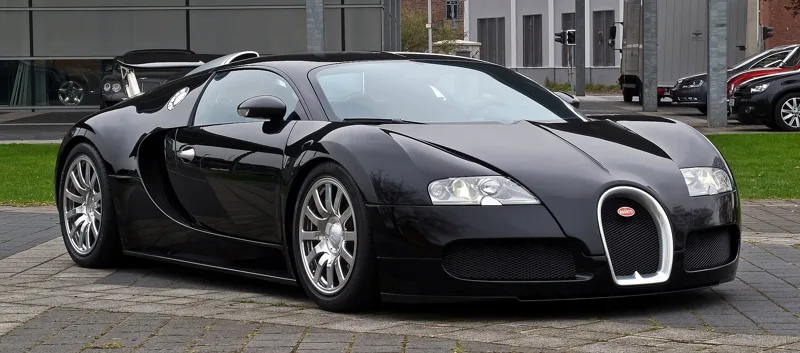
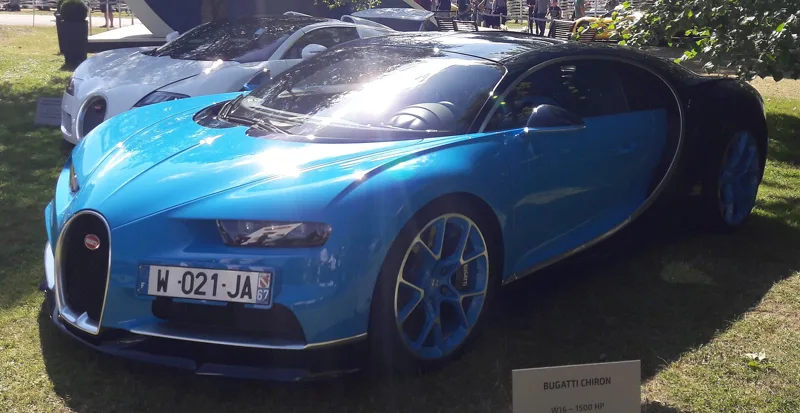
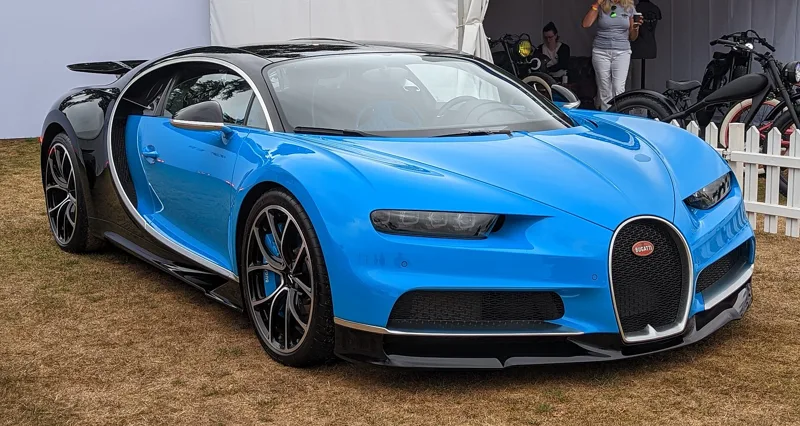
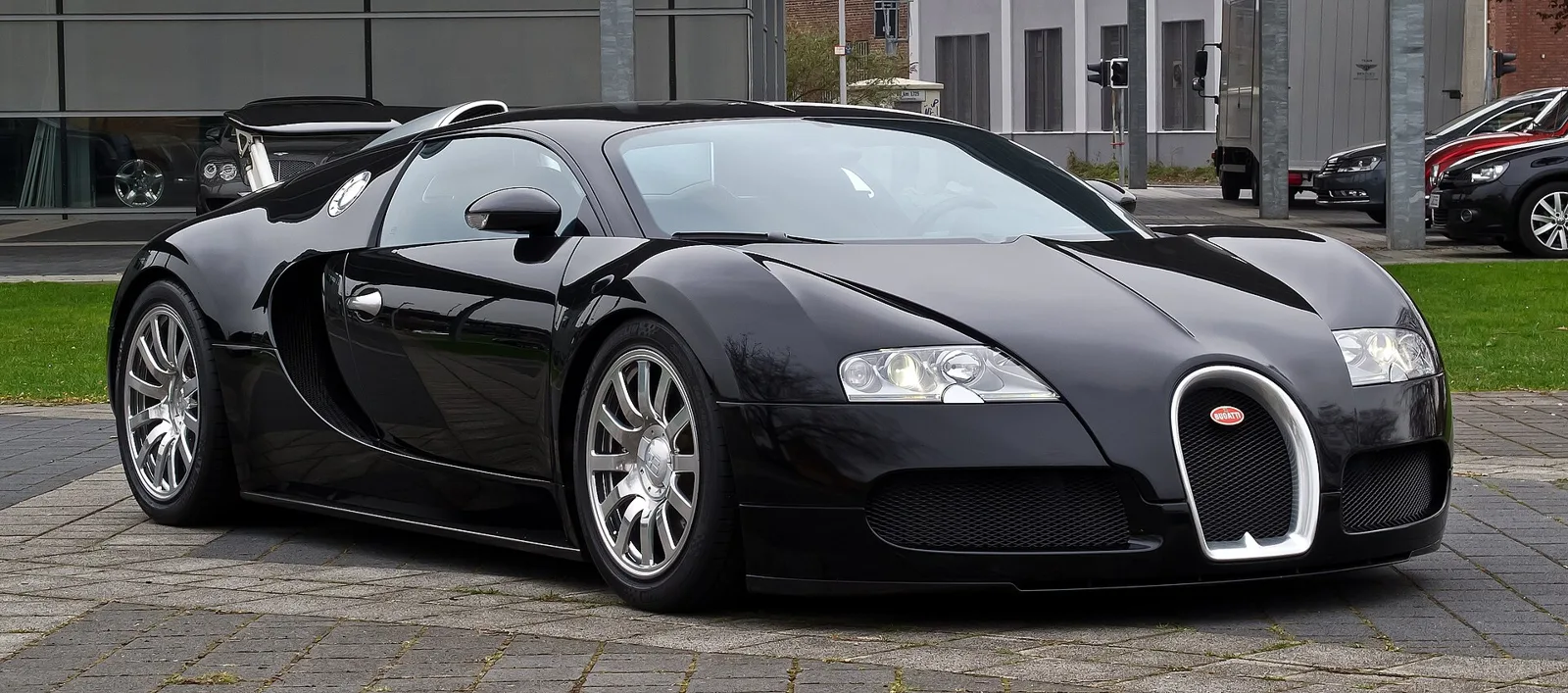
Volkswagen Group acquired the name in 1998, and its first concept, the EB118, styled by Giorgetto Giugiaro of ItalDesign with a 408 kW (555 PS) W-18 engine, debuted at the 1998 Paris show. Its first production car, the Veyron 16.4, with 1001 PS from an 8-litre W-16 engine with four turbochargers, began assembly at Molsheim in September 2005. The last Veyron, a Grand Sport Vitesse called La Finale, was sold on 23 February 2015. The Chiron, designed by Achim Anscheidt, was unveiled at the Geneva Motor Show on 1 March 2016. The Bugatti name has been owned by Bugatti Rimac since 2021.
Where this goes next
Bugatti said in February 2024 that the Chiron's successor would have a V16 hybrid-electric powertrain, and in June 2024 the car was confirmed as the Bugatti Tourbillon. Andrea Iervolino is producing a film about how Bugatti was founded.
What it meant for a buyer then, and what survives now
The Type 35's gift to customers was choice. A privateer who wanted the full works experience could buy a Type 35, and one who wanted the look with an easier life could take a 35A or a Type 37. The marque has also kept turning up in unexpected places. Relatives of Harold Carr found a rare 1937 Type 57S Atalante in his belongings after his death in 2009, and in 2009 a 1925 Brescia Type 22 was lifted from the bottom of Lake Maggiore, where it had lain for 75 years. The Mullin Museum bought it at auction in Paris in 2010 for $351,343.