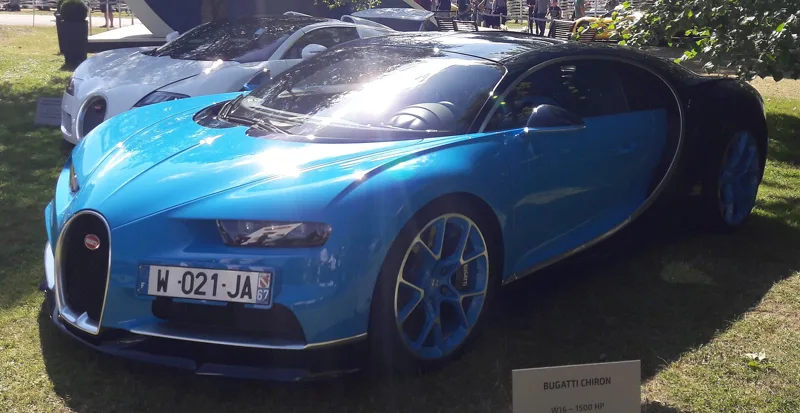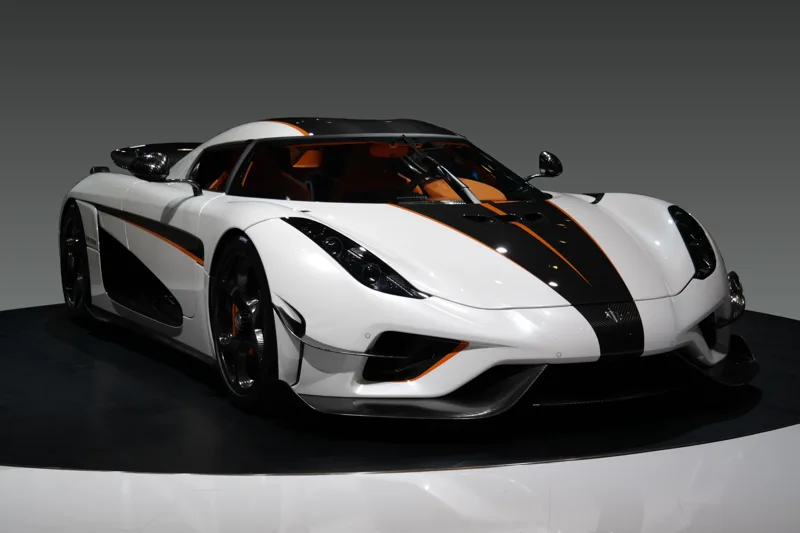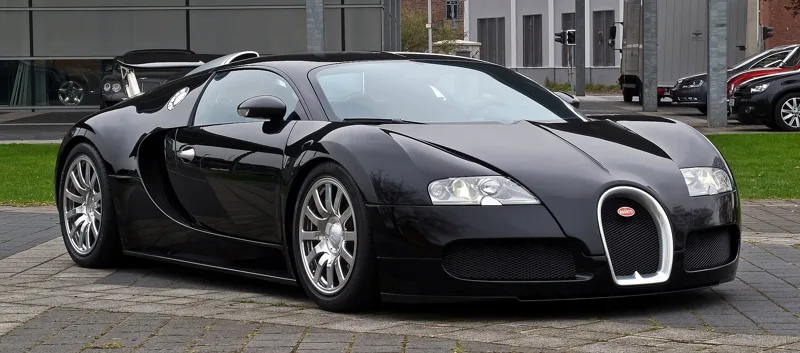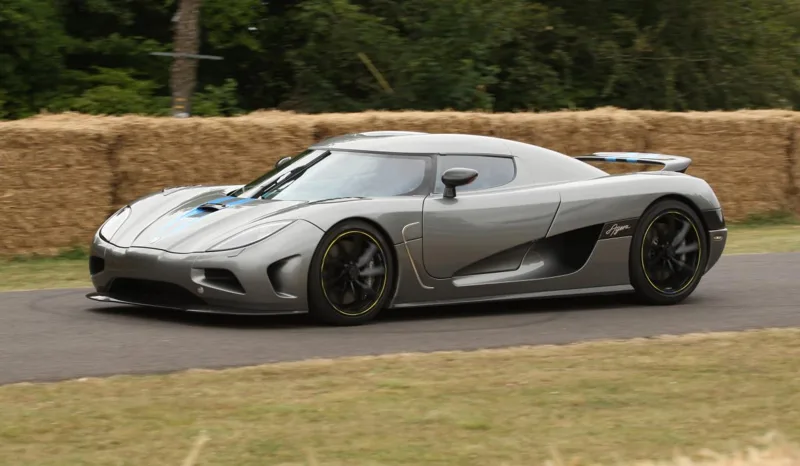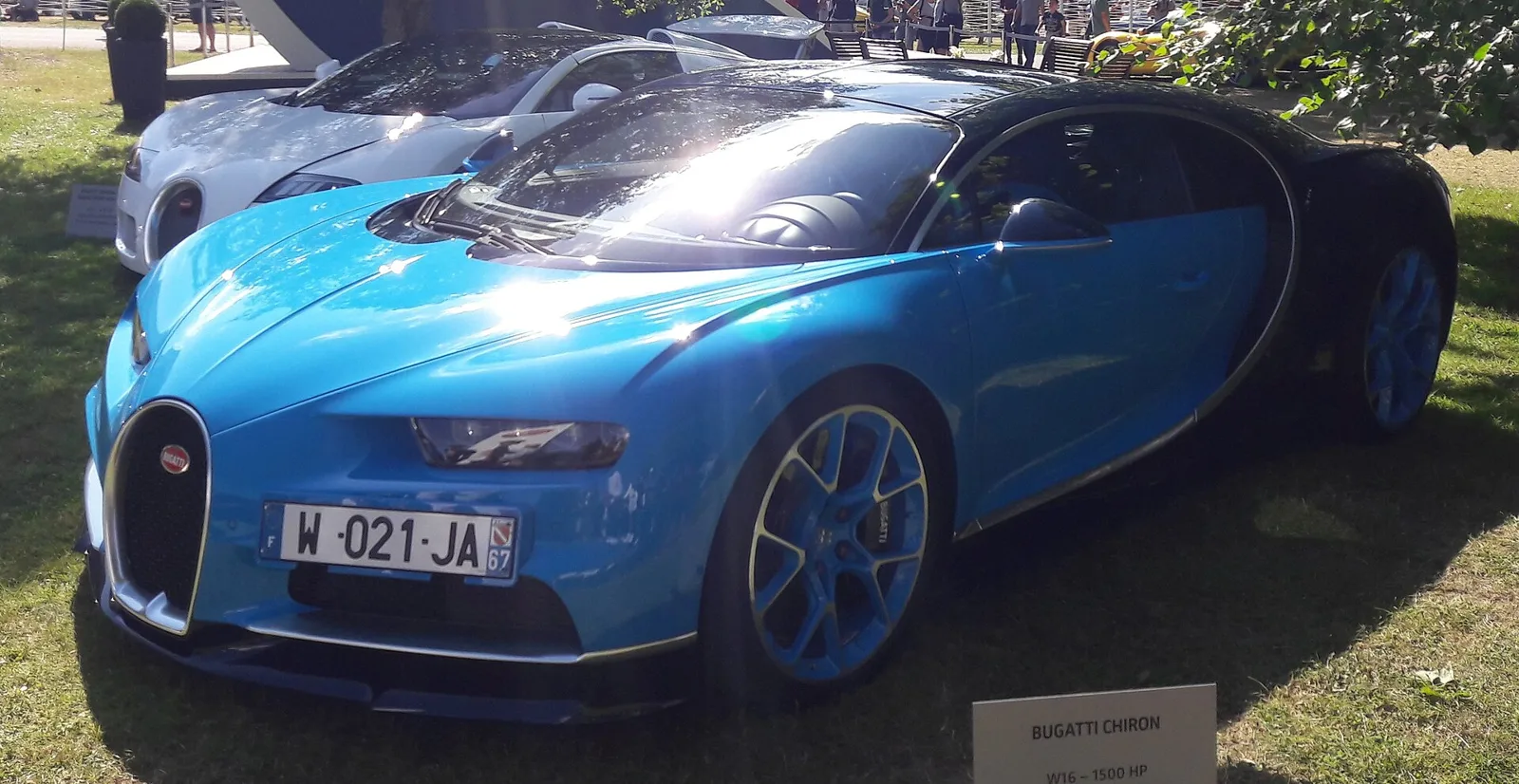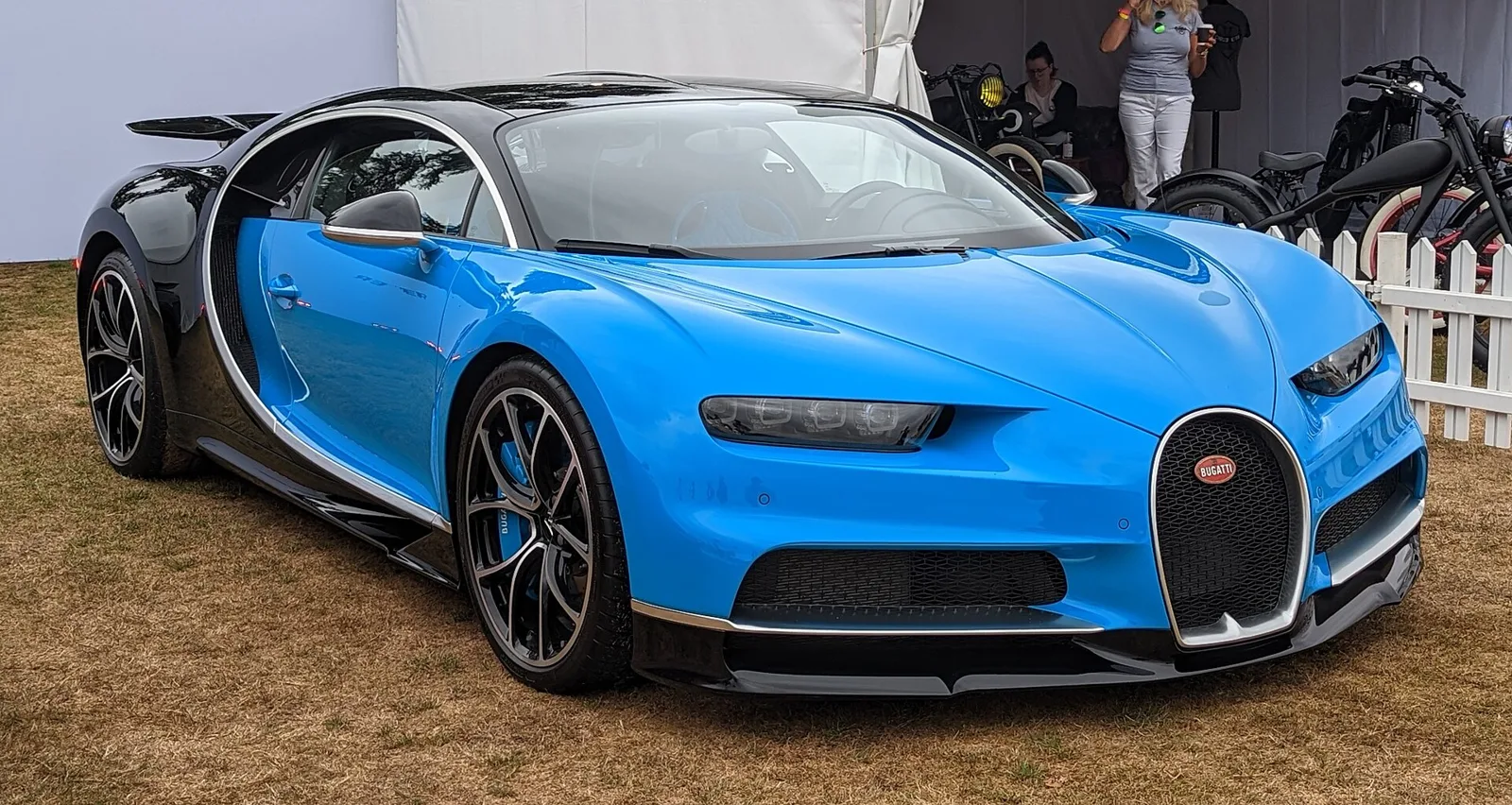
Bugatti's quad-turbo W16 Chiron and Koenigsegg's plug-in hybrid Regera both pushed top-end performance, but they chose very different routes to get there.
A Bugatti Chiron is a mid-engine two-seater that Bugatti built with a quad-turbo W16 producing 1,479 hp from 2016. A Koenigsegg Regera is a limited plug-in hybrid grand tourer with a twin-turbo V8 and three electric motors, built in 85 units from 2015.
The Bugatti Chiron and the Koenigsegg Regera both sit at the top of the performance market, and both were built to make extreme speed feel effortless. One does it with the sheer force of a quad-turbocharged W16, the other with a hybrid system that uses electric motors to fill in power at low speed.
Both were produced in tiny numbers, which made each one a collector's piece from the moment it left the factory. The comparison is between two different philosophies. Bugatti kept the Veyron's brute-force approach, while Koenigsegg chose a hybrid to combine instant electric response with the lightweight character of its sports cars.
Why were the Chiron and Regera compared?
The Chiron and the Regera are both limited, expensive cars built to show what a road car could achieve, and both were produced in very small numbers. The Chiron was designed as the successor to the Veyron, while the Regera was built to be a more practical, luxurious grand touring alternative within the Koenigsegg range.
The Chiron was first shown at the Geneva Motor Show on 1 March 2016, after its design was previewed by the Vision Gran Turismo concept at the 2015 Frankfurt Auto Show. The car is named after Monegasque driver Louis Chiron, a choice that links it to the racing history of the brand.
The Regera was unveiled at the March 2015 Geneva Motor Show. Its name is a Swedish verb meaning to reign or to rule, and Koenigsegg produced only 85 examples, most of which were sold upon unveiling.
One car pushes a quad-turbo W16 to its limits, the other rebuilds a supercar around three electric motors and a single fixed gear.
What was the origin of each car?
The Chiron is a mid-engine two-seater designed and developed in Germany by Bugatti Engineering GmbH and built at Molsheim in France. Its carry-over from the Veyron is the 7,993 cc quad-turbo W16, although the engine was heavily updated for the new car.
The Regera came from a different question. Founder Christian von Koenigsegg bought a Tesla Model S P85+ in 2013 and was impressed by its instant power delivery. He wanted to combine that electric response with the traditional Koenigsegg experience, so he chose a hybrid as the compromise.
To make room for the electric motors and battery, Koenigsegg removed the traditional seven-speed dual-clutch transmission and used a single-gear direct-drive system instead. The company reported that the change added only 88 kg (194 lb) compared with the same car fitted with the older gearbox.
How did the engines and performance compare?
The Chiron's engine produces a peak 1,103 kW (1,479 hp; 1,500 PS) at 6,700 rpm and 1,600 N-m (1,180 lb-ft) of torque from 2,000 to 6,000 rpm. Bugatti claims 0-100 km/h in 2.4 seconds, then 6.5 seconds to 200 km/h and 13.6 seconds to 300 km/h.
The Regera's internal combustion engine is a 5.0-litre twin-turbo V8 rated at 820 kW (1,100 hp; 1,115 PS) at 7,800 rpm. Three YASA electric motors add a total of 520 kW (707 PS; 697 hp), and the combined system reaches 1,119 kW (1,500 hp; 1,521 PS) and 2,000 N-m of torque.
Koenigsegg claims 0-100 km/h in 2.8 seconds for the Regera, 0-200 km/h in 6.6 seconds and 0-300 km/h in 10.9 seconds, with 400 km/h (249 mph) reached in 20 seconds. Its power-to-weight ratio is 0.7 kW (0.94 hp) per kilogram.
The Chiron's top speed is electronically limited to 420 km/h (261 mph). In a 2017 world-record-setting test it reached 400 km/h (249 mph) in 32.6 seconds, then needed 9.4 seconds to brake to a standstill.
What did the Regera's hybrid system change?
The Regera uses a fixed-gear direct drive with a 2.73:1 reduction ratio, so the engine turns 2.73 times for each turn of the output shaft. Below 30 mph (48 km/h) the wheel-shaft electric motors do most of the propelling, and in reverse only those motors move the car.
A steering-wheel paddle simulates a downshift by letting the hydraulic coupling slip, which raises engine speed and power at lower road speeds. The battery is a 4.5 kWh, 800-volt, 75 kg (165 lb) liquid-cooled pack developed by Rimac Automobili, which Koenigsegg says makes the Regera its first 800-volt production car.
The Chiron takes a simpler route, with Haldex all-wheel drive and a carbon fibre body that Bugatti rates at 50,000 Nm of stiffness per degree. Its power comes from the engine alone, while the Regera adds electric motors that work alongside the V8.
How did the two cars handle and brake?
The Regera uses double wishbone suspension at both ends, with chrome-molybdenum steel wishbones chosen over carbon fibre for cost and complexity reasons. Its Triplex damping system uses three Ohlins shock absorbers on the rear suspension to control squat under hard acceleration.
The Regera's wheels are 480 mm (19 in) at the front and 510 mm (20 in) at the rear, and its carbon-ceramic brakes have 397 mm front discs with six-piston calipers. Its stock aerodynamics generate 450 kg (990 lb) of downforce at 250 km/h (155 mph), and the optional Ghost package adds more than 20 percent.
The Chiron Sport version added a torque vectoring system and stiffer suspension for track use, and it cut 18 kg (40 lb) from the standard car. Bugatti's Pur Sport later changed the springs and damping further, aiming at handling rather than pure speed.
Which variants and special editions were built?
Bugatti built a long line of Chiron specials, starting with the Chiron Sport in 2018 and the 110 Ans Bugatti in 2019, which was limited to 20 units. The Super Sport 300+ followed in 2019 with 30 examples at a net price of 3.5 million euros.
The Chiron Pur Sport was limited to 60 units, and the Chiron Profilee was a one-off that was later sold at auction for EUR 9,792,500 in 2023. The Chiron production run ended in May 2024 with the Chiron L'Ultime.
Koenigsegg's Regera had no comparable run of special editions in the record. Its production of 85 cars was the defining limit, and most were sold on unveiling, which made the car a rare sight on the road.
What is inside the Regera?
The Regera's cabin added insulation to reduce noise from the wind and powertrain, and its 8-way electrically adjustable memory foam seats were offered as a luxury item. The car also gained a camera system with recording, Apple CarPlay, a new sound system, ambient lighting and 4G and Wi-Fi connectivity.
The engine mounts are designed to stay soft at lower speeds, which cuts vibration and noise. As the driver pushes harder, the mounts firm up and give more lateral response, so the car feels calm in town and sharper on a fast road.
Koenigsegg used 3D printing for several Regera parts, including the variable-geometry turbocharger. That method allowed a more complex inner housing and more precise airflow than conventional manufacturing could achieve.
The Regera also carries wireless connectivity that lets Koenigsegg send over-the-air updates. Those updates can change parameters such as the electric motors' power band or the throttle response without any physical work on the car.
Special editions in more detail
The Chiron Noire celebrated the 1936 Type 57SC Atlantic known as La Voiture Noire. Only 20 were made, in the Noire Elegance and Noire Sportive versions, and the package was offered for the standard Chiron or the Chiron Sport.
The Chiron Sport Les Legendes du Ciel edition celebrated Bugatti's racing drivers who flew for the French Air Force. It had a matte grey finish with a gloss white centre stripe, a French flag behind the front wheels and tan leather inside, with 20 cars built.
The Chiron Pur Sport Grand Prix was a one-off under the company's Sur Mesure programme. It recalled Louis Chiron's 1931 French Grand Prix win at Montlhery with Achille Varzi, and the number 32 is hand painted on its doors.
What limits did the top-speed cars reach?
Without its limiter the Super Sport 300+ was claimed to exceed 483 km/h (300 mph), and a pre-production car reached 490 km/h (304.7 mph) in August 2019. The limiter was kept on the production cars for safety, mainly because of tyre stress.
Bugatti built only a small number of each special variant, and the final Chiron Super Sport 300+ was delivered on 21 July 2022. The company still makes cars based on the Chiron, even after the main run ended.
How do the specifications compare?
| Specification | Bugatti Chiron | Koenigsegg Regera |
|---|---|---|
| Layout | mid-engine two-seater | plug-in hybrid two-door targa |
| Engine | 7,993 cc quad-turbo W16 | 5.0-litre twin-turbo V8 with three electric motors |
| Peak output | 1,103 kW (1,479 hp; 1,500 PS) | 1,119 kW (1,500 hp; 1,521 PS) combined |
| Torque | 1,600 N-m (1,180 lb-ft) | 2,000 N-m combined |
| 0-100 km/h | 2.4 seconds, manufacturer | 2.8 seconds, Koenigsegg |
| 0-200 km/h | 6.5 seconds | 6.6 seconds |
| Top speed | 420 km/h (261 mph) limit | no figure given |
| Transmission | seven-speed dual-clutch with Haldex all-wheel drive | single-gear direct drive, 2.73:1 |
| Built | limited run, production ended May 2024 | 85 cars |
| Base price | EUR 2,400,000 | no figure given |
Read down the table and the two cars follow different routes to extreme performance. The Chiron relies on a larger, brutal engine, while the Regera relies on electric motors to deliver power at low speed, so neither column settles which car a buyer would prefer.
Which buyer suits each car?
The Chiron suits a buyer who wants the most extreme engine and a limited, track-capable supercar with the Bugatti name and its racing history. The Regera suits a buyer who wants a rare hybrid grand tourer with instant electric response and a focus on comfort and daily usability.
Buyers who value a road car that is comfortable over long distances will find more in the Regera's interior and insulation. Those who want the purest expression of top speed and track focus will look to the Chiron and its special variants.
The record gives no current values for either car beyond the launch prices and special-edition figures quoted above, so buyers should check present-day values before comparing purchase costs.