A public road that turns into a 1,000 km race, the Ford and Holden rivalry behind it and the Gen3 rules that now shape the cars.
The Bathurst 1000 is a 1,000.29 km touring car race held each October at Mount Panorama in New South Wales as part of the Supercars Championship. Ford and Holden have won all but six editions. Since 2023 it has been raced by Gen3 Supercars.
On an ordinary day, anyone can drive around Mount Panorama in either direction for free, so long as they keep to 60 km/h (37 mph). On race weekend the same public road hosts Supercars that touch 300 km/h (190 mph) on Conrod Straight. That strange double life is half the reason the Bathurst 1000 has the reputation it does.
What is the Bathurst 1000?
It is a touring car race of 1,000.29 km (621.6 mi) held every year on the Mount Panorama Circuit at Bathurst, New South Wales, and run as a round of the Supercars Championship. Fans and media call it The Great Race. For one year, 1987, it also counted towards the World Touring Car Championship.
The Bathurst 1000 began life as something else entirely. The Armstrong 500 was first run on 20 November 1960 at Phillip Island, in Victoria, over 500 miles (800 km). It was meant to find out which production saloons offered the best mix of performance and reliability, and it doubled as a promotional platform for a maker of shock absorbers. There was no outright winner in 1960, only class winners, and the cars had to be standard saloons built or assembled in Australia.
Phillip Island did not last. Its bitumen surface could not stand up to dozens of cars running flat out for 500 miles, and the track broke up during races. The event moved to Bathurst in 1963, kept its 500-mile distance, and stayed. Australia's switch to metric measurements turned it into a 1,000 km race in 1973.
The date has drifted, too. Tradition put the race on the Labour Day long weekend in New South Wales, early in October. Since 2001 it has moved to the following weekend, generally the second one in October.
The winners receive the Peter Brock Trophy, introduced in 2006 after Brock's sudden death in an accident. He won the race nine times, more than anyone, and was known as the King of the Mountain.
There is no substitute for cubic inches.
Why is Mount Panorama so unusual?
Most circuits are purpose-built loops on flat ground with tarmac run-offs. Mount Panorama is a 6.213 km (3.861 mi) street circuit that doubles as a public road, with homes along it that can be reached only through the circuit. It climbs and falls through 174 m (571 ft) between its highest and lowest points, with grades as steep as 1:6.13.
The easiest way to picture a lap is in three parts. First comes the short pit straight and a tight left into the long, steep Mountain Straight. Next is the narrow, twisting section across the top of the mountain. Last is the long downhill run along Conrod Straight, the very fast Chase, and the turn back on to the pit straight.
Visiting drivers have tried to describe it. French sportscar driver Alexandre Premat, who later became a Supercars regular, compared it with the Nordschleife, Road Atlanta and Laguna Seca rolled into one. Nurburgring 24 Hours winner Kevin Estre said half the track is the Nordschleife and half is Macau.
A lap of Mount Panorama, corner by corner
- Hell Corner is the first turn, a ninety-degree left-hander named after a tree stump that once sat on its apex.
- Mountain Straight is a long climb where Supercars reach around 290 km/h (180 mph) before braking for Griffins Bend.
- Griffins Bend is an off-camber right-hander named after Martin Griffin, the mayor whose vision created the circuit.
- The Cutting is a pair of left-handers that lead into a steep exit of 1 in 6. Overtaking is difficult, and a spin is hard to recover from in the narrow space.
- Quarry Corner follows The Cutting. In 1980 Dick Johnson crashed here out of the lead after hitting a rock that had been pushed on to the track from a spectator area, and an emotional public appeal on the live telecast helped restart his career.
- McPhillamy Park is a fast, blind left-hander guarded by a crest. It also holds the longest-running campsite for those who watch the race from the hill.
- Skyline is a sharp right-hander where the descent begins, renamed Brock's Skyline in late 1997. Cars take it and the first of The Esses at 220 km/h (140 mph).
- The Dipper is the sharp left that is the third corner of The Esses.
- Conrod Straight is the fastest section, where cars reach 300 km/h (190 mph).
- The Chase is a long sweeping chicane. Cars are on the rev limiter at 300 km/h before a big braking zone drops them to 130 km/h (81 mph), and the kink at its entrance is the fastest corner in touring car racing.
- Murray's is the 23rd and final turn and the slowest part of the track.
The start itself is odd. For the standing start, the start line sits 143 m (156 yd) closer to Hell Corner so that the grid does not stretch too far around Murray's. The finish line is placed so every pit bay lies after it.
How did the Bathurst 1000 become Ford against Holden?
Showroom cars made the race. In the early Bathurst years the rules demanded that race cars match the ones on the dealer floor, so a good result meant credibility and sales. Small, agile cars such as the Ford Cortina and Mini Cooper dominated the first years on the mountain. A Mini Cooper S won in 1966, and it was the last four-cylinder victory for more than two decades.
Then the rules changed. In 1967 a minimum number of pit stops was mandated, which took away the economy of the small cars, and Ford's 289 cubic inch V8 Falcon GT beat the Alfa Romeo GTVs and Mini Coopers. The V8 suited the long straights, and the adage that there is no substitute for cubic inches was born. That race produced a mess over lap counting: the Geoghegan brothers' Falcon was first awarded victory before Harry Firth and Fred Gibson were declared the winners.
From there the "Big Three" of Holden, Ford and Chrysler fought out their rivalry on the mountain and gave Australia its famous Bathurst Specials: the Falcon GT and later GT-HO, the Holden Monaro and Torana, and Chrysler's Pacer and Charger. Holden's first win came in 1968 with the Monaro GTS 327. In 1969 Ford brought the Phase One GT-HO with a 351 cubic inch V8, and Holden answered with the GTS 350 Monaro, which won with Colin Bond and Tony Roberts. Many Falcon tyres failed that year and Ford ran a post-race campaign with the slogan "we were a little deflated". Peter Brock made his debut in 1969.
The rivalry became so central that the rules protected it. From 1995 to 2012 only Ford Falcons and Holden Commodores were allowed to enter. Even so, the numbers show how one-sided the contest has been: Ford and Holden have won all but six races, with Holden on 34 victories, Ford on 21 and Nissan the only other multiple winner with two. Morris, Jaguar, BMW and Volvo are among the other makes to have taken the flag.
The personal side mattered as much. Allan Moffat, in a Ford, and Peter Brock, in a Holden, personified the rivalry and helped make the race a national event even for people with no interest in motorsport. Since late 2022 a campaign has called for Mountain Straight to be renamed after Moffat.
What is a Gen3 Supercar?
Gen3 is the current set of technical rules for Supercars, introduced in 2023. It replaced the Car of the Future regulations that arrived in 2013 and was meant to lower the cost of running a car by using more standardised parts. It was due to debut in the middle of 2022 but slipped a season because of supply chain problems and pandemic disruption.
| Area | Car of the Future (from 2013) | Gen3 (from 2023) |
|---|---|---|
| Minimum weight | 1,400 kg | 1,335 kg, later 1,340 kg from the Sandown 500 |
| Aerodynamic downforce | Before the cut | Cut by 67% |
| Roll cage | Mustang roof had to be stretched to fit | Lowered by 100 mm to suit coupes |
| Fuel | E85, used from 2009 | E75 blend |
| Pedals, brakes, wheels | Not standardised | Control components |
| Engines | V8s | Fuel-injected V8s: 5.7-litre LTR (Camaro), 5.4-litre Coyote (Mustang) |
A Supercar is not a road car in disguise. Each is custom made around a control chassis, and only certain body panels are common to the road car. Technical parity keeps any approved car in the fight, and the engines are race-prepared versions of current units.
The changes also targeted the racing. Drivers had complained of dirty air and aerowash from the earlier cars, so downforce was cut by 67% to encourage closer racing and easier overtaking. The lower roll cage answered the Mustang controversy, since that car had needed a stretched roof to fit the old chassis. Supercars produce the roll cage as a kit for teams without the budget to build one.
Who races at Bathurst now?
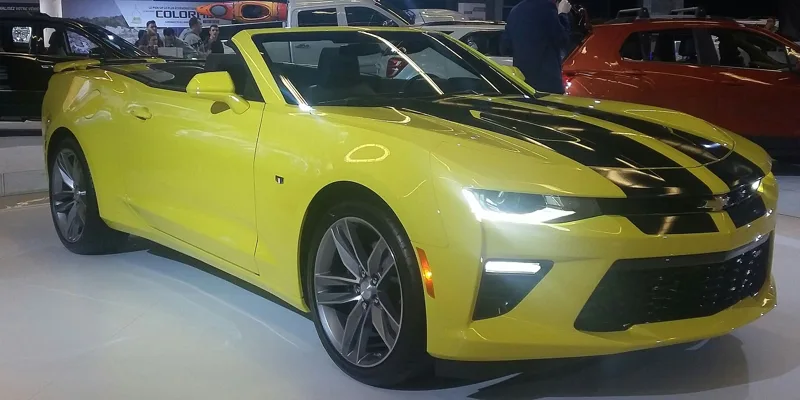
Two cars made up the 2023 field: the Chevrolet Camaro ZL1 and the Ford Mustang. The Camaro replaced the Holden ZB Commodore after General Motors decided to discontinue the Holden brand, and it brought the Chevrolet name back to the series for the first time since 1984. Triple Eight Race Engineering oversaw its development, while Dick Johnson Racing oversaw the S650 Mustang. Ford Performance supported five teams that year, including Walkinshaw Andretti United, which switched from Holden to Ford.
The 2013 rules had opened the door to other makes. Nissan was first through it with four Altimas. Erebus Motorsport then tried Mercedes-Benz E63 AMGs for a short spell, and Garry Rogers Motorsport ran Volvo S60s. The grid returned to a Ford and Holden duopoly in 2020 when Nissan left, and the Mustang had replaced the Falcon in 2019. Starting in 2026 Toyota joined with the GR Supra, powered by a bespoke 5.2L version of its 2UR-GSE V8.
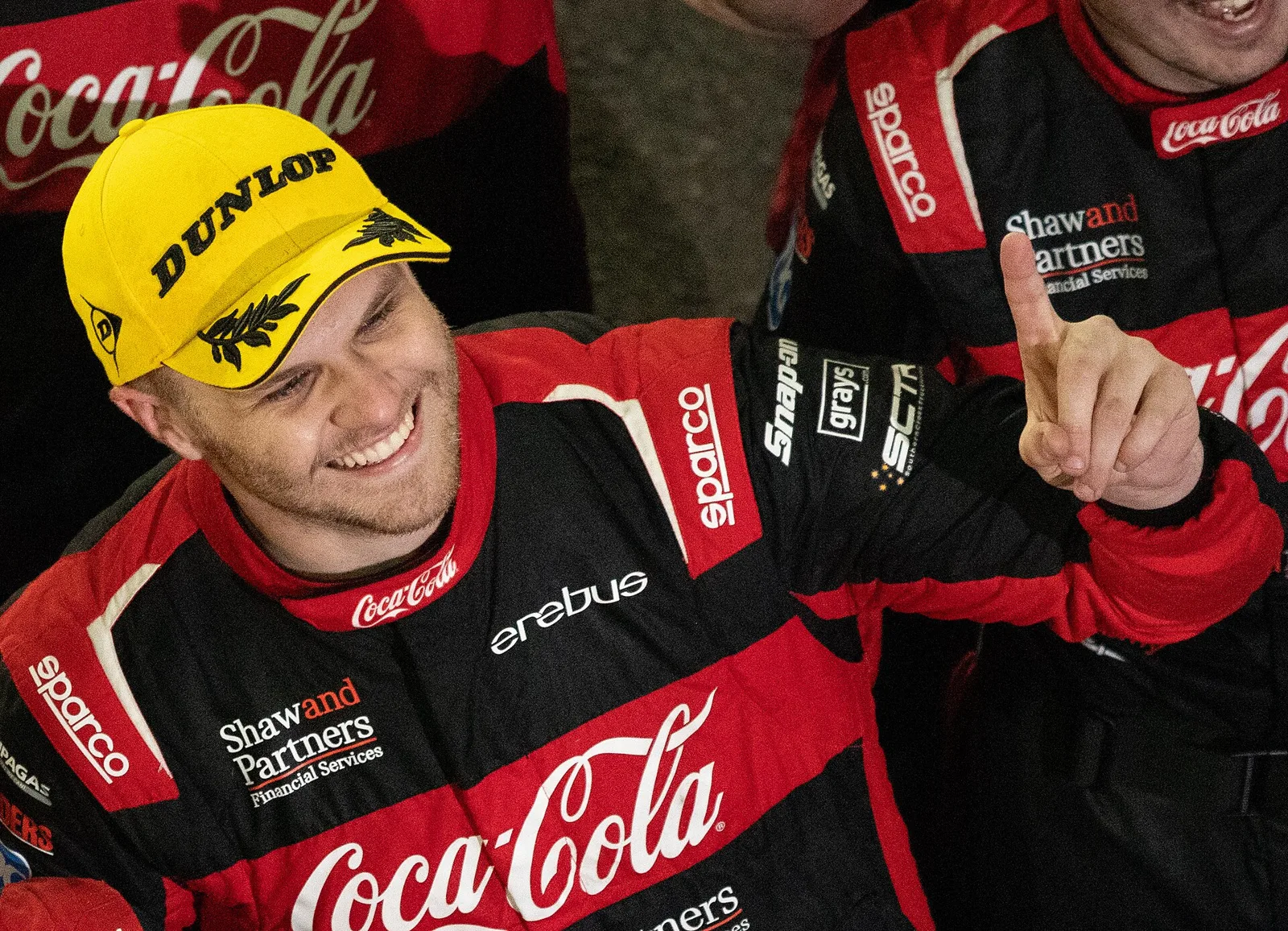
Bathurst is a two-driver endurance race, so each car carries a co-driver. In 2023 Triple Eight ran a third car for Zane Goddard, who shared with Craig Lowndes at the Sandown 500 and Bathurst, while at Bathurst Dick Johnson Racing fielded an extra car for Kai Allen and Simona De Silvestro. That season Brodie Kostecki and Erebus Motorsport won the first Drivers' and Teams' titles of their careers, with the Sandown 500 returning as the lead-in to Bathurst. Points are only awarded to a car that completes at least 75% of the race distance and is running at the finish.
Scale helps explain why Bathurst matters to a series that has this much reach. Supercars is broadcast in 137 countries and averages more than 100,000 spectators per event, and the Adelaide Grand Final draws more than 285,000.
What does Bathurst mean for people who buy or drive cars?
For drivers the answer is practical. The circuit is a public road, so you can drive the Mount Panorama lap yourself within the 60 km/h limit, which Bathurst Police strictly enforce, and the National Motor Racing Museum stands next to it.
For buyers, the heritage is the point. The race grew up as a test of whether showroom cars were fast and tough enough, and the cars it produced, the Falcon GT and the Monaro among them, were ones the public could buy. Today's Supercars share only certain body panels with their road cousins, so the link is looser. The badges on the grid still follow the market: Chevrolet and Ford now, with Toyota added from 2026.