A crashed Nissan was declared the winner, the last turbo cars lined up, and a Ford hero who once lost everything on the mountain finished second.
The 1992 Bathurst 1000 was stopped by a rainstorm and results were taken at lap 143, giving Jim Richards and Mark Skaife a win in a crashed Nissan GT-R. Dick Johnson finished second, 12 years after the 1980 rock crash that made him a folk hero.
The car that won the 1992 Bathurst 1000 was a wreck. Rain forced officials to stop the race, the results were wound back to lap 143, and Jim Richards took the trophy in a battered Nissan while a Ford and Holden crowd booed him.
What happened in the 1992 Bathurst 1000?
The 33rd running of the race took place on 4 October 1992 at Mount Panorama, just outside Bathurst, with 47 cars entered. Rain swept across the circuit late on, crashes multiplied, and officials stopped the race and issued results as at the end of lap 143, which left the field 18 laps short of the full distance.
Richards and Mark Skaife won in a Gibson Motorsport Nissan Skyline GT-R. It was their second victory in a row, which made them the first back-to-back winners since Peter Brock and Larry Perkins took the 1983 and 1984 races.
Dick Johnson and John Bowe were classified second in the DJR Ford Sierra, and Anders Olofsson and Neil Crompton, who shared a team with the winners, completed the podium in a second Nissan. The race had been called off early only once before, in 1981. The average speed was 138 km/h over a race time of 6:27:16.22, and Skaife set the fastest lap on lap 114 at 2:16.47.
The race was also the last in which turbo powered cars could compete: from 1 January 1993 the V8 formula took over.
Why was the winner booed?
The winning Nissan was crashed and undrivable by the finish. Richards had hit the wall once, nursed the damaged car along, then slid off about 200 metres past Forrest's Elbow and joined several other wrecks on Conrod Straight. He was the leader when the count went back to lap 143, so the win was his.
Confusion followed. Johnson crossed the line after the flag had gone up and appeared to complete a 144th lap, but the wind-back stood. Fans of Ford and Holden, who make up most of the crowd, were unhappy that a crashed Nissan had taken the race, and Richards was jeered on the podium.
He had been told only moments earlier that his friend Denny Hulme had died. Upset by the news and the reception, he gave a short and abusive speech on a live international feed, and apologised for it later. Crompton also showed his disappointment with the crowd as he left the podium.
Why did the death of Denny Hulme overshadow the day?
Hulme was a popular veteran, 56 years old, the 1967 Formula One world champion and New Zealand's only World Drivers' Champion. He shared the second Benson and Hedges BMW M3 with Paul Morris, started 18th, and suffered a heart attack at the wheel on lap 33 while the rain was heavy.
He radioed his team as he came through Forrest's Elbow to say that he could not see. The yellow number 20 BMW then ran down Conrod Straight, glanced the wall on the left, crossed the track to the outside wall and stopped short of the right-hand kink into Caltex Chase. Channel 7 cameras caught the moment.
The race ran on behind the safety car. Marshals removed Hulme from the BMW and an ambulance took him to Bathurst Hospital, where he was pronounced dead from heart failure.
How fast was Dick Johnson's pole lap?
Johnson claimed pole position with a lap of 2:12.898, almost a second quicker than any other Sierra had ever lapped the mountain and more than 3 seconds faster than his shootout time of 1991. It was his second and final Bathurst pole, after the one he took in 1988.
His entry in the shootout surprised people, because Bowe had set the team's fastest qualifying time. It was also the 15th year in a row that Johnson reached the runoff, so he had been there since the format began in 1978.
Rumours circulated that the Sierra carried a special qualifying engine producing around 680 bhp (507 kW; 689 PS). DJR denied it, and the claim was never confirmed.
Perkins qualified an older VL Commodore second, in both official qualifying and the runoff, and said he was only 8/10ths quicker than in that model in 1990, while the Sierras had improved far more. Skaife held provisional pole at 2:13.82 in a GT-R that was reportedly restricted by a pop-off valve to 450 bhp (336 kW; 456 PS) and carried 140 kg of extra weight. Team boss Fred Gibson conceded more than 15 years later that the GT-Rs had in fact produced nearly 600 bhp (447 kW; 608 PS).
How did the classes work in 1992?
| Class | Rules | Entries |
|---|---|---|
| A | Group A cars over 1600cc | 10 Ford Sierras, 4 Holden VN Commodores, 11 Holden VL Commodores, 3 BMW M3 (E30), 3 Nissan Skyline R32 GT-Rs, 1 BMW M3, 1 BMW 635CSi, 1 Nissan Skyline GTS-R, 1 Toyota Supra |
| B | Group A cars under 1600cc | 10 Toyota Corollas (six E80, four E90) |
| C | The new V8 touring car class for 1993 | 3 Holden VP Commodores, 1 Ford EB Falcon |
Class C was the future arriving early. All four of the 1993-specification cars reached the top 10 in the runoff, and Glenn Seton and Alan Jones put their V8 Falcon fourth on the grid, the fastest of the new machines. It was the highest a Ford Falcon had started at Bathurst since Johnson's second-row result in 1984.
Why did 1992 end the turbo era?
It was the last Bathurst in which turbocharged cars such as the Nissan Skyline and the Ford Sierra could compete. From 1 January 1993 turbos were banned in favour of the V8 formula, which later grew into the V8 Supercars category.
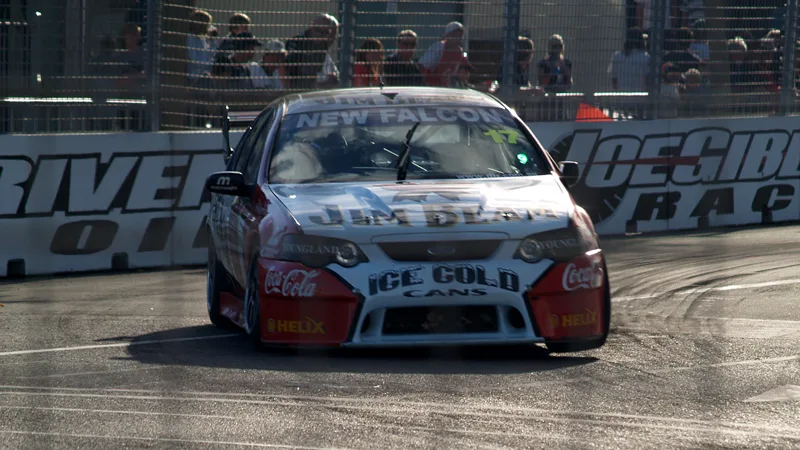
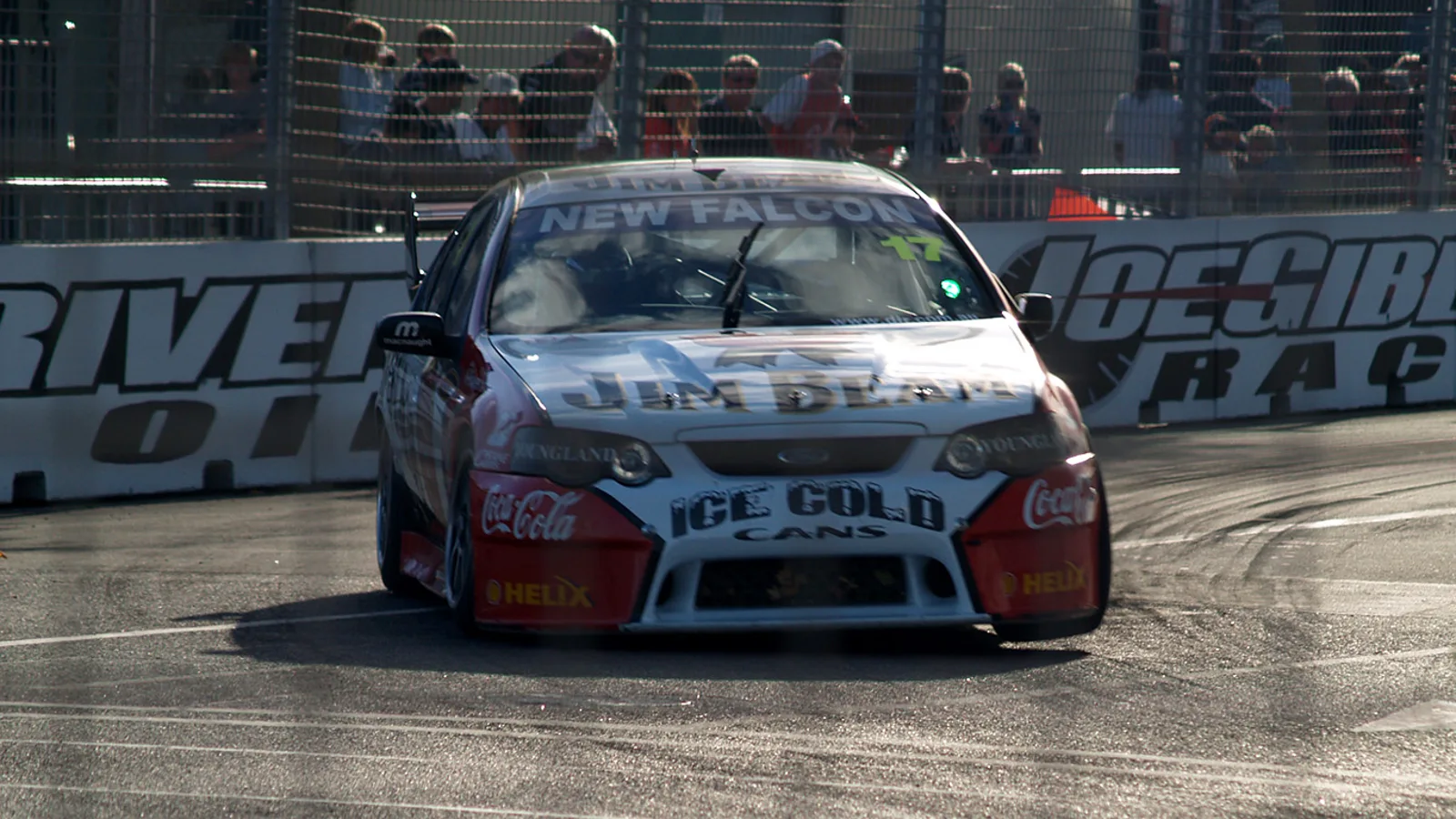
The Falcon's return was the other sign of the change. Ford had been absent from the front of the field since the Group C era ended in 1984, and the Seton and Jones car, a V8 built to the 1993 rules, outran its own team's hopes before a fuel pump failure ended its race on lap 84.
Holden's showing pointed the same way. Four Commodores reached the runoff, the best Holden representation of the Group A years from 1985 to 1992, though still short of the record seven set in 1983 under Group C rules. Both Holden Racing Team entries and Brock's car were the new VP Commodores with Small Block Chevrolet V8 engines. Perkins' 1988 model used the Holden V8.
Who else made the 1992 race memorable?
Brock, a nine-time winner, had the worst start of his Bathurst career after the tailshaft in his brand-new VP Commodore snapped on the grid. The Mobil 1 crew fitted a new one and he rejoined on lap 15, last of all, with co-driver Manuel Reuter, the German who had won the 1989 24 Hours of Le Mans.
A second tailshaft broke later, and during the first rainstorm Allan Grice pushed Brock into a spin at Forrest's Elbow. Brock complained about it on television in a rare show of temper. He and Reuter finished 27th.
Two former motorcycle world champions also raced. Wayne Gardner, the 1987 500cc champion, made his touring car debut alongside Graham Moore, qualifying 21st and finishing 26th. Johnny Cecotto, champion in 1975 and 1978, shared a BMW M3 Evolution with Tony Longhurst and finished fourth, despite crashing the car at Forrest's Elbow in the morning warm-up. The TAFE crash repair crew rebuilt it in time for the start.
How did Dick Johnson's Ford crash out in 1980?
Johnson started the 1980 race second in his Ford Falcon XD and led the first 17 laps. On lap 18 he crashed on the exit of Quarry Corner, the right-hander that follows the Cutting, after meeting a large rock on the track as he passed a quick-lift tow truck. He had nowhere else to go.
The rock was said to have been pushed from the spectator area. An eyewitness in 2012 said one of two drunken men had accidentally kicked it onto the circuit. The Falcon hit the outside concrete wall, which it almost cleared, and was destroyed. That wall had been installed only before the 1979 race, in place of railway sleepers and fence posts.
The crash took away the means by which Johnson paid for his racing.
How did one crash save Johnson's career?
An emotional public appeal during the television broadcast relaunched his career. Viewers rang their local Channel 7 station from around Australia and pledged money, and A$72,000 was donated to rebuild the car. Edsel Ford II, the chief executive of Ford in Australia, saw the goodwill in the press and promised to match the donations, bringing the total to $144,000 and a new car shell.
Ross Palmer of Palmer Tube Mills, a close friend, became the primary sponsor in 1981, alongside Bryan Byrt Ford. With the donated money behind him Johnson won the Australian Touring Car Championship that year and the Bathurst 1000 with John French. The 1981 race was itself stopped on lap 120, 43 laps short, after a collision involving Bob Morris and Christine Gibson, both in Falcons, blocked McPhillamy Park.
What did Johnson do after 1980?
He won the Australian Touring Car Championship five times and Bathurst three times, taking the race in 1981 with French, in 1989 with Bowe in a Sierra, and in 1994 with Bowe in an EB Falcon. He entered the V8 Supercars Hall of Fame in 2001.
Johnson began in Holdens, starting with a Holden FJ at Lakeside in November 1964, and switched to Ford in 1977. He did national service from 1965, and was stationed at the same barracks near Wagga Wagga as Brock, a future rival. Shell became the team's primary sponsor in 1987, funding a second car for Gregg Hansford.
In 1989 and 1990 he tried NASCAR, entering seven Cup races in a Ford Thunderbird, with a best start of 11th at Sears Point and no finish better than 22nd, at Pocono. Ray Evernham, later a NASCAR Hall of Fame honouree, was his crew chief.
How did the racecam make Johnson a household voice?
Channel 7 first put a racecam in his Tru-Blu Falcon for the 1982 James Hardie 1000, and wired Johnson and French for sound so the commentators could talk to them mid-race. His dry humour suited it. From then on his cars rarely ran without a television camera where the passenger seat usually sat.
His best-known moment came at Bathurst in 1995, when a commentator crossed to him and Johnson replied 'You've got to be joking' seconds before spinning into Caltex Chase. The pictures showed his Falcon's rear wing giving way at more than 280 km/h (174 mph).
What makes Mount Panorama so unforgiving?
The lap is 6.213 km (3.861 mi) long. The top of the mountain sits 174 m (571 ft) above the lowest point, and gradients reach 1:6.13. It is a public road for the rest of the year, with a 60 km/h (37 mph) limit that police enforce.
The Cutting is a pair of left-handers into a 1 in 6 climb, where it is difficult to overtake and hard to recover from a spin. Quarry Corner follows at once, named after the quarry beneath its outside wall. On Mountain Straight, modern V8 Supercars reach 290 km/h (180 mph), and the kink that leads into the Chase is the quickest corner in touring car racing.
The mountain was known to the Wiradjuri people as Wahluu, meaning to watch over. Construction of the circuit began in mid-1936, and the first meeting was held on 16 April 1938.
Where did Dick Johnson Racing go from there?
Johnson retired from driving at the end of 1999, though he stayed in charge of the team. He made a one-off farewell start in the Queensland 500 of 2000 alongside his son Steven, who took over the famous number 17 and kept it for over a decade.
In 2014 DJR announced that 51 per cent of the team had been sold to Roger Penske, creating DJR-Team Penske. In 2019 Scott McLaughlin and Alexandre Premat won the Bathurst 1000 for the team, Johnson's first win in any capacity since 1994. Penske sold his share back at the end of the 2020 season, and the team reverted to the name Dick Johnson Racing.