A die-cast aluminium straight-four that gave Toyota an economical 1.8 litre and a high-revving 2ZZ-GE that Lotus later fitted to its sports cars.
Toyota's ZZ series is a line of petrol fours with an aluminium block. Its best-known members are two 1.8 litre units, the economy-focused 1ZZ and the high-revving 2ZZ, which powered Corolla, Celica and Lotus models.
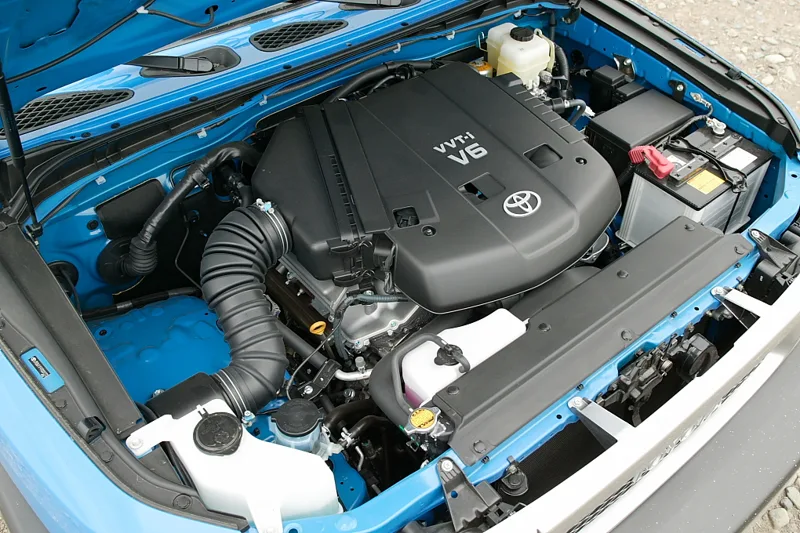
The Toyota ZZ engine is a family of straight-four petrol engines built around a die-cast aluminium block, aluminium DOHC cylinder heads and chain-driven camshafts. Its two 1.8 litre members, the 1ZZ and the 2ZZ, took very different routes: one was tuned for everyday economy, the other for high revs and peak power. The 2ZZ-GE in particular earned a reputation that reached well beyond Toyota's own showrooms.
What is the Toyota ZZ engine?
The ZZ is a straight-four piston engine series from Toyota. It was designed to replace the extremely popular cast-iron block 4A and 7A engines of the earlier A family, and its defining change was a die-cast aluminium block with thin press-fit cast iron cylinder liners. Displacements run from 1,398 cc to 1,796 cc.
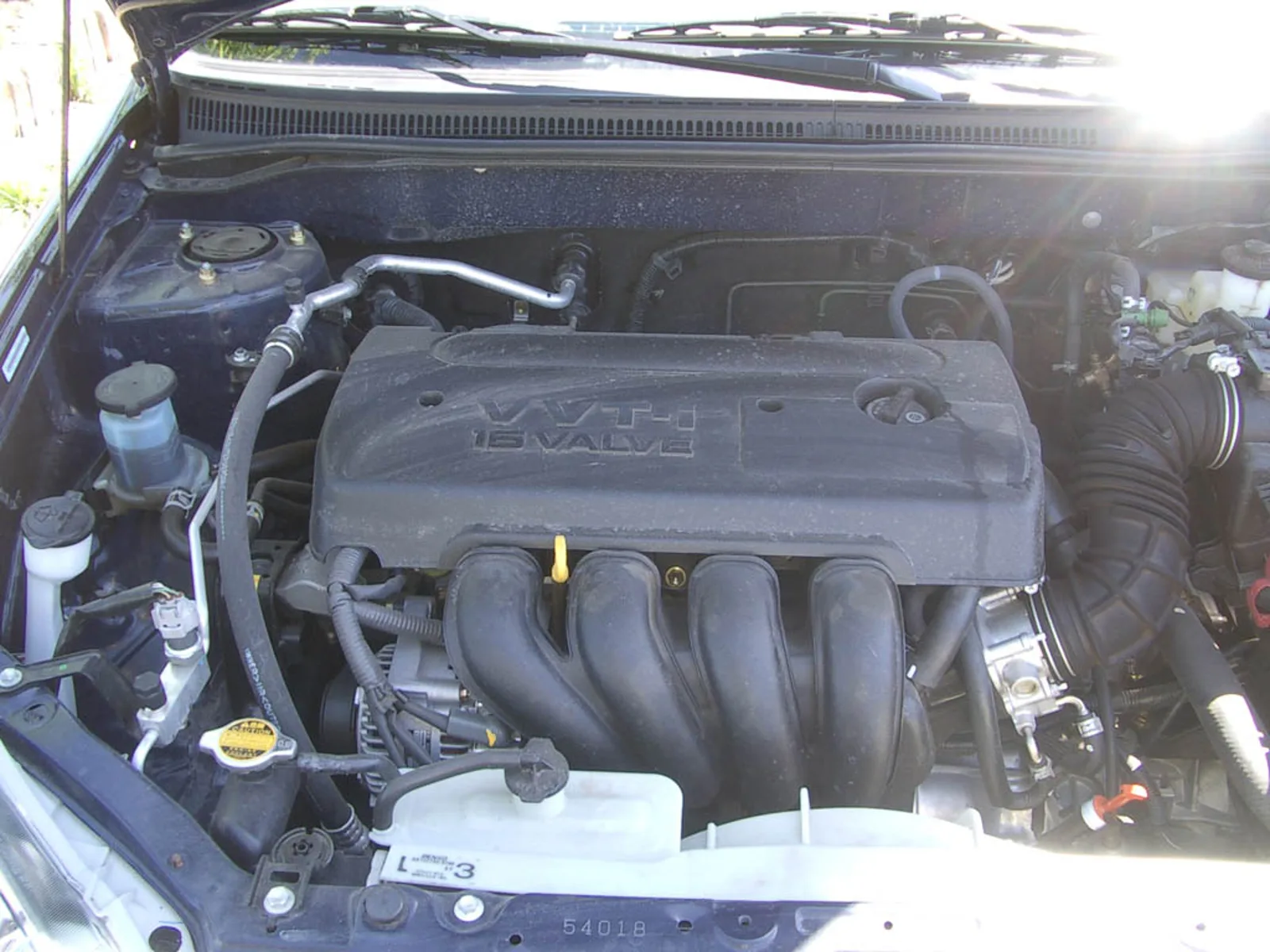
The cylinder heads are aluminium DOHC units with four valves per cylinder, and the camshafts are chain driven. That layout gave the family a common base, and the differences between members come from bore, stroke, cam design and fuel management rather than from a new architecture.
The breadth of the family shows in its smaller members. The 3ZZ-FE, a 1,598 cc unit built in Japan, was used in several Asian and European markets, and also in Brazil and South Africa, from 2000 to 2012. The 4ZZ-FE, at 1,398 cc, served as a more modest alternative in the Corolla range of its time.
Two 1.8 litre fours shared one aluminium family, but they were tuned for very different jobs.
How do you read a Toyota ZZ engine code?
Toyota engine codes follow a consistent pattern. The leading number gives the generation, and the letters that follow name the engine family. Anything after the hyphen describes the major features. Take the 2ZZ-GE: it is a second-generation ZZ with a performance cylinder head, where the G denotes widely angled valves, and the E denotes electronic fuel injection.
Once the pattern is clear, the codes are easy to decode. The 1ZZ-FBE is a modified 1ZZ-FE that can run on E100 ethanol, which is why it was offered as a Brazil-only Corolla. Reading the suffix before buying a car tells an owner what the engine was built to do.
How much power did the 1ZZ-FE make?
The North American 1ZZ-FE was rated at 120 bhp (122 PS; 89 kW) at 5,600 rpm, with a higher-output version at 130 bhp (132 PS; 97 kW) at 6,400 rpm. Peak torque was 122 lb ft (165 N m) at 4,400 rpm. Japanese versions made more, at 140 bhp (142 PS; 104 kW) at 6,400 rpm.
The 1ZZ-FE has a bore and stroke of 79 mm x 91.5 mm and a compression ratio of 10.0:1. It uses multi-point fuel injection, and VVT-i was fitted to most examples, although the 1998-99 engines were built without it. Its connecting rods are fracture-split forged powder metal, and its camshafts are one-piece castings.
Two production streams existed. The North American engine came from plants in Buffalo, West Virginia, and Cambridge, Ontario, where output at Cambridge ended in December 2007 and at Buffalo in 2008. The Japanese version used larger valves, at 32 mm intake and 27.5 mm exhaust, with the ports revised to suit. That combination accounts for its extra power.
Why did the 2ZZ-GE rev so high?
The 2ZZ-GE carries a high-output cam profile that engages at around 6,200 rpm, with lift set-points between 6,000 and 6,700 rpm depending on the vehicle. The high-output cam stays disengaged until coolant reaches 60 C (140 F). Engine control caps revs at about 8,200 rpm by cutting fuel or spark, although Lotus versions are allowed to 8,500 rpm.
The engine combined cam phasing with dual-profile valve lift, which the VVTL-i name describes. It was the first production engine in America to pair those two systems, and it used forged steel connecting rods and Metal Matrix Composite cylinder liners. Toyota commissioned Yamaha to design it on the ZZ block, aiming for a power peak near the top of the rev range.
The engine's standing was confirmed in 2002, when it won International Engine of the Year for 1.4 to 1.8 litre engines. The first Japanese versions were rev limited to 8,600 rpm and rated at 190 PS (140 kW), and the rev ceiling differed by application, with Celicas held to between 7,900 and 8,200 rpm in North America.
What problems affected the Toyota ZZ engines?
The best-known fault was excessive oil consumption in the 1ZZ-FE, linked to undersized piston rings and too few oil drainage holes in the pistons. Some engines used up to a quart of oil every 1,000 miles, which meant shorter gaps between oil changes and higher running costs for owners.
Toyota recalled 2005 to 2008 Corolla and Matrix models with 1ZZ-FE engines because the engine control module circuit board could crack. The fault could leave the car unable to start, shift harshly or stall. GM recalled 2005 to 2008 Pontiac Vibes for the same issue.
The 2ZZ had its own teething problems. Early engines suffered failed lift bolts, which did not damage the engine but stopped the high-output cam from engaging. A redesigned bolt arrived in late 2002, and a Toyota technical service bulletin covered the earlier engines. Later Matrix and Corolla XRS models from 2004 also gained extra air injection holes in the head.
The oil pump is the 2ZZ's Achilles heel. Incidents are rare and usually come down to how the car was driven, but even the briefest period of oil starvation is usually fatal to this design. Owners who keep the oil level and pressure healthy avoid most of the trouble.
Could the 1ZZ be tuned for more power?
Yes, though the gains were modest. A factory bolt-on supercharger kit was sold for the 2003 and 2004 Corolla and Matrix, and a similar kit was offered through GM Performance for the Pontiac Vibe. The supercharger gave 7.5 psi (0.52 bar) of boost and a gain of 40 horsepower at the wheels.
Kits of this kind were aimed at owners who wanted more pull without rebuilding the engine. They were bolt-on accessories rather than changes to the internals, so the engine's basic design stayed the same.
What did supercharging add to the 2ZZ-GE?
Forced induction turned the 2ZZ-GE into a much stronger engine in some applications. The Corolla Compressor produced 168 kW (228 PS; 225 hp) with a supercharger and intercooler, while the Lotus Exige S 260 reached 192 kW (261 PS; 257 hp). Both figures sat well above the 190 hp naturally aspirated Lotus Elise rating.
The supercharged engines did not take a Z in their codes, so the suffix alone does not identify a boosted 2ZZ. Owners checking an engine should look at the car's badging and specification rather than the code.
Which cars used the ZZ engines?
The 1.8 litre engines appeared in a wide range of Toyota models and in several Lotus and General Motors-linked cars. The list below covers the strongest versions, so it leaves out the more modest 1ZZ installations that were more common in everyday Toyota models.
- Toyota Celica GT-S (USA) with the 2ZZ-GE at 180 hp (134 kW; 182 PS)
- Lotus Elise for North America and the UK at 190 hp (142 kW; 193 PS)
- Lotus Exige with a supercharger at 243 hp (181 kW; 246 PS)
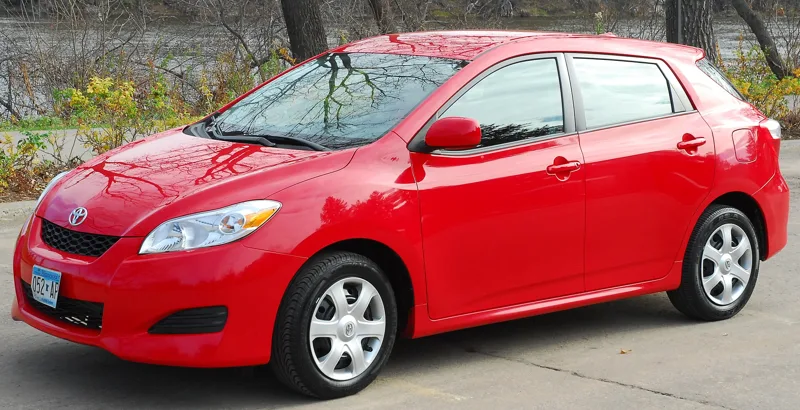
- Toyota Matrix XRS and Pontiac Vibe GT in the United States at 164-180 hp
- Toyota Corolla Sportivo in Australia at 141 kW (192 PS; 189 hp) at 7,600 rpm
- Toyota Voltz Z in Japan at 132 kW (180 PS; 178 hp)
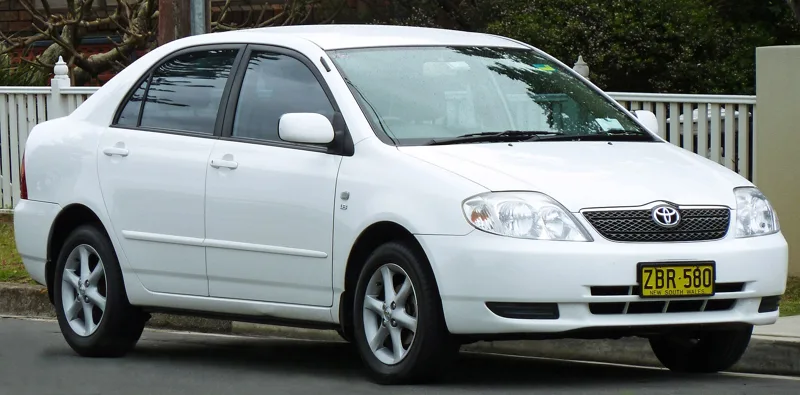
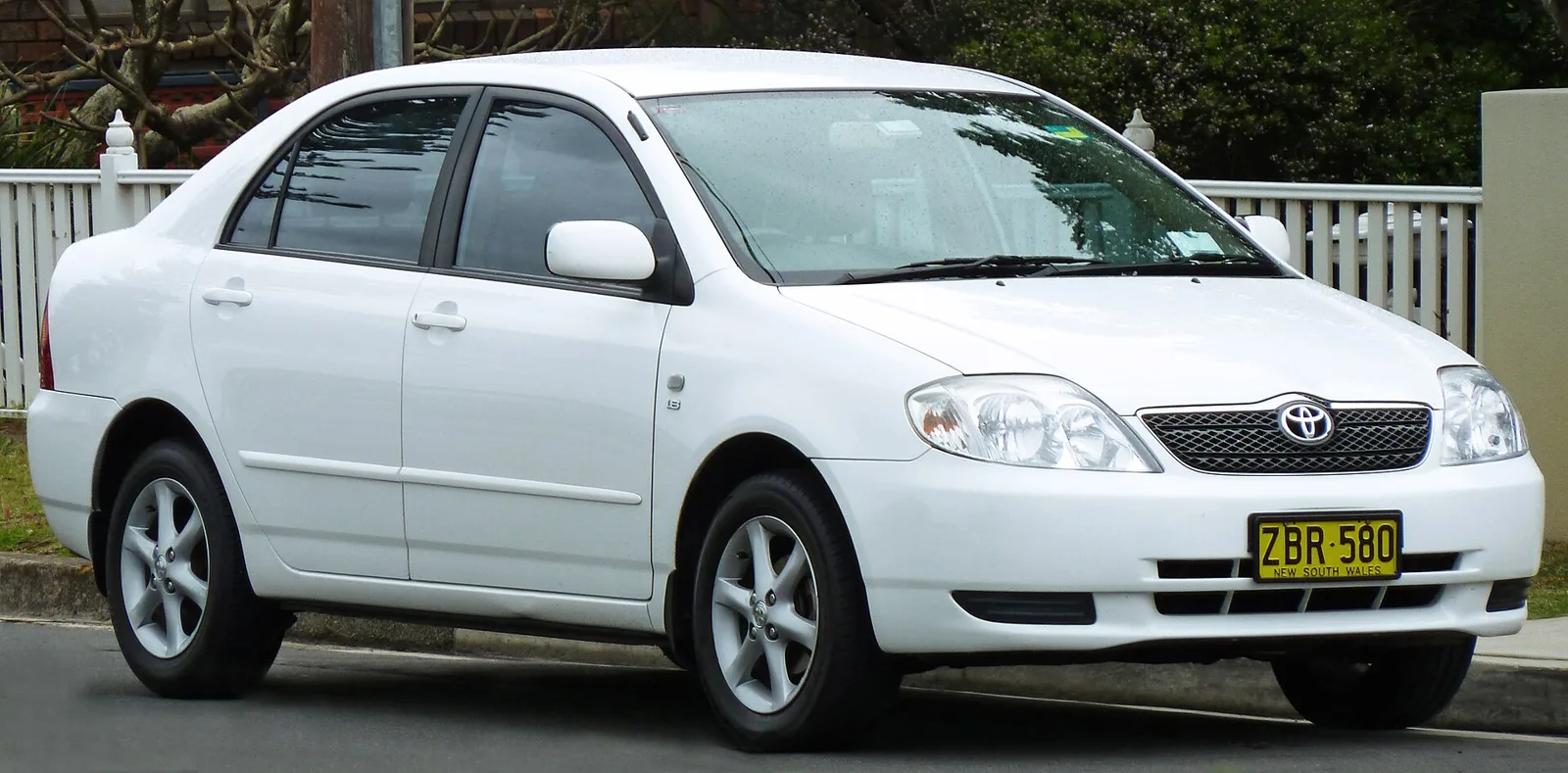
The 1ZZ-FE went into a long list of models, among them the Corolla E110, the RAV4, the Celica GT, the MR2 W30 and the Avensis. In Japan it also appeared in the Allion, Premio, Caldina and Wish. Its reach was wide because the same block served both economy cars and performance models.
How did the ZZ engine perform in motorsport?
The 2ZZ found its most visible racing role in open-wheel machinery. Tatuus FT40 and FT50 cars ran a naturally aspirated 2ZZ in the Toyota Racing Series at 160 kW (218 PS; 215 hp). That series is now known as Formula Regional Oceania.
Lotus pushed the engine further with forced induction. The supercharged Lotus 2-Eleven produced 252 hp (188 kW; 255 PS), and the Exige CUP 260 reached 260 PS (191 kW; 256 hp). Those figures show how far the same basic family could be stretched when the boost was turned up.
What were the main Toyota ZZ engine specifications?
| Engine | Displacement | Output | Notes |
|---|---|---|---|
| 1ZZ-FE | 1,794 cc | 120 bhp (122 PS; 89 kW) at 5,600 rpm, North America | Compression 10.0:1; MPFI and VVT-i |
| 2ZZ-GE | 1,796 cc | 141 kW (192 PS; 189 hp), Celica and Elise versions | Compression 11.5:1; VVTL-i and Yamaha design |
| 3ZZ-FE | 1,598 cc | 109 hp (81 kW; 111 PS) at 6,000 rpm | Built in Japan; used in Asia and Europe from 2000 to 2012 |
| 4ZZ-FE | 1,398 cc | 97 hp (72 kW; 98 PS) at 6,000 rpm | Bore 79 mm and stroke 71.3 mm |
Why does the 2ZZ-GE still matter?
The 2ZZ-GE is often cited as one of the highest-revving mass production engines ever made, and it set a benchmark for output per litre among production engines. Its combination of dual cam profiles, electronic management and a high rev ceiling made it stand out in its class.
Lotus used the engine across its Elise and Exige range, including supercharged versions, while Tatuus open-wheel cars showed how far the design could be taken. The family's breadth, from economy-focused 1ZZ units to the high-revving 2ZZ-GE, is the reason the name still appears in enthusiast discussions.