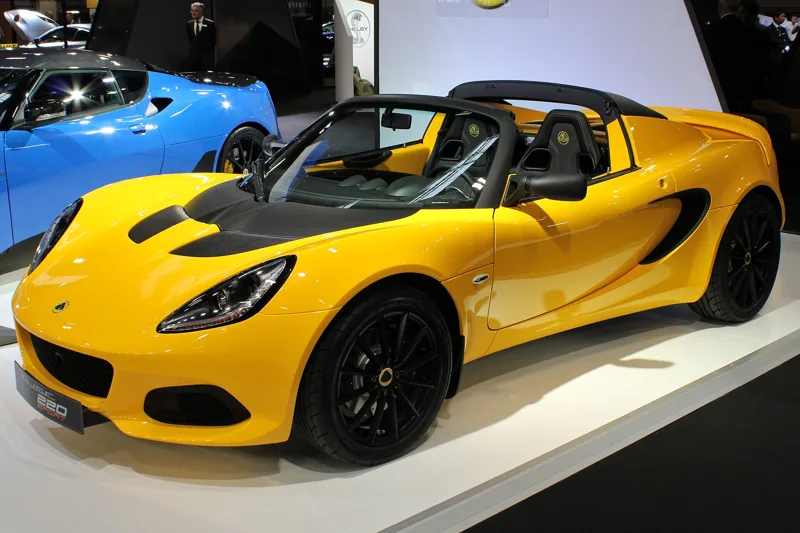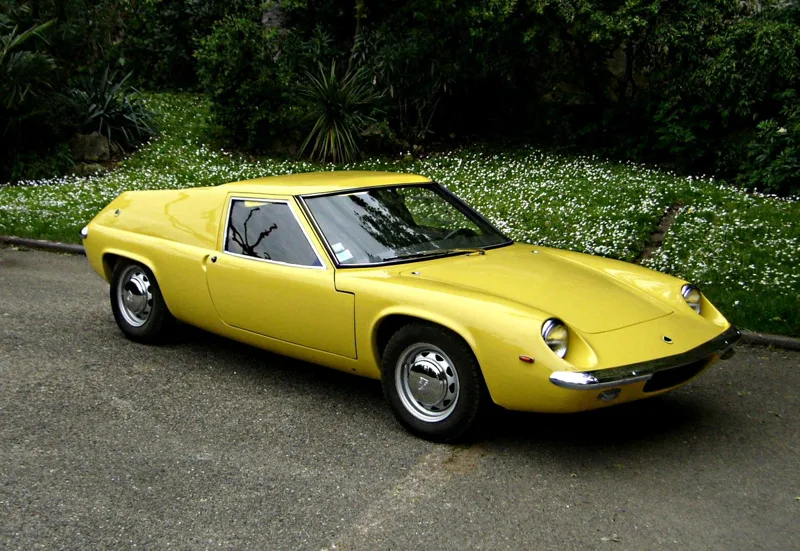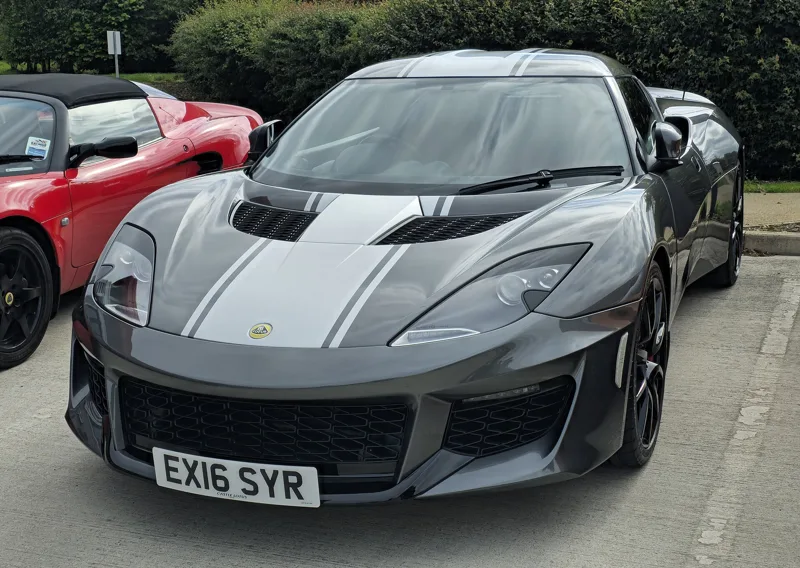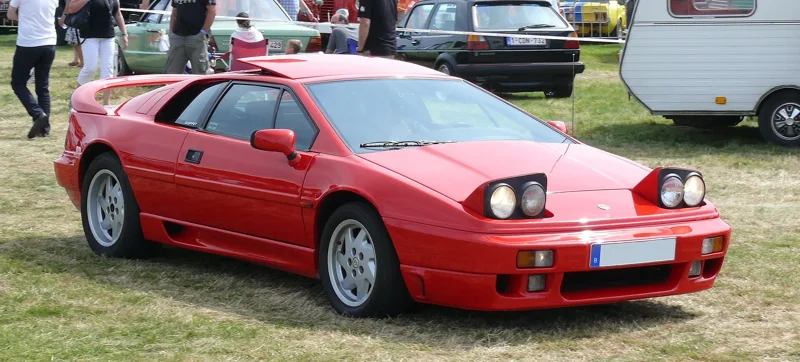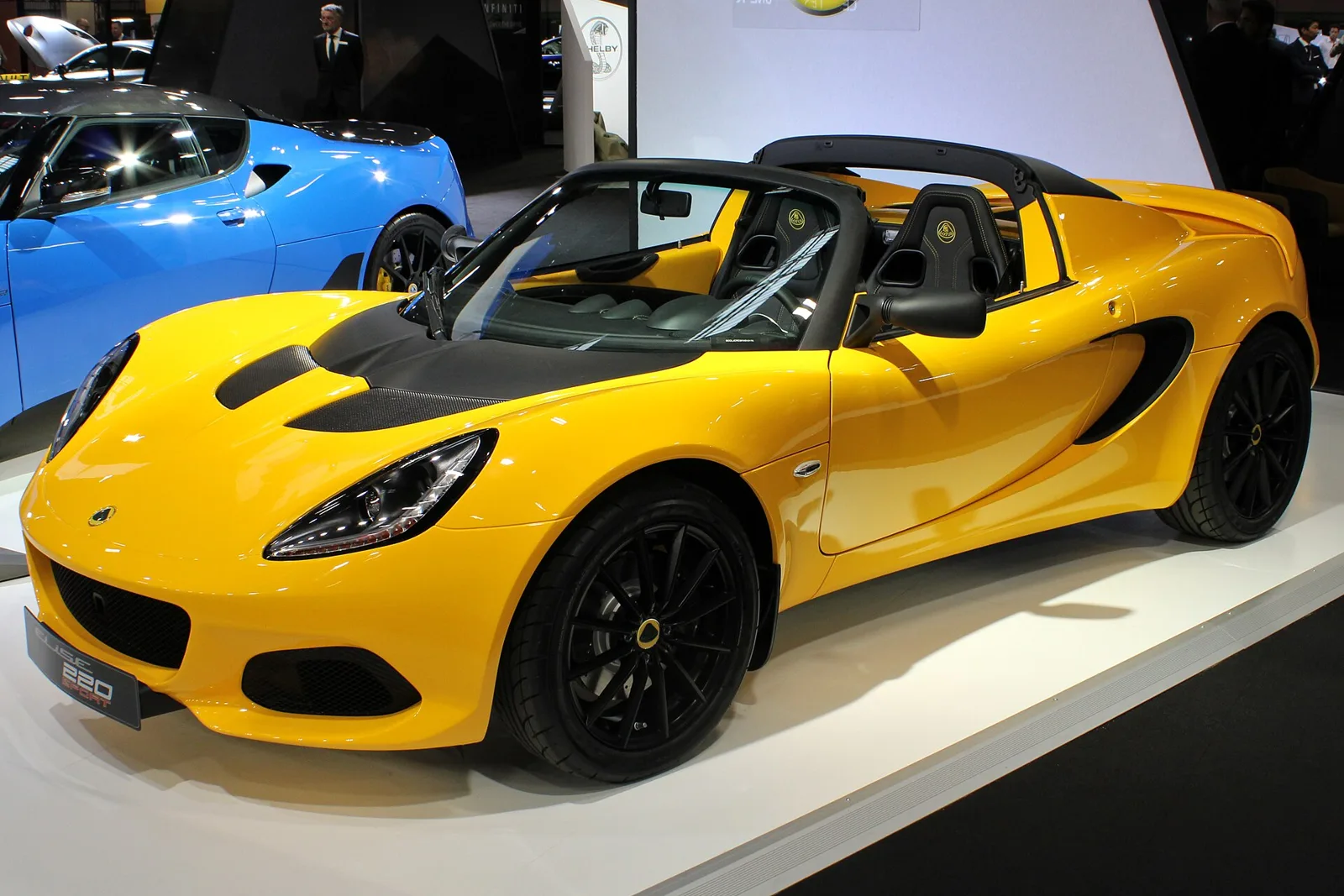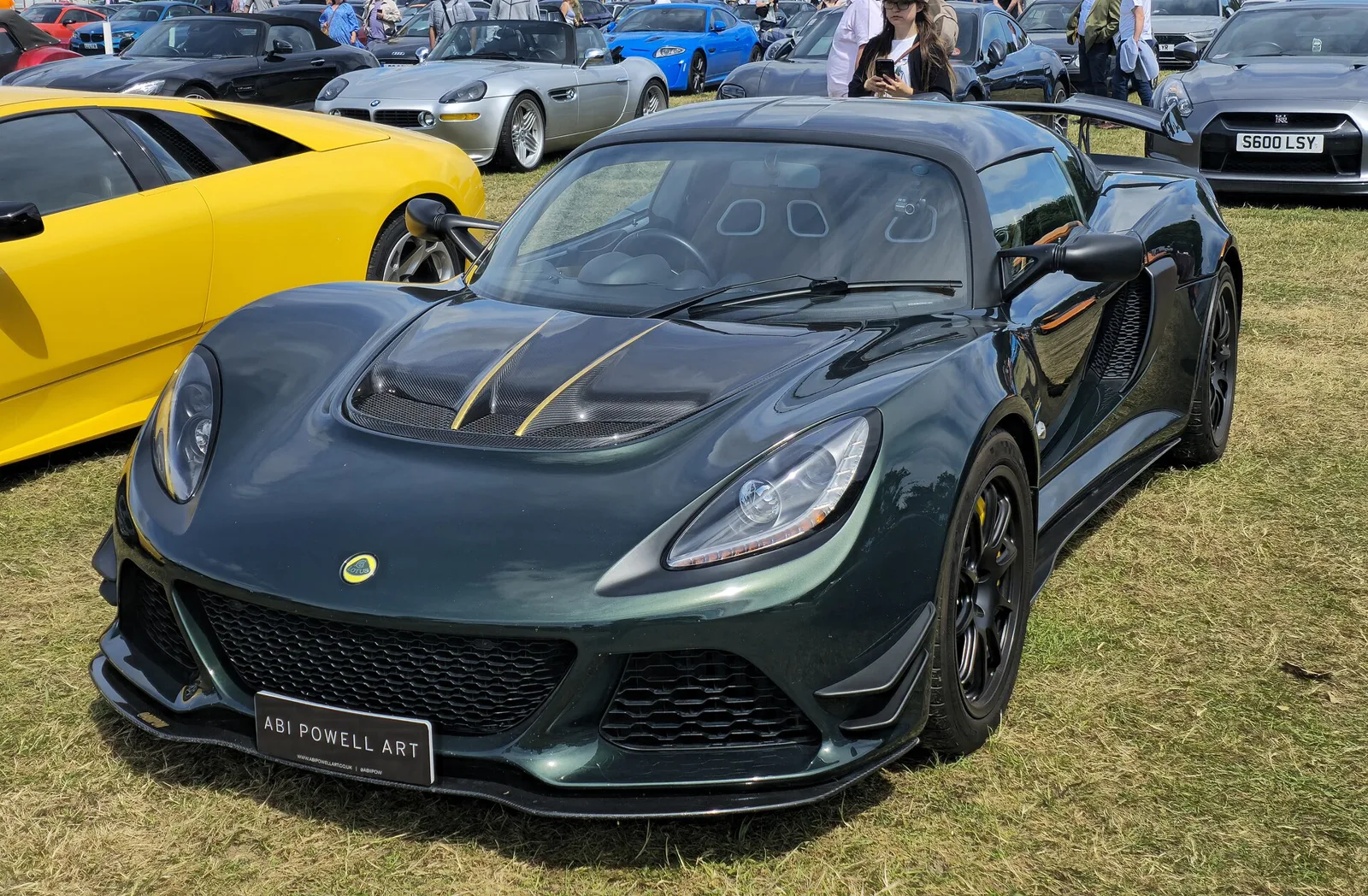
From the Elise-based coupe of 2000 to the 430 hp Cup 430, the lightweight Exige ran until 2021 and built a long list of limited editions.
The Lotus Exige was a British sports car built by Lotus Cars from 2000 to 2021. Developed as a coupe offshoot of the Elise, it moved to a V6 from Series 3 and became the larger-engined member of its family. Its Cup 430 version produced 430 hp.
The Lotus Exige ran from 2000 to 2021 and began as a hard-topped coupe version of the Elise roadster. Across its Series 1, Series 2 and Series 3 phases it moved from a four-cylinder car to a supercharged V6 machine with a serious track record.
What is the Lotus Exige?
The Exige is a lightweight sports car made by Lotus Cars, the British manufacturer. It was sold from 2000 until 2021 as a coupe based on the Elise, with convertible versions of both models also offered. From Series 3 the Exige used a V6 in place of the Elise's four-cylinder engine.
The first Exige arrived in 2000 with a 1.8 L Rover K Series inline-four in VHPD tune. In standard form it was rated at 177 hp (132 kW; 179 PS) at 7,800 rpm, and a track-spec version raised the figure to 190 hp (142 kW; 193 PS). The five-speed manual car was claimed to reach 219 km/h (136 mph), with 0-100 km/h taking 4.9 seconds.
A coupe version of the Elise that grew a supercharged V6 and a 430 hp track car.
How did the first Exige differ from the Elise?
The first Exige reused the bodywork of the Series 1 Elise, which was built from 1996 to 2000. Lotus added a non-removable hardtop with a fastback, kamm-tail rear and a pylon-mounted rear wing. Both front and rear clamshells were widened to fit a wider track.
Front air intakes were blanked on road cars, and a front splitter was added to the nose. The engine cover was tinted and transparent.
Series 1 production ran until 2001, and 604 examples were built in total before the Series 2 arrived in 2004.
What changed with the Series 2 Exige?
The Series 2 Exige arrived in 2004 with a 1.8 L Toyota 2ZZ-GE engine rated 190 hp (142 kW; 193 PS). Its aerodynamic additions, including a fibreglass hardtop with a roof scoop, were there to create more downforce than the Elise. The engine was designed by Yamaha.
The downforce gap was measurable. The Exige made almost 45 kg (100 lb) of downforce at 161 km/h (100 mph), against 5.9 kg (13 lb) for the Elise at the same speed. Standard Series 2 cars weighed 914 kg (2,016 lb), and Lotus quoted 0-97 km/h in 4.7 seconds, with 0-161 km/h taking 12.9 seconds.
Lotus also took the Exige to North America, where it was unveiled at the Los Angeles Auto Show in January 2006.
The supercharged Exige S and Sport 240
The Exige S used a supercharged version of the Toyota engine, rated at 218 hp (163 kW; 221 PS) at 7,800 rpm. Its torque was 159 lb ft (215 Nm) at 5,500 rpm, a clear step up from the 190 hp of the Series 2 car.
In February 2005 Lotus announced a limited run of 50 supercharged 240R cars.
The Exige Sport 240 followed in 2007 and was limited to 6 units for the Australian market. Its output reached 179 kW (240 hp; 243 PS), and it went on sale at the 2007 Australian show at $149,990. Its traction control offered 18 presets plus electronic launch control.
A separate car, the Exige 265E, ran on E85 fuel, which is 85% ethanol.
The Exige S 240 raised power by 9 percent to 240 hp (179 kW; 243 PS) and carried a suggested retail price of $65,690. The Exige S 260 went further, reaching 260 PS (256 hp; 191 kW) while its weight fell to 916 kg (2,020 lb), down from 942 kg (2,077 lb).
Did the Exige ever get a V6?
Yes. The Series 3 Exige arrived with a supercharged 3.5 L V6 taken from the Evora S, rated at 345 hp (350 PS; 257 kW) at 7,000 rpm. The V6 version was announced at the 2011 Frankfurt Motor Show, and Lotus built the car from 2012 until 2021 in its various forms.
The V6 cars were about 25 cm (9.8 inches) longer than the four-cylinder models, and they measured 4,052 mm (159.5 inches) long and 1,802 mm (70.9 inches) wide. Their drag coefficient was 0.433, and the Series 3 V6 weighed 1,176 kg (2,593 lb). The V6 produced 400 Nm (295 lb ft) of torque at 4,500 rpm.
Lotus quoted 0-97 km/h in 3.8 seconds, or 3.9 seconds for the automatic, with a top speed of 277 km/h (172 mph). The 6-speed Toyota EA60 manual was the standard gearbox, and an automatic was offered as an option.
What were the track versions of the Exige?
The Exige V6 Cup was a track-oriented version of the S, unveiled at the 2013 Autosport International show. Its Cup R variant produced 366 PS (361 hp; 269 kW), and the track-only Cup R was its sibling. The Exige 360 Cup was limited to 50 examples.
Lotus later pushed the Cup line further with the Cup 430. It made 430 hp (436 PS; 321 kW) at 7,000 rpm, reached 97 km/h in 3.2 seconds and had a top speed of 290 km/h (180 mph). Its lowest dry weight was 1,056 kg (2,328 lb), and its body produced 220 kg (485 lb) of downforce.
How did the Sport 350 change the Exige?
The Sport 350 replaced the Exige S with a lighter car, revealed on 9 December 2015. It kept the 345 hp V6 but lost 51 kg, bringing kerb weight down to 1,125 kg. The Sport 380 then pushed power to 375 hp (380 PS; 280 kW). The Sport 350 and Cup 380 were both offered from 2015 to 2021.
The Sport 350 was built around a 1,200 kg target weight set by CEO Jean-Marc Gales. Lotus could not reach that target with the Evora's 400 bhp engine, so the team kept the 345 hp V6 and cut weight elsewhere. The gearshift used an open-gate aluminium mechanism.
The Sport 380 raised output to 375 hp (380 PS; 280 kW) with a 6500 rpm red line. It reached 97 km/h in 3.5 seconds and weighed 1,076 kg (2,372 lb). CEO Gales said the car was in a class of its own. The car used polycarbonate windows, and it had two rear lights.
The Sport 410 and the 2021 Final Editions
The Sport 410 was detuned to 410 hp (416 PS; 306 kW) and produced 420 Nm (310 lb ft) of torque. Its dry weight of 1,054 kg made it the lightest V6 Exige to date, and it generated 150 kg of downforce.
Lotus revealed three Final Editions on 9 February 2021: the Sport 390, the Sport 420 and the Cup 430. The Sport 390 Final Edition weighed 1,138 kg, while the Cup 430 Final Edition weighed 1,098 kg (2,421 lb).
Which limited editions were built?
Several small runs left the factory. The Exige S 260 Final Edition was built with 30 examples for North America, the Type 25 was limited to 25 units, and the Exige 360 Cup had 50 examples.
The LF1 limited edition had 81 cars, one for each Formula One victory Lotus had won. Car 1 marked Lotus's first F1 victory at Monaco in 1960, and car 81 marked Kimi Raikkonen's 2013 win in Australia.
The Type 25 paid tribute to Colin Chapman's Lotus 25, which Jim Clark drove in 1963. Ten of the 25 cars were right-hand drive. The RGB Special Edition honoured Roger Becker, the former vehicle engineering director at Lotus.
How did the Exige perform in motorsport?
The Exige also raced in endurance events. Simply Sports Cars ran an Exige Cup R at the Bathurst 12 Hour in 2014 and 2015, and the entries took class wins on both occasions.
The Angelo Lazaris car was unveiled in round three of the 2008 GT Championship. Its engine was rated 355 PS (261 kW; 350 hp) at 7,000 rpm.
Lotus tied the Exige to its racing history. CEO Jean-Marc Gales cited 65 years of motorsport racing, 40 of them in F1.
The Hennessey Venom GT was built on a modified Exige chassis, which shows how far the platform could be pushed.
Why did the Exige end production?
Production of the North American Exige ended in August 2011, after an exemption for smart airbags expired and Toyota stopped making the 2ZZ-GE engine. Lotus marked the close of the era with the S 260 Final Edition, of which 30 were built for North America.
The Emira replaced the Evora, Exige and Elise. Lotus launched it on 6 July 2021, and sales began in March 2022, closing the Exige chapter.
What were the main Exige specifications?
The core figures varied across the range, from the 177 hp Series 1 to the 430 hp Cup 430. The table below lists the key specifications for the main phases, and
| Specification | Detail |
|---|---|
| Series 1 engine | 1.8 L Rover K Series inline-four, VHPD tune |
| Series 1 power | 177 hp (132 kW; 179 PS) at 7,800 rpm |
| Series 1 top speed | 219 km/h (136 mph) |
| Series 2 engine | 1.8 L Toyota 2ZZ-GE, designed by Yamaha |
| Series 2 power | 190 hp (142 kW; 193 PS) at 7,800 rpm |
| Series 2 weight | 914 kg (2,016 lb) |
| Series 2 0-97 km/h | 4.7 seconds |
| Exige S power | 218 hp (163 kW; 221 PS) at 7,800 rpm |
| Series 3 engine | 3,456 cc Toyota 2GR-FE supercharged V6 |
| Series 3 power | 345 hp (350 PS; 257 kW) at 7,000 rpm |
| Series 3 torque | 400 Nm (295 lb ft) at 4,500 rpm |
| Series 3 weight | 1,176 kg (2,593 lb) |
| Series 3 0-97 km/h | 3.8 seconds (3.9 seconds with automatic) |
| Cup 430 power | 430 hp (436 PS; 321 kW) at 7,000 rpm |
| Cup 430 0-97 km/h | 3.2 seconds |
| Cup 430 top speed | 290 km/h (180 mph) |
| Cup 430 dry weight | 1,056 kg (2,328 lb) |