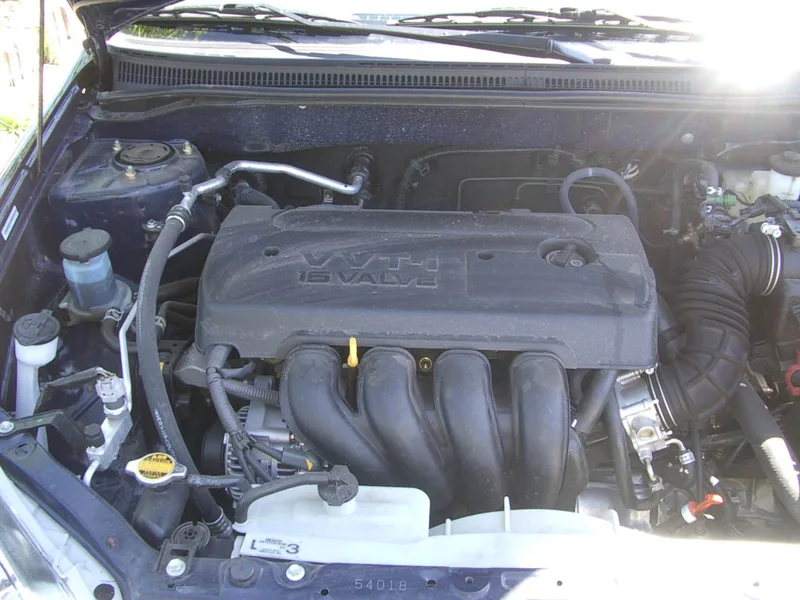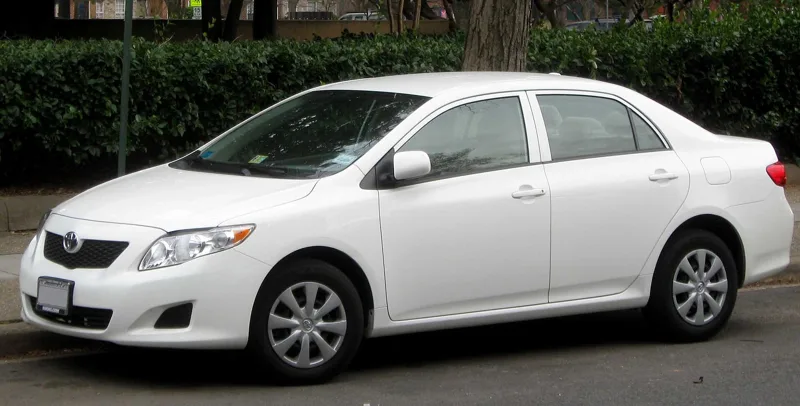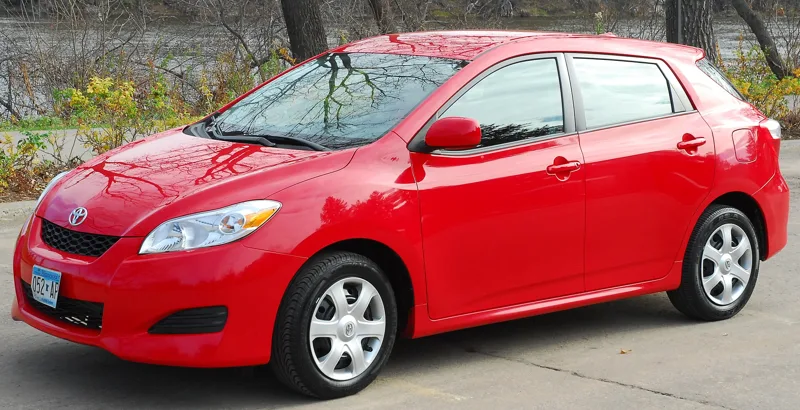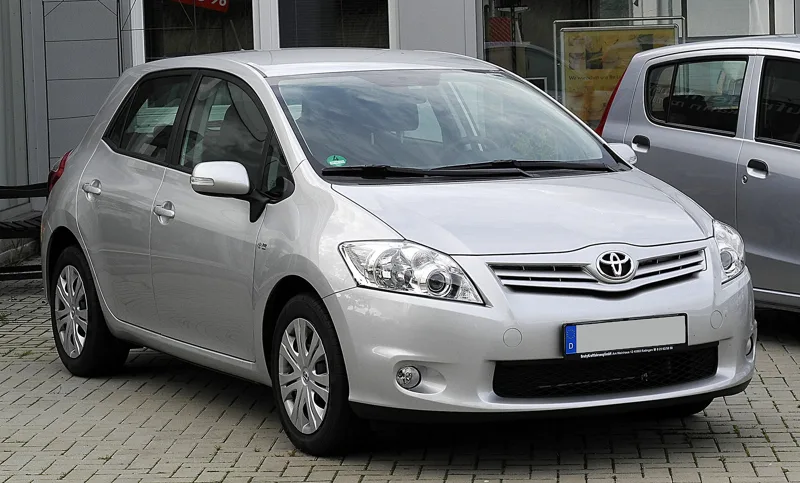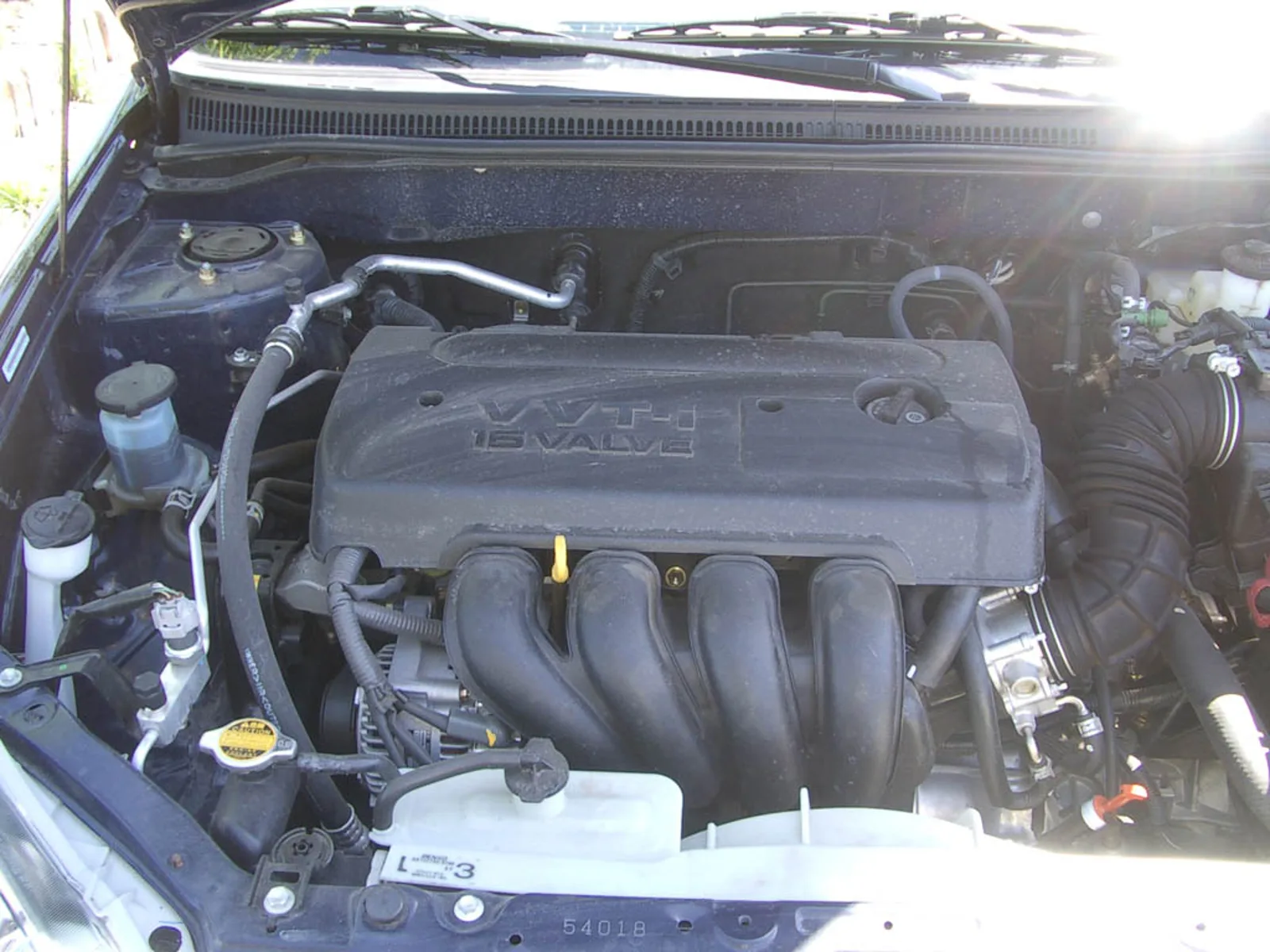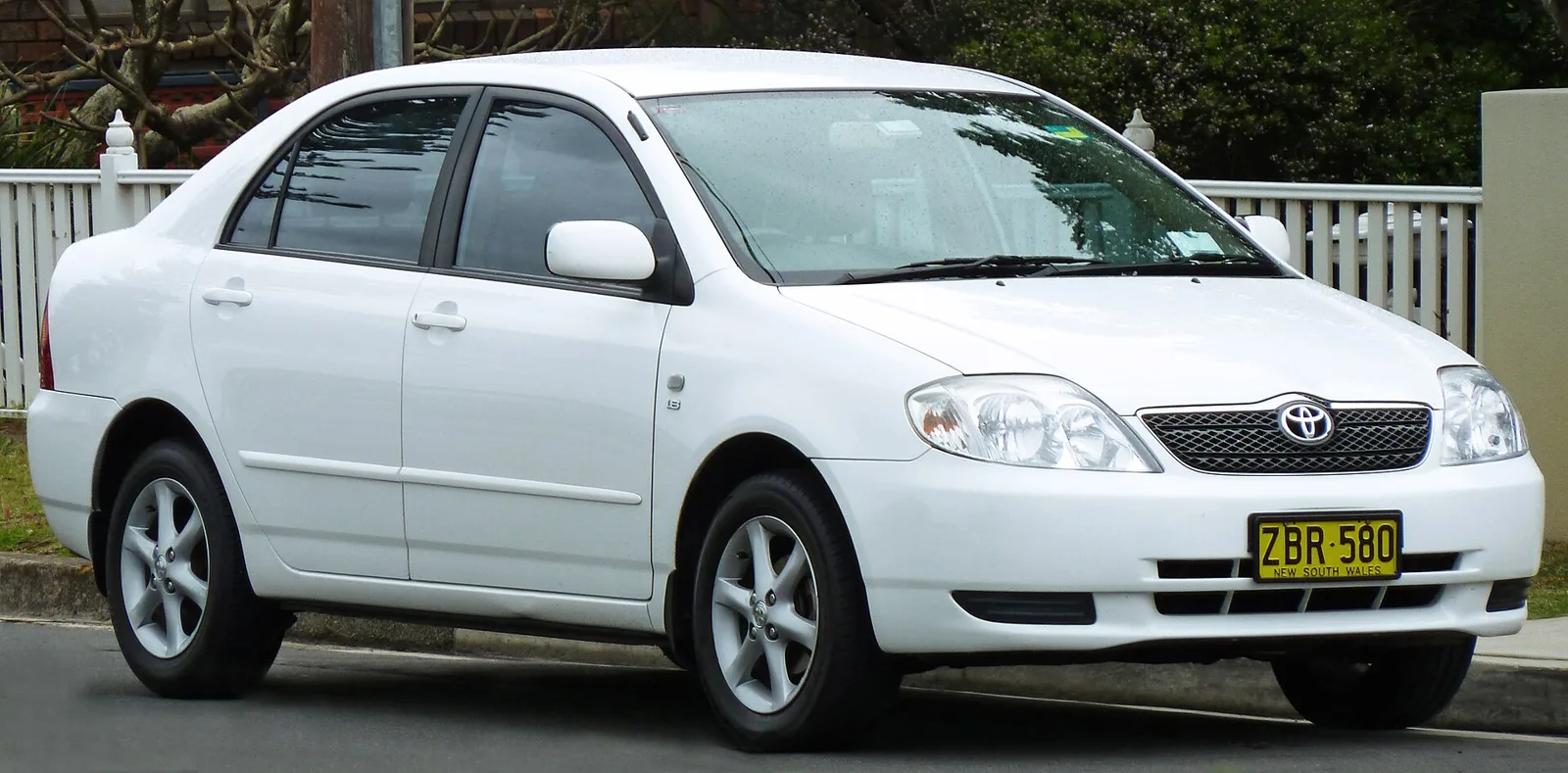
A 2002 award winner that sold as a sedan, wagon and hatchback across the world, and a sleeper XRS that became a cult favourite.
The Toyota Corolla E120, also coded E130, was the ninth generation of the Corolla. It went on sale in Japan in August 2000 as a sedan and wagon, a five-door hatchback followed in 2001, and production continued in China until 2017.
The ninth-generation Corolla, coded E120 and E130, reached Japan in 2000 and spread to much of the world in the years that followed. It was designed to cover roles from a compact sedan with some prestige to a budget-friendly hatchback.
When did the ninth-generation Corolla go on sale?
Japan saw sedans and wagons in August 2000, and the five-door hatchback came in January 2001. The sedan and wagon went on sale on 28 August 2000 with front-wheel and all-wheel drive options. A Europe-only three-door hatchback appeared in 2002, and exports to most other markets generally started in 2001 and 2002.
From 2002 the hatchback alone received a sharper, edgier look layered on top of the original styling. Japanese sedans and wagons received a new front design in 2004, although that design rarely reached European showrooms.
The E120 was replaced by the E140 or E150 in late 2006 or early 2007. Production carried on in China, however, until 2017.
A global compact that could be a prestige sedan in one market and a budget hatchback in another, with one sleeper XRS on top.
How was the E120 designed?
A design proposal from Masao Saito in 1998 was frozen for production in early 1999. Patents were filed with the Japan Patent Office on 22 July 1999, under patent number 1120997. Toyota framed the project as a global automobile that could suit different needs.
The original styling was later supplemented with a hatchback-only treatment, and the Japanese car eventually gained its own front and rear treatment. Other Asian and American models wore unique styling of their own.
The Japanese saloon's headlamp and tail lamp design also differed from the cars sold elsewhere. A facelift on 27 April 2004 refreshed the headlights and tail lights on Japanese sedans.
What platform and size did the E120 use?
The E120 and E130 used a shortened version of the V50 series Vista platform and a 2,600 mm (102.4 in) wheelbase. Toyota designed it as a global car that could be adapted to suit different markets, moving between a more prestigious compact sedan and a budget hatchback.
The result was one of the most versatile and popular Toyotas ever built. The same architecture carried sedans, wagons and hatchbacks across Asia, Europe and the Americas, with each region receiving its own detail changes.
Alongside the sedan, a separate hatchback named the Matrix was offered in North America, covering the US, Canada and Mexico. It became the foundation of the Pontiac Vibe, and the Vibe was sold in Japan as the Voltz.
How was the Corolla sold in Japan?
Japanese sedans were offered in four grades, from a base X Assista Package up through X, G and the top Luxel. The station wagon was called the Fielder, while the five-door RunX arrived in December 2001 alongside the Allex, a near twin.
The RunX could be bought only at Toyota Corolla Store outlets, and the Allex only at Toyota Netz Store outlets. The Allex swapped the RunX's body-coloured trim for chrome and used different cloth patterns inside.
Japanese engines ranged from small units to a 1ZZ-FE at the top of the range. Base cars used the 2NZ-FE, mid-range models the 1NZ-FE, and the 2ZZ-FE was offered only in the wagon and RunX. Diesel sedans used the 3C-E engine.
The Spacio, called the Verso in Europe, moved onto the new platform and later gained a third row of fold-down seats.
What was the Corolla line-up in Australia and New Zealand?
Australian buyers could choose a sedan, a wagon and a five-door hatchback called the Seca, from December 2001 onward. Trim levels were Ascent, Ascent Sport, Conquest, Levin and Ultima. South African-built cars carried vehicle identification numbers beginning with A, and Japanese-built cars began with J.
The Sportivo hatchback, built only in South Africa, paired a 2ZZ-GE engine with a six-speed manual. It was discontinued in Australia from 2006 because modifying the engine to meet Euro IV emissions rules was too expensive.
Australian cars lost power in October 2005, as output fell from 100 kW to 93 kW, equal to a drop from 134 hp to 125 hp. Torque slipped from 171 to 161 Nm (126 to 119 lb-ft) as Euro IV compliance took effect. Starting in May 2006, the Ascent and Ascent Sport variants received front power windows and a passenger airbag.
New Zealand offered the hatch in GL, GLX and T Sport trims. The T Sport added a rear spoiler, side skirts, front fog lamps and alloys measuring 15 inches, while every New Zealand car used the 1.8-litre 1ZZ-FE with a choice of four-speed automatic or five-speed manual.
How did the Corolla sell in Europe?
European buyers could choose a three-door hatchback, a five-door hatchback, a saloon or an estate. The wagon was sold as a Kombi or estate depending on the market, and the high-performance Corolla T-Sport used a 1.8-litre 2ZZ-GE in certain countries.
European petrol engines ran from the 1.4-litre 4ZZ-FE rated at 97 hp (72 kW) and the 1.6-litre 3ZZ-FE rated at 109 hp (81 kW) up to the 1.8-litre 2ZZ-GE. Diesel options included the 1ND-TV 1.4-litre rated at 89 hp and several 2.0-litre 1CD-FTV turbo units rated between 90 and 116 hp.
Supercharged 2ZZ-GE versions followed in 2005 and 2006. The limited TTE Compressor used a supercharged 2ZZ-GE rated at 215 hp (160 kW), and another limited batch reached 224 hp (167 kW).
What engines did the Asian Altis versions use?
The Altis, an upmarket version, was manufactured and sold in a long list of Asian markets. Those included Pakistan, Taiwan and most of Southeast Asia. It debuted in March 2001 with two engines, a 1.6-litre 3ZZ-FE rated at 110 hp and a 1.8-litre 1ZZ-FE.
Thailand was the first Southeast Asian country to get the Altis, on 16 May 2001. Its J, E and G grades were joined by a 1.8S in June 2002, and a taxi-focused Limo with a 4A-FE engine followed in January 2003.
Two facelifts followed. The first, revealed on 19 November 2003, brought a new grille, a sleeker front bumper and LED tail lights. The second, in June 2006, added yet another grille, a third LED brake light and new steering-wheel audio switches.
In Singapore the Altis replaced the earlier Japanese-built Corolla in August 2004, offered only with automatic transmissions. Large numbers were sold, and production lasted seven years.
How did the Corolla EX sell in China?
In China the ninth-generation car was sold as the Corolla EX through FAW Toyota from February 2004. The EX name was used throughout its production run in China. Production ran for 13 years and stopped on 17 February 2017, which made it longer-lived than most other Corolla generations.
The EX first used a 3ZZ-FE of 1.6 litres, with 80 kW (109 PS) on offer. It was replaced by a 1ZR-FE dual VVT-i engine rated at 88 kW (120 PS), and in November 2012 by the almost identical 4ZR-FE.
The EX came in Value, Excellence and Elegance trims. In its later years the EX ran side by side with the newer tenth-generation car. An electric variant called the Ranz E50 EV, built by the Ranz marque, started production in April 2015.
How did the Corolla arrive in North America?
The North American Corolla was larger than the Japanese car and was based on the Corolla Altis sold in Southeast Asia. It arrived on US roads in January 2002 as a 2003 model, having made its show debut in 2002 at the North American International Auto Show.
Trim levels were CE, LE and S. The CE came with manual windows and locks as standard, the LE brought more luxury, and the S added a sportier nose and tail, plus 15-inch six-spoke alloy wheels. Mexico received the first Corolla generation sold there.
A refresh for the 2005 model year revised the front bumper and grille and added clear rear turn signal lenses. Some models gained electronic throttle bodies and anti-lock brakes, and the manual gearbox was dropped for the CE and LE, leaving it only on the S.
Production of the ninth-generation car in North America ended in December 2007. The tenth-generation Corolla arrived in January 2008 as a 2009 model, with a plastic intake manifold and 130 hp.
What was the Corolla XRS?
The XRS was a sporty model sold for 2005 and 2006 with a 2ZZ-GE engine rated at 170 hp (127 kW) and a close-ratio six-speed manual. It was shown as a concept in November 2003 and appeared in 2004, slotted between the 2005 and 2006 model years.
The engine was a high-revving unit borrowed from the Celica GT-S, and Yamaha helped develop it. The XRS version used a cable throttle that cut in at 6,700 rpm, with the redline sitting at 8,200 rpm, and the car carried a Yamaha-designed brace across the front strut towers.
The XRS sat 12.7 millimetres (0.5 in) lower than the S and used Michelin Pilot Primacy P195/55-R16 tyres. It had drum-in-disc rear brakes from the Celica GT-S, and it lacked traction control and stability control.
Toyota estimated annual sales of about 5,000 XRS models. Production is unofficially put at 6,619 units, and Toyota Canada reportedly sold 818 cars in model year 2005 and 279 in model year 2006.
The E140 XRS introduced for 2009 used the 2AZ-FE engine from the Camry and Scion tC, with a five-speed manual or automatic. It was significantly slower than the original, although its design intent was similar.
How did the E120 perform in safety tests?
In United States crash tests the 2003 model year Corolla scored moderately, with cumulative results of around 7 out of 10. Lawsuits followed over unintended acceleration and weak subframe rigidity. The crash results were therefore mixed, with moderate scores set against the legal claims.
The 2003 car was also among the vehicles caught up in the Toyota Safety Controversy, where allegations centred on manipulated or falsified safety inspections. This led many to question the car's safety pedigree.
How was the Corolla built in South America?
In Brazil the sedan and the Fielder wagon were built locally. The sedan was available with a 1.6-litre 3ZZ-FE or a 1.8-litre 1ZZ-FE, and it was externally identical to the US and ASEAN Altis models, while the Fielder had styling of its own.
Flex-fuel capability arrived with the 2008 model, released in May 2007, using a 1.8-litre 1ZZ-FBE. Unlike most flex-fuel vehicles on the Brazilian market, the Corolla Flex produced the same power on ethanol or petrol.
What were the Corolla E120 specifications?
| Specification | Detail |
|---|---|
| Generation | Ninth, E120 and E130 |
| Japanese launch | August 2000, sedan and wagon |
| Wheelbase | 2,600 mm (102.4 in) |
| Platform | Shortened V50 series Vista |
| XRS engine | 2ZZ-GE, 170 hp (127 kW) |
| XRS production | Unofficially estimated at 6,619 units |
| Chinese production end | 17 February 2017 |
| North American refresh | 2005 model year |
| Successor | E140 or E150, late 2006 or early 2007 |