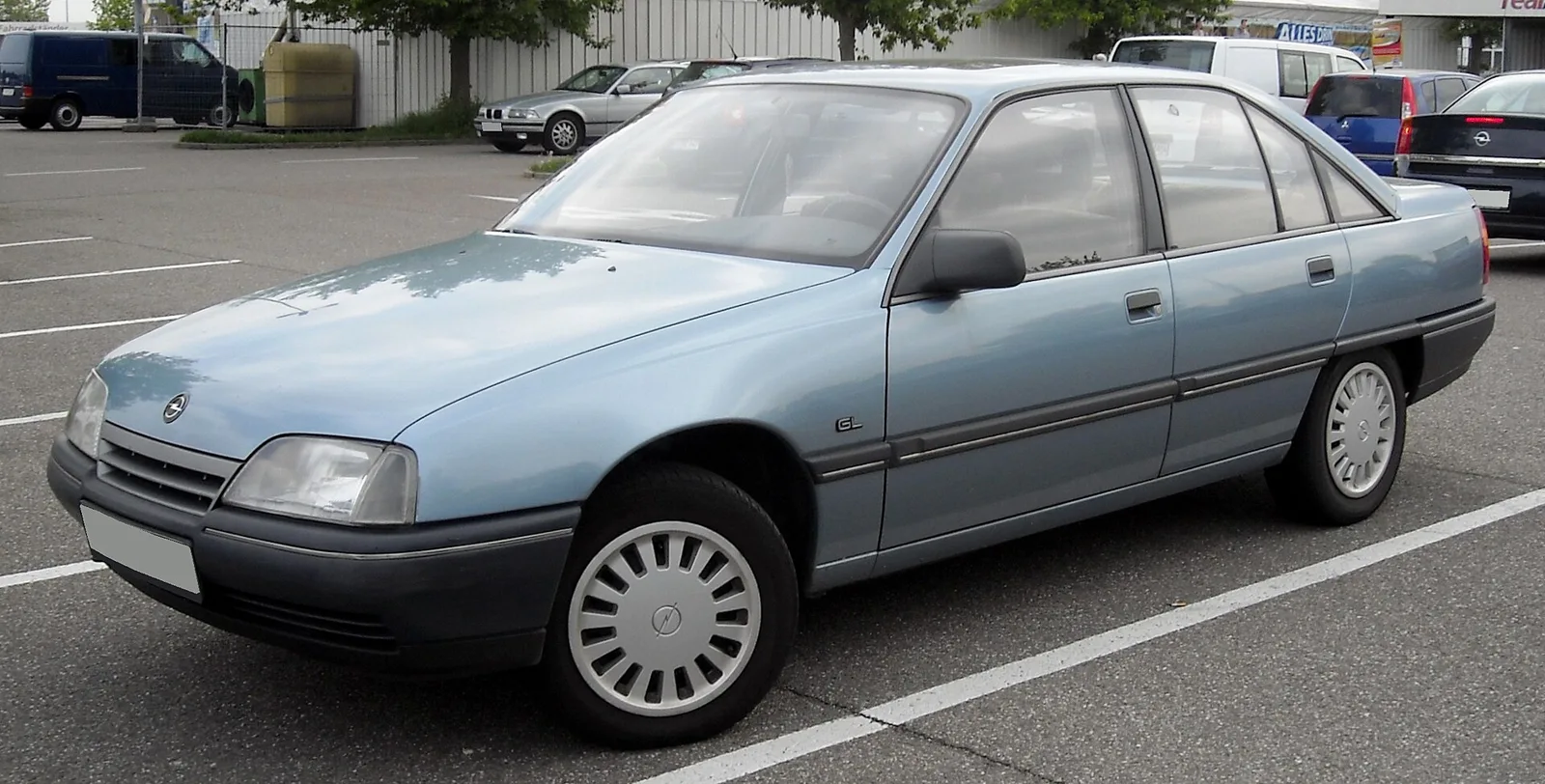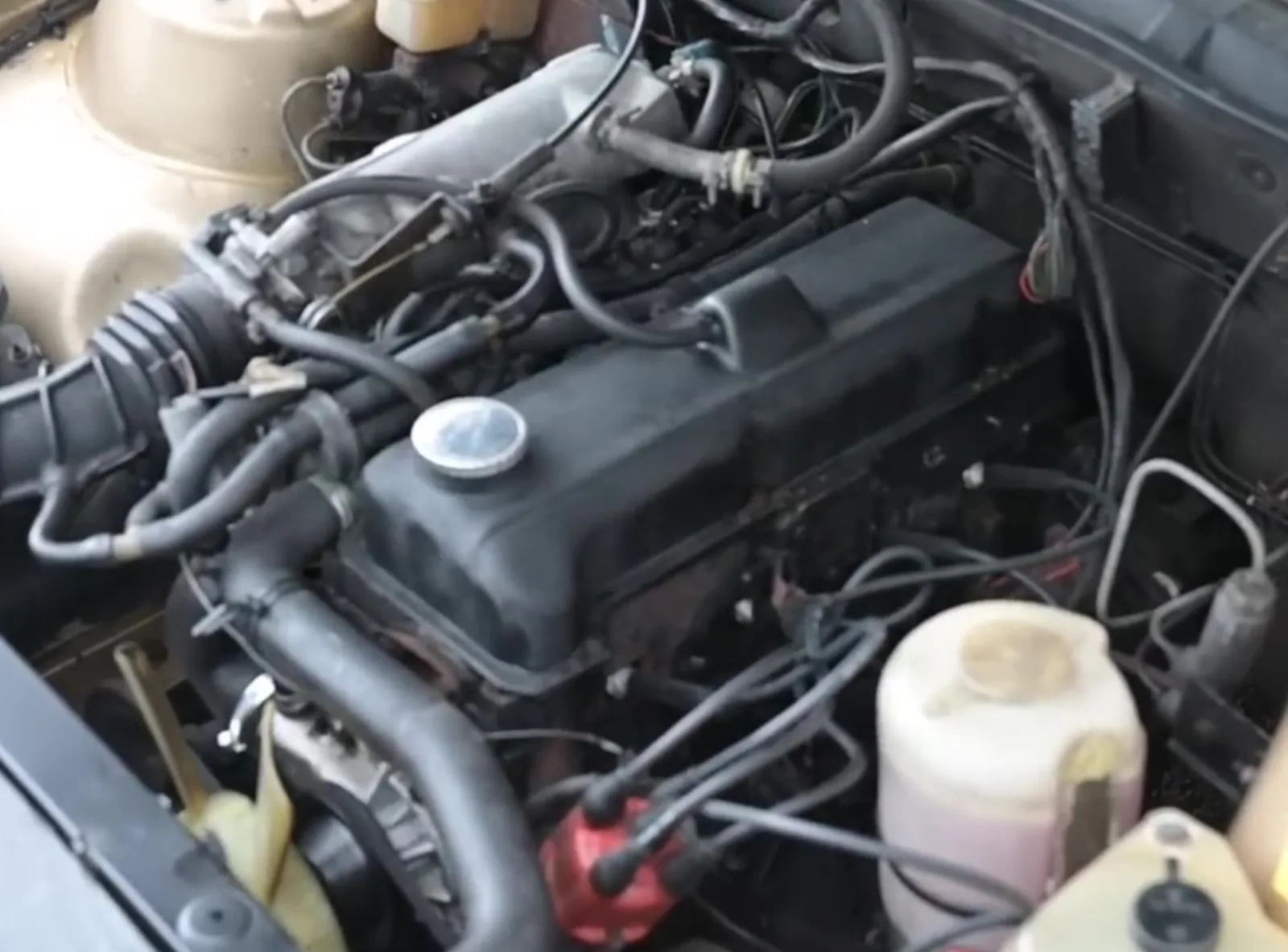
A rear-drive engine family that ran from the Rekord B to the Omega and Frontera, with four and six cylinder versions, diesels and a Lotus-built 3.6.
The Opel cam-in-head engine is an inline family that Opel built from 1965 to 1998 in four and six cylinder forms. Its camshaft sits in the head beside the valves, and it powered Opel and Vauxhall rear-drive cars along with a long-running diesel line.
The Opel cam-in-head engine, known as the CIH, was a family of rear-drive engines built by Opel from 1965 until 1998. It came in four and six cylinder inline form, appeared across Opel and Vauxhall cars, and spawned a diesel line that ran for almost two decades.
What is the Opel cam-in-head engine?
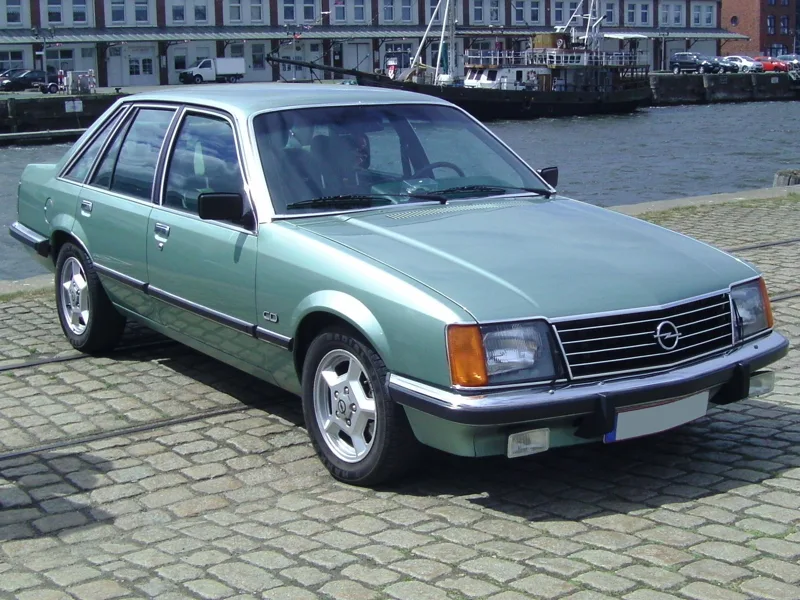
The CIH is a family of inline engines that Opel built from 1965 until 1998. It first appeared in the Opel Rekord B in 1965, and both four and six cylinder forms were produced. The name comes from the position of the camshaft, which was neither a cam-in-block layout nor a true overhead cam.
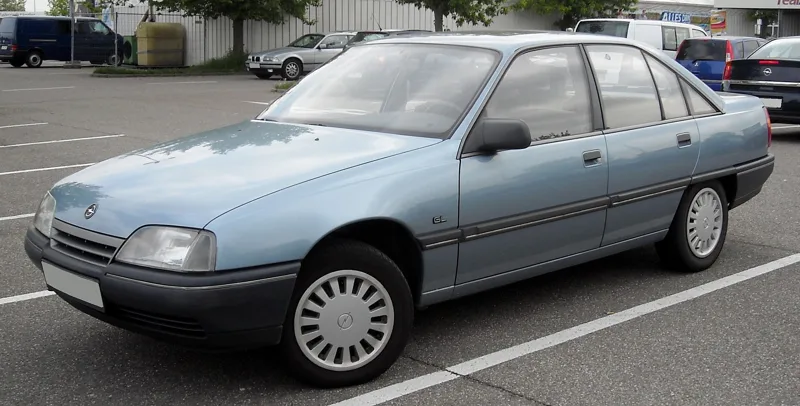
In four-cylinder form the GM Family II unit took over as the mid-size workhorse of the 1980s. Six-cylinder versions continued until 1994 in the Omega A and Senator B, and a large capacity 2.4 litre four lasted until 1998.
A diesel version followed later. It debuted in the Opel Rekord D in 1972, and the diesel branch of the family became a staple of Opel's higher range cars for two decades.
A rear-drive engine family that gave Opel a reliable four, a long straight six and a diesel line that ran for two decades.
Why is it called cam-in-head?
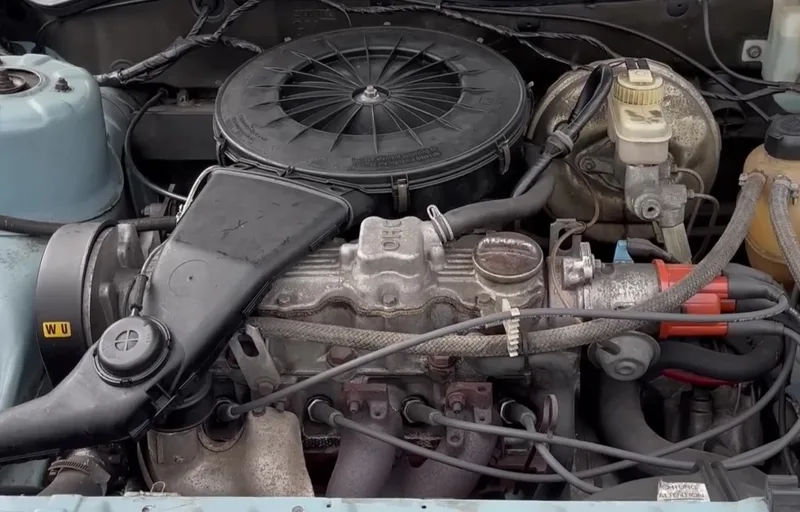
The camshaft sits in the cylinder head, but it runs alongside the valves rather than above them. That makes the CIH effectively an overhead valve design, actuated by very short tappets and rocker arms. The camshaft is driven by a roller chain, and the layout behaves much like a cam-in-block engine with a greatly shortened valve drivetrain.
General Motors in Detroit did the first design work. Early engines used mechanical lifters, while later versions moved to hydraulic tappets, a step Opel pioneered for mass market production in the Family II unit that ultimately replaced the CIH.
The cylinder head was a non-crossflow layout. That lowered fuel economy, but it was considerably cheaper to manufacture. Both the head and the block were cast iron, and the CIH was oversquare, with the original three versions sharing a stroke of 69.8 mm (2.75 in).
What did the CIH gain over an overhead cam engine?
The advantages over an overhead cam design were limited but real. The lower head allowed a correspondingly lower bonnet line, and the CIH was expected to need less maintenance than an OHC engine. It was also lighter, although the cast iron head cancelled out part of that saving.
The CIH was never adapted for transverse mounting, unlike its smaller stablemate, the Opel OHV. It was always found in rear-wheel-drive Opel and Vauxhall cars, which shaped how the family was used across the range.
A crossflow head was also developed in-house and shown in the 1975 experimental GT-2. Four-cylinder examples saw little production, appearing mainly as the 20EH of the Kadett GT/E, while the six-cylinder version reached mass production in the Opel Senator B.
Which CIH versions mattered most?
| Version | Introduced | Headline output |
|---|---|---|
| 1.9 L 19HL | 1967 | 106 PS (78 kW) |
| 1.9 L 19E | March 1974 | 105 PS (77 kW), first fuel-injected CIH four |
| 2.0 L 20E | 1975 | 110 PS (81 kW) |
| 2.4 L C24NE | 1988 | 125 PS (92 kW; 123 hp) |
| 3.0 L 30E | 1977 | 180 PS (132 kW; 178 hp) |
| 3.6 L C36GET (Lotus) | 1990 | 382 PS (377 bhp; 281 kW) |
How did the 1.5 and 1.6 litre fours differ?
The 1.5 litre was the smallest of the three original CIH engines, with an 82.5 mm bore and a 69.8 mm stroke giving 1,492 cc. Opel offered it in low-octane 15N and high-octane 15S forms. The 15N made 58 to 60 PS (43 to 44 kW), while the export-only 15S made 65 PS (48 kW) DIN at 5000 rpm.
The 1.5 found a second home in South Korea. It was imported by the predecessors of Daewoo, GM Korea and Saehan Motors, and was built there from around 1983. South Korea's tax system favoured engines below 1.5 litres, and the engine was installed in the Saehan Camina, the Saehan Gemini and the Saehan Daewoo Royale until 1987.
The 1.6 litre arrived in September 1970 with the Opel Manta A, and seven weeks later in the Opel Ascona A. Its 16N and 16S versions produced 68 and 80 PS (50 and 59 kW) at launch. Tighter pollution controls in early 1975 cut those figures to 60 and 75 PS (44 and 55 kW).
What happened with the 1.7 and 1.9 litre engines?
The 1.7 litre, with an 88 mm bore and the same 69.8 mm stroke, was only ever available in carburettor form. The 17N made 60 PS (44 kW) at first, rose to 66 PS (49 kW) in 1969, and fell back to 60 after the compression was lowered in 1975.
The 1.9 litre was the largest of the original three, with a 93 mm bore. It was the most common CIH four, available in more versions and built for longer than any other. The 19HL, introduced in 1967 for the Rekord Sprint and Kadett Rallye Sprint, produced 106 PS (78 kW) against 97 PS (71 kW) for the 19SH fitted to the Rekord.
The 19E was the first CIH four to receive fuel injection, appearing in the Manta GT/E in March 1974 with 105 PS (77 kW). Other variants included an Austrian 19N rated at 70 PS (51 kW) and a low emission S19S for Sweden and Switzerland at 88 PS (65 kW).
How did the 2.0 and 2.4 litre fours develop?
The 2.0 litre was based on the 1.9, with its bore enlarged to 95 mm while the stroke stayed at 69.8 mm. Unlike the earlier 1.9, it received hydraulic tappets. It was developed to offset falling outputs caused by stricter emissions rules, and the original 20S made 100 PS (74 kW) when it was presented in September 1975.
The fuel-injected 20E followed with 110 PS (81 kW), and the 20EH fitted to the Kadett 2.0 GT/E made 115 PS (85 kW) with Bosch L-Jetronic. A 90 PS (66 kW) 20N appeared in August 1977, and Bosch's LE-Jetronic replaced the earlier system late in 1981.
The 2.2 litre, built from 1984 to 1987, had fuel injection, a 77.5 mm stroke, bigger valves and hardened valve seats for unleaded fuel. It made 115 PS (85 kW; 113 hp) and 182 Nm of torque. The final four-cylinder CIH was the 2.4 litre C24NE, with an 85 mm stroke and 125 PS (92 kW; 123 hp), used in the Omega A in Germany and in the Frontera SUV until 1998.
What was the Cosworth-developed 400 engine?
In the early 1970s Opel announced a DOHC engine project for Formula 2, and the design was unveiled in 1975. It was homologated in Group 4 rallying, but it suffered a series of failures, which prompted Opel to bring in Cosworth engineering.
Cosworth revised the port and camshaft shapes and carried out extensive reliability work on the engine, which was based on a 2.0E block. The 2,420 cc racing unit had a compression ratio of 11.5:1 and twin Weber carburettors, and it produced 190.2 kW (255 bhp) at 7200 rpm.
Cosworth then built the 400 copies needed to homologate the Ascona 400, with more later for the Manta 400. A detuned 16-valve road car reached 107.4 kW (144 bhp) at 5200 rpm, and Cosworth additionally helped with the injection system that replaced the carburettors on it.
How did the six-cylinder CIH grow?
The straight-six CIH powered the largest Opel and Vauxhall cars from 1968 to 1993, before the Opel-designed 54-degree V6 took over in the mid-1990s. Most of these engines used a single chain-driven cam in the head, and they came with carburettors before Bosch fuel injection arrived in 1969.
The rarest six was the 2.2 litre, which debuted in December 1966. It shared the 82.5 mm bore and 69.8 mm stroke of the 1.5 four, and it made 95 PS (70 kW), which was only marginally more than the 1900S four. It was dropped from the Rekord C after the Commodore line arrived in February 1967.
The modern Opel six began in 1968 with the 2.5 litre 25S in the Commodore. It had an 87 mm bore and a 69.8 mm stroke, and with 9.2:1 compression and a single carburettor it produced 115 PS (85 kW) and 174 Nm. The 25H with dual carburettors reached 130 PS (96 kW).
The 3.0 litre arrived in 1977 with a 95 mm bore and the same short stroke. The fuel-injected 30E produced 180 PS (132 kW; 178 hp) and 248 Nm in the Monza GSE and Senator 3.0E. A 1989 DOHC 24-valve version with a variable length intake manifold raised output to 204 PS (150 kW; 201 hp).
How did the Lotus 3.6 engine work?
In 1990 a special six appeared in the Lotus Carlton and Omega. It started from the 24-valve 3.0 litre engine of the GSI, and displacement grew to 3.6 litres (3,615 cc) by lengthening the stroke to 85 mm while keeping the 95 mm bore.
Lotus experimented with several forced induction approaches before choosing a pair of small turbochargers, which would spool up quickly. Garrett AiResearch T25 units were fitted in parallel, each handling three cylinders, and a Behr intercooler cooled the charge.
The compression ratio was cut to 8.2:1, and the fuel injection was customised. The engine produced 382 PS (377 bhp; 281 kW) at 5,200 rpm and 568 Nm (419 lb ft) at 4,200 rpm.
Who tuned the CIH engine?
Crossflow and multi-valve heads for the CIH block were developed by well-known German tuners such as Irmscher, Mantzel, Risse and Steinmetz. Swedish work on a revised four cylinder head, with larger valves and enlarged ports, was carried out by ENEM in Nacka, and the changes were later copied by Opel for factory backed cars.
In the Omega Evo, Irmscher's 24-valve 3.0i made 230 PS (169 kW; 227 hp) thanks to a revised head and forged parts. Its 3.6i 12-valve engine went into the Monza E and Monza GSE.
Mantzel built a 4.0 litre (4,032 cc) engine for the 1980 to 1986 Bitter SC, and Irmscher's 4.0 litre (3,983 cc) produced 272 PS (200 kW; 268 hp). That Irmscher engine used a specially cast block, and it was fitted to the Omega A and Senator B.
What diesel versions were built?
Diesel derivatives of the CIH appeared in September 1972 and became more popular over the following two decades. They were designed for maximum fuel economy and long life, and they had a stiffened block, longer strokes and a single overhead cam head, which made them taller than the petrol units.
The 2.0 litre diesel was made by reducing the earlier 2.1 litre's bore to 86.5 mm, and it produced 58 PS (43 kW; 57 hp) at 4400 rpm from a 22:1 compression ratio. The 2.1 litre 21D arrived in 1972 and marked the company's debut in diesel production.
The 2.3 litre diesel followed in 1979, and it was the one offered in several variants. The 23D made 65 PS (48 kW; 64 hp), and the 23DK used a Comprex pressure wave supercharger, reaching 95 PS (70 kW; 94 hp) between 1984 and 1986.
The 23DT was Opel's first turbodiesel, using a KKK K24 turbocharger and producing 86 PS (63 kW; 85 hp). The 23YD followed in September 1986 for the Omega A, and the final four cylinder CIH diesel was the 23DTR, rated at 100 PS (74 kW; 99 hp) with an air-to-air intercooler.
How did the CIH perform in motorsport?
The CIH raced for many years in four and six cylinder guise. Its first big success was the 1966 European Rally title, which Lillebror Nasenius secured in a Rekord B. The engine's competition life stretched well beyond that single title.
Virgilio Conrero became the official director of Opel's rally team in 1969, with responsibility for preparing cars and selecting drivers, and the arrangement lasted until 1986. In 1971 an Opel GT won the GT2.0 class at the Targa Florio.
Ahead of the diesel's launch in June 1972, a special single-seater built on an Opel GT body set two world records and eighteen international records at Dudenhofen. Its turbocharged 2.1 litre diesel made 95 PS (70 kW).