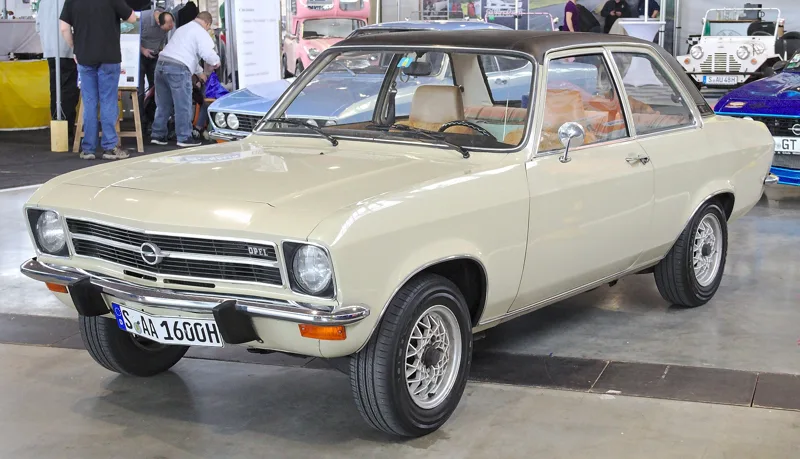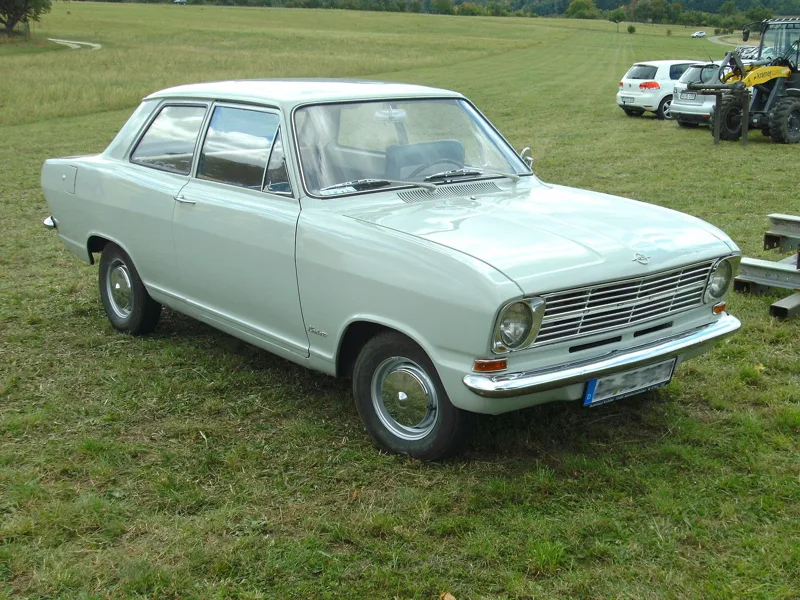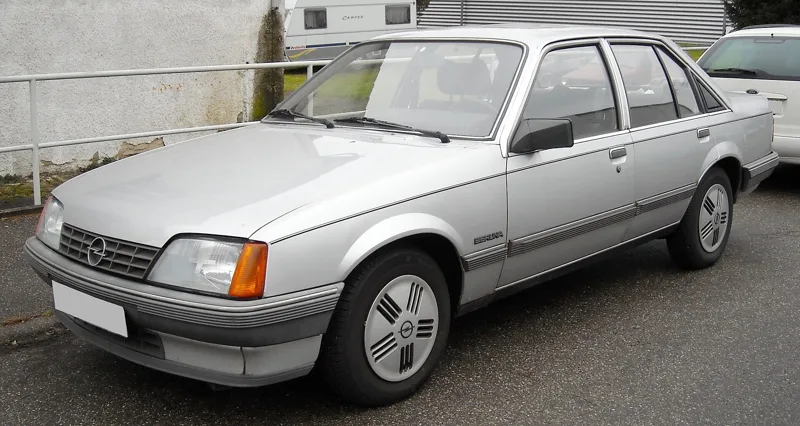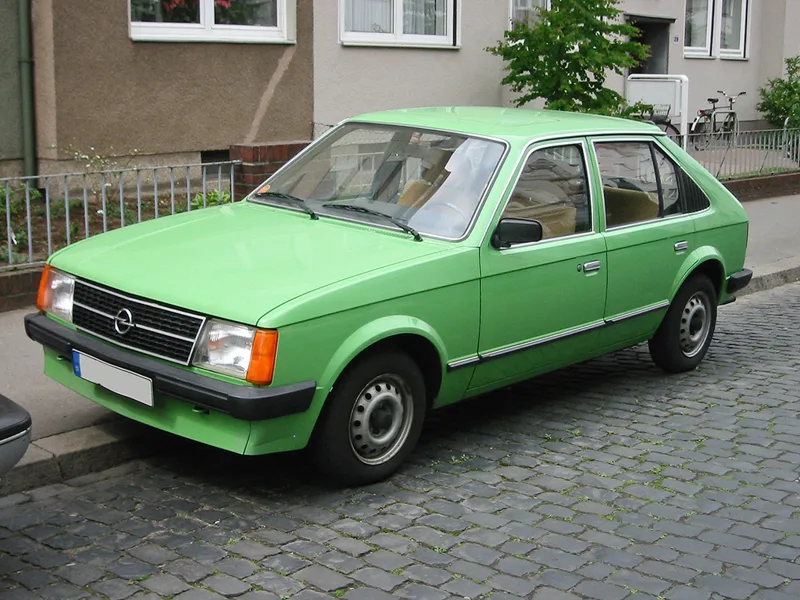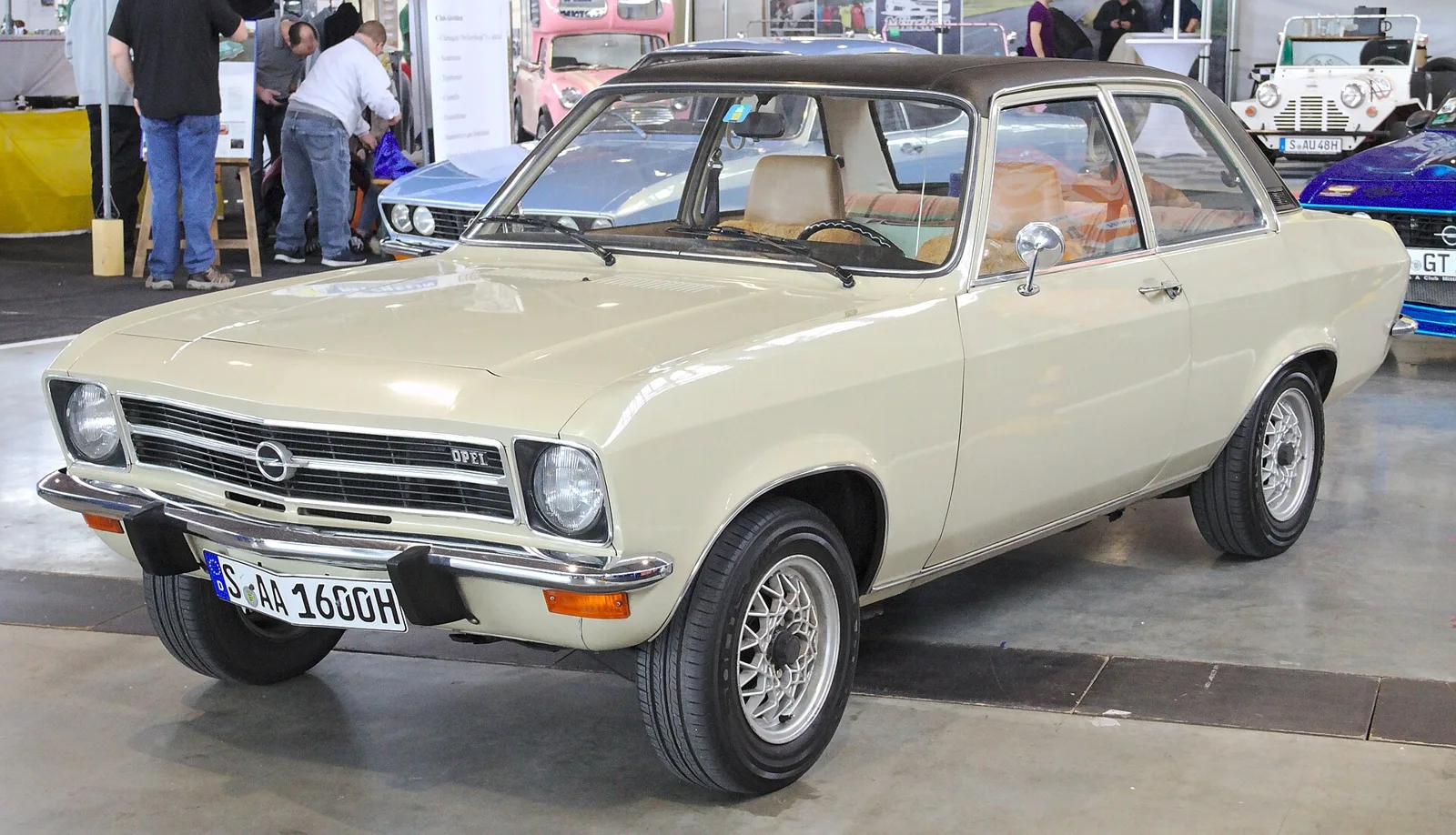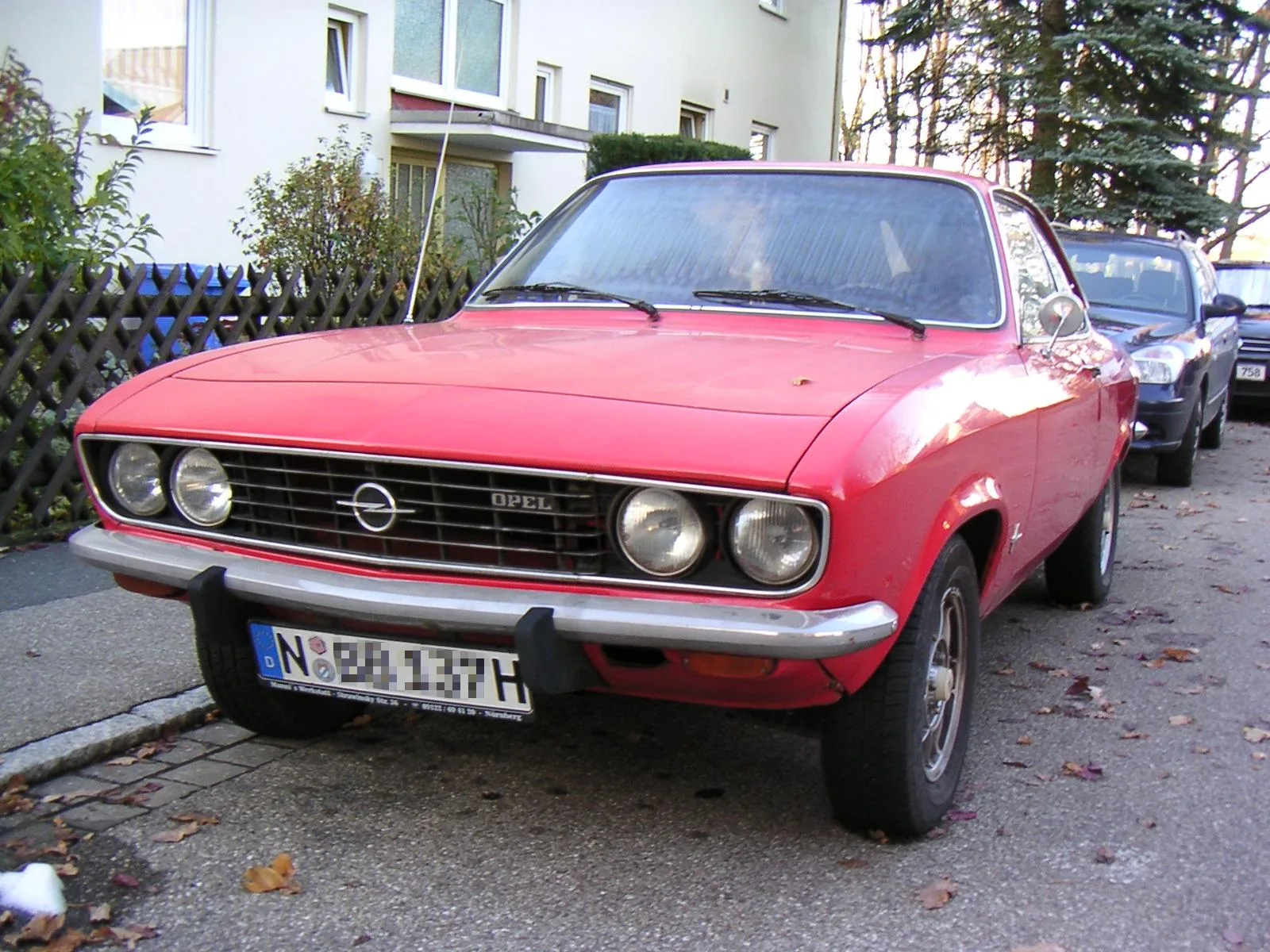
Opel planned a Kadett successor, then reacted to the Ford Capri with a new coupe that drew around 55,000 orders in Europe by the end of 1970.
The Opel Manta A was a mid-size coupe that Opel built from 1970 to 1975. Opel decided on it after the Ford Capri appeared, and it used the Ascona A's cockpit and chassis with its own body. Its CIH engines ran from 60 PS to 105 PS, and 498,553 cars were built.
Opel's first Manta came out in 1970 as a coupe built around the Ascona A's cockpit and chassis, under a body of its own. Its roots lay in a Kadett successor plan that the Capri changed. About 55,000 orders reached Opel in Europe before the end of 1970.
Why did Opel build the Manta A?
Opel's board first planned a Kadett successor with a coupe on the saloon's front end. After the Ford Capri appeared, the board decided in spring 1969 to build a larger range instead, with the coupe receiving its own body and name. The debut of the Kadett successor was delayed until 1973.
The coupe body came together quickly. George Gallion drew it in six weeks during summer 1969, starting from a Kadett coupe design. Production was less than a year away, so there was no time to develop special lamps, and the car borrowed standard round headlamps and the front indicators of the Opel Olympia instead.
The styling leaned Italian, and the long front followed the fashion of the period. Gallion took the distance from the Capri's front door edge to its bumper as his guide. Chuck Jordan, Opel's chief designer, led the work.
A coupe that started as a Kadett plan and became Opel's reply to the Ford Capri.
How did Opel launch the Manta A?
Opel presented the Manta A to the press on 16 September 1970 at Timmendorfer Strand, and dealers held their own presentation on 25 September. Showrooms hung inflatable manta rays with black undersides and orange tops, under the slogans "Manta is here" and "Every man a Manta man".
The press message stressed that the new coupe did not make any other Opel obsolete. It joined the range as a useful addition to meet a need that had newly emerged.
Orders came in quickly. Opel had taken roughly 55,000 bookings across Europe by the end of 1970, 22,000 of them in Germany, and demand held until production stopped in 1975.
How did the Manta A differ from the Ascona?
The Manta shared the Ascona's cockpit, but its front carried four round headlamps, and its doors were frameless where the Ascona's carried a frame. Lower drag let it reach 170 km/h (106 mph), where the Ascona topped out at 160 km/h (99 mph) on the same engines. Boot space was the same in both.
Apart from that frame, the doors were built from the same sheet metal. The door trim, glass and window winding mechanism were not the same, however.
Owners who fitted a Manta front to an Ascona usually called the result a Mancona. That home-made hybrid shows how closely the two cars were related in the first place.
What engines did the Manta A use?
At launch the Manta used the familiar CIH engine family in three forms. A 1.9 litre (115.9 cu in) unit taken from the Rekord made 90 PS (66 kW; 89 hp), while a newly created 1.6 litre (97.6 cu in) produced 68 PS (50 kW; 67 hp) or 80 PS (59 kW; 79 hp). Manual cars always had four speeds.
The names followed their own logic. Opel called the cars Manta 1.6 and Manta 1.9, and the boot lid showed no engine data, except for a red-backed 1900 script on the 1.9 cars. Opel did speak of the Ascona 16 or Ascona 19, but for the Manta it used Manta 1.6 and Manta 1.9.
The 1.9 became available without SR trim in January 1971, and later with automatic. The Kadett's 1.2 litre (73.2 cu in) engine also reached the Manta in 1972, sold first in Italy and from March 1972 in Germany. It saved 347 DM against the 1.6, but Opel dropped the Manta 1.2 again in May 1973. In the oil crisis the Kadett engine, with 60 PS (44 kW; 59 hp), was fitted again, and the price list showed the Manta 1.2 as a model in its own right from June 1974. It was a car that seemed ideal as a second car for novice drivers or city dwellers.
What did the Manta A's chassis borrow?
The rigid rear axle with coil springs came from the Kadett B, although the Manta received progressive springs. The new double-wishbone front axle also used coil springs, where the Kadett had a transverse leaf spring. A servo came as standard, with discs at the front and drums at the rear, which suited the class.
That rear axle had been redesigned only in the 1968 model-year revision of the Kadett B. A limited-slip differential arrived in January 1971, first with every engine and later only with the 1.6 S and the 1.9.
What was the Manta SR?
The SR was a model in its own right rather than an option pack. It had a sport chassis with harder springs and adjusted dampers, sport rims with no hubcaps, a sports wheel, a rev counter, and a console for additional dials. Its shorter axle ratio meant the SR could not at first be combined with the automatic gearbox.
Halogen lamps came with the SR, with H1 bulbs in all four headlamps, and a 35 A alternator replaced the 28 A unit. It rolled on 185/70 SR 13 tyres. Inside, a black headlining with black sun visors sat above a wood-look gear knob, and the car wore a sports exhaust with twin tailpipes.
The SR also carried a matt black bonnet, matching black paint around the tail lamps and rear number plate, and broad and thin stripes running from front to rear. Buyers could delete that look, and Opel offered the L trim's side stripes as the alternative. Against the L trim it was based on, the SR added about 800 DM, and its boot lid bore the SR name.
What set the GT/E apart from other Mantas?
The GT/E was the fuel-injected sports Manta. Its 1.9 litre (115.9 cu in) CIH engine made 105 PS (77 kW; 104 hp) with injection, its front stood 22 mm lower and its rear 14 mm lower, and it carried gas-pressure shock absorbers and a front spoiler.
Opel showed the GT/E at the 1973 IAA and delivered it from March 1974. BMW had introduced a fuel-injected four-cylinder engine in its 2002 tii in 1971, and Opel followed three years later. The GT/E's styling was close to the SR's but not identical: wider side stripes carried the GT/E lettering on the front wing, while the stylised manta ray, door handles and window surrounds were finished in matt black.
The cabin used the SR's black headlining, a dial reading up to 220 km/h (137 mph), sports seats and a four-spoke wheel. The tailgate bore just the GT/E badge. The car appeared during the oil crisis, so only 5,248 GT/E cars were built, and 3,737 were registered in Germany.
Which special editions did Opel sell?
Opel offered a run of special editions between 1972 and 1975. The Holiday of May 1972 cost 10,667 DM, the Berlinetta arrived in November 1972 with Cord seat covers, and the Black Magic of April 1975 cost 14,145 DM. The Berlinetta later moved into the regular price list in February 1973.
The Holiday was built on the 1.9 Luxus, in a choice of Citrus Yellow, Ochre, Cardinal or Brick Red, and came with a rev counter, heated rear window, halogen headlamps and sport wheels. It cost 10,667 DM, which was 500 DM below the regular list price. The automatic version was 11,422 DM, and that was 700 DM under its list price.
The Berlinetta took its name from the Italian word for coupe. It had imitation wood and carpet in the lower door trims, a choice of five paint colours and a matching vinyl roof as standard. Berlinetta buyers included a striking number of women.
The Black Magic combined an all-black finish, a matt black bonnet and black-painted sport wheels with five-line stripes in red, orange and yellow on the sides and spoiler. Around 850 vehicles sold, and the price was 14,145 DM. The Swinger of January 1975 added four-stripe side decor to a Manta 1.6 S, and the dealer fitted it. In May 1975 the Sommer Bazar 75 arrived at 11,500 DM, with silver sport wheels, a sports steering wheel and head restraints.
How did the 1974 and 1975 updates change the Manta?
The 1974 revision brought a B-pillar in place of the thin window frame, a black plastic radiator grille, two windscreen washer jets and imitation wood around the instruments. Belted tyres became standard in March 1974. In 1975, lower compression for low-lead petrol cut the power of the 1.6, 1.6 S and 1.9.
The August 1973 revision, applied in line with the Ascona, was hard to spot. The grille turned to black plastic, the exterior mirror became square, the wiper switch moved onto the indicator stalk, and the steering wheel and centre console were redesigned. Front safety belts became mandatory from January 1974 and were standard, but they were static belts only, and automatic belts cost extra.
The power cuts came next. The Manta 1.6 fell to 60 PS (44 kW; 59 hp), the 1.6 S to 75 PS (55 kW; 74 hp), and the 1.9 to 88 PS (65 kW; 87 hp). A larger carburettor reversed that loss on the 1.9 in June 1975, only weeks before production ended.
How many Manta A cars were built and sold?
Opel built 498,553 Manta A cars before production ended on 9 July 1975, and sales held up until the end. The GT/E was far rarer, with 5,248 built, and the Black Magic special edition sold around 850 vehicles. Production ended in favour of the Manta B.
The Manta was built from 1971 at GM's Antwerp plant and sold in the USA through Buick dealers. Buick first sold it as the Opel 1900 Sport Coupe and 1900 Rallye, switching to the Manta name for the 1973 model year. With a carburettor and a compression ratio of 7.6:1, the US engine made 78 PS (56 kW; 77 hp). Counting the Ascona A too, roughly 170,000 vehicles went to the USA.
What were the Manta A specifications?
Across its life the Manta A ran from 60 PS in the 1975 Manta 1.6 to 105 PS in the GT/E. Its rigid rear axle, coil springs and four-speed gearbox remained the core of the car, while power, tyres and trim changed from one version to the next.
| Specification | Detail |
|---|---|
| Engine range | 1.2 litre (73.2 cu in) to 1.9 litre (115.9 cu in) |
| Power range | 60 PS (44 kW; 59 hp) to 105 PS (77 kW; 104 hp) |
| Top speed | 170 km/h (106 mph), standard Manta |
| Gearbox | Four-speed manual; Opel automatic on the 1.6 S |
| Rear axle | Rigid, coil springs, from the Kadett B |
| Front suspension | Double wishbones with coil springs |
| Brakes | Discs at the front, drums at the rear, standard servo |
| Tyres | 165 SR 13; 185/70 SR 13 on the SR |
| Basic price | 8,270 DM, standard Manta |
| Production | 498,553 cars until July 1975 |
What replaced the Manta A?
Production of the Manta A ended in July 1975 in favour of the Manta B. The new car was presented alongside the Ascona B at the 1975 IAA and had a larger body with more room in the rear, while its engines and chassis were largely carried over. In the Manta B, the injection engine became the best-selling powertrain.
The Manta B's wider body gave the rear seat passengers more space than the car it replaced. Its drive unit and chassis changed little.