A 2004 all-aluminium four that grew into turbo and hybrid versions, and the Theta II recalls that later drew regulator attention.
The Hyundai Theta is a gasoline four-cylinder family, first fitted to the fourth-generation Sonata in 2004. It spans 1.8 to 2.4 litre naturally aspirated versions, turbocharged units producing up to 280 PS, and hybrid and LPG variants.
The Hyundai Theta is a family of gasoline four-cylinder engines that began life in the fourth-generation Sonata in 2004. As the company's third all-aluminium design, it spread across Hyundai and Kia models in several sizes and tunes. The family later produced turbocharged, direct-injection, hybrid and LPG variants, and it is also remembered for the recalls that affected its Theta II versions.
What is the Hyundai Theta engine?
The Theta is a gasoline four-cylinder automobile engine family from Hyundai. Its first members went into the Sonata NF, which was unveiled in South Korea in August 2004, and its later members covered everything from modest family cars to performance coupes. The family is defined by its aluminium block and its double overhead camshaft cylinder heads.
Hyundai and Kia both sold the Theta widely across their own ranges, so many owners in different markets knew the same engine family under different badges.
Hyundai built a dedicated Theta II engine shop at its Montgomery, Alabama, factory, which allowed the company to produce the later versions locally. That investment reflected how central the Theta became to the group's line-up across the following decade.
One engine family ran from economy sedans to turbocharged coupes, and its recall history is as much part of it as its power figures.
Where did the Theta engine originate?
The Theta was linked to the Global Engine Alliance, a joint venture between Chrysler, Mitsubishi Motors and Hyundai Motor Company. The alliance aimed to develop a line of shared four-cylinder engines, and each manufacturer tailored its versions to its own needs. Hyundai and Mitsubishi were partners in the venture, and their engines were built separately after the split.
Chrysler took over the Mitsubishi and Hyundai shares in 2009, but each partner kept the right to build the engines it had developed, so the Theta stayed in Hyundai and Kia production.
How was the Theta engine built?
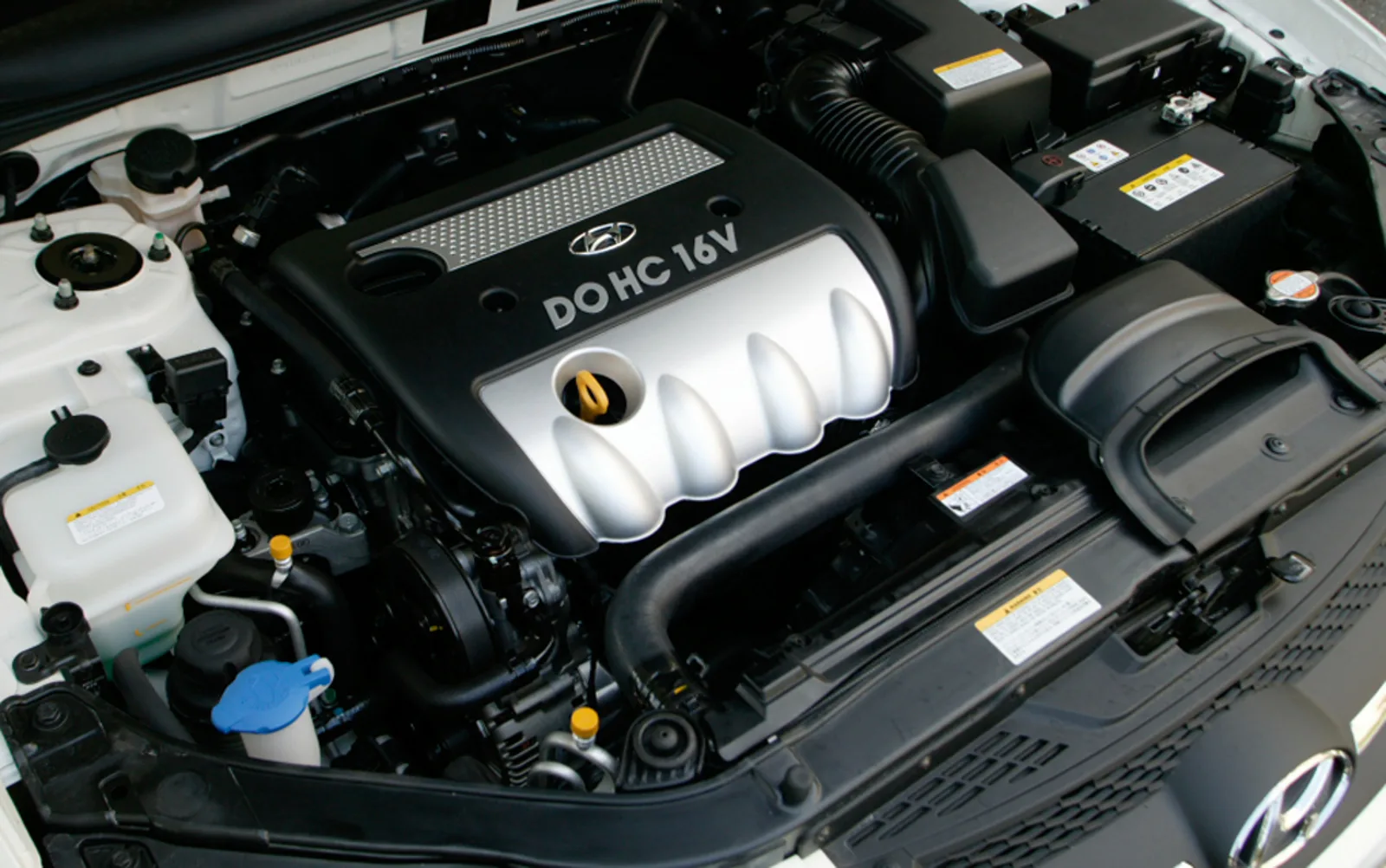
The first Theta carried hollow stainless-steel camshafts with powder-metal lobes, pent-roof chambers and shimless bucket tappets in its head. BorgWarner Morse TEC supplied the timing system, which used proprietary silent timing chains. Continuously variable valve timing acted on the intake side.
The aluminium block was made by high-pressure die casting and carried a balance shaft module supplied by Metaldyne, with a two-stage oil pump built in. A ladder frame reinforced the lower end, and the connecting rods were fracture-split sinter-forged units made by Sinteron. Engine management used Siemens VDO EMS-II software, with a hot-film mass air flow sensor that resists contamination.
How much power did the first Theta versions make?
The 1.8L G4KB had a compression ratio of 10.5:1, and it was rated at 133-138 PS (98-101 kW; 131-136 hp), at 6,000-6,200 rpm. Torque reached 16.9-17.5 kg m, or 122-127 lb ft and 166-172 N m, at 4,250 rpm. It was fitted to the Kia Optima MG from 2005 to 2008.
Several first-generation versions went into Kia models as well as Hyundai ones, which spread the engine's use across both brands.
The 2.0L G4KA used an 86 mm bore and the same 10.5:1 compression ratio, and it made 144-151 PS (106-111 kW; 142-149 hp), at 6,000 rpm. It used a timing chain rather than a belt, and its dry weight was 134 kg (295 lb). The 2.4L G4KC had an 88.0 mm bore and a 97.0 mm stroke, with 165 PS (121 kW; 163 hp), at 5,800 rpm.
What changed with Theta II?
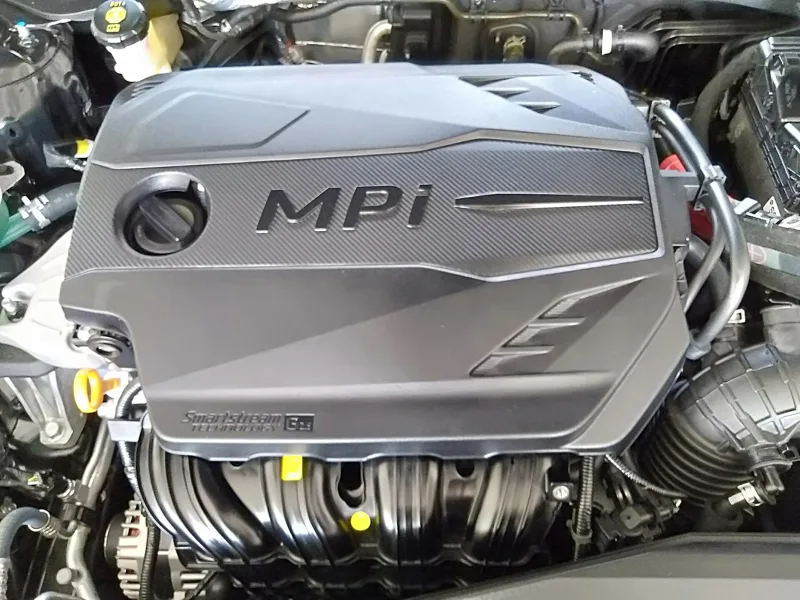
The second-generation Theta added continuously variable valve timing on the exhaust side as well as a two-way variable intake system. It came in 2.0 and 2.4L sizes. The 2.0L MPi G4KD reached 165 PS at 6,200 rpm, with 20.1-20.2 kg m of torque at 4,500-4,600 rpm.
The 2.4L MPi G4KE produced its 178-179 PS version with 131-132 kW and 176-177 hp at 6,000 rpm. The rear-wheel-drive G4KG put out 175 PS (129 kW; 173 hp), at 6,000 rpm for the Starex. These versions shared the same basic architecture as the first Theta, with refinements to the valve gear and management.
Direct injection arrived with the 2.4L GDI, announced in November 2009 with the sixth-generation Sonata. Its compression ratio was 11.3:1. Early versions made 201-203 PS (148-149 kW; 198-200 hp), while later ones were rated at 188 PS (138 kW; 185 hp), at 6,000 rpm.
How did the Theta II turbo engines perform?
The Genesis Coupe used the 2.0L FR turbo G4KF, which had a Mitsubishi TD04 turbocharger and a block related to the Mitsubishi 4B11T. Its output on 91 RON fuel was 210-213 PS (154-157 kW; 207-210 hp), at 6,000 rpm. The facelifted version reached 260-264 PS (191-194 kW; 256-260 hp), with a new twin-scroll turbocharger.
The first T-GDI, G4KH, was fitted to the sixth-generation Sonata and third-generation Optima. Its output was 261-278 PS (192-204 kW; 257-274 hp), at 6,000 rpm, with 37.2 kg m of torque between 1,750 and 4,500 rpm. The second iteration switched to electronic CVVT control and a smaller turbo, and it reached 245-248 PS (180-182 kW; 242-245 hp).
The high-power version of the second iteration, used in the i30N and Veloster N, was rated between 250 and 275 PS (184-202 kW; 247-271 hp). The Kona N and Elantra N reached 280 PS (206 kW; 276 hp), at 6,000 rpm, and 40 kg m of torque, which made them the strongest members of the turbo line.
The first family therefore covered a wide spread of outputs, from the modest 1.8L to the 2.4L. That range gave Hyundai a family of engines rather than a single unit, and it let the same basic design serve both economy sedans and larger vehicles.
What hybrid and LPG versions were built?
The 2.4L hybrid G4KK had a compression ratio of 13.0:1 and used multi-point fuel injection. Its gasoline engine made 171 PS (126 kW; 169 hp), at 6,000 rpm, with the electric motor adding 41 PS (30 kW; 40 hp). The combined system reached 212 PS (156 kW; 209 hp), and a later revision lifted the total to 200 PS at 5,500 rpm, equal to 147 kW and 197 hp.
Hybrid applications were limited to the Grandeur and Azera hybrid from 2013 to 2022 and the Cadenza and K7 hybrid from 2013 to 2021.
Liquefied petroleum gas versions were also built. The 2.0L L4KA used LPI injection and gave 136-144 PS (100-106 kW; 134-142 hp), at 6,000 rpm. The 2.4L L4KB was listed at 159 PS (117 kW; 157 hp), at 5,500 rpm and found its way into the Starex.
| Version | Displacement | Output | Example vehicles |
|---|---|---|---|
| G4KB | 1.8L | 133-138 PS | Kia Optima MG |
| G4KA | 2.0L | 144-151 PS | Hyundai Sonata NF, Kia Carens |
| G4KC | 2.4L | 165 PS | Hyundai Grandeur TG, Sonata NF |
| G4KD | 2.0L Theta II | 165 PS | Hyundai Tucson and Sonata |
| G4KE | 2.4L Theta II | 178-179 PS | Hyundai Santa Fe and Tucson |
| G4KL | 2.0L turbo | 252-255 PS | Genesis G70 and Kia Stinger |
Where did Theta II engines appear?
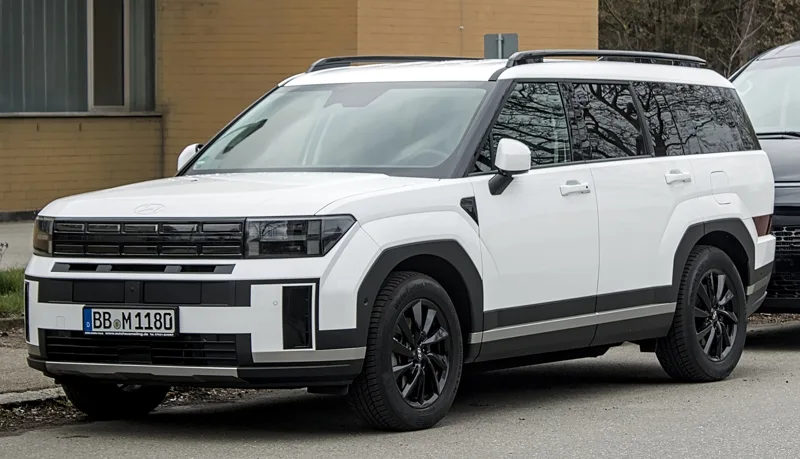
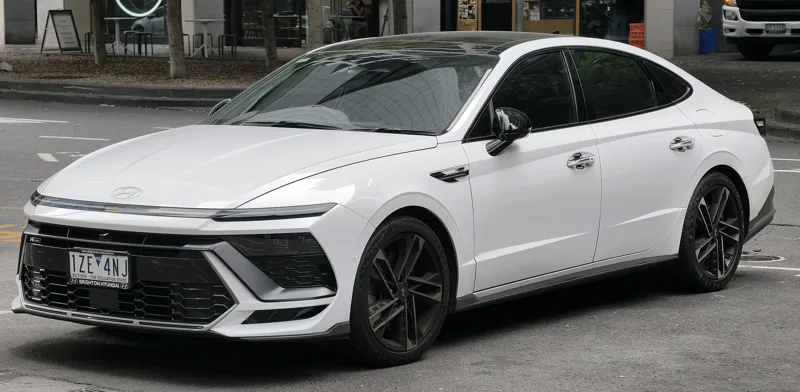
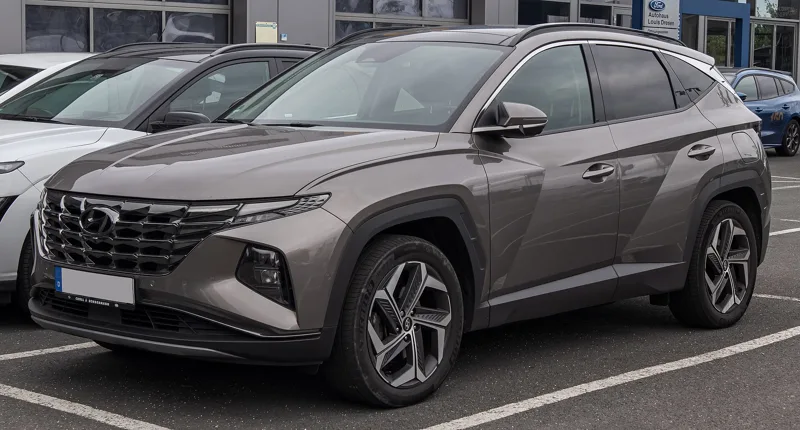
Theta II engines spread widely across Hyundai and Kia's mid-size and sport utility ranges. The 2.0L MPi appeared in the Tucson and ix35 from 2009 to 2015 and in the Sonata from 2007 to 2014. The 2.4L MPi went into the Azera from 2013 to 2016, the Santa Fe from 2010 to 2020, the Sonata from 2007 to 2019 and the Tucson from 2010 to 2020.
Hyundai sport utility models were the main home of the 2.4L engine, while the Sonata carried both sizes at different times. Kia used the same engines in the Sorento, from 2009 to 2020, and in the Optima, from 2008 to 2019. The Starex, a rear-wheel-drive van, used the G4KG from 2007 to 2021, which gave Theta II a commercial role as well as a passenger one.
Why were the Theta II engines recalled?
Hyundai and Kia vehicles with Theta II GDI engines were recalled after the National Highway Traffic Safety Administration opened an investigation into them. Regulators looked at close to 1.7 million vehicles fitted with Theta engines that were prone to unusual noise and seizure.
The September 2015 action covered about 470,000 Sonatas from the 2011 and 2012 model years. The company told regulators that manufacturing problems left metallic debris around the crankshaft, which interfered with oil flow through the connecting rod bearings. By April 2017 the recall had grown by another 572,000 vehicles, including 2013 and 2014 Sonata and Santa Fe Sport models.
Kia separately recalled more than 618,000 model year 2011-2014 Optima, 2012-2014 Sorento and 2011-2013 Sportage vehicles in 2017, because their bearings wore out too early. Owners filed more than 29,000 complaints about the 2.4L engine, and some alleged engine fires.
What did owners face after the recalls?
The regulator also examined the timeliness and scope of Hyundai's recall actions, along with the company's compliance with its reporting duties. Owners in several markets pursued legal action after the manufacturer declined to pay for repair or replacement. One lawsuit from 2015 alleged that a dealer wanted $4,500 for the work, and Kia faced a class action in 2016 from owners of Theta-equipped vehicles.
In South Korea, the affected models included the Grandeur and Sonata, and the recall eventually reached 520,000 vehicles there. In Canada, Hyundai announced a recall for most affected vehicles in 2019, and a class action over failures in Forte models followed in 2018.
On December 1, 2020, Hyundai and Kia recalled 423,000 vehicles with various engines after a joint review with the regulator. That recall marked the first time the MPI variants of these engines were included.
Did Hyundai sell Theta engines as crate units?
Hyundai announced a new factory crate engine programme on November 5, 2013, at the SEMA Show in Las Vegas. The programme began with a 2.0L turbocharged four-cylinder and started in December 2013. A crate unit gives an owner a complete replacement engine, which is a different proposition from repairing a failing original.
For an owner weighing a repair against a replacement, the recall history matters as much as the specification. Checking whether an engine falls within a recall population, and whether the work was carried out, is the first practical step.
The Theta's place in the Hyundai story is therefore mixed. Its performance versions earned a following, while its reliability problems in the Theta II generation became a lasting part of the family's history.