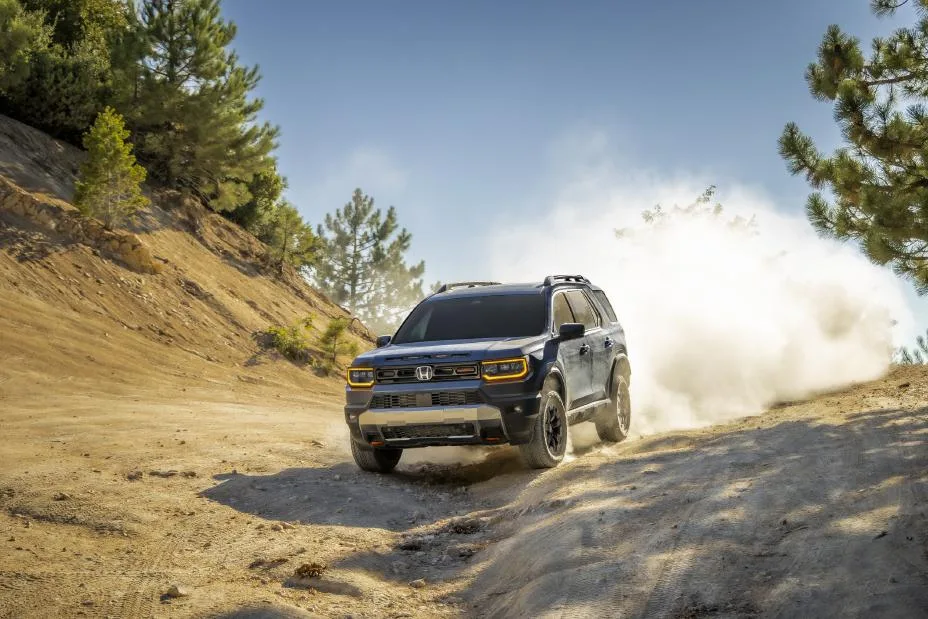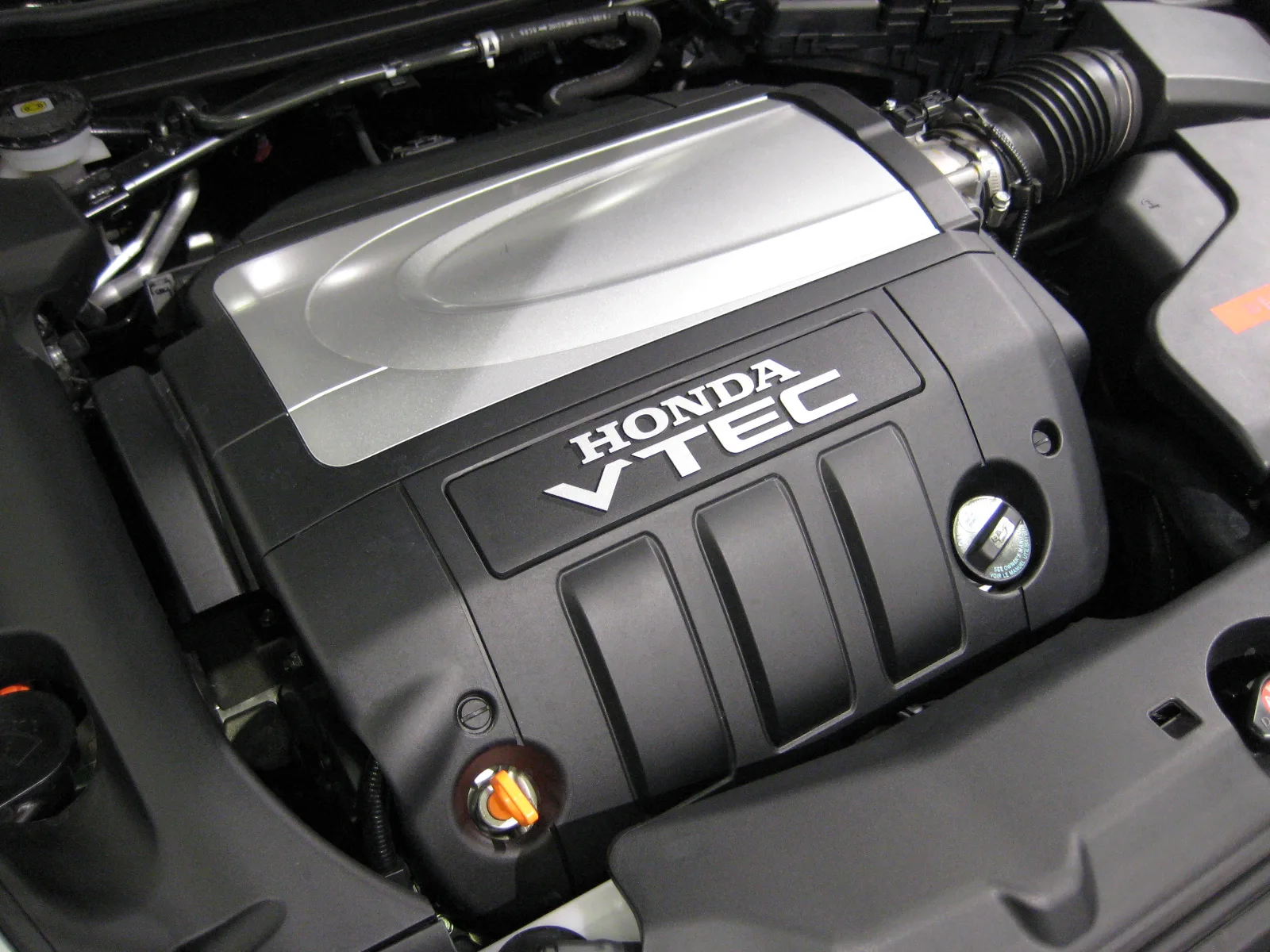
Honda's fourth production V6, built for transverse fitting from 1996 and adapted into VCM, direct injection, turbo and hybrid versions.
The Honda J-series is a 60-degree transverse V6 family from 2.5 to 3.7 litres, introduced in 1996 and used across Accord, Odyssey, Pilot and Acura models with VTEC, VCM and direct injection.
The Honda J-series is a family of 60-degree V6 petrol engines that Honda introduced in 1996. Built only for transverse mounting, it spanned capacities from 2.5 to 3.7 litres and powered Accords, Odysseys, Pilots and Acura models for three decades.
Where did the J-series come from?
The J-series is Honda's fourth production V6 family, introduced in 1996 after the C-series, which had consisted of three dissimilar versions. Designers worked in Japan and engineers in the United States, and production runs at Honda's plants in Anna, Ohio and Lincoln, Alabama.
The J-series is a 60-degree V6, while the earlier C-series ran at 90 degrees. It was designed only for transverse mounting, which showed in its shorter bore spacing of 98 mm (3.86 in), shorter connecting rods and a smaller crankshaft than the C-series used.
Every J-series engine burns gasoline and uses four valves per cylinder, with one timing belt turning the overhead camshafts. VTEC appears on almost every application. The exceptions are the J30AC and the J35Y8, which use Variable Timing Control, or VTC, instead.
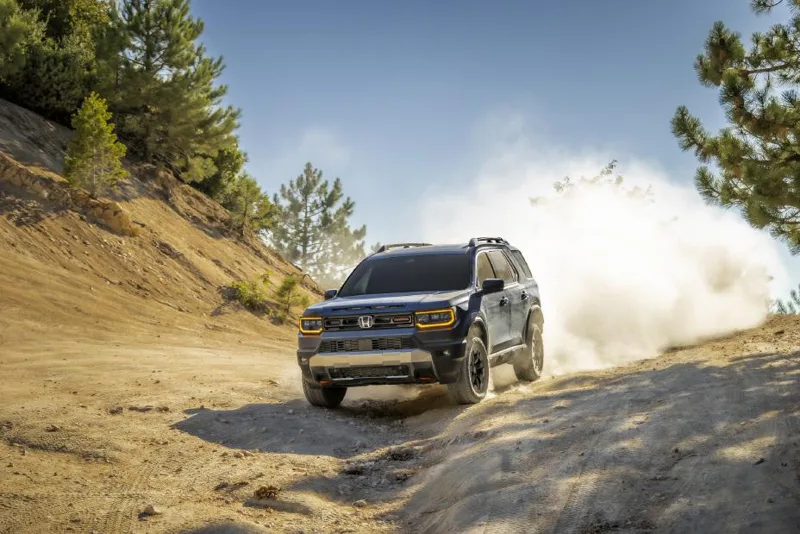
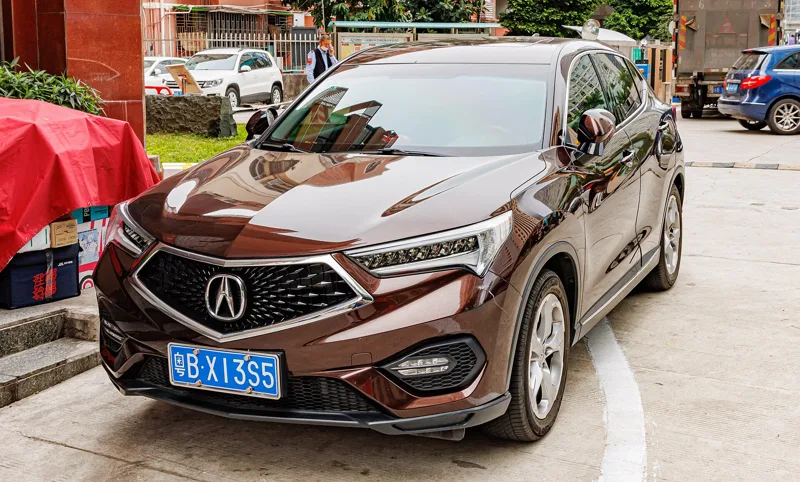
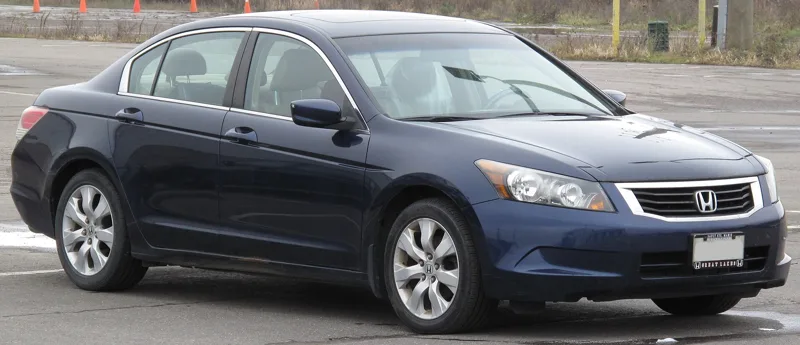
One transverse 60-degree V6 family that stretched from a 200 hp Inspire engine to a 300 hp MDX and a 285 hp Pilot.
What is Variable Cylinder Management?
Variable Cylinder Management, or VCM, is Honda's system for switching off part of the engine under light loads. Initially it shut one bank of cylinders, turning the V6 into a straight-three, and some versions could switch off one cylinder on opposing banks, allowing three-cylinder running at light load and four-cylinder running at medium load.
Honda's four-cylinder i-VTEC pairs VTEC with Variable Timing Control, while its V6 i-VTEC engines pair VTEC with Variable Cylinder Management. The two systems therefore solve different problems: one shapes the valve timing, the other decides how many cylinders are firing.
The first VCM generation appeared in the J30A VCM, used in the 2003 to 2007 Inspire. It produced 247 hp (184 kW) at 6,000 rpm and 296 N m (218 lb-ft) at 5,000 rpm. Intake Manifold Resonance Control, known as IMRC, boosted low-speed torque, and the redline sat at 6,800 rpm.
The second generation allowed three, four or six cylinder operation, and the third allowed three or six. The 2004 to 2013 Honda Elysion in Japan also used the VCM engine, so the system was not confined to one market or one model.
What did the J25 and J30 engines offer?
The J25A was a 2.5 litre SOHC VTEC engine used only in the Japanese Inspire and Saber models, making 200 hp (149 kW) at 6200 rpm. The J30A family carried the early years, with a 3.0 litre capacity and outputs that rose from 200 hp to 242 hp on the J30A4.
The J25A had a bore and stroke of 86 mm by 71.6 mm and a compression ratio of 10.5:1. Its torque reached 24.5 kg-m (240 N m; 177 lb-ft) at 4600 rpm. A variable intake manifold tuned torque across the rev range and improved throttle response.
The J30A1 started at 200 hp (149 kW), where torque read 195 lb-ft (264 N m), and later reached 210 hp (157 kW) and 200 lb-ft (271 N m). The J30A4 pushed output to 242 hp (180 kW) with 212 lb-ft (287 N m), and it relied on a three-stage VTEC arrangement and a 10.0:1 compression ratio. Its exhaust manifold was cast in one piece with the head, and the engine weighed nearly 20 lb (9.1 kg) less than the J30A1.
Thai domestic models of the J30A4 carried a lower rating, and that version used drive-by-wire throttle control to help cut emissions. The J30A3 served the 1998 to 2002 Accord V6 and the 1997 to 2003 Odyssey Prestige and Absolute models, while the 1996 to 1999 Acura 3.0CL and the 1999 to 2003 Avancier used the J30A1.
Ward's 10 Best Engines listed the J30A4 for 2003 and 2004, and the hybrid IMA version made the list for 2005. In 2006 Honda marked the Accord's 30th anniversary with the J30A5, lifting output to 244 hp (182 kW) and 211 lb-ft (286 N m) through airflow changes to the intake and exhaust.
What did the turbo and hybrid J30 variants do?
The J30AC turbo, fitted to the Acura TLX Type-S and the MDX Type-S, produced 355 hp (265 kW) at 5500 rpm, with 480 N m of torque across a band from 1400 to 5000 rpm. It used a 24-valve DOHC layout with VTC, and its compression ratio was 9.8:1.
The JNA1 in the 2005 to 2007 Accord Hybrid combined a 240 hp (180 kW) engine with the IMA hybrid motor, which added 15 hp (11 kW) for a combined 255 hp (190 kW). The engine had a compression ratio of 10.5:1 and a 24-valve SOHC i-VTEC head.
The J30Y1 added direct injection. It delivered 257 hp from the engine alone and 321 hp combined in the 2017 to 2020 MDX Sport Hybrid, and combined torque peaked at 289 lb-ft (392 N m) at 5000 rpm. Its valvetrain was a 24-valve SOHC design, and it was naturally aspirated.
What did the J32 engine add?
The J32A is a 3.2 litre (3,210 cc) SOHC VTEC engine with an 89 mm bore and an 86 mm stroke. The J32A1 produced 225 hp (168 kW) at 5600 rpm, while the J32A2 raised output to 260 hp (194 kW) at 6200 rpm.
Acura's TL carried the J32A3 from 2004 to 2008. It was rated at 270 hp (201 kW) at 6200 rpm in 2004 and 2005. A change in SAE testing methods brought the 2006 to 2008 rating down to 258 hp (192 kW), although the engine was mechanically identical.
The J32A3 also used 11:1 compression with high compression piston domes, and an exhaust manifold cast into the head. Its VTEC engaged at 4,700 rpm, and its equipment list included a dual-stage induction system, direct ignition and high flow close-coupled catalytic converters.
How did the J35 branch spread across models?
The J35 branch covered the Odyssey, Pilot, Ridgeline, MDX, Legend, RL, TSX and TL, with outputs that ran from 210 hp to 290 hp. It had a 3.5 litre (3,471 cc) capacity and an 89 mm by 93 mm bore and stroke. The J35S1 variant was sold in the 2004 to 2007 Saturn Vue, where it is also known as the GM L66, and it used a Honda round-style bellhousing.
The earliest J35A1, used in the 1999 to 2001 Odyssey, was rated at 210 hp (157 kW) on premium fuel and 205 hp (153 kW) on regular, with 229 lb-ft (310 N m) on premium and 217 lb-ft (294 N m) on regular. The J35A3 in the 2001 to 2002 MDX made 240 hp (179 kW) at 5800 rpm and 242 lb-ft (328 N m) at 4500 rpm.
The J35A8 powered the Legend and RL, giving 286 hp (213 kW) at 6200 rpm with 11.0:1 compression. The J35Z series used a die-cast aluminium block with cast-iron cylinder sleeves, and the J35Z2 VCM unit made 268 hp (200 kW) at 6200 rpm in the 2008 to 2012 Accord V6.
The J35Z3 offered a manual gearbox in the 2008 to 2012 Accord V6, rated at 268 hp (200 kW) at 6,200 rpm, with peak torque of 254 lb-ft (344 N m) at 5,000 rpm and VTEC engaging at 5,000 rpm. The 2013 to 2017 Accord V6 manual, the J35Y2, made 278 hp (207 kW) at 6,200 rpm. Torque sat at 252 lb-ft (342 N m) from 4,900 rpm, and the fuel cutoff came at 7,200 rpm.
The J35Y generation brought direct injection and Earth Dreams technology. The J35Y4 in the RLX and Legend was rated at 310 hp (231 kW) at 6500 rpm, and its peak torque was 272 lb-ft (369 N m) at 4500 rpm. The J35Y8 that followed in the 2023 Pilot used VCM Gen 4 and produced 285 hp (213 kW) at 6100 rpm.
| Variant | Capacity | Published output | Example applications |
|---|---|---|---|
| J25A | 2.5 L (2,495 cc) | 200 hp (149 kW) at 6200 rpm | Inspire, Saber (Japan) |
| J30A1 | 3.0 L (2,997 cc) | 200 hp (149 kW), later 210 hp (157 kW) | Acura 3.0CL, Accord V6, Avancier |
| J30A4 | 3.0 L (2,997 cc) | 242 hp (180 kW) with three-way VTEC | Accord V6 (USDM) |
| J30A5 | 3.0 L (2,997 cc) | 244 hp (182 kW) | Accord V6, 2005 to 2007 |
| J30AC | 3.0 L (2,997 cc), turbo | 355 hp (265 kW) at 5500 rpm | TLX Type-S, MDX Type-S |
| J32A2 | 3.2 L (3,210 cc) | 260 hp (194 kW) at 6200 rpm | CL Type-S, TL Type-S, Inspire Type-S |
| J35A8 | 3.5 L (3,471 cc) | 286 hp (213 kW) at 6200 rpm | Legend, RL, TL Type-S |
| J35Z2 | 3.5 L (3,471 cc) | 268 hp (200 kW) at 6200 rpm | Accord V6, Crosstour, RDX |
| J35Y4 | 3.5 L (3,471 cc) | 310 hp (231 kW) at 6500 rpm | RLX, Legend |
| J35Y8 | 3.5 L (3,471 cc) | 285 hp (213 kW) at 6100 rpm | Pilot, Passport |
| J37A1 | 3.7 L (3,664 cc) | 300 hp (224 kW) at 6000 rpm, 2007 to 2009 | MDX |
What changed in the later J35 and J37 engines?
Later J35 versions moved further into direct injection and cylinder management. The J35Y6 in the 2015 to 2020 TLX produced 290 hp (216 kW) at 6200 rpm, while 267 lb-ft (362 N m) arrived at 4500 rpm, and it was later used in the Pilot, Ridgeline, Odyssey and Passport. Its VCM Gen 3 control switches between three and six cylinder operation.
The J37 is the family's largest step, with a 3.7 litre capacity. Its die-cast aluminium block has aluminium cylinder liners, which make it lighter than the J35Z, and its intake manifold is cast magnesium alloy. The J37A1 gave 300 hp (224 kW) in the 2007 to 2013 Acura MDX, and the J37A4 made 305 hp (227 kW) in the 2008 to 2012 Honda Legend.
A later J37A1 rating for 2010 to 2013 put output at 300 hp (224 kW) at 6,300 rpm, with 270 lb-ft (366 N m) at 4,500 rpm, while its VTEC engaged at 4,800 rpm in that form.
The J35Z6 in the 2010 to 2014 Acura TSX V6 and the 2009 to 2014 Acura TL (non SH-AWD) made 280 hp (209 kW) at 6,200 rpm. The engine turned 254 lb-ft (344 N m) at 5,000 rpm, and compression stood at 11.2:1.
The J37A2 took 300 hp (224 kW) into the 2009 to 2012 Acura RL, and the J37A5 delivered the same 300 hp in the 2010 to 2013 Acura ZDX. Across those models the engine stayed at 300 hp, while the J37A4 added a little more to the Legend.
Why does the J-series matter?
The J-series matters because one transverse V6 family carried Honda and Acura from the Accord and Odyssey through to the Pilot and Passport. Its VCM, VTEC and direct injection stages show how the design adapted over three decades without changing its basic layout.
Ward's named several J-series variants among its 10 Best Engines, and that recognition reflects steady refinement rather than a single breakthrough. Each generation tightened up the same fundamentals: a 60-degree block, a single belt, transverse packaging and a valvetrain that could switch between cam profiles.