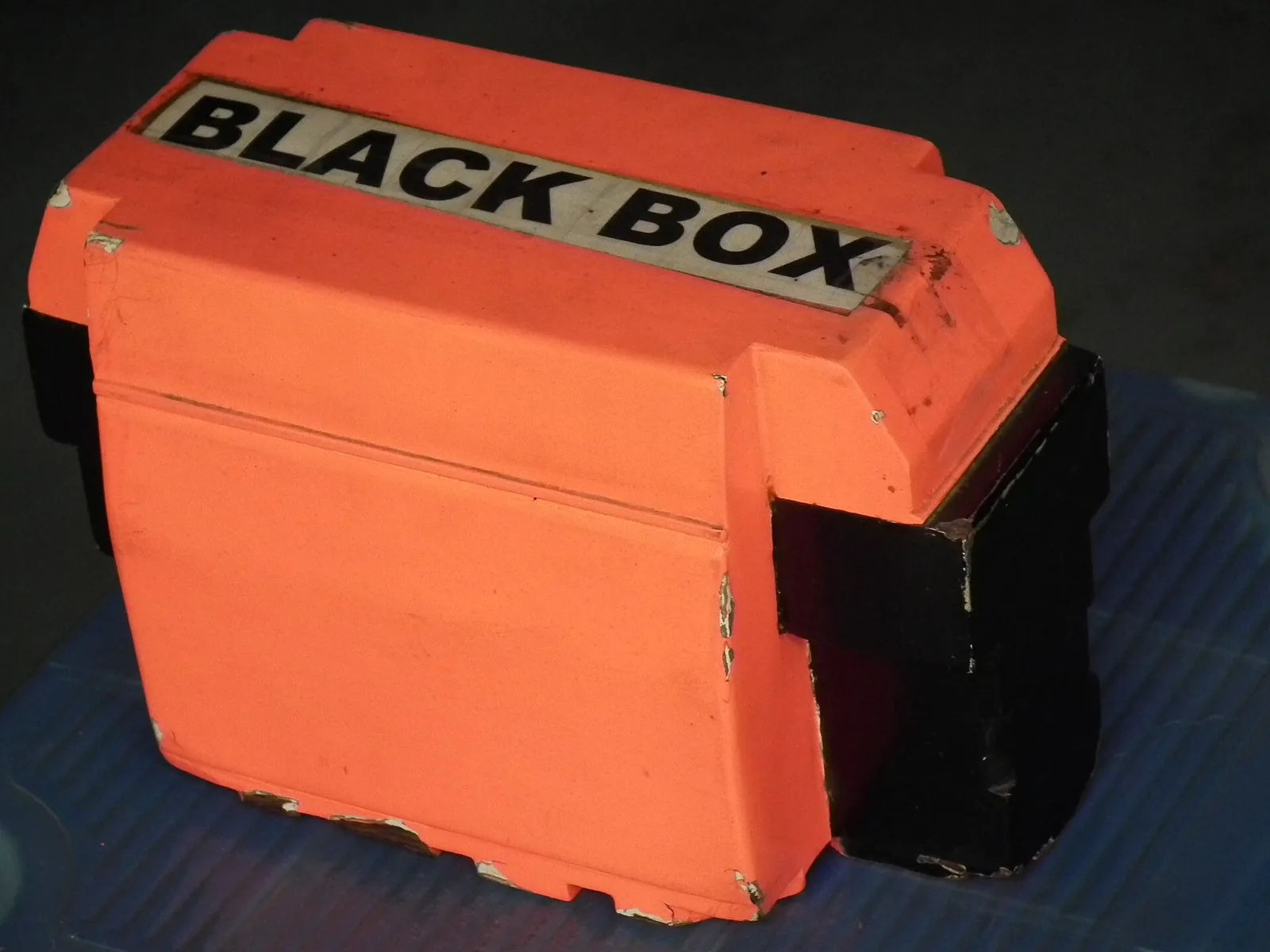
Crash recorders are now standard on new cars in Europe and common elsewhere, but who owns their data and who can read it is still contested.
An event data recorder (EDR) is a device in some vehicles that stores crash-related information such as speed, braking and airbag timing for later retrieval. In the United States it is governed by federal rules, while UN Regulation 160 has made EDRs mandatory for new European light vehicles since 2022.
An event data recorder, or EDR, is a device fitted to some vehicles that stores information about a collision for later retrieval. The idea borrows from the aircraft black box, and it has become a regulated feature of new cars in Europe and of many vehicles elsewhere. Its data can help investigators reconstruct what a vehicle was doing before, during and after a crash, which is why courts, insurers and regulators have all taken an interest.
What is an event data recorder?
An event data recorder is a simple, tamper-proof memory device that stores crash-related vehicle data. Its role is far narrower than a journey recorder such as a European tachograph, which tracks a whole trip. The US rules define an EDR as recording time-series data just before and during a crash, for retrieval afterwards.
Light vehicle makers began fitting EDRs to most models from the late 1990s, and they were commonly called black boxes. Some devices record continuously and overwrite the last few minutes until a crash stops them. Others are triggered by crash-like events, such as a sudden change in velocity, and keep recording until the event is over or the recording time runs out. Many EDRs keep their data in EEPROM until someone recovers it from the module.
The recorded items can cover brake application, impact speed, steering input and whether the seat belts were fastened. Data is written after the airbag decision, provided there is still power, so a sudden loss of electrical power early in a crash can leave nothing to read.
A device built to make cars safer has become one of the most contested witnesses in a crash.
How is the data read after a crash?
Most car modules are read by connecting a scan tool to the diagnostic link connector under the dashboard, while some can be read on a test bench once they are taken out of the vehicle. Investigators use vendor software, and the Bosch CDR tool handles more than 88% of cars from the 2016 model year onwards.
The software side of the Bosch tool is a standalone program designed to run in Windows. Vehicles from some other makers, such as certain Subaru, Kia and Hyundai models, are covered by separate tools. Because fewer such vehicles are involved, many reconstruction firms may judge that investment unnecessary.
Older downloads often ran to six to eight pages of data, while newer systems record many more elements. Depending on the circumstances of the collision, a module may store records for deployment events, non-deployment events, or both.
Heavy trucks work differently. Most of their EDRs sit in the engine electronic control module, which also controls fuel injection timing. Fault events or a sudden drop in wheel speed write data to memory, and a wheel-speed event can capture almost two minutes of speed, braking, clutch and cruise control status.
Why did the United States standardise EDRs?
The United States studied EDRs through a NHTSA working group from 1998 to 2001 and issued its final ruling in August 2006. The rule set minimum data standards but did not force manufacturers to fit EDRs, since most vehicles already had them. It required at least 15 types of crash data and 30 optional types.
The ruling itself ran to 207 pages. It set out the definitions and standards, and it also served as a formal reply to dozens of petitions that NHTSA had received after its 2004 notice.
The mandate covered pre-crash speed, throttle position, brake use, change in forward velocity, belt use and airbag timing. Recorded data needed to withstand a 30 mph barrier impact, and manufacturers had to make the data publicly readable. The first compliance date was 1 September 2010, but it was later pushed back to 1 September 2012.
Public access was slow to arrive. By October 2009 only General Motors, Ford and DaimlerChrysler had released their EDR data in a readable form.
How did the EU and the UN approach EDRs?
The UN vehicle regulation forum adopted the UN's Regulation 160 on event data recorders in March 2021. The European Union made it effective from March 2022, which made EDRs mandatory for light and passenger vehicles. Heavy-vehicle rules under UN Regulation 169 followed in June 2024.
EU regulators built on the baseline. Under the revised General Vehicle Safety Regulation, new car types from mid-2022 must record speed, braking, position, tilt, the state of safety systems and eCall activity. The EU rules also add requirements for data retrieval, privacy and security that the UN text does not cover, and they sit alongside eCall, the emergency call system that reports a crash automatically.
Heavy-vehicle rules under Regulation 169 follow the same logic but apply to larger M2, M3, N2 and N3 classes. Heavy-vehicle timetables are staged. New types of M2, M3, N2 and N3 vehicles were covered from 7 January 2026, and all new registrations in those categories are targeted for 7 January 2029. Ownership of EDR data in Europe, unlike in the United States, is not clearly defined.
Who owns EDR data and who can access it?
In the United States the Driver Privacy Act of 2015 says the owner or lessee of a vehicle owns the data its EDR collects. Investigators must then be authorised by a court or similar authority, obtain consent, be conducting a federally authorised inspection, need the data for medical care or be doing traffic safety research.
At least 17 US states have statutes that restrict access to EDR data or limit how recovered information can be used. Many drivers do not know their vehicle records such data, despite warnings in the owner's manual, and civil liberty groups have raised concerns about data recorders in cars.
The data has also featured in insurance disputes over who was at fault in a collision, which is one reason privacy rules matter beyond the courtroom. Canadian legal opinion takes a different line. It holds that EDR information does not reveal intimate personal details of the driver, so there is no strong expectation of privacy in it. Its use in civil and criminal cases is rising, because courts increasingly accept it as reliable evidence for reconstructing crashes.
How has EDR evidence changed court cases?
EDR data has helped convict and clear drivers. In 2007 the recorder in a New Jersey governor's SUV showed about 91 mph five seconds before a crash on a road with a 65 mph limit, although the governor was not driving. In 2011 a Massachusetts lieutenant governor's account was contradicted when data showed 108 mph and no seat belt.
The first UK use of EDR evidence came at Birmingham Crown Court, where Antonio Boparan-Singh was tried over a 2006 collision involving his Range Rover Sport and a Jeep. The crash left a baby girl paralysed. The data put him at 72 mph where the limit was 30 mph, and he was jailed for 21 months.
Elsewhere, a New South Wales probationary driver was convicted of dangerous driving in 2005 after the EDR of a Peugeot showed excess speed, and an injunction against using the data was overturned. In Quebec a driver who ran a red light and killed another motorist was convicted in 2001, after the data showed he, not the other driver, had been speeding.
Experts stress that EDRs exist to improve safety rather than to serve as evidence, so courts must weigh their limits.
What are the limits of EDR data?
EDR data is useful but incomplete. Some recorders track only forward speed and not sideways movement, and a severe loss of power can prevent anything being written. Analysts therefore compare EDR readings with momentum, energy and crush damage before drawing firm conclusions.
Data can also be lost at the moment of impact. Where the restraint module loses power early in a collision, the reserve in its capacitors may be used up by the airbag deployment itself, leaving too little to write the data to memory. Other faults can also stop a file from being recorded.
Interpretation is a further limit. Analysts need to test the recorded speeds against the damage, which is why reconstruction teams treat the EDR as one source among several.
How do truck fleets use EDR software?
Truck EDR software does more than reconstruct crashes. The same downloads can show driver hours, fuel economy, idle time and average travel speeds, which fleet managers use for maintenance and operations. Vendor tools are tied to each engine maker, so a fleet may need several programs.
Because the software runs routine fleet monitoring, a manager may already hold relevant records before any investigation begins, and that is a practical reason fleets value the system.
How do dashcams and fleet systems differ from EDRs?
Dashcams, technically video event data recorders, record video to document accidents and evaluate driver and vehicle performance. The Eaton VORAD radar system goes further, because it monitors the movement and speed of nearby vehicles relative to the truck, something a standard EDR does not do.
Race series adopted EDRs early. CART introduced them in 1993 and Formula One followed in 1997, and the data was used to improve safety and design in race cars and on circuits.
Police and emergency fleets in Britain carry a more detailed version from specialist firms. London's two forces, the Met and the City of London force, have both used recovered data in prosecutions.
What comes next for EDRs and automated driving?
Regulators disagree on how driver-assistance systems should be recorded. Some treat the EDR as a feature of an ordinary car, while others argue that automated vehicles need a Data Storage System for Automated Driving, known as a DSSAD. An NTSB communication in 2020 noted that ADAS systems could collect useful crash data, but that federal regulators had not standardised it.
The EDR's aim is to analyse accidents, whereas a DSSAD would serve research, monitoring, liability and legal responsibility.