From Alfred Sloan's 1924 idea at General Motors to Volkswagen's 1959 reply, the history of planned obsolescence and what competition does to car durability.
Planned obsolescence means designing a product with a limited life or a look that dates quickly. In cars, the case critics focused on is the annual model change, proposed by General Motors executive Alfred P. Sloan Jr. in 1924, while longer-lived Japanese imports later pushed American makers to improve durability.
In 1924 an executive at General Motors looked at an American car market that was running out of new buyers and proposed a remedy: change the way every car looks, every single year. By 1931 GM had overtaken Ford in sales, and it stayed ahead from then on. That one idea, the annual model change, reshaped the car industry, the way cars are built and eventually much of the American economy.
Do car makers plan for cars to go out of date, or even design them to wear out? The record covers what planned obsolescence means, how the annual model change put it to work, what critics and rivals said, and what happened to durability when competition arrived.
What is planned obsolescence?
Economists and industrial designers use the term planned obsolescence, or built-in or premature obsolescence, for a product that has been given a deliberately short working life or a purposely flimsy design. After a set time it is finished, either because it has worn out or because it has come to look unfashionable.
The logic is about sales. Shortening the interval between purchases, which is called shortening the replacement cycle, builds sales volume over the long term. It was once dismissed as a conspiracy theory.
It works best for a producer that holds at least an oligopoly, and one that can count on the customer to buy the replacement from the same maker, perhaps through brand loyalty. It also depends on an imbalance of knowledge. The producer knows the lifespan it designed in, and the customer does not. Competition changes the picture: the more contested a market becomes, the longer products tend to last.
Design for change, or at least the illusion of change.
Annual model change: how Alfred Sloan put it to work
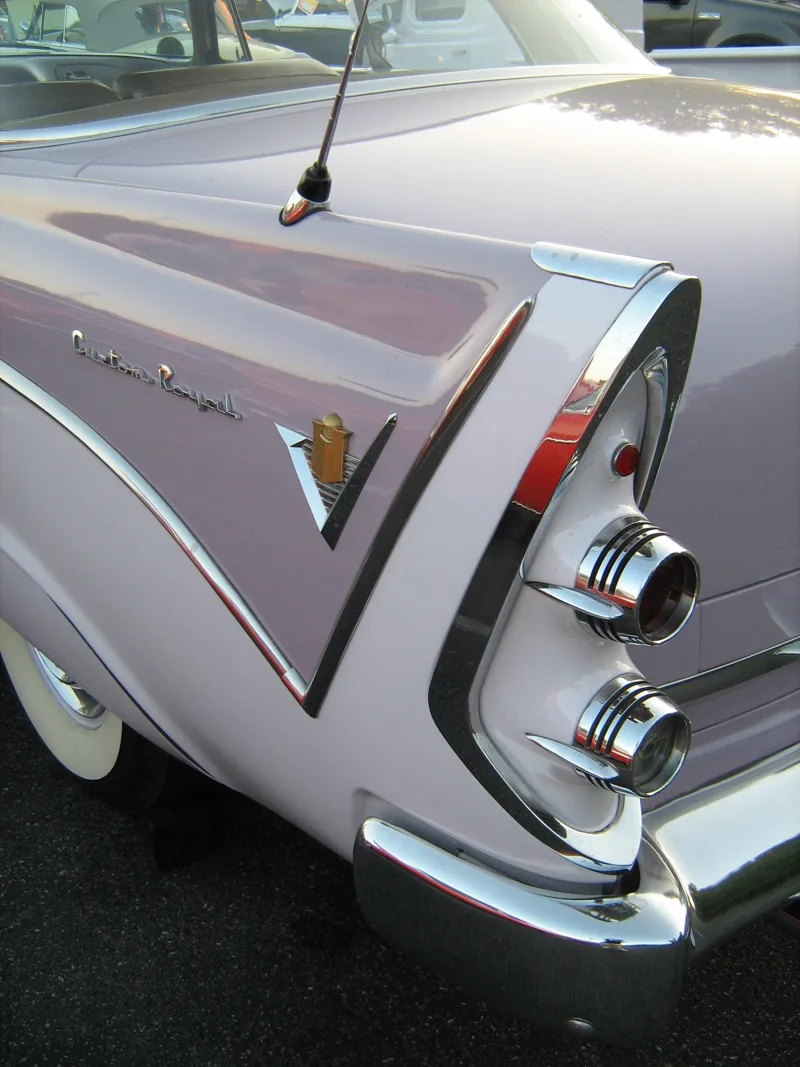
In 1924, with the American automobile market approaching saturation, Alfred P. Sloan Jr. of General Motors proposed annual model-year design changes. The aim was to persuade owners to replace their cars each year, using refreshed appearances led by Harley Earl and GM's Art and Color Section. The idea was borrowed from the bicycle industry, though its origin is often wrongly credited to Sloan.
Sloan himself talked about dynamic obsolescence. It was his critics who coined the name planned obsolescence for the strategy.
The lever here was appearance. A refreshed look was meant to make last year's car feel old, which matches one of the two kinds of obsolescence later described by the critic Vance Packard.
The effect on rivals and on how cars were built
The consequences spread far. Smaller manufacturers could not keep up with the pace and cost of restyling every year. Henry Ford disliked the endless parade of yearly changes, because he believed as an engineer in simplicity, volume economies and sound design. GM passed Ford in 1931 and led the industry from then on.
There was an engineering consequence too. Because the styling kept changing, makers needed a body-on-frame structure, which is easier to modify than the lighter unibody that most European automakers used.
Where did the phrase come from?
The phrase has older roots than Sloan's strategy might suggest. It goes back at least to 1932, when Bernard London published a pamphlet titled Ending the Depression Through Planned Obsolescence. His plan had the government set a legal expiry on goods for personal use, to keep people buying.
It reached a wider public in 1954 through the American industrial designer Brooks Stevens. Booked to speak at an advertising conference in Minneapolis, he gave the talk that title almost on impulse, and the phrase stuck to him. His definition was a nudge to the buyer: to want something a little newer and a little better, a little sooner than necessary.
Others took the phrase up quickly, and challenged that definition. By the late 1950s it was a common term for products that were designed to break easily or to go quickly out of style.
Volkswagen's famous answer
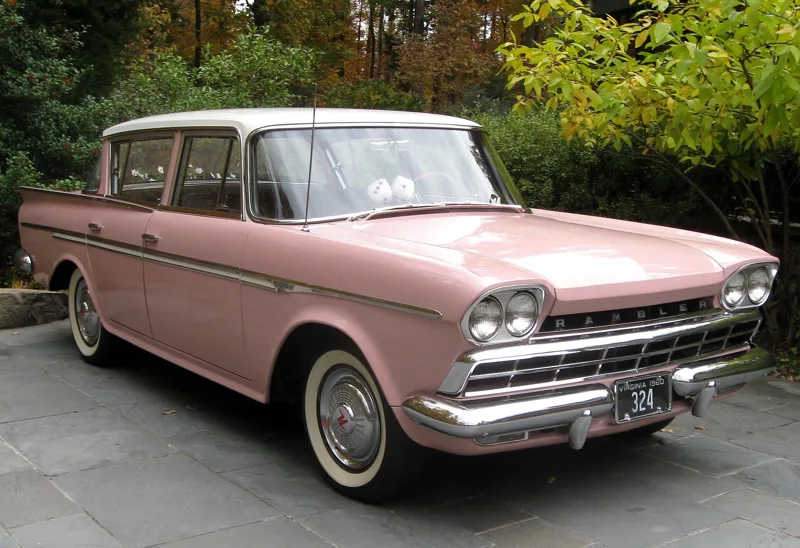
By 1959 the idea was so familiar that Volkswagen made fun of it in an advertising campaign. Granting that it was common among car makers, Volkswagen cast itself as the alternative. Its ads said the company did not believe in planned obsolescence and never altered a car just for the sake of altering it. In one famous advertisement from the agency Doyle Dane Bernbach, an almost blank page carried the line that there was no point in showing the 1962 Volkswagen, because it still looked the same.
Packard's two kinds of obsolescence
The critic Vance Packard published The Waste Makers in 1960, an attack on what he saw as business's systematic effort to turn people into wasteful, debt-ridden, permanently discontented individuals. He split planned obsolescence in two.
The first was obsolescence of desirability, or psychological obsolescence: marketers working to wear a product out in its owner's mind. Annual model changes belong here. Packard quoted the industrial designer George Nelson, for whom real design contributes something through change, and who said that when nothing real can be contributed, styling is the only means left of faking change.
The second was obsolescence of function, where the product itself stops doing its job.
What happened when durable cars arrived
History offers a test of the durability question. Japanese vehicles with longer lifespans reached the American market in the 1960s and 1970s, and American carmakers were forced to answer by making sturdier products. That fits the general pattern: as markets get more competitive, products last longer.
The wider toolkit: contrived durability, repair barriers and lock-outs
Planned obsolescence has several variants, listed in order of increasing severity.
Contrived durability
The first is contrived durability, in which the life of a product is cut short before it reaches the market, because it is designed to deteriorate quickly. Every personal-use product carries an expected average lifetime, and for a complex product that has to be settled early so each component can be built to suit. Most products will eventually break down whatever happens, so a limited lifespan only counts as planned obsolescence if the limit is artificially short.
The law generally does not forbid the strategy, so manufacturers can choose how durable to make their products. Methods include inferior materials in critical areas or component layouts that cause excessive wear: soft metal in screws, for example, or cheap plastic where a stress-bearing part should be metal.
Preventing repairs
Next come designs that frustrate repair. Parts may be unavailable, or so expensive that fixing the product no longer makes economic sense. Some products use glue to hold internal components, and others use screws that common tools cannot turn, or refuse to work if a third-party part is detected. Kyle Wiens, a co-founder of the online repair community iFixit, said a possible goal is to make the cost of repair comparable to the cost of replacement, or to prevent servicing entirely.
Governments have started to look. In Australia in 2021, the Productivity Commission published a report asking whether some products faced significant and needless barriers to repair. Its conclusion was that such barriers did exist, and it recommended ways for the government to address them.
Programmed obsolescence and software lock-out
The most severe variant is programmed obsolescence, where a working product is deliberately disabled so that the buyer must buy a replacement, with no random element in the decline. Software can be handled this way too, by making older versions deliberately unserviceable. Where older versions carry unpatched security flaws, a lock-out can be a risk-based way of stopping malware by forcing users to update.
Batteries show how design choices and regulation interact. Sealed designs leave an ageing battery trapped inside a device, limiting its life to that of its shortest-lived part. The EU Parliament reached an agreement on 9 December 2022 that, starting in 2026, appliances sold in the EU must let consumers take out and swap their own batteries with ease.
How the car industry grew around the idea
Hundreds of manufacturers were pioneering the horseless carriage when the automotive industry began in the 1860s. Early assembly was done by hand. It evolved into a conveyor belt with specialist stations, and robotic equipment arrived in the 1960s. Most cars are now assembled mainly by automated machinery. Globally the market was worth about $2.75 trillion in 2025.
The United States led for decades, with General Motors, Ford and Chrysler, the Big Three, as the world's three largest manufacturers for a time. In 1929 the world had 32,028,500 cars in use, and American makers produced more than 90 percent of them, at a rate of one car per 4.87 Americans. After 1945, the United States built around three-quarters of the world's cars. Japan overtook it in 1980, the United States regained the lead in 1994, and China took the top spot in 2009 with 13.8 million units. In 2024 China produced more than 31 million vehicles.
Choice multiplied alongside volume. The number of automobile models on sale in the United States rose from 140 in 1970 to 684 in 2012.
| Year | Models on sale in the United States |
|---|---|
| 1970 | 140 |
| 1998 | 260 |
| 2012 | 684 |
A market that stopped growing
The saturation that worried Sloan in 1924 has recurred. About 806 million cars and light trucks were on the world's roads in 2007. By 2010, emerging markets accounted for 51 percent of global light-vehicle sales, according to a J.D. Power study, although reports in 2012 showed the industry slowing even in the BRIC countries. In developed countries the industry has slowed, and that is expected to continue as younger people in highly urbanised countries lose interest in owning a car. US vehicle sales reached their peak in 2000, at 17.8 million.
Against that backdrop, the climb in US models on sale, from 140 in 1970 to 684 in 2012, is easier to place in context.
Where this goes next
Competition is again the main force. In the 2020s European automakers have faced growing competition from Chinese manufacturers, particularly in electric vehicles, and they are preparing for the EU's planned end to new fossil-fuel vehicles by 2035. Brands such as BYD have expanded in Europe, and Volkswagen Group and other large European makers responded with restructuring amid weak profitability. As of 2026, China releases 542 new models every six months.
China's rule, in force until 2022, that foreign firms must form joint ventures to reach its market led to quality improvement across the industry. The EU's battery rule, due from 2026, is one example of regulation reaching into product design.
What this means for a buyer
The record suggests a few practical points. Style-driven obsolescence is about perception, which means a car does not have to fail to feel dated. Durability has tended to improve where there is real competition, as the Japanese entry into the American market showed. And because the producer knows more about a product's designed lifespan than the buyer does, the questions that matter are the ones about repair: whether parts are available, whether they are affordable, and whether the product can be serviced independently.