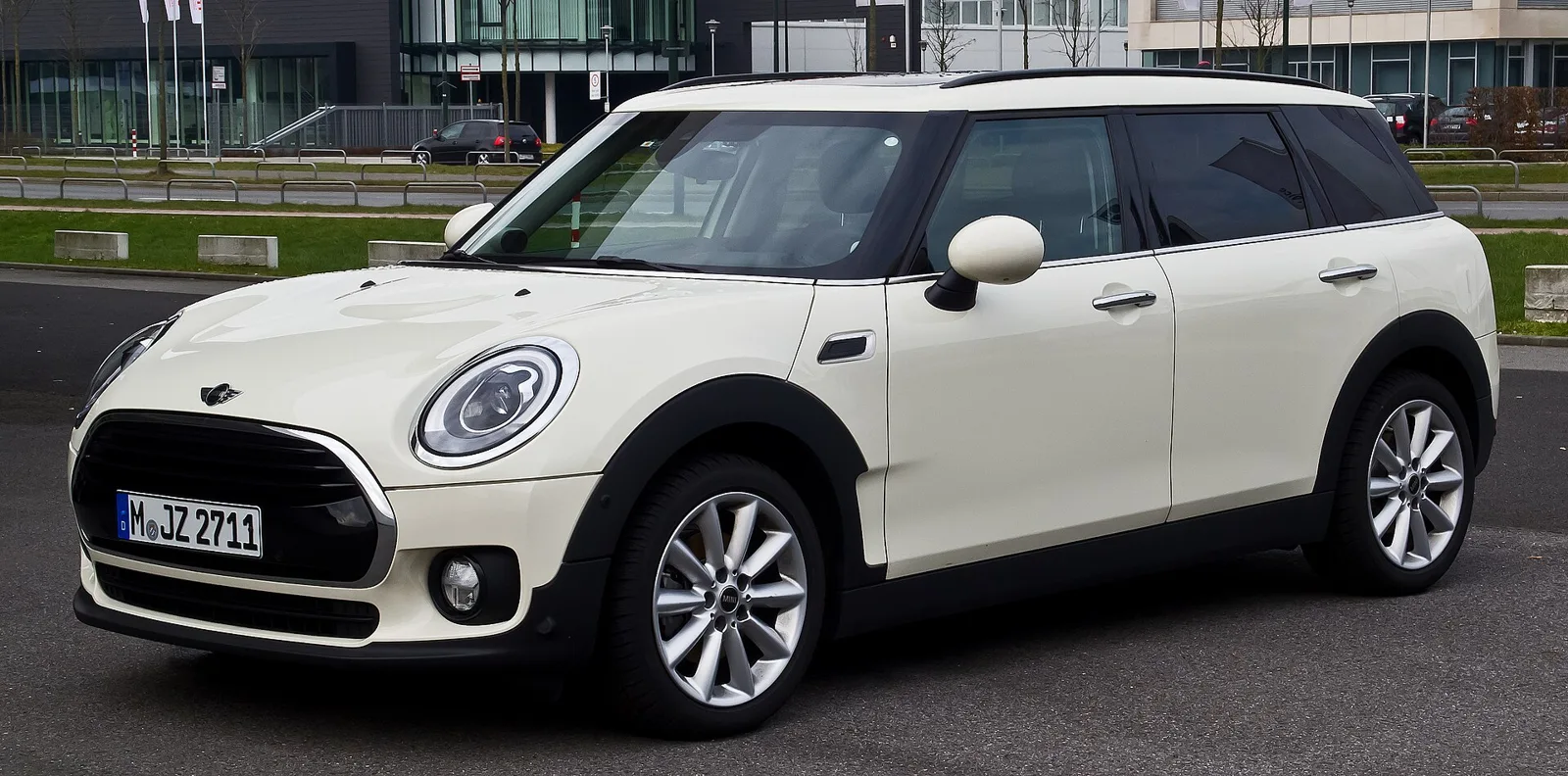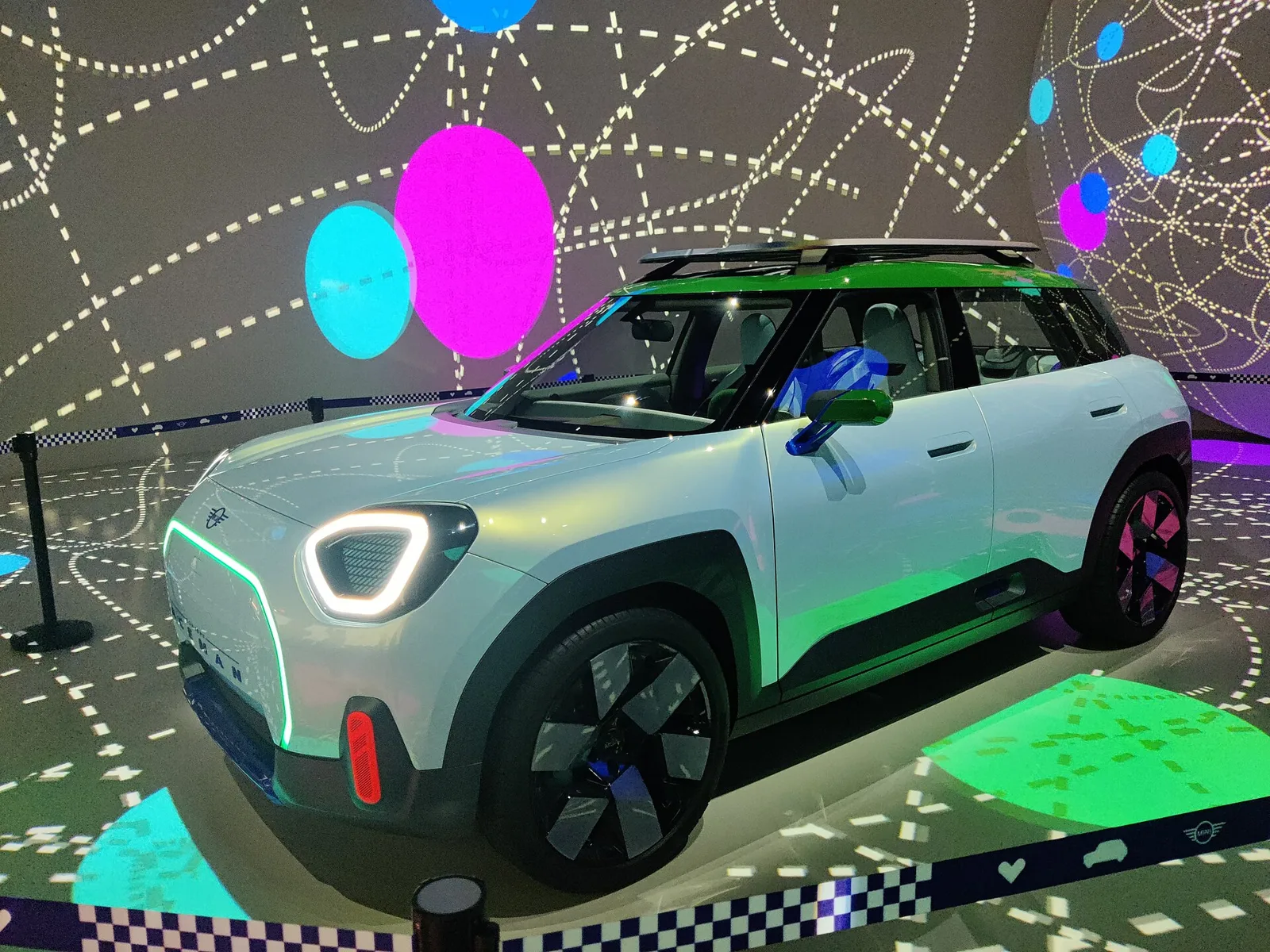
Unbuilt replacements, retro estates and electric show cars: how Mini concepts tested ideas that shaped the brand.
Mini concept cars are show vehicles that preview future ideas and models at international motor shows. They range from the 1967 to 1979 9X, an unbuilt replacement for the original Mini, to the 2008 Crossover, the 2011 Paceman and the 2017 Electric Concept.
Mini concept cars are the show vehicles the brand has used for decades to preview future ideas and models before committing to production. The collection runs from an unbuilt replacement developed by Alec Issigonis to the electric and urbanaut show cars of recent years. Several of these studies left a mark on the production range even when they never reached a showroom.
What was the Mini 9X?
The 9X was an experimental replacement for the Mini that Alec Issigonis developed from 1967 to 1979. It aimed to fix the complexity, harsh ride and mechanical refinement of the original design. British Leyland politics stopped it from reaching production, despite its resemblance to later superminis such as the Fiat 127 and Renault 5.
The car grew out of an earlier idea. In 1966 Innocenti asked for a smaller Mini for the Italian market, and that project, known first as Mini-Mini and then as the Innocenti 750, supplied the gearbox and engine carried over to the 9X. BMC researchers doubted that the car would sell outside Italy, where it could not match the Fiat 500 on price.
The first fully engineered prototype was a hatchback with more interior space than the original, yet it was slightly wider and shorter overall, even though its wheelbase was shorter too. Its new four-cylinder engine had a belt-driven overhead camshaft and delivered 60 horsepower per litre, against roughly 40 from the A-Series. The alternator sat inside the flywheel, and the gearbox had a casing of its own.
A cancelled replacement, a retro estate and an electric show car all tested ideas that still shape the modern Mini.
Project Ant and the 10X
Project Ant ran alongside the 9X with a similar goal of packing space into a small car, but it aimed to be cheaper to make and quicker to assemble. It was cancelled in 1968. Even so, it returned in a design contest against the ADO74 study between 1972 and 1974, and it performed well there, particularly with Allegro rear suspension.
Issigonis also sketched the 10X, a five-door car on a 90-inch or 96-inch wheelbase. It borrowed structural, suspension and drivetrain parts from the 9X and was meant to replace his own ADO16 design. He also compared an extended 9X measuring 10ft 6-inches with the rivals of the day.
Why did the Clubman and Pininfarina concepts stall?
The Clubman began as a 1967 update to the existing Mini, when Roy Haynes joined BMC from Ford and proposed a new front. Pininfarina produced two concepts in 1967 and 1968 based on the BMC 1800 and 1100, but BMC rejected them. The new front was the only proposal that went forward.
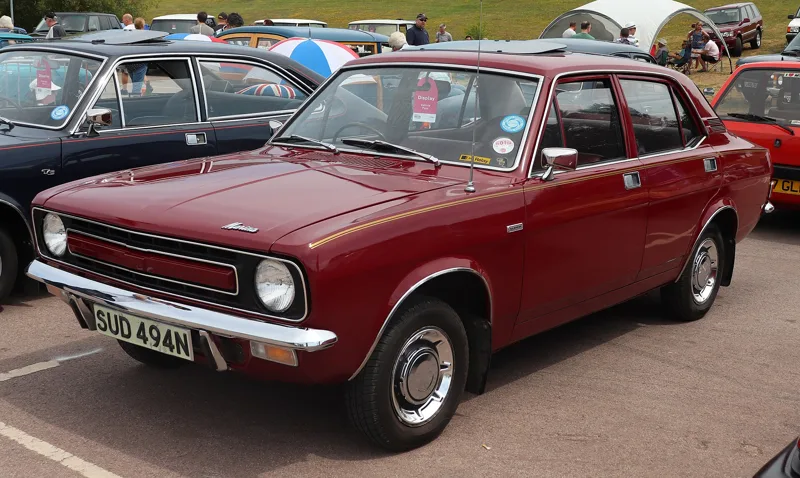
Haynes also had several other designs, among them a booted version derived from the Riley and Wolseley Elf and Hornet, and a hatchback with a rear end resembling the Morris Marina. Those were all turned down. BMC is also said to have studied a mini version of the Pininfarina car, though without the Italian firm's involvement.
How did ADO74 and ADO88 try to replace the Mini?
British Leyland started looking at a successor to the Mini in 1972, under the working name Project Ladybird. ADO74 was dropped in 1973 and replaced by ADO88, a clean-sheet design led by Charles 'Spen' King. ADO88 had to offer the cabin room of rival cars in a smaller outside size.
ADO74 had been a mid-sized design with styling by Harris Mann and Giovanni Michelotti. Its MacPherson strut front suspension and independent rear trailing arms echoed the Honda Civic. Leyland International's constant demands for changes pushed the project into repeated redesigns, and BL concluded it was better to start again.
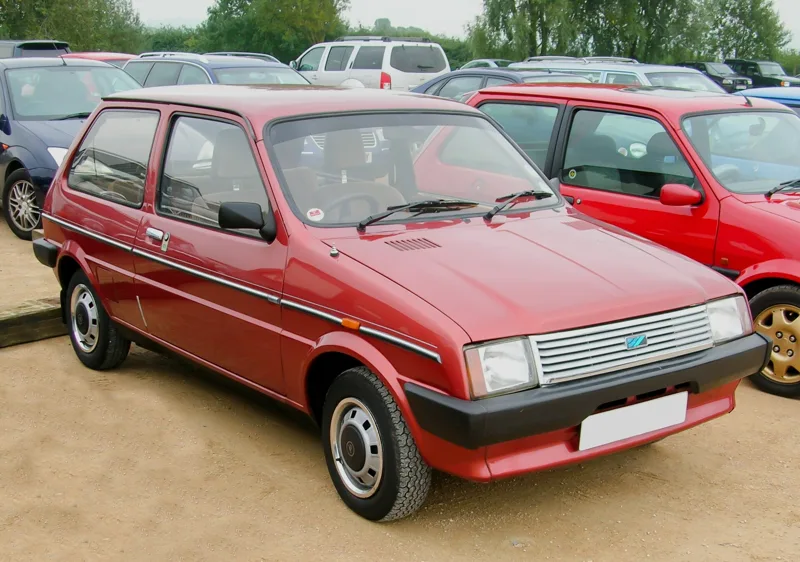
ADO88 kept the A-Series engine, updated as the A-Plus, because budget ruled out new power units. The Mini's rubber cone springs were swapped for Hydragas units borrowed from the Austin Allegro. Harris Mann's upright body, with an almost vertical rear hatch, failed in customer clinics, so the project became LC8, later the Austin Metro, which debuted in 1980 under the name Austin Mini-Metro.
What did the 1997 concepts show?
Two concepts appeared at the 1997 Geneva Motor Show. The Spiritual and Spiritual Too, built with the Italian coachbuilder Stola, previewed a non-retro Mini. The first used a rear-mounted 60 hp 800 cc three-cylinder K-Series, and the second a 1.1-litre four-cylinder K-Series.
The ACV30 came the same year to celebrate 30 years since Mini's 1967 Monte Carlo Rally win. Its name stood for Anniversary Concept Vehicle, and it sat on the platform of the MG F, a mid-engined car with rear-wheel drive. Several of its features, such as black A-pillars, wheel arch detailing and a white roof, carried into the Mini that went on sale in 2001.
Research began at the end of 1995 with the transport design course of the IED in Turin. A project by a Sicilian designer was acquired by Rover in July 1996 and shaped the concept, and some of its ideas found their way into the production car. Credit went to Adrian van Hooydonk, a BMW designer, and to Frank Stephenson.
Prototypes of the production Mini appeared at the 2000 Paris Motor Show before sales started in 2001. They were almost the same as the final car, with the exception of two colours, Candy Blue and Flamenco Orange, which never went into production.
Which BMW-era concepts became production models?
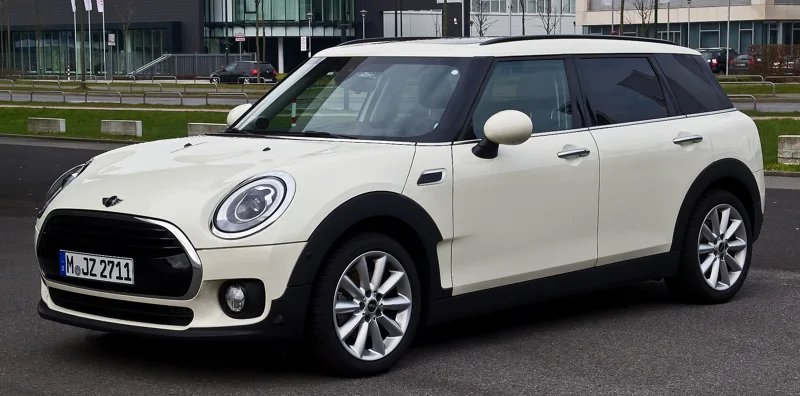
Several BMW-era concepts led to production cars. The 2005 Traveller concept became the Mini Clubman in the 2008 model year, and the 2008 Crossover became the Countryman in 2010. BMW also said the 2009 Coupe would go into production, with assembly planned in Oxford.
The Traveller was a retro estate shown at the 2005 Frankfurt Motor Show. Its longer wheelbase, two doors hinged at the side of the rear and individual back seats set it apart from the standard car. At the Tokyo Auto Show it gained a removable roof section that formed a picnic table with four folding chairs, and its side windows became fold-down storage.
The Crossover, shown at the 2008 Paris Motor Show, stretched beyond 4 metres (13 ft), used four-wheel drive and broad tyres, and carried a rear hatch that opened as one piece with a window that could be lowered out of sight. Its glass Mini Centre Globe in the dashboard used laser projection for 3D navigation and films.
The Coupe was a two-seat concept revealed at the 2009 Frankfurt Motor Show. It combined the John Cooper Works engine with the chrome grille from the Cooper S, with the grille's inner sections painted in body colour. Its luggage capacity was 250 litres.
What were the Beachcomber, Paceman and Rocketman?
The Beachcomber drew on Moke styling and used modern equipment, and it debuted at Detroit in January 2010. The Paceman was a three-door sports activity coupe from 2011, while the Rocketman was a compact three-door hatch shown at Geneva the same year. All three were shown in the early 2010s.
The Beachcomber was revealed on 16 December 2009 and was based on the soon-to-arrive Countryman all-wheel drive platform. Its styling borrowed from the Moke, while its equipment was modern.
Gert Hildebrand designed the Paceman, which was announced in January 2011 to mark the 10th anniversary of Mini in the United States. Based on the Countryman, it used the ALL4 all-wheel drive system and carried the most powerful engine in the range, a 1.6-litre twin-scroll turbo from John Cooper Works, producing 211 hp and 260 Nm of torque.
At the 2011 Geneva Motor Show the Rocketman appeared as a three-door hatchback roughly a foot shorter than the standard model. It had a panoramic roof showing the flag of the brand's home country, a carbon spaceframe and a cantilevered door design. Mini claimed 94 miles per imperial gallon, but in early 2012 the company confirmed it would stay a concept only.
The Clubvan, shown at Geneva in 2012, was Mini's first light commercial van in 30 years, since the original Mini Van ended in 1982. The Vision came to Germany in July 2013 and hinted at the look of the 2014 Mini.
What did the 2014 and 2017 concepts preview?
The 2014 Clubman concept was the longest and widest car Mini had designed, larger than the production Countryman, and it is seen as a preview of the future Clubman. Mini also announced a concept for Gran Turismo 6 in June 2014.
The Mini Superleggera Vision was built with Carrozzeria Touring Superleggera in 2014 and shown at Villa d'Este during the Concorso d'Eleganza. It was a coachbuilding showcase, drawing on Touring's long history of bespoke bodies.
At IAA in Frankfurt in 2017 Mini showed the Electric Concept, which foreshadowed a fully electric model, and the John Cooper Works GP Concept. The Vision Urbanaut, presented later by the MINI brand, completes the list.
Key concepts at a glance
| Concept | Year | Shown at | Notable detail |
|---|---|---|---|
| Mini 9X | 1967 to 1979 | Development programme | Gearbox in its own casing |
| ACV30 | 1997 | Rover concept | Based on the MG F |
| Prototypes | 2000 | Paris Motor Show | Candy Blue and Flamenco Orange |
| Hydrogen | 2001 | Frankfurt Auto Show | Built on the 1.6-litre petrol engine |
| Traveller | 2005 | Frankfurt Motor Show | Two side-hinged rear doors |
| Crossover | 2008 | Paris Motor Show | Mini Centre Globe |
| Coupe | 2009 | Frankfurt Motor Show | 250 litres of luggage |
| Paceman | 2011 | Detroit Auto Show | 211 hp and 260 Nm |
| Rocketman | 2011 | Geneva Motor Show | 94 miles per imperial gallon |
| Electric Concept | 2017 | IAA Frankfurt | Preview of an electric production model |
How did the concepts shape the production Mini?
The 2001 production Mini inherited design cues first seen on the ACV30. The 2000 prototypes showed how close the final car was before sales started. In that sense the concept cars acted as rehearsals, and the production model took the parts that worked.
The later BMW-era concepts followed the same route. The Traveller idea reached the road as the Clubman, and the Crossover became the Countryman. Even the more speculative cars, such as the Hydrogen and the Rocketman, tested powertrains and body shapes that could be useful later.
Why did so many concepts stay on paper?
Many proposals from the late sixties and the seventies were stopped by corporate trouble, shifting budgets and changing demands rather than by weak design. British Leyland's finances, politicking inside the group and repeated changes requested by its overseas sales arm all pushed projects back.
A show car can test reaction, but it still needs a business case, a platform and a factory. The Rocketman, for instance, was expected to reach production before the company confirmed in early 2012 that it would stay a concept.