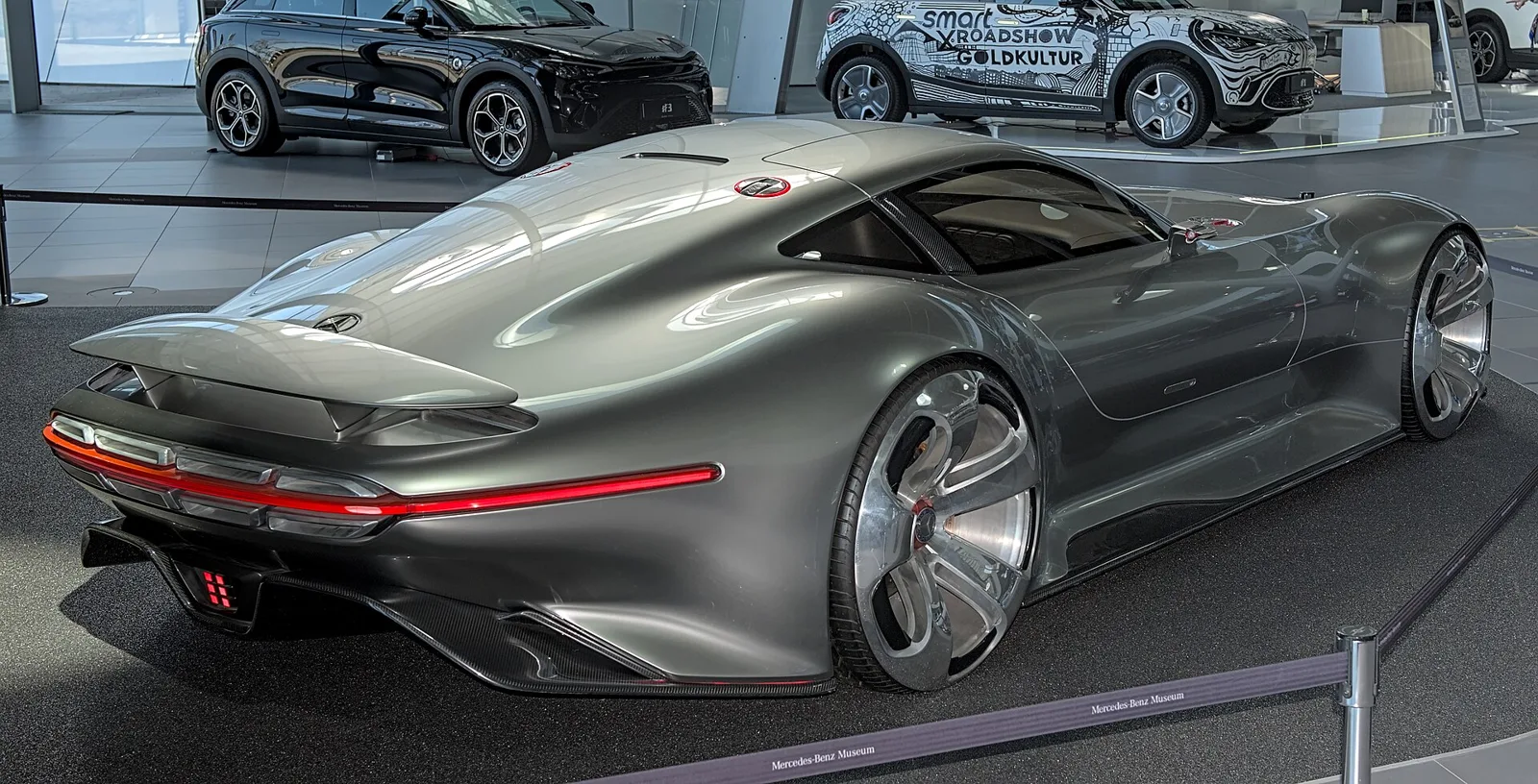
Polyphony Digital's 2004 sim added B-Spec mode, Driving Missions and a Photo Mode, and became one of the highest-selling games of 2005.
Released by Polyphony Digital in 2004 as a PlayStation 2 sim, the game lists more than 721 cars and 51 tracks. Its additions were the B-Spec mode, Driving Missions and a Photo Mode, and it sold 11.76 million copies by March 2016.
Polyphony Digital released Gran Turismo 4 in 2004 as a PlayStation 2 sim. Counting every release, it is the sixth entry in the series and the fourth main one. Japan received it in late December 2004, and North America and Europe followed in early 2005.
The game was first planned for a 2003 release, but Polyphony delayed it by more than a year and a half and removed its online mode.
What is Gran Turismo 4?
Gran Turismo 4 is a PlayStation 2 sim racer with over 721 cars from 80 manufacturers and 51 tracks. It added the B-Spec crew-chief mode, Driving Missions and a Photo Mode to the series. Its A-Spec career rewards race wins with points, which act as experience rather than money.
The car list runs from the 1886 Daimler Motor Carriage to concepts planned for 2022. Many of the 51 tracks are new or modified versions of older Gran Turismo courses, and some real-world circuits were added to the line-up.
A sim that counted 721 cars, rewarded experience over cash and sold nearly twelve million copies.
How did A-Spec points and progression work?
A-Spec is the normal first-person driving mode, and each race event can yield up to 200 points. A win with a car that has less advantage over the AI pays more, and a result can only be scored once. The 34 Driving Missions pay 250 points each.
Points can only be won once per event, so repeating a win for points means returning with a car that is less dominant against the AI. Because the points are experience and not currency, they measure progress rather than buy anything.
What is B-Spec mode?
B-Spec puts the player in the role of a crew chief who tells the driver how hard to push, when to pass and when to pit. The crew chief monitors tyre wear and fuel to decide when a pit stop is needed, so the driver simply follows instructions.
Race speed can be increased up to 3 times normal, which makes endurance races faster to finish. The 3 times setting resets to normal after every pit stop, so it must be switched on again each time. The manual claimed 5 times speed, but that number is most likely an error.
B-Spec points raise the AI skill in vehicle, course and battle skills, so harder events become available as the career moves on. B-Spec is unavailable on wet, dirt and snow courses.
What are the Driving Missions?
Driving Missions resemble licence tests. Passing a mission pays 250 A-Spec points and at least 1000 credits. Each mission takes place with a set car on a set track or section of track, against a given group of opponents. Finishing a whole set unlocks a prize car.
The Pass asks the driver to overtake an opponent within a set distance. 3 Lap Battle requires passing 5 opponents over 3 laps. Slipstream Battle means overtaking identical opponents by drafting, and 1 Lap Magic starts with a time penalty against much slower rivals and requires passing them all in a single lap.
How did the Photo Mode work?
Photo Mode lets players control a virtual camera and shoot their cars on track or at set locations, including the Grand Canyon. Pictures can be saved in Normal, Fine or SuperFine compression at up to 1280x960, and they can be saved or printed to a supported USB device.
How did the graphics and physics change?
Graphics got a clear upgrade, with richer cars and courses, even though the hardware was the same PlayStation 2. Cars now show body movement, such as pitching under braking, and the physics were upgraded in other ways too.
Barriers were given much more friction to slow cars and stop wall riding. Friction between cars stayed low, so driving into a rival's flank rather than braking still paid off in some situations.
Driving Missions and Special Conditions events apply a 5-second penalty for hitting walls or rivals in this way. The car is then held at 50 km/h (31 mph) until the countdown ends.
Which versions and spin-offs came before the full game?
The Prologue came first: Japan and Southeast Asia got it on December 4, 2003, and Europe on May 26, 2004. It was a short version that featured 50 of the 500 planned cars and five courses, and it was never released in North America for undisclosed reasons.
The Prologue sold 1.4 million copies. The European Prologue included a documentary bonus disc, and the full Gran Turismo 4 followed in 2004.
An American demo disc featuring a Toyota Prius and a Toyota concept car could be had by requesting a brochure online or by visiting Toyota's display at that year's New York motor show.
Japan first received a limited edition carrying the signature of producer Kazunori Yamauchi on the cover. A Christmas bundle paired the regular game with a white ceramic PlayStation 2 under the name PlayStation Racing Pack.
Although the Prologue had to limit its cars and courses, it still included races, time attacks and license tests. A Driving School of license tests was included, along with early versions of some circuits, such as a New York track that was later changed for the full game.
Logitech released the Driving Force Pro wheel, called GT Force Pro in Japan, to coincide with the Prologue launch. It supported force feedback. The European Prologue also added several cars, most of them unveiled at the 2004 Geneva Motor Show, including the BMW Concept M5.
| Release | Date | Notes |
|---|---|---|
| Gran Turismo 4 Prologue (Japan and Southeast Asia) | December 4, 2003 | Short version with 50 of 500 planned cars and five courses |
| Gran Turismo 4 Prologue (Europe) | May 26, 2004 | Included a documentary bonus disc in Europe |
| Gran Turismo 4 (Japan and Hong Kong) | December 28, 2004 | Full release on PlayStation 2 |
| Gran Turismo 4 (North America) | February 22, 2005 | Retail release |
| Gran Turismo 4 (Europe) | March 9, 2005 | Retail release, later re-issued under the Greatest Hits brand |
| Gran Turismo 4 Online Test Version | 2006 | Free test edition with online services from June 1 to September 1, 2006 |
Was there an online version?
The online mode was removed from the standard game because of problems and a lack of time. A free 2006 test edition, the Gran Turismo 4 Online Test Version, ran between June 1 and September 1, 2006, and it was used to trial features for the next series entry.
The beta shipped free to 4,700 selected members in Japan and 300 in South Korea. Its modes included a 6-player Competition, Time Trial, chat and an Internet ranking chart, and there were 5,000 test players in all.
The test was not a full launch of online play. Its real purpose was to develop and check online structures for Gran Turismo 5 on PlayStation 3.
A separate public beta ran in North America in 2006 for members of the now-defunct PlayStation Gamer Advisory Panel, with the same goals and features as the Japanese test.
Test events brought in guests. The Top Racer Battle was staged at Polyphony headquarters on August 17, and Satoshi Motoyama won three rounds of the Motoyama Trophy. Sebastien Loeb set a Time Attack record on the Circuit de la Sarthe I layout during his visit.
How did critics respond?
Critics gave Gran Turismo 4 generally favourable reviews, according to Metacritic. Many reviewers said the AI followed its racing line with little regard for the human driver, while others praised the handling and the detail of the cars.
Top Gear presenter Jeremy Clarkson staged a test at Laguna Seca Raceway. In the real car, an Acura NSX took 1:57 for a lap. In the game he used a lighter Honda NSX-R, and he said the game pushed players into bigger risks than real life.
The Sunday Times ran a column in which Clarkson rated the game three stars out of five. He also noted that the game's cars did not suffer brake fade.
Karl Brauer of Edmunds.com ran a similar test at the same circuit with a professional driver and an IGN editor. None of the four real vehicles matched the game times on the real track. Brauer said that a real mistake costs far more than a bad lap time, and that the force feedback wheel could not replace the feel of a real car.
Reviewers widely complained about the lack of rendered damage. Cars bounce or spin away rather than showing real damage, and players could cut chicanes on tracks such as Fuji Speedway 90's to win by cheating.
Online play that had been promised during development was dropped at launch, and the AI drew disappointment from many reviewers. Some critics also found that B-Spec mode added little to the overall experience.
Non-game coverage was more positive. Maxim handed the game a perfect ten, and The Sydney Morning Herald awarded five stars for its realistic handling. The New York Times was positive but noted that competitors can seem like mindless automatons, and Detroit Free Press gave three stars out of four for the home map.
What awards and sales did it earn?
Versions sold in China, Japan and South Korea came with a 212-page driving guide, which taught the physics behind racing. A PlayStation Portable port was first planned as Gran Turismo Mobile, but it was later renamed Gran Turismo and released on October 1, 2009.
Gran Turismo 4 won Best Racing Game at the E3 2003 Game Critics Awards, and IGN ranked it 5th among the best PlayStation 2 games of all time. Japanese sales passed the 1 million mark by February 2005, and worldwide sales topped 6 million by March 2005.
The game also earned a Double Platinum award from ELSPA, a level tied to at least 600,000 UK copies. UK sales had passed 611,000 units by December 2005, and the game ranked among the year's biggest sellers.
Shipments by March 2016 stood at 1.27 million in Japan, then 3.47 million in North America and 6.83 million in Europe. Asia added 180,000, a total of 11.76 million copies.
That places it third across the franchise, below Gran Turismo 5 and Gran Turismo 3, yet above the original Gran Turismo.