Polyphony Digital's PlayStation 3 preview brought 16-car races, a My Page hub and online play to the franchise, and sold 5.34 million copies.
Gran Turismo 5 Prologue is a 2007 sim racing game from Polyphony Digital for the PlayStation 3. It served as a precursor to Gran Turismo 5 and marked the series' tenth anniversary. It was the first mass-produced Gran Turismo game with online multiplayer, and it sold 5.34 million copies by December 2011.
Gran Turismo 5 Prologue arrived as a stepping stone to the full Gran Turismo 5, marking ten years of the franchise with a playable preview. It brought races with up to 16 cars, real-time in-car lighting and the first online mode in a mass-produced Gran Turismo title. Its free demo, regular updates and online features made it a landmark in the series' history.
What did the game introduce to the series?
The game brought racing with up to 16 cars at once to the series for the first time. Polyphony Digital also said the non-player car AI had improved over earlier entries. A new realistic in-car view added working speedometers, odometers and reflecting mirrors, along with real-time lighting such as shadows.
Players could look left and right from the cockpit with the D-pad, and that control could be mapped to other buttons. Any PlayStation 3 compatible steering wheel worked with the game. Three exterior angles showed each car from outside, while the cockpit view was limited to premium cars.
Sixteen-car races, a My Page hub and online play gave the series its first taste of mass-market multiplayer.
How did online play work?
Online multiplayer was the headline addition, and up to 16 players could race at once. Gran Turismo 4 had been designed with an online component, but that feature was pulled before release to avoid further delays, even though a beta had been released. Gran Turismo HD Concept had offered an online Time Trial feature before it.
Because development of Gran Turismo 5 took so long, the Prologue's servers stayed online for two years despite the game being only a prologue. Online events were limited in time, and each week brought new events with specific car classes, tyre types and assistance levels while older ones closed. Ranking boards tracked the best record for each course and car.
When an event closed, a ranking board showed the most successful players, and their replay files could be downloaded as ghost replays to race against.
Menus, events and the My Page hub
The game replaced older menus with My Page, a personal hub that shows the selected car in a real-life location, with a 360 degree camera and real-time zoom. From there players could reach news, video, online events, rankings, the arcade mode and the garage.
Event races were arranged as championships, time trials and mission races against computer opponents in several classes. Winning in gold, silver or bronze unlocked harder classes, starting with Class C, then B and A, and completing Class A opened a bonus class called Class S. Credits from race wins paid for new cars at dealerships.
The garage let players view, race and sell cars, and selling was another route to credits. Some manufacturers ran one-make races for a specific model, and the in-game museum offered background on carmakers once the game entered its rolling demo mode.
How many cars and tracks were there?
The December 2007 Japanese release featured 37 stock cars, plus a GT-R model carried over from the free demo. Spec II raised the playable roster to 71 cars, and the North American version listed 76 credited cars. Those additions were an early sign that the roster would keep growing after release.
Earlier entries had included Formula One cars, but GT5 Prologue was the first in the series to feature a fully licensed one, the F2007. The original game shipped with four real circuits from Japan, Europe and North America, plus two fictional tracks.
The Spec II update added the High-Speed Ring, bringing the total to six tracks and twelve layouts. The Eiger Nordwand track was built from a real hiking trail, because no suitable roads existed near Kleine Scheidegg.
Several venues had extra variants. Fuji International Speedway offered F1 and GT versions, Daytona International Speedway had oval and road course layouts, and the Suzuka Circuit had a shorter East Course. Each real circuit also had an HD course guide that documented the location with footage and commentary.
How did the game handle wheels and controllers?
The demo was the first PlayStation 3 release to support both Dual Shock 3 vibration and racing wheel force feedback. Logitech then announced the Driving Force GT in February 2008, a wheel launched in May to coincide with the Western release. Earlier official Gran Turismo wheels also worked with the game.
Support for other wheels was partial. The Logitech G25 was not officially supported, but its buttons could be remapped and its clutch enabled at race start. The G27's paddle shifts did not work in the game, although the controller configuration screen detected them.
How did the demos and events build interest?
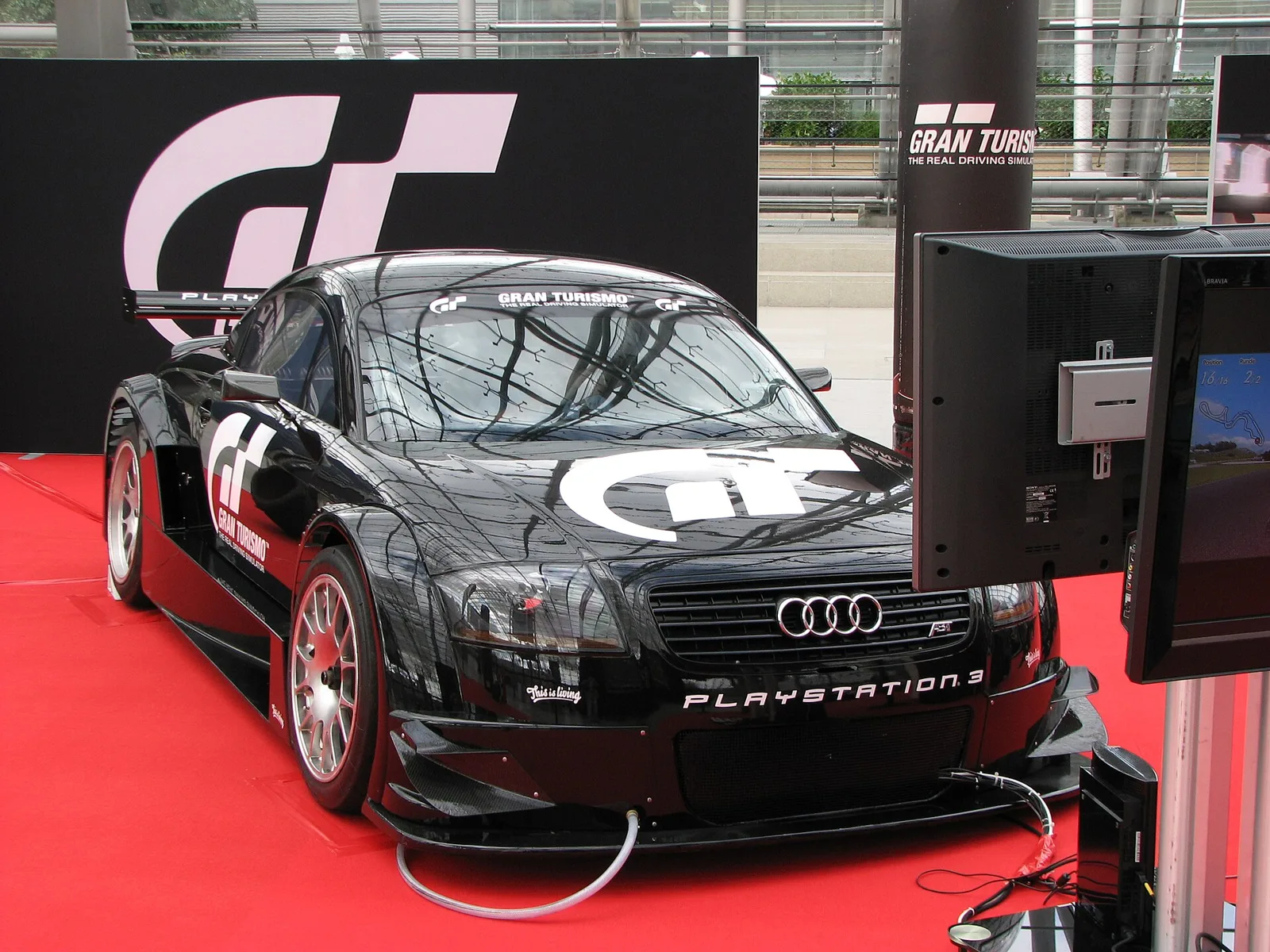
A free Japanese PlayStation Network demo ran from 20 October to 30 November 2007 with the Suzuka Circuit and seven cars, unlocking vehicles when each was shown at the 40th Tokyo Motor Show. A North American demo appeared at the SEMA Show in Las Vegas, adding American cars and the Daytona International Speedway.
The Downshift Session in October 2008 celebrated ten years of the franchise with a huge projection. It ran at 3840x2160 resolution, while the game normally ran at 60 FPS and 1920x1080. Four PlayStation 3 consoles shared the rendering, with each handling a quarter of the image on a 220-inch screen.
A separate showing ran at the original resolution at 240 FPS. The high-resolution display used about 8.3 million pixels, compared with roughly 2.1 million for a single PlayStation 3.
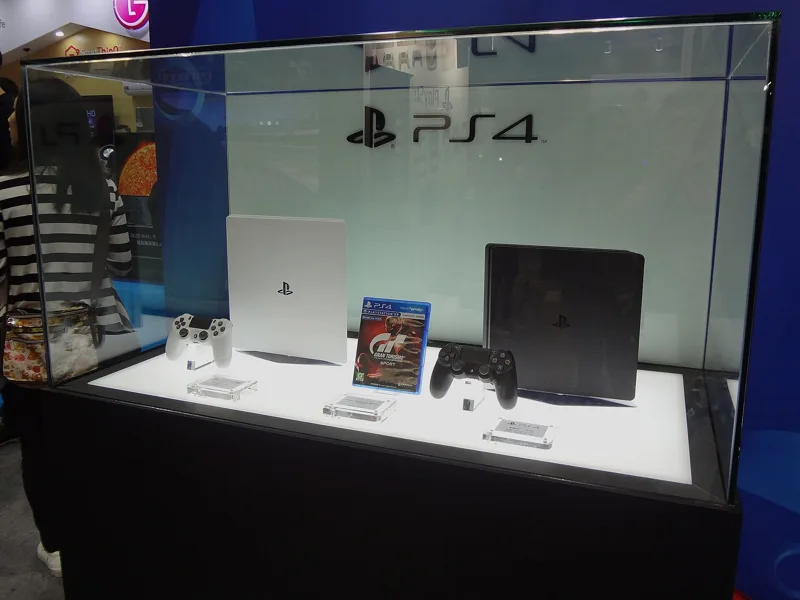
Spec III was released for a limited time in Japan, bundled with the 80GB PlayStation 3 announced in October 2008. The update introduced gameplay improvements and three new cars, and the bundle came with a DualShock 3 controller in black, silver or white.
What extras and music came with the game?
Beyond the Apex is an 18-minute GT-TV documentary on the Blu-ray of the North American release. Director Greg Harvey filmed and edited it over four months, mixing behind-the-scenes development footage with an interview with series creator Kazunori Yamauchi. GT-TV had already been introduced in the free demo, so the extras began before the full game shipped.
The soundtrack was released in Japan on 20 February 2008 with 18 tracks, published by Village Music. The series theme, Moon Over the Castle, appeared in an arrangement by Vince DiCola, who recorded a separate version for the album.
GT-TV also carried car programming. Free trailers and HD videos about Super GT and D1 Grand Prix appeared in the demo, and in August 2008 the service was overhauled with pay-per-view videos at reduced launch prices. Premium content had been discontinued on December 29, 2009, as the team turned its focus to the full game.
How did critics and buyers respond?
Reviews were generally favourable, according to Metacritic, and the game was praised for its looks and feel. Hyper's reviewer liked how it looked and felt, but criticised the absence of a damage model. Pre-orders in PAL territories passed one million, making it the first PlayStation 3 game to reach Platinum status before release.
Sales were strong from the start. By 30 April 2008 the game had shipped 2.23 million copies worldwide. Japan took 270,000 copies, North America 550,000, Europe 1.38 million and Asia 30,000. By August 2009 total shipments had reached 3.94 million copies.
The game earned an ELSPA Platinum award for sales of at least 300,000 copies in the UK. By December 2011 total sales had reached 5.34 million, which placed it second among PlayStation 3 titles behind its successor, Gran Turismo 5.
What did the prologue leave behind?
Gran Turismo 5 Prologue set the stage for its successor, and its online service ran for two years while the full game was in development. The updates that added cars and modes showed how the series could keep growing after release, a pattern the franchise continued.
The long development cycle of Gran Turismo 5 explains why the Prologue existed at all. The preview carried the franchise through its tenth year, and its free demo, GT-TV content and retail updates kept interest going while the full game was in development.
What did the Spec updates add?
The Spec II update brought Drift Mode, which was similar to the drift mode of Gran Turismo HD Concept, along with car tuning adjustments and head-to-head two-player racing offline. It also added new manufacturers and tuned cars, widening the garage well beyond the launch lineup.
Spec III followed in October 2008 with further improvements and new cars. A separate Japanese disc carried every update, and the Platinum release sold in Europe included Spec III as well.
Free updates and regional music
Updates downloaded when the game booted and cost nothing. Each one added cars, game modes or GT-TV videos. Some background music varied by region because of licensing, and once Polyphony Digital turned its attention to Gran Turismo 5 it stopped issuing updates for the Prologue.
How did the Japanese demo line-up grow?
The first Japanese demo offered four playable cars from Japanese and European makers. The Mazda ATENZA Sport, Lexus IS-F and Subaru Impreza WRX STI were unlocked one by one as each was unveiled at the Tokyo Motor Show. The demo line-up therefore changed through the show.
The Nissan GT-R was revealed at the same show, replacing the Black Mask with its defining panels concealed until the official unveiling. The Black Mask left the car list on October 23 and returned the following day.
What else did My Page offer?
Beyond the online events, the menu offered an arcade mode in which a single race pitted the player against 15 AI-controlled cars, with no credits earned there. A 2P Battle option provided offline split-screen racing for two players, and a Save option recorded progress when auto-save was off.
My Page also listed News, GT-TV, Online, Ranking, Arcade, 2P Battle, Event, Garage, Dealerships, Replay, Option, Manual and Save. The Manual was updated almost every time the software changed, and brand-related news was posted regularly through online updates.