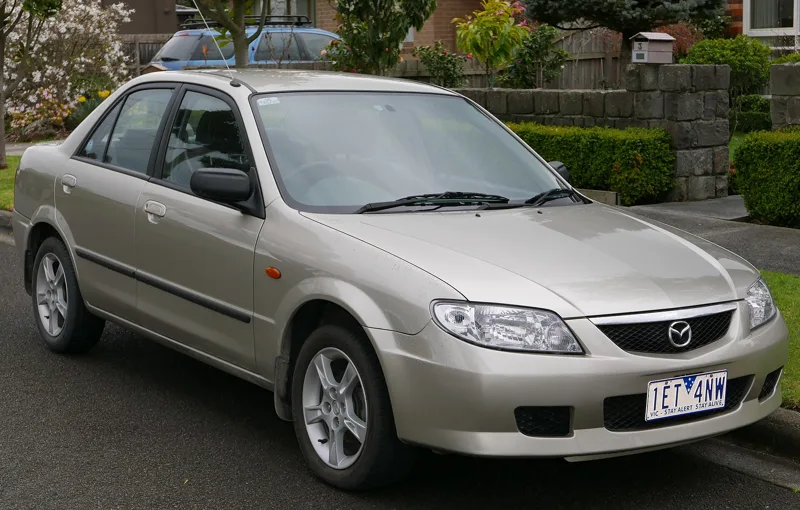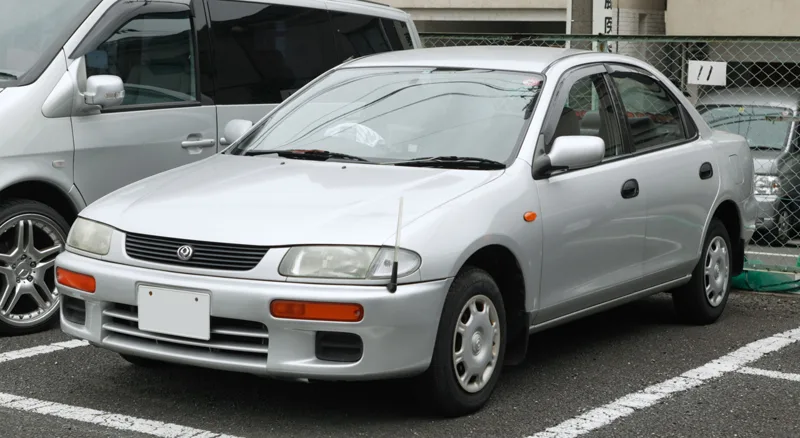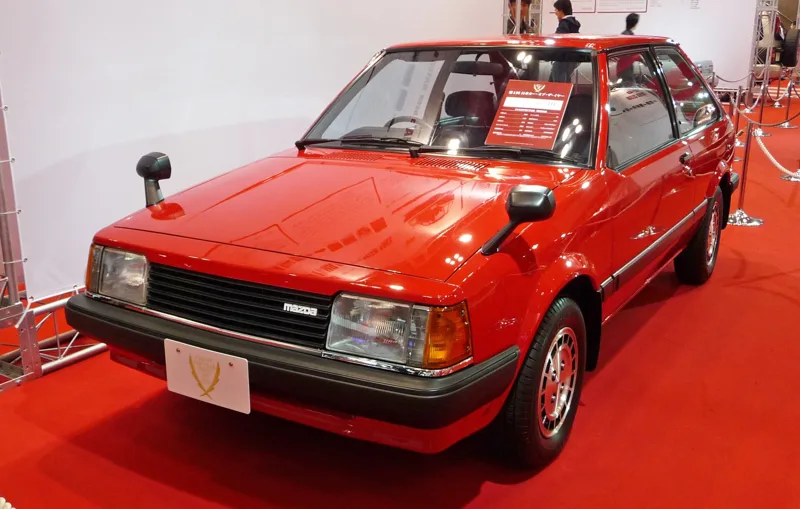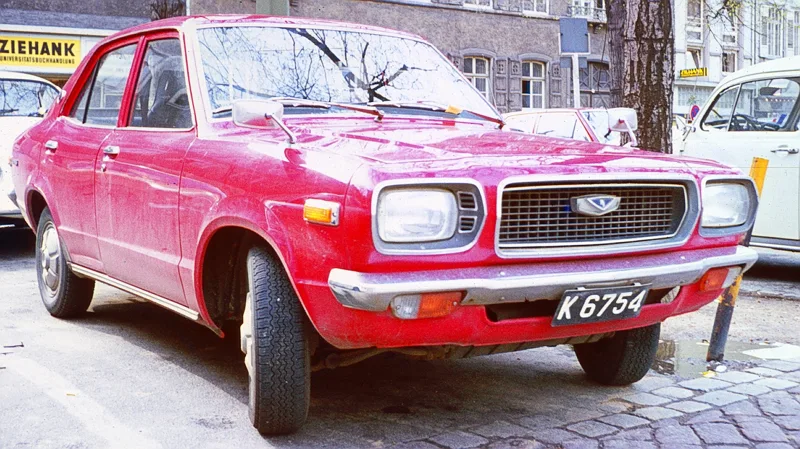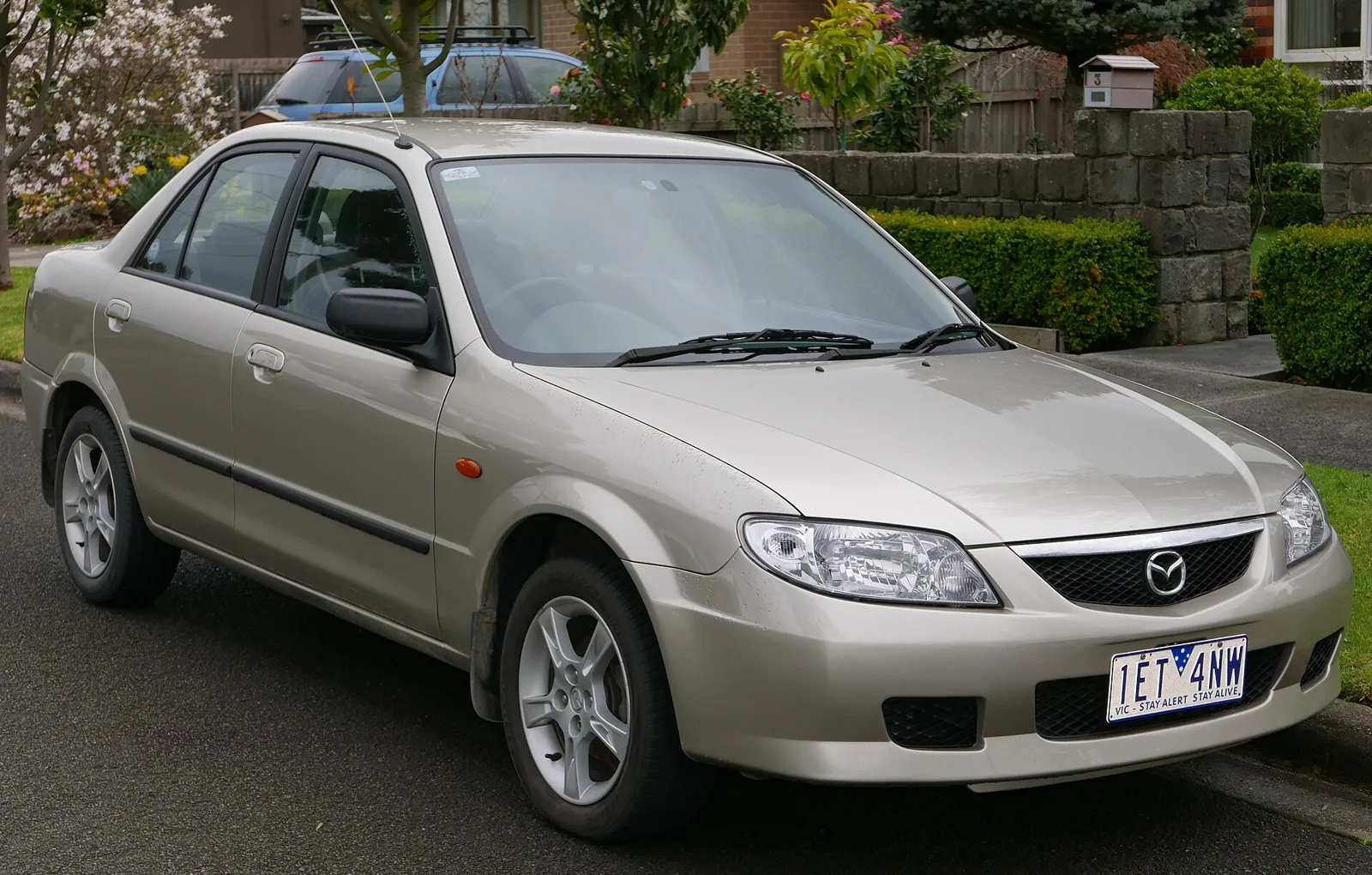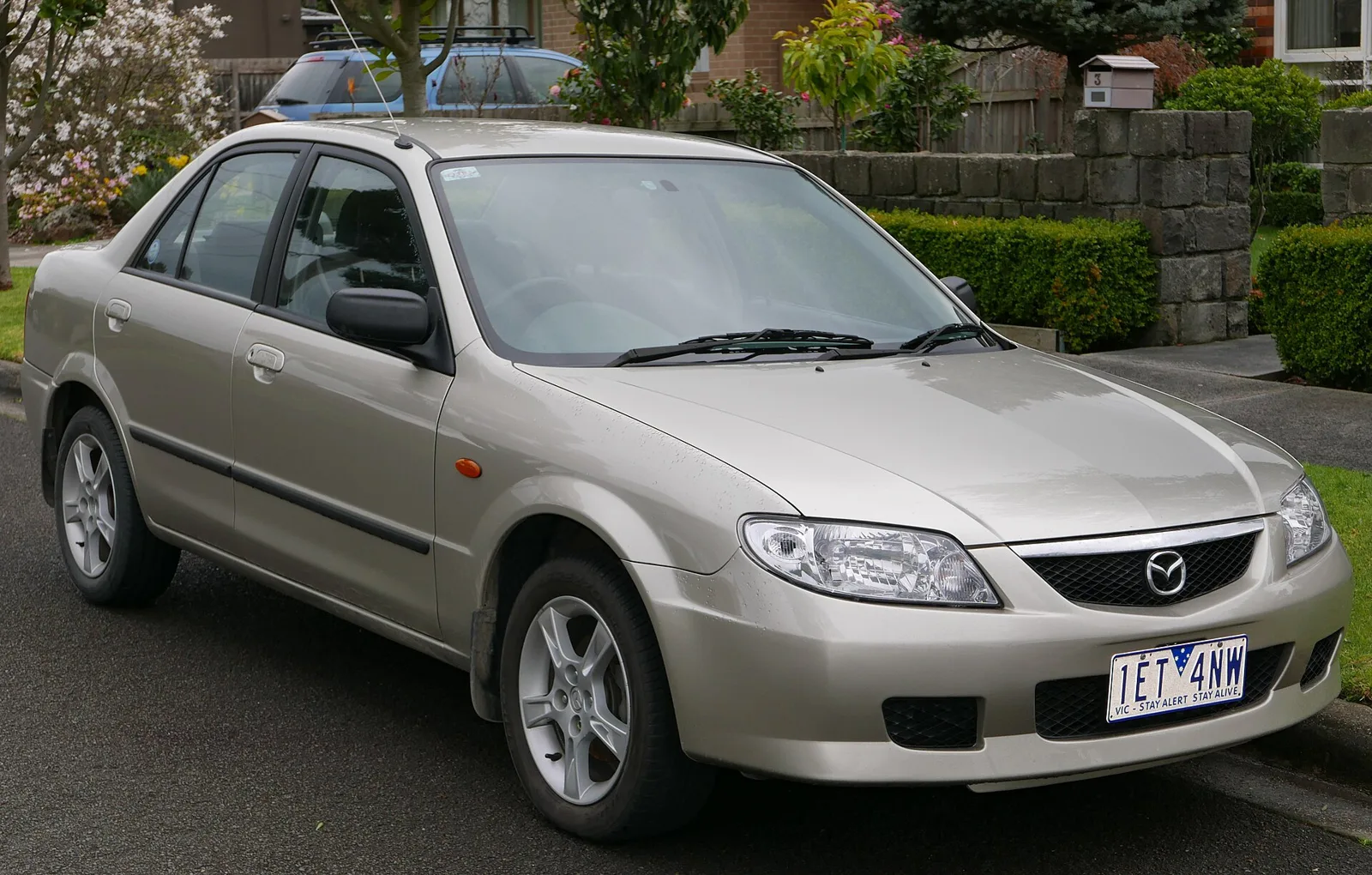
The Mazda Familia and the Nissan Sunny were both small Japanese family cars built for the same economy-minded buyers, and the record links them through the Toyota Corolla they were both meant to challenge.
The Mazda Familia was a small family car built from 1963 to 2003. The Nissan Sunny was a small family car built from 1966 to 2004, sold abroad as the Datsun 1000 and Datsun 1200, and both were meant to challenge the Toyota Corolla.
The Mazda Familia and the Nissan Sunny were both small Japanese family cars, and they were sold to the same kind of economy-minded buyer. The Familia was built by Mazda from 1963 to 2003. The Sunny was built by Nissan from 1966 until 2004 in Japan, and it was marketed abroad under the Datsun name for much of its early life.
This comparison covers origins, engines, export names, sales and the figures available for each car. Where the record gives a figure for only one car, the gap is shown rather than estimated, and metric figures come first with imperial values in brackets.
Were the Familia and Sunny rivals?
They were rivals in the sense that both were built to meet the same market. The Sunny was designed to compete with the Toyota Corolla, and the Grand Familia's intended rivals were the Corolla, the Sunny and the Mitsubishi Colt, so the Familia and the Sunny met in the same small-car showrooms.
The record does not show the two cars being sold against each other in a single model comparison. What it does show is that both were small, economical cars sold through dedicated dealer networks, the Sunny through the Nissan Satio Store channel in Japan.
Two small Japanese family cars built for the same economy buyers, separated by a Mazda badge and a Nissan one, and linked by the Toyota Corolla they both chased.
How did the Familia begin?
The Familia grew out of Mazda's plan to advance alongside the Japanese economy. The R360 kei car arrived in 1960, and a larger Mazda 700 prototype, shown at the eighth Tokyo Motor Show in 1961, became the basis for the Familia.
The first production Familia appeared in October 1963, styled by Giorgetto Giugiaro while he was working at Carrozzeria Bertone. It was first sold as a commercial two-door van, joined in April 1964 by a wagon, and then by saloons later that year.
The early engine was a 782 cc four known as the white engine. A 985 cc SOHC unit powered the 1000 coupe from November 1965, and a 987 cc OHV unit appeared in January 1967.
Around 400,000 first-generation Familias were built, of which 130,473 were saloons and coupes. About 10,000 were exported, mainly to Australia and Oceania.
How did the Sunny begin?
The Sunny was launched in September 1966 with two body styles, a two-door sedan and a van or station wagon, and it was built on a dedicated platform called the B series. Nissan named it after a national mail-in campaign that drew over eight million submissions, with the name Sunny suggested 3,105 times.
In Japan the Sunny was sold through a dealership channel set up just for it, called Nissan Satio Store. It was introduced in the same year as the Toyota Corolla and the Subaru 1000.
The first Sunny was exported as the Datsun 1000, and the Sunny truck followed in February 1967 as a light commercial based on the van chassis. The Sunny was engineered by Aichi Manufacturing, which Nissan had newly acquired, and the record says the car let that company show its profitability to its new owners.
What engines did the Familia use?
The Familia's later engines were the 1.0 L PB and the 1.2 L, and in April 1970 the Presto added a 1.3-litre TC rated at 69 hp (51 kW; 70 PS). The Familia Presto produced 67 lb ft (91 N m) of torque in that form.
In the United States the Familia was offered as the 1200 in 1971 and again for 1973. The record gives its power as 58 hp (43 kW; 59 PS), and the 1200 was replaced by the 808 in 1972.
The rotary version, the R100, was introduced in July 1968 with a 982 cc 10A engine producing 100 PS (74 kW). Its rotary tax advantage was tied to the higher 1.0-litre bracket, and the 10A was discontinued in late 1973.
What engines did the Sunny use?
The first Sunny had a four-cylinder A10 engine of 988 cc with a four-speed gearbox. It produced 62 PS JIS Gross (46 kW) at 6,000 rpm, and the displacement was kept below 1.0 litre to stay in the lowest Japanese road tax bracket.
The Sunny coupe built for Japan used a higher compression engine and produced 66 PS JIS Gross (49 kW) in Australia, where the export name was Datsun 1000 Coupe. The record notes that this was a 4 PS, or 6.5 percent, increase over the lesser models.
The second generation, the B110, arrived in January 1970 as the Datsun 1200 in export markets, with an A12 1.2 L engine. In April 1971 the Sunny Excellent coupe added a SOHC 1.4-litre Nissan L engine.
How did the second generation compare?
The Sunny's second generation, the B110, was launched in January 1970 and was slightly larger than the first car. Its 1.2-litre engine answered a Toyota move to 1,100 cc, and the marketing for the car said that the car next to it looked small.
The Familia's second generation, the FA2, arrived in November 1967 with the engine of the earlier saloons. Both makers were therefore refreshing their small cars in the same period, with the Familia's Presto facelift following in April 1970.
How did the two cars sell in export markets?
In North America the Datsun 1200 sold over 133,000 cars across the three model years 1971 to 1973. The coupe accounted for 89,541 of those sales, and the two-door sedan for 43,761. The coupe was the bigger seller within that total.
In the United Kingdom the Datsun 1200 was the first Japanese car to sell in large numbers, rising from about 6,000 in 1971 to above 30,000 the following year. In Portugal Entreposto assembled the 1200 locally from 1972 until 1974.
The Familia's export life was built on knock-down kits sent to Taiwan, Indonesia, Malaysia, South Africa, Zimbabwe, Colombia and New Zealand, and on renamings such as Ford Laser and Ford Escort. The Sunny was sold abroad under the Datsun name, and the record gives the Familia and Sunny no shared export channel. The Sunny's overseas spread rested on its many export names, which included the Datsun 1000 and Datsun 1200. The record gives the Familia's export spread through its knock-down kits and rebadged names, while the Sunny's came through the Datsun brand. A Thai version of the pickup, sold as the Familia Super Cab and Maxi Cab, was built in small volumes until the late 1990s.
Which body styles did each car offer?
The Familia offered a van, a wagon, a saloon, a coupe and a pickup over its life, which gave it a broad range of body styles. The Sunny offered a two-door sedan, a van or station wagon, a coupe and a truck, so the two cars overlapped in several body styles.
The Sunny truck debuted in February 1967 and was based on the VB10 van chassis. It is sometimes called a coupe utility, because its bed was not separate from the passenger area. The B120 commercial truck followed in February 1971 on the B110 chassis.
Side-by-side specifications
| Specification | Mazda Familia | Nissan Sunny |
|---|---|---|
| Production | 1963 to 2003 | 1966 to 2004 in Japan |
| First engine | 782 cc white engine | A10 988 cc four, four-speed gearbox |
| Later engine | 1.3 L TC Presto, 69 hp (51 kW; 70 PS) | A12 1.2 L (B110); 1.4 L L engine in the Sunny Excellent |
| Power at launch | Not given | 62 PS JIS Gross (46 kW) at 6,000 rpm |
| Rotary | Familia Rotary R100, 982 cc 10A, 100 PS (74 kW) | Rotary tested in the Sunny Excellent but not put into production |
| Body styles | Van, wagon, saloon, coupe, pickup | Two-door sedan, van or station wagon, coupe, truck |
| Export names | 800, 1000, 1200 and 1300; 323 in Europe after 1977 | Datsun 1000, Datsun 1200; later Nissan |
| US model | 1200 in 1971 and 1973, 58 hp (43 kW; 59 PS) | Datsun 1200, over 133,000 sold in 1971 to 1973 |
| Built | Around 400,000 first generation | Not given |
| Top speed | Not given | Not given |
| Acceleration | Not given | Not given |
Read down the table and the gaps are plain: speed, acceleration and price are missing for both cars.
Which buyer suits each car?
On the figures available, the Familia suits a buyer who wanted a small Mazda with a wide range of body styles and a rotary option. The Sunny suits a buyer who wanted a small Nissan with a dealer network of its own and a choice of coupe, saloon and van.
Neither car is shown to be better overall. The record gives the Familia a first-generation production figure of around 400,000, and the Sunny a US sales figure of more than 133,000 for the 1200 alone.
A buyer comparing the two should note that the Familia's life ran from 1963 to 2003 and the Sunny's from 1966 to 2004, so both were long-running families rather than single models.
What does the record leave open?
The record gives no top speed or acceleration figure for either car, and no price for either. It also gives no total production for the Sunny, so the volume comparison is one-sided. Both gaps are marked as not given in the table rather than estimated.
Those gaps matter most for buyers comparing the two on cost or performance, because the record covers engines, export names and sales in more detail than either car's value.