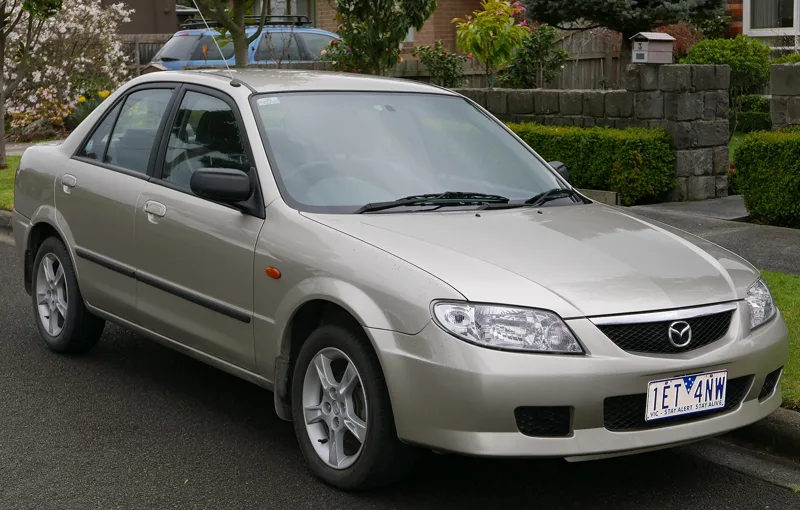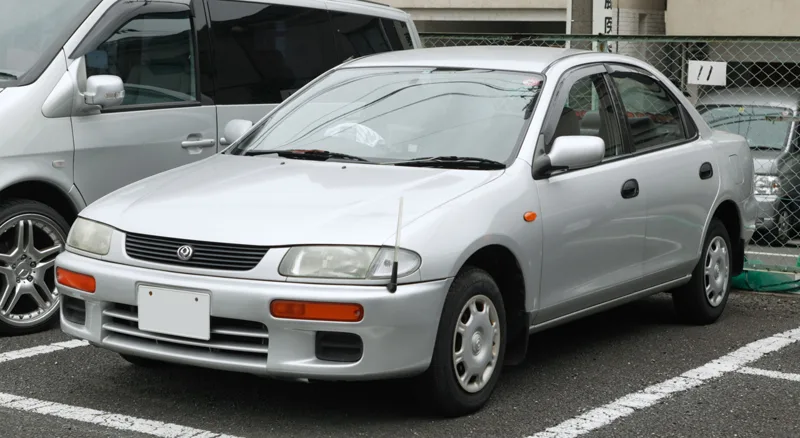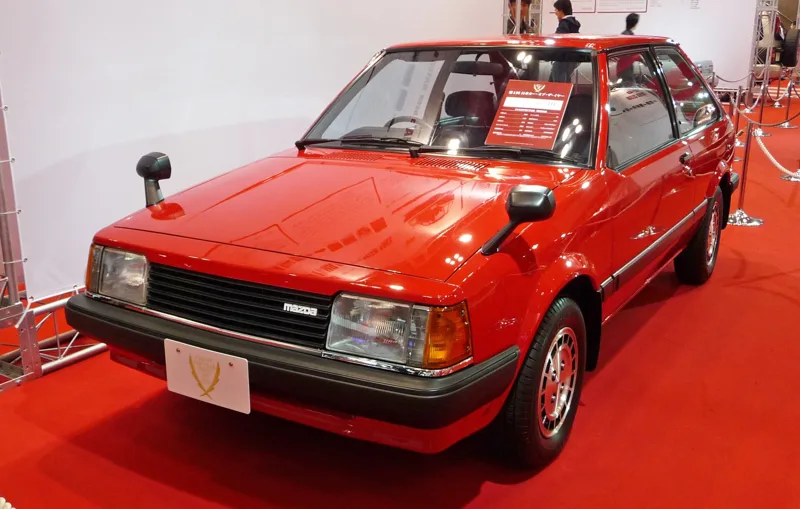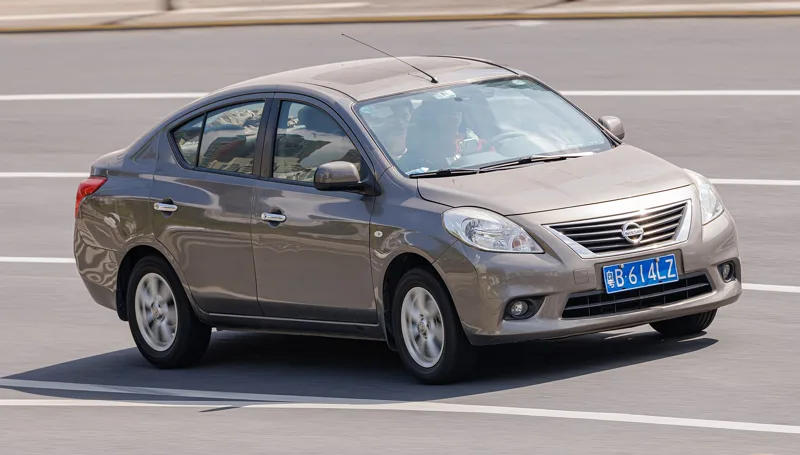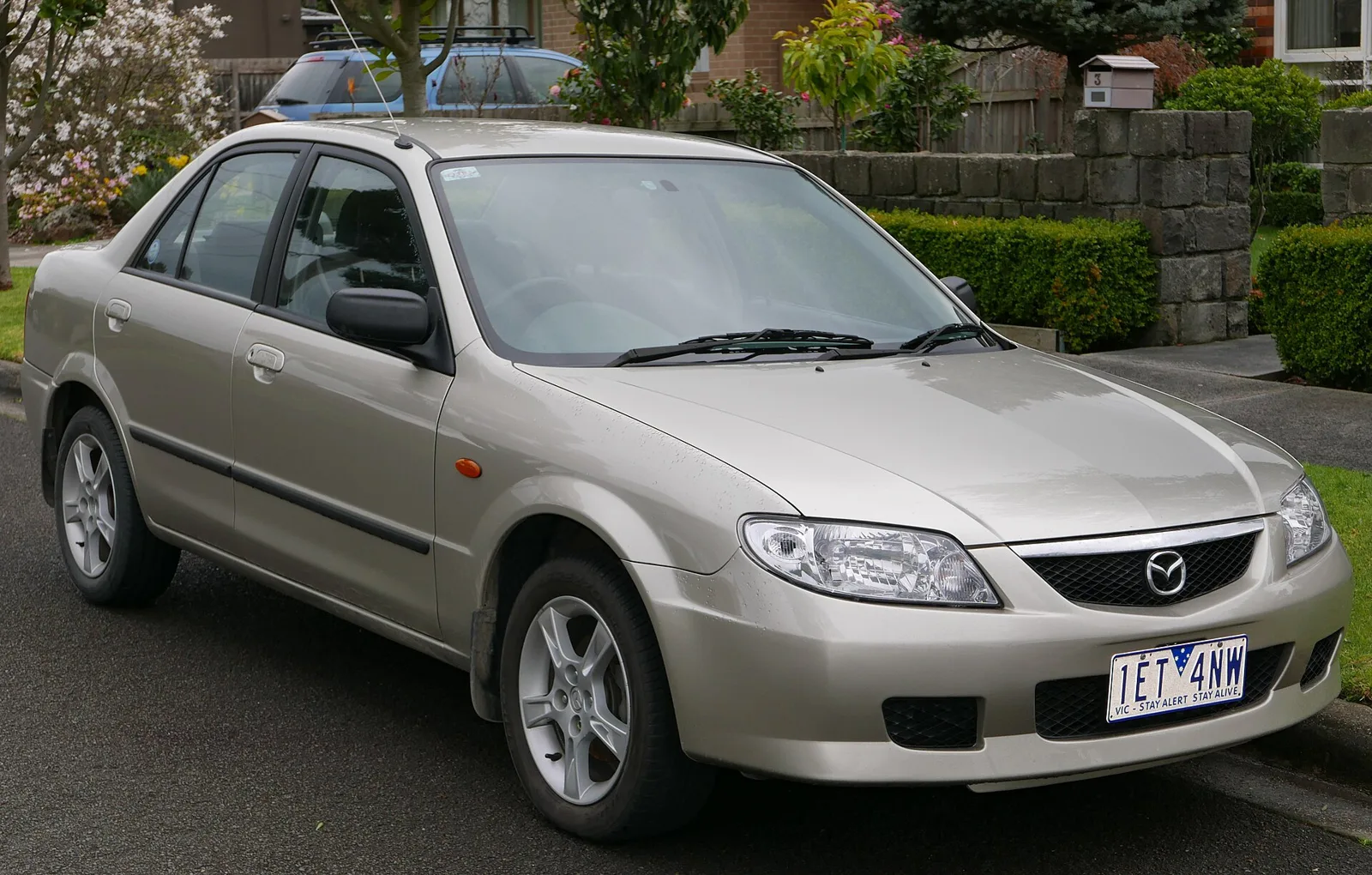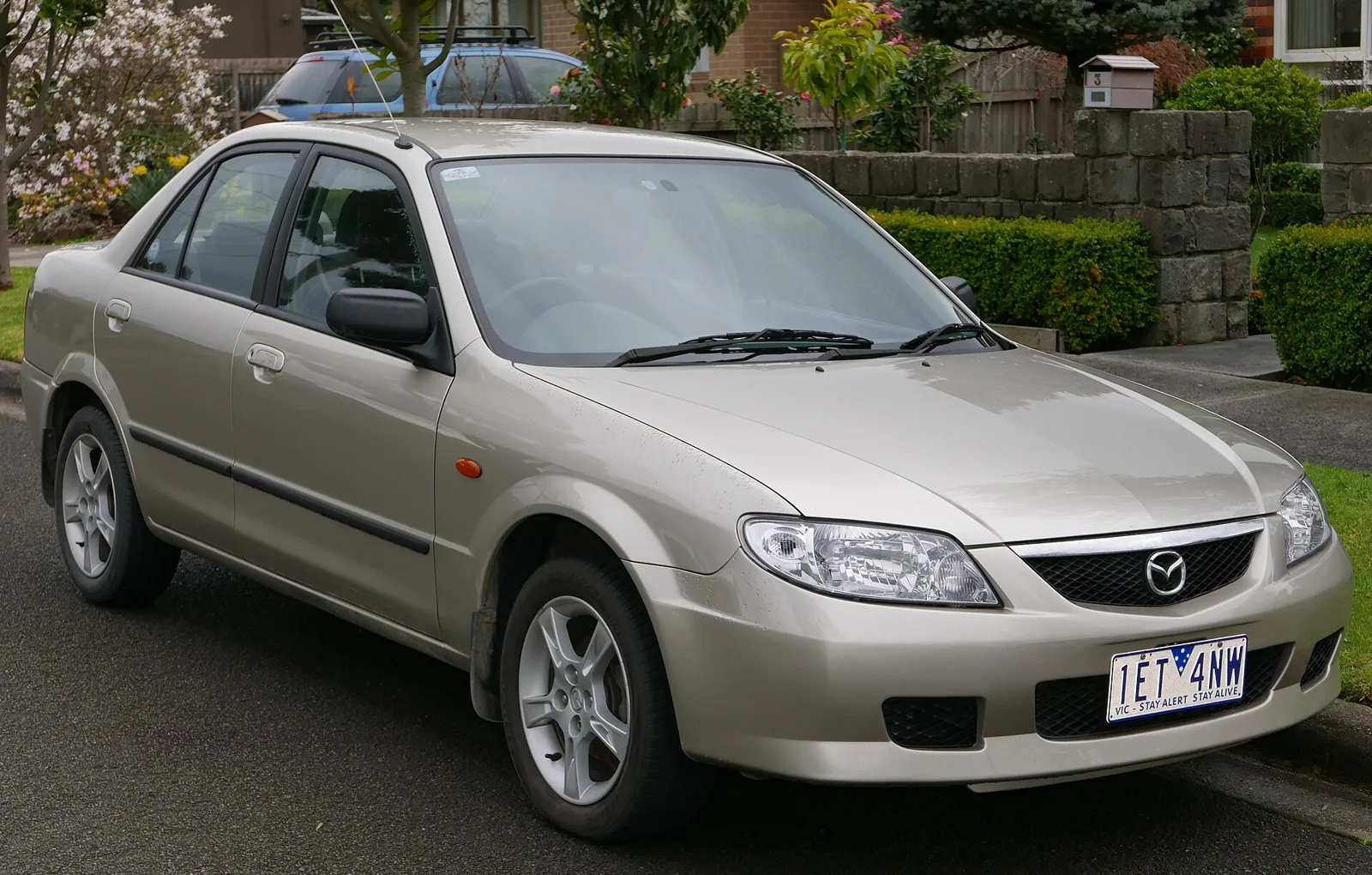
A Mazda Familia that became the 323 and a Nissan Sunny built to take on the Toyota Corolla, compared on origins, engines, sales and the markets they reached.
Mazda's Familia, marketed as the 323 in many countries, was built from 1963 to 2003. Nissan's Sunny, first built in 1966, was conceived as a rival to the Corolla and lasted until 2004.
The Mazda Familia, sold in many markets as the 323, and the Nissan Sunny were both small family cars from Japan. The Familia was built from 1963 to 2003, and the Sunny from 1966 to 2004. Both were sold in export markets under different names, and both had long production runs.
This comparison covers origins, engines, sales, export markets and later generations. Where a figure exists for only one car, the gap is shown rather than estimated, and metric figures come first with imperial values in brackets.
Did the Familia and Sunny compete?
The record ties the Sunny to the Toyota Corolla as its rival, and it was designed to compete with that car. The record does not name the Familia as a competitor for the Sunny, so the two were not direct rivals in the material.
Both cars were launched in the same decade, with the Sunny's first generation in 1966 and the Familia's in 1963. Their paths met mainly in export markets, where both were sold under local names.
Two small Japanese family cars that met in export markets, one built to chase the Corolla and one a Mazda with a rotary option.
How did the Sunny begin?
Exported as the Datsun 1000, the first Sunny appeared in September 1966 with a two-door sedan and a van body. It was built on a dedicated B series platform that drew on Nissan's experience with small cars and on engineering from the newly acquired Aichi Manufacturing.
Nissan held a national campaign in December 1965 to name the car, and after more than eight million submissions the name Sunny was chosen. It had been suggested 3,105 times, and the name was confirmed on 19 February 1966.
How did the Familia begin?
Mazda's plan was to grow with the Japanese economy, starting with the R360 kei car in 1960 and moving to the larger Mazda 700 prototype shown at the 1961 Tokyo Motor Show. The first production Familia, styled by a young Giorgetto Giugiaro at Carrozzeria Bertone, appeared in October 1963 as a commercial van.
The Familia's wagon followed in April 1964, then a four-door saloon in October and a two-door saloon in November. It was introduced in time for the 1964 Summer Olympics, and it was sold in other markets as the 800.
What engines did the two cars use?
The Sunny's launch engine was a 988 cc A10 in-line four, rated at 62 PS JIS Gross (46 kW) at 6,000 rpm. Nissan kept the displacement below 1.0 litre to stay in Japan's lowest road tax bracket and to encourage sales.
The Familia's first engine was a 782 cc aluminium four known as the white engine. By 1965 a 985 cc SOHC unit powered the 1000 coupe, and a 987 cc OHV PB engine followed in January 1967. The 1.3-litre TC of 1970 made 69 hp (51 kW; 70 PS).
In the 1970s the Sunny's second generation grew to a 1.2-litre A12 engine, and the record notes that Toyota had given the Corolla an 1,100 cc engine first. The Familia's 1.3 TC was then the rival of the Sunny's larger engine in the Mazda range.
How did the second-generation Sunny change?
The second-generation Sunny, the B110, launched in January 1970 and was known as the Datsun 1200 in export markets. It was slightly larger in all dimensions than its predecessor, and it used MacPherson strut front suspension with optional disc brakes.
In November 1970 the B110 raced for the first time at Fuji, in the TS1300 class, in a 200-mile event. In Australia and New Zealand the 1200 was rated highly as a rally car, and it won Class A at the 1970 Bathurst 500.
How did the two cars sell?
In North America the Datsun 1200 sold over 133,000 cars in the three model years from 1971 to 1973, with 89,541 coupes and 43,761 two-door sedans. The Familia's first generation sold around 400,000 units, of which 130,473 were saloons and coupes.
In the United Kingdom the Datsun 1200 became the company's best seller, rising from roughly 6,000 cars in 1971 to beyond 30,000 the year after. In South Africa the B110 sold over 275,000 units before it was discontinued in 1976.
What were the US versions like?
The US Datsun 1200 was rated the most fuel-efficient vehicle by the EPA in 1973, at 28.7 mpg-US (8.2 L/100 km; 34.5 mpg-imp). When it arrived in the US it made 69 hp (51 kW) with 70 lb ft (95 N m) of torque, and these values dropped in 1972 as anti-smog measures came in.
The Familia's US version was the 1200, offered in 1971 and again for 1973 with a 1.2-litre engine of 58 hp (43 kW; 59 PS). It was the first piston-powered Familia sold in the United States, alongside the rotary R100 coupe.
What did the rotary and coupe versions add?
The Familia Rotary, launched in July 1968, used a 982 cc 10A Wankel engine producing 100 PS (74 kW), and the coupe was sold outside Japan as the R100. The Sunny had no rotary version in the material, but it did offer a coupe that became the Sunny Coupe in Japan from February 1968.
The Sunny's coupe was sold in Australia as the Datsun 1000 Coupe, where it produced 66 PS JIS Gross (49 kW), a 4 PS increase over the lesser models. The PB110 Sunny Excellent coupe appeared in April 1971 with a 1.4-litre Nissan L engine.
How the two families spread across markets
The Familia's reach came through knock-down kits as well as the Hiroshima plant. Familias were assembled from kits in Taiwan, Indonesia, Malaysia, South Africa, Zimbabwe, Colombia and New Zealand, and some of those plants kept building the car long after it was discontinued at home. The Familia name was also used on a Mazda wagon that was a badge-engineered Nissan AD from 1994 to 2017.
The Sunny was imported and later manufactured worldwide under many names and body styles, in economical, luxury and performance packages. In Japan it was sold through a dedicated Nissan Satio Store channel, and rebadged models later reached the other Japanese dealer networks. The name survives in China and the GCC countries on a rebadged Nissan Almera.
The Sunny truck arrived in February 1967 as a light commercial version of the B10, sharing the VB10 van chassis. Its B120 successor followed in 1971 on the B110 chassis. In South Africa it was badged as the 120Y, and in New Zealand it was assembled locally in the 1980s in RoadStar and SportStar trims.
In the United Kingdom the Datsun 120Y arrived in the autumn of 1973 and helped take the brand forward. On the Familia side, Kia Motors built the Brisa at its Sohari Plant in Gwangmyeong, starting with the 1973 pickup.
What the later Sunny and Familia models added
The Sunny Excellent coupe carried a 1.4-litre Nissan L engine and a front overhang extended by 130 mm (5.1 in) to fit a larger radiator, while its wheelbase grew by 40 mm (1.6 in). The record says the engine stayed where the original A-series engine sat, which helped handling.
The Familia's second generation was the FA2 of November 1967, which kept the 987 cc pushrod engine. The 1200 of February 1968 became the export Mazda 1200, and the Presto update of April 1970 brought the 1.3-litre TC to the whole range. The Japanese vans stayed largely unchanged until 1978.
Side-by-side specifications
| Specification | Mazda 323 (Familia) | Nissan Sunny |
|---|---|---|
| Production | 1963 to 2003; replaced by Mazda3 for 2004 | 1966 to 2004 in Japan |
| Launch | Van in October 1963; saloons November 1964 | Datsun 1000 in September 1966, name chosen by public ballot |
| Export names | 800, 1000, 1200, 1300; 323 in Europe after 1977 | Datsun 1000, Datsun 1200 for export; Nissan badge from early 1980s |
| Launch engine | 782 cc aluminium four, then 985 cc SOHC and 987 cc OHV | 988 cc A10 in-line four, 62 PS JIS Gross (46 kW) |
| Later engine | 1.3 L TC, 69 hp (51 kW; 70 PS), from 1970 | 1.2 L A12; 1.4 L Nissan L in the Sunny Excellent coupe |
| Body styles | Van, wagon, saloon, coupe, pickup | Two-door sedan, van, coupe; four-door sedan from 1968 |
| Rotary | Familia Rotary R100, 10A 982 cc, 100 PS (74 kW) | None in the record |
| US model | 1200, 58 hp (43 kW; 59 PS), 1971 and 1973 | Datsun 1200, 69 hp (51 kW), 1971 to 1973 |
| Sales | About 400,000 first generation | Over 133,000 US Datsun 1200s in three years |
| Fuel economy | Not given | EPA most efficient 1973, 28.7 mpg-US (8.2 L/100 km; 34.5 mpg-imp) |
| Top speed | Not given | Not given |
| Rival | Not named in the record | Toyota Corolla |
| Later life | Pickups until 1991 in some markets | South Africa B110 to 1976, 275,000 sold |
Which buyer suits each car?
On the figures available, the Familia suits a buyer who wanted a small Mazda with a wide range of body styles and a rotary coupe option. The Sunny suits a buyer who wanted a Nissan built to match the Toyota Corolla, with strong sales in export markets such as the UK and South Africa.
Neither car is shown to be better overall. The Sunny has the stronger export sales figures in the material, while the Familia has the larger first-generation production and the rotary variant.
What does the record leave open?
Several points are missing. The record gives no top speed for either car, no acceleration time for the Familia, and no price for either model. It does not give a head-to-head sales figure for the two cars in the same market.