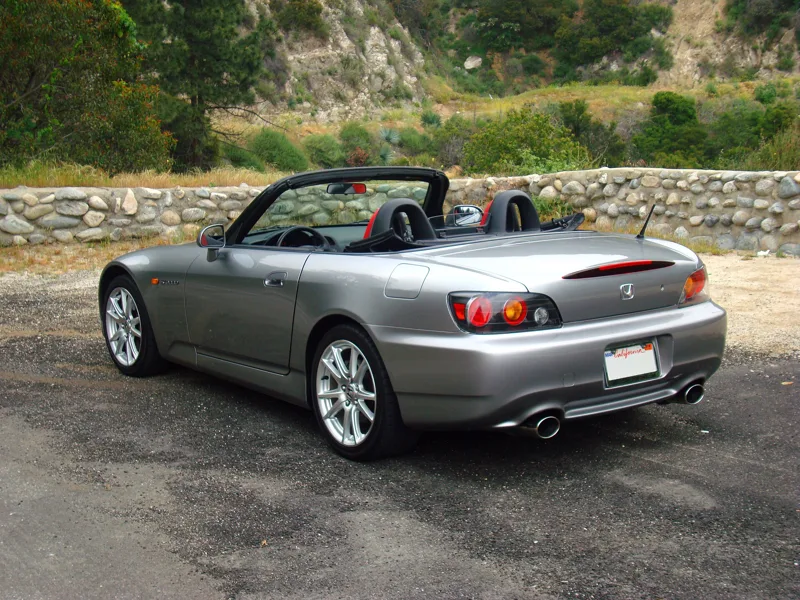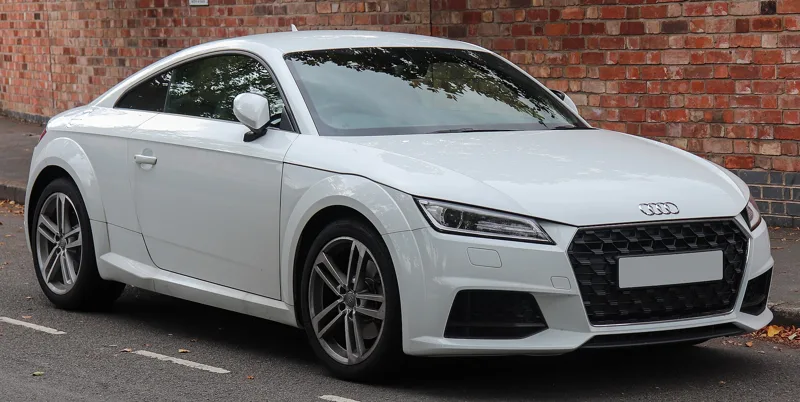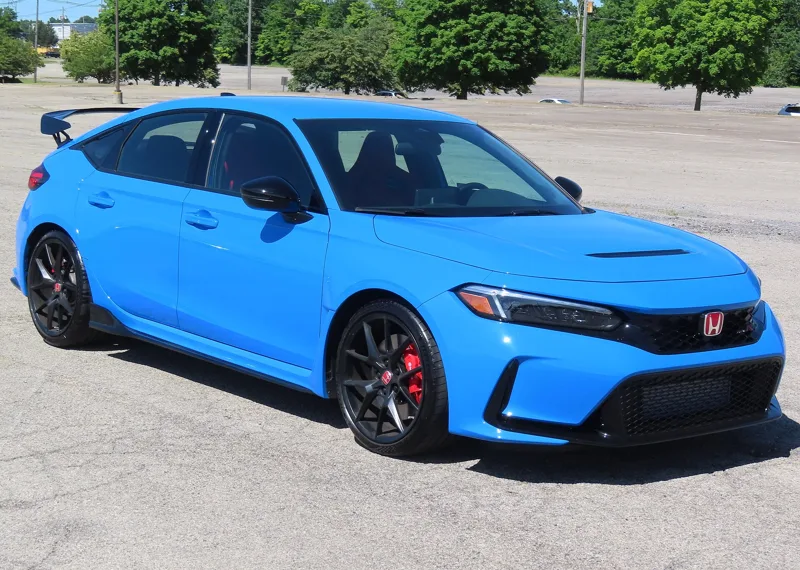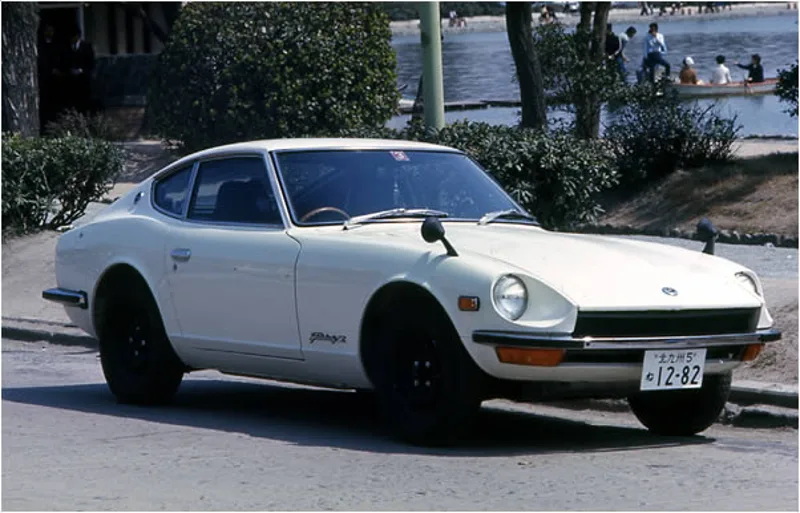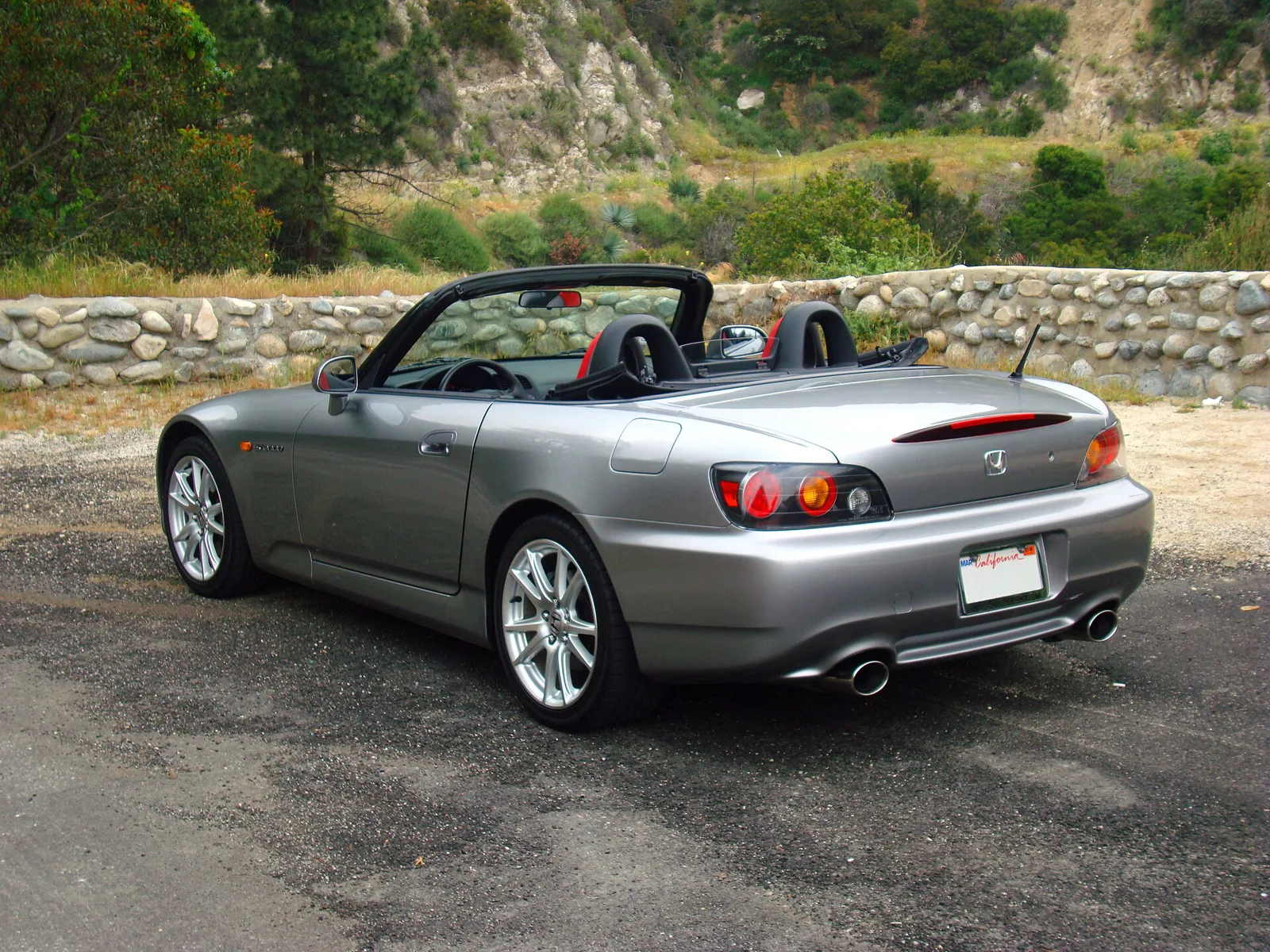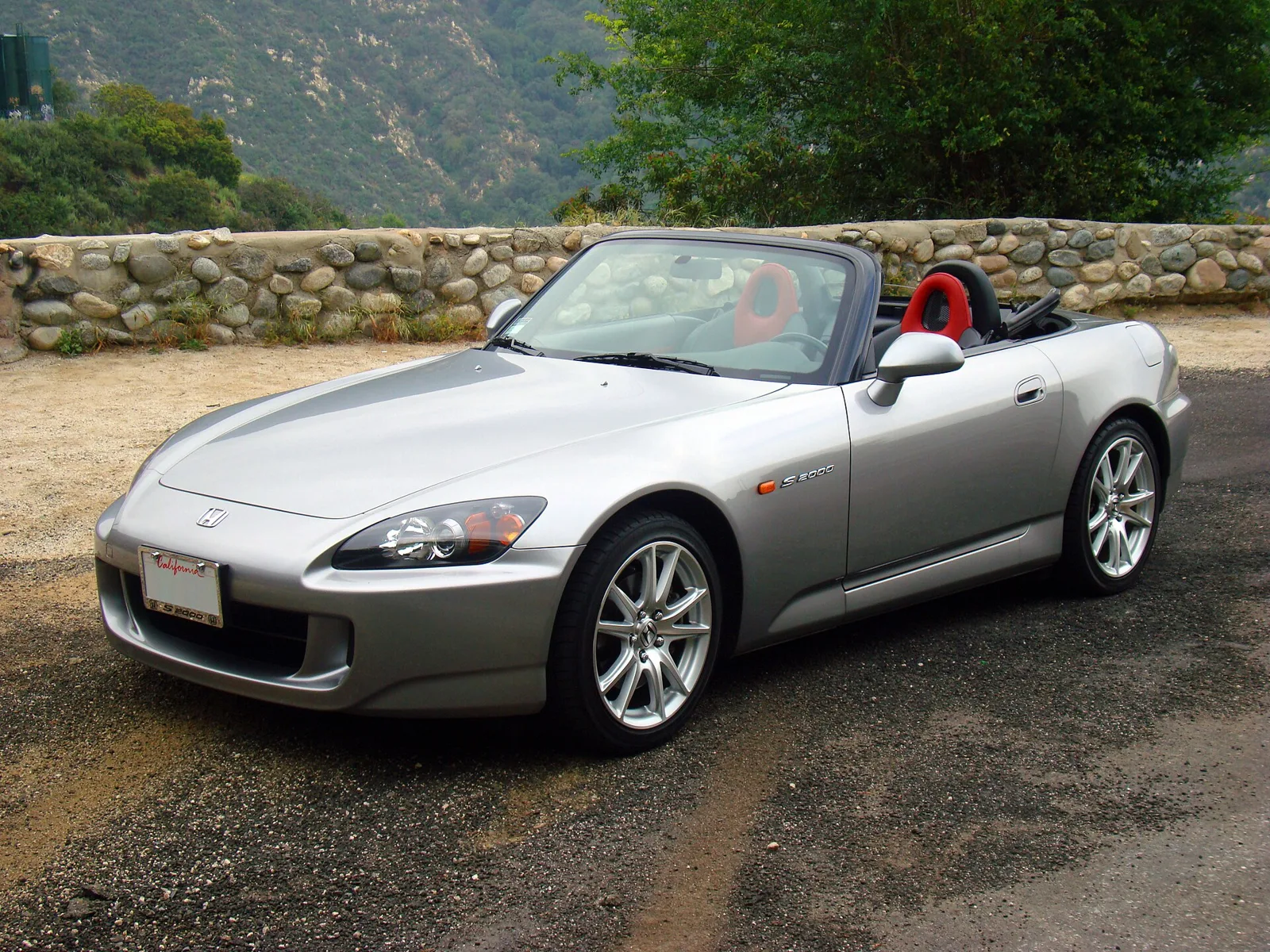
Two rear-drive two-seat roadsters from the same era, one built around a high-revving four and the other around a torquey V6 with a long Z-car heritage.
The Honda S2000 is a front-mid engine open-top sports car built by Honda from 1999 to 2009, powered by a 2.0-litre four-cylinder engine. The Nissan 350Z is a two-door two-seat sports car built by Nissan from 2002 to 2009, powered by a 3.5-litre V6 and the fifth generation of the Z-car line.
The Honda S2000 and the Nissan 350Z were both rear-drive two-seat sports cars that reached the market within a few years of each other, yet they went about the job in very different ways. The S2000 was an open-top roadster from Honda built around a high-revving four-cylinder engine. The 350Z was a coupe first, with a V6 and a long lineage as Nissan's Z-car line. Set side by side, they show a focused Japanese roadster against a more mainstream sports car with a famous name.
How did the S2000 and 350Z come about?
The S2000 began as the Sport Study Model concept at the 1995 Tokyo Motor Show, which drew on an early Honda Formula One car and the Caterham Seven. Honda launched the production car on April 15, 1999, marking its 50th anniversary, and the name reflected its two-litre engine, with the S standing for sports.
The 350Z had a more tangled birth. Nissan withdrew the 300ZX from the US market in 1996, and its design team later created a 240Z concept that was shown in 1998 and 1999. The first design was judged too retro, so the car was redesigned, and in February 2000 president Carlos Ghosn announced that it would go into production. Ghosn saw the car as a way to help the company recover. It entered production in 2002 and was sold as a 2003 model from August 2002.
A Honda four-cylinder roadster that lived for its revs, against a Nissan V6 coupe and roadster that carried the Z name forward.
Which engines did the two roadsters use?
The S2000 used a 1,997 cc inline four-cylinder DOHC VTEC engine called the F20C. Its output was 177 to 184 kW (241 to 250 PS; 237 to 247 hp), depending on the market, and its torque ran from 208 to 218 N-m (153 to 161 lb-ft). The Japanese version carried an 11.7:1 compression ratio and the highest rating in the range.
The 350Z used a 3.5-litre VQ35DE V6 from the start. Later cars gained the 300 hp Rev-up version of that engine and, in 2007, the VQ35HR, which produced 306 bhp (310 PS; 228 kW) and had a redline raised to 7,500 rpm. Where the S2000 relied on revs, the 350Z relied on cylinders and torque.
How did the two cars' gearboxes and drivetrains compare?
Both cars were rear-wheel drive, and both paired their engines with a manual gearbox. The S2000's six-speed manual had a Torsen limited-slip differential. The 350Z's manual was a six-speed as well, and its automatic was a five-speed.
Balance was the S2000's selling point. Neither car offered all-wheel drive, so both relied on their rear tyres and the balance of their chassis. Its engine sat entirely behind the front axle, which gave a 50:50 front to rear weight split and low rotational inertia, while the 350Z was a front mid-engine car with a long-hood, short-deck layout.
How did the 350Z's design come about?
The 350Z's road to production began with a 1997 Middle Sport prototype, a 2.4-litre four tuned to 200 horsepower and mounted in a front-midship layout. The 240Z concept followed in 1999. It was built around a sketch by Manny Baker at the California studio, and it was a bright orange two-seater, shown at the North American show that year before a Los Angeles appearance.
The concept used a 2.4-litre four borrowed from the Altima, and the design team created it in only 12 weeks. The original design was judged too retro, so a redesign followed, and the Z concept appeared at the Detroit show two years later with a new front end. It was then assigned the 3.5-litre VQ35DE V6 and became the 350Z.
What did the 350Z's cabin and body offer?
Ajay Panchal designed the 350Z, a front-midship, rear-drive two-seater, under Diane Allen at Nissan Design America in San Diego. It kept the long-hood, short-deck proportions of the Z-car family, with a sloping fastback roofline and bulging fenders pushed out to the corners.
Inside, brushed aluminium accents added a sporty touch. The main gauge pod sat on the steering column so that it moved with the wheel, and a triple gauge cluster recalled the 240Z. There was no conventional glove box, only storage behind and between the seats.
What did the S2000 AP2 change underneath?
The AP2 suspension was retuned to reduce oversteer, while the AP1's independent double wishbones were kept, with new spring rates, revised shock damping and altered suspension geometry to cut toe changes under cornering. The subframe was revised for rigidity, and the gearbox replaced its brass synchronizers with carbon fibre. Honda also changed the front and rear bumpers, the headlights and the tail-lights, while the Japanese, Australian and European cars kept the 2.0-litre engine.
The S2000 AP1 had independent double wishbones, electrically assisted steering and integrated roll hoops, with 16-inch Bridgestone Potenza S-02 tyres. Its dashboard drew on the look of late-eighties and early-nineties McLaren-Honda Formula One cars, a nod to Honda's racing history.
Side-by-side specifications
| Specification | Honda S2000 (AP1) | Nissan 350Z (first year) |
|---|---|---|
| Launch | April 15, 1999 | August 2002, as a 2003 model |
| Bodystyle | Open-top two-seat roadster | Coupe first; roadster from 2004 |
| Layout | Front-mid engine, rear-wheel drive | Front mid-engine, rear-wheel drive |
| Engine | 1,997 cc F20C inline four, DOHC VTEC | 3.5-litre VQ35DE V6 |
| Output | 177 to 184 kW (241 to 250 PS; 237 to 247 hp) | No figure given for the first year; 287 hp later on the 2005 model |
| Torque | 208 to 218 N-m (153 to 161 lb-ft) | No figure given for the first year |
| Transmission | Six-speed manual with a Torsen limited-slip differential | Six-speed manual or five-speed automatic |
| Weight distribution | 50:50 front to rear | No figure given |
| Trims | Base model at launch; Type V added in Japan in 2000 | Base, Enthusiast, Performance, Touring and Track |
| Later versions | AP2 with 2.2-litre F22C1; Club Racer for 2008 | 2007 VQ35HR, 306 bhp; 2005 Anniversary Edition |
| End of production | August 19, 2009 | 2009, succeeded by the 370Z |
How did the S2000 evolve into its second generation?
The 2004 model, known as the AP2 in North America, introduced 17-inch wheels and a retuned suspension, and production moved to Suzuka. The North American car received a larger F22C1 engine of 2,157 cc, which gave 177 kW (237 hp) at 7,800 rpm. Its redline dropped from 8,800 rpm to 8,000 rpm, while peak torque rose by 6 percent.
In 2006 the F22C1 reached the Japanese market with 178 kW (242 PS; 239 hp), and the model gained drive-by-wire throttle and electronic stability control. Japanese and European buyers kept the 2.0-litre engine until the end.
How did the 350Z's versions develop?
The 350Z roadster arrived in 2004 with an electrically retractable soft top, and Grand Touring trim was added to it for 2005. In 2005 Nissan launched an Anniversary Edition to mark the 240Z's birthday. It had 18-inch wheels, Brembo brakes and special badging, and it was shown at the SEMA Show on November 2.
The 2006 facelift brought bi-xenon projectors and LED rear lights, and speed-sensitive steering arrived too. and the 2007 cars gained the VQ35HR with a hood bulge that recalled the original 240Z. A Nismo 350Z followed in 2007 with only a six-speed manual, a viscous limited-slip differential and track-focused equipment.
Which special versions did each car offer?
The S2000 Club Racer arrived for the 2008 model year as the first multi-trim S2000 in the United States. It was 41 kg (90 lb) lighter than the standard car, used a lower steering ratio and stiffer suspension, and had a hard top in place of the folding roof. Honda built 668 for the 2008 model year.
Nissan's Nismo division produced several 350Z variants, including the R-Tune kit of 2004, which added headers, cams and pulleys, and the S-Tune GT of 2005. The S-Tune GT ran a 316 PS (232 kW; 312 hp) engine with a 7,200 rpm redline, and Nismo built 20 of them a month in Japan.
Did Nissan try a more extreme 350Z?
In 2006 Nissan Technical Centre Europe unveiled the 350Z GT-S concept at the Goodwood Festival of Speed. Its radial flow supercharger could be switched on or off from the dashboard. With it engaged, the VQ35DE was reported at 382.6 bhp (387.9 PS), and torque hit 424.8 N-m, all without internal changes.
The GT-S also wore a new body kit for cooling and downforce, with wider 245 and 265/40/18 tyres. Journalists tested the car, but none were put on sale.
The production Nismo 350Z arrived at the New York show on April 4, 2007. It kept the VQ35HR, but it came only with a six-speed manual, a viscous-type limited-slip differential and traction control.
Which buyer suits each car?
The S2000 suits a driver who wants a focused, lightweight roadster with a high-revving four and precise handling above all else, and who values an engine that rewards revs. The 350Z suits a buyer who wants a V6 sports car with more torque, more trim choice and a famous name that goes back to the 240Z.
The figures here do not settle which is better, so no verdict is given. The S2000 was the more specialised car, while the 350Z offered a broader range of trims, a coupe and a roadster in one line-up.
What did each car leave behind?
The S2000 left a reputation for high specific output, and Honda's Club Racer showed how far the car could be pushed on track. Nissan's Nismo team, by contrast, expanded the 350Z into a family of tuned versions. Honda claimed about 92 kW (124 hp) per litre, the highest of any naturally aspirated production car until 2010. Its production ended on August 19, 2009, the same year the 370Z arrived to succeed the 350Z.
The 350Z left a place in the Z-car story, and the 370Z took over from it in 2009. Its roadster continued alongside the 370Z for that year, and it helped keep the Z name in the American market after the 300ZX.