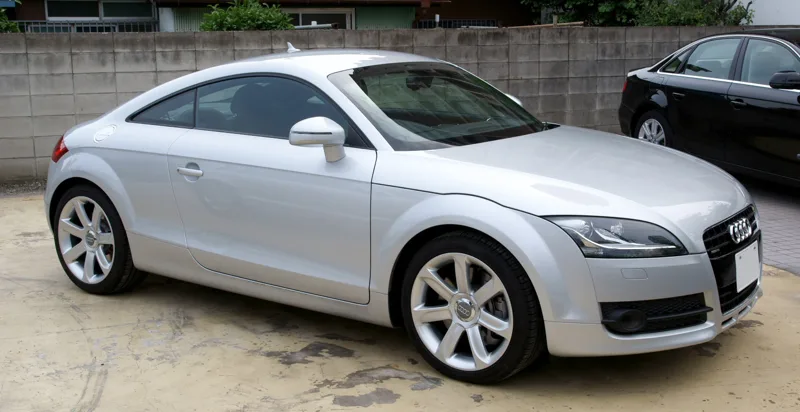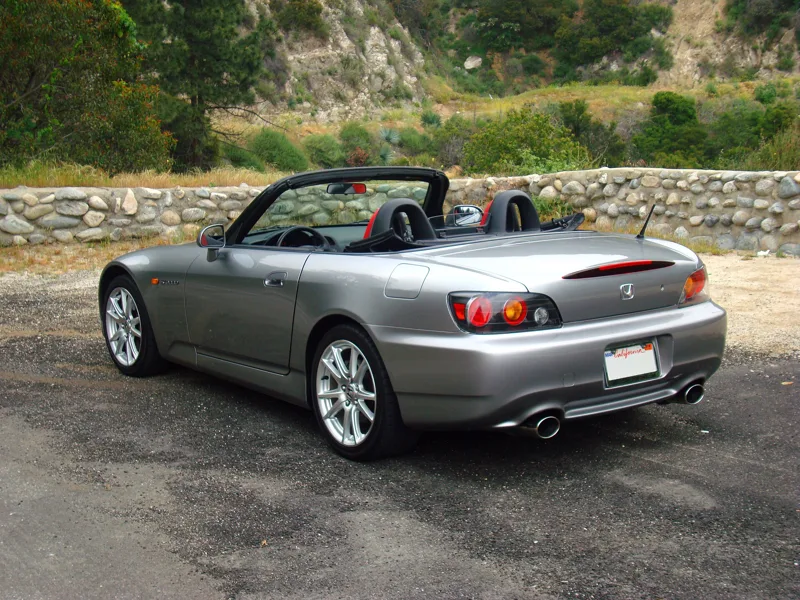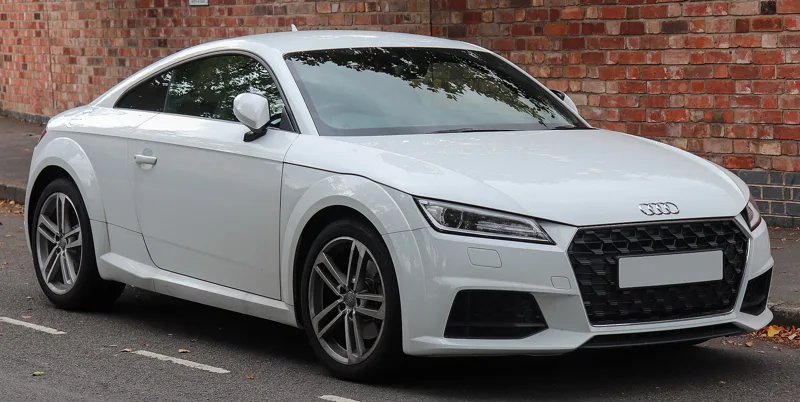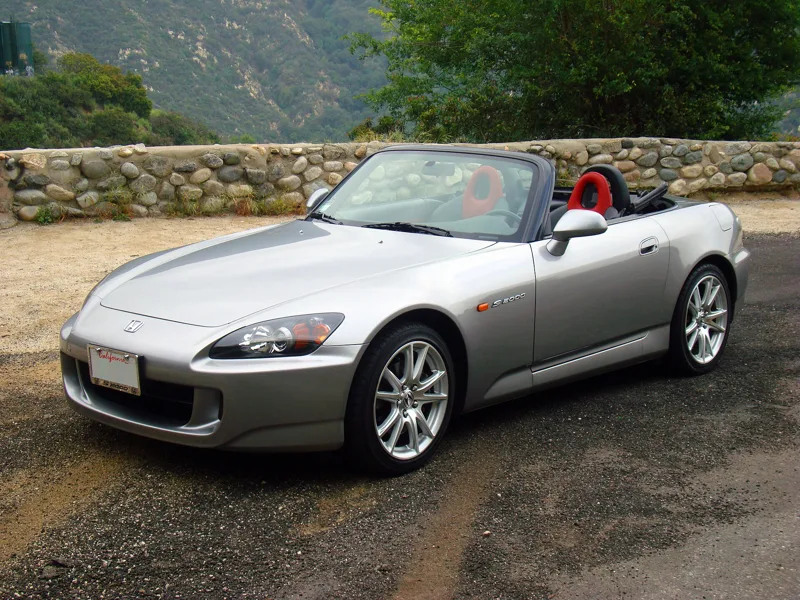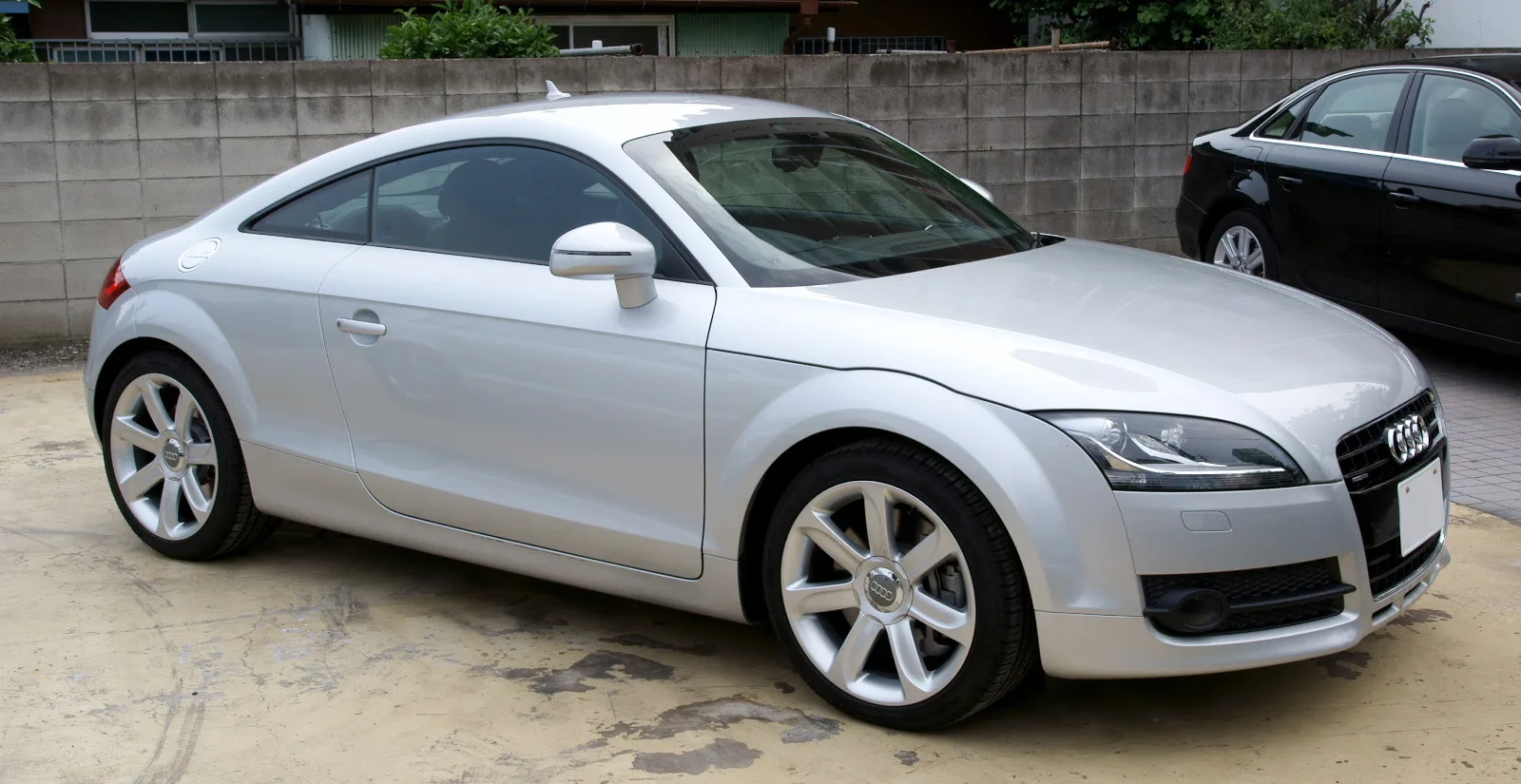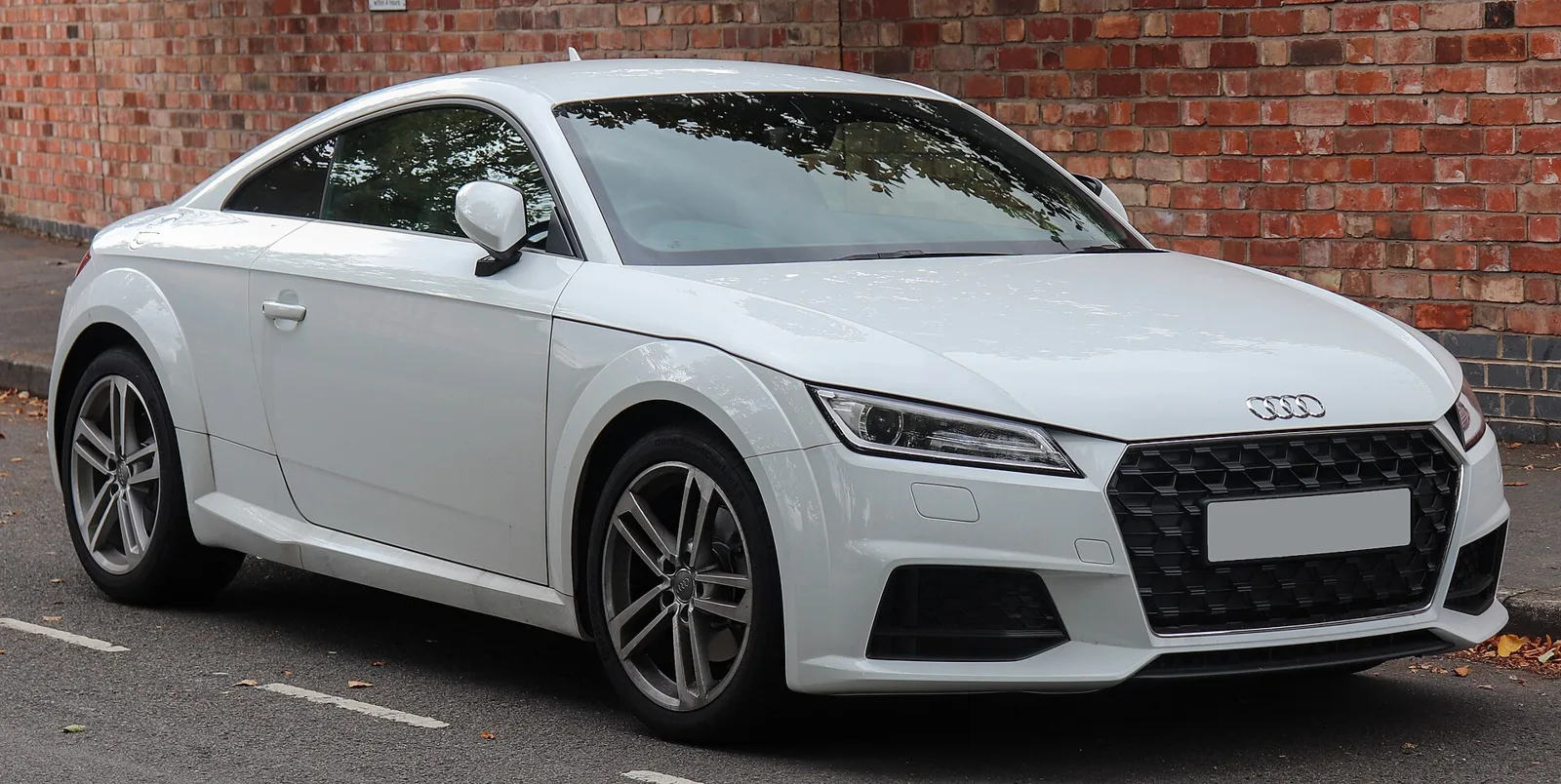
Audi's TT offered coupe and roadster bodies on a shared Volkswagen Group platform, while Honda's S2000 was a purpose-built open two-seater with a high-revving four.
The Audi TT is a sports car built by Audi from 1998 to 2023 across three generations, offered as a 2+2 coupe and a roadster. The Honda S2000 is a front-mid engine open-top sports car built by Honda from 1999 to 2009, with a naturally aspirated four-cylinder engine.
The Audi TT and the Honda S2000 were both small sports cars that aimed at drivers who wanted more than comfort, yet they were built on opposite principles. The TT was a German coupe and roadster built on Volkswagen Group platforms and shared with cars such as the Audi A3. The S2000 was an open-top, purpose-built two-seater from Honda with a front-mid engine and rear-wheel drive. Set side by side, they show a practical premium sports car against a more focused roadster.
How did the TT and S2000 come about?
The TT's styling began in spring 1994 at the group's California design studio, and the design was first shown as a concept at the 1995 Frankfurt Motor Show. Its name came from the Isle of Man TT motorcycle race, where NSU, a predecessor of Audi, had enjoyed success. The production coupe went on sale in September 1998, and the roadster followed in August 1999.
The S2000 began as the Sport Study Model concept shown at the 1995 Tokyo Motor Show, which drew inspiration from an early Honda Formula One car and the Caterham Seven. Honda launched the production version on April 15, 1999, to mark its 50th anniversary, and it named the car after the two-litre engine, with the S standing for sports.
A quattro-capable coupe and roadster on shared platforms against an open two-seater with a high-revving four built for the driver.
How did the two cars' layouts differ?
The TT used a transverse front engine, with either front-wheel drive or Haldex quattro all-wheel drive, and it had MacPherson struts at the front. It shared its layout with other models on the Volkswagen Group platforms, which kept costs down and made the TT a familiar car under the skin.
The S2000 used a front-mid engine layout that drove the rear wheels. Its compact engine sat entirely behind the front axle, which gave the car a 50:50 front to rear weight distribution and lower rotational inertia. Honda's team had Japanese and European testing carried out on race tracks and mountain roads.
How did the early TT and S2000 engines compare?
The first TT used a 1.8-litre turbocharged four with 20 valves, offered in two states of tune. The milder tune used a smaller K03 turbocharger, while the stronger one fitted a larger K04 unit. Haldex quattro was optional on the 180 and standard on the 225.
The early S2000 used a 1,997 cc inline four-cylinder DOHC VTEC engine called the F20C. Its outputs ranged from 177 to 184 kW (241 to 250 PS; 237 to 247 hp), depending on the market, with torque of 208 to 218 N-m (153 to 161 lb-ft). The Japanese version was the most powerful, at 250 PS, and it carried an 11.7:1 compression ratio.
How did the TT's V6 and DSG change the line-up?
In early 2003 the TT gained a 3.2-litre VR6, rated 250 PS (247 bhp; 184 kW), with torque of 320 N-m (236 lb-ft), and it came as standard with quattro. In July 2003 Audi offered a six-speed dual-clutch gearbox, the Direct-Shift Gearbox, which cut shift times and was the first automatic option for the TT.
The S2000's six-speed manual had a Torsen limited-slip differential and was the only gearbox offered. Honda's approach was to keep the driver in charge, and the car rewarded a driver who kept the engine on the boil.
How did the S2000 get faster in its second generation?
The 2004 model, known as the AP2 in North America, introduced 17-inch wheels and a retuned suspension, and production moved to Suzuka. The North American car received a larger F22C1 engine of 2,157 cc, which gave 177 kW (237 hp) at a lower 7,800 rpm. Peak torque rose by 6 percent, while the redline dropped to 8,000 rpm.
Japanese and European buyers kept the 2.0-litre engine, and the F22C1 reached the Japanese market in 2006 with 178 kW (242 PS; 239 hp). The 2006 model also brought drive-by-wire throttle and electronic stability control.
Which later TT versions added diesel and new engines?
Audi launched the second-generation TT on 6 April 2006, built on the A5 (PQ35) platform, mixing aluminium up front with steel at the back for a balanced weight split. The car grew by five inches in length and three in width over its predecessor, and production began in August 2006. Audi had earlier previewed the design as a Shooting Brake concept at the 2005 Tokyo Motor Show.
Early petrol engines were a 1.8-litre EA888 turbo, available first in Germany, and the familiar 2.0-litre TFSI, with the carried-over 3.2-litre VR6 at the top. The 2.0 TFSI quattro arrived in the 2009 model year, and the TT was also offered as a 2.0 TDI quattro after its launch at the 2008 Geneva Motor Show, the first diesel TT in Europe.
Side-by-side specifications
| Specification | Audi TT (Mk1) | Honda S2000 (AP1) |
|---|---|---|
| Launch | Coupe in September 1998; roadster in August 1999 | April 15, 1999 |
| Bodystyles | 2+2 coupe and two-seat roadster | Two-seat open-top roadster |
| Layout | Transverse front engine, front-wheel drive or quattro | Front-mid engine, rear-wheel drive |
| Engine | 1.8-litre turbocharged four; 3.2-litre VR6 from 2003 | 1,997 cc F20C inline four, DOHC VTEC |
| Output | Two tunes of the turbo four, with the VR6 at 247 bhp | 177 to 184 kW (241 to 250 PS; 237 to 247 hp) |
| Torque | 320 N-m (236 lb-ft) for the VR6 | 208 to 218 N-m (153 to 161 lb-ft) |
| Transmission | Five-speed manual; six-speed dual-clutch from 2003 | Six-speed manual with a Torsen limited-slip differential |
| Weight distribution | No figure given | 50:50 front to rear |
| Drag coefficient | 0.35 | No figure given |
| Special edition | quattro Sport, 1,165 built in 2005 | Club Racer for 2008, 668 built in the model year |
| Production | 662,762 across three generations; last built in November 2023 | Production ceased on August 19, 2009 |
What lawsuits did the TT face?
In June 2007 a class action was filed against Volkswagen Group of America over timing belts on 1999 to 2003 model year Audi and Volkswagen cars with the 1.8-litre turbo engine, which were said to fail before the service interval. A class-wide settlement was later approved in preliminary form in May 2008.
A separate settlement in May 2008 covered allegedly defective instrument clusters on 2000 to 2004 and 2005 model year TTs. Owners could claim repairs, replacement or cash, and were given a warranty extension of two years on the instrument cluster.
How did the TT's safety problems and fixes unfold?
Early cars were linked to fatal crashes at very high speed, sudden lane changes and sharp bends. Audi recalled both the coupe and roadster in late 1999 and early 2000 to improve handling at high speed, adding Electronic Stability Programme or Anti Slip Regulation, a rear spoiler and suspension changes.
Audi also modified the control arms and firmer shock absorbers on the front and rear. The original TT's drag coefficient of 0.35 was on a par with rivals like BMW's Z4 and Mazda's MX-5, but its high-speed stability needed these fixes.
What did the TT quattro Sport add?
In 2005 Audi released a coupe-only limited edition called the quattro Sport, known as the Club Sport in Europe. Only 1,165 were built, and it used a 240 PS (177 kW; 237 hp) version of the 1.8-litre turbo. The car lost 75 kg (165 lb), which brought its weight to 1,390 kg (3,064 lb).
The quattro Sport reached 0 to 62 mph (0 to 100 km/h) in 5.9 seconds, and its top speed was capped electronically at 155 mph (249 km/h). Its weight was saved by removing the spare wheel, rear seats and standard air conditioning, and it wore Recaro bucket seats and 18-inch wheels with a 15-spoke design.
How did the S2000 Club Racer differ?
The 2008 model year brought the first multiple trim levels in the US, with the Club Racer as a track-oriented version. It was 41 kg (90 lb) lighter than the standard car and used a lower steering ratio, a revised exhaust and stiffer suspension. Honda built 668 for the 2008 model year.
The Club Racer's bodywork was wind-tunnel tested and claimed to cut the overall coefficient of lift by 70 to 80 percent. It had a hard top in place of the folding soft top, and a light on the instrument panel flashed when the engine reached peak output.
How did the S2000 change in Japan?
Honda announced the S2000 Type V in Japan on July 7, 2000. Its variable gear ratio steering changed the ratio with speed and steering angle, which made parking easier and cornering sharper. The lock-to-lock steering ratio fell to 1.4 turns, compared with 2.4 on the base car.
Type V cars also had revised dampers, stabilisers and limited-slip differentials to complement the steering. The Type V was retired when the Type S arrived in 2007. Honda later showed a 20th anniversary restomod prototype of the AP1 at the 2019 Tokyo Auto Salon.
Which buyer suits each car?
The TT suits a buyer who wants a premium sports car with a choice of body, all-wheel drive for grip and a family of platform-mates that make maintenance simpler. The S2000 suits a driver who wants a focused roadster with a high-revving engine and precise handling above practicality.
The figures here do not settle which is better, so no verdict is given. The TT offered more variety in engines and gearboxes, while the S2000 was more narrowly focused on a single engine and a manual gearbox.
What did each car leave behind?
The TT left a long run of 662,762 cars across three generations, and it earned a nomination as North American Car of the Year for 2000. Its name carries a nod to the TT motorcycle race that NSU once contested.
The S2000 left a reputation for high specific output. Honda claimed about 92 kW (124 hp) per litre, the highest of any naturally aspirated production car until 2010. Production ended on August 19, 2009, and Honda later made parts for a 20th anniversary restomod prototype available to owners.