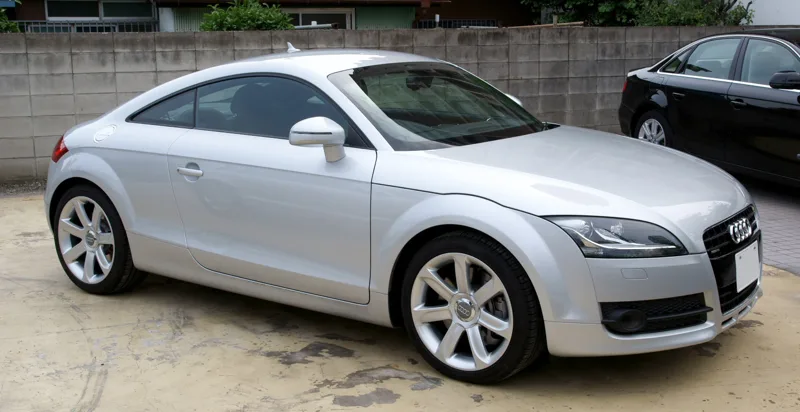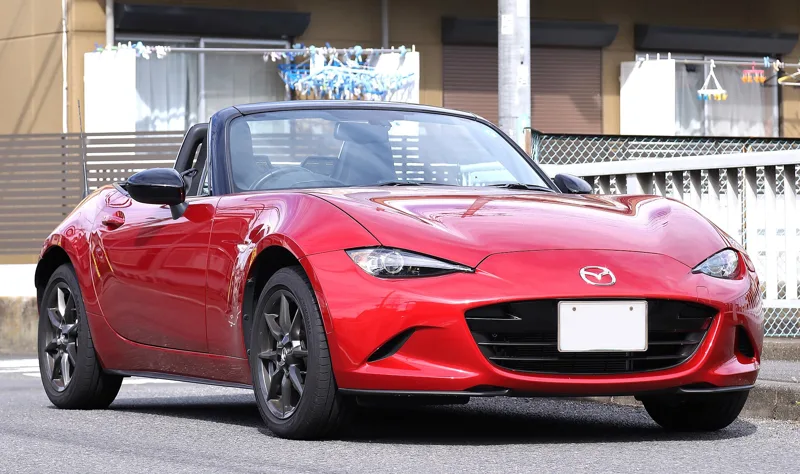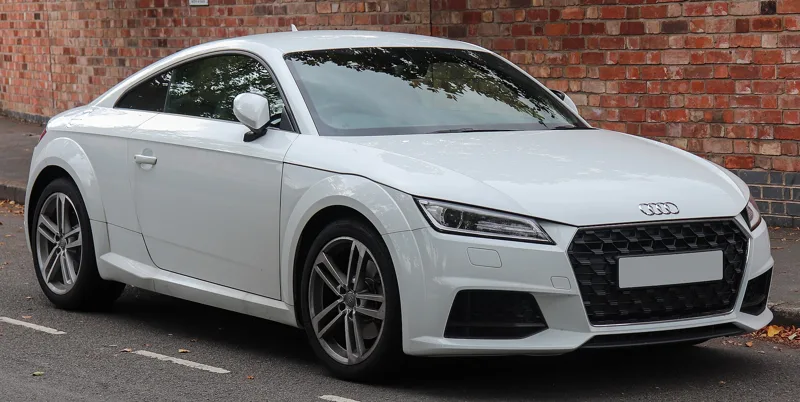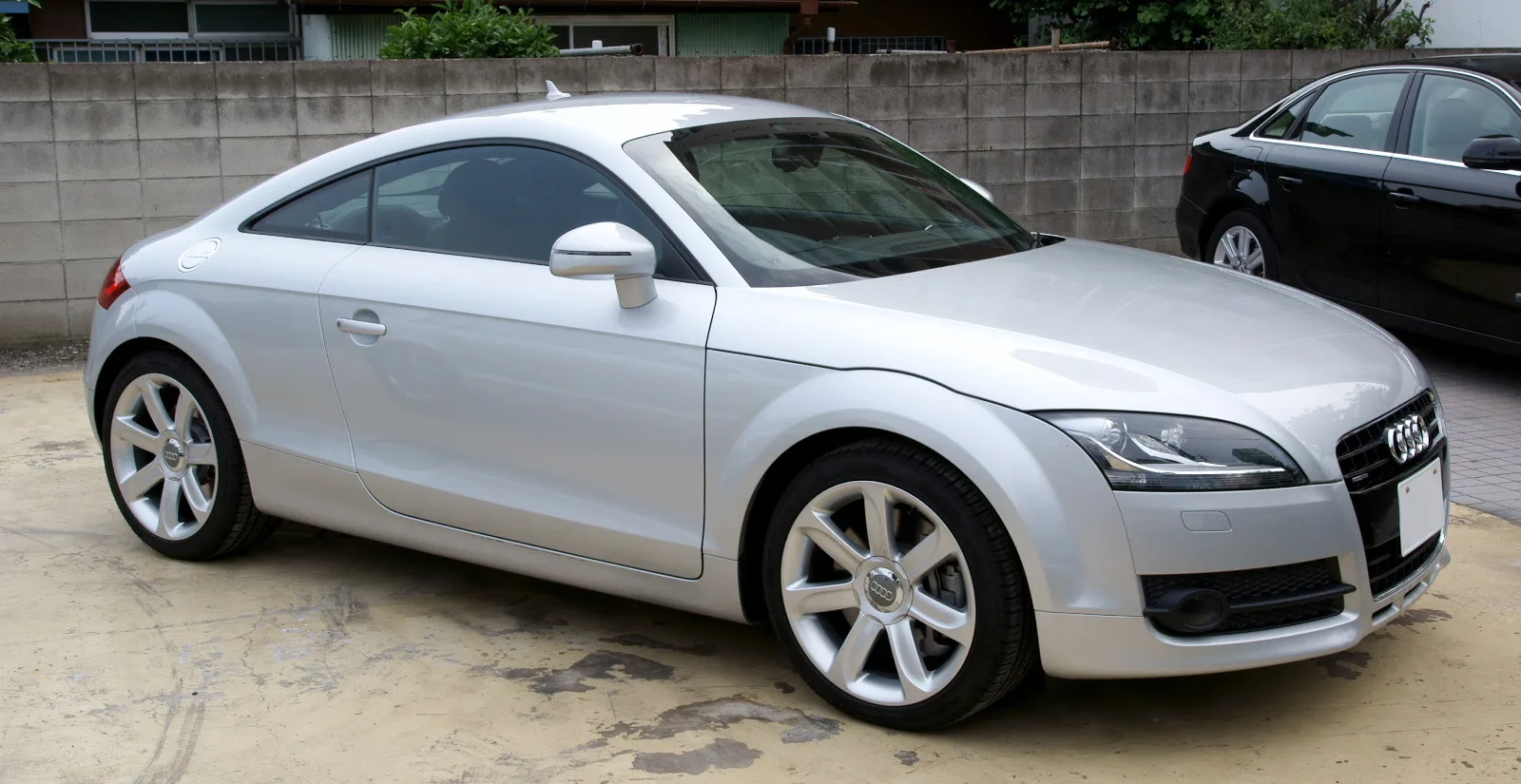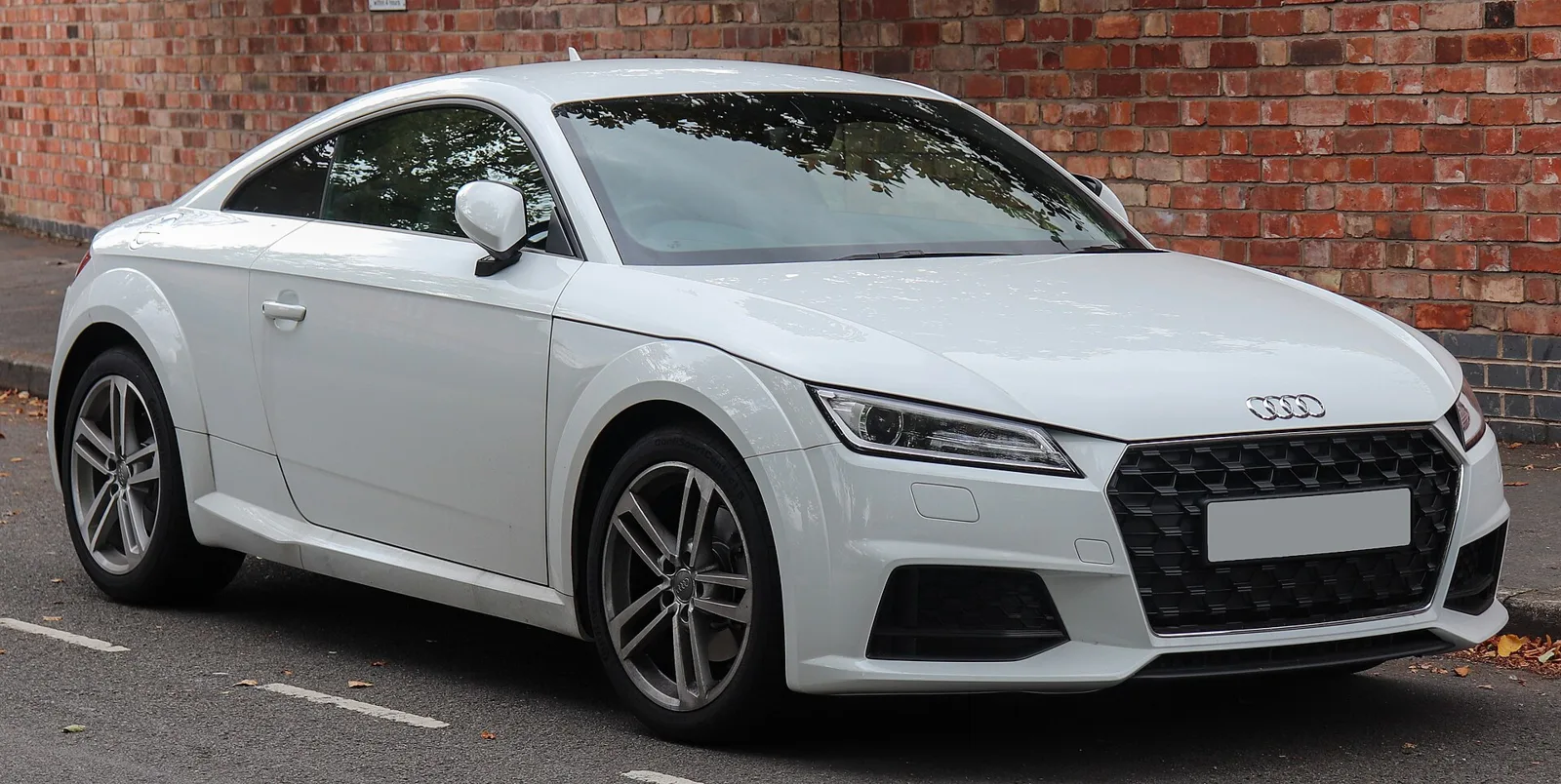
Two sporting roadsters from different traditions: the Volkswagen Group-based Audi TT and Mazda's lightweight MX-5, compared on design, engines, weight, production and awards.
The Audi TT and Mazda MX-5 were sporting roadsters with overlapping production years in the late 1990s and early 2000s. The TT offered a 2+2 coupe, quattro drive and a 3,189 cc VR6, while the MX-5 offered a lighter two-seat roadster with 1.6 L and 1.8-litre engines.
The Audi TT and the Mazda MX-5 were both sporting roadsters, and the TT's drag figure was set alongside the MX-5's. The TT came from Volkswagen Group platforms and could be ordered with quattro four-wheel drive, while the MX-5 was a lightweight two-seat Mazda built as a successor to small British roadsters such as the MGB.
Were the Audi TT and Mazda MX-5 really rivals?
Yes, at least on the aerodynamic comparison. The TT's drag coefficient of 0.35 was described as similar to those of the BMW Z4 and the Mazda MX-5. Both cars offered open roadster bodies with a sporting purpose, but the TT came from a Volkswagen Group design and the MX-5 was a dedicated Mazda project.
The MX-5 was introduced in February 1989 at the Chicago Auto Show, while the TT's coupe followed in September 1998. Their production years overlapped for much of the late 1990s and early 2000s. The first TT generation was built until June 2006, and the MX-5 second generation, the NB, was sold from 1998 for the 1999 model year.
Two sporting roadsters from different traditions, one built on Volkswagen Group platforms and one a lightweight Mazda, meeting on the same buyer's shopping list.
How did the two cars come about?
The TT's styling began in spring 1994 at the Volkswagen Group Design Center in California, and the car was first shown as a concept in 1995. The MX-5 took longer, beginning with a 1976 meeting between Bob Hall and Mazda's Kenichi Yamamoto and Gai Arai, then a design competition that started in 1983.
Design credit for the TT goes to J Mays and Freeman Thomas, and laser beam welding delayed the first-generation introduction. The name comes from the Isle of Man TT motorcycle race, where NSU, Audi's predecessor, competed.
The MX-5 story moved forward when the California team proposed a front-engine, rear-wheel-drive design codenamed Duo 101. It won at the August 1984 full-scale clay model round. The prototype V705 was completed in August 1985 with a 1.4 L Familia engine, and the codename changed to P729 after final approval.
Mazda's design credo was Jinba ittai, meaning unity of horse and rider, and the Lotus Elan served as the design benchmark.
Where were the TT and MX-5 built?
The first two TT generations were assembled by Audi's Hungarian subsidiary, while the MX-5 was produced at Mazda's Hiroshima plant. Across its life, the TT reached 662,762 cars, with the last one built in November 2023. The second generation, Type 8J, debuted on 6 April 2006 on the PQ35 platform.
The Mk2 used aluminium front bodypanels with steel at the rear, and it was five inches longer and three inches wider than its predecessor. The MX-5's production milestones, from the 250,000th car to the one millionth, are covered in the sales section below.
What engines did each car offer?
The first TT offered 180 PS and 225 PS versions of a 1.8-litre turbo four, with quattro optional on the first and standard on the second. The MX-5 started with a 1.6 L engine rated at 116 horsepower and moved to a 1.8-litre engine as standard in most markets from late 1993.
The 180 PS engine produced 132 kW (178 hp), and the 225 PS engine produced 165 kW (222 hp). In early 2003 a 3,189 cc VR6 arrived, rated at 250 PS (247 bhp; 184 kW), with 320 N-m (236 lb-ft) of torque and quattro as standard.
The second-generation TT used the 1.8-litre EA888 TFSI and the 2.0-litre TFSI. The 2.0 TDI quattro launched at the 2008 Geneva Motor Show, adding a diesel option to the Mk2 line-up, and Magnetic Ride was available as an option on the same generation.
On the MX-5 side, the NB added variable-valve timing to its 1.8-litre engine, rated at 106 kW (142 hp) in 2001. The Mazdaspeed version produced 133 kW (178 hp) from its turbo engine in 2004 and 2005 only, and the 2019 update of the fourth generation brought 135 kW (181 hp).
How did each car change across its generations?
The TT ran through three generations between 1998 and 2023, with the Mk1 Type 8N lasting until June 2006 and the Mk2 Type 8J covering 2006 to 2014. The MX-5 has gone through four generations, from the NA of 1989 to 1997 to the ND that arrived in 2015. Both cars changed their engines, bodies and equipment across those runs.
The Mk1 launched as a coupe in September 1998, the roadster followed in August 1999, and factory production began in October 1998. Audi added a six-speed DSG dual clutch gearbox from 2003 onwards, which changed how the TT could be driven.
The Mk2 moved to aluminium front bodypanels and was built on the PQ35 platform. Its petrol range centred on the EA888 1.8-litre unit and the 2.0-litre TFSI, and the 2.0 TDI quattro gave it a diesel option from 2008.
On the MX-5 side, the NB followed in 1998 for the 1999 model year, and the retractable headlamps were dropped for pedestrian safety testing. The NC arrived in 2005 with a folding hard top, and the ND from 2015 brought a Retractable Fastback variant.
Both cars therefore changed most in their engines, bodies and equipment, and the buyer section below shows how those changes affect the choice between them.
How do the two cars compare on paper?
| Feature | Audi TT | Mazda MX-5 |
|---|---|---|
| Launch | Coupe in September 1998; roadster in August 1999 | Introduced February 1989 at the Chicago Auto Show |
| Generations | Mk1 Type 8N to June 2006; Mk2 Type 8J from 2006 to 2014 | NA 1989 to 1997; NB from 1998; NC 2005 to 2015; ND from 2015 |
| Bodystyles | 2+2 coupe and two-seater roadster | Two-seat roadster; Power Retractable Hard Top on the NC; Retractable Fastback on the ND |
| Drivetrain | Front-wheel drive or quattro four-wheel drive | Not reported |
| Engines | 1.8-litre turbo four; 3,189 cc VR6 | 1.6 L at launch; 1.8-litre from late 1993; Mazdaspeed 133 kW (178 hp) |
| Weight | Quattro Sport 1,390 kg (3,064 lb); Mk1 base weight not reported | Curb weight under 1,100 kg (2,500 lb) |
| Sporting version | Quattro Sport, 2005, 1,165 built | Mazdaspeed MX-5, 2004 and 2005, 6.7 seconds to 97 km/h |
| Production | 662,762 built | More than one million sold; NA 228,961 units |
| Recognition | Car and Driver Ten Best lists for 2000 and 2001 | Car and Driver Ten Best 17 times; World Car of the Year 2016 for the ND |
On the figures given, the TT offered more body and drivetrain options, while the MX-5 has the lower published weight and the larger production total.
Which car was quicker in a straight line?
The figures here do not settle which car was quicker overall, because they describe different versions and slightly different benchmarks. The 2005 Quattro Sport reached 100 km/h in 5.9 seconds, while the Mazdaspeed MX-5 reached 97 km/h in 6.7 seconds.
The Quattro Sport was a coupe-only limited edition of 1,165 cars, with 240 PS (177 kW; 237 hp) and an electronically limited top speed of 155 mph (249 km/h). The Mazdaspeed was built only for 2004 and 2005.
The Mazdaspeed time is quoted to 97 km/h (60 mph), while the TT figure uses 62 mph (100 km/h). The two numbers are close but not identical benchmarks, so a buyer should read them as indicative rather than a verdict.
How heavy were the two cars?
The MX-5 had a curb weight under 1,100 kg (2,500 lb), and the first-generation car weighed 940 kg (2,070 lb) at introduction. The Quattro Sport weighed 1,390 kg (3,064 lb), which was 75 kg lighter than the standard coupe it was based on.
The base TT weight is not reported here, so the two cars cannot be compared at the same level of equipment. The MX-5's roughly 50:50 front-to-rear weight balance is a point the handling section returns to.
How did the design and handling differ?
The TT's curved shape gave it a drag coefficient of 0.35, but high-speed incidents led to changes. The MX-5 owed its design cues to the Lotus Elan and kept its curb weight under 1,100 kg.
Audi head of design Marc Lichte credited Bauhaus for the TT's curved outline, which was unusual at the time. Early TT cars were linked to fatalities at speeds above 112 mph (180 km/h), and the late 1999 to early 2000 recall added ESP, ASR and a rear spoiler.
The second-generation TT offered Magnetic Ride, which uses magneto rheological dampers, and a rear spoiler that deploys at 125 km/h (78 mph).
The NB dropped the retractable headlamps for pedestrian safety testing, a change that marked the second generation. The MX-5 is not listed with a comparable recall in this history.
Which buyer suits each car?
The TT suits a buyer who wants a 2+2 coupe or a roadster, with a choice of front-wheel or quattro drive and, from 2003, the DSG dual clutch gearbox. The MX-5 suits a buyer who wants a two-seat roadster with a light curb weight and a simple base specification.
A TT buyer gets a 2+2 seating arrangement in the coupe, a Haldex quattro system as standard on the 225 PS engine, and the option of Magnetic Ride on the second generation. The 3,189 cc VR6 added a higher-output choice for buyers who wanted more power.
An MX-5 buyer gets a car whose early NA base models lacked power steering and air conditioning. Later generations added a Power Retractable Hard Top on the NC and a Retractable Fastback on the ND, which changed the choice of roof for buyers.
On the facts given, neither car is a clear winner. The wider body and drivetrain range points one way, and the lighter two-seater points the other.
How did sales and recognition compare?
The TT built 662,762 cars before production ended in November 2023. The MX-5 sold more than one million units, and Guinness named it the best-selling two-seat sports car in 2000, when total production stood at 531,890 units.
The first MX-5 generation sold 228,961 units between 1989 and 1997. The 250,000th car rolled out on 9 November 1992, and the one millionth came on 22 April 2016.
The TT's recognition included a North American Car of the Year nomination for 2000, along with Car and Driver Ten Best lists for 2000 and 2001. The MX-5 won Wheels Car of the Year for 1989, 2005 and 2016, and it made the Car and Driver Ten Best list 17 times.
Set side by side, the TT's total covers production from 1998 to 2023, while the MX-5's one millionth car came in April 2016, after the ND had entered production in 2015. The figures given do not split the TT total by generation, so the Mk1 and Mk2 cannot be compared on volume.
Did either car go racing?
The MX-5 became a racing staple, with lightly modified cars forming the basis of many spec racing series. The TT's only motorsport link in this history is a 2.7T concept car from Quattro GmbH.
The concept produced 280 kW (381 PS; 375 hp), and it stayed a concept rather than a production model.