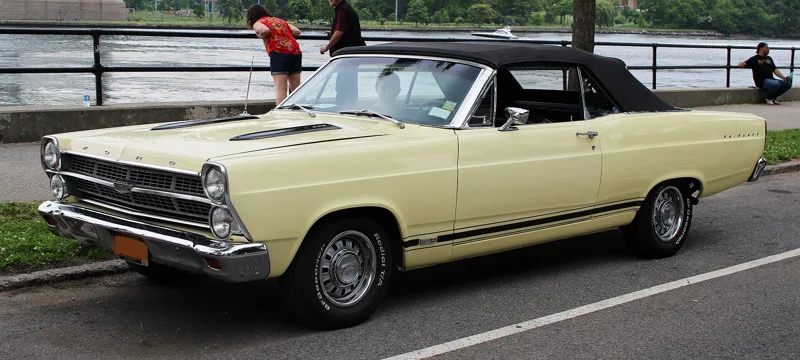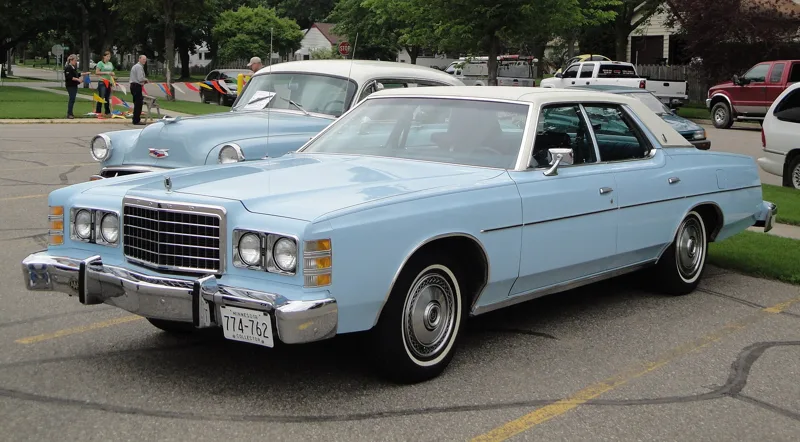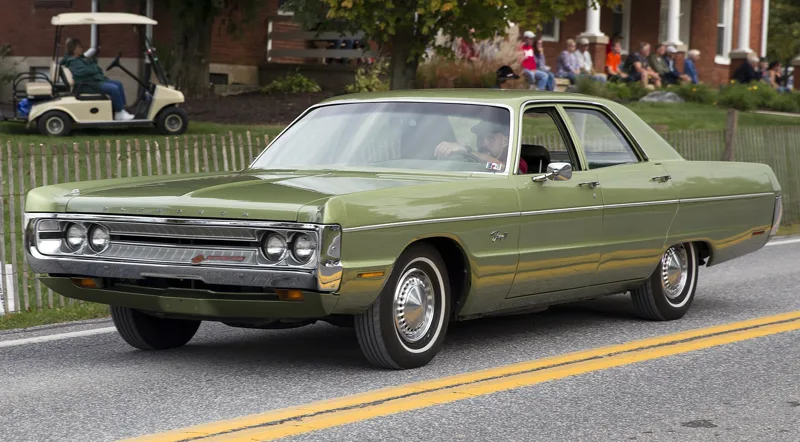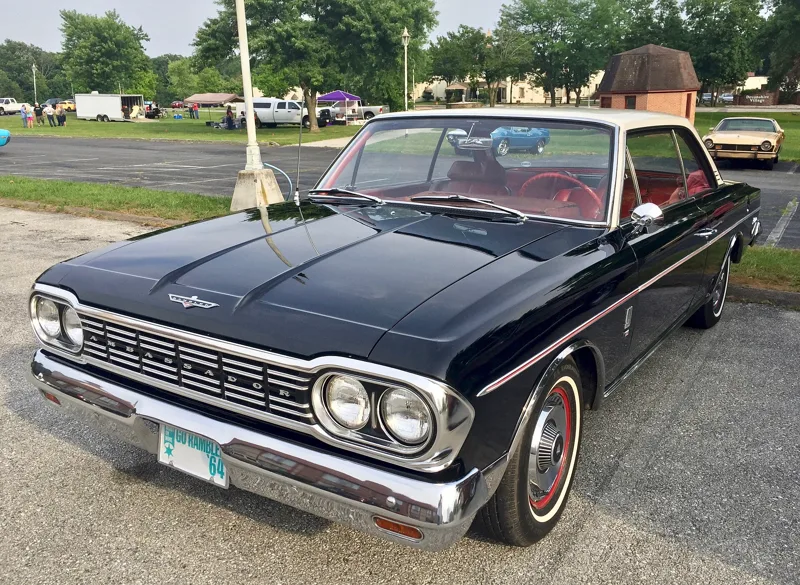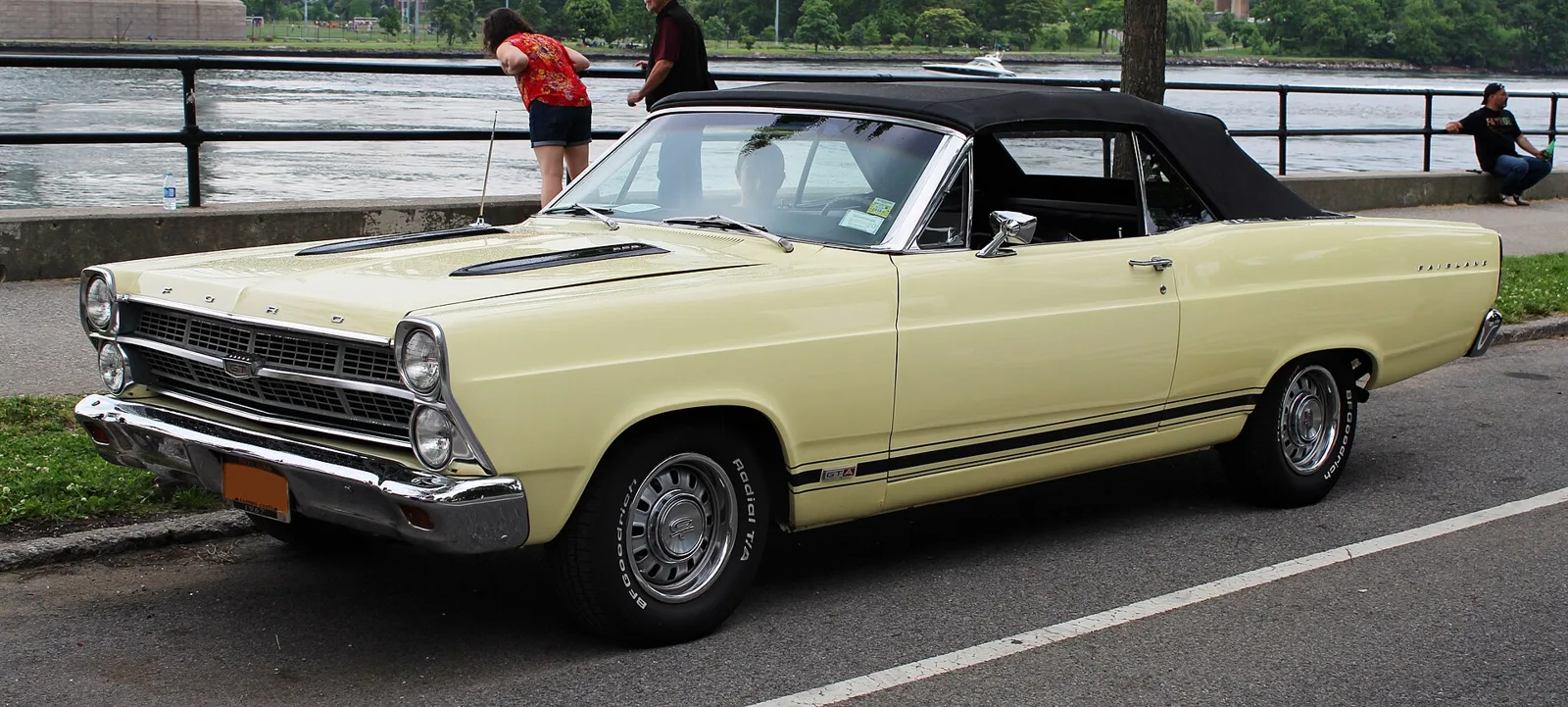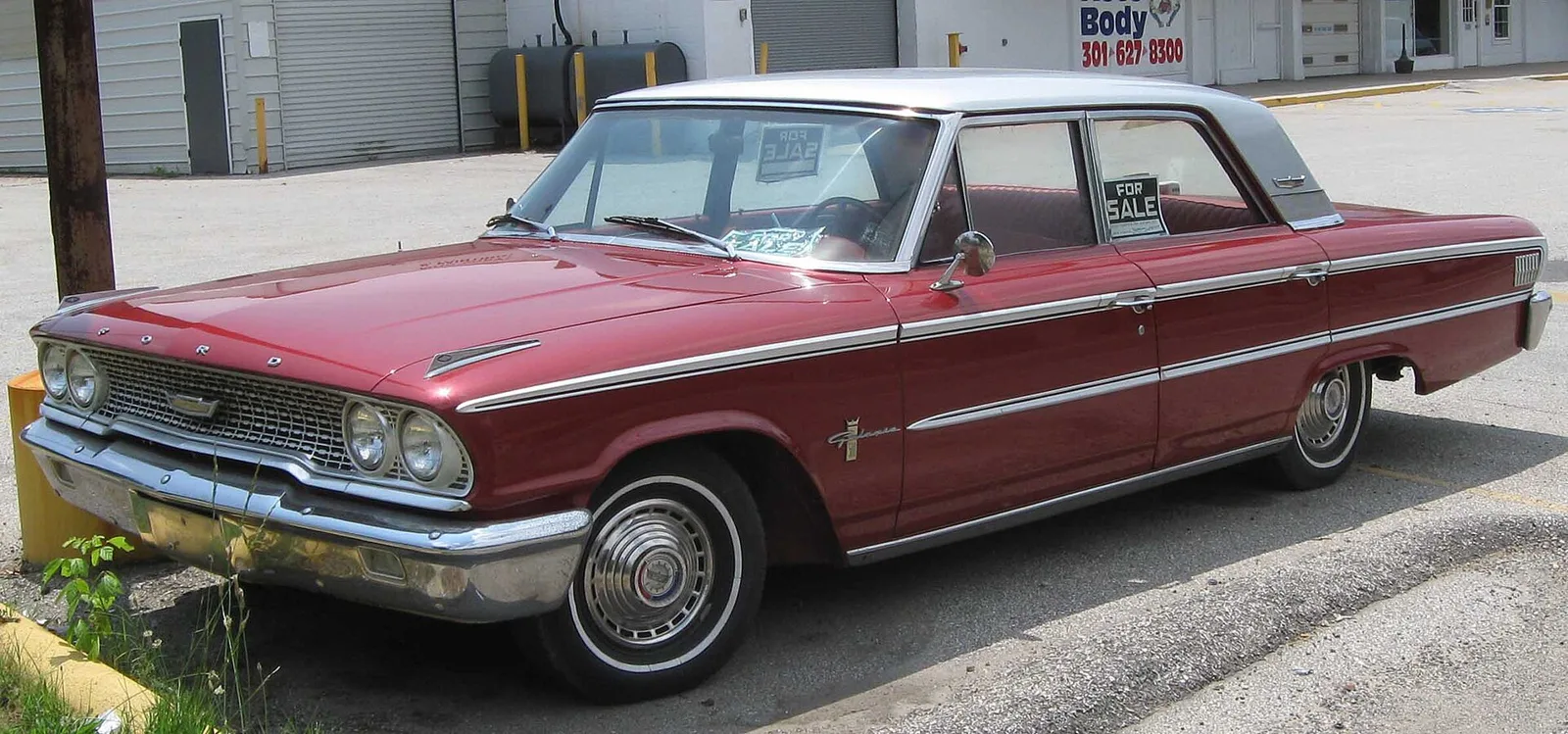
The Galaxie and the Fury were full-size rivals that fought over the same showroom floors, and both took their own paths through shifting sizes and trim lines.
The Ford Galaxie was a full-size Ford sold from 1959 to 1974, and the Plymouth Fury was a Plymouth model from 1955 to 1989 that moved between full-size and mid-size sizes. The two were direct rivals in the full-size segment, where the Galaxie competed against the Chevrolet Impala and the Fury against the Impala as well as the Galaxie.
The Ford Galaxie and the Plymouth Fury were both full-size American sedans, and they competed for the same family and luxury buyers in the late 1950s and 1960s. The Galaxie was a Ford sold from 1959 to 1974, while the Fury was a Plymouth model that ran from 1955 to 1989 and changed size several times. In the full-size segment the Galaxie fought the Chevrolet Impala and the Fury, and the two Detroit rivals sometimes met on the same showroom floor.
Where did the Galaxie and the Fury come from?
The Galaxie took its name from a marketing tie-in with the excitement of the Space Race. It was added to the full-size Ford range in 1959 as an additional trim, assuming the top position from the Fairlane 500, and it was offered as a sedan throughout its run. Four generations were produced in North America, and the car was also built locally by Ford Australia and Ford Brasil.
The Fury began in 1956 as a sub-series of the Plymouth Belvedere. The first Furys were sold only as a sandstone white two-door hardtop with gold anodised aluminium trim in 1956 and 1957, and a buckskin beige version followed in 1958. They had special interiors, bumper wing-guards and V8 engines with twin four-barrel carburettors.
In 1959 Plymouth made the Fury a separate series one level above the Belvedere, and the Sport Fury became the top model. The Fury then alternated between full-size and mid-size sizes, and it was full-size again from 1959 to 1961 and from 1965 to 1974.
The 1959 Galaxie had optional seat belts, a padded dashboard and child-proof rear door locks, while a deep-dished steering wheel and double-door locks were standard. Ford advertised safety anchorage for the front seats.
The 1960 Galaxie had an all-new design with less ornamentation, a Starliner pillarless hardtop, and half-moon taillights turned downward. Its A-pillar swept backward, which made entry and exit easier.
For 1961 the tailfins were almost gone, and performance became a selling point with the 390 V8. The Starliner was dropped at the end of the year, as the square-roof Galaxie Club Victoria took the bulk of sales.
Two full-size American sedans that met in the same showrooms, each with its own luxury trim and its own V8 ambitions.
How did the two cars change in size?
The Galaxie stayed in the full-size bracket throughout its life, although Ford made minor adjustments to the model line. Its 1962 Galaxie 500 and 500/XL models brought a plusher interior and more chrome outside, and the 500/XL introduced a bucket-seat and console model.
The Fury's size changes were more dramatic. It was downsized for 1962 onto Chrysler's B-body unibody platform, sales were slow at first, and the Sport Fury trim was reintroduced to help. Chrysler then returned the Fury to the full-size C-body platform in 1965.
Plymouth's rear-drive V8 model was then mid-size again from 1975 to 1978, when the Fury sold alongside the full-size Gran Fury. It ended at Kenosha on December 23, 1988, and Plymouth never lived to see the resurgence of the large V8 rear-drive sedan, which Dodge did see.
For the 1962 Galaxie the Lively Ones campaign used sporty cars with bucket seats and consoles, and Ford said that XL stood for Xtra Lively.
For 1963 Ford also offered a no-frills big Ford priced about one hundred dollars below the base Galaxie sedan. It was sold as the Ford 300 for that year only, before the Custom series replaced it in 1964.
Which V8 engines did each car offer?
The Galaxie's engine line was dominated by Ford's FE series. The 1959 model used the 352 V8 at 300 hp, and in 1961 a 390 cu in (6.4 L) FE V8 with 401 hp (299 kW) was introduced, offered with three two-barrel carburettors for the top performance.
The Fury's V8s were Chrysler's own. A 318 cu in V8 with 290 hp was shared with the Dodge Coronet in 1957 and 1958, and the 1958 Golden Commando 350 cu in gave 305 hp with two four-barrel carburettors. A 361 cu in Golden Commando followed in 1959.
By 1965 the Fury had a 426 cu in street wedge V8 rated at 385 hp (287 kW), which was finally street-legal. The 318 LA engine replaced the older 318 in 1967, with a thinner-walled casting and more power for the same advertised rating.
What were the six-cylinder and base engines?
The Galaxie's base engine in 1962 was the 223 cu in Mileage Maker six. Ford kept the 406 cu in engine as an option for the largest Galaxies, and the 1963 cars mostly ran the 352 V8 with Cruise-O-Matic.
Chrysler's new slant-six arrived for 1960 and produced 145 hp (108 kW) at 4,000 rpm from its 225 cu in size. It was a notable engine for its reliability.
The Plymouth's 383 was rated at 330 hp (250 kW) in 1960. In 1970 the Sport Fury GT's 440 cu in engine could be ordered with three two-barrel carburettors for 390 hp.
In 1959 the Sport Fury became the top model, while the Sport Suburban was the Fury station wagon and was not marketed as a Fury.
In 1960 Plymouth barely kept its 1959 volume while Chevrolet and Ford sales rose.
The Galaxie's 1959 Skyliner retractable hardtop folded into the trunk, and it left very little trunk room when stowed.
What trims and luxury models did each one offer?
The Galaxie's trims were built around the 500 and 500/XL, and in 1965 the Galaxie 500 LTD became the flagship. For 1966 the LTD name became a separate model, and the Galaxie moved to the mid-level full-size series above the Custom.
The Fury's trims were built around the Fury I, II and III, with the Sport Fury as the sportier top model. In 1965 Plymouth offered a plush luxury edition called the VIP, initially as a four-door hardtop, which was marketed as the very important Plymouth in 1966.
The VIP competed with the Ford Galaxie 500 LTD and the Chevrolet Caprice, along with the AMC Ambassador DPL. The VIP was dropped after 1969, and the Sport Fury took over the luxury role with a Brougham package.
The 1965 Fury lineup included the Fury I, Fury II and Fury III, and the Sport Fury was positioned against the Chevrolet Impala Super Sport.
The 1967 model year brought dual-circuit brake master cylinders, energy-absorbing steering columns and shoulder belt mounting points to all Plymouths.
By midyear 1971 every full-size Plymouth had a V8, including the new 360 cu in engine, which was the largest production small-block V8 that Chrysler built.
How did each car compete with the other?
The Fury's Sport Fury trim was positioned to compete with the Chevrolet Impala Super Sport and the Ford Galaxie 500/XL. In this way the Plymouth sporting model took direct aim at the Galaxie's own sportier variants.
The Galaxie's 1963 fastback sports hardtop, introduced mid-year, outsold the boxtop square-roof models, which gave Ford an edge in the sporting market for that year. The Fury's 1964 slant-back hardtop also helped sales, as Plymouth used the roofline to improve its numbers.
The Fury remained Plymouth's leading sales model through the early 1960s, while the Galaxie served as Ford's mid-range full-size car until the LTD took over its role. In the market, both cars were positioned against the Impala more than against each other.
Which racing and performance models appeared?
The Galaxie's most famous performance story is the 1963 race engine. In limited numbers a 427 cu in engine rated at 425 hp (317 kW) was produced for racing applications, and Ford built 212 lightweight versions of the 427 in the Galaxie 500 Sport Special Tudor Fastback for drag racing.
The Sport Special cars were available only in Corinthian White with a red vinyl interior, and their list price was about US$4,200. They used fibreglass and aluminium parts and were built to compete in drag racing.
The Fury's performance story centres on the Golden Commando and the 440 cu in engine of the late 1960s. The V-800 Dual Fury of 1958 used a dual four-barrel 318 V8, while the Golden Commando 350 made 305 hp. In 1970 the 440 in the Sport Fury GT could reach 390 hp.
How did the cars end?
The Galaxie ended after the 1974 model year, when Ford dropped both the Galaxie and the Custom and consolidated its full-size sedan line into the LTD. The LTD had come from the Galaxie 500 LTD in 1966, so the Galaxie's line effectively became the LTD.
The Fury lasted much longer. It was sold alongside the Gran Fury from 1975 to 1977, the R-body Gran Fury filled the large-car gap in 1980, and the M-body Fury appeared in 1982. The last V8 rear-drive Fury ended at Kenosha on December 23, 1988.
The Galaxie's successor was the LTD, while the Fury's most direct successor was the Gran Fury. Both models therefore left a long trail of trim and engine development. The Galaxie is remembered for its Ford FE V8s and its 1960s sporting models, while the Fury is remembered for its size changes and its Chrysler engines.
Side-by-side comparison
| Point | Ford Galaxie | Plymouth Fury |
|---|---|---|
| Years | 1959 to 1974 | 1955 to 1989 |
| Size class | Full-size throughout its run | Full-size, mid-size and full-size again |
| Early V8 | 352 V8 at 300 hp in 1959 | 318 V8 at 290 hp in 1957 and 1958 |
| Largest V8 | 390 CID FE, 401 hp (299 kW) in 1961 | 426 street wedge, 385 hp (287 kW) in 1965 |
| Base six | 223 CID Mileage Maker in 1962 | 225 CID slant-six, 145 hp (108 kW) in 1960 |
| Performance model | Sport Special lightweight 427 cars, 212 built | Sport Fury GT with 440 engine, 390 hp |
| Luxury model | Galaxie 500 LTD, 1965 flagship | VIP, from 1965 |
| Rivals | Chevrolet Impala and Plymouth Fury | Chevrolet Impala and Ford Galaxie |
| End | After the 1974 model year, replaced by the LTD | Kenosha, 23 December 1988 |