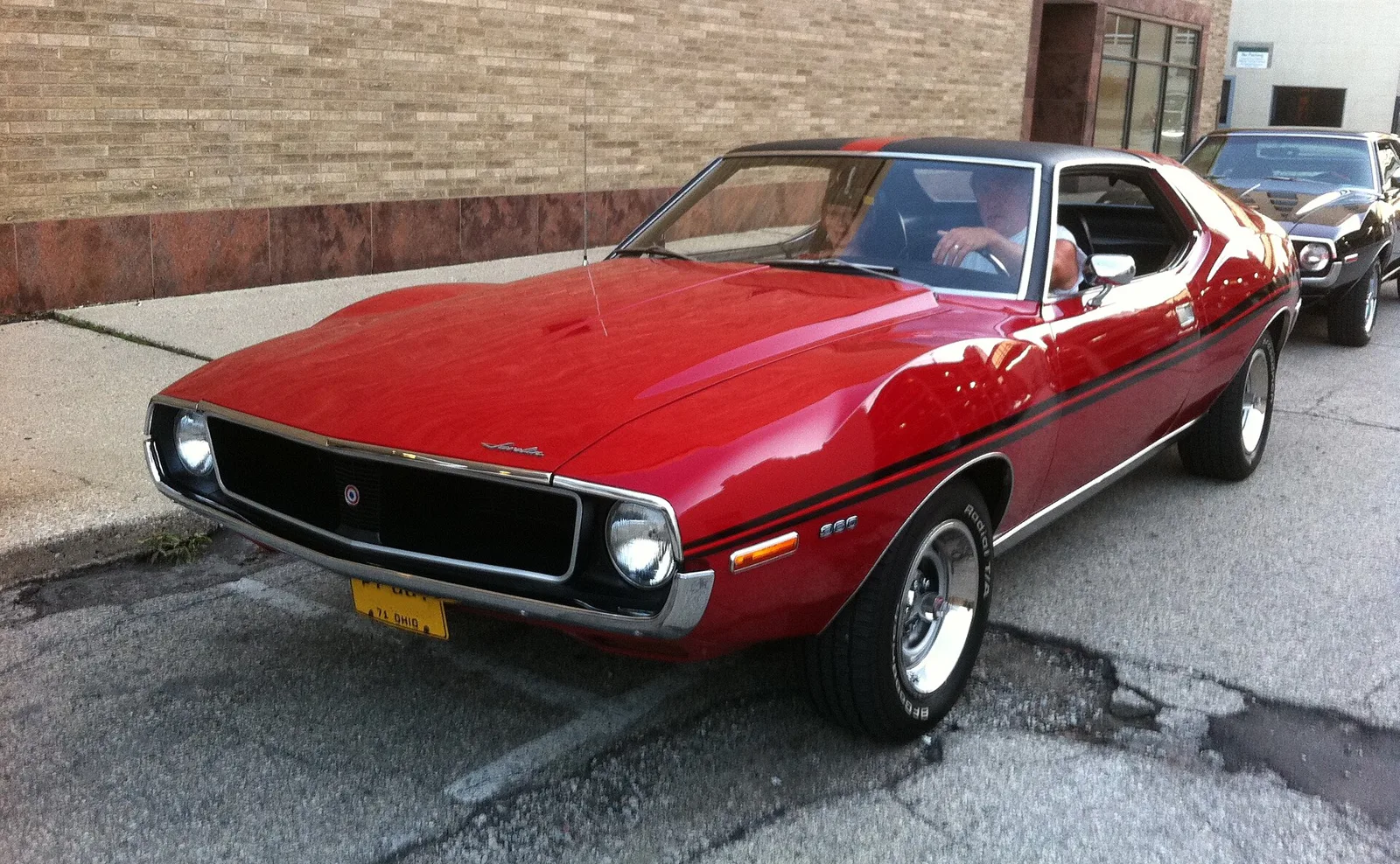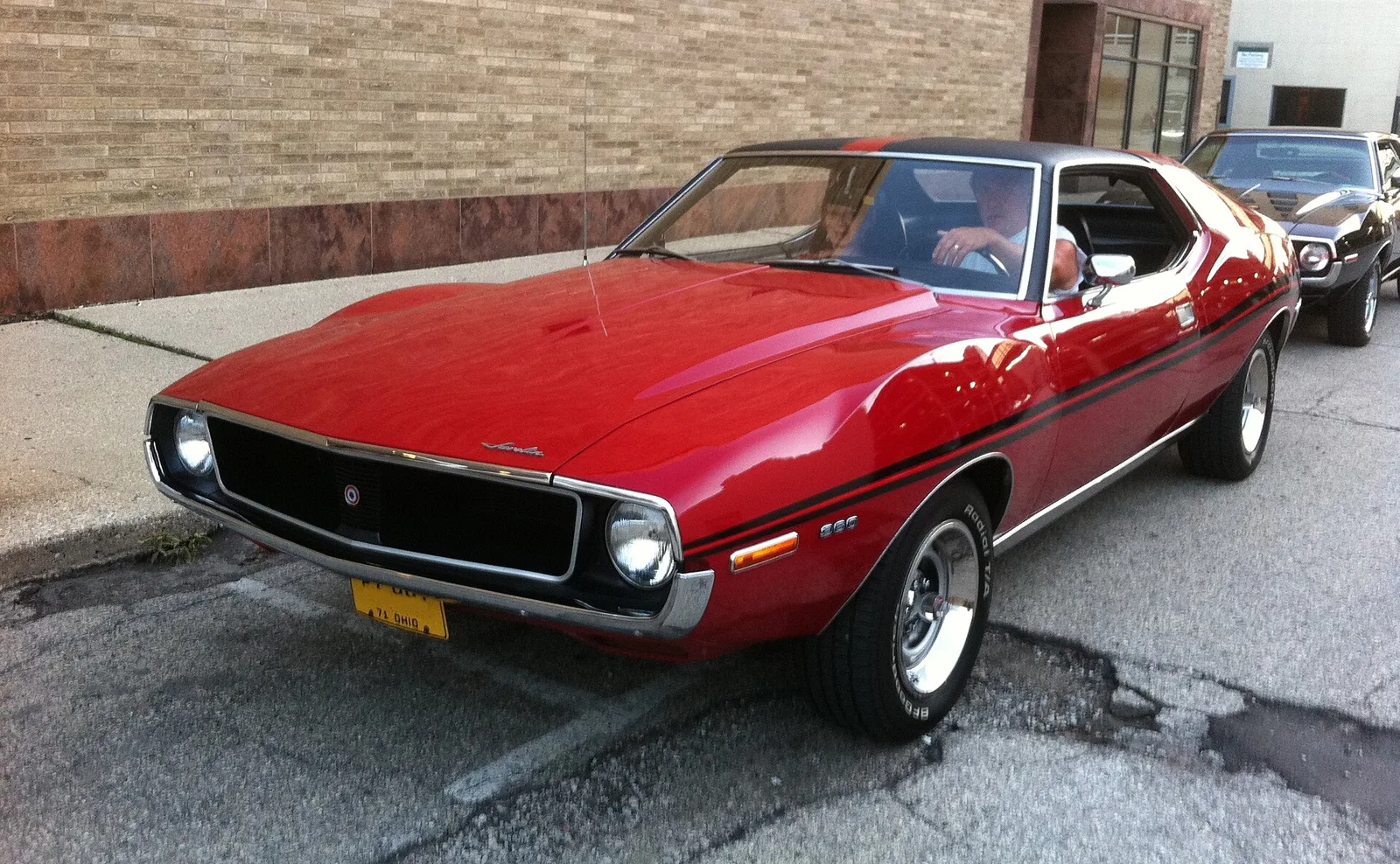
One came from Chrysler in 1964 and the other from American Motors in 1967, and both chased a young audience the Mustang had opened up.
The Plymouth Barracuda arrived as a fastback in April 1964, and the AMC Javelin followed for the 1968 model year. The Javelin's Trans-Am titles came in 1971, 1972 and 1976, while the Barracuda's peak engine was a 426 Hemi rated at 425 hp.
The AMC Javelin and the Plymouth Barracuda were both two-door pony cars, but they came from different companies and different years. The Barracuda arrived first, as a Chrysler fastback in April 1964, and the Javelin followed for the 1968 model year from American Motors. In size the Javelin sat between the compact Mustang and the larger Barracuda, which makes it the middle figure in a three-way comparison.
When did the Javelin and Barracuda arrive?
The Barracuda debuted in fastback form on 1 April 1964, and it predated the Mustang's introduction by two weeks. The Javelin debuted on 22 August 1967, and it went on sale from 26 September 1967 with a starting price of $2,743.
Chrysler marketed the first Barracuda to a broad, family-minded public, and its brochures aimed at every age group and taste. Ford's Mustang, by contrast, was promoted heavily to young professionals. The 1964 Barracuda sold 23,443 units in a shortened season, against 126,538 Mustangs in the same period.
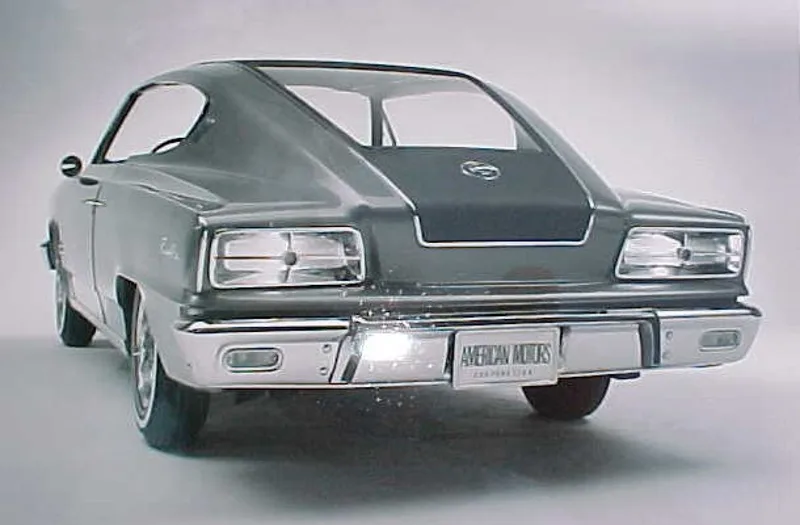
American Motors used the Javelin to enter the pony car market and to shake off its economy-car reputation. Its styling team had shown two prototypes called AMX during the 1966 Project IV auto show circuit, one a two-seat fibreglass car and the other a four-seat AMX II. The production Javelin grew out of that work.
The Barracuda came first and the Javelin followed with a wider playbook, but both cars were fighting for the same young buyer.
How did the two cars differ in size?
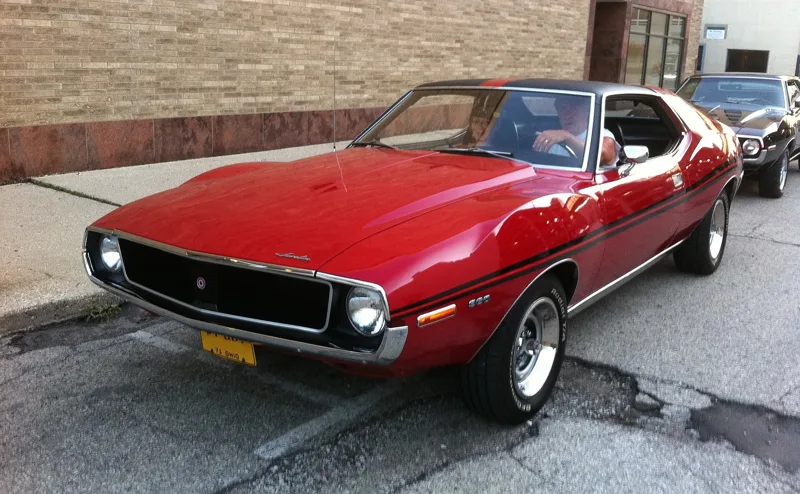
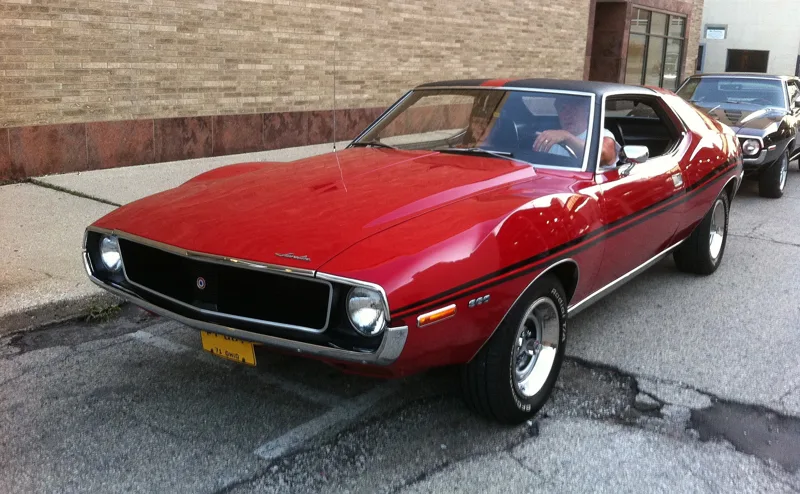
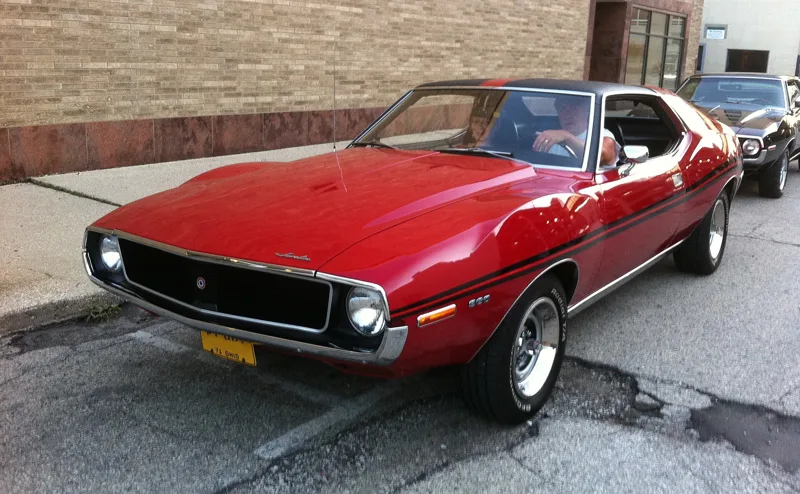
The Javelin was built on AMC's compact Rambler American platform and offered only as a two-door hardtop. It outsized the Ford Mustang and Chevrolet Camaro for length and room, yet fell short of the larger Plymouth Barracuda, which made it the middle car of the three.
The first Barracuda used a 106 in (2,692 mm) wheelbase shared with the Valiant, which the 1967 redesign stretched to 108 in (2,743 mm).
Chrysler's second-generation Barracuda, from 1967 to 1969, moved to model-specific sheet metal while keeping many Valiant parts. It came as a fastback, a notchback coupe and a convertible, with Coke-bottle flanks and roof pillars curved in an S shape on the hardtop. The first-generation Javelin, by contrast, used one semi-fastback body and no convertible.
Specifications side by side
| Specification | AMC Javelin | Plymouth Barracuda |
|---|---|---|
| Debut | 22 August 1967, 1968 model year | 1 April 1964, fastback |
| Body styles | Two-door hardtop, base and SST trims | Fastback (1964 to 1966); fastback, notchback and convertible (1967 to 1969); hardtop and convertible (1970 to 1974) |
| Wheelbase | None given | 106 in (2,692 mm) in 1964; 108 in (2,743 mm) in 1967 |
| Base engine | 3.8-litre (232 cu in) straight six | 2.8-litre (170 cu in) slant six, 101 bhp (75 kW) |
| Top engine | 6.4-litre (390 cu in) V8, 315 hp (235 kW) from mid-1968 | 7.0-litre (426 cu in) Hemi, 425 hp (317 kW) in 1970 |
| Trans-Am | Series wins in 1971, 1972 and 1976 | 1970 AAR Cudas: three pole positions, no wins |
| Drag racing | Entered in dragstrip racing; no results given | About fifty fastback Hemi cars built for Super Stock in 1968 |
| Production or sales | 55,125 in 1968; 40,675 in 1969 | 23,443 sold in the abbreviated 1964 season |
| Starting price | $2,743 at launch | US$2,512 in 1964 |
Which engines did each offer?
The Javelin's base engine was a 3.8-litre (232 cu in) straight six, with a 4.8-litre (290 cu in) V8 and a 5.6-litre (343 cu in) V8 as the main options. The Barracuda started with a 2.8-litre (170 cu in) slant six and reached a 7.0-litre (426 cu in) Hemi.
Both lines covered the distance from economy to muscle.
A Javelin with the straight six and an automatic could hold 129 km/h (80 mph) on the open road, while the base 290 V8 reached a top speed of 161 km/h (100 mph). The Go Package added a four-barrel 343 with front disc brakes, heavy-duty suspension and dual exhausts. A 343 Go Pac could reach 97 km/h (60 mph) in 8 seconds, run the quarter-mile in 15.4 seconds and approach 193 km/h (120 mph).
In mid-1968 the 6.4-litre (390 cu in) V8 joined the Go Package at 315 hp (235 kW), with 425 lb ft (576 N m) of torque that could take the car from zero to 60 mph in the seven-second range. Early Barracuda V8s were more modest. The 1964 Barracuda's strongest option was a 4.5-litre (273 cu in) LA V8 with 180 bhp (130 kW), and the 340 four-barrel only reached the range in 1968.
The Barracuda's power climbed sharply through the later years. The 1968 383 Super Commando was rated at 300 bhp (224 kW), and by 1970 the 'Cuda carried a 383 at 335 hp (250 kW) as standard. The 426 Hemi at 425 hp (317 kW) was the most powerful engine on offer in the 1970 Barracuda lineup, with the 440 options rated lower.
What was the Javelin's Trans-Am record?
The Javelin's competition reputation rests on Trans-Am championship results, with series wins in 1971, 1972 and 1976. Its first Trans-Am effort in 1968 started more modestly. American Motors hired Kaplan Engineering, led by Ron Kaplan and Jim Jeffords, to run two Javelins, with a third car kept for shows and demonstrations.
The 1968 team finished third in the over-2-litre class and was the sole works car to complete every Trans-Am round it entered, despite a single engine retirement. Kaplan's crew developed a cross-ram manifold with Vic Edelbrock, and a run of 50 blocks was cast in Windsor, Ontario, to give the team a stronger block with four-bolt mains. Development began with the rear suspension, which used a Watt's linkage.
The Barracuda's 1970 Trans-Am entry was a factory effort too. Swede Savage and Dan Gurney raced identical AAR Cudas, which qualified for three pole positions but won no races. Their best finish was second at Road America.
Which car had the stronger drag and straight-line record?
The Barracuda had the more striking straight-line story. For 1968 Chrysler built about fifty fastback cars with the 426 Hemi for Super Stock drag racing, assembled by Hurst Performance. They were stripped of rear seats and sound deadening, and they carried a sticker saying they were not for public roads.
Those cars were quick, with a run of the quarter-mile in the mid-tens during 1968. Chrysler France raced Hemi 'Cudas from 1970 until 1973, and one of them took four French Group 1 class titles, three won on the circuit and one on a hill climb. American Motors also entered its Javelin in dragstrip racing, though the results are not given, and it backed the muscle versions with dealer-installed Group 19 accessories.
The Group 19 catalogue ranged from cross-ram induction and performance camshafts to roller rocker arms and dual-point ignition. They were factory-approved accessories that dealers installed.
How did the two cars sell?
The Barracuda's first season sold 23,443 units, but that was a short year. The Mustang moved 126,538 cars over the same window, so the Barracuda trailed well behind in its first season. The Javelin's first model year produced 55,125 cars, and its second produced 40,675.
The Javelin's first 1,000 buyers averaged 29 years old, about ten years younger than the typical AMC customer. Mary Wells Lawrence led the campaign for its agency, and the advertising was unusually bold, setting the car against the Mustang and showing a Mustang being smashed with sledgehammers.
How did the styling and trim compare?
Dick Teague settled on one body style for the Javelin, a semi-fastback roof, because American Motors could not afford separate fastback and notchback hardtops. Management wanted trunk and rear-seat room, and Teague gave the body generous curves while staying within those limits.
The Javelin's safety kit included fibreglass padding on the windshield posts, flush paddle door handles, side marker lights and three-point belts for the front seats. Air came through flow-through ventilation in the doors, with no side vent windows. For 1969 the car gained revised striping, a bull's-eye grille emblem and a Mod Javelin package with a roof spoiler, plus Big Bad paint in neon brilliant blue, orange or green.
The Barracuda's 1964 fastback had the largest rear window fitted to a standard production car up to that time, a 14.4 sq ft (1.34 m2) piece made with PPG. Its 1966 update brought a fish logo in place of the Valiant lettering, and the 1970 model abandoned the Valiant underpinnings altogether and moved to the E-body. Its colours ranged from Lime Light and Bahama Yellow to Tor Red and Lemon Twist.
How did critics judge the two cars?
Road & Track compared the Javelin favourably with its rivals in 1968, citing a powerful engine for such a small car and calling the styling pleasant. Motor Trend gave the Javelin top billing in the sports-personal class of its Car of the Year awards, and racing driver Gordon Johncock described it as roomy and peppy after a road test.
Car and Driver tested six pony cars from 1968 and described the Javelin's appearance as clean and understated, free of phony vents and bulges. Those verdicts show the car was taken seriously by the enthusiast press of the day.
What changed on the Barracuda after 1967?
Side marker lamps arrived as federal rules required, and the second-generation car differed from year to year because of them. The 1967 car had no side marker lamps, the 1968 car had round lamps without reflectors, and the 1969 car had rectangular reflectors.
The 1968 range also included a 300 bhp (224 kW) 383 Super Commando, alongside the 340 four-barrel.
In 1969 Plymouth pushed performance harder. The 'Cuda trim package, based on the Formula S option, could be ordered with a 340, a 383 or the new 440 Super Commando V8, and the 383 itself was lifted to 330 bhp (246 kW). A Mod Top vinyl roof with a floral motif was offered in 1969 and 1970 as well.
The 1970 Barracuda moved to a shorter, wider version of the E-body platform, and it came only as a coupe and a convertible. The base model, the Gran Coupe and the 'Cuda were the main versions, and a low-end coupe with a 3.2-litre (198 cu in) slant six joined mid-year. The Challenger shared that platform, though no exterior sheet metal was common to the two cars.
Which pony car suits a buyer better?
A buyer who wanted a roomy, compact-based pony car with a strong optional V8 had the Javelin, and the Go Package made that V8 more than a token option. A buyer who wanted the earliest pony car, or the 1970 E-body with Hemi power, had the Barracuda.
Neither car takes every category, and each suited a different kind of driver.