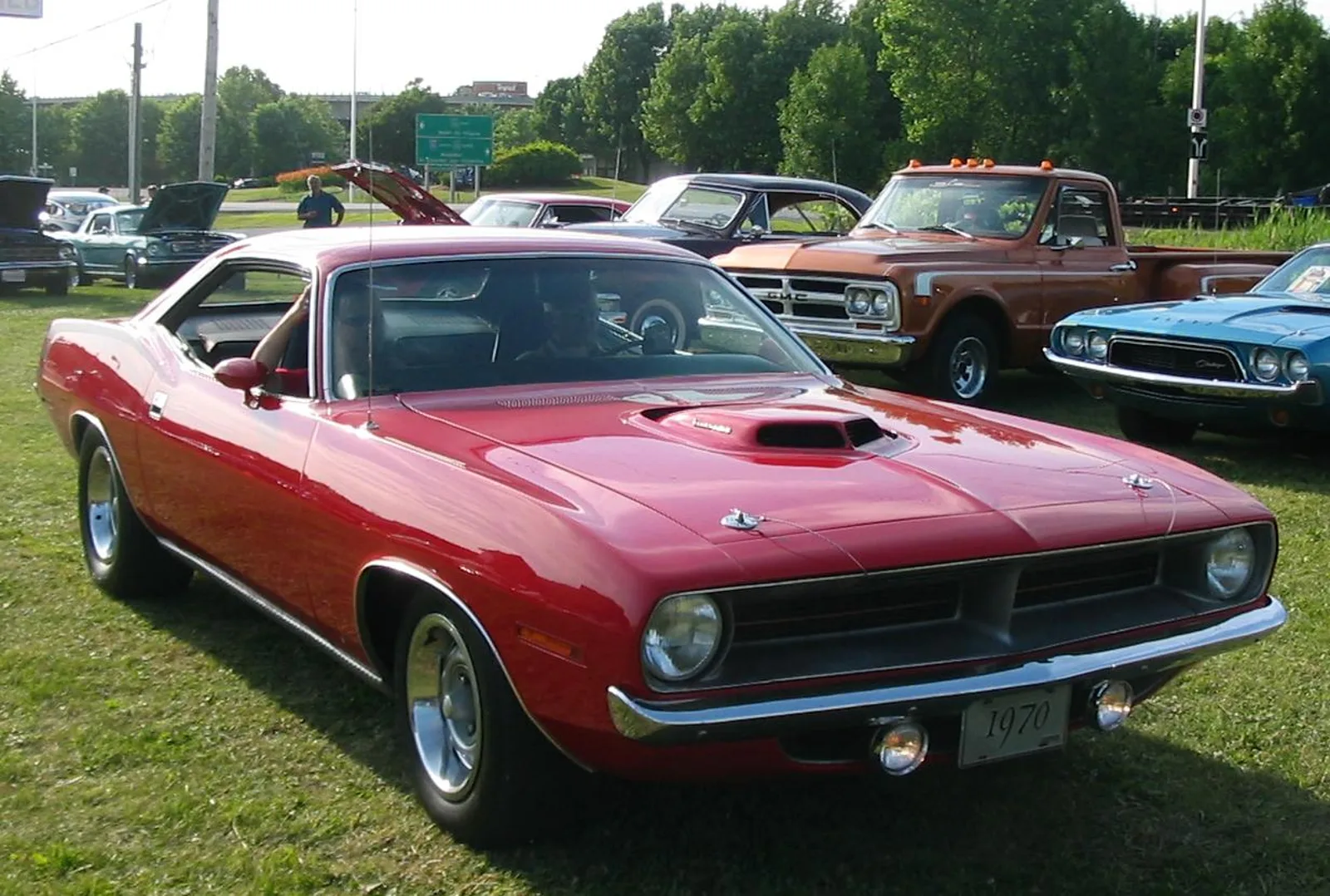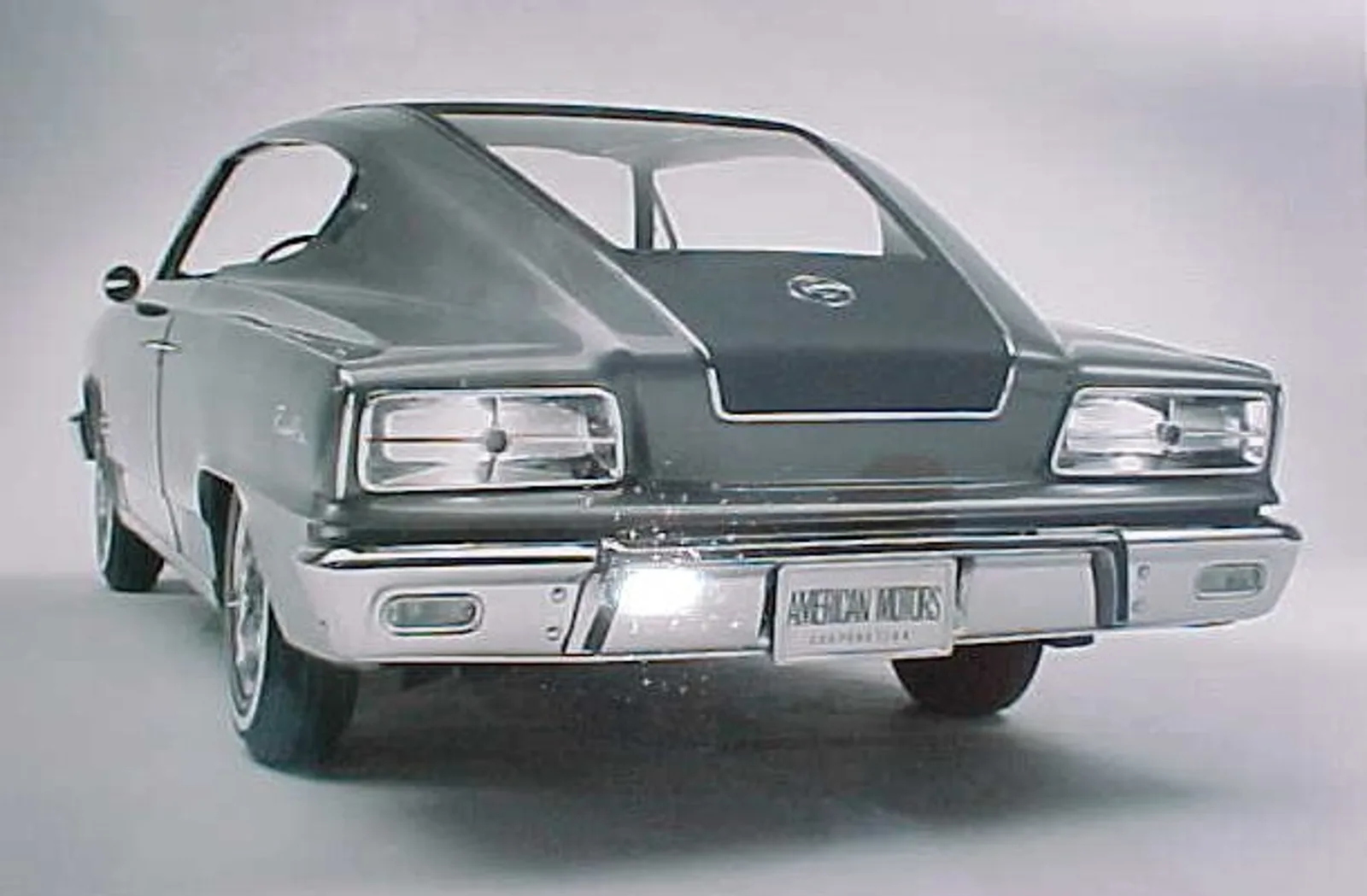
AMC's fastback show car never reached showrooms, while Chrysler's Barracuda became one of the first pony cars and was built for ten years.
The AMC Rambler Tarpon was a 1963 concept car that never reached production. The Plymouth Barracuda was a fastback pony car built from 1964 to 1974, sharing the Tarpon's 106 in wheelbase and competing for the same sporty-car buyers.
The AMC Rambler Tarpon and the Plymouth Barracuda were both fastback sporty cars from the early 1960s, but only one of them reached production. The Tarpon was a 1963 concept from American Motors that was shown at the 1964 Chicago Auto Show. The Barracuda was Chrysler's pony car, built from 1964 through 1974, and it debuted on 1 April 1964, two weeks before Ford's Mustang.
Could the Tarpon have competed with the Barracuda?
Only on paper. The Tarpon never reached production, but had it been built it would have competed directly with the Barracuda, a fastback derived from the Valiant. Both cars were aimed at the same young buyers who wanted a sporty car at a modest price.
The two cars also shared a wheelbase. The Tarpon used the compact Rambler American's platform on a 106 in (2,692 mm) wheelbase, and the first Barracuda used the Valiant's 106 in (2,692 mm) wheelbase. That common dimension is the clearest engineering link between the two, although the Tarpon never had the production engine to make the comparison real.
A concept that tried to be a pony car before the pony car existed, and a production car that proved the market and then built a decade on it.
Where did each car come from?
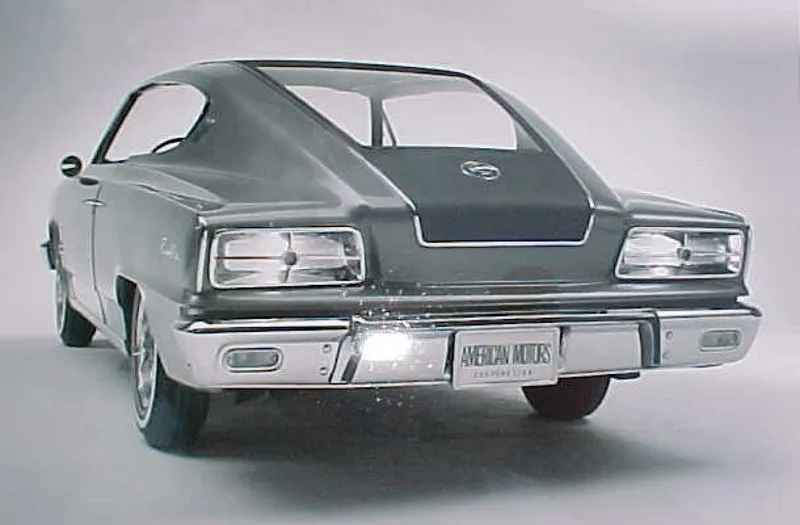
The Tarpon began in 1963, when AMC's management wanted a new car with a sports flair to change the company's image. Dick Teague's styling team devised a fastback concept, and the Tarpon was built on existing tooling because AMC did not have the resources for an all-new car. The result was a small two-door fastback with a sloping roof that narrowed toward the rear bumper.
The Barracuda came from a different route. Irv Ritchie, a Chrysler stylist, drew a fastback take on the compact Valiant, and the company wanted an entry in the new sporty compact market. The name Panda was considered and rejected, and John Samsen's suggestion of Barracuda prevailed. The car shared the Valiant's hood, headlamp bezels, windshield, doors and bumpers, with a new trunk and glass.
How did the Tarpon's design work?
The Tarpon was a 2+2 hardtop coupe with a fastback roof, two large deep taillights set into the rear fender shoulders, and a black vinyl roof over a red body. Its extended rear quarter windows were designed to keep rear-seat passengers from feeling closed in, and the top section was made of reinforced plastic.
The show car had no trunk lid or outside hatch, and AMC planned to address that before production. The Tarpon's windshield was described as bulbous, and it had a double-compound curve that added to the low look. Its roof sat 52.5 in (1,334 mm) high, two inches lower than the Rambler American it was based on.
How do the specifications compare?
| Feature | AMC Rambler Tarpon | Plymouth Barracuda |
|---|---|---|
| Status | Concept car; never produced | Production car, 1964 to 1974 |
| Body | 2+2 hardtop fastback coupe | Fastback (1964 to 1966); fastback, notchback and convertible (1967 to 1969); hardtop and convertible (1970 to 1974) |
| Wheelbase | 106 in (2,692 mm) | 106 in (2,692 mm) for 1964 to 1966; 108 in (2,743 mm) for 1967 |
| Length | 180 in (4,572 mm) | Not reported |
| Engine | GEN-2 V8 still in development; no production engine | 170 cu in (2.8 L) six at 101 bhp (75 kW) base; 273 cu in (4.5 L) V8 at 180 bhp (130 kW) from 1964 |
| Top V8 | Not applicable | 383 cu in (6.3 L) at 330 bhp (246 kW) in 1969; 426 Hemi at 425 hp (317 kW) in 1970 |
| Wheels | 13-inch polished aluminium | Not reported |
| Rear window | Fastback roof with skylight window | 14.4 sq ft (1.34 m2) rear window in 1964 |
| Price | Not reported | Base price US$2,512 in 1964 |
| Sales | Not applicable | 23,443 sold in the abbreviated 1964 season |
| Racing | Not applicable | 1968 Hemi drag cars; 1970 Trans-Am cars from AAR |
What engines did the Barracuda offer?
The Barracuda launched with Chrysler's slant-six, in a 170 cu in (2.8 L) base version at 101 bhp (75 kW) and a larger 225 cu in (3.7 L) six, rated at 145 bhp (108 kW). The top engine for 1964 was the new 273 cu in (4.5 L) LA V8, which was light for its size, with a two-barrel carburettor and 180 bhp (130 kW).
The V8 grew through the decade. In 1965 a four-barrel Commando version of the 273 raised output to 235 bhp (175 kW), and the Formula S package added the Commando V8, suspension upgrades and a tachometer. By 1967 the choice ran up to a rarely specified 383 cu in (6.3 L) B big-block at 280 bhp (209 kW), available only with Formula S.
The 1969 383 was pushed to 330 bhp (246 kW), and the 'Cuda trim package was built on the Formula S option. For 1970 and 1971 the range included a new 198 cu in (3.2 L) slant-six and a 383 Magnum rated at 330 hp (246 kW), while the 'Cuda carried a 335 hp (250 kW) 383 as standard.
How did the Barracuda sell?
The Barracuda's launch season was short but respectable. The 1964 Barracuda sold 23,443 units in its abbreviated sales season, while the Mustang sold 126,538 in the same period. The sales brochure pitched the car to people of all ages and interests, and the Valiant-based car carried an image of frugal family transport.
The Mustang's advertising made it the more famous pony car, and that success has long obscured the fact that the Barracuda arrived two weeks earlier. The Tarpon, meanwhile, never had sales, because it never went into production.
How did the Barracuda perform in racing?
The Barracuda had a varied competition life. In 1968 about fifty fastback Barracudas received the 426 cu in (7.0 L) Hemi, built for Super Stock drag work, assembled by Hurst Performance with lightweight parts and carrying a sticker that barred them from public roads. In 1970, two factory-sponsored AAR Cudas raced in the Trans-Am series, qualifying for three pole positions but winning no races.
Chrysler France also raced Hemi 'Cudas from 1970 to 1973. One of them took four French Group 1 class titles, three on circuit and one in hill climbing. The Tarpon had no racing history, because the concept never reached the track.
What changed with the second-generation Barracuda?
The 1967 Barracuda was redesigned with model-specific sheet metal, although many components were still common with the Valiant. It rode on a 108 in (2,743 mm) wheelbase and came as a convertible and a notchback coupe as well as the fastback. John E. Herlitz and John Samsen led the work, which added Coke-bottle side contours and extensively reworked the front and rear ends.
Wheel openings were wider, the side glass was curved, and the hardtop roof pillars took an S shape. The fastback roofline became more streamlined and steeply raked, with a much smaller flush rear window in place of the original wraparound glass, and the use of chrome was more restrained.
Federal safety rules also shaped the model. Each year from 1967 to 1969 had different side marker lights and reflectors, and the engine line changed as the pony-car class grew. The 1967 base engine was still the 225 slant-six, while the V8 options ran from two- and four-barrel 273s up to the 383.
How did the 1970 Barracuda change?
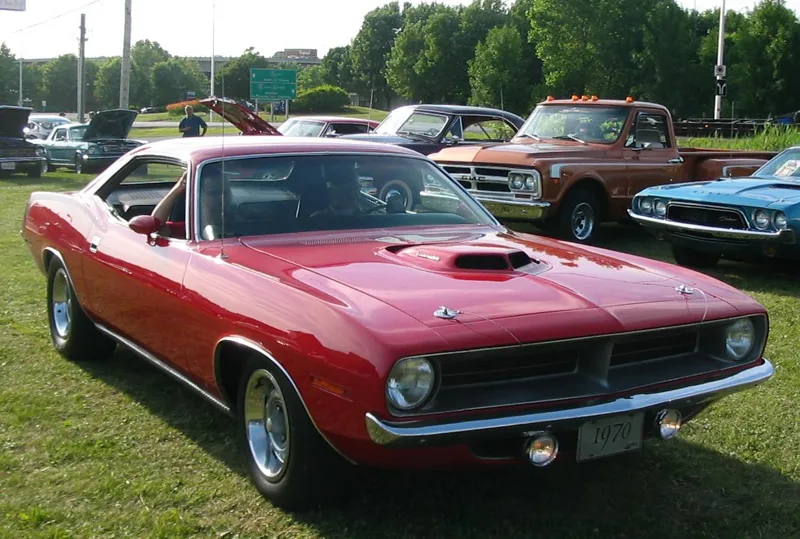
The 1970 Barracuda was built on a shorter, wider version of Chrysler's B platform, called the E-body, and it removed all previous shared parts with the Valiant. The fastback was deleted, and the car came only as a coupe and convertible. The Dodge Challenger shared the platform but none of the sheet metal.
Three versions were offered for 1970 and 1971: the base Barracuda, the luxury-oriented Gran Coupe and the sporting 'Cuda. A lower Barracuda Coupe with a 198 cu in (3.2 L) slant-six and fixed quarter glass joined in mid-1970. The E-body's larger engine bay allowed the 426 cu in (7.0 L) Hemi to fit.
Which buyer suits which car?
The facts do not settle which car was better, because one is a concept and the other a production car. The Tarpon is best understood as an idea that shaped the Marlin, while the Barracuda is the pony car that actually reached the road. A buyer who wanted a fastback in 1964 could buy only the Barracuda.
For anyone weighing the two as design statements, the Tarpon's rear-quarter windows and sloping roof show a clear view of what AMC was aiming for. The Barracuda's engine range and its record-setting rear window show a company that committed to production.
What became of the Tarpon's ideas?
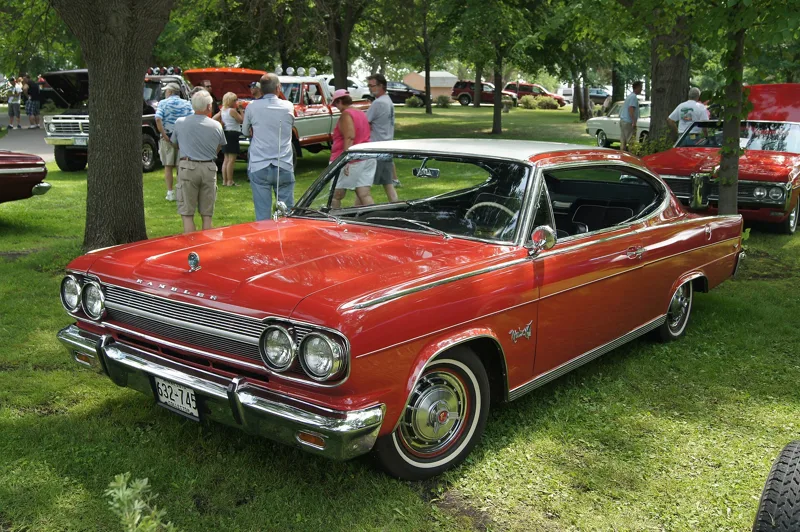
The Tarpon was the direct fastback influence on the 1965 to 1967 AMC Marlin, which carried its roofline and rear-end ideas on a larger body. Because the Marlin was a six-passenger car with personal luxury features, it was not a pony car, and AMC waited until 1968 to introduce the smaller Javelin.
The Tarpon's shape returned much later in the 2004 Chrysler Crossfire, a two-seat fastback that some automotive journalists compared with the Marlin. The original Tarpon concept was destroyed, but a tribute car was built on a 1966 Rambler American convertible with the roof of a 1965 Marlin, powered by a 343 cu in (5.6 L) GEN-2 V8 and a four-speed manual.
For a buyer in 1965 or 1966, the Barracuda offered disc brakes and factory air conditioning once that model year began, and the Formula S package brought a tachometer, suspension upgrades and larger wheels for those who wanted more than a family car. A buyer who wanted more power in 1967 could choose a V8, while the 1970 'Cuda put a 335 hp (250 kW) 383 in as standard.
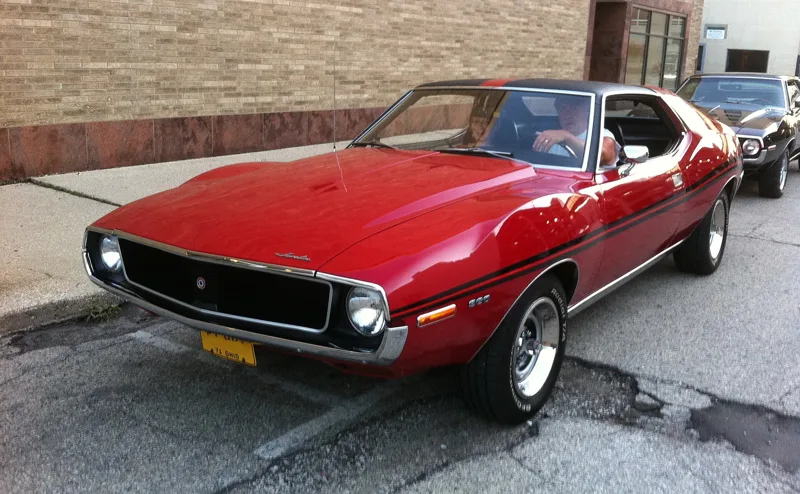
AMC's own answer to the pony car came later. The Javelin arrived in 1968 as a small fastback aimed at the segment the Mustang had created, the market the Tarpon had anticipated years before.