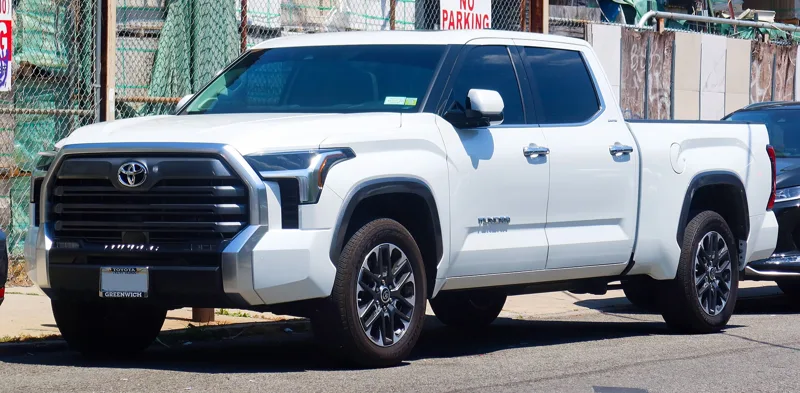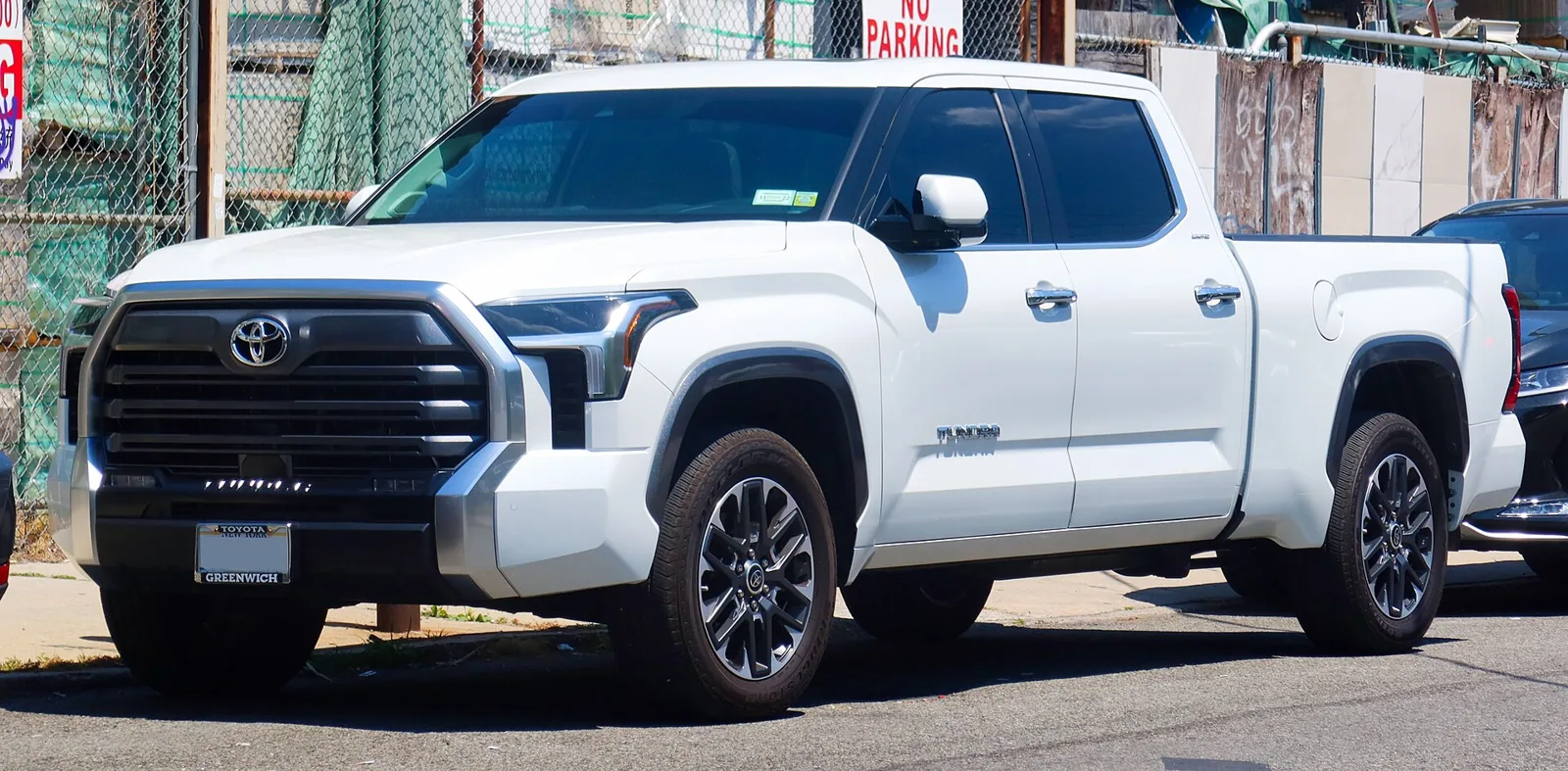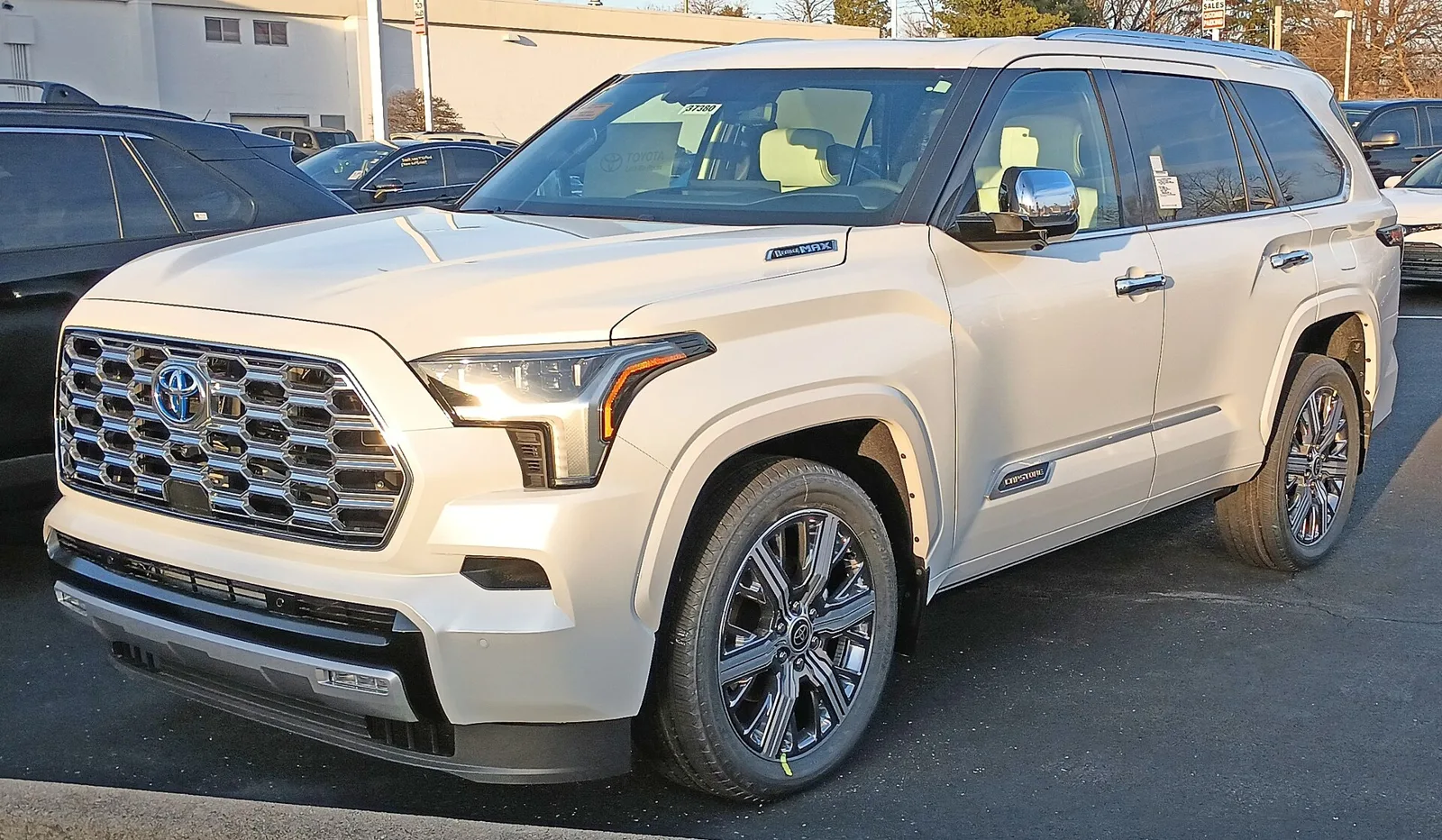
A full-size Toyota SUV that began as a Tundra sibling in 2000, grew into the brand's flagship in North America and moved to a twin-turbo hybrid V6 in 2022.
The Toyota Sequoia is a full-size SUV that Toyota has built mainly for North America since 2001, based on the Tundra pickup. It became the brand's flagship in the region after the Land Cruiser left the market, and its third generation uses a 437 hp twin-turbo hybrid V6.
Built mainly for North America since 2001, the Sequoia is a Tundra-based SUV and now the brand's flagship in that region, and its third generation uses a twin-turbo hybrid V6 in place of the V8 that powered earlier cars.
Where did the Toyota Sequoia come from?
The Sequoia began as a Tundra-based SUV that Toyota introduced at the North American International Auto Show on 11 January 2000. Full production followed in September 2000, in time for the 2001 model year, and the car was the second largest SUV the company has built, behind only the Japan-only Mega Cruiser.
Development of a full-size SUV started alongside a replacement for the T100 pickup in the mid-1990s. The design was frozen in 1997, and the styling was led by Toshihiko Shirasawa. Speculation during the Tundra's 1999 launch had pointed to a Highlander name, but Toyota used that badge on a mid-size Camry-based crossover instead.
The car takes its name from the Giant Sequoia, a tall redwood that grows naturally in California.
A Tundra sibling that became the flagship of Toyota's North American SUV range and then took on a hybrid V6.
Who was the Sequoia built to beat?
The Sequoia was aimed squarely at the Ford Expedition, the Chevrolet Tahoe and GMC Yukon, and the other full-size SUVs of the day. It was also presented as a Japanese-brand entry in the mainstream full-size SUV class in North America.
Kaoru Hosokawa, the first-generation chief engineer, led the initial planning that set those targets. At launch it measured a touch longer than the Land Cruiser, outsized the Tahoe in most measurements and roughly matched the Expedition.
Its low-emission V8 also earned Ultra Low Emission Vehicle certification. The first car also earned a nomination in the 2001 North American Truck of the Year contest.
Where did the Sequoia sit in Toyota's lineup?
Until the 2021 model year, the Sequoia ranked above the 4Runner and below the premium Land Cruiser in Toyota's North American SUV range. Once sales of the Land Cruiser in North America ended with the 2022 model year, the Sequoia moved up to become the flagship SUV in the region.
As of 2021 the car was sold in the US, Canada, Mexico and Costa Rica, always in left-hand drive. That footprint kept the model focused on buyers in those markets.
Toyota built the first two generations at its Indiana plant in Princeton. The third generation moved to the San Antonio plant in Texas, where the Tundra is also built.
How was the first-generation Sequoia built?
The first Sequoia shared its engine, dashboard, sheetmetal and chassis with the Tundra. The main differences were rear disc brakes and an upgraded multi-link live axle arrangement at the rear, and the frame assemblies and driveshafts were produced by Dana Holding Corporation.
A standout feature was the power rear window, which Toyota also fitted to the 4Runner and to the Tundra Double Cab from the 2004 model year.
The original engine was a 4.7-litre 2UZ-FE V8, certified as an Ultra Low Emission Vehicle.
What trims and four-wheel drive did the first generation offer?
The first Sequoia came in two trim levels, the SR5 and the Limited, and buyers could choose two-wheel drive or four-wheel drive. Early four-wheel drive was switched on by a dashboard button, with a separate console shifter doing the work.
From 2003 to 2004 the VSC OFF button was replaced by a centre differential lock button, which let the centre differential lock in either 4-H or 4-L. Between 2005 and 2007 dashboard buttons handled both four-wheel drive engagement and centre locking, and traction control and Vehicle Stability Control were standard across the range.
What changed in the 2005 facelift?
The 2005 model year brought a minor facelift, plus engine and transmission changes. The 2UZ-FE gained VVT-i and an increase of 42 hp (31 kW), and the 4-speed automatic was replaced by a 5-speed unit. The changes were modest in scope but touched the drivetrain as well as the look.
Four-wheel drive models switched from an open centre differential to a Torsen unit. In full-time mode it splits power 40 percent to the front and 60 percent to the rear under normal driving, and it can send up to 53 percent to the front and 71 percent to the rear when slip occurs.
The grille and headlights were redesigned, the taillights gained a new layout without amber lamps, and an in-glass antenna replaced the old retractable unit. Inside, the gauge cluster was updated with optional electroluminescent Optitron gauges, and optional rear air suspension and captain's chairs for the second row were added.
What did the second generation change?
Toyota unveiled the second-generation Sequoia, badged as the 2008 model, at the Los Angeles Auto Show in November 2007, with sales beginning that December. Like the first car, it was based on the new Tundra, but the differences were substantial.
The second generation used a fully boxed frame and a rear independent suspension with double wishbones and coil springs, which improved ride comfort and gave more room. Toyota said the frame resisted bending flex 70 percent better, and its torsional rigidity rose by 30 percent, and the new suspension tightened the turning circle to 19 ft (5.8 m) and allowed a fold-flat rear seat.
The trade-off was weight. The new model is 500 lb (227 kg) heavier than the car it replaced, although its drag coefficient fell to 0.35.
Which engines did the second-generation Sequoia use?
The base engine was the 4.7-litre 2UZ-FE V8, which produced 276 hp (206 kW) and remained standard on the SR5. It was a carry-over from the first generation. The larger 5.7-litre V8 was an option, and it was the more powerful choice for towing.
An optional ULEV-II compliant 5.7-litre 3UR-FE V8 offered 381 hp and was mated to a six-speed automatic. Some early 2008 and 2009 SR5 models could be specified with the 5.7-litre engine, while the Limited and Platinum trims came standard with it.
In 2009 the 5.7-litre V8 gained E85 flex-fuel capability in certain states. For 2010, the 4.7-litre unit was replaced by an all-new 4.6-litre 1UR-FE engine, paired with a six-speed automatic transmission.
How much could the Sequoia tow?
Towing capacity depended on the year, the engine and the drive layout. In 2005 the Sequoia was rated at 6,500 lb (2,948 kg) in two-wheel drive and 6,200 lb (2,812 kg) in four-wheel drive, while the 2008 model with the 5.7-litre V8 reached 7,400 lb (3,357 kg) in two-wheel drive SR5 form.
The four-wheel drive SR5 with the same engine was rated at 7,100 lb (3,221 kg). For the third generation, Toyota quotes 9,300 to 9,520 lb (4,220 to 4,320 kg), depending on trim, which is a major step up from the earlier cars.
What interior and trim features did the second generation offer?
The 2008 Sequoia used the same dashboard as the new Tundra. Standard equipment covered a tilt and telescopic wheel, power windows and locks, dual sun visors and keyless entry, and the range covered SR5, Limited and a new Platinum trim.
Options included DVD navigation with a backup camera and a 7-inch screen, a rear DVD entertainment system and a 14-speaker JBL audio system. The Platinum added heated and ventilated front seats, a rear air suspension that could lower for loading and Dynamic Laser Cruise Control.
Seating was for seven or eight passengers, with eight seats on the SR5 and Limited and seven on the Platinum. The Platinum offered a power-folding third row split 60/40, and it sat on diamond-cut 20 in (508 mm) alloy wheels.
What safety equipment did the Sequoia carry?
Standard safety kit in the second generation covered stability control, traction control, ABS with brake assist and electronic brake force distribution. Side protection came from front torso airbags and roll-sensing curtain airbags covering all three rows. Buyers got all of this as standard.
Knee airbags for the front driver and passenger became standard for the 2010 model year. The Insurance Institute for Highway Safety, in a 2015 review, found the four-wheel drive model posted a driver death rate of zero per million registered vehicle years, the lowest in its class, although the car had not been retested for 2010 to 2016.
How did the Sequoia change through the model years?
The Sequoia received a steady run of smaller updates. Each one was incremental rather than a full redesign. For 2012, Toyota's Entune system became standard on the SR5, with an upgraded navigation version standard on the Platinum. Buyers could add blind-spot monitoring to the 2012 Platinum as an option.
For 2014 a Blu-ray DVD player was offered as an option on the Limited and standard on the Platinum. No major changes were made for 2015, 2016 or 2017, and the 2010 model year had already added Bluetooth and audio controls to the SR5.
Toyota revealed a facelifted Sequoia in February 2017 for the 2018 model year. It added LED headlights as standard, along with daytime running lights and foglights, three new paint colours, a TRD trim for the SR5, Limited and Platinum, emergency braking that acts automatically, and the Toyota Safety Sense package.
The 2020 model year added a TRD Pro off-road package, with Apple CarPlay and Android Auto, Toyota Safety Sense-P, and Fox shock absorbers with aluminium bodies. The 2021 Nightshade Edition, introduced at the Chicago Auto Show in February 2020, was limited to 2,500 units.
What was the third-generation Sequoia?
Toyota unveiled the third-generation Sequoia on 25 January 2022 for the 2023 model year, and production began on 21 September 2022, with sales starting that October. It rides on GA-F, a body-on-frame platform, and uses a solid rear axle. It was also the first Sequoia to use a hybrid drivetrain.
The 3.4-litre twin-turbo V6, a hybrid marketed as i-Force Max, became standard across the lineup. It makes 437 hp (326 kW; 443 PS), with 790 Nm (583 lb ft) of torque, and the 5.7-litre 3UR-FE V8 was discontinued.
The third generation is offered in five trims: SR5, Limited, Platinum and TRD Pro, plus the flagship Capstone luxury trim. Seating is for seven or eight, and the second row comes as a split bench or as dual captain seats, depending on the trim.
San Antonio built the new car alongside the XK70 Tundra. Toyota had moved production because the Indiana facility was preparing for two new eight-seat SUVs, the Toyota Grand Highlander and the Lexus TX.
What changed in the 2024 and 2025 model years?
For 2024 a new Terra colour was offered only on the TRD Pro, the Limited became available with the Nightshade package, and the Platinum gained the TRD Off-Road package. These changes gave buyers a wider choice of look and off-road kit.
The 2025 model year added a Mudbath colour for the TRD Pro and made a towing technology package standard on the Platinum, 1794 Edition, TRD Pro and Capstone. The package includes a Trailer Backup Guide and Straight Path Assist, and a wireless trailer camera can stream footage to the digital rear-view mirror.
The 1794 Edition was added between the Platinum and Capstone. It honours the land the plant sits on, which was once home to a ranch established in 1794, and it features American walnut trim, Saddle Tan leather and a panoramic sunroof. Massaging seats were added as standard on the Platinum, 1794 Edition and Capstone.
Which awards and studies have rated the Sequoia?
A 2008 Motor Trend test of full-size SUVs put the Sequoia at the top. More recently, a 2019 iSeeCars study ranked it as the top US vehicle most likely to last 200,000 miles. Both results came from outside Toyota, which gives them some independence.
The 2001 nomination and the 2015 IIHS result sit alongside these honours, although the IIHS finding relates to a single reporting year.
Which recalls affected the Sequoia?
Early 2003 Sequoias were recalled to reprogramme the Vehicle Stability Control system, which could produce weak acceleration at some low speeds. The 2002 to 2007 model years also had a front suspension lower ball joint defect, which could wear excessively and separate.
A later recall for frame rust also took in the Tacoma and Tundra alongside the Sequoia. A 10 mm perforation in the frame led to a frame replacement if the work was done within 12 years of purchase, while cold-weather vehicles without perforation were given an undercoating service. The 2002 to 2007 cars were also part of the Takata airbag recall.
The 2008 to 2010 Sequoias were included in the 2009 to 2010 Toyota accelerator pedal recall, which required a small shim to restore smooth pedal movement. On 1 October 2025 Toyota recalled certain 2023 to 2025 models for a faulty backup camera display, and the fix was a software update at no cost to the owner.
What are the Toyota Sequoia specifications?
| Specification | Detail |
|---|---|
| Introduced | January 2000 show debut; 2001 model year production |
| Platform, first and second generations | Tundra-based body-on-frame chassis |
| Platform, third generation | GA-F body-on-frame with solid rear axle |
| First-generation engine | 4.7 L 2UZ-FE V8, ULEV certified |
| 2005 engine upgrade | VVT-i and 42 hp (31 kW) gain |
| Second-generation base engine | 4.7 L 2UZ-FE V8, 276 hp (206 kW) |
| Second-generation option | 5.7 L 3UR-FE V8, 381 hp, ULEV-II, six-speed automatic |
| 2010 engine | 4.6 L 1UR-FE V8 with six-speed automatic |
| Third-generation engine | 3.4 L V35A-FTS twin-turbo V6 hybrid, 437 hp (326 kW; 443 PS) |
| Third-generation torque | 790 Nm (583 lb ft) |
| Towing, 2005 | 6,500 lb (2,948 kg) 2WD; 6,200 lb (2,812 kg) 4WD |
| Towing, 2008 with 5.7 L | 7,400 lb (3,357 kg) 2WD SR5; 7,100 lb (3,221 kg) 4WD SR5 |
| Towing, third generation | 9,300-9,520 lb (4,220-4,320 kg), depending on trim |
| Second-generation turning circle | 19 ft (5.8 m) |
| Second-generation drag coefficient | 0.35 |
| Seating | Seven or eight passengers |