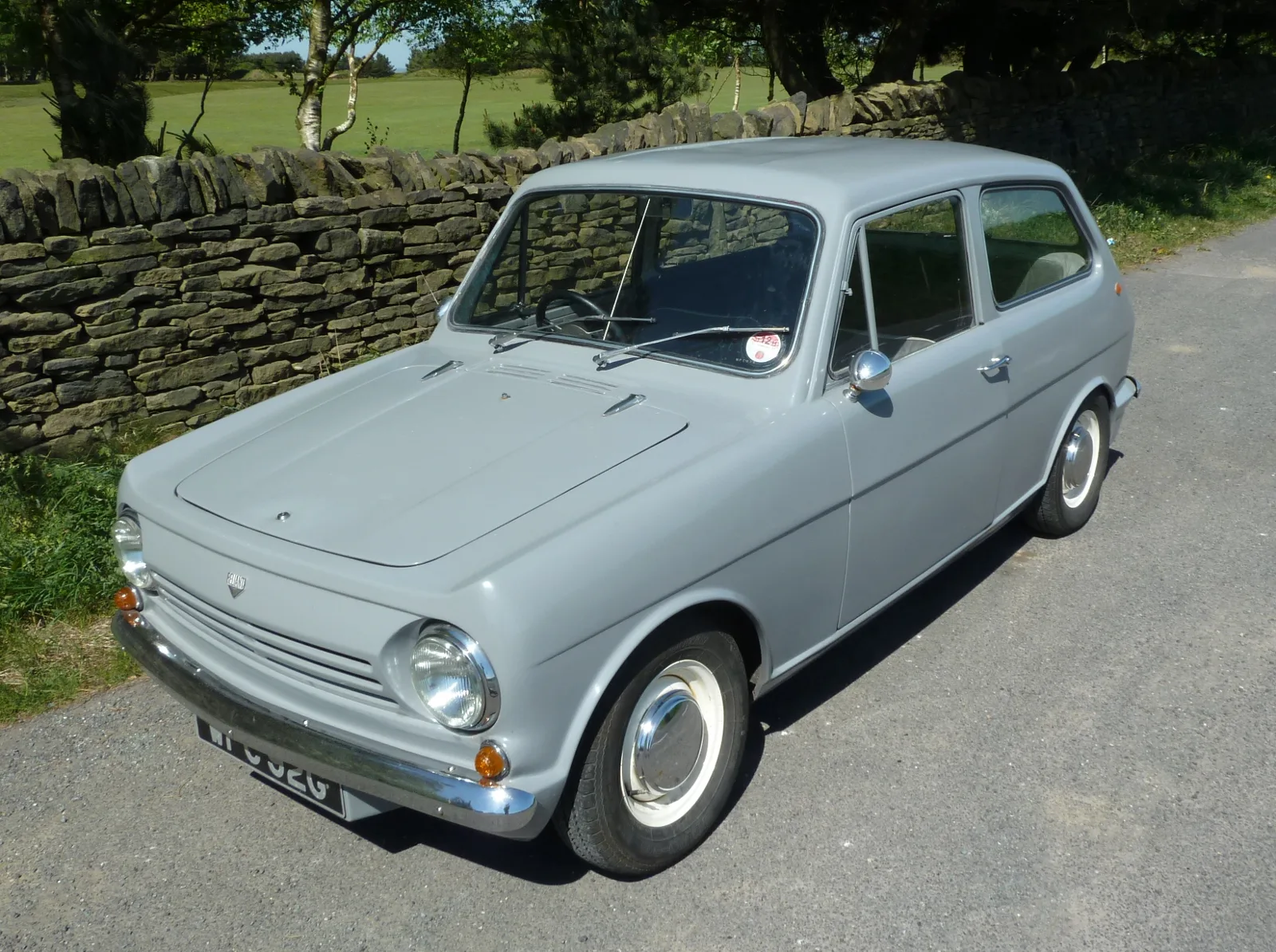
From a back garden in Tamworth to the Robin, the Scimitar and the last Robin 65, the story of the British firm that built its name on fibreglass.
Reliant Motors was a Tamworth car maker founded in 1935 that built the three-wheeled Robin, sports cars and fibreglass bodies. It sold approximately half a million vehicles in at least nine countries, and it ended its own car production in 2001 with the Robin 65.
Reliant Motor Company was a British car maker based in Tamworth, Staffordshire, founded in 1935. It was best known for the three-wheeled Robin, but it also built sports cars, convertibles and commercial vehicles, and it became a pioneer of fibreglass body construction.
Who founded Reliant and where did it start?
Reliant was founded in 1935 by T. L. Williams and E. S. Thompson. When the Raleigh Bicycle Company stopped making three-wheelers in 1934, the pair decided that lightweight three-wheelers still had a future, and they built their own vehicle in Williams's back garden on Kettlebrook Road.
The company's name changed several times. It was known as RMC until the 1990s, then as Reliant Motors, and finally as Reliant Cars Ltd after production ended. Today the company is dormant, and Reliant Partsworld remains as the only entity, supplying parts for Reliant vehicles.
Around half a million Reliant vehicles were built and sold across at least nine countries. From the 1970s to the 1990s it was the UK's second biggest British-owned car maker, behind British Leyland.
A company that began with a back-garden prototype and ended with the Robin 65, built from fibreglass and sold from a single Tamworth site.
How did the first Reliant vehicles work?
The first Reliant was a 7 cwt (356 kg) van with a 600 cc single-cylinder engine, a three-speed gearbox and chain drive. Its body was a hardwood frame with aluminium panels, and the first one was delivered on 3 June 1935 from a disused bus depot on Watling Street in Fazeley.
The single-cylinder engine was underpowered, so a two-cylinder water-cooled J.A.P. unit followed in March 1936, with the gross weight raised to 8 cwt (407 kg).
The first improved twin-cylinder model was delivered on 16 March 1936. In 1938 the company began using the 747 cc four-cylinder Austin side-valve engine, which made 10.5 hp. Austin sold the tooling and manufacturing rights to Reliant, and the first four-cylinder Reliant was delivered on 12 March 1938.
Reliant also made its own engine castings. The side-valve engine's crankcase was sand-cast rather than die-cast, which set it apart from the Austin original. Reliant aimed to make as many of its own parts in-house as it could.
How did fibreglass change Reliant?
Reliant began making car bodies from fibreglass in the mid-1950s, partly to keep the vehicles light. It became a pioneer of fibreglass design and techniques, and by the 1970s it was the largest producer of fibreglass in Europe.
The change came in stages. In 1952 a four-seat car was launched with an aluminium body, but Reliant replaced the panels one at a time with fibreglass as its understanding of the material improved. By 1956 the Mark 3 version of the Regal had a fully fibreglass body.
The 1963 Regal 3/25 had a body made entirely of fibreglass. The engine was a pioneering design, the first lightweight overhead valve aluminium-alloy unit of its kind to reach mass production in Europe and the UK. It displaced 598 cc at first, later raised to 700 cc on the Regal 3/30.
The know-how spread well beyond cars. Reliant built lightweight bodyshells for Ford RS200 rally cars, a fibreglass MetroCab taxi with full wheelchair provision, and Ford Transit high roofs. It also made bodies for trains, kitchen worktops and boat hulls, and British Rail carriage bodies.
Which Reliant models became best known?
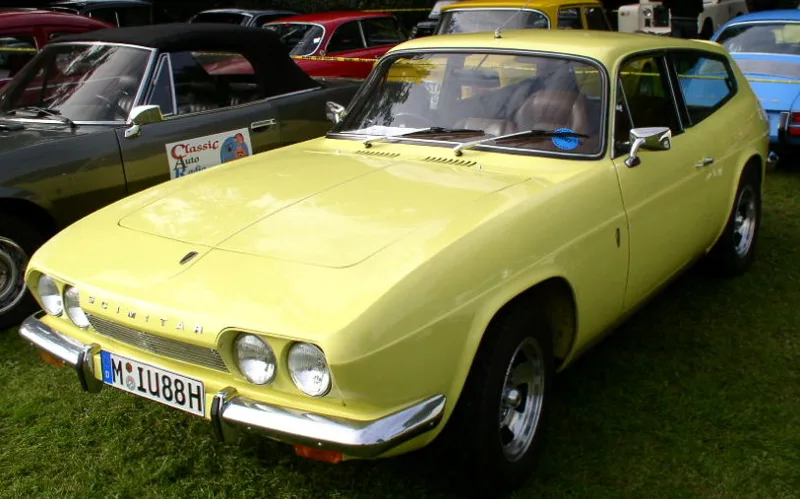
The Robin was the best known Reliant, a three-wheeler aimed at motorcyclists who did not want to take a full car test. The Scimitar GTE became the best-selling sporting estate, and the Sabre and Bond Bug showed the company's attempts to move beyond three wheels.
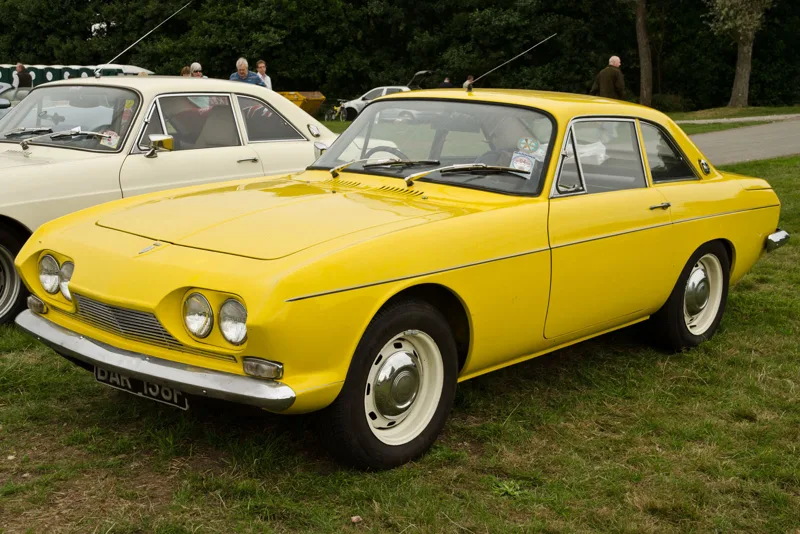
The Scimitar came from a prototype design for the replacement Daimler Dart, which Reliant bought and turned into the Scimitar coupe. The GT coupe could be bought with a 2.5 litre or 3.0 litre Essex V6, and the engines came from Ford of Britain.
The Sabre was a redesign of the Sabra Sport, a vehicle Reliant had first produced for Israel on Ford running gear. Reliant sold it in the UK to help its image expand beyond three-wheeled micro-cars, but the Sabre sold poorly against offerings from Triumph and MG.
Reliant bought Bond Cars in 1969 after Bond went into liquidation. The Bond Bug was a sporty three-wheeler designed by Ogle designer Tom Karen. It was first named the Reliant Rogue, and it came in 700, 700E and 700ES models before the 750 replaced it.
The Kitten was a four-wheeled version of the Robin. It used the 850 cc engine from 1975, and production stopped in 1982. The rights were later sold to Sipani Automobiles in India, which built nearly the same car as the Sipani Dolphin.
Did Reliant only make three-wheelers?
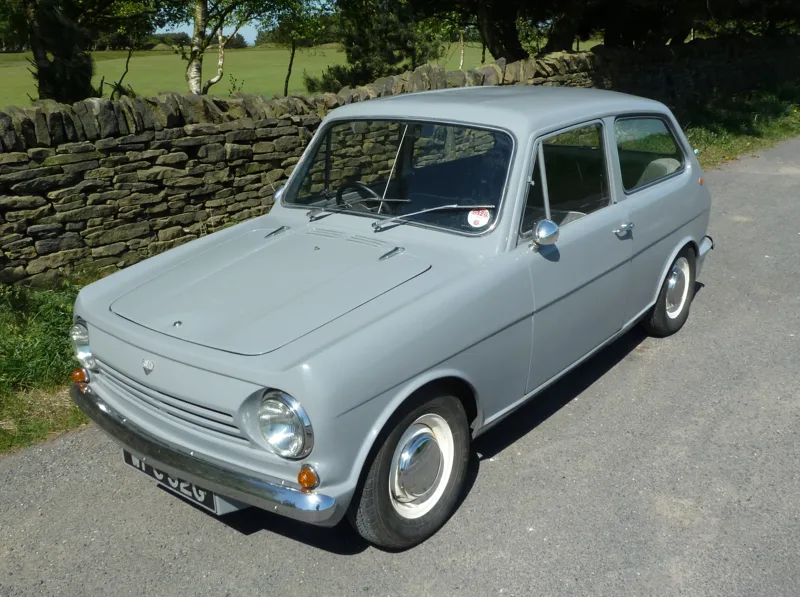
Reliant did not stop at three wheels. It built four-wheeled cars, starting with the Rebel, whose front suspension was based on the Triumph Herald. The Rebel was offered as a saloon, estate and van, and later the Kitten replaced it.
The Fox was a pickup built in the UK from 1983 to 1990. It had first been built in Greece by MEBEA from 1979 to 1983, and the UK version used the 850 cc engine. The TW9 was a small three-wheeled commercial chassis and cab that could carry a custom rear body.
The company also diversified far beyond cars. A documentary called World of Reliant, filmed in the early 1980s, showed the spread of its work. Products ranged from GRP sinks and kitchen worktops to GRP train carriage bodies and aircraft bodies.
How did Reliant's ownership change?
The Hodge Group bought the majority of Reliant in 1962. J.F. Nash Securities later acquired the company at 76.6 percent of the value of its shares, which made the deal a below-market purchase.
In the early 1990s, during the 1992 recession, the company folded and was sold to Beans Engineering. By 1996 Jonathan Haynes had taken the lead, with his main backer taking control.
Haynes created Robin and Rialto specifications, including the SLX, to appeal to more buyers. Sales doubled, because earlier Reliant vehicles had been basic cars. Production moved to Plant Lane, Burntwood in 1997.
A 1998 Robin redesign by Andy Plumb kept the model in production. The Robin continued until 2001, when shareholders chose to import Ligier microcars and Piaggio Ape three-wheelers instead.
How did Reliant end its own car production?
Reliant produced 50 vehicles a week until 2001, when it finished its own models to focus on imports. Its work then centred on Ligier microcars and the Piaggio Ape range of commercial vehicles.
The last Reliant was the Robin 65, a metallic gold model built to mark 65 years of car production. It had every optional extra and sold for 10,000 pounds sterling. Only 65 were built up to Valentine's Day 2001.
Reliant Cars Ltd was renamed Reliant Partsworld, and the old Tamworth site later became Scimitar Park, a housing estate named after the Scimitar.
Could B&N Plastics revive the Robin?
B&N Plastics of Sudbury took on the Robin and began production of a version under its own name in late 2001. The BN-1 Robin cost 10,000 pounds sterling, but the venture ran out of money by early 2002, after 30 to 40 cars had been built.
Reliant could no longer supply the mechanical parts, because it had ended production of its 850 cc engine. B&N Plastics had already spent 100,000 pounds sterling on approving the design, and over 200 orders were left unfulfilled when it ceased production in late 2002.
A later plan was to fit a Japanese K-car 660 cc three-cylinder engine to make the Robin more modern. That plan never reached production.
How did the export deals with Israel and Turkey work?
In the early 1950s Reliant agreed a deal in Israel to produce Regent vans in SKD form, meaning the vehicles were shipped in kit form for local assembly. Israel then asked for a four-wheeled vehicle that could handle rough roads and be built as a van, pick-up or estate.
The answer was a car that reused a lot of Reliant's existing parts, in effect a Regent converted into a four-wheeled vehicle. Autocars sold it in Israel as the Sussita, a name chosen to make it seem a more homegrown car. Reliant showed it in the UK in 1958, though only in left-hand drive, because it was an overseas model.
The Israeli work led to the Carmel, a people's car designed around the same time as the Regal 3/25. It used the 1100cc Ford Anglia engine, and many of its chassis and running gear parts came from the Sussita.
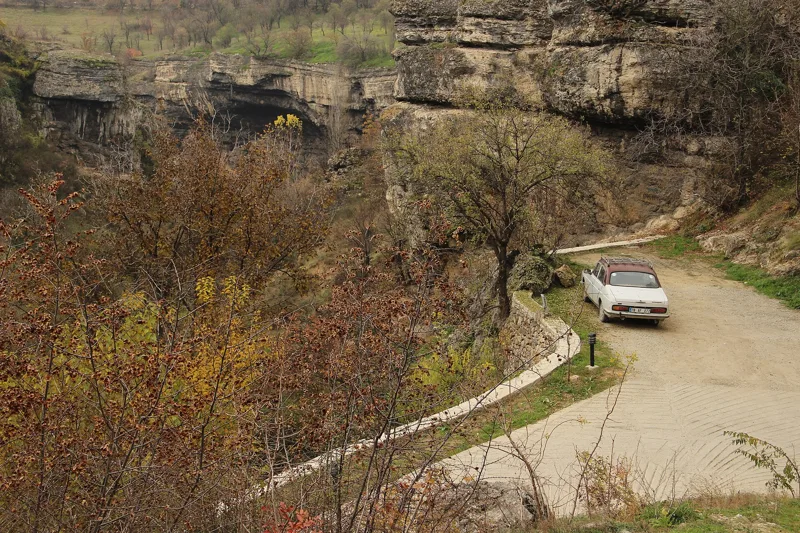
In 1962 a Turkish delegation visited Autocars in Israel and was impressed by its production. Turkey then asked Reliant to design its own people's car, which became the Anadol, a saloon with a GRP body, a separate chassis and Ford running gear. The deal went beyond the car itself, because Reliant also helped set up the production operation, which became Otosan.
The Anadol grew into a family of two-door and four-door saloons, vans, pick-ups and estates. Reliant later offered to redesign it again, but Otosan believed it could go it alone, and sales declined before the plant became a Ford assembly site.
Is it legal to drive a Reliant three-wheeler?
A Reliant can be driven legally with the right licence. A full motorcycle or car licence is required, and the driver must be over 21. A CBT licence is not enough, because the larger Reliant engines exceed what it allows.
The B1 class allowed three or four-wheeled vehicles up to 550 kg on a motorcycle licence, until the EU eliminated it in 2001. In January 2013 the rules changed again, so that full A-category motorcycle licence holders over 21 may drive three-wheelers of any weight.
Three-wheelers are allowed on motorways if the engine is over 50 cc, so Reliant vehicles were never barred from the motorway network.
Was the Robin really unstable on corners?
The most widespread myth holds that a Reliant cannot go around corners. Jeremy Clarkson conceded in The Sunday Times in 2016 that the Robin's rollovers came from modifications: a welded differential, mismatched rear wheels and sandbags in the footwell.
Other myths persist. Many people believe that Derek Trotter drove a Reliant Robin in Only Fools and Horses, but the Trotters' van was a Supervan III. Another is that three-wheelers have no reverse gear, when in fact the reverse gear was disabled only before 1964, and later vehicles all had one.
Reliant models at a glance
| Model | Period | Engine | Notes |
|---|---|---|---|
| Regal 3/25 | 1963 onward | 598 cc overhead valve | First all-fibreglass body |
| Regal 3/30 | Later Regal | 700 cc | Upgraded from the 3/25 |
| Sabre | Four-wheeled saloon | Ford Zephyr 6 or Consul 4 | Sold in the UK, sold poorly |
| Scimitar GT | Coupe | 2.5 or 3.0 litre Essex V6 | Scimitar coupe from a Daimler Dart prototype |
| Bond Bug | 1970s | 700 cc, then 750 | Designed by Tom Karen of Ogle |
| Kitten | 1975 to 1982 | 850 cc | Four-wheeled Robin relative |
| Fox | 1983 to 1990 | 850 cc | Pickup built in the UK |
| Robin 65 | 2001 | Reliant Robin | Last Reliant built, 10,000 pounds sterling |