From the fibreglass A1 to the Bocek buggy and the STC-16 sports car, Turkey's first mass-production brand ran from 1966 until 1991.
Anadol was Turkey's first domestic mass-production passenger car brand. Built by Otosan in Istanbul from 1966, it offered seven models, including the A1, A2 and STC-16 sports car, before passenger car production ended in 1986. Its name came from Anatolia, and the pick-up version kept building until 1991.
Anadol built Turkey's first passenger cars for a domestic mass market, working from Otosan's Istanbul plant between 1966 and 1991. The A1 went into production in December 1966, and the range that followed included a four-door saloon, a fibreglass estate, a sports coupe and a pick-up. Passenger car production ended in 1986, while the pick-up kept going until 1991.
Where did the Anadol name come from?
The name is taken from Anadolu, the Turkish word for Anatolia, and the brand's logo was the Hittite stag. Otosan Otomobil Sanayii, based in Istanbul, built every Anadol car and pick-up. Production of passenger cars stopped in 1986, although the brand's pick-up continued until 1991.
The company's home market was the focus from the start. Otosan's Istanbul works produced the cars and trucks, and the Anatolian name tied the range to the country it was built for.
Turkey's first domestic mass-production car brand, built in Istanbul from fibreglass bodies and rally ambition.
How did the Anadol A1 get started?
The A1 was the first Anadol model and went into production in December 1966 at Otosan's new eastside Istanbul plant. Reliant developed the prototype at Anadol's request, and the styling came from Tom Karen of Ogle Design. It began with a 1200 cc Cortina engine before a 1300 cc Kent unit took over in October 1968.
Changes came steadily. In 1969 the dashboard gauges were redesigned and moved, and the steering wheel was reworked for better ergonomics. In 1970 the round headlamps gave way to oval ones, and a new transmission and revised bumpers followed. The roof lining was covered in vinyl in 1971, in keeping with the fashion of the period, and the design held until April 1972.
A special edition, the Akdeniz, was built in 1971 for the Mediterranean Games held in Izmir. It previewed the 1972 restyle, which integrated the bumpers into the body, adopted rectangular headlamps with white signal lamps and changed the interior. From 1972 it became the standard Anadol coupe until production stopped in 1975.
The five-seat body was fibreglass on an H-frame chassis, with independent front suspension, a live rear axle on leaf springs, and disc brakes at the front with drums at the rear. Saloon and estate versions joined the coupe in late 1973, giving the A1 a wider reach.
The A1 also became Turkey's first rally car. Its drivers included Renc Kocibey and Demir Bukey, who won the 1968 Trakya (Thrace) Rally, the country's first official rally. Iskender Aruoba took an A1 on a 30,000 km Africa-Asia-Europe tour in 1968, which lasted 8 months. In 1967 New Zealand entrepreneur Alan Gibbs announced a local version, the Anziel Nova, but it never got beyond an announcement and a prototype.
What was the Anadol A2?
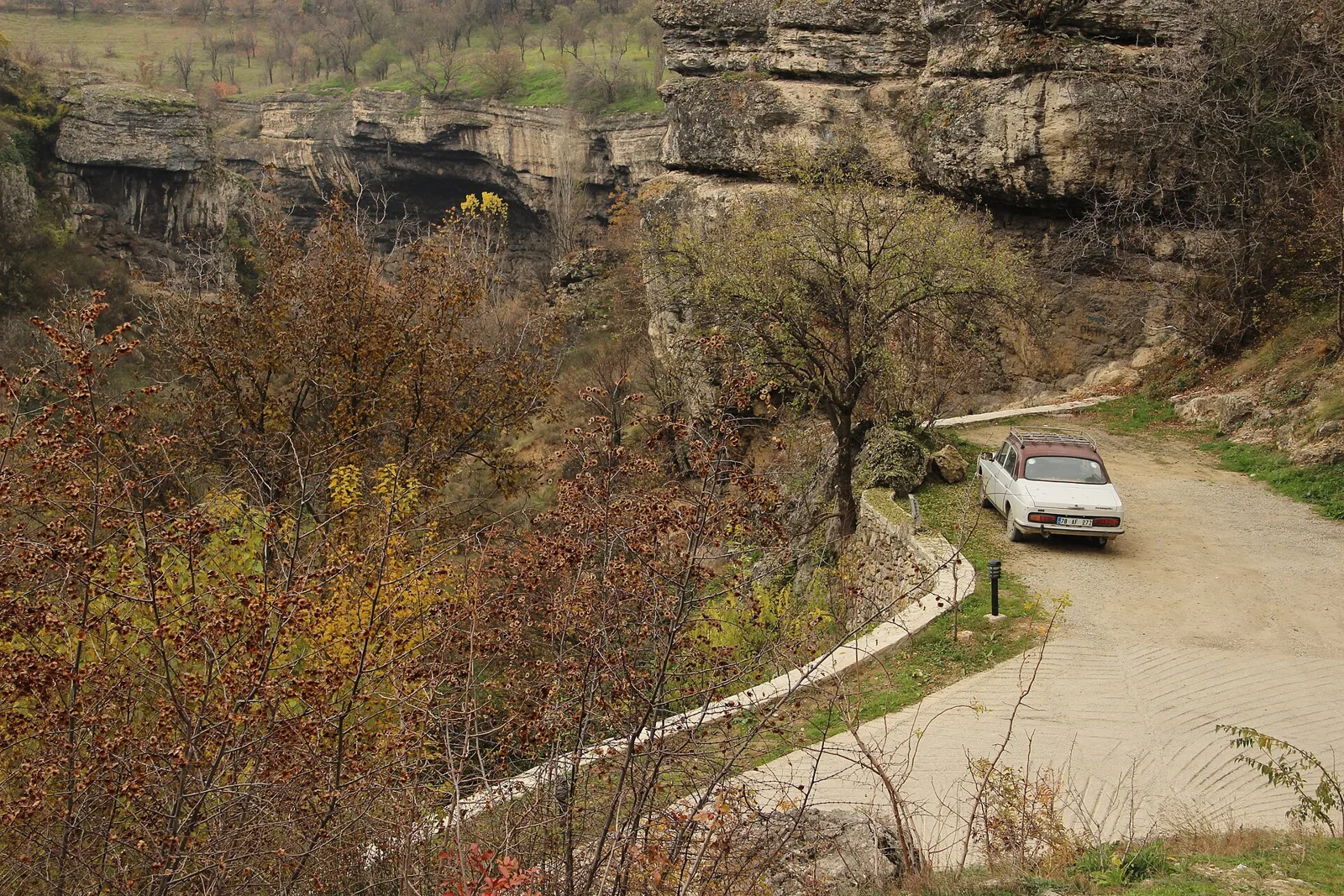
The A2 was Anadol's first four-door model and was billed as the first fibreglass-bodied four-door sedan in the world. Prepared in 1969, it went on sale in 1970 and shared the A1's technical specification in its early versions. It became the best-selling Anadol passenger car, with 35,668 units sold before the A8-16 replaced it in 1981.
Early A2 cars kept the A1's front end until April 1972, when they took the same nose, grille and headlamps. In 1976 the SL arrived with new lamps front and rear, plus a revised interior with a new steering wheel, dashboard and trim. The A2 was designed primarily as a family sedan, and its practical body also suited taxi work.
Crash testing set the A2 apart. It was the first Anadol to receive extensive crash tests, a sign of growing attention to safety at the company.
The P2 pick-up and its long run
The P2 pick-up was the longest-lived model in the Anadol range, built from 1971 to 1991. A first prototype on A1 underpinnings was developed by Bernar Nahum in 1970, and serial production started the following year with the 1.3-litre Ford Crossflow engine that also powered the saloons.
The Turkish Post, known as PTT, used the pick-up extensively, and demand stayed high across the decade. The 1.6-litre Ford Pinto replaced the original engine in the 1980s. After 1983 the 600D arrived with a 1.9-litre diesel that needed a slight bulge in the bonnet, and many saloons were later converted into pick-up trucks by their owners.
By the time production ended in 1991, 36,892 had been built. That made the pick-up the largest single run in the Anadol line, ahead of the A2 saloon and far ahead of the sports and buggy models.
What was the STC-16 sports car?
The STC-16 was Turkey's first sports car, produced from 1973 to 1975 with a 1598 cc Crossflow engine. Designed by Eralp Noyan, a graduate of the Royal Fine Arts Academy in Belgium, it looked nothing like earlier Anadols and was aimed at the upper end of the Turkish market. Its engine had been developed for the 1970 Ford Escort Mexico.
Erdogan Gonul, Otosan's general manager and the son-in-law of Vehbi Koc, persuaded Koc to back a sports car in 1971. The plan was to win prestige through international rallies. Initial development took 11 months, and the first three prototypes were tested on the road at Kosekoy within Kocaeli Province before the car went abroad.
Nihat Atasagun, Otosan's production manager, took one to England and tested it at the MIRA circuit. British drivers suggested changes, and the car's performance and safety were improved as a result. The first production car left the Otosan factory in April 1973 and reached showrooms soon after.
The 1973 oil crisis hurt demand. Fuel prices rose, fibreglass bodies became more costly, and the STC-16 cost more than 70,000 Turkish Liras, against 50,000 to 55,000 for other Anadols. Only 176 were built, most of them in 1973. Most were painted Alanya Yellow, which became synonymous with the car, and the buyers were mainly rally drivers, enthusiasts and young celebrities.
The rally version swapped the steel chassis for a lightweight FRP chassis and used a modified 140 bhp (104 kW; 142 PS) engine. Its victories in Turkey and across Europe made it a symbol for a generation of young Turkish drivers.
The SV-1600 estate and the Bocek buggy
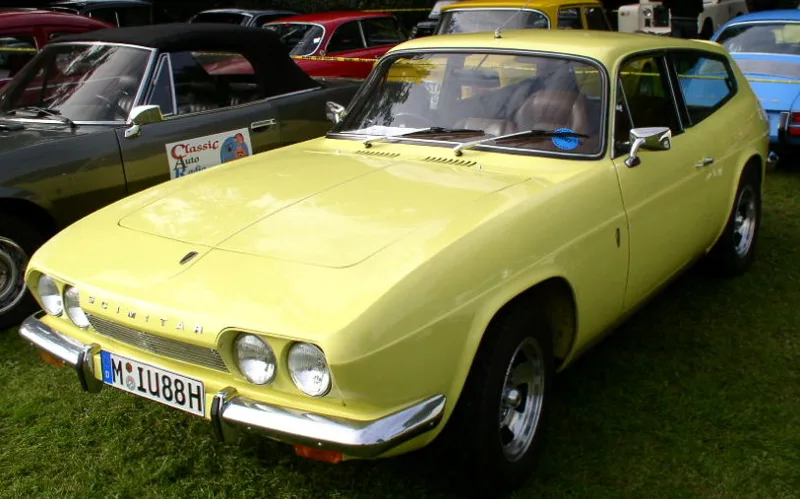
The SV-1600 was the world's first fibreglass-bodied five-door estate, arriving in showrooms at the end of 1973. Its design drew on Reliant's Scimitar sports estate coupe. Aluminium wheels, a new steering wheel and a black-and-white side stripe followed in 1976, and production ran until 1982, with 6,499 units built over that period.
The Bocek, meaning Bug, was designed by Jan Nahum at Otosan. It was first developed on request from the Turkish Armed Forces and went on sale in 1975, with a civilian version aimed at the country's growing beach resorts. Its roof could be opened, it had no doors, and its 1298 cc Ford engine produced 63 bhp (47 kW; 64 PS). The futuristic front panel and gauges were ahead of their time.
Only 203 Bocek were produced from 1975 to 1977. Variants included a gull-wing door version, a model for the Turkish Radio and Television Corporation (TRT) fitted for film and video cameras, an off-road version, a tractor-trailer and a military version. The concept was ahead of its time, but the 1973 oil crisis left little appetite for such a vehicle.
The A8-16 and the end of the passenger range
The A8-16 was a four-door, five-seat car that entered production in 1981 and was styled with the 1970s Volvo and Saab models in mind. Traditional Anadol customers were unconvinced by its interior and materials. Only 1,013 were built between 1981 and 1984, and the SL version dropped the Pinto E-Max engine for an older 1.6 unit from 1983.
The body sat on a box-type perimeter frame with crossmembers, and the running gear was conventional for the period. It had independent coil spring front suspension, a live leaf spring rear axle, rack and pinion steering and a four-speed manual gearbox. Many buyers saw the car as a mix of old Anadol parts and new ideas, which did not help sales.
The A8-16 was the last model launched in the passenger range. Passenger car output stopped in 1986, the year Otosan turned its plant over to Ford models, and no new Anadol passenger car followed.
Which prototypes did Anadol develop but never sell?
Anadol developed several prototypes that never reached mass production. A Wankel engine project, the FW 11 designed by Marcello Gandini in 1977, the Cagdas of the late 1970s and the A9 of 1982 all stalled, mostly on cost, politics or the economy. None of them went on sale under the Anadol badge.
Klod Nahum led the team that developed a Wankel engine producing more than 100 PS (74 kW) from a small unit. Its development costs and the known problems of Wankel designs kept it out of production. One of these engines is now displayed at the Rahmi M. Koc Museum in Istanbul.
The FW 11 was built for Anadol and Reliant, which named its version the Scimitar SE 7. Four prototypes were made, and two of them went to Turkey with Anadol badges. Anadol judged the car too expensive to produce profitably, and the project was shelved. The Turkish prototypes spent nearly 25 years in a depot before one was occasionally displayed at the museum from 2004.
Jan Nahum's Cagdas, meaning Contemporary, used fibreglass panels on a steel skeleton and the Wankel engine. It won an industrial design prize from the Turkish State Fine Arts Academy. Production was expected in 1980 or 1981, but political and economic instability meant it was never realised, and a single prototype is now in the museum.
The A9, styled by Bertone in 1982, was the last Anadol prototype. It was a four-door sedan with a very modern look for the early 1980s, and it was never mass-produced. The prototype was later destroyed, and Anadol ceased as a car brand in 1986.
Anadol models at a glance
| Model | Years | Built | Detail |
|---|---|---|---|
| A1 | 1966-1975 | 19,724 | Fibreglass coupe, later saloon and estate |
| A2 | 1970-1981 | 35,668 | Four-door saloon, best-selling passenger car |
| STC-16 | 1973-1975 | 176 | Turkey's first sports car |
| SV-1600 | 1973-1982 | 6,499 | World's first fibreglass five-door estate |
| Bocek | 1975-1977 | 203 | Fibreglass buggy with no doors |
| A8-16 SL | 1981-1984 | 1,013 | Four-door, five-seat, Volvo and Saab influence |
| P2 500 Pick-Up | 1971-1991 | 36,892 | Pick-up, later 600D diesel version |