One Ford arm ended all production in a market where it was the fifth best seller, another builds just a single pickup, and a Turkish joint venture now runs plants from Kocaeli to Romania.
Ford Brasil ended all production on 12 January 2021 after 101 years. Ford Argentina, founded in 1913, builds only the Ranger at General Pacheco as of 2022. Ford Otosan, equally owned with Koc Holding, runs plants in Turkey and, since 2022, Craiova in Romania.
Ford closed every factory it owned in Brazil. The shutdown came on 12 January 2021, after 101 years, and it hit a company that had just finished 2020 as the fifth best-selling automaker in the country, with 7.14% of the market. The following year, a Ford joint venture in Turkey took over a factory in Romania for 625 million euros.
Three Ford operations outside the United States and Europe, in Brazil, Argentina and Turkey, show how differently one global brand can age.
Ford Brasil, from Model T kits to a shut-down industry
Ford Motor Company Brasil Ltda. dates its founding to 24 April 1919, when it began importing Model T cars and Model TT trucks in kit form for assembly, though Ford vehicles had been sold in the country since 1904. At first the operation rented buildings. In 1921 it opened its own plant in Sao Paulo, called Solon, a scaled-down version of the Highland Park plant, also designed by Albert Kahn. Fordlandia, a rubber plantation village opened in Para in 1928 to supply tyres and other parts, was abandoned in 1934.
From assembling to manufacturing
A bigger plant, Ipiranga, opened in Sao Paulo in 1953. On 26 August 1957 the first Brazilian-built F-600 medium truck rolled out with a Y-block engine and 40% local parts, a share that rose as Brazilian suppliers multiplied. The F-100 pickup followed in 1958 and the F-350 light truck in 1959, and local production of the 272 Y-block engine started in 1958.
On 9 October 1967 Ford took control of troubled Willys-Overland do Brasil as majority shareholder. That brought in the Sao Bernardo do Campo factory, the Aero-Willys and Willys Itamaraty sedans, the F-75 utility vehicle and pickup, and the Willys Jeep. Ford also inherited a work in progress that became the front-wheel drive Corcel. Though widely based on the Renault 12, the Corcel had its own design, and it was among the most popular cars of the 1970s. The Ford Galaxie, launched in 1967 with a Y-block V8 and a body from the 1966 North American four-door, was the most expensive car built in Brazil. In 1974 an engine factory at Taubate began producing the 2.3L four-cylinder used in the Brazilian Maverick and exported to the United States.
Maverick, ethanol and AutoLatina
The Maverick debuted at the Sao Paulo show in December 1972 as a 1973 model. It came in Super, Super Luxo and GT forms; the first two had the Willys six-cylinder, while the GT carried the 302 V8, optional in the Super Luxo. It sold well for two years, then only the two-door Super Luxo kept the numbers up, and it was quietly dropped in 1979. During the oil shock Brazil built up its ethanol industry from sugar cane, and "Movido a alcool", or "Powered by Alcohol", became a sales slogan for any car.
In 1987 the Brazilian and Argentine arms of Ford and Volkswagen merged into a holding called AutoLatina, with Volkswagen holding 51% and Ford 49%. Each brand kept its own image, marketing, dealerships and service shops, but other departments were combined, which saved money and cut the workforce almost in half. The Ford Verona, sold as the Volkswagen Apollo, arrived in 1989, and the Versailles, a facelifted Volkswagen Santana, in 1990. The partners split amicably in 1994. Ford wanted its independence back, partly because its own sales were dwindling, but it still relied on engines and drivetrains from its former partner.
Camacari and the end
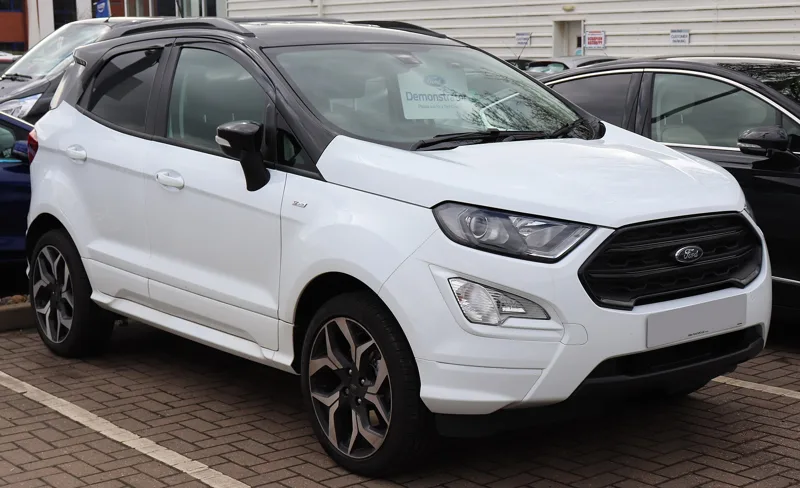
In 1996 the German Fiesta arrived as Ford's new low-end model, replacing the Escort Hobby, and the whole Escort range moved to Argentina. The 2000s were built around low-cost versions of global platforms: the Ka, the Fiesta and the EcoSport mini SUV, four-cylinder 1.0, 1.6 and 2.0 litre engines. Ford closed the Ipiranga plant in 2000. A new factory at Camacari, in Bahia, absorbed US$4 billion and put suppliers inside the same complex. The Fiesta and EcoSport were built for the Brazilian market and exported to other developing countries, and Ford America Latina was described at the time as the most profitable part of the company's global operation. The Fusion, built in Mexico, was often the best-selling car in its segment, and Ford had 396 sales points and 233 dealerships.
In 2019 Ford decided to close the Sao Bernardo do Campo plant, which was sold to Construtora Sao Jose and FRAM Capital, ending national production and the South American truck business. On 12 January 2021 production ended across Brazil. The Camacari and Taubate plants closed immediately, and the Troller plant in Horizonte, Ceara, closed on 31 December 2021. In its last full year Ford sold 119,454 cars, 19,864 pickups and 579 trucks in Brazil.
The range now comes from elsewhere. As of July 2024 the Mustang is built in the United States, the Ranger in Argentina, the Territory in China, the Bronco Sport, Maverick and Mustang Mach-E in Mexico, and the Transit and E-Transit in Uruguay by Nordex.
Ford ended 101 years of Brazilian production in a single January, while its Turkish partner was buying a plant in Romania.
Ford Argentina and the General Pacheco plant
Ford Argentina was founded in Buenos Aires in 1913. In 1916 the city got the first Ford assembly operation in Latin America and the second in the world after Ford of Britain, working on dismantled cars at a plant on Herrera Street in Barracas. The parent company then invested US$240,000 in an assembly plant in La Boca, inaugurated in 1922 with the Model T and about 20% local parts. By 1927, 100,000 units had been produced, and the Model A was launched the same year. The company's first products are also dated to 1917, Model Ts assembled from complete knock-down kits.
The Second World War stopped imports in 1939. Ford made batteries and sold spare parts made in local repair shops, and that work later gave rise to the Argentine auto parts industry. Production restarted at La Boca in late 1946, stopped in 1948 and stayed stopped until 1957. In 1959 the company began building F-series pickups, F-600 trucks and chassis for B-600 buses, and in 1960 construction started on a new plant at General Pacheco, which officially opened in 1961. It covers 252,000 square metres under roof, out of 1,308,000 in total.
Falcon, Taunus and Focus
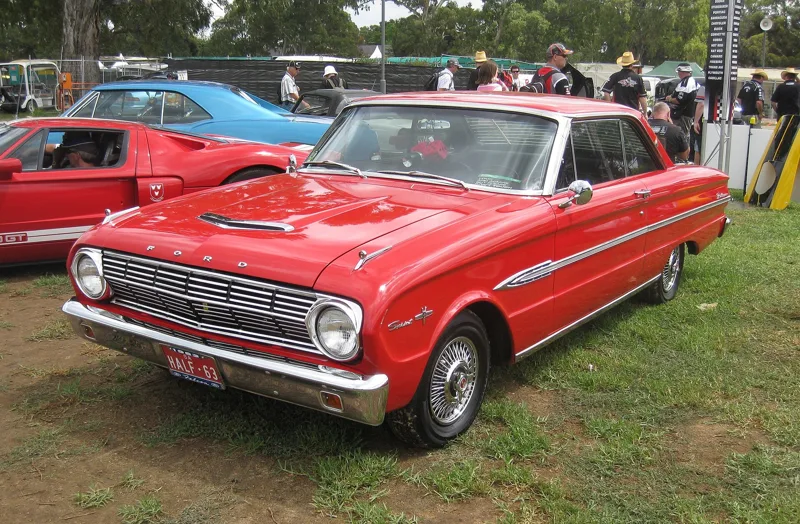
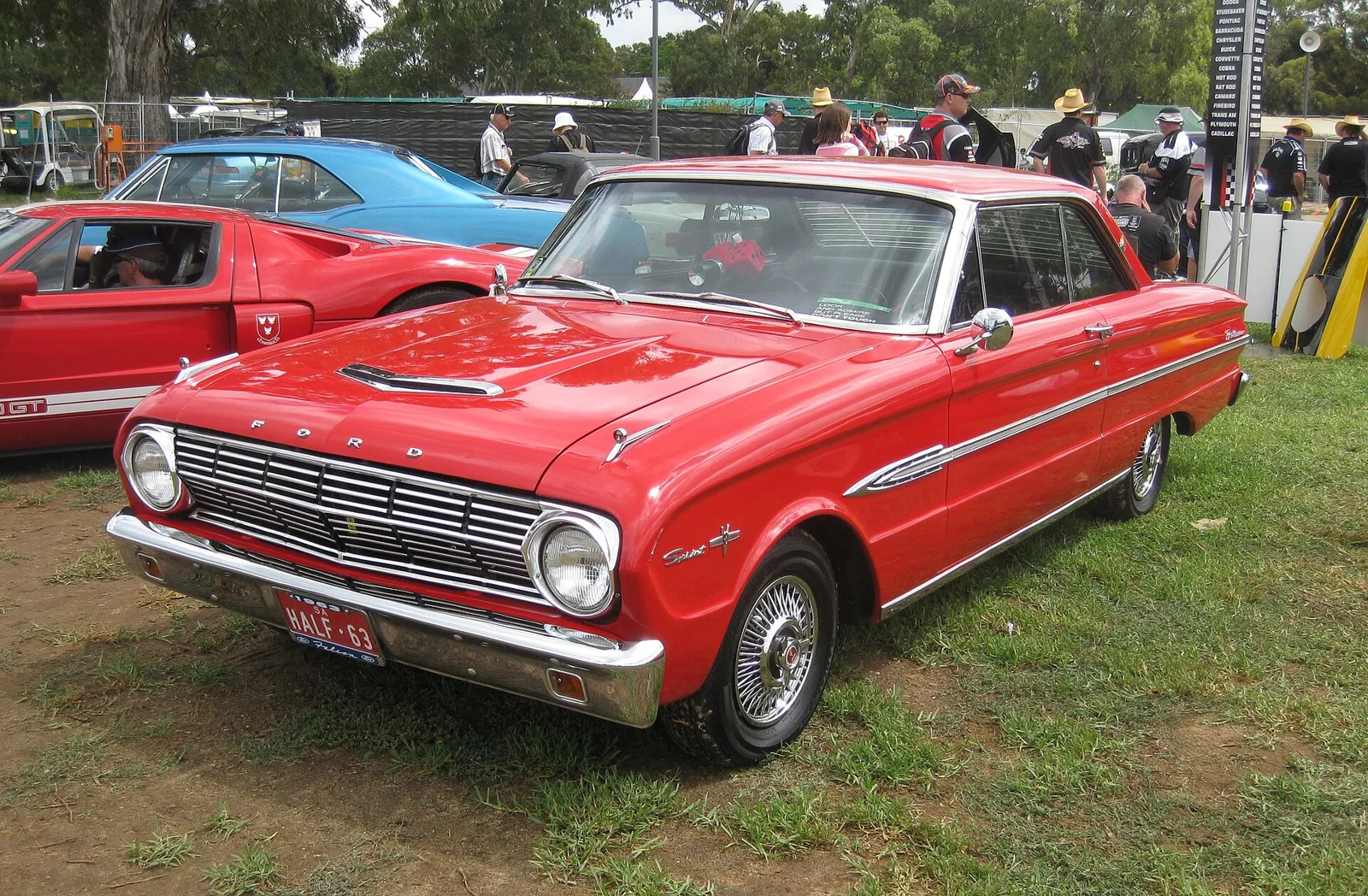
The first car built at Pacheco was the Falcon, in 1962, followed by the luxury Fairlane in 1969. After the 1973 oil crisis pushed prices up more than 300%, manufacturers turned to smaller cars, and in 1974 Ford launched the Taunus, the first European-based Ford built in Argentina. In 1979 the Falcon became Argentina's top-selling car, with 28,522 units, and repeated the feat six times. By 1982 Ford held 38% of the market. The millionth Taunus left Pacheco in 1983, and a year later came the Sierra, a mid-size car by Uwe Bahnsen, Bob Lutz and Patrick le Quement for Ford Europe.
AutoLatina Argentina was created in 1987 by merging Ford Motor Argentina and Volkswagen Argentina. Sales and profits disappointed, the venture was dissolved in 1994, and Ford Argentina S.A. was re-established on 1 January 1995, with Ford keeping the Pacheco plant. The Escort and Ranger were added, ISO certifications followed in 1996 and 1999, and output passed 2,000,000 vehicles in 1998.
The Focus began at Pacheco in 1999 and was named Car of the Year in Argentina by two councils of journalists. In 2000 Ford held 14.9% of the market and ranked second, and led all manufacturers in exports; only the Focus and Ranger were then built there. In 2007 its share was 12.8%, third behind Peugeot-Citroen at 28.5% and General Motors at 20.5%, and it invested US$156.5m in the plant.
In 2018 two former executives were convicted over the kidnapping and torture of company workers during the military dictatorship of 1976 to 1983, and sentenced to 10 and 12 years. Rising interest in SUVs led Ford to stop the Focus in 2019, the last sedan it built there. As of 2022 only the Ranger pickup is made at General Pacheco.
Ford Otosan, Turkey's equal partnership
Ford Otomotiv Sanayi A.S., trading as Ford Otosan, is equally owned by Ford Motor Company and Koc Holding. Its relations with Ford go back to 1928, when Vehbi Koc became a Ford dealer in Ankara. The next year the Turkish national assembly let Ford install an assembly plant in a free zone at Tophane in Istanbul's port, where limited numbers of Model A and Model B vehicles were put together until 1934.
From Anadol to the Transit
The Otosan factory was founded in Istanbul in 1959, and in 1960 the Ford Consul became the first model built there, followed by the Thames and the Thames Trader van. The D1210 truck arrived in 1965. In 1966 came the Anadol, the first mass-production passenger vehicle developed in Turkey, and in 1967 the Transit began production. The Anadol STC-16 followed in 1973 as the first Turkish sports car.
In 1977 the company signed a licence agreement with Ford and took the Ford Otosan name. A new factory opened at Inonu, Eskisehir, in 1979 and started on the Cargo in 1983, the year Ford raised its stake to 30%. The Taunus was built in Istanbul from 1985, and the Escort replaced it in 1993. In 1997 Ford's holding rose to 41%, making it an equal partner with Koc. A new plant at Golcuk, Kocaeli, began operating in 2001 to replace the Istanbul facility, aimed mainly at commercial vehicles, and builds the Transit and Transit Connect, both sold worldwide.
The Cargo heavy truck unveiled in January 2013 was co-developed with Ford Brazil and planned for both countries. In September 2018 Ford showed an electric tractor trailer concept called the F-Vision, with Level 4 autonomous capability. In March 2022 Ford Otosan announced it would buy Ford Romania, and took over the Craiova factory on 1 July 2022 for 625 million euros, with a further 140 million euros payable in 2028 depending on the plant's production capacity.
The plants today
The Kocaeli plant at Golcuk, opened in 2001, is the main global production centre for the Transit and can build 320,000 vehicles a year, with its own port. The Yenikoy plant, inside the same site, began building the Transit/Tourneo Courier in 2014 with a starting capacity of 110,000 a year. Courier production left Turkey in July 2023 for Romania, and Yenikoy will instead build the new Transit Custom. Craiova, founded in 1976, produced Oltcit until 1994 and Daewoo vehicles until 2008, when Ford bought it. Since 2022 Ford Otosan has owned it, and as of 2023 it makes the Puma crossover and Courier, with electric versions due in 2024.
The Inonu plant has a capacity of 10,000 trucks, 66,000 engines and 45,000 gearboxes a year. The Sancaktepe Engineering Center, set up in 2014, employs over 1000 product development engineers. Across six locations Ford Otosan employs more than 20,000 people and had capacity for over 934,500 vehicles, 430,000 engines and 112,000 powertrains by 2024. Its current products are the Transit, Transit/Tourneo Custom, Transit/Tourneo Courier, F-Max truck, Puma and, from 2024, the Volkswagen Transporter and Caravelle.
Three Ford operations compared
| Operation | Started | Main sites | Production status |
|---|---|---|---|
| Ford Brasil | 1919; own plant 1921 | Sao Paulo, Sao Bernardo do Campo, Taubate, Camacari | All production ended 12 January 2021; Troller plant closed 31 December 2021 |
| Ford Argentina | 1913 | La Boca, General Pacheco | Ranger only at General Pacheco as of 2022 |
| Ford Otosan | Dealer ties 1928; Otosan factory 1959 | Golcuk, Yenikoy, Inonu, Craiova | Transit, Custom, Courier, F-Max, Puma |
Where the three stand now
Ford's range in Brazil is imported, and the Ranger sold there comes from Argentina. In Argentina, the Ranger is the one vehicle left at General Pacheco. In Turkey and Romania, Ford Otosan still builds commercial vehicles and the Puma, with the Yenikoy plant taking on the new Transit Custom and electric versions planned for Craiova from 2024.