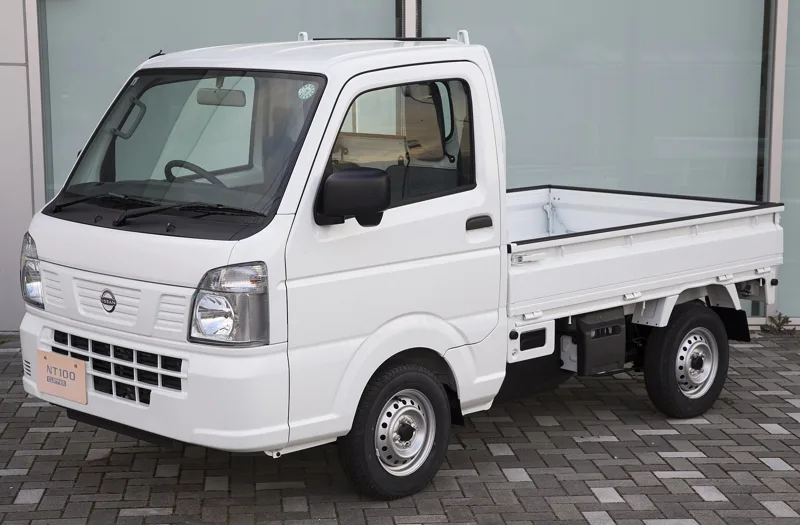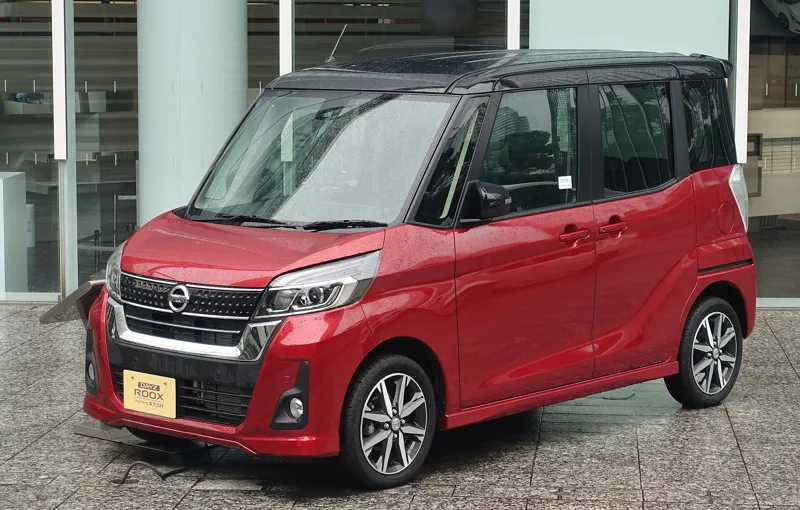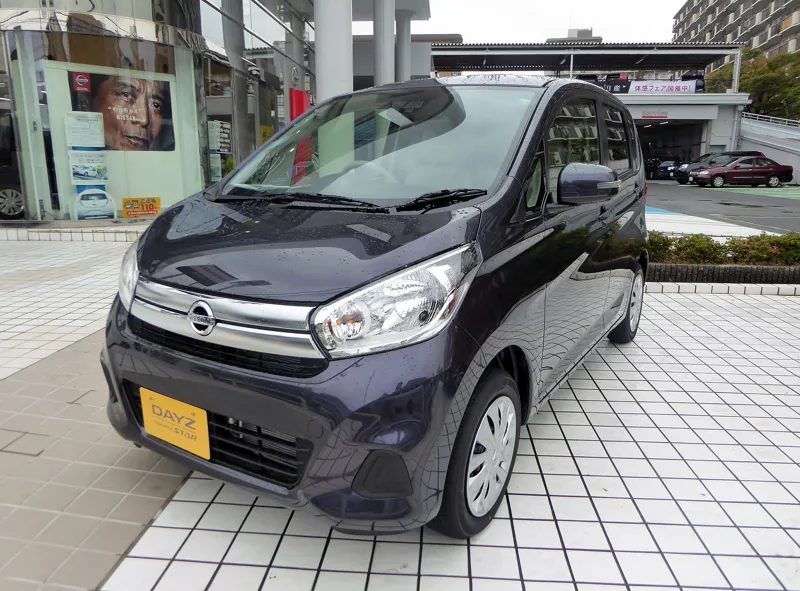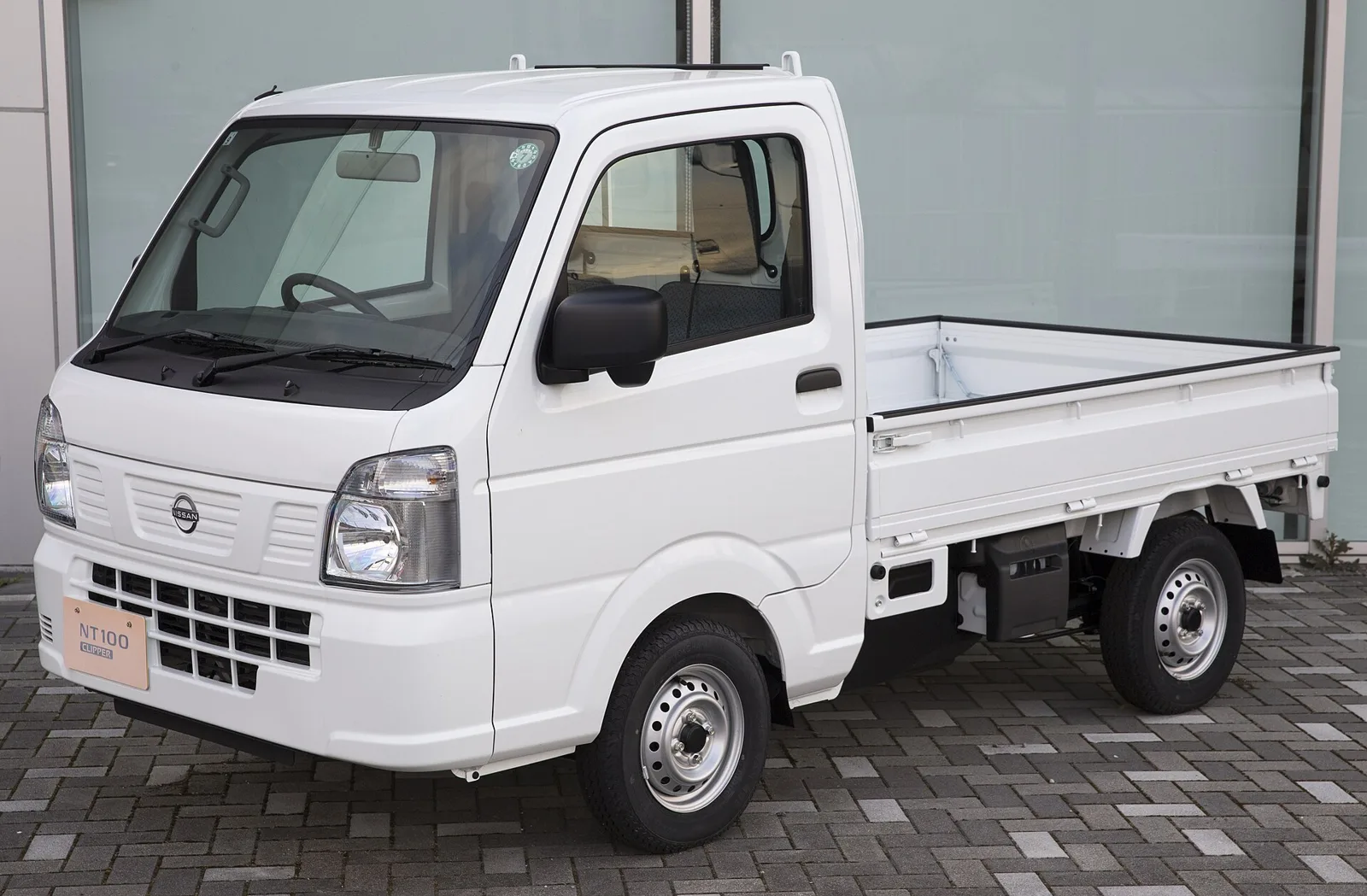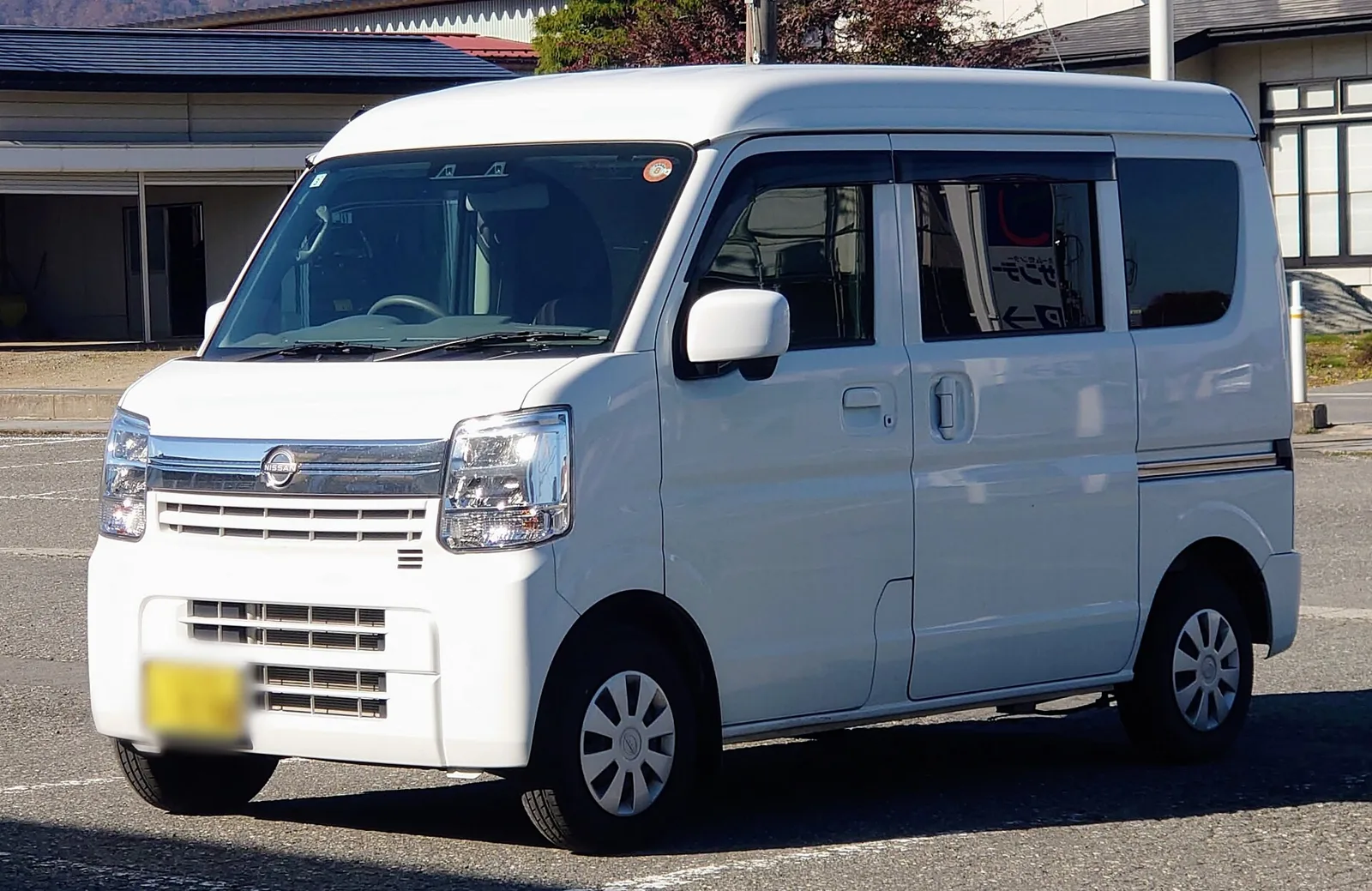
A semi-cab-over kei light van that Nissan sold from 2003, built by Mitsubishi and later by Suzuki, with a name that changed in 2012 and returned in 2024.
Nissan's Clipper Van began sales in October 2003, built by Mitsubishi on an OEM basis. The line moved to Suzuki Every-based OEM supply in 2013, and in 2024 its name returned to Clipper Van after the NV100 Clipper years. Each generation brought changes to engines, safety equipment and grades.
The Nissan Clipper Van is a semi-cab-over kei light van that Nissan Motor has sold since 2003. The first generation and the EV version came from Mitsubishi Motors on an OEM basis, while the petrol versions from the second generation onward came from Suzuki. The name changed in the middle of its life and returned to Clipper Van in 2024.
When did the Clipper Van go on sale?
Nissan and Mitsubishi announced the supply deal and the Clipper name on 29 August 2003 (Heisei 15). The van was officially announced on 16 September 2003 alongside the Clipper Truck, and sales began on 6 October 2003 with three grades: SD, DX and GL.
Each grade matched a Mitsubishi Minicab Van grade. SD matched the CS, DX the CD and GL the CL. The CS two-seater set offered on the Minicab Van had no Clipper equivalent. The internal code was VMA0, but the official vehicle type was Mitsubishi's U71V, and apart from the dummy grille and emblems the van differed little from the Minicab Van.
The first model also had an electric derivative, the Clipper EV. Apart from the Hyper Mini, which stayed in small-scale production, the Clipper was Nissan's second kei car after the Moco.
A Mitsubishi-built van became a Suzuki-built one, then returned to its original name in 2024.
What changed during the first generation?
The 20 October 2004 update was a partial improvement. All vehicles gained the Heisei 17 emissions certification with a 50% reduction, and every grade except the SD and DX 4WD 3AT versions reached the Heisei 22 fuel economy standard plus 5%. A passenger SRS airbag and a head-impact-cushioned assist grip on the driver's side became standard, and the front body was reinforced.
The December 2005 update gave the van Nissan's wing grille, a change that separated it from the Minicab Van. An LCD trip meter and headlamp levelling were added, and the top GL grade gained privacy glass and a cassette-integrated AM/FM tuner radio with two speakers. A passenger-side under-mirror and an Extra Pack with a CD player and colour-coded side mirrors followed in December 2006.
The Clipper Rio, a passenger one-box wagon based on the van, went on sale on 14 June 2007. Its base vehicle was the Mitsubishi Town Box, and it had a dark smoke plated front grille to set it apart. The 2007 update brought a two-tone grey interior and rear seat belts as standard on every model.
The 8 January 2010 update added the special edition DX Black-Limited, which had a dedicated black paint finish and a chromed grille, and sales started on 14 January. The August 2010 update cut internal engine friction and brought the 2WD cars up to the Heisei 22 fuel standard plus 10%.
The first generation was renamed NV100 Clipper on 25 January 2012. The grades were reduced to DX, GX and GX Turbo, the rear design was renewed with LED high-mount stop lamps, and the new rear combination lamp was a part shared with the Daihatsu Hijet Cargo, which is why it carries a Daihatsu logo. The passenger Clipper Rio was discontinued in the same change because production of its base vehicle, the Town Box, had ended.
Why did the second generation switch to Suzuki?
Mitsubishi announced on 29 August 2013 that it would leave the kei commercial vehicle market, although the Minicab MiEV electric van was excluded. Nissan turned to Suzuki's Every, and the next model was announced as an Every-based OEM car from the end of that year. The second generation launched on 3 December 2013 together with the NT100 Clipper, with the internal code VZA0 and the Suzuki-style vehicle type DR64V.
The grades followed the late first-generation line-up: DX, GX (equivalent to the Every JOIN) and GX Turbo (equivalent to the JOIN Turbo). The DX came in a high-roof form equivalent to the Every PA and a standard-roof form equivalent to the Every GA, but the standard roof was offered only with 2WD and 3AT. A GL package bundled privacy glass, remote keyless entry, power windows, fabric seats and a car alarm.
The second generation had a minimum turning radius of 4.1 m, which made it easier to handle and manoeuvre. Step heights were 355 mm at the front seats and 375 mm at the rear, with grab handles for the driver and front passenger. An instrument-panel shift knob allowed a walk-through between the front seats, and the cargo area took nine tatami mats when laid flat. The GX series added a split rear seat that folds, so a long load could still leave room for a passenger in the back.
Every engine was now DOHC. The naturally aspirated 3AT version achieved the Heisei 17 emissions standard at 75% reduction, and the turbo engine's maximum torque rose by 9 Nm (6.6 lb ft; 0.9 kgf m). Outside, little changed beyond the emblems. Production ended in February 2015 and only stock on hand was sold, and the sales period of the second generation was 1 year and 3 months.
Clipper Van generations at a glance
| Generation | Years | Supply source | Notes |
|---|---|---|---|
| First, U71V/U72V type | 2003 to 2013 | Mitsubishi Motors (OEM), with the Clipper EV | Three grades at launch: SD, DX and GL |
| Second, DR64V type | 2013 to 2015 | Suzuki Every (OEM) | NT100 Clipper launched alongside it |
| Third, DR17V and DR18V types | 2015 onward | Suzuki Every (OEM) | R06A engine and AGS automated manual on naturally aspirated cars |
What did the third generation change?
The full model change to the third generation was announced on 24 February 2015 together with the NV100 Clipper Rio, and sales began on 3 March. It used the R06A engine, already in use in the third-generation Moco and in the NT100 Clipper of the second generation. The GX Turbo used an intercooled turbo version of that engine, and the naturally aspirated cars replaced the old three-speed automatic with AGS, an automated manual based on a five-speed manual.
Lower and middle-range torque rose, and high-tensile and extra-high-tensile steel was used at key points of the body. That reduced the weight of the whole vehicle while improving crash safety and durability. Cargo length with two occupants, cargo height and cargo width with four occupants were all increased, and the sliding door and tailgate openings were enlarged. Luggage utility nuts let owners arrange the cargo area, and an overhead shelf was fitted as standard to the DX GL package, GX and GX Turbo.
The third generation also introduced the Emergency Brake, a collision damage mitigation brake, and it was the first infrared laser radar system in a Nissan commercial vehicle. The van also gained a pedal-misapplication assist, VDC, an emergency stop signal and hill start assist, with the emergency brake and VDC standard on the AGS version of GX and on GX Turbo.
On 12 February 2016 Nissan announced the DX Emergency Brake Package and the DX GL Emergency Brake Package, equivalents of Every models with radar brake support. The DX version went on sale the same day and the DX GL version on 10 March. The ABS and EBD that had been part of the optional set became standard on the DX and DX GL package on 5AGS, and hill start assist became standard on those models too.
The 24 May 2017 update fitted a second-gear start mode to the DX series, and the GX switched to the same 4AT as the GX Turbo. On 9 April 2018 the remote keyless entry, car alarm and privacy glass of the DX Emergency Brake Package were made standard on the high-roof DX, and ABS and EBD were made standard on the 5MT versions of the high-roof DX and DX GL package, so every vehicle now had them. It was also announced that the Chair Cab, a wheelchair mobility version first offered on the passenger NV100 Clipper Rio and handled by Autech Japan, would join the van range in June, with 4AT only.
On 24 June 2019 the collision brake became a stereo camera system able to detect pedestrians at night, and the Pedal Misapplication assist gained braking when reversing. The DX Emergency Brake Package and DX GL Emergency Brake Package became the DX Safety Package and DX GL Safety Package, and the standard-roof DX, the DX GL package and the DX GL Safety Package moved from 5AGS to 4AT.
The 22 September 2021 update fitted two USB power sockets as standard, power windows to the DX and DX Safety Package, and electric colour door mirrors to the DX GL package. The DX dropped its standard roof, and the DX GL package lost its 5MT versions. Most models then met the Heisei 30 emissions standard at 50% reduction. The 4AT versions also switched from a foot-operated to a hand-operated parking brake.
The 20 April 2022 update added idling stop to the 4AT version of GX and to the DX GL package. The luggage lamp became LED, and the GX received xenon headlamps with auto levelling. Fuel economy improved on all vehicles, and the GX Turbo was discontinued, leaving the range naturally aspirated only.
The 26 March 2024 update returned the name to Clipper Van, about 12 years and 2 months after the NV100 name began. The DX Safety Package was merged into the DX, and the 5AGS and 4AT versions of several grades were changed to CVT, the first CVT in the range. CVT cars received the brake LSD used on the NT100 Clipper, and 4WD CVT cars gained an electronically controlled 4WD with 2WD, 4WD AUTO and 4WD LOCK modes.
The same update reinstated the GX Turbo, about two years after it had been discontinued, as a CVT-only grade. It came with LED headlamps and an intelligent key, plus a driver's heated seat, a seatback table for the front passenger, and automatic closing for the rear sliding doors. The 4 September 2025 update replaced Cool Khaki Pearl Metallic on CVT cars with Ivy Green Metallic and Tool Orange.
On 14 October 2025 the Multi Rack, a utility model from Nissan Motorsports and Customizing, was announced and went on sale on 27 November. It is built on the GX and GX Turbo and adds a steel rack, perforated boards, and J-shaped and L-shaped brackets, plus a waterproof floor and an optional bed mat that can be used for sleeping in the vehicle.
The 11 May 2026 update removed the 5MT version of the GX, leaving the manual gearbox on the DX only. Safety was strengthened with Intelligent LI lane departure prevention and sign recognition, and the emergency brake switched to a monocular camera and millimetre-wave radar system, adding intersection collision avoidance support. The pedal misapplication assist also gained front ultrasonic sensors, so the brake works forwards as well as in reverse.