A three-cylinder kei tall wagon developed through NMKV and built by Mitsubishi, with Nissan involved from the planning stage, a sporty Highway STAR grade and an order pace that beat the eK.
Launched in Japan in June 2013, the Dayz is a kei tall wagon developed through NMKV and built by Mitsubishi Motors, with Nissan involved from the planning stage. Its three-cylinder engine and sporty Highway STAR grade define the first generation, which drew about 30,000 orders in its first month.
The Nissan Dayz is a kei tall wagon that Nissan sold in Japan from 6 June 2013. The first generation was developed by the joint venture NMKV, but it was designed and built by Mitsubishi Motors from start to finish, and it was the first kei car Nissan had worked on from the planning stage.
Where did the Dayz come from?
The Dayz was developed by NMKV, a joint venture of Nissan and Mitsubishi Motors. The first generation was designed and built by Mitsubishi, and it was made at the Mizushima plant of Mitsubishi Motors in Kurashiki, Okayama Prefecture.
Nissan's own input came in the planning and design stages. The exterior base was chosen from Mitsubishi's proposal after the two companies held a design competition.
The teaser site on the Nissan website carried the line about the kei car Nissan really wanted to make, and the catchphrase All of Nissan, in a kei car. The company said it was not bound by the usual kei car conventions and aimed for a lively design, a high-quality interior and strong fuel economy.
The Dayz was the first kei car Nissan had helped to plan and design from the start.
What engine and transmission does the Dayz use?
The Dayz uses a newly developed three-cylinder 3B20 engine, the same unit as the third-generation eK. It drives through an Xtronic CVT with a sub-transmission mechanism, and the Highway STAR G Turbo gets the turbo version of the same engine.
Idle stop works below 13 km/h before the car stops on the naturally aspirated and 2WD cars, except the J and Highway STAR J. Naturally aspirated 4WD cars also have idle stop, although it works only when the car is stopped.
In July 2014 the 2WD cars of the S, X, Highway STAR X and Highway STAR G received battery assist, which cut petrol use by reducing how often the alternator charges. JC08 fuel economy rose by 0.8 km/L, from 29.2 km/L to 30.0 km/L. The intake duct was also turned to face forwards, which lowered the intake air temperature.
The turbo cars include VDC and a front stabiliser as standard. The turbo versions went on sale in August 2013, a couple of months after the rest of the range.
How does the Dayz meet emissions and fuel economy rules?
All cars carry certification for a 75% reduction from the 2005 emissions standard level, rated four stars. Naturally aspirated cars reach the 2015 fuel economy standard +20% whether or not they have idle stop, and turbo 2WD cars reach the 2015 standard +10%.
Turbo 4WD cars meet the 2015 fuel economy standard. The fuel economy figures were later tested again after the 2016 scandal at Mitsubishi, and the results are set out in the section on 2016 below.
What changed in the October 2015 minor change?
The October 2015 minor change added high beam assist, which switches automatically between high and low beam, and it was the first time a kei car had it. Emergency braking, the pedal misapplication collision prevention assist and VDC became standard on all grades, and an IR cut glass that blocks about 70% of infrared was adopted.
The rear lights became new LED signature lamps, and the Dayz gained a new chrome grille. The Highway STAR was given a premium combination interior as a manufacturer option, and the Highway STAR J was discontinued.
The Rider custom car, handled by Autech Japan, and the Life Care Vehicle series received the same changes. The Bolero, also from Autech Japan, went on sale on 24 December 2015 in X and J grades.
Which grades and equipment were on offer?
The Dayz had three grades, J, S and X, while the Dayz Highway STAR had four: Highway STAR J, X, G and G Turbo. The Highway STAR was the sporty version, and it was the only one to have alloy wheels, a tachometer, high beam assist and lane departure warning as standard.
Manual air conditioning and UV-cut glass were standard on the S as well as the J. Like the J, the S had no tilt steering. Four speakers, front and rear, were standard on all Dayz grades and the Highway STAR X.
The Rider, based on the Highway STAR, was offered in every grade except the G, and the Bolero was offered in the X and J grades.
How did the Dayz look different from the eK?
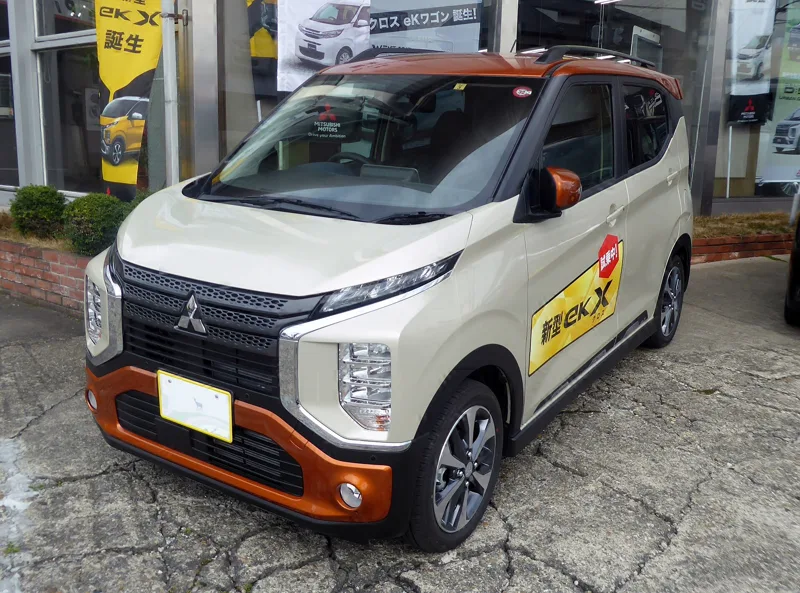
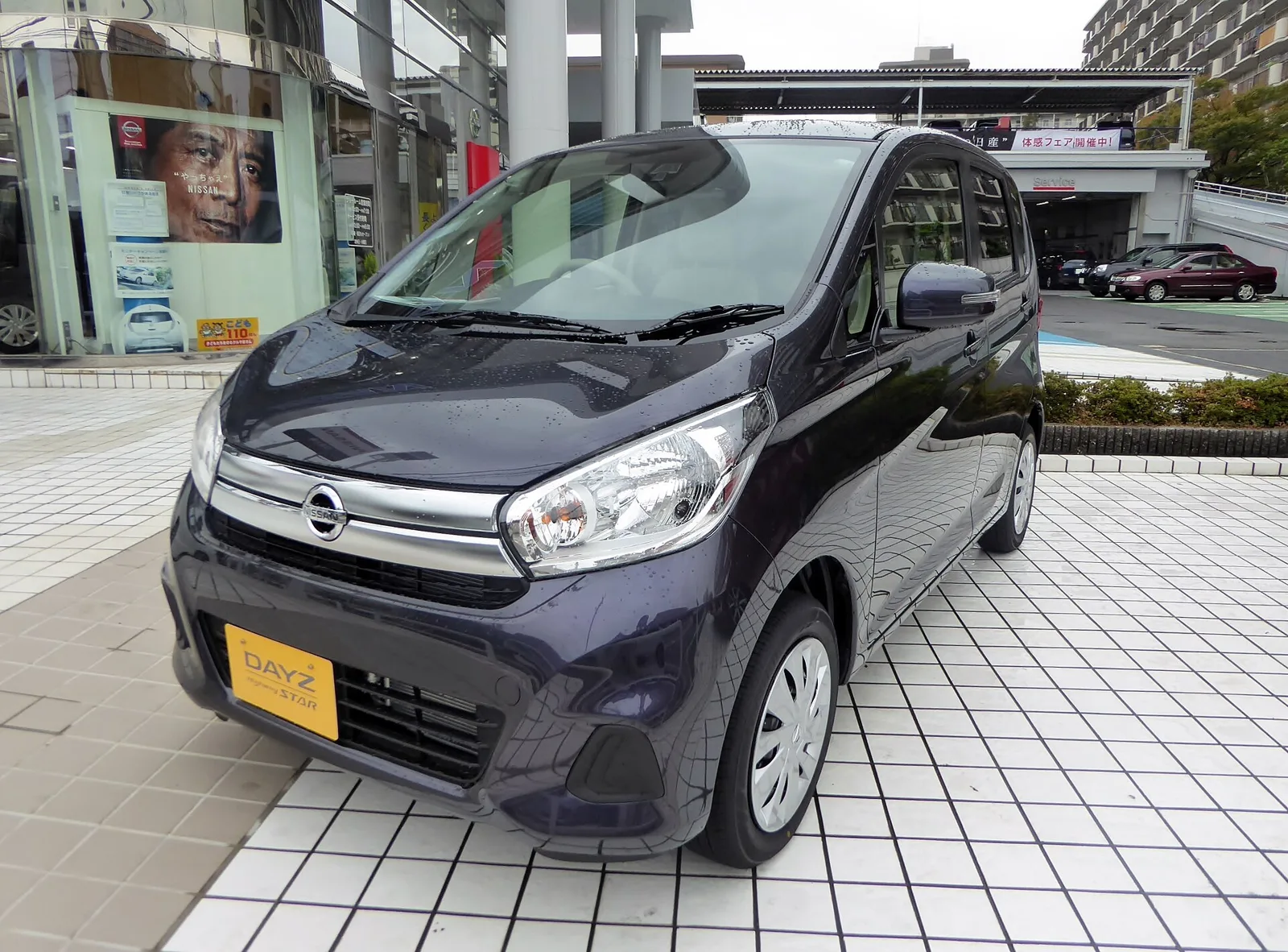
The Dayz and the eK share a structure, but their front ends, grades and equipment differ. The standard Dayz has a mesh grille with chrome trim along its lower edge, while the Highway STAR has three chrome bars and its own front bumper.
From the A-pillar rearwards, including the tail lights, the Dayz is common with the eK. Later the standard Dayz switched to a two-line chrome grille, while the Highway STAR kept the three-bar design.
Colours were a point of difference too. At launch the Dayz had seven colours to the eK Wagon's eight. By July 2014 the Dayz had nine colours, matching the eK Wagon, while the sporty model had seven, one more than the eK Custom.
A four-coat orange called Premium Sunshine Orange arrived in January 2017. It had first been used on the Dayz Roox, and no model of the eK series offered it, which made it an original colour of the Dayz series.
How well did the Dayz sell at launch?
About 30,000 orders were taken by 8 July 2013, a month after sales began. That was 3.75 times the monthly target of 8,000 units, and the order pace beat that of the eK, which had 18,000 orders against a target of 5,000.
The Highway STAR X was the most popular grade, followed by the X and the Highway STAR G, and those three made up 79% of orders. The start lifted Nissan's share of the June kei car market to 10.4%.
By the end of February 2014 total sales had reached 106,318 units. That was reached in eight and a half months, and it passed a year's worth of the monthly target of 96,000 units. By June 2014 the cumulative sales of the series, including the Dayz Roox, had passed 170,000.
What was the Dayz Roox?
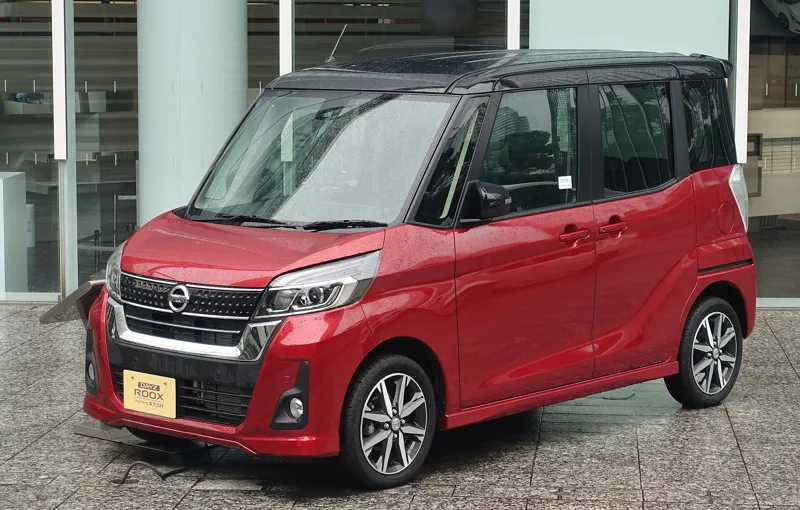
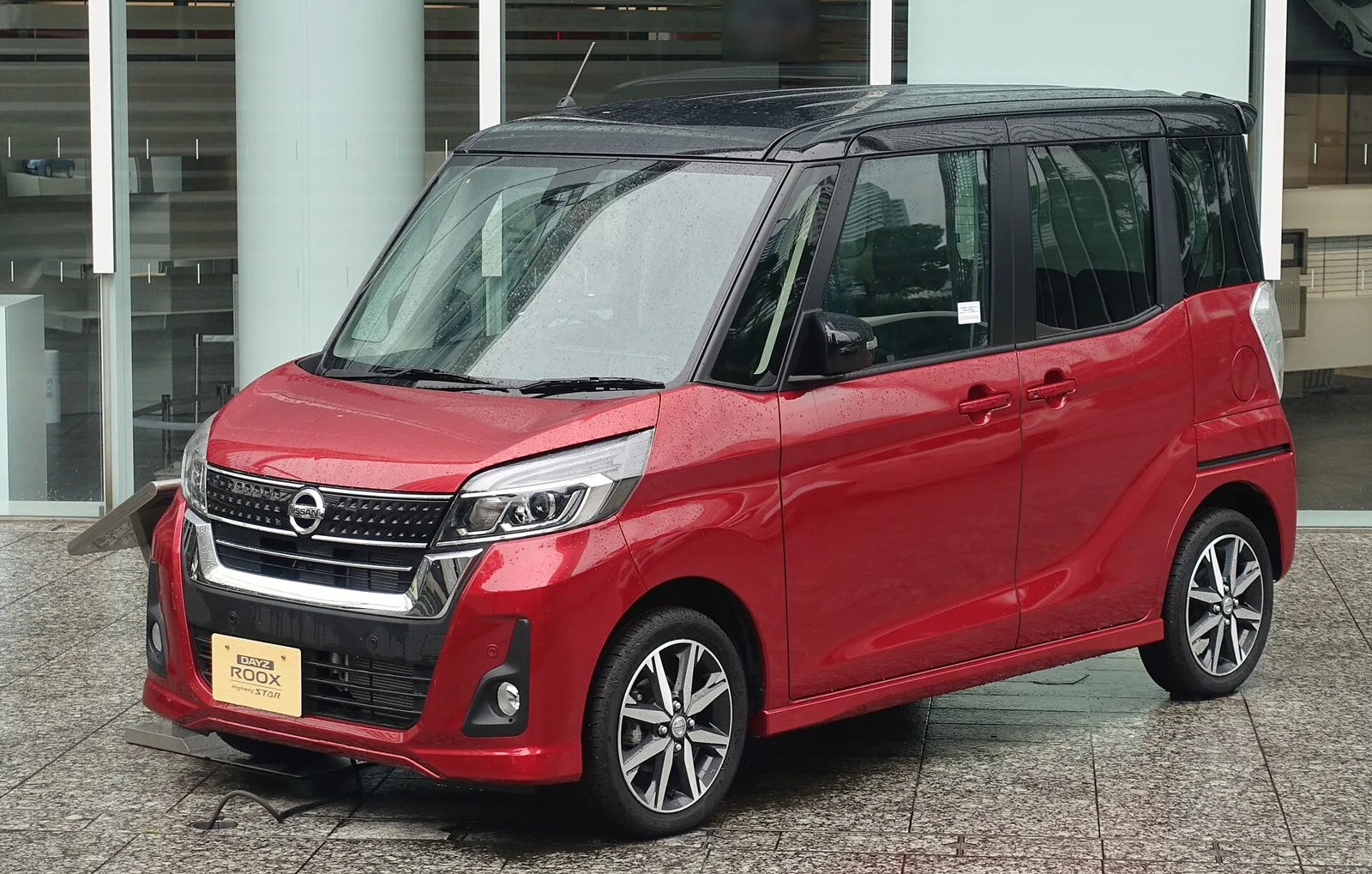
The Dayz Roox was the second model in the Dayz series, a super tall wagon that went on sale on 13 February 2014. Its battery assist system was later adopted on the standard Dayz's 2WD cars.
Several colours were shared between the two. Azalea Pink Metallic, Mocha Brown Pearl and Pink Gold Metallic were added to the standard Dayz in July 2014, all three colours already used on the Dayz Roox.
What happened to the Dayz in 2016?
Sales of the Dayz were temporarily suspended on 20 April 2016 because of the falsified fuel economy figures at Mitsubishi Motors. In June 2016 the transport ministry published its re-check. Fuel economy on the re-tested models was out by up to 16%, while emissions and safety standards met the national requirements.
The ministry told Mitsubishi Motors to fix the published fuel economy numbers. The approval for the whole eK range stood, and it was not withdrawn. Orders and production restarted on 4 July 2016, when a special X V Selection edition went on sale.
What did the Dayz mean for Nissan?
The Dayz was the first kei car on which Nissan took part from product planning and design onwards. The company presented it as a kei car that was not held back by the conventions of the class, with a lively Nissan design, a high-quality interior and excellent fuel economy.
The name was then extended into a series. The Dayz Roox was the second model, and the Highway STAR sporty grade carried the sporty side of the line.
Special editions followed. The Highway STAR V Selection+Safety went on sale on 1 October 2014 with the around view monitor fitted as standard at an unchanged price, and the X V Selection+Safety II and Highway STAR X V Selection+Safety II followed on 4 December 2014.
Where is the Dayz built?
Offline production began on 20 May 2013, and the catalogue names Mitsubishi Motors Corporation as the manufacturer. The plant is in Kurashiki, Okayama Prefecture.
The second generation is designed by Nissan Motor and built by Mitsubishi on commission, so the arrangement changed after the first generation.