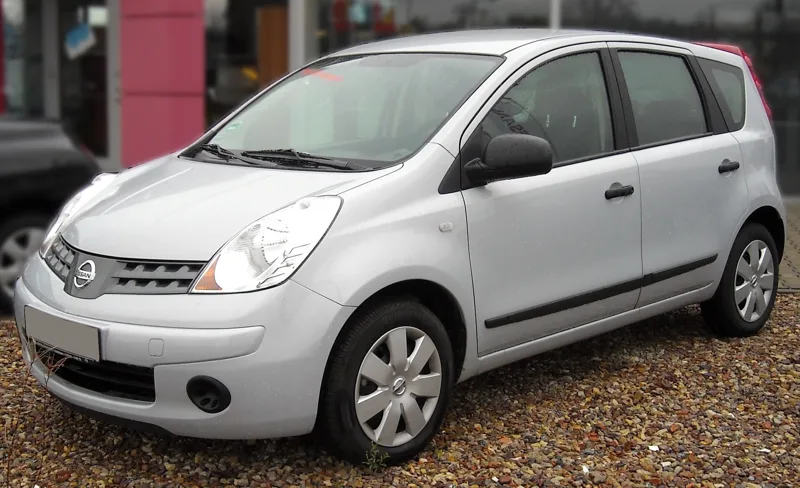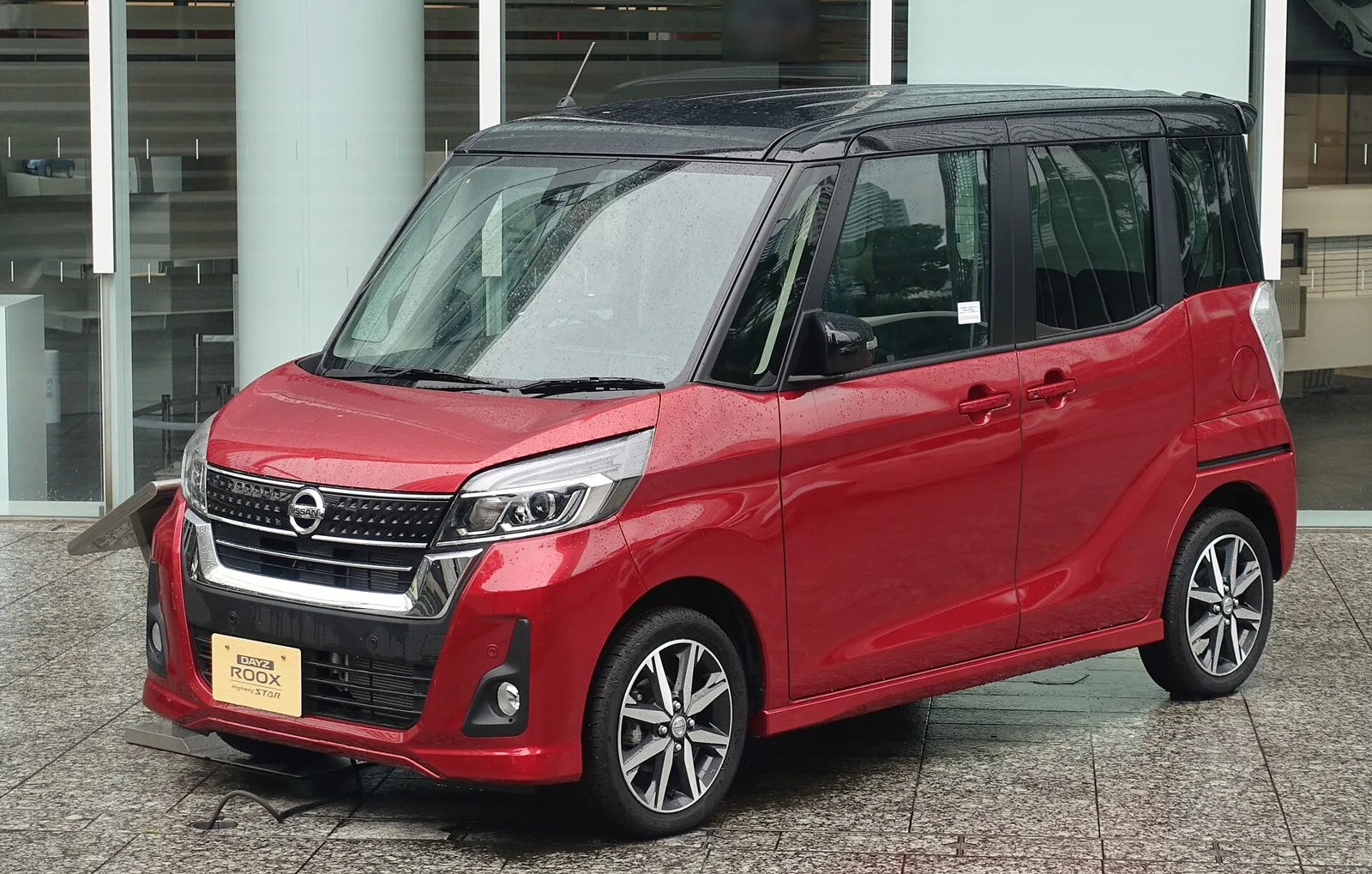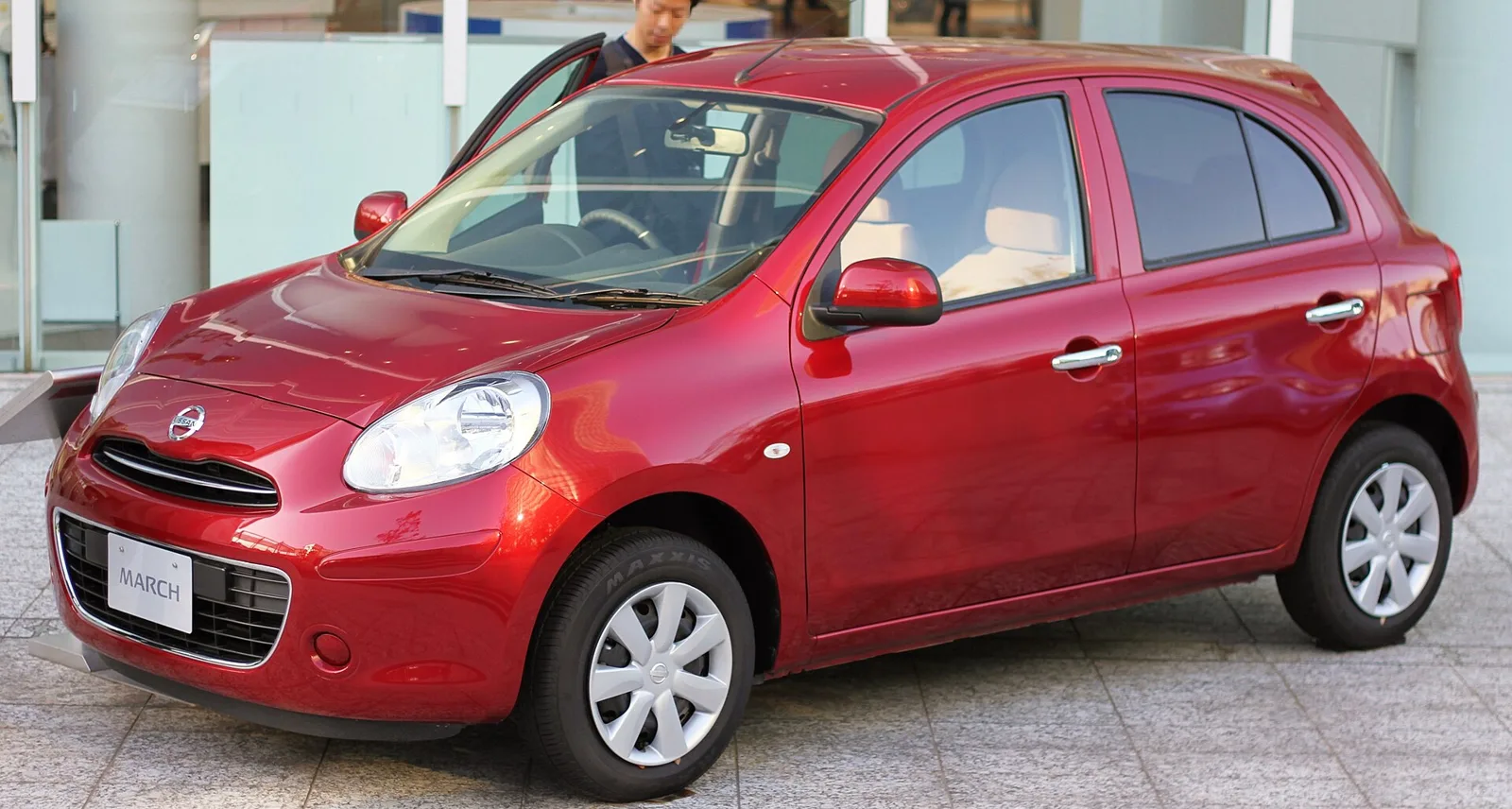
A Thai-built Nissan that wore the Micra name in Europe and India, carried the March badge in Japan from 2010 and ended its Japanese run in 2022.
The March K13 was a compact Nissan hatchback built from 2010 to 2022 for Japan. It was known as the Micra elsewhere, built in Thailand, and it closed a 40-year Japanese run when production ended in August 2022.
The March K13 was the fourth-generation March, a compact-class hatchback built by Nissan Motor from 2010. In Europe and India the same car was sold as the Micra. In Japan the March name had a 40-year history, and this car closed that history. Production for the Japanese market ran out of Thailand and ended in August 2022.
Moving the work abroad was a deliberate decision. Thai Nissan was chosen as the mother plant for the first mass production, the Japanese-specification car switched away from Oppama, and cost and currency pressures did much of the shaping. Electronic parts, sensors especially, still came from Japan or Europe.
When did the K13 reach showrooms?
Nissan unveiled the fourth-generation Micra at the 2010 Geneva Motor Show on 2 March 2010. Thai Nissan held its production-start ceremony on 12 March, with advance orders from the following day and sales from 26 March. The Japanese-specification car arrived with a full model change on 13 July 2010, and the rear number plate moved from the tailgate to the bumper at the same time.
Production spread quickly after that. Shown at the Beijing Motor Show in April 2010 as the March for China, the car went on sale there in August through Dongfeng Motor, and Nissan India began building the Micra at the Renault-Nissan Alliance's Chennai plant in May 2010.
A Thai-built car that closed 40 years of the March name in Japan.
Why did production leave Japan?
Nissan moved production for Japan to Thailand, a factory with more than 20 years of know-how that became the mother plant for mass production. Manufacturing costs, including the effect of exchange rates, were the reason given. Electronic components, and especially the sensors, were still sourced from Japanese or European makers.
The company announced a monthly Japanese sales target of 4,000 units. The fifth-generation car, presented in 2016, was not introduced to the Japanese market, so the fourth-generation model stayed on sale for the rest of its life there.
How did the design depart from the K12?
The K13 was styled to work in every market, and its design proposal came from Nissan Design Europe. Its team set the curves in CAD, built the surfaces and then revised a clay model over and over. The dashboard stayed bare plastic without soft pads, and its twin bubble shape, with bulges to left and right, gave the cabin a gentle feel.
Several details recalled the car it replaced. The round headlamps and arched side windows came over from the K12, to keep the March's friendly character. Even so, the previous car had already been rounded, and marketing research had shown that buyers did not want the new one to look too cute. Marketing took in a wide age range, especially buyers in their 40s and 50s, and it also noted that female customers overseas judge value strictly.
The stance was lower and wider. Moving the wheels toward the four corners widened the rear track and let the sills stick out, giving a compact car a planted look. The air-conditioning control panel was borrowed from the Cube.
What was under the skin?
The K13 used a new V platform, designed so that most of its parts could be produced locally and so that the layout and body structure stayed simple. Thanks to it, the lightest front-wheel-drive versions came in under 1,000 kg (2,205 lb). The roofline ran slightly upward at the rear, a shape that improved airflow and helped fuel use.
Noise was another target. The previous car had carried weights on seals inside the roof to damp the thumping that came up through the body. The K13 dropped them and used boomerang-shaped grooves in the roof, which added rigidity and saved weight.
Engines were three- or four-cylinder units driving the front wheels. Four-wheel-drive models used e-4WD, with an electric motor on the rear axle. For Japan Nissan developed the HR12DE, a light and low-friction three-cylinder with 12 valves, and paired it with a new-generation Xtronic CVT that included a two-stage auxiliary gearbox across all grades.
How did the idling stop work?
The idling stop on the Japanese car restarted the engine as soon as the steering began to turn toward the direction of travel, so the start felt smooth and in step with the driver. The system also read faint, unconscious inputs, such as waiting to turn at a junction. Whether the engine restarted or stayed off depended on how the brake pedal was eased.
That focus on stopping the engine helped the 12X and 12G reach a low fuel use of 26.0 km/L on the 10-15 mode. Every grade, including those without idling stop, met the 2005 emissions standard at the 75% reduction level with four stars, and the 2010 fuel economy standard plus 25%.
Nissan ran a PURE DRIVE range of engine-evolution eco cars, petrol models fitted with next-generation environmental technology. The fourth-generation March was its first model, and the 12X and 12G carried a PURE DRIVE badge at the rear to show it.
Which grades could buyers choose?
At launch the March came as the 12S, 12X and 12G. The 12S was the standard model that stayed under 1.3 million yen while gaining equipment. The 12X added idling stop, an intelligent key and coloured door handles. The 12G topped the range with privacy glass, an automatic light system, a tachometer, ozone-safe air conditioning and curtain airbags.
A four-wheel-drive option existed for the 12X and 12G, badged 12X FOUR and 12G FOUR. Nine body colours were offered at launch, three of them special paints, and the 12S dropped Burning Red, Pacific Blue Pearl Metallic and Champagne Gold Metallic from its choice.
Specifications and grades at a glance
| Item | Detail |
|---|---|
| Japanese launch | 13 July 2010, full model change |
| Japanese production | Thailand, ended August 2022 |
| Engine (Japan) | HR12DE, three-cylinder, 12-valve |
| Transmission | New-generation Xtronic CVT with two-stage auxiliary gearbox |
| Grades at launch | 12S, 12X, 12G; 12X FOUR and 12G FOUR |
| Fuel use | 26.0 km/L on the 10-15 mode, 12X and 12G |
| Emissions | 2005 standard, 75% reduction, four stars |
| Lightest front-drive weight | Under 1,000 kg (2,205 lb) |
| Mexico | Facelift March 2021; production ended April 2026 |
What did the 2021 Mexican update change?
Nissan announced on 30 January 2021 that an improved version would go on sale in Mexico in March. It was the first full minor change in eight years, and the new front face was the main change. A larger V-motion grille and headlights that flowed into it gave the car a fresh expression. The updated March came in six grades, some with two-tone colour options, and a touchscreen audio system with smartphone connectivity was fitted. Nissan said the car would not go on sale in Japan.
How did the March Bolero evolve?
The Bolero was the custom model that Autech Japan had produced since the K11, and it was remodelled and released on the same day as the March. Its mesh grille carried chrome plating, and the interior had a dedicated frost-patterned finisher and wine-coloured seats.
The 2013 minor change added chrome outside door handles to the G series and optional dedicated rear bumper trim and wheel decals. Nadeshiko Pink Pearl Metallic came in to replace Pure Black Pearl Metallic. In 2020 a Black Interior with a piano-style centre cluster finisher was added. Brilliant Silver Metallic was dropped, and Titanium Khaki Pearl Metallic and Pure Black Pearl Metallic were added, bringing the range to five colours.
What was the Bolero A30?
The Bolero A30 was announced by Autech Japan in 2016. It was planned as a commemorative car for the company's 30th anniversary, with special work including improved performance and a wider track. Purchase enquiries went through the company's website, and when applications exceeded the supply, a lottery decided who could buy. The recommended retail price was 3,564,000 yen including tax.
The engine was the HR16DE petrol unit used in the Latin American version, given its own tuning, and it came with a five-speed manual. Its overall width reached 1,810 mm (71.3 in), roughly 90 mm (3.5 in) more than the base car's.
Where did the NISMO models fit?
The March NISMO was the third model in Nissan's NISMO range of premium sports versions, after the Juke and the Fairlady Z. It was introduced alongside the June 2013 minor change, and it was offered in two grades so that it could appeal beyond motorsport fans. Its bumpers were reshaped to improve airflow, with red accents and a raised front spoiler for downforce.
The NISMO was a 1.2-litre CVT car based on the X. The NISMO S was a 1.5-litre manual, built on the S with an engine tuned for higher output and torque, a stiffer body, a dedicated tuning computer, exhaust, suspension and brakes. It also had a tachometer, a speedometer marked to 220 km/h, and dedicated sports seats. The NISMO cars were imported semi-finished and fitted with their parts at Autech Japan after pre-delivery inspection at Oppama.
Why did sales end in Japan?
Sales in Japan slumped in the car's later years, as it came to compete with cheap kei tall wagons. Nissan redirected its small-car resources in Japan to the Note. Production for Japan in Thailand ended at the end of August 2022, and sales were then discontinued in stages, closing 40 years of the March in Japan.
Milestones of the K13 in brief
- 2010: Geneva unveiling, Thai production start, Chinese and Indian production, and the Japanese full model change in July.
- 2011: Mexican production from March, Pulse announced in India, and Taiwan production from December.
- 2012: The 30th Happiness special edition, on sale from December, and a CVT efficiency update in April.
- 2013: The Thai facelift in March, the Japanese minor change in June and an Indian facelift in July.
- 2014: The return to Canada after 21 years, and a partial Japanese improvement in May.
- 2016: Australian sales end, and the Bolero A30 limited run.
- 2020: Safety features added to all models except the NISMO cars.
- 2021: Mexican facelift and the start of the new front face.
- 2022: Japanese production ended in August.