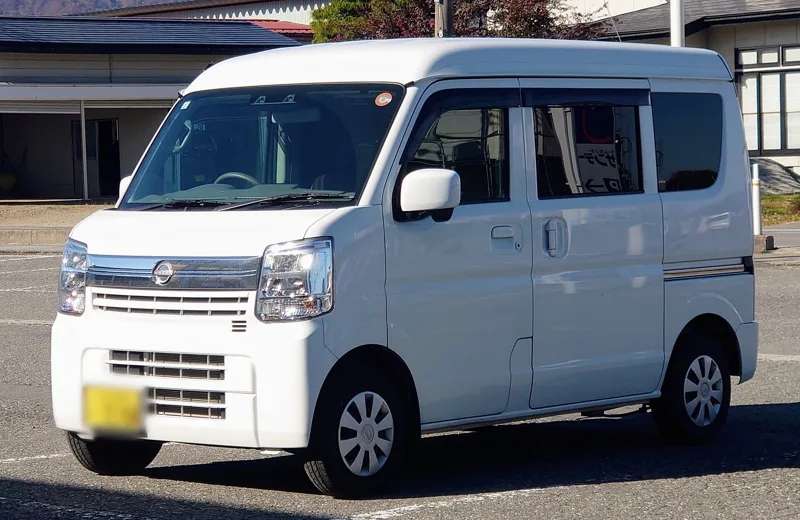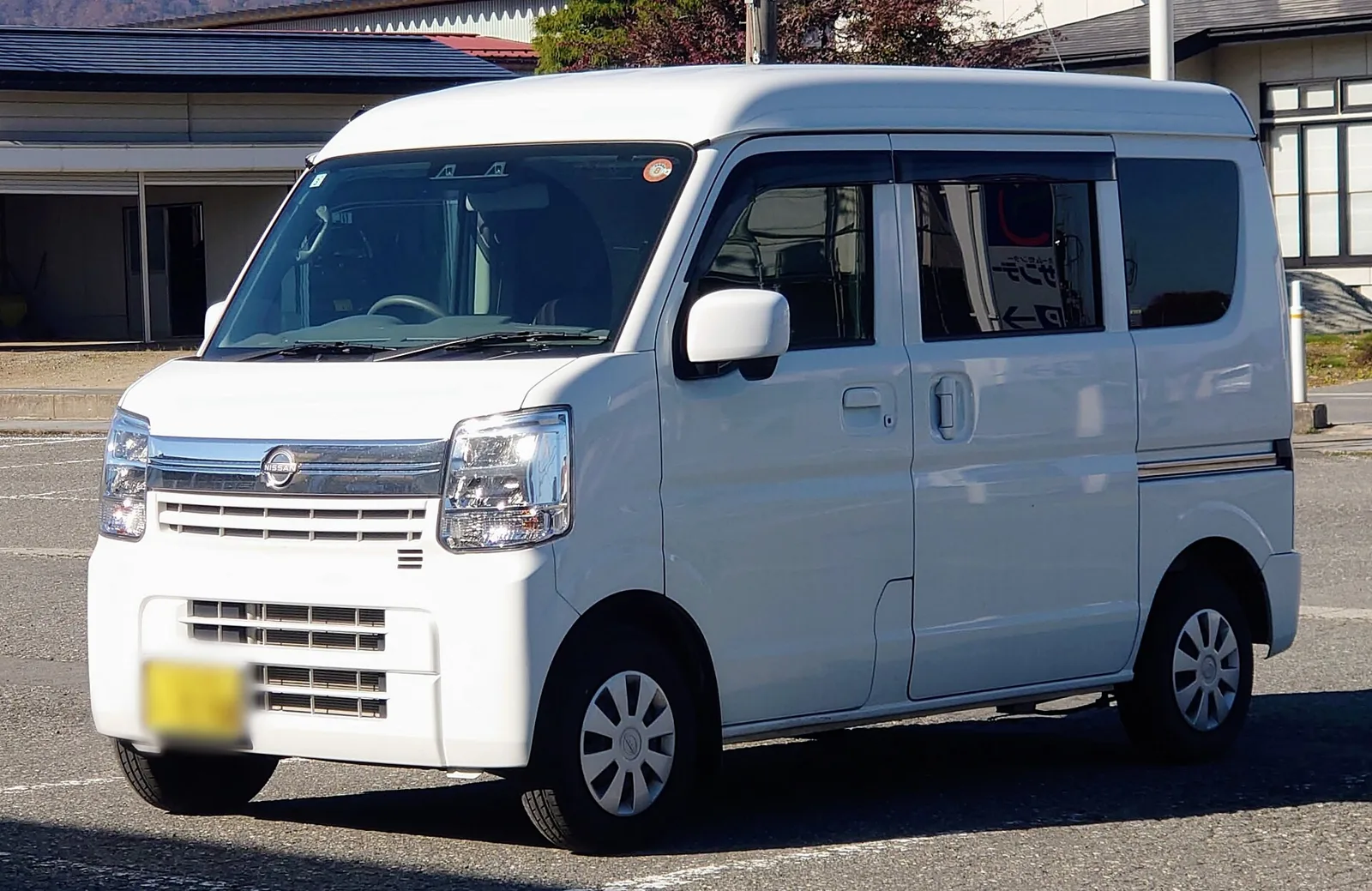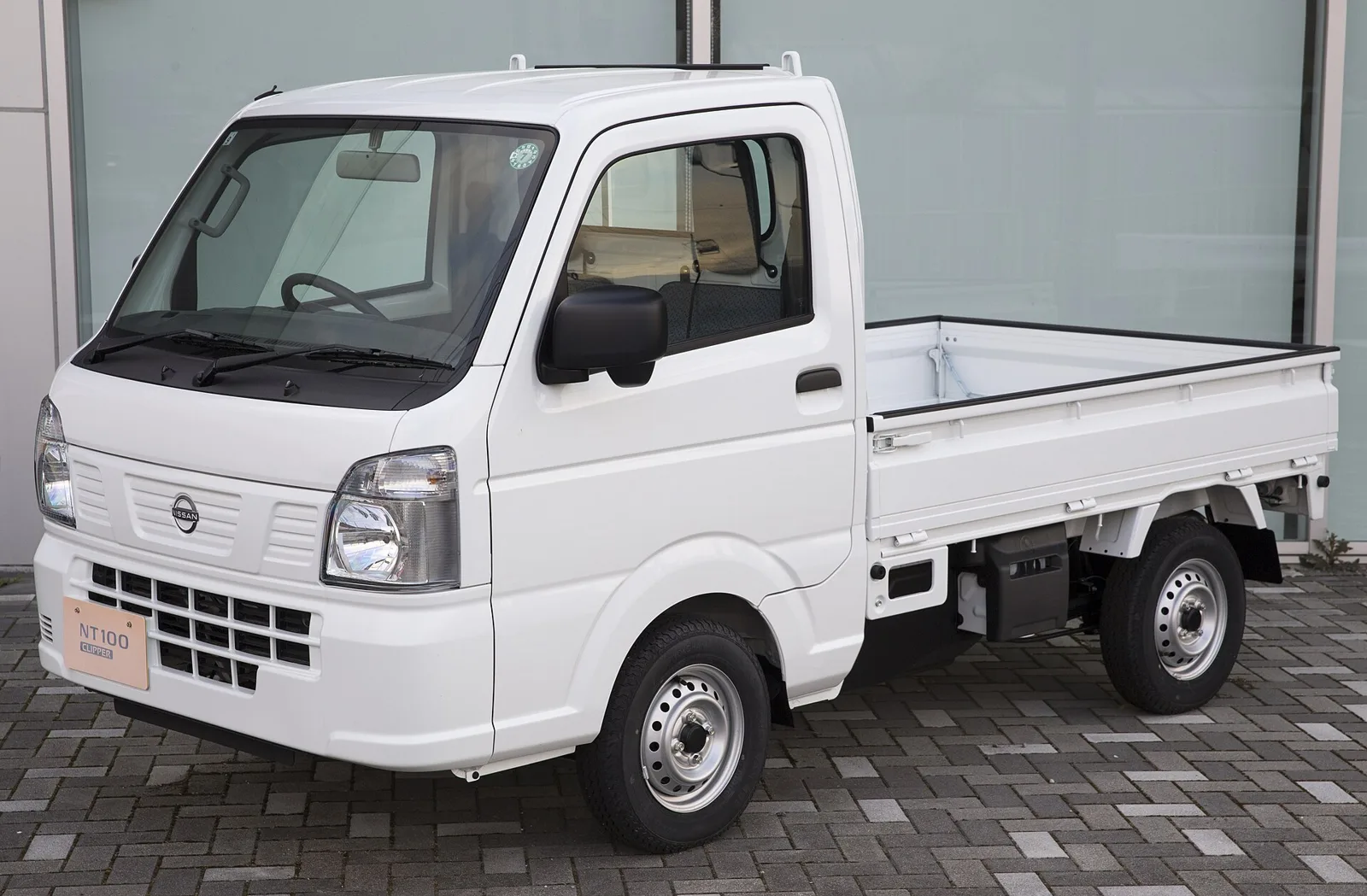
Nissan's kei truck was first built on Mitsubishi's Minicab and later on Suzuki's Carry, with farm, dump and refrigerated versions built around it.
Built first by Mitsubishi and then by Suzuki, Nissan's kei truck has been sold since 2003. Today it comes as the DX, the DX farm work and the GX, and Nissan Motorsports and Customizing fits dump, freezer and refrigerated versions on top of it.
The Clipper Truck is a kei truck that Nissan Motor has sold since 2003. The first generation came from Mitsubishi Motors, and the second and later generations from Suzuki, so it is a Nissan badge on machinery built by two other makers. Its name has changed twice, and it carried the NT100 Clipper name from 2012 to 2024.
Nissan launched it together with the semi-cab-over Clipper Van. Leaving aside the Hyper Mini, an electric kei car built only in experimental numbers, it was Nissan's second kei car, following the Moco, which was a version of Suzuki's MR Wagon.
When did the Clipper Truck first go on sale?
Mitsubishi Motors and Nissan Motor announced an OEM agreement on 29 August 2003, under which Nissan would sell Mitsubishi's Minicab. The new light commercial vehicle was given the Clipper name at the same time. Nissan made the official announcement on 16 September 2003, when the Clipper Van was also unveiled, and both vehicles went on sale together.
The first-generation truck looked almost exactly like the Minicab Truck, with only emblem changes to set it apart. Four grades were offered: SD, DX, GL and a panel van. The SD and DX could also be ordered with air conditioning. Internally the model was called TMA0, while Mitsubishi's official type was U71T.
A Nissan badge on kei trucks built by Mitsubishi and then Suzuki, with farm, dump and refrigerated versions on top.
How did the first generation change between 2004 and 2008?
The first generation was updated several times in its early years. In October 2004 every car gained the 2005 standard emissions certification with 50% reduction and three stars, and the 2WD three-speed automatic cars met the 2010 fuel economy standard plus 5%. The top GL grade was dropped when the TL was removed from the Minicab Truck range.
The December 2005 minor change replaced the grille with Nissan's wing design and added a liquid-crystal trip meter. Headlamp levellers were standard, meeting lighting rules that took effect in January 2006. A farm version, DX farm work, was added in December 2006. It was based on the 4WD manual DX, with reinforced rear suspension and rib-lug tyres, and it was offered only in 4WD manual form.
The December 2008 update changed the front fenders to meet road transport vehicle safety standards and UN regulations. High-mounted stop lamps were added to SD, DX, DX farm work and the panel van, and the panel van received ozone-safe air conditioning, power steering, coloured bumpers and a cigarette lighter as standard.
What was the SD Black-Limited?
The SD Black-Limited, announced in January 2010, started from the SD with air conditioning and power steering. A dedicated black paint job set it apart, and chrome trim went onto the front grille and the inner headlamp panels. The name echoed the Minicab Truck's black special edition, known as the Kuro Tora or black truck.
That January update also reworked the dashboard, meter and steering-wheel area, and added a door-ajar warning lamp and an AM/FM radio as standard. The SD no longer offered an air-conditioned version, with air conditioning instead an option bundled with power steering, while the DX came with air conditioning as standard. In August 2010 engine friction was reduced to improve fuel economy.
When did the name change to NT100 Clipper?
The name changed on 25 January 2012, when the van and truck were given a minor change and the truck became the NT100 Clipper. The front design and seat fabric were updated, and the floor console cup-holder box was enlarged. Headrests were made stronger and set at a new height, and seat belt mounting points were moved.
A driver's side front door pocket was added. On the SD, buyers now got power steering as standard, along with a passenger assist grip and entry grips on both front seats, to improve convenience. In December 2012 rear reflectors became standard on all but some special-equipment vehicles, and JC08 fuel economy figures were introduced. The panel van grade was discontinued at the same time.
How did the second generation start?
On 29 August 2013 Mitsubishi Motors said it was leaving the light commercial vehicle market, apart from the electric Minicab MiEV. Nissan responded by announcing that Suzuki's Carry would be supplied as the next OEM model from the end of that year. The second-generation Clipper Truck and NV100 Clipper launched together on 3 December 2013, and the new truck carried the type code DR16T.
Four grades were set: the SD, the DX, the DX farm work and the GX. The GX was the first top grade since the GL, which had been sold only in the first year of the early first generation. The Carry's own KC and KC power steering farm work equivalents were not offered.
Shortening the wheelbase reduced the minimum turning radius to 3.6 m and enlarged the loading bed to a floor length of 2,030 mm. The floor was flat and lower, the door openings were larger, the seats sat lower and the wheel housings moved under the seats. Some 4WD manual versions had a lever-operated high and low two-speed part-time 4WD system with a differential lock.
Rust protection was strengthened. Anti-rust steel covered more than 95% of the body surface and the frame, the paint had three coats, and the warranty covered surface rust for three years and perforation rust for five years, including the loading bed. The engine was made DOHC like the NV100 Clipper, but this model used the R06A from the third-generation Moco, mounted longitudinally to improve fuel economy.
Suzuki already supplied a similar truck to Mazda as the Scrum Truck, so at launch the family had three members. Mitsubishi's Minicab Truck switched to the same Carry basis on 27 February 2014, making four sibling models.
What safety equipment arrived after 2017?
In November 2017 the front passenger SRS airbag, passenger pretensioner seat belt and ABS, previously found only on the GX, were extended to all grades. A power socket became standard too, and the glovebox grew. In May 2018 the accelerator misoperation collision prevention assist was made standard on the GX, though the other grades did not have it, even as an option.
The September 2019 update made a major change. High beam assist, lane departure warning, intelligent emergency brake, intelligent drowsiness warning, the misoperation assist, an auto light system, VDC with traction control, hill start assist and a lead-vehicle start notice were all fitted to a new DX Safety Package. That package was available only with the 3AT. The GX took most of these as standard, and the DX 5MT and DX farm work still had no safety features even as manufacturer options.
The August 2021 update extended VDC and the auto light system to the DX and DX farm work. Hill start assist then arrived on the 3AT DX and the 5MT GX, but not on the 5MT DX or the DX farm work. A brake LSD, which slows a spinning rear wheel so that drive passes to the other one, now came fitted to the 4WD automatic GX, plus the DX and DX Safety Package as standard. The DX farm work also received strengthened rear suspension with four-leaf springs.
Which grades can you buy now?
Three grades remain. The DX is the standard model and the best seller. The DX farm work is aimed at farmers and is available only as 4WD manual. The GX is the owner-driver top grade, and since the January 2026 update it has been sold only as 4WD automatic.
Grade comparison
| Grade | Drive and gearbox | Main features |
|---|---|---|
| DX | Standard, 2WD and 4WD | LED headlamps with manual levelling, high beam assist, manual air conditioning, power steering, AM/FM radio, VDC with TCS, idling stop, hill start assist, brake LSD, LDW |
| DX farm work | 4WD 5MT only | Adds two-speed high and low transfer, protector torii, LED working lamps, tailgate chain, reversing buzzer, differential lock and four-leaf rear springs |
| GX | 4WD 4AT only since January 2026 | Adds bumper LED fog lamps, electric folding colour door mirrors, two speakers, USB socket, door pockets and LED working lamps; audio-less |
What are the work-use versions?
Nissan Motorsports and Customizing, formerly Autech Japan, fits the commercial special-equipment vehicles, which share the Work Use Vehicle name with the NV200 Vanette. Their specifications differ from the Carry's special vehicles. The range includes refrigerated vehicles, which have insulated loading areas, a cheaper sliding-door cold-storage van and freezers able to hold minus 5 or minus 20 degrees.
Dump versions are four-wheel drive only, with a dump switch, a safety bar and a hoist. Three dump types are offered, including a multi-purpose version with a high tailboard. A tailgate-lifter truck with a vertical lift reduces sideways sway of the load, so loading and unloading can be done more safely. Some Carry special vehicles, such as the Kintaro dump, have no equivalent on this truck.
Where does the name come from?
Clipper was originally the name of Prince Motor's small and medium trucks, launched in January 1958. The word means a swift horse, one proud of its speed. The NT in the later name stands for Nissan Truck, and the 100 for the gross vehicle weight class of 1,000 kg, which is about 2,205 lb.
What changed in 2024?
In May 2024 the truck regained the name Clipper Truck, about 12 years and 5 months after the NT100 name arrived in January 2012. Hill start assist and idling stop, which had been automatic-only, became standard on manual cars too, and a rear vehicle proximity confirmation device was fitted to every model.
Features that had been GX-only, namely power windows, remote entry and central door locking, now appeared on every grade. The GX received electric folding remote-control door mirrors in colour. The CLIPPER TRUCK lettering changed to the typeface used by the Clipper Van and Clipper Rio, and the NISSAN logo on the tailgate moved to the company's current branding. Work vehicles had their containers unified in the same year.
What did the January 2026 update add?
The update, on sale from 23 January 2026, gave the front a new body-colour garnish with a black lower section and horizontal square headlamps. LED headlamps became standard on all grades, and the GX gained LED fog lamps. The meter became digital, an instrument centre tray arrived, and a USB power socket was added. The GX became audio-less, with an 8-inch display compatibility.
Safety was tightened again. The intelligent emergency brake switched from a stereo camera to millimetre-wave radar with a monocular camera, borrowed from the current Roox and Dayz. Intersection collision avoidance was added for turns and oncoming traffic. The misoperation assist gained front bumper sensors, so it works when moving forward, and lane departure prevention and sign recognition became standard. Mos Grey was added to the colour choices, giving three colours.
Other kei truck notes
Like the Minicab, the Clipper Truck was offered with a King Cab, with an enlarged cab to make the interior roomier. The Minicab's equivalent was called the Super Cab. Next to the Hijet Jumbo, which can claim to be the original, the sales gap is large even when the Minicab is counted. The King Cab name had first been used on the Datsun Truck Frontier.
Suzuki announced its own Super Carry, a large-cab derivative, on 16 May 2018. The second-generation Clipper Truck has no equivalent to it.