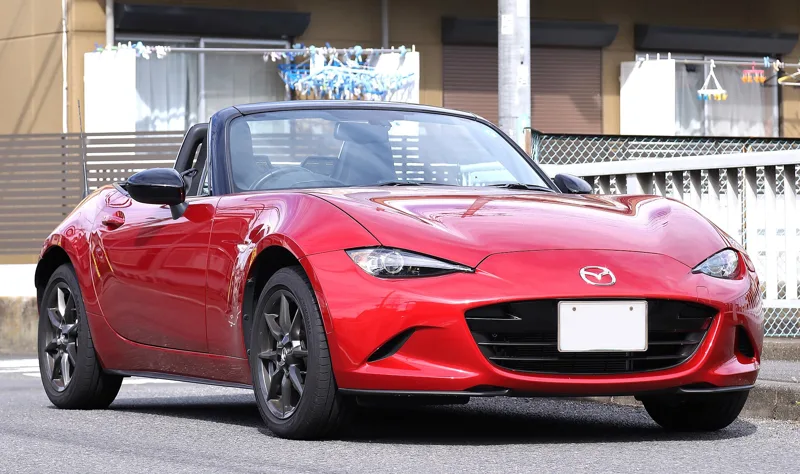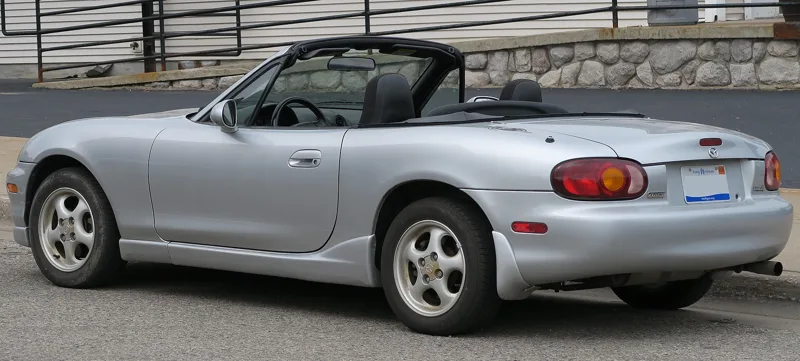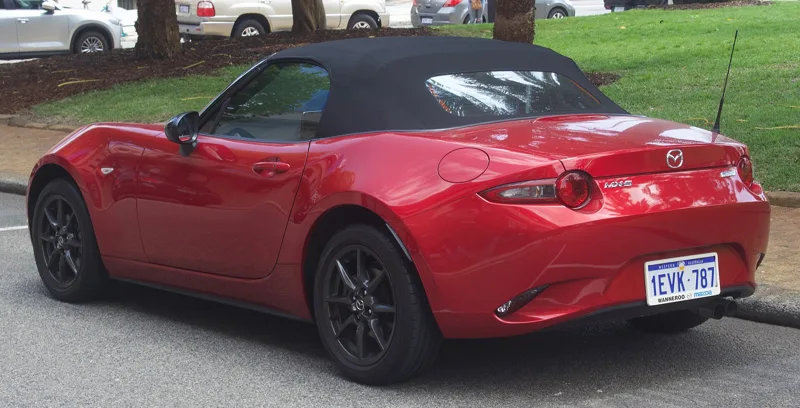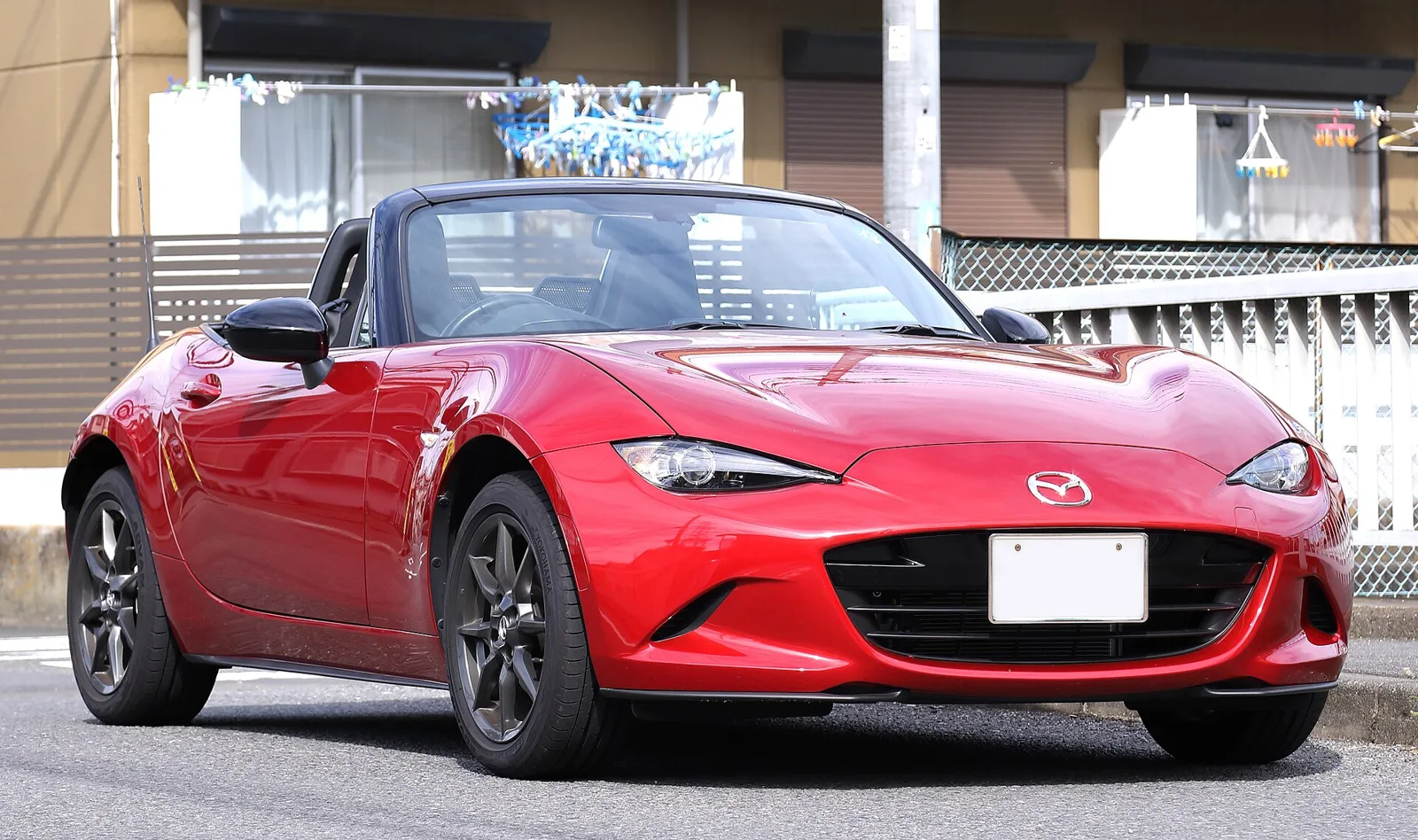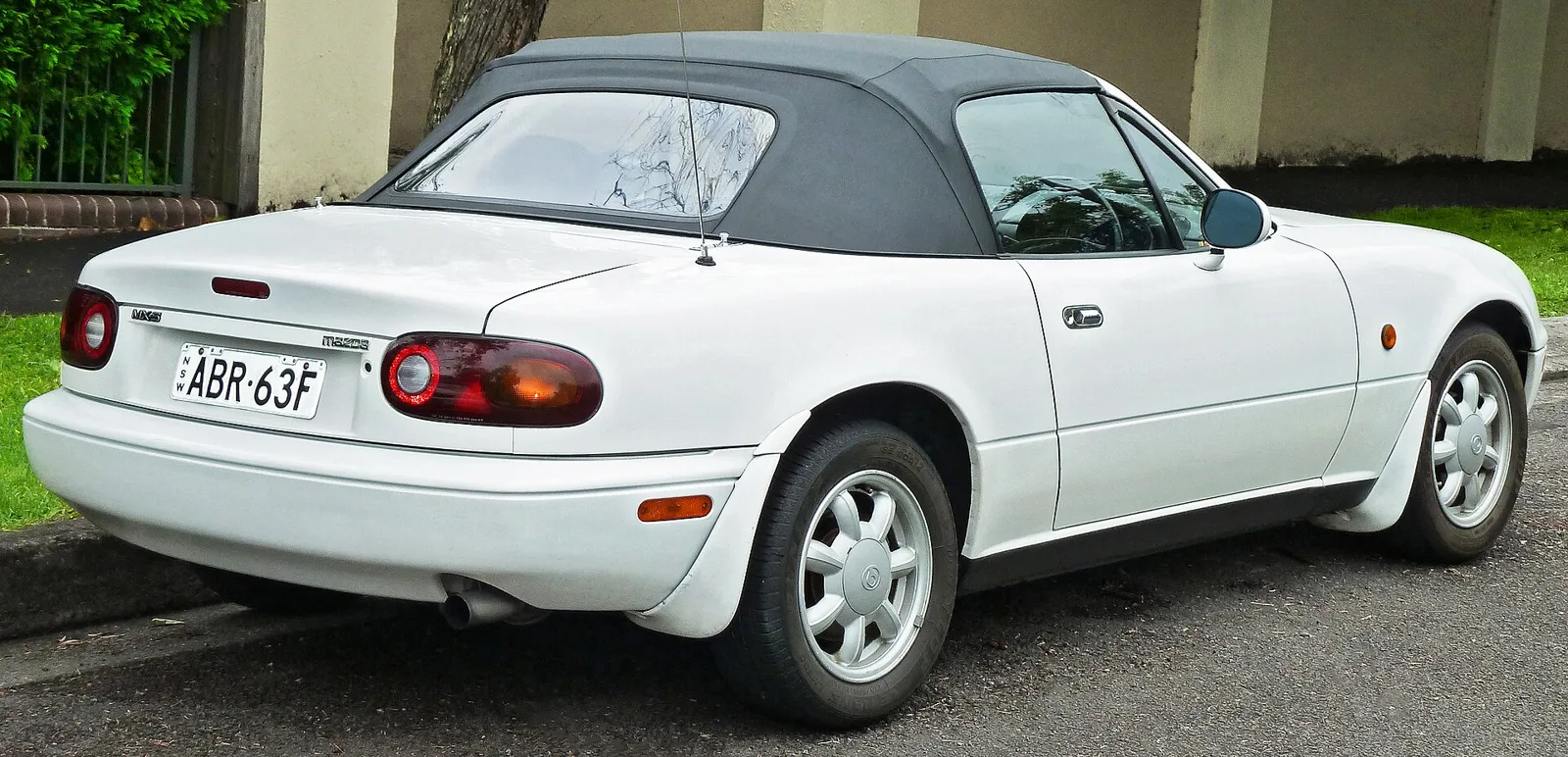
The first-generation MX-5, sold as the Eunos Roadster in Japan, with its engines, special editions, M2 variants and the factory restoration program that followed.
Built by Mazda from 1989 to 1997, the NA was the first-generation MX-5. Sold as the Eunos Roadster in Japan, it used a 1.6-litre inline four producing 86 kW (115 bhp), and a 1.8-litre engine followed in 1994.
The Mazda MX-5 NA started life as the first-generation MX-5 roadster, built from 1989 to 1997. Sold as the Eunos Roadster in Japan and the MX-5 Miata in North America, it brought open-top motoring back at a time when several classic European rivals had gone.
What was the Mazda MX-5 NA?
The NA was the initial generation of the MX-5, a rear-wheel-drive roadster built from 1989 to 1997. It drew inspiration from post-war British sports cars. Its low price and light weight helped it sell in great numbers, and it is widely regarded as the world's top-selling sports car.
The Chicago Auto Show gave the car its public debut on 10 February 1989, at a price of US$14,000 (equivalent to $36,362 in 2025). Sales in the US and Canada began in May 1989 for the 1990 model year, Japan followed on 1 September 1989, and Europe got the car in 1990.
An optional hardtop in sheet moulding compound (SMC) arrived alongside it. Early demand ran ahead of supply, helped by glowing reviews from the press.
Inspired by British roadsters, the NA revived open-top motoring and then stayed in production for eight years.
Why was the NA sold under a different name in Japan?
Japanese buyers saw no Mazda badge on the car. The maker was setting up separate marques for deluxe models, much as Nissan had Infiniti, Honda had Acura and Toyota had Lexus, so the MX-5 was sold as the Eunos Roadster. The MX-3, AZ-3 and Eunos Presso joined it there.
Its exterior dimensions and engine displacement were also set to comply with the Japanese government's compact car regulation, which shaped the car from the outset.
How big and heavy was the NA?
The NA measured 3,970 mm (156 in) long, 1,675 mm (65.9 in) wide and 1,235 mm (48.6 in) high. Without options it weighed 980 kg (2,160 lb), and its drag coefficient was Cd=0.38.
The body was a steel unibody with an aluminium hood. Each corner had its own wishbone setup, and stabilising bars sat at both ends of the car.
Brakes were four-wheel discs, ventilated at the front, and the tyres were 185/60HR14 radials fitted to alloy wheels. The base model rolled on stamped steel wheels from the 323/Protege of that time.
What engine did the original MX-5 use?
The original car came with a 1.6 L DOHC inline four-cylinder engine, codenamed B6ZE(RS). Peak output was 86 kW (115 bhp), arriving at 6,500 rpm, and 136 N m (100 lbf ft) arrived at 5,500 rpm.
The engine was designed for the MX-5 specifically. It had a lightened crankshaft, a lightened flywheel and an aluminium sump with cooling fins, and it used electronic fuel injection with a vane-type air flow meter.
Electronic ignition with a camshaft angle sensor replaced a distributor. Cars with the optional automatic had their engine tuned for peak torque at 4000 rpm instead of 5500, which gave 78.5 kW (105 bhp), peaking at 6500 rpm.
What did the entry model leave out?
The entry model was kept basic to reach a low introductory price and light weight. It had steel wheels, no power brakes or steering, no windows, and no stereo or air conditioning. Later model years brought those items in as standard, depending on the market.
The standard 5-speed manual was derived from the one in the rear-wheel-drive Mazda 929/Luce. Engineers worked hard on the gear lever, aiming for a compact shift pattern that needed little effort. A 4-speed automatic was offered in the US and Japan, and manual cars could take a viscous limited-slip differential as an extra.
How quick was the NA?
The maker claimed the 1990 NA reached 0-60 mph (97 km/h) in 8.6 seconds, and its top speed was 116.8 mph, which is 188.0 km/h. Car and Driver measured 9.2 seconds in September 1989, while Motor Trend recorded 8.9 seconds in July 1989.
Eunos-badged cars in Japan were capped at 180 km/h (110 mph). The automatic version was slower off the line, taking 9.9 seconds to reach 60 mph (97 km/h) and topping out at 181 km/h (112 mph).
What changed in 1994 and 1996?
For 1994 the car received the 1,839 cc (1.8 L) BP-ZE engine, dual airbags in a redesigned dashboard, and a Mazda badge on the front in the US. The chassis was braced for new side-impact standards, and the engine was stronger again for 1996, when it made 99 kW (133 bhp).
The first 1.8 L delivered 129 bhp (96 kW), with 110 lbf ft (149 N m) of torque. Mazda added a track bar between the seatbelt towers, and braced the front and rear subframes as well.
The base car gained weight, rising to 990 kg (2,180 lb), but the extra power more than offset it, so performance improved slightly. Europe kept the 1.6 L as a lower-cost choice, detuned to 66 kW (89 bhp).
The 1994 R package added Bilstein shocks, stiffer sway bars, retuned springs, underbody spoilers and a Torsen limited-slip differential. A red Miata badge on the tail, in place of the usual black one, marked these cars.
Which special editions were made?
Special editions were often shaped by local marketing departments. The 1993 Limited Edition had 1,505 units in the USA and 300 in Canada, while the 1991 Special Edition had 3,997 units in the US. The 1997 Special Touring Option, nicknamed Stuff Taken Off, was limited to 1,500 units.
The Japanese J Limited celebrated the Eunos Roadster's second anniversary in 1991 with sunburst yellow paint. The J LIMITED II of December 1993 kept the same colour, with blacked-out A-pillars, and 800 units were built across both.
In the UK, 250 examples of the 1991 Limited Edition came in British Racing Green with a tan interior. Each had a numbered brass plaque and alloy wheels from MSW that were often mistaken for BBS.
The 1992 Black Miata was limited to 4,625 units, in Brilliant Black with tan leather. The Sunburst option cost US$250, with 1,519 cars in the USA and 503 in Canada.
The annual M-Editions were the US specials. The 1994 edition came in Montego Blue Mica with 3,000 units, the 1995 edition in Merlot Mica with 3,500, and the 1996 and 1997 editions with 3,000 units each. The 1997 edition was finished in Marina Green Mica.
Mazda also built one-offs. The 1995 M Speedster Concept had large fog lights and a smaller windshield, while the 1996 M Coupe Concept showed a fixed hardtop version at the New York show.
In the UK the 1997 Monza Edition was built in 800 units, with green paint, 14-inch alloy wheels and the basic 1.6 L engine. The 1998 Berkeley Limited Edition, sold only in the UK, was limited to 400 units in Sparkle Green.
Back in 1993 the company worked with Chugoku Electric Power on an electric prototype, the Energia. Its top speed was 130 km/h (81 mph), its range 180 km (110 miles), and it weighed 1,410 kg (3,110 lb).
What were the M2 cars?
M2 was a 100% owned Mazda subsidiary founded in November 1991. It built niche variants of Mazda's volume products from Tokyo, Japan, and its best known output was a series of Eunos Roadster specials. Heading it was Masakatsu Kato, the father of the Miata in Japan, and Mazda closed M2 in 1995.
The M2-1001 Cafe Roadster arrived in December 1991, a run of 300 finished in Blue/Black Mica and priced at $26,000. Buyers had to appear in person at the Tokyo headquarters and enter a lottery for the right to order one.
It was a turn-key track car with a functional front airdam, fog lamps, a roll bar, racing pedals and HKS exhaust. Tuning lifted its 1.6 L to 98 kW (131 bhp), reached at 7,000 rpm, and some owners later paid up to $35,000 for one.
The M2-1002 Vintage Roadster followed in late 1992, with a front bumper that differed slightly, and it sold less well than the 1001. The third car, the M2-1028 Street Competition Roadster, arrived in February 1994 and was billed as track-ready.
The M2-1028 used the 1.8 L engine and produced close to 110 kW (150 bhp). Its aluminium trunk lid weighed 3.5 kg (7.7 lb), against 7.0 kg (15.4 lb) for the original, and a roll cage replaced the soft-top.
How did Mazda restore NA cars?
Mazda opened a factory restoration program in 2018 for Japanese owners of Eunos Roadsters. Work is carried out at the Hiroshima plant, where every Roadster was built, and TUV Rheinland certifies the results. Over 600 owners applied when it was announced.
A car could return to factory specification with OEM parts, or be given only the restoration steps its owner picked. Not every NA qualified, and the program lists the conditions.
The first finished example was shown on 27 September 2018: a 1992 V-Special in British racing green, with tan leather and a single owner since new.
Reproduction parts for North American NA owners were announced on 28 October 2019, built with contemporary methods and materials. Enkei will remake the original alloy wheels, lighter and tougher than before.
What awards did the NA win?
Automobile Magazine named the NA its 1990 Automobile of the Year, and the car featured on Car and Driver's 10Best list between 1990 and 1992. In 2018 the restoration program itself received the RJC Car of the Year Special Award for classic car restoration service.
In 2019 the Japan Automotive Hall of Fame gave the car a Special Award for Historic Car. A red 1990 Eunos Roadster is also on display in the Red Room at the Haynes International Motor Museum in England.
Mazda MX-5 NA specifications
| Specification | Detail |
|---|---|
| Production | 1989 to 1997 |
| Body | Steel unibody with aluminium hood |
| Length, width, height | 3,970 mm (156 in), 1,675 mm (65.9 in), 1,235 mm (48.6 in) |
| Weight | 980 kg (2,160 lb) without options; 990 kg (2,180 lb) from 1996 |
| Drag coefficient | Cd=0.38 |
| Original engine | 1.6 L DOHC inline four, 86 kW (115 bhp) at 6,500 rpm |
| Original torque | 136 N m (100 lbf ft) at 5,500 rpm |
| Automatic output | 78.5 kW (105 bhp) at 6500 rpm |
| 1.8 L engine, 1994 | 96 kW (129 bhp) at 6,500 rpm; 149 N m (110 lbf ft) at 5,500 rpm |
| 1.8 L engine, 1996 | 99 kW (133 bhp) at 6,500 rpm; 155 N m (114 lbf ft) at 5,500 rpm |
| Transmission | 5-speed manual; 4-speed automatic option |
| 0-60 mph, Mazda claim | 8.6 seconds (97 km/h), 1990 NA |
| Top speed, Mazda claim | 116.8 mph (188.0 km/h) |
| Launch price | US$14,000 (Chicago); US$13,995 base US model |
| Tyres | 185/60HR14 radial |