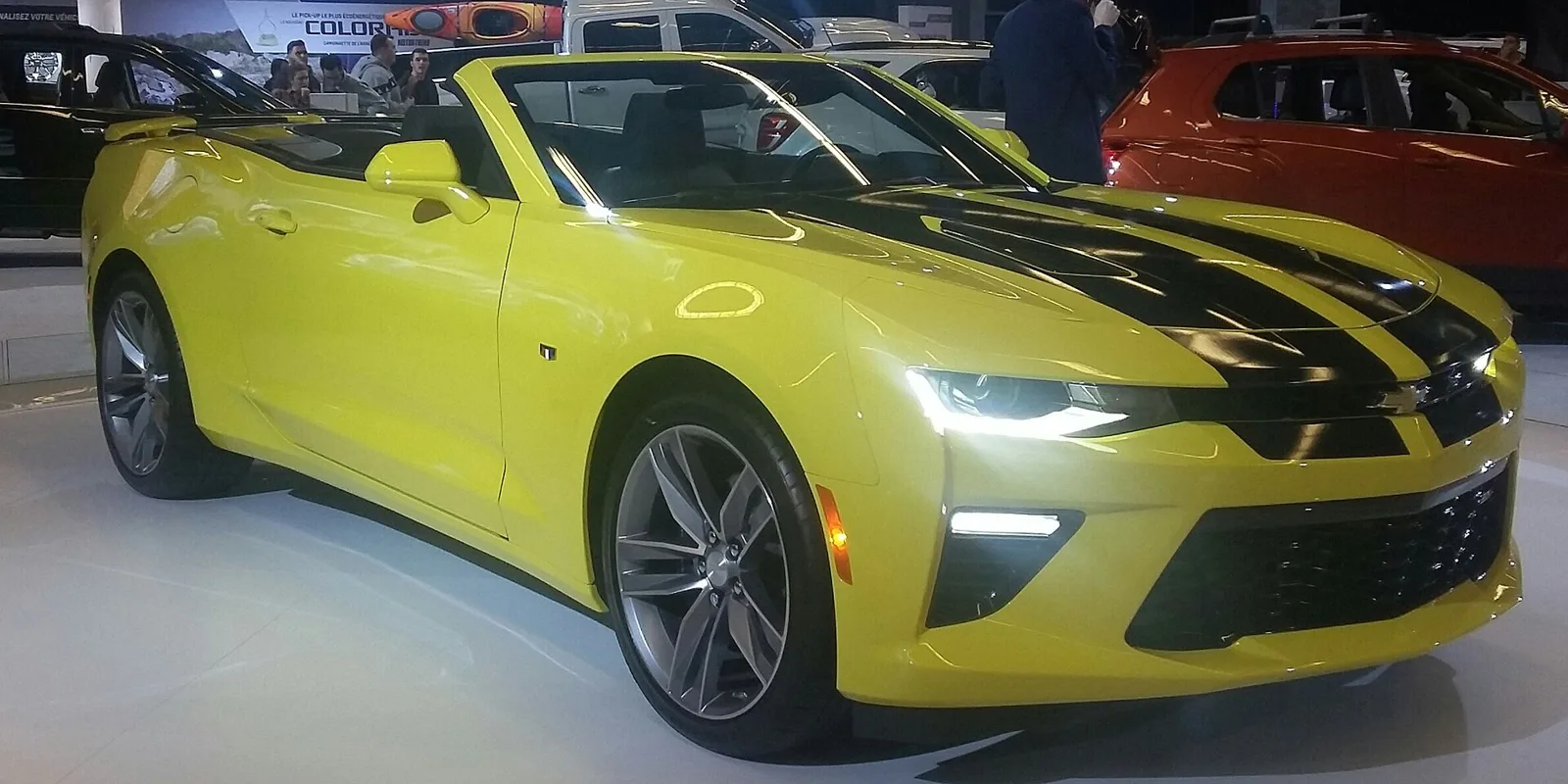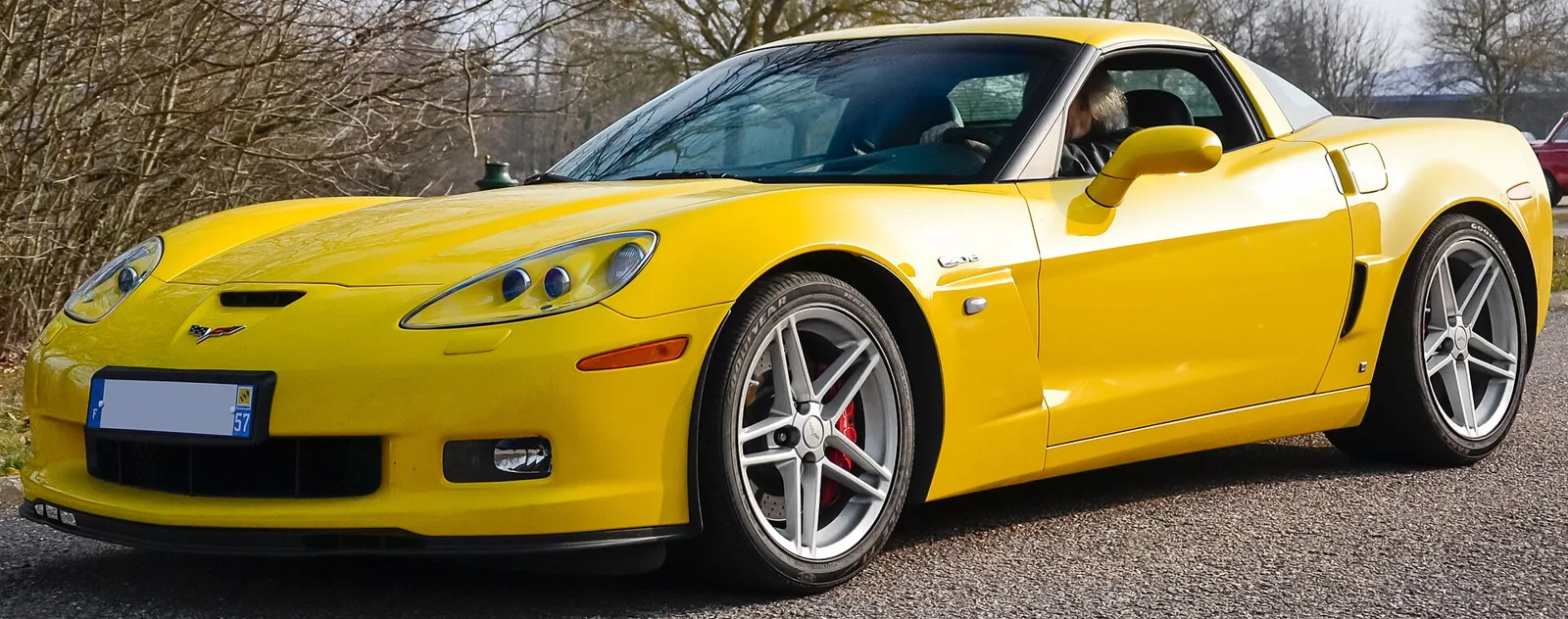
The 2005 to 2013 Corvette ran from a 400 hp coupe to a supercharged 638 hp ZR1, and its racing version won at Le Mans.
The Chevrolet Corvette C6 was the sixth generation of the Corvette sports car, built by Chevrolet from 2005 to 2013. It reintroduced exposed headlamps, used V8 engines from 6.0 to 7.0 litres, and ranged from the 400 hp coupe to the 638 hp ZR1.
The C6 Corvette arrived in 2005 with new bodywork, a larger cabin and exposed headlamps, the first Corvette to show them since 1962. Over the following years it spawned a run of variants, from the Grand Sport to the 638 hp ZR1.
What changed from the C5?
The C6 was 13 cm (5.1 in) shorter than the C5, but its wheelbase grew by 3 cm (1.2 in) and the body was 2.5 cm (1 in) narrower. Engineers revised the suspension geometry and enlarged the passenger compartment, and the car gained a 6.0-litre V8 and a higher level of refinement.
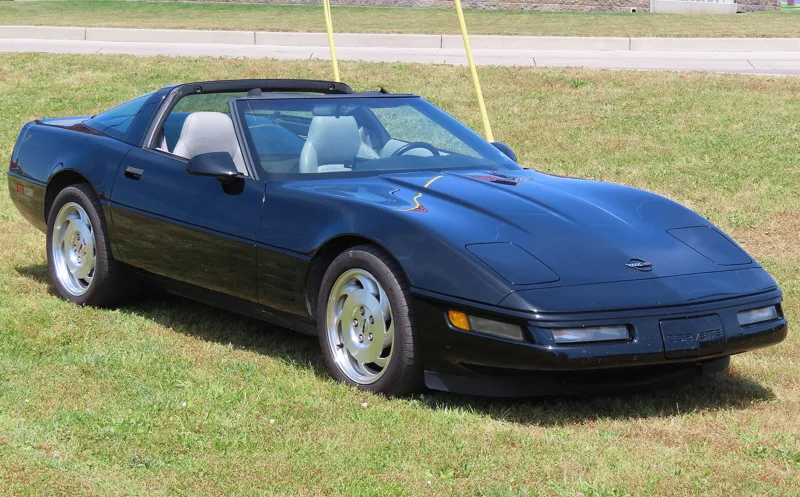
Like its predecessor, the coupe kept a removable roof panel, either solid in body colour or transparent black. The convertible added a power soft top, an option the C5 had never offered.
Underneath, the suspension stayed with independent unequal-length double wishbones and transverse fibreglass mono-leaf springs, with optional magnetorheological dampers. A Z51 performance package, available since 2004, added stiffer suspension, larger brakes and a transmission oil cooler.
European cars had their own lighting kit: parking lights in the headlights, headlight washers, amber side marker lights, and rear lights with a turn signal and rear fog lamps.
Exposed headlamps returned in 2005, and the generation that followed ran from a 400 hp coupe to a 638 hp ZR1.
How did the LS2 and LS3 engines compare?
The first C6 used the GM LS2, a 5,967 cc (6.0 L) V8 rated at 400 hp (298 kW) at 6,000 rpm, with 400 lb ft (542 N m) available from 4,400 rpm. From the 2008 model year the 6,162 cc (6.2 L) LS3 replaced it, producing 430 hp (321 kW) at 6,500 rpm.
An optional vacuum actuated valve exhaust lifted the LS3's output to 436 hp (325 kW) and 428 lb ft (580 N m). The older Tremec T56 manual gave way to the TR6060 in 2008, with improved shift linkage. Chevrolet said the automatic reached 0-60 mph (97 km/h) in 4.0 seconds, quicker than any other production automatic Corvette.
From 2008 the steering was revised for better feel, and the wheels switched to a five-spoke design. The last C6 built was a white 427 convertible, completed on 28 February 2013.
How much fuel did the C6 use?
Automatic cars were rated at 15 mpg-US in town and 25 on the highway (15.7 / 9.4 L/100 km; 18 / 30 mpg-imp), while manuals managed 16 / 26 mpg-US (14.7 / 9.0 L/100 km; 19 / 31 mpg-imp). Computer Aided Gear Shifting forced a shift from 1st to 4th at low engine speed, which lifted the EPA's derived figure.
That boost let buyers avoid the gas guzzler tax, which the figures would otherwise have triggered.
Why did the Z06 matter so much?
The Z06 arrived for the 2006 model year as a homologation car. It was the lightest Corvette and carried the largest small-block V8 ever built, a 7.0-litre LS7 rated at 505 hp (512 PS; 377 kW) at 6,300 rpm. Torque was 470 lb ft (637 N m) at 4,800 rpm.
The LS7 used a dry sump oiling system and titanium alloy connecting rods. It was hand-built, and until the LT6 arrived in October 2021 it was the most powerful naturally aspirated production engine General Motors had made.
Weight saving went deep. The aluminium frame saved 136 lb (62 kg) over the C5's steel frame, and balsa wood and carbon fibre composite floors plus a magnesium engine cradle helped further. The car weighed 3,130 lb (1,420 kg), which worked out at 6.2 pounds per horsepower (3.8 kg/kW).
Economy ratings ran from 24 mpg-US (9.8 L/100 km; 29 mpg-imp) on the highway down to 15 mpg-US (16 L/100 km; 18 mpg-imp) in town. The Z06 also served as the pace car for the 2006 Daytona 500 and the Indianapolis 500. In October 2005 Car and Driver recorded 0-60 mph (97 km/h) in 3.6 seconds and the quarter mile in 11.7 seconds at 125 mph (201 km/h).
The Z06 added the following over the standard car:
- Hand-built LS7 V8 with dry sump oiling
- Aluminium chassis with a fixed roof
- Larger, stiffer anti-sway bars, plus stiffer springs and shocks
- Larger rear spoiler, front splitter and transmission cooler
- Wider carbon fibre front and fibreglass rear fenders
- Forged aluminium 18-inch front and 19-inch rear wheels
- Wider 275/35ZR18 front and 325/30ZR19 rear tyres
- Larger 6-piston front and 4-piston rear calipers, with 355 mm (14.0 in) and 340 mm (13 in) rotors
The Z06 Carbon of 2011 borrowed several parts from the ZR1, including carbon ceramic brakes, active suspension and a carbon fibre hood. Its colours were limited to Inferno Orange and Supersonic Blue.
What was the ZR1?
The ZR1 was the top model of the C6 range, built around a supercharged 6.2-litre LS9 V8 rated at 638 hp (647 PS; 476 kW) at 6,500 rpm. It began life as the Blue Devil programme before General Motors revived the ZR1 name, first used on developmental cars in 1971 and later on the C4 Corvette.
The Blue Devil codename came from Duke University, the alma mater of GM chief executive Rick Wagoner. Early rumours spoke of a supercharged LS9 with more than 630 hp (639 PS; 470 kW).
Evidence piled up. AutoWeek published photographs on 12 October 2006 of a Z06 with manufacturer plates and a hood bulge, widely taken to show a supercharger. In February 2007 a worker at a Michigan shipping company posted pictures of a development mule being shipped to Germany, with carbon-ceramic discs, enlarged fender vents and a supercharger between the cylinder banks.
GM began releasing details in April 2007. The company confirmed the project in an interview with Car and Driver on 13 April, and power was confirmed at between 600 and 700 hp (447 and 522 kW). Motor Trend later confirmed the production name would be ZR1, and GM introduced the car with a press release and photographs on 19 December.
In Motor Trend's October 2008 test the car needed 3.3 seconds to reach 60 mph (97 km/h), then covered the quarter mile in 11.2 seconds, crossing the line at 130.5 mph (210 km/h). The LS9 peaked at 604 lb ft (819 N m) at 3,800 rpm. At the time the ZR1 was quicker through the quarter mile than almost any car Motor Trend had tested, and the Ferrari Enzo, Bugatti Veyron and Saleen S7 Twin Turbo were among the cars quicker than it. Chevrolet engineered it for a top speed of 205 mph (330 km/h).
Carbon fibre covered the roof, hood, fenders, front splitter and rocker mouldings. The hood and fenders were painted over, while the roof and splitter kept their black finish under a clear coat. A polycarbonate window in the hood let people see the intercooler, and the wheels were the largest fitted to a production Corvette. Carbon-ceramic brakes came as standard with blue calipers.
How did the Grand Sport fit the line-up?
The Grand Sport debuted in 2010 at the 12th annual Corvette Birthday Bash, staged at the National Corvette Museum. It replaced the Z51 option, which had been offered since 2004, and took gill-style front fenders, plus the front bumper and rear fenders of the Z06.
The Grand Sport kept a standard steel frame. It used Z06 brakes and wheels, a specific manual gearbox with different ratios, and launch control. The dry sump oil system and the hand-built LS3 were reserved for manual coupes, while the LS3 in automatic cars ran a wet sump.
What was the 427 Convertible?
The 427 Convertible arrived in early 2012 as the fastest C6 convertible yet. The name paid homage to the older 427 engines, although the engine itself had the displacement of the 428. It was a limited run, and the very last copy went to the museum.
It borrowed its drivetrain and running gear from the Z06, including the manual gearbox, steering and brakes. The Z06 engine sat in a standard steel convertible frame, and the body took bumpers and fenders from the Z06 and ZR1, with a bulging hood that had no window. Only 2,552 were produced.
Which limited editions did the C6 include?
The C6 had several limited editions, from the 2007 Ron Fellows ALMS GT1 Championship Edition, of which 399 were made, to the 2012 Centennial Edition marking 100 years of Chevrolet racing. Two of them planned far more cars than were built.
The Ron Fellows edition celebrated the 2007 ALMS GT1 title won by Corvette Racing driver Ron Fellows. It used Arctic White paint, red stripes on the front fenders and a red and silver livery with a maple leaf, while the red interior had accents on the seats, console and door panels. The armrest carries Ron Fellows' signature, and 33 of the cars went to Canada.
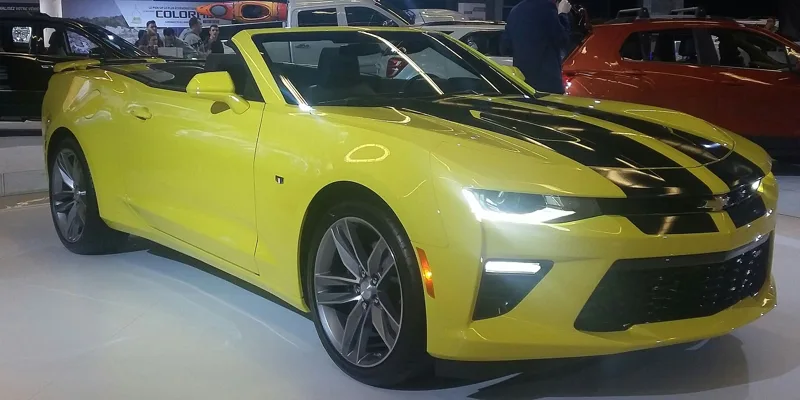
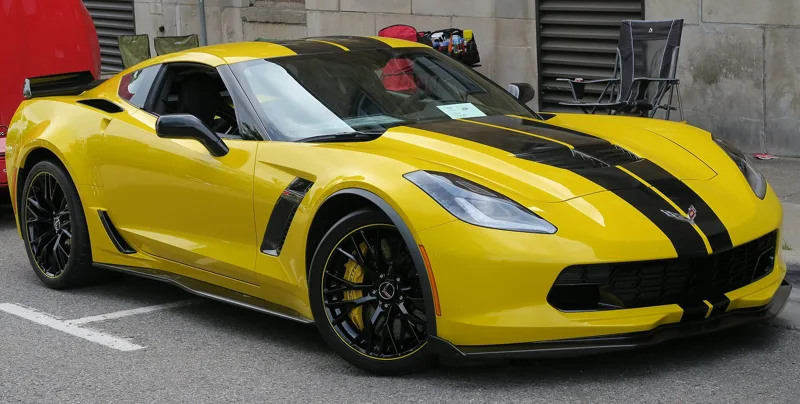
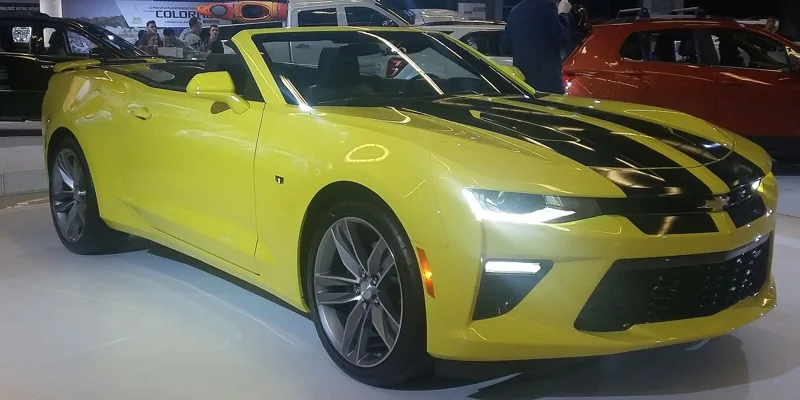
The ZHZ was a Hertz special for the company's Fun Collection in 2008. It was a standard Corvette with the LS3, a six-speed automatic, vacuum actuated valve exhaust, F55 suspension and seven-spoke chrome wheels. Every car was yellow with a broad black stripe along the hood and roof, and 500 targa tops were built in 2008 with 350 convertibles in 2009.
The GT1 Championship Edition was an option package unveiled at the 2009 New York Auto Show. It celebrated the C6.R's entry into the ALMS GT1 class and could be applied to the 4LT targa, the 4LT convertible or the Z06. Planned output was 100 units of each model in each colour, or 600 in total, but only 125 were built because of the government takeover of General Motors.
The Z06 Carbon Limited Edition went on sale in summer 2010 as a 2011 model, in Inferno Orange or the new Supersonic Blue. It had black headlamps and mirrors, a ZR1-style spoiler, black carbon rockers and splitter, and ebony leather and suede seats. Chevrolet planned 500 units and built 252.
The Centennial Edition, order code ZLC, celebrated 100 years of Chevrolet racing in 2012. It was offered only in Carbon Flash Metallic, with satin-black graphics, Centennial Satin Black wheels with a thin red outline on Z06 and ZR1 cars, and red brake calipers.
What else came from the C6 platform?
The Cadillac XLR was a luxury roadster sold from 2004 to 2009 model years. It was built in Bowling Green, Kentucky, on the Corvette's Y platform, with a 4.6-litre Cadillac Northstar V8, standard adaptive suspension and a power-retractable aluminium hardtop.
The Z06X was a 2010 concept meant to be a factory-built road race car, in the same spirit as the Porsche 911 GT3 Cup and Dodge Viper ACR-X. GM built it with Pratt & Miller Engineering, adding a carbon fibre adjustable rear wing, a full roll cage, a fire suppression system, a race seat and harness, carbon ceramic brakes and a polycarbonate rear window. The radio, carpeting and sound-deadening were removed, and the suspension was designed and supplied by Pfadt Race Engineering.
How did the C6.R race at Sebring and Le Mans?
The C6.R replaced the C5-R and was built by Pratt & Miller. It first raced at the 2005 12 Hours of Sebring, finishing second and third in class behind the Aston Martin DBR9, and in 2006 it won both the teams and manufacturers titles in the American Le Mans GT1 series.
A GT1 class win followed at Sebring on 17 March 2007, and four C6.R entries lined up at Le Mans that year. The LS7.R engine was named Global Motorsport Engine of the Year by a jury of 50 race engine engineers at the Professional Motorsport World Expo 2006 in Cologne.
GT1 was thinning out by 2009, so Corvette Racing switched to the GT2 class during that ALMS season. For 2011 the cars' aerodynamics were modified to resemble the ZR1, and the C6.R won both the GTE-Pro and GTE-Am classes at the 24 Hours of Le Mans. It won the GTE-Am category again in 2012.
Corvettes also raced in the FIA GT1 World Championship. Those cars had more power and fewer aerodynamic restrictions than the Le Mans machines, which followed GT2 rules.
Who else raced the C6 in GT2 and GT3?
Riley Technologies built a GT2-class Corvette for the 2008 American Le Mans Series, and Callaway Competition built eight Z06-R cars for the FIA GT3 European Championship in 2006. The Z06-R went on to win that title in its second year of entry.
The Riley car also raced at the 2009 Petit Le Mans, where it beat both Pratt & Miller factory cars in qualifying.
The Z06-R was a modified production Z06 with a stripped interior, a full roll cage, centre-locking wheels, carbon fibre doors, a rear deck spoiler and a front splitter. Its LS7 and LS3-based engines and drivetrains came from APP Racing Engines in the Netherlands, and the car was not road legal.
To balance the GT3 field, the FIA applied three handicaps: extra weight, ride height and tyre compound. The Corvettes ran with all three, and a French team, Riverside, fielded three of them.
C6 specifications at a glance
| Specification | Detail |
|---|---|
| Production | 2005 to 2013; last car completed 28 February 2013 |
| Engine, 2005 to 2007 | LS2 6.0-litre, 5,967 cc, 400 hp (298 kW) at 6,000 rpm |
| Engine, 2008 on | LS3 6.2-litre, 6,162 cc, 430 hp (321 kW) at 6,500 rpm |
| Z06 engine | LS7 7.0-litre, 7,011 cc, 505 hp (512 PS; 377 kW) at 6,300 rpm |
| ZR1 engine | Supercharged LS9 6.2-litre, 638 hp (647 PS; 476 kW) at 6,500 rpm |
| Z06 weight | 3,130 lb (1,420 kg) |
| Z06 0-60 mph | 3.6 seconds (Car and Driver, October 2005) |
| ZR1 0-60 mph | 3.3 seconds (Motor Trend, October 2008) |
| Automatic fuel use | 15 / 25 mpg-US (15.7 / 9.4 L/100 km; 18 / 30 mpg-imp) |
| Grand Sport | Unveiled 2010; steel frame, Z06 brakes and wheels |
| 427 Convertible | Introduced early 2012; 2,552 produced |