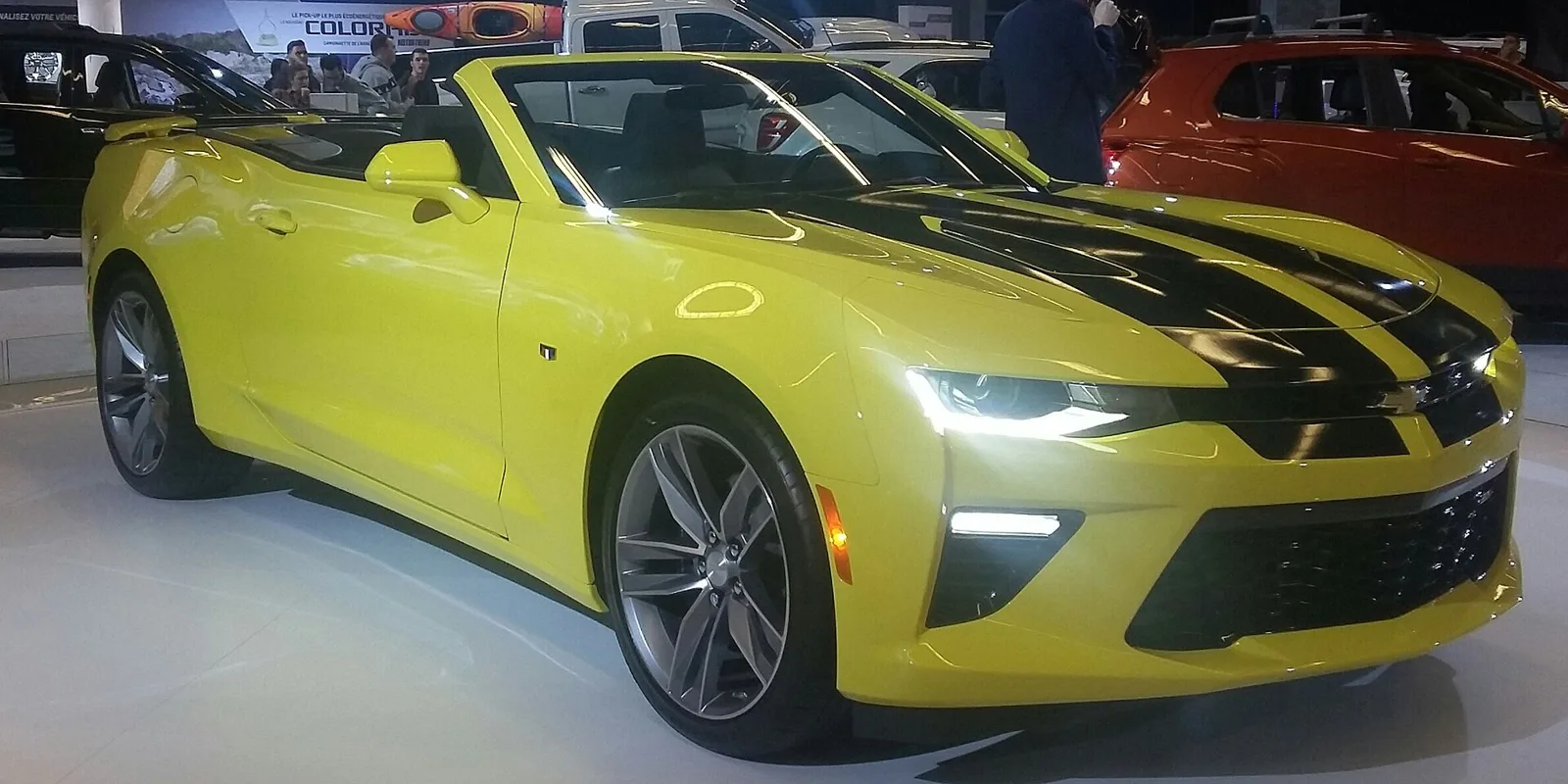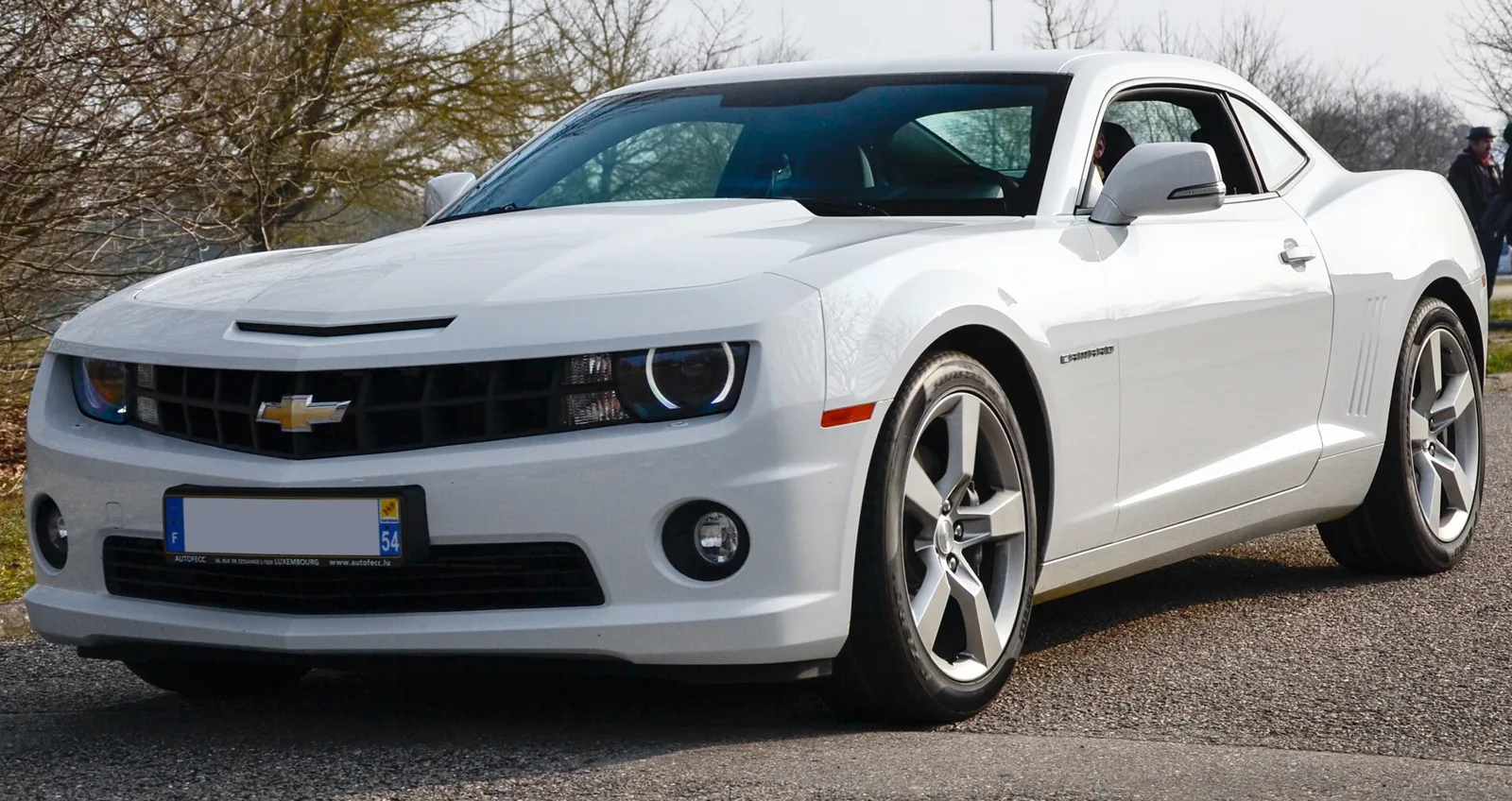
Designed largely by GM Holden and built at Oshawa, the 2010 to 2015 Camaro brought a V8 SS, a supercharged ZL1 and a crowded run of special editions.
Chevrolet's fifth-generation pony car ran from 2010 to 2015, with GM Holden leading its design. Engines ranged from a 312 hp V6 to the supercharged ZL1 at 580 hp, and the 2014 Z/28 was the track-focused top model alongside the COPO drag cars.
The fifth-generation Camaro was built from 2010 to 2015 at Oshawa, Ontario, and it brought the pony car back after the previous generation ended production in 2002. GM Holden in Australia led its design, and the top model, the ZL1, produced 580 hp (588 PS; 433 kW) from a supercharged V8.
Why did the fifth-generation Camaro come back?
Production of the earlier Camaro ended in 2002, and the fifth generation began building cars on 16 March 2009. Sales to the public started in April 2009 as 2010 models. The car was first planned to share a chassis with the Impala, but a 2007 energy law reshaped the fuel economy rules and forced GM to drop that idea.
Development started with sketches in spring 2005, and a clay model was finished by fall 2005. The first concept appeared in January 2006 at the Detroit auto show, after which the engineering work moved into its more demanding phase.
GM Holden in Australia took over the final design and engineering. That made sense because the car used the Zeta architecture, and GM was the global centre for rear-wheel-drive development.
Holden built camouflaged test mules at about US$250,000 each. They were used for crash tests and for extreme-weather driving in Canada, Arizona and Australia. Chevrolet dropped the disguise by January 2008, and pre-production cars were shown that year.
In March 2008 General Motors said production would slip to February 2009. This pushed on-sale timing to spring 2009, for the 2010 model year.
A supercharged V8 in the ZL1 and a Holden-led chassis gave the fifth-generation Camaro its edge.
Where was the fifth-generation Camaro built?
Assembly took place at Oshawa Car Assembly in Ontario, after production moved from Sainte-Therese in Quebec. The plant conversion was a US$740,000,000 investment, and it saved part of the 2,750 jobs that had been at risk at Oshawa, which had been scheduled to close in 2008.
The 2010 car debuted at the Warren Technical Center. Later showings included GM Holden's Melbourne office, the Yokohama Red Brick Park and the Summer Sonic 2010 festival, which gave the car a global stage before deliveries began.
US cars were on sale from the first quarter of 2009, and Japanese LT and SS models followed in December 2009. Advance orders were strong, and GM confirmed more than 10,000 of them by the end of 2008.
Which engines did the 2010 Camaro offer?
The LS and LT used a 3.6-litre LLT V6 rated 233 kW (312 hp) at 6,400 rpm, with 370 Nm (273 lb ft) of torque. The SS with the six-speed manual had the 6.2-litre LS3 V8 with 426 hp (318 kW), while the SS automatic used the L99 V8 with 400 hp (298 kW).
The L99 used Active Fuel Management, which ran the engine on four cylinders during highway cruising and other light loads to improve economy. It was a different engine from the earlier LT-series L99, and the two should not be confused.
Standard equipment included independent suspension, variable-rate power steering and disc brakes on all four wheels, with four-piston Brembo calipers on the SS. StabiliTrak with Competitive and Sport modes was offered on the SS.
Six standard airbags included head-curtain airbags for side impacts and thorax airbags mounted in the front seats. The SS with the six-speed manual also had launch control, which helped with quick starts.
What were the special editions of the first two years?
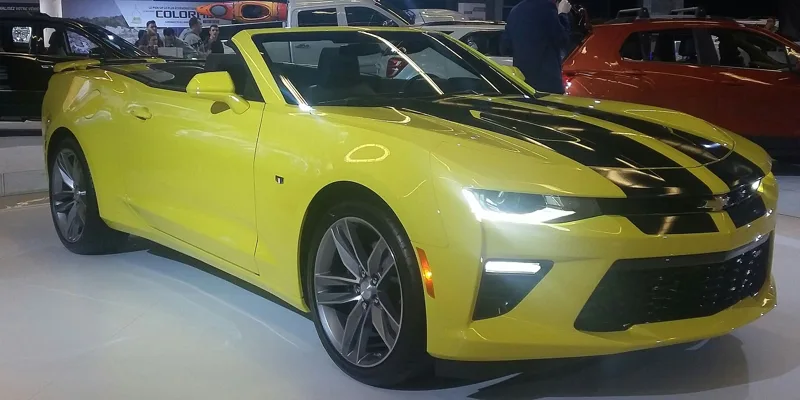
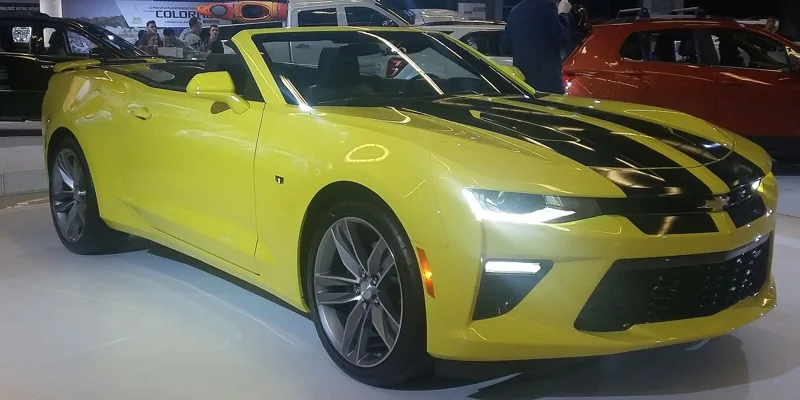
GM announced a Transformers Special Edition on 22 July 2009, timed to tie in with the film sequel. The US$995 appearance package was limited to Rally Yellow cars, and production of the add-on stopped on 12 January 2010, with 1,916 units finished by the end of 2010.
The Synergy Special Edition was announced on 14 January 2010 on the 1LT and 2LT in Synergy Green, with Cyber Grey stripes along the hood and deck. A total of 2,425 cars were sold between February and May 2010.
The Indianapolis 500 Pace Car replica, RPO Z4Z, was built in Inferno Orange on the 2SS automatic with the RS package. Only 294 units were made, with 50 going to the race as festival cars, 45 to Canada and 199 to 186 dealerships in the United States.
SLP Performance produced the ZL550, with a supercharged V8 at 550 hp, and the ZL575, which had the same engine at 575 hp and a six-speed manual. Each car carried a numbered plaque and numbered key fobs, and sales began in mid-2010 at Chevrolet dealers.
What did the 2011 to 2013 updates change?
The 2011 model year added a head-up display adapted from the Corvette, and the V6 was rated 312 hp (233 kW) with 278 lb ft (377 Nm) of torque. GM said the 2010 engine rating had been conservative, so the 2011 figure marked no real engine change.
The 2012 update brought the 323 hp (241 kW) LFX V6, a power lift for the passenger seat and a Rear Vision Package with a camera and an auto-dimming mirror. A new rear spoiler became standard, and the instrument panel was revised.
The 2013 model year brought the 1LE performance package, MyLink navigation and ZL1-style shift knobs. The 1LE was offered on 1SS and 2SS coupes with a 3.91 limited-slip differential and 285/35ZR20 Goodyear tyres.
Convertible production began on 31 January 2011 at Oshawa, and the cars reached dealers in February. The convertible was offered in base and SS versions, like the coupe.
What made the ZL1 different?
The ZL1 was a high-performance SS with a supercharged 6.2-litre LSA V8. A ZL1 made 433 kW (580 hp; 588 PS) at 6,000 rpm and 754 Nm (556 lb ft) at 4,200 rpm, with the supercharger boosting 7 psi (0.48 bar). The car was unveiled at the 2011 Chicago Auto Show.
Magnetic Ride Control can sense the need for a damping change 1,000 times per second and carry it out in five milliseconds. Brembo supplied six-piston front calipers and four-piston rear calipers, and 20-inch forged wheels carried Goodyear tyres of 285/35ZR-20 at the front and 305/35ZR-20 at the rear.
At least 30 percent of the ZL1's parts were exclusive to the model. Its six-speed manual had 30% more torque capacity than the SS automatic, and triple synchronizer rings were fitted in some gears to improve shift quality.
A ZL1 set a Nurburgring lap time of 7:41.27 in the fall of 2011. That time equalled or beat the Porsche 911 Turbo S, the Lamborghini Murcielago LP640 and the Mercedes-Benz SLS AMG.
What were the COPO cars?
The 2012 COPO Camaro was a limited production drag-racing car for NHRA Stock Eliminator and Super Stock. Only 69 were built, with Powerglide automatics and a choice of LS7 7.0-litre or LSX 5.3-litre engines, and the cars were hand-built at the plant in Wixom, Michigan.
Two COPO convertibles were built, one carrying the number 68 and the other 69. Car number 69 was later offered at the 2013 Barrett-Jackson auction, where the final COPO convertible sold for US$400,000.
The 2013 COPO Camaro used 350, 396 or 427 cubic-inch engines, with the 350 rated 325 hp (242 kW), the 396 rated 375 hp (280 kW) and the 427 rated 425 hp (317 kW). It was sold without a VIN, so it could not be registered for highway use, and production was limited to 69 units.
What changed with the 2014 facelift and the Z/28?
The 2014 facelift redesigned the front and rear with new lamp assemblies, and it added a functional hood vent on the SS and optional Recaro seats with microfibre suede inserts. The head-up display became a colour unit on the 2LT, 2SS and ZL1.
The Z/28 was a track-focused model with a 7.0-litre LS7 V8 developed with Corvette Racing. It accelerated 0-60 mph in 3.95 seconds (0-97 km/h) and reached 188 mph (303 km/h), with a full aerodynamic package of splitter, flares and a functional diffuser.
The Z/28 used Brembo carbon ceramic discs, Multimatic DSSV dampers, Pirelli P Zero Trofeo R tyres and a Tremec TR-6060 six-speed manual. It won Motor Trend's 2014 Best Driver's Car award, ahead of the Alfa Romeo 4C and the BMW i8.
Concepts and racing
The 2006 Camaro concept was designed by Sangyup Lee and based on the Zeta platform. It carried a 6.0-litre LS2 V8 rated 400 hp (298 kW) with a T56 six-speed manual, and AutoWeek's editors voted it Best in Show.
Many later concepts were shown at SEMA. The LS7 concept took a 7.0-litre crate engine rated 550 hp (410 kW) in a 2010 SS, and the SSX track car, also shown in 2010, used the LS3 with Chevrolet Performance parts and a dry-sump oiling system.
NASCAR used the fifth-generation body in the Xfinity Series from 2013 until 2017, and a Camaro won the 2014 championship with Chase Elliott. The ZL1 entered the NASCAR Cup Series in 2018, replacing the Chevrolet SS.
Which limited editions followed in 2011 and 2012?
The Neiman Marcus Edition convertible opened for orders on 19 October 2010 and sold out within three minutes. A total of 75 units were produced, based on the 1SS and 2SS, with a tri-coat Deep Bordeaux paint and ghosted rally stripes running from the hood to the rear deck.
Its interior was two-tone leather with amber accents and red stitching, and it rode on 21-inch five-spoke wheels fitted with Pirelli tyres. The windshield surround was painted silver, a detail that no factory Camaro convertible had carried before.
The 2011 Synergy Series followed in May 2011, with Level One and Level Two appearance packages. Only 500 units were planned for the 2011 model year, but 400 were actually ordered, and the package required the RS option.
Television helped the car's profile too. A Camaro RS appeared in the CBS series Hawaii Five-0 from its second episode on 27 September 2010, and a 2014 Camaro replaced it for the fourth season.
How did the fifth-generation Camaro sell?
Pre-orders opened on 13 October 2008, and by the end of that year General Motors had more than 10,000 advance orders. Those orders were to be filled by October 2009, and rentals and later orders were processed before some of the pre-orders.
The first production car, VIN 100001, was auctioned at Barrett-Jackson on 17 January 2009 in a charity lot for US$350,000, and Rick Hendrick bought it. By late June 2009, dealers reported prices running roughly US$5,000 over the window sticker, and GM sold 61,648 Camaros in calendar 2009.
Specifications at a glance
| Specification | Detail |
|---|---|
| Production | 2010 to 2015 model years; built at Oshawa, Ontario |
| Standard V6 | 3.6-litre LLT; 233 kW (312 hp) at 6,400 rpm; 370 Nm (273 lb ft) |
| SS manual | 6.2-litre LS3 V8; 318 kW (426 hp) at 5,900 rpm; 569 Nm (420 lb ft) |
| SS automatic | L99 V8; 298 kW (400 hp) at 5,900 rpm; 556 Nm (410 lb ft) |
| ZL1 | Supercharged 6.2-litre LSA; 580 hp (588 PS; 433 kW); 754 Nm (556 lb ft) |
| Z/28 (2014) | 7.0-litre LS7; 0-60 mph in 3.95 seconds; top speed 188 mph (303 km/h) |
| 2012 COPO Camaro | 69 units; LS7 7.0-litre or LSX 5.3-litre engines |
| Calendar 2009 sales | 61,648 Camaros |